
How Modern Laminating Machines Are Reshaping Textile and Composite Manufacturing
Industrial laminating machines have evolved far beyond simple adhesive bonding. Today, they are precision-engineered systems that enable multi-layer material combinations, functional coatings, and structural composites — driving innovation across apparel, automotive, filtration, and ballistic protection industries.
The Challenge: Matching Bonding Technology to Application Complexity
As end-use requirements intensify — waterproofing, flame retardancy, high-temperature resistance, lightweight ballistic performance — traditional adhesive methods often fall short. Inconsistent coating weight, solvent emissions, and limited bond strength drive manufacturers to seek more controllable, repeatable, and environmentally sound laminating solutions. According to Coherent Market Insights, the global laminating machines market is projected to reach USD 1,356.7 million by 2033, reflecting the growing demand for specialized bonding equipment across technical textiles and composites.
Kuntai’s Portfolio: A System for Every Bonding Requirement
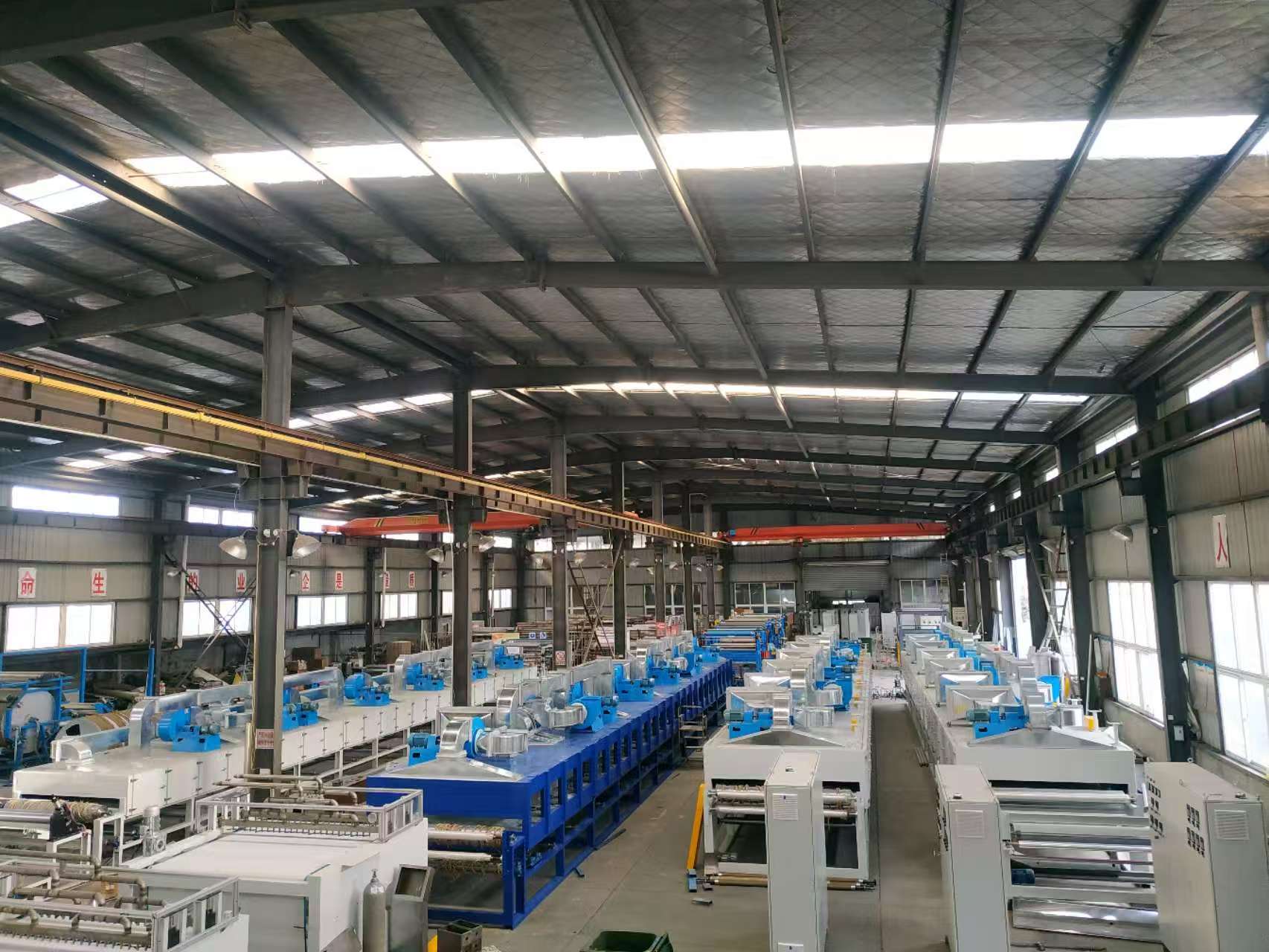
JIANGSU KUNTAI MACHINERY CO., LTD. is a manufacturer of laminating, coating, impregnation, and cutting machinery for technical textiles and composites, headquartered in Yancheng, China. With a factory spanning 30,000 m² and an annual output of 650 units, the company has built a product line that covers virtually every laminating process in industrial use today.
Key equipment types include:
- PUR hot melt glue laminating machine (model KT-PUR) – material width up to 3400 mm, speed 0–40 m/min, integrated glue melter and oil heater.
- Flame laminating machine (model KT-HY) – for automotive seat manufacturing, uses natural gas or liquefied gas, burner width up to 3300 mm.
- Double belt press laminator (model KT-HY-H) – max temperature 250 °C, 3 m heating zone plus 1.5 m cooling zone, ideal for insulation materials and filters.
- Fabric-to-fabric laminating machine (model KT-FT) – 2400 mm max width, equipped with PUR glue drum melter and humidifier for textile laminates.
- UD prepreg impregnation machine (model KT-LH-1800) – for UHMWPE and aramid prepreg, 1650 mm material width, water-based adhesive, 1080 yarn bobbins.
- UD crossply machine (model KT-LH-1800) – 8000 kN pressing tonnage, 1700 × 1700 mm working table, hydraulic pressing for ballistic panel layering.
- Glue spraying and powder scattering machine (model KT-SF) – 6 spray systems, 4 powder scattering units, powder size 20–150 microns, for filter manufacturing.
- Dot coating laminating machine (model KT-DS) – coating width up to 4500 mm, electric heating, 80–100 °C working temperature, for carpet manufacturing.
Technical Architecture: How the Machines Deliver Precision
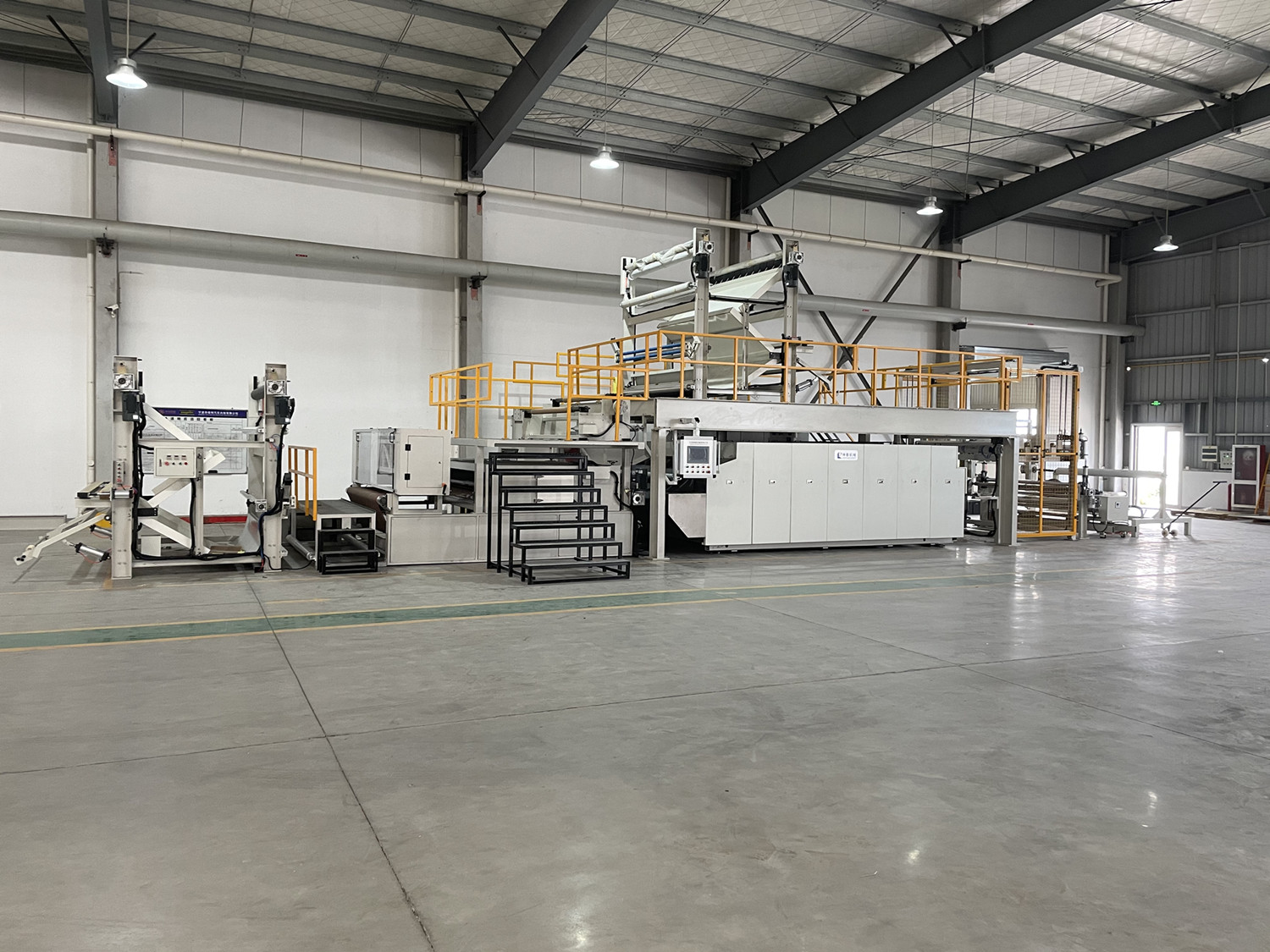
Kuntai’s laminating machines share a common engineering philosophy: modularity, Siemens controls, and robust thermal management. Key technical aspects include:
- Heating systems: Electric or circulating thermal oil, with external oil heaters (e.g., 60 kW for UD prepreg lines). Maximum temperatures range from 130 °C (dot coating) to 250 °C (double belt press).
- Drive and control: Motors from Siemens (made in China), inverters from Yaskawa or Inovance, electric components from Schneider. PLC and HMI (Siemens) enable precise speed and temperature regulation.
- Material handling: Air-shaft trolleys, unwinders with 1000 mm diameter capacity, and synchronized tension control ensure consistent lamination at speeds up to 40 m/min (hot melt glue line) or 25 m/min (double belt press).
- Adhesive application: For PUR systems, a glue drum melter (200 kg capacity) melts and delivers reactive hot melt, while the gluing roller can apply coatings from 25 to 110 g/m². For water-based systems, dipping or coating rollers are used.
- Cooling zone: Integrated cooling sections (1.5 m) stabilize the composite before winding.
Application Scenarios: Real-World Use Cases
The flexibility of Kuntai’s product range is reflected in the diverse industries served:
| Industry | Application | Recommended Machine |
|---|---|---|
| Automotive seat manufacturing | Flame bonding of foam and fabric | Flame laminating machine (KT-HY) |
| Aircraft sound insulation panels | High-temperature lamination of insulation mats | Double belt press (KT-HY-H) or Flatbed laminator (KT-PB) |
| Bulletproof vest & helmet manufacturing | UHMWPE / aramid prepreg and crossply | UD prepreg impregnation machine + UD crossply machine |
| Garment industry (protective suits, thermal wear) | Waterproof / windproof fabric lamination | Hot melt glue laminating machine (KT-PUR) or Lamination machine for textile (KT-FT-XC) |
| Filter manufacturing | Powder scattering and glue spraying for filter media | Glue spraying and powder scattering machine (KT-SF) |
| Carpet manufacturing | Dot coating for secondary backing | Dot coating laminating machine (KT-DS) |
Market Trends Driving Equipment Choice
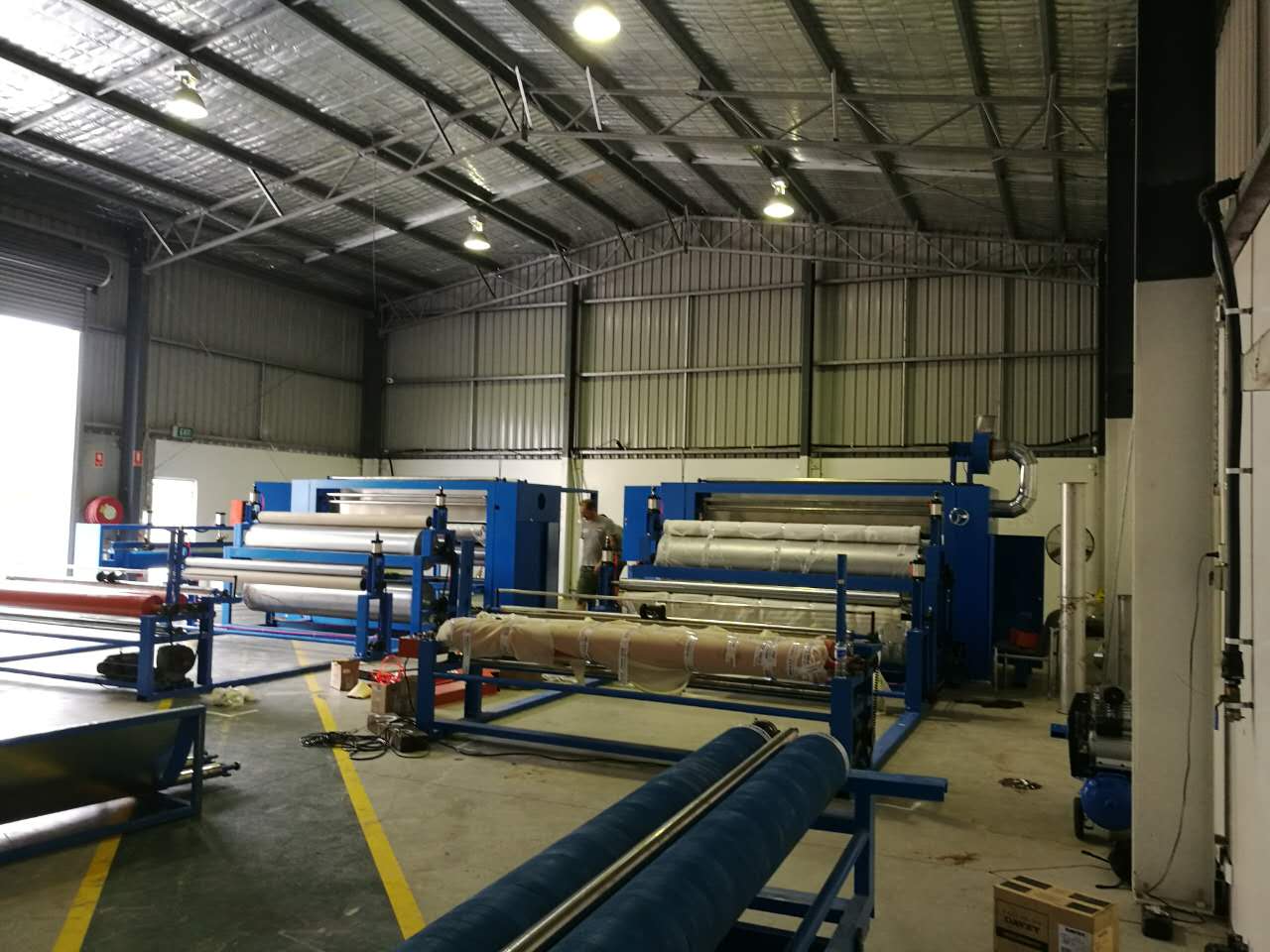
Several macro trends are shaping the laminating machinery landscape:
- PUR hot melt adhesive growth: The global PUR hot melt adhesives market is expected to grow at a CAGR of 7.2% through 2034 (Dataintelo). This shift from solvent-based to reactive hot melts drives demand for PUR laminators with precise temperature and humidity control.
- Prepreg expansion in aerospace and defense: The prepreg market was valued at USD 15.07 billion in 2024 (Maximize Market Research), with aerospace alone accounting for USD 3.5 billion (MarketsandMarkets). This directly supports the need for UD impregnation and crossply machines.
- Asia-Pacific manufacturing dominance: Fortune Business Insights notes that Asia-Pacific held a 72.70% share of the textile machinery market in 2025, led by automation in China. Kuntai’s location within this ecosystem provides supply chain advantages and proximity to raw material suppliers.
Comparison with Traditional Adhesive Methods
Compared to solvent-based spray bonding or manual roller coating, Kuntai’s precision laminators offer higher uniformity, reduced material waste, and lower volatile organic compound (VOC) emissions. The use of Siemens controls and Yaskawa inverters ensures repeatability from batch to batch. However, it should be noted that the initial capital investment for a full PUR hot melt line is higher than that of a simple solvent spray booth, meaning the return on investment must be justified by production volume and quality requirements.
Future Outlook
As manufacturers push toward Industry 4.0, Kuntai is integrating more connectivity features — PLC and HMI interfaces allow data logging and remote diagnostics. We can expect further developments in modular line configurations, where the same base platform can be reconfigured for hot melt, flame, or dry powder bonding with minimal downtime. The increasing emphasis on circular economy will also favor machines that can handle recyclable mono-materials and bio-based adhesives.
Frequently Asked Questions
Q: What is the maximum material width available on Kuntai laminating machines?
A: Depending on the model, material width ranges from 1600 mm (flatbed laminator) up to 4500 mm (dot coating machine for carpets). Most textile laminators offer 2400–3400 mm working width.
Q: Can the same machine handle different adhesive types?
A: Kuntai designs dedicated systems for PUR hot melt, water-based adhesive, flame bonding, and powder scattering. For example, the glue spraying and powder scattering machine (KT-SF) can switch between PUR and PSA hot melt, but each adhesive type typically requires a specific applicator configuration.
Q: Are Kuntai machines certified for international safety standards?
A: The company’s quality control system complies with ISO9001 and CE certificate standards. The machines also incorporate key electrical components from Schneider and inverters from Yaskawa, which meet global safety requirements.
Q: How does the UD prepreg impregnation machine achieve yarn spreading?
A: It uses a mechanical multi-roll plus profiled wire spreading method, combined with frequency-converted servo drives, to achieve uniform fiber distribution across a 1650 mm width with mirror-level roller surface finish (level 14).
Q: What is the typical delivery lead time for a custom laminating line?
A: While specific lead times are project-dependent, Kuntai’s factory capacity of 650 units per year and in-house CNC machining centers allow for relatively short turnaround compared to pure-assembly competitors.
For detailed specifications and project consultation, download the official company profile:
Contact: Christin Chen | Email: christin@kuntai-group.com | Phone/WhatsApp: +86 15051080850
¿Tiene preguntas o necesita más detalles?
Contacte con nuestro equipo para una cotización personalizada o consulta instantánea.
Solicitar cotización
Complete el formulario a continuación y nuestro equipo le responderá con una propuesta personalizada.
Chat directo de WhatsApp
¿Prefiere chatear en tiempo real? Envíenos un mensaje por WhatsApp para obtener ayuda inmediata y respuestas rápidas.
- Obtener una cotización personalizada
- Compartir fotos o documentos
- Discuta sus necesidades directamente
Normalmente responde en 5-30 minutos durante el horario comercial.