
How LONGTE Demonstrates Supplier Capability: Evidence from USA Renovation Projects
Supplier capability is asserted in a catalogue and tested in a project. For wall panel buyers, the useful question is rarely whether a factory can produce a decorative panel. It is whether the same panel can be supplied to the same tolerance, finish, and documentation standard across repeat orders that travel through several sales channels at once.
North American renovation demand makes that question concrete. A single supply program can feed residential renovation, multi-unit apartment finishing, and DIY retail shelves simultaneously — three streams with different expectations for batch consistency, packaging, paperwork, and delivery rhythm. A factory that serves one stream is a vendor. A factory that serves all three from one production base is a supply-chain decision, and it needs evidence rather than adjectives.
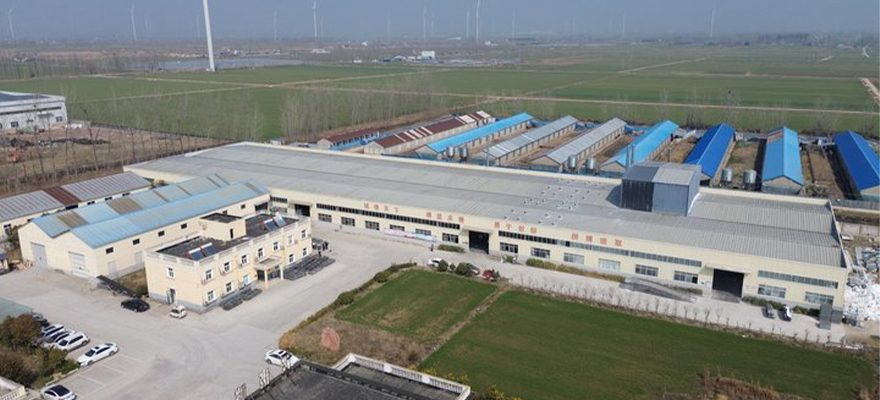
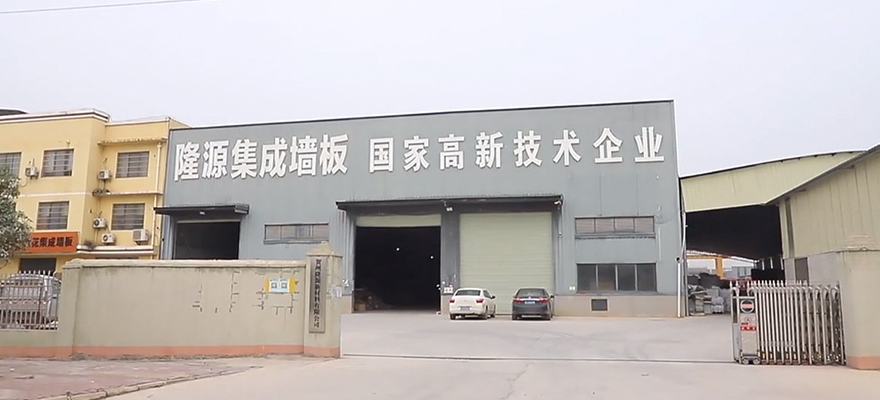
LONGTE is the brand used by Haining Longtime Industry Co., Ltd., a building-materials manufacturer founded in 2003 that produces PVC ceiling and wall panels, WPC wall panels, SPC flooring, WPC decking, and the PVC lamination films and hot-stamping foils used to surface them. The company reports an export ratio of 85% and lists the United States among its main markets, alongside Colombia, India, the Philippines, the UAE, and other South American countries.
The program examined here — a USA-based distributor and DIY retailer case organized around product 6486 — is a useful reference because it combines all three demand streams inside one commercial relationship. The sections below set out what verifiable supplier capability looks like in that context. Where LONGTE's documented specifications describe a different model, that model is named explicitly rather than attributed to 6486.
What “Supplier Capability” Actually Means in a Wall Panel Decision
Capability claims become useful only when they can be converted into evidence a buyer can inspect. In wall panel sourcing, three dimensions carry most of the weight.
1. Repeatability of bulk customization
Customization is not a sample. Bulk customization means a specified surface, colour direction, dimension, and core behaviour that survives volume production across repeat orders. The common failure mode is drift: the first container matches the approved sample, the second is acceptable, and the third is visibly different under the same light. Drift is controlled by in-process inspection and a documented dimensional standard, not by a promise made at the quotation stage.
2. Documentary readiness
Panels cross borders with paperwork. Fire classification, formaldehyde emission class, conformity attestation, commercial invoice, packing list, certificate of origin, and MSDS each answer a different question from a different party — a code official, a customs broker, a retail compliance team. A supplier that can produce a certificate but cannot explain its scope and its market coverage creates avoidable work for the buyer at the worst possible moment.
3. Delivery continuity
Renovation schedules and retail restocking cycles do not wait. Continuity depends on port options, pre-booked capacity, and documentation speed, and it is usually the first thing to break when a program scales from a trial order to repeat volume.
The USA Program: Three Demand Streams, One Supply Chain
Residential renovation is the first stream. Orders are small, room-by-room, and often placed by contractors or homeowners weeks apart from one another. What the stream demands is not volume but consistency — a bedroom accent wall finished in March should match a living room wall finished in August, and the trims should still be available.
Apartment finishing is the second stream, and it behaves differently. Multi-unit work repeats the same wall dimensions across identical floor plans, so the priority shifts to durability of joint details, installation speed, and batch uniformity across a large order. A supplier that cannot hold tolerance across a few thousand square metres creates rework in every unit.
DIY retail supply is the third stream and the least forgiving. Panels are handled by consumers rather than installers, so packaging must survive stacking and transport, formats must be manageable without professional tools, and the SKU itself must remain recognizable so that a shopper who returns to the store months later finds a product that matches what was installed before.
What the three streams share is a requirement that the supplier not treat them as separate businesses. A distributor serving all three needs one production reference, one quality standard, and one documentation set; otherwise the retail SKU and the project SKU gradually diverge, and returns follow.
Product 6486 in Its Application Context
Model 6486 is referenced in this program as the working SKU supplied into the USA distributor and DIY retail channel. Its application context is broad rather than specialised: the same panel family is specified across residential bedroom accent walls, living room TV background walls, bathroom and shower surrounds, and apartment finishing packages, while exterior cladding remains a separate specification exercise.
LONGTE's panel range covers several surface and core families, each with a different performance envelope — WPC fluted wall panels, PU stone wall panels, UV marble sheets, bamboo charcoal wood veneer panels, flexible stone panels, and rigid SPC wall panels, alongside co-extrusion outdoor profiles. Where measured performance is cited below, it is taken from LONGTE's documented models, including the LT-SW stone-plastic composite wall panel and PVC wall panel 6491, rather than extrapolated onto 6486.
Technical Explanation: What the Panels Are Made Of, and Why It Matters
The LT-SW model is a stone-plastic composite (SPC) wall panel measuring 1,220 × 2,800 mm with a thickness of 4 mm. It carries a B1 fire rating and is documented as 100% waterproof, anti-scratch, and wear-resistant. Its construction is limestone powder, PVC, and a UV surface layer.
Each layer answers a specific renovation problem. The limestone-powder and PVC core supplies rigidity and humidity behaviour, which is why a rigid-core panel is specified for bathroom shower walls and apartment wet areas rather than a moisture-sensitive composite. The UV layer carries the surface performance: it is the layer that resists scratching in high-traffic corridors and retail displays, and the layer that determines how a printed or embossed decor holds up under light. A 4 mm profile keeps the panel in the handling class of rigid decorative boards rather than stone cladding, which matters when units are finished one after another.
LONGTE's published rigid-core comparison documents an expansion coefficient of 0.02% against 3–5% for HDF-based laminate, and an IPX8 waterproof rating against 0 for laminate, with installation speed of 40 m² per day compared with 15 m² per day and a click-lock system that removes the need for glue. The same documentation states that an optional IXPE underlay adds 8–12% thermal insulation and reduces impact noise by 18–22 dB. Unit price is documented as 10–15% higher than laminate, with a lifespan three times longer and total maintenance cost over ten years 50% lower.
Mapping Panel Types to Renovation Scenarios
The table below translates the technical discussion into specification terms. It is a starting point for a project conversation, not a substitute for manufacturer confirmation of the exact model, finish, and documentation required.
| Scenario | Performance requirement | Documented panel family | What the buyer should verify |
|---|---|---|---|
| Bathroom / shower wall | No water absorption, no swelling, cleanable surface | Rigid SPC panel; LT-SW documented as 100% waterproof | Model-level waterproof statement and joint/seal detail |
| Residential bedroom accent wall | Low formaldehyde emission, dimensional stability | Bamboo charcoal wood veneer panels, referenced against E0 (≤ 0.07 mg/m³) | Current E0 test documentation for the specified batch |
| Living room TV background wall | Seamless interlocking, colour consistency, light handling | UV marble sheets, WPC fluted panels, flexible stone panels | Batch-to-batch colour tolerance and trim availability |
| Commercial office / high-traffic interior | Anti-scratch surface, fire classification | B1-rated panels; PVC wall panel 6491 documented as Fire Class B1(B) | Certificate scope, standard referenced, issuing laboratory |
| Exterior facade / cladding | UV resistance, low weight, anchoring plan | PU stone panels and co-extrusion outdoor profiles | Substrate condition; PU stone documented at 2–3 kg/m² |
| DIY retail supply | Retail-ready packaging, repeatable SKU | Program SKU 6486 | Packaging specification and repeat-order tolerance |
Market Trend Analysis: What the Numbers Say, and Where They Disagree
Published category data points in one direction. Dataintelo places the global wall panel market at USD 32.4 billion in 2025, projected to reach USD 43.7 billion by 2033. Grand View Research sizes the global wood-plastic composite market at USD 8.89 billion in 2025 with a projected CAGR of 11.7% through 2033. On the decorative side, Witop Decor reports PU stone wall panel sales of USD 3.7 billion in 2024, linked to a 70–80% weight reduction compared with natural stone, and UV marble sheets at 18% of the global decorative materials market in 2024 — described by the same source as a 260% increase from 2020.
Supply, meanwhile, remains concentrated. Dataintelo estimates Asia-Pacific at approximately 42.3% of global wall panel market share in 2025, driven by urbanization in China and India, and Volza export records place China first for PVC marble sheet exports with 1,480 documented export records as of late 2025.
These figures should be used directionally rather than as procurement inputs. Market-size estimates for the same category diverge by source and by product definition: one tracker places the base year at USD 17.1 billion while another puts a later year at USD 32.4 billion. Two of the figures above — the PU stone and UV marble shares — come from a supplier-side source with medium reliability and signal category momentum rather than measurable demand. The defensible reading is narrower and more useful: demand spans interior and exterior applications, Asia-Pacific concentrates supply, and lighter rigid products continue to take share from heavier traditional finishes.
Comparison with Traditional Solutions — and Where Panels Are the Wrong Choice
Comparison only has value if it includes the cases where the incumbent material remains the better answer. The table below states what changes, using LONGTE's documented comparisons.
| Alternative | What changes | Documented comparison | Where the traditional option still fits |
|---|---|---|---|
| Natural stone cladding (marble, granite, sandstone) | Weight and installation labour | 2–3 kg/m² vs 30–60 kg/m²; 4–6 hours per 50 m² vs 3–5 days; 60–70% lower delivered cost; no rebar, mortar, or scaffolding; R-value 2.5–3.5 vs 0.5–1.0 | Villa facades, feature walls, and hotel lobbies where structural reinforcement is not required; natural stone remains the specification where genuine stone mass or a stone substrate is required |
| Traditional wood decking (pine, cedar, teak) | Maintenance cycle and service life | 15–25 years vs 5–8 years; annual maintenance near zero vs 8–12% of initial cost; rinse-only vs annual sanding, sealing, staining, and termite treatment; 60% lower total cost over 15 years despite 20–30% higher upfront price; surface 10–15°C cooler under direct sun | Dry, sheltered patios where the natural wood appearance is the design intent |
| HDF-based laminate | Moisture behaviour and installation method | Expansion 0.02% vs 3–5%; IPX8 vs 0; 40 m²/day vs 15 m²/day; wet mop only vs re-coating and swelling on water contact | Dry indoor areas where the initial budget ceiling is the binding constraint |
Three boundaries deserve to be stated plainly. First, decorative panels are not a structural material. LONGTE's own comparison positions PU stone products for facades, interior feature walls, and hotel lobbies where structural reinforcement is not needed — where a stone substrate or true stone mass is part of the design requirement, natural stone remains the correct specification.
Second, the cost case depends on holding the product long enough for the maintenance and lifespan advantage to be realized. Rigid-core products are documented at 10–15% above laminate unit price, and WPC decking at 20–30% above wood. A buyer with a short holding horizon or a purely aesthetic specification may not capture that return.
Third, certification scope must be mapped deliberately. The B1 classification referenced in this article is Fire Class B1(B) per GB 8624-2012, a Chinese national standard, with certificates issued for China and global markets; the CE attestation of conformity on file for the WPC decking range is scoped to the EU market, where commercial WPC panels are commonly evaluated against EN 13501-1. LONGTE's compliance function maintains regional formula customization and monitors HS code and anti-dumping developments quarterly, but a supplier's internal process does not replace the buyer's own code review for a US project.
The Risk Controls Behind the Program
Capability claims rest on processes that can be described. LONGTE's quality documentation specifies a three-stage inspection regime: incoming material inspection, in-process inspection every two hours, and 100% finished-goods inspection, supported by third-party pre-shipment inspection on request through SGS, BV, or TUV, standardized packaging with edge protection, an ISO 9001 quality management system, a five-year warranty on major SKUs, free replacement within 30 days of arrival for genuine defects, and an after-sales team that responds within 24 hours.
Logistics is treated as a continuity problem rather than a booking. The company maintains multi-port shipping capability through Ningbo, Shanghai, Yantian, and Shenzhen, pre-books containers 30 days ahead of peak season, and works with five or more carriers — including COSCO, MSC, OOCL, EVERGREEN, and CMA — with an in-house logistics team of six people. DDP service is offered to the United States, UAE, Colombia, and Chile, with export documentation ready within three days after loading and ETD/ETA updates provided weekly.
Compliance is monitored rather than assumed. The company's legal and compliance function tracks HS code updates and anti-dumping cases quarterly, maintains CE, RoHS, and fireproof B1 certificates valid since 2022, supports DDP customer clearance with commercial invoice, packing list, certificate of origin, and MSDS, and provides product-to-country compliance guidance. Certificate references on file include Fire Class B1(B) per GB 8624-2012 for PVC wall panel 6491, tested under GB/T 20284-2006 and GB/T 8626-2007, with certificate number BITFR202507063 issued by BITFR (Henan) Company Limited (CNAS L14889); and a CE attestation of conformity for the WPC decking range under certificate number TD15322306 for the EU market.
How a Buyer Can Verify These Claims
Supplier capability is verifiable, but only if the buyer asks for the right artefacts. A practical sequence for a renovation or retail program:
- Request model-level documentation rather than the company certificate pack, and confirm which standard each certificate references.
- Ask for an in-process inspection record from a production run, not only the final inspection report.
- Order a repeat sample from a later production batch and compare it against the first approved sample under the same lighting.
- Confirm the geographic scope of each certificate before specifying it into a project in a different jurisdiction.
- Test retail packaging against stacking and handling before the first DIY order is placed.
- Map the delivery terms to your own customs exposure, particularly where anti-dumping or HS code changes could apply.
- Put the warranty term, replacement window, and response time in writing before the repeat order, not after the claim.
Future Outlook
The direction of the category is lighter, more rigid, and more documented. Rigid stone-plastic cores, flexible stone surfaces, and co-extrusion profiles continue to displace heavier traditional finishes in renovation work, and the trend data above — however imprecise — points the same way. For importers and distributors, the consequence is a shift in what defines a good supplier: not the ability to produce a panel, but the ability to reproduce it across batches, document it for a specific market, and deliver it on a schedule that a retail plan can absorb.
That is the practical significance of a program like the USA distributor and DIY retailer case built around product 6486. The case matters less as a reference to one model than as a demonstration that residential renovation, apartment finishing, and retail supply can be served from one production and documentation base. Buyers evaluating suppliers for 2026 and beyond should test that claim the same way this article has tried to test it — by asking for the evidence behind it.
FAQ
What does supplier capability mean when buying wall panels for a renovation program?
In wall panel procurement, supplier capability refers to three verifiable things: the ability to reproduce a specified panel across repeat bulk orders without dimensional, colour, or surface drift; the ability to supply documentation — fire classification, emission class, conformity attestation, and export papers — with clear scope and market coverage; and the ability to maintain delivery continuity across ports and carriers. A sample is not evidence of any of the three.
How can a distributor verify bulk customization consistency before scaling a repeat order?
The most reliable method is batch comparison. Ask for the in-process inspection record from a specific production run, then order a sample from a later batch and compare it with the originally approved sample under identical lighting. Confirm which dimensional standard and colour tolerance the factory applies during production, and confirm that trims and accessories will remain available for the same SKU. LONGTE's documented regime combines incoming material inspection, in-process inspection every two hours, and 100% finished-goods inspection, with third-party pre-shipment inspection available on request.
Are wall panels suitable for wet areas such as bathrooms and shower surrounds?
Rigid-core panels are, provided the specific model is documented for that use. The LT-SW model, a stone-plastic composite wall panel measuring 1,220 × 2,800 mm and 4 mm thick, is documented as 100% waterproof and is manufactured from limestone powder, PVC, and a UV surface layer. In LONGTE's rigid-core comparison, the construction is documented with an expansion coefficient of 0.02% against 3–5% for HDF-based laminate, and an IPX8 waterproof rating against 0 for laminate. Moisture-sensitive composites such as HDF-based boards are the wrong specification for these areas.
How do wall panels compare with natural stone and traditional wood on cost and maintenance?
LONGTE's documented comparisons state that PU stone panels weigh 2–3 kg/m² against 30–60 kg/m² for natural stone, install in 4–6 hours per 50 m² against 3–5 days, and cost 60–70% less delivered, without rebar, mortar, or scaffolding; thermal R-value is given as 2.5–3.5 against 0.5–1.0. Against traditional wood decking, the documented service life is 15–25 years versus 5–8 years, annual maintenance near zero versus 8–12% of initial cost, and total cost over 15 years 60% lower despite a 20–30% higher upfront price. Both comparisons favour panels on lifecycle terms, not on initial price.
What certifications should a buyer check, and do they apply to US projects?
Buyers should check the standard referenced, the certificate scope, and the issuing body. LONGTE holds Fire Class B1(B) per GB 8624-2012 for PVC wall panel 6491, tested under GB/T 20284-2006 and GB/T 8626-2007, with certificate number BITFR202507063 issued by BITFR (Henan) Company Limited (CNAS L14889) and covering China and global markets, and a CE attestation of conformity for the WPC decking range under certificate number TD15322306 for the EU market. Because GB 8624-2012 and EN 13501-1 are not US fire codes, buyers specifying for US projects should confirm at the specification stage that the documentation set maps to the applicable local requirements.
What are the limits of wall panels in renovation and cladding projects?
Three limits are worth stating. Decorative panels are not structural: LONGTE's documentation positions PU stone products for facades, interior feature walls, and hotel lobbies where structural reinforcement is not needed. The cost advantage is lifecycle-based, so short holding periods reduce it — rigid-core products carry a documented unit price 10–15% above laminate and WPC decking 20–30% above wood. And certification is jurisdiction-specific, so a valid certificate for one market does not automatically satisfy another.
Company reference material: LONGTE product catalogue (PDF).
¿Tiene preguntas o necesita más detalles?
Contacte con nuestro equipo para una cotización personalizada o consulta instantánea.
Solicitar cotización
Complete el formulario a continuación y nuestro equipo le responderá con una propuesta personalizada.
Chat directo de WhatsApp
¿Prefiere chatear en tiempo real? Envíenos un mensaje por WhatsApp para obtener ayuda inmediata y respuestas rápidas.
- Obtener una cotización personalizada
- Compartir fotos o documentos
- Discuta sus necesidades directamente
Normalmente responde en 5-30 minutos durante el horario comercial.