
How Integrated Natural Stone Suppliers Are Redefining Project Delivery
The global natural stone market has long been fragmented between quarries, processors, and distributors. For architects, contractors, and procurement professionals, managing multiple suppliers across different product categories often leads to quality inconsistency, communication gaps, and project delays. SONGJIA, a natural stone specialist established in 2009 and based in Xiamen, China, addresses this fragmentation by offering a vertically integrated model that spans design coordination, production management, and international logistics. This structure is increasingly recognized as a strategic advantage for high-end construction and memorial projects alike.
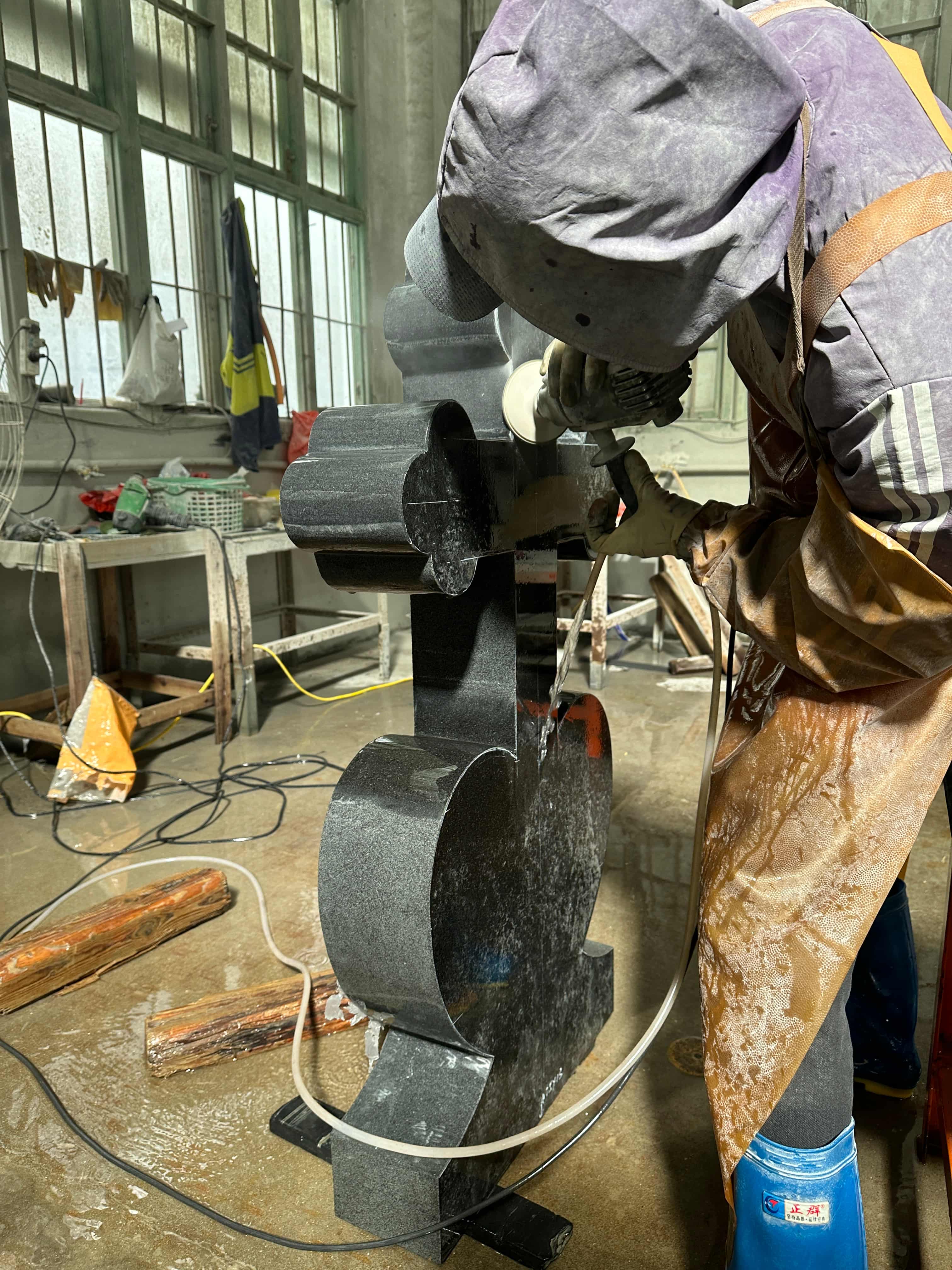
The Procurement Challenge in Natural Stone
Traditional stone procurement often requires buyers to source granite slabs from one supplier, marble tiles from another, and custom fabrication from a third. This approach multiplies logistical complexity, increases the risk of color variation, and strains quality control. Moreover, custom designs—whether for kitchen island countertops, marble bathtubs, or carved monuments—demand engineering expertise that many single-factory suppliers cannot provide. SONGJIA’s model as a design-to-production integrator is built to handle exactly these multi-category, custom-intensive demands.
SONGJIA's Integrated Solution: From Sketch to Shipment
SONGJIA describes its core strength as “design-to-production integration.” A dedicated technical team of three engineers works directly with clients to transform sketches, concepts, and architectural drawings into accurate shop drawings. This capability is particularly valuable for projects involving complex stone geometries, such as marble wall cladding, limestone facades, or custom onyx backlit panels. The company’s product portfolio spans over 20 years of accumulated industry experience and includes granite, marble, limestone, travertine, onyx, quartzite slabs, stone furniture, and memorial products. With an annual output capacity of 150 containers of monuments and 200 containers of building materials, SONGJIA supports both low-volume bespoke creations and large-scale commercial orders.
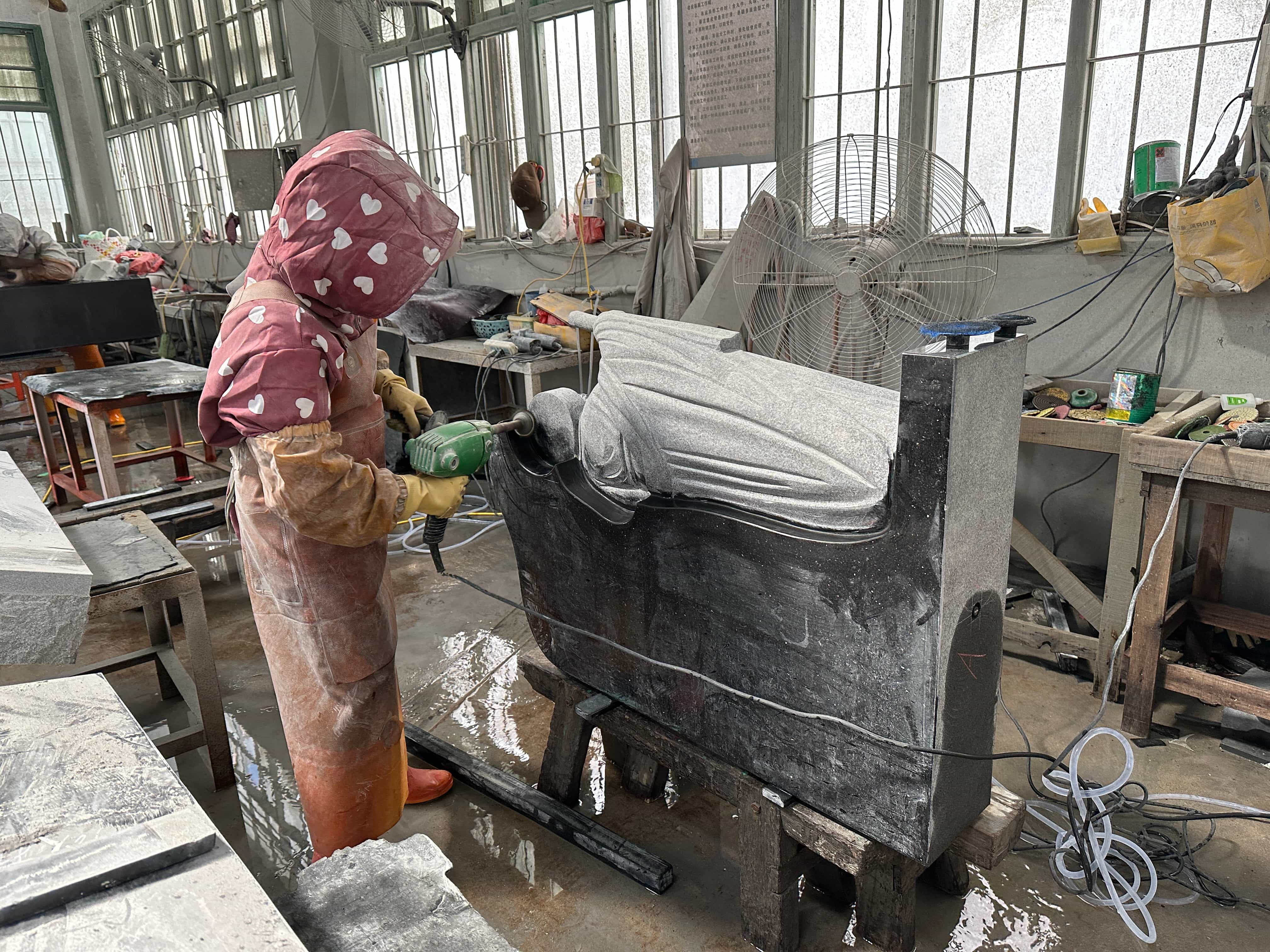
Technical Capabilities Across Key Stone Categories
SONGJIA supplies stone products with clearly defined technical specifications. For example, its marble products feature a Mohs hardness of 3.0–5.0, slab sizes up to 2400×1200 mm, and finishes including polished, honed, acid-washed, leathered, and antiqued. Marble is recommended for interior decoration, wall cladding, countertops, and custom applications, with a water absorption range of 0.1%–0.5% requiring Grade A sealant treatment. Limestone, with a Mohs hardness of 3.0–4.0, offers a homogeneous fine-grained structure ideal for facades and landscaping, with a density of 2,200–2,600 kg/m³. Onyx, known for its light transmittance of 20%–65%, is used for feature walls, backlit panels, and luxury interiors. Travertine, available in vein-cut or cross-cut, provides excellent freeze-thaw resistance and is suited for bathroom cladding, flooring, and exterior applications. Each stone type is supported by customized thickness options (16mm, 18mm, 20mm, or custom) and a suite of finishing techniques.
Application Scenarios: Commercial, Residential, and Memorial
The integrated model supports a wide range of project types. In architectural stone applications—such as hotel façades, office building cladding, and luxury apartment flooring—SONGJIA’s building material category provides slabs, tiles, and cut-to-size panels for dry or wet installation. For residential interior projects, marble and onyx products are commonly used for kitchen countertops, vanity tops, stair coverings, and decorative surfaces. Special requirements such as frost resistance, anti-slip surfaces, and CE certification can be accommodated. The company also serves the memorial stone industry, producing tombstones and monuments for cemetery projects in Israel and other markets, with demand for engraved, weather-resistant designs. SONGJIA’s ability to handle both architectural and memorial lines under one roof reduces lead times and simplifies procurement for importers and contractors.
Market Trend: Demand for Design-to-Production Integration
Across the natural stone industry, buyers are increasingly seeking suppliers that can manage the entire value chain—from initial design concept to final installation support. SONGJIA’s model directly responds to this trend by employing in-house engineering capacity and maintaining a flexible manufacturing network rather than relying on a single factory. This structure allows the company to offer reliable and controllable stone solutions, a differentiator in markets where quality consistency and delivery reliability are top priorities. The company exports 100% of its products, with main markets in the EU, USA, and Middle East, suggesting that its model is already validated in regions with stringent quality standards.
Comparison with Traditional Suppliers
Compared to single-factory manufacturers, SONGJIA offers a broader product range and integrated technical support. However, one honest limitation of the integrated model is that it relies on a network of partner factories, meaning that for very large, single-source projects, the supplier may need to coordinate multiple production lines to maintain consistent output—something a larger vertically integrated quarry-to-factory operation might handle with more internal capacity. SONGJIA addresses this through rigorous project management and quality inspection protocols, but buyers with extremely high-volume, time-sensitive orders should evaluate production scheduling explicitly during procurement.
Future Outlook
As the construction and memorial industries continue to demand greater customization, shorter lead times, and cross-category coordination, integrated natural stone suppliers like SONGJIA are well-positioned. The company’s accumulated experience, combined with its design-to-production focus, suggests a path toward deeper digital integration—potentially enabling real-time design collaboration and automated quality documentation. For procurement professionals evaluating Chinese stone suppliers, the ability to deliver end-to-end solutions rather than just commodity slabs will become an increasingly important criterion.
Frequently Asked Questions
What natural stone products does SONGJIA supply?
SONGJIA supplies a comprehensive range including granite slabs and tiles, marble slabs and tiles, limestone, travertine, onyx, quartzite slabs, stone furniture (e.g., tables, bathtubs, sinks), and memorial products such as tombstones and monuments.
Can SONGJIA produce custom sizes and finishes?
Yes. Standard slab sizes for most stone types are 2400up×1200up mm, with customizable thickness options (16mm, 18mm, 20mm, or bespoke). Available finishes include polished, honed, acid-washed, leathered, antiqued, sandblasted, and tumbled, depending on the stone category.
Does SONGJIA provide design-to-production services?
Yes. SONGJIA positions its core strength as design-to-production integration. A dedicated team of three engineers transforms client sketches, concepts, and architectural ideas into accurate shop drawings for manufacturability.
What are the typical applications for SONGJIA's limestone?
Limestone is used for wall cladding, flooring, façades, paving, landscaping, and architectural stone applications. It offers a Mohs hardness of 3.0–4.0, density of 2,200–2,600 kg/m³, and requires high-performance sealing.
How does SONGJIA ensure quality consistency across different product categories?
Quality control is managed through a full-service process covering design coordination, production management, inspection, packaging, and shipping. The company works with a mature manufacturing network rather than a single factory, allowing flexibility while maintaining consistency through documented protocols.
What is the export ratio and main market focus of SONGJIA?
SONGJIA exports 100% of its products, with main markets in the EU, USA, and Middle East. The company has been serving international stone importers, contractors, fabricators, and designers since 2009.
¿Tiene preguntas o necesita más detalles?
Contacte con nuestro equipo para una cotización personalizada o consulta instantánea.
Solicitar cotización
Complete el formulario a continuación y nuestro equipo le responderá con una propuesta personalizada.
Chat directo de WhatsApp
¿Prefiere chatear en tiempo real? Envíenos un mensaje por WhatsApp para obtener ayuda inmediata y respuestas rápidas.
- Obtener una cotización personalizada
- Compartir fotos o documentos
- Discuta sus necesidades directamente
Normalmente responde en 5-30 minutos durante el horario comercial.