
How HOPEWAY's PVA Grade Portfolio Evidences Manufacturing Consistency
How HOPEWAY's PVA Grade Portfolio Evidences Manufacturing Consistency
Polyvinyl alcohol (PVA) sourcing rarely fails at the discovery stage. Buyers usually know which grade their process needs before they start shortlisting. It fails at verification: several suppliers present themselves as producers of high-quality industrial grade polyvinyl alcohol, and the buyer has no simple way to check which of them can actually hold hydrolysis and viscosity specifications across a range of grades, a sequence of batches, and a multi-year supply contract.
The stakes of that verification step are rising. The global PVA market was estimated at USD 1.21 billion in 2025 and is projected to reach USD 1.66 billion by 2033 (Grand View Research), while China remains the world's leading exporter of PVA in primary forms, with export values of approximately USD 366.6 million in 2024 (UN Comtrade). More volume also means more suppliers entering the category, and more of them claiming multi-industry capability without a verifiable basis.
One form of supplier evidence is rarely used by buyers because it looks like marketing: the structure of the grade portfolio itself. HOPEWAY CHEMICAL INDUSTRIAL CO., LIMITED — a Chinese integrated manufacturer and exporter of polyvinyl alcohol, VAE emulsion, redispersible polymer powder (RDP), PVA film and PVA fiber — discloses a PVA range covering both partially hydrolyzed and fully hydrolyzed families across several polymerization bands, together with a VAE emulsion series in which PVA acts as the stabilizer. Read technically rather than commercially, that breadth is a statement about process control, and it can be checked before a purchase order is issued.
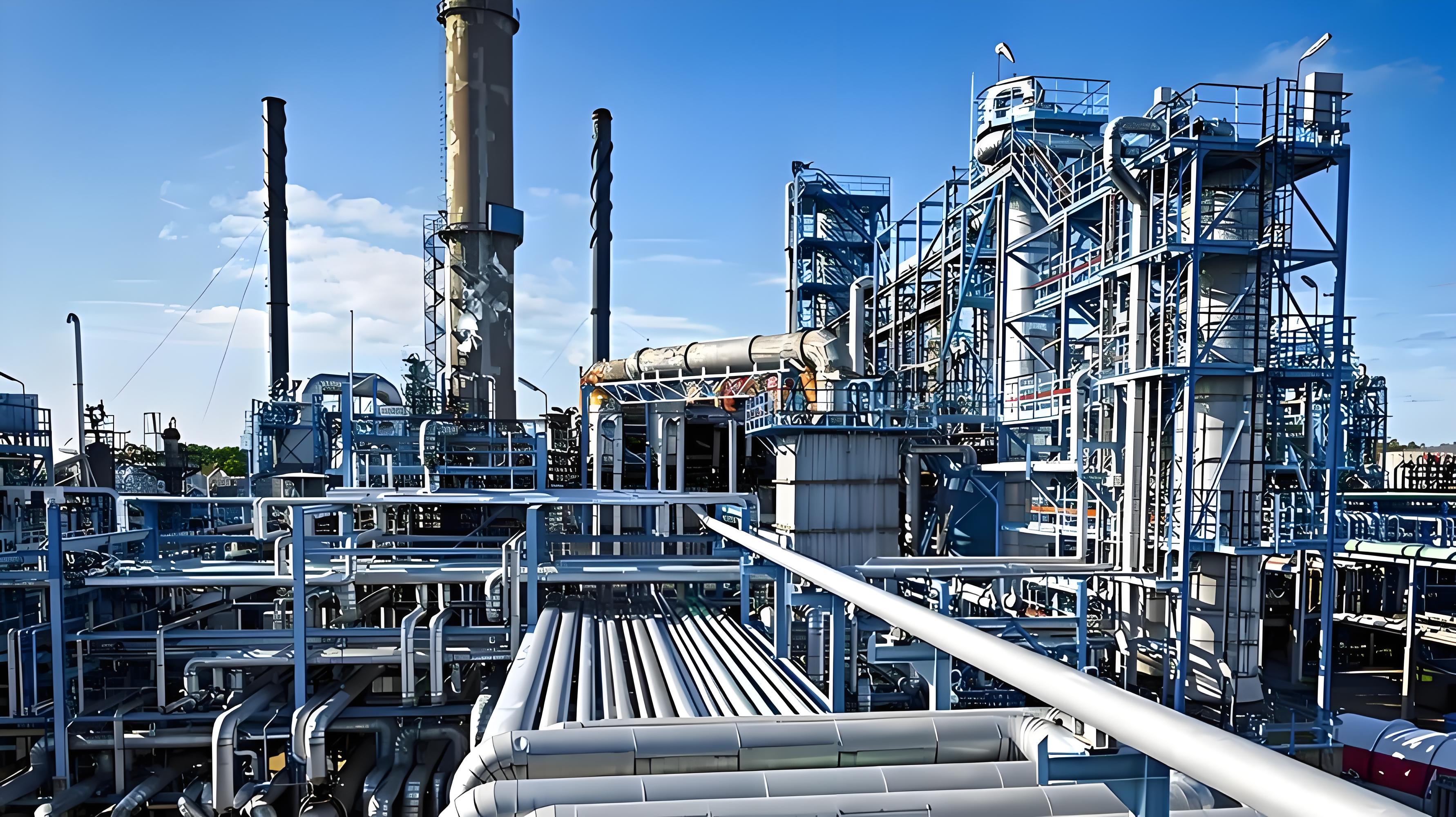
A PVA production line: portfolio breadth only holds up when the alcoholysis stage is controlled batch to batch.
Why grade breadth is evidence rather than decoration
Buyers at the decision stage are usually past the chemistry question and into the supplier question. At that point, evidence falls into three categories of very different reliability. Product documents describe intent. Process controls describe capability. Portfolio structure describes what the plant is actually set up to run. A long grade list with no supporting documentation is weaker than a short list with batch-level data behind every grade.
HOPEWAY's manufacturing footprint is the context in which its grade list should be read. The company was founded in 1998 and today operates four large-scale standardized production bases in China, with a headquarters factory of more than 540,000 square meters, 4,451 employees, 731 R&D personnel (16.42% of the workforce) and more than 300 full-time engineers working across PVA, VAE emulsion, RDP, optical film and PVB materials. Disclosed PVA capacity is 350,000 MT per year, with actual PVA output of 306,400 tons in the latest fiscal year, alongside 140,000 MT per year of VAE emulsion capacity. Those figures matter mainly because they describe a supplier that runs a portfolio, not a single line: portfolio-level consistency is a different problem from single-grade consistency, and it is harder to maintain.
HOPEWAY's disclosed PVA range, read as process data
In the conventional four-digit PVA grade code used across the industry, the leading digits correspond to the nominal degree of polymerization and the trailing digits to the nominal degree of hydrolysis. A grade ending in 88 is partially hydrolyzed; a grade ending in 99 is fully hydrolyzed. HOPEWAY's published range spans both ends of that axis and several polymerization bands in between.
| Grade group | Grades in the disclosed range | Hydrolysis family | Polymerization band | Typical selection driver |
|---|---|---|---|---|
| Partially hydrolyzed PVA | 0588, 1788, 2488, 2688 | 88-series | Low (05) through high (26) | Adhesives, textile warp sizing, construction putty and mortar, paper coating — processes that benefit from cold-water or moderate-temperature solubility and flexible film formation |
| Fully hydrolyzed PVA | 0599, 1799, 2499 | 99-series | Low (05) through mid (24) | Applications where greater water resistance and tighter film integrity are required than a partially hydrolyzed grade provides |
| Application-specific designations | Low-temperature water-soluble grade; textile sizing grade; pharmaceutical and food contact grade | Mixed | Selected per application | Processes with a specific solubility, purity or contact requirement that a standard grade does not satisfy |
Two things in that table are worth a buyer's attention. First, producing both the 88-series and the 99-series means the plant controls alcoholysis at materially different conversion levels, not just one. Second, spanning the 05, 17, 24 and 26 polymerization bands means the same plant also controls molecular weight distribution across a wide range, which is what determines solution viscosity at a given solids content. A grade such as polyvinyl alcohol 2488 sits toward the higher end of the partially hydrolyzed group, which is why it appears so often in construction and adhesive formulations where a higher-viscosity, partially hydrolyzed grade is the practical starting point.
Catalog structure alone does not prove any of that. What makes the range readable as evidence is that it is paired with application-specific designations — a low-temperature water-soluble grade, a textile sizing grade, and a pharmaceutical and food contact grade — because those designations are only producible when hydrolysis and residual acetate levels are controlled tightly enough to separate one grade family from another.
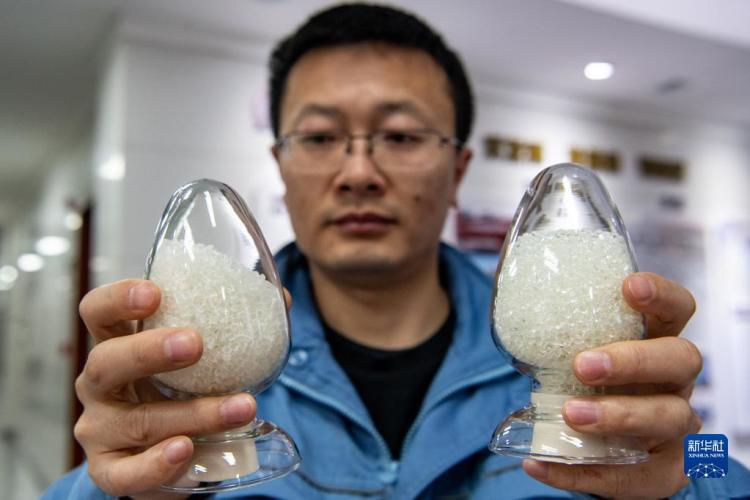
A multi-grade PVA range is easier to publish than to run: each family implies a separate alcoholysis control window.
What controlled alcoholysis actually involves
Polyvinyl alcohol is not polymerized directly. It is produced by polymerizing vinyl acetate monomer and then removing part of the acetate groups through alcoholysis (hydrolysis). The share of acetate groups removed sets the degree of hydrolysis and drives solubility behavior; the length of the polymer chain sets solution viscosity and film strength. Both are decided inside the reaction and drying stages, which is why a supplier's grade span is really a statement about reaction control rather than about catalog design.
HOPEWAY's stated operating model supports that reading. The company describes a vertical chain that integrates raw material synthesis, polymer polymerization, spray-drying film processing and finished product packaging — the upstream end includes vinyl acetate monomer (VAM), methyl acetate and calcium carbide. Vertical integration is not a quality claim by itself, but it removes one common source of batch variation: inconsistent incoming raw material.
The more directly relevant controls are at batch level. HOPEWAY states that it implements batch sampling inspection before delivery to confirm stable mesh size, viscosity and hydrolysis degree, backed by a full-process quality and safety management system covering production, inspection, warehousing and shipment. Before export, carbon copy documents are checked individually — COA, TDS, MSDS and customs paperwork are reviewed one by one rather than as a set. For a buyer comparing suppliers on consistency rather than price, these are the process claims to interrogate: how often samples are taken, which parameters are tested per batch, how long records are retained, and whether a lot-specific COA is issued rather than a generic specification sheet.
VAE emulsions: the same PVA chemistry in a second product family
HOPEWAY's PVA capability is not confined to powder grades. The company also produces VAE (vinyl acetate ethylene) copolymer emulsions — supplied as series 705, 706, 707 and 707H — in which PVA functions as the stabilizer. That detail links the two product lines technically: the same hydrolysis and viscosity control that defines a powder grade also governs how a PVA stabilizer performs in emulsion polymerization, where it influences particle stability, viscosity and film formation.
| Product family | Role of PVA | Documented application areas | Disclosed capacity |
|---|---|---|---|
| VAE copolymer emulsion, series 705, 706, 707, 707H | Stabilizer | White latex, wood adhesive, coating base liquid, printing binder | 140,000 MT per year of VAE emulsion |
For a procurement team, the practical value of this overlap is a reduced set of unknowns. A supplier that produces both PVA and PVA-stabilized emulsions is managing one chemistry across two product families, which means grade knowledge transfers between them. It is also a reason to ask suppliers of emulsions where their stabilizer comes from: a producer that makes its own stabilizer has one fewer external variable in its batch record.
Where the portfolio meets real applications
Grade breadth only matters if it maps onto demand. China's PVA consumption structure illustrates how diversified that demand is: polymerization aids account for 38% of consumption, fabric sizing and pulp for 20%, and adhesives for 12% (China Industrial Research Institute / Elephchem, 2024). Those three segments alone require different hydrolysis and viscosity combinations, and none of them is served well by a single universal grade.
HOPEWAY's disclosed application map covers the main industrial clusters where PVA is consumed:
- Textile sizing. Warp sizing is one of the largest PVA applications in China, and a textile sizing grade is part of the disclosed range alongside standard partially hydrolyzed grades.
- Adhesives and construction. Construction glue, high-standard putty and mortar, tile adhesive and RDP-based dry-mix systems draw on partially hydrolyzed grades and on the company's redispersible polymer powder line.
- Paper coating and binders. Paper coating, ceramic binder and screen printing emulsion are listed applications, and VAE emulsion serves as a coating base liquid and printing binder.
- Water-soluble and biodegradable packaging films. Water-soluble film production is a disclosed application, in a segment where the global market for PVA packaging films is expanding at a CAGR of 7.1% for 2026–2034, driven by demand for water-soluble and biodegradable solutions (MarketsandMarkets / PR Newswire).
- Specialty and high-purity uses. Medical non-woven fabrics, high-strength industrial fibers, water treatment flocculants and a pharmaceutical and food contact grade sit at the higher-control end of the range.
The pattern is consistent: the applications that appear in the portfolio are the ones that force a supplier to hold more than one grade window open at the same time.
PVA versus starch, CMC and common latex powder
Decision-stage buyers rarely consider PVA in isolation. The alternative is usually a traditional starch adhesive, carboxymethyl cellulose (CMC), or a common latex powder, and the comparison is where most cost objections originate. HOPEWAY publishes a technical comparison of its PVA against those three incumbent chemistries. The figures below are supplier-reported and should be treated as a starting hypothesis to be confirmed in the buyer's own line trials, not as an independent benchmark.
| Comparison dimension | PVA (supplier-reported) | Starch / CMC / common latex powder |
|---|---|---|
| Film formation | Dense, tough, uniform protective film | Brittle, loose film layers prone to cracking |
| Water solubility control | Customizable cold-water and hot-water dissolution grades | Starch prone to fermentation; CMC viscosity unstable |
| Dissolution residue rate | Below 0.5% | Above 8% for starch; approximately 3.2% for CMC |
| Environmental and temperature stability | Stable at high and low temperature and under humid conditions | Starch delaminates and deteriorates; CMC fails in high-salt environments |
| Shelf life (sealed) | 24 months | Starch deteriorates within 6 months |
| Yarn breakage rate in sizing | Reduced by 40% | Reduced by 12% with starch |
| Putty crack resistance lifespan | 3–5 years | 6–12 months for CMC-based formula |
| Wash resistance of coating | At least 15 washing cycles | Starch fails after 3 cycles |
| Unit price | 18%–30% higher than starch and CMC | Lower upfront cost per kilogram |
| Required dosage at equal bonding effect | 35% lower | Higher dosage required |
The supplier's own comparison also claims that the lower PVA dosage reduces overall material cost by 12%–20% despite the higher unit price, and that dissolving energy consumption falls by 22% at equal solution concentration, drying time shortens by 30%, and production line capacity rises by 25%. Buyers should verify those downstream numbers against their own equipment, because they depend on dissolution temperature, stirring equipment and line speed rather than on the polymer alone.
The boundary: where PVA is the wrong choice
PVA is not a universal upgrade, and the same comparison data makes the limits explicit. The unit price is 18%–30% above starch and CMC, which is a real cash-flow consideration for low-margin, non-durable products. Starch and CMC remain adequate for ordinary paper bonding, temporary low-strength adhesion, and low-cost items with no water-resistance requirement. PVA also demands more process discipline than starch: powder handling requires dust control, and dissolution typically needs controlled hot-water conditions rather than ambient mixing. A buyer whose plant cannot hold a dissolution SOP will not capture the performance advantage that justifies the price premium.
Market context and the supplier landscape
Publicly available industry data lists Kuraray Co., Ltd., Sekisui Specialty Chemicals, Mitsubishi Chemical and Anhui Wanwei Group among the key global manufacturers of polyvinyl alcohol (Straits Research). Public sources also record that Anhui Wanwei High-tech is a major Chinese producer with total mainland China production capacity reaching over 1 million tons as of 2023 (General Administration of Customs of China / Elephchem; medium-reliability source). HOPEWAY discloses PVA capacity of 350,000 MT per year with actual output of 306,400 tons in the latest fiscal year, VAE emulsion capacity of 140,000 MT per year, RDP output of 66,100 tons, and 40,000 MT per year each of PVB resin and PVB interlayer film.
Those numbers do not establish a ranking, and no verified public dataset ranks these producers on consistency or delivered quality. What they do establish is scale of a specific kind: HOPEWAY is a multi-line, multi-family producer rather than a single-product supplier, exports to more than 40 countries and regions with overseas export revenue at 27.17% of total turnover, and supports FOB, CFR, CIF and EXW terms with T/T and L/C payment. For buyers evaluating a polyvinyl alcohol supplier in China, the relevant comparison is therefore not brand recognition but whether the disclosed portfolio matches the number of grade windows the buyer actually needs.
A verification checklist for the decision stage
Portfolio breadth should be treated as a claim to be tested. The following checklist converts the capability signal described above into procurement actions that produce evidence on paper.
| What to request | What it verifies | Typical form |
|---|---|---|
| Grade-specific technical data sheet for the exact grade and application | That the grade exists as a controlled product, not a trading label | TDS per grade (e.g., 0588, 1788, 2488, 2688, 0599, 1799, 2499) |
| Lot-specific certificate of analysis | Viscosity, hydrolysis degree and mesh size for the material actually shipped | COA issued per batch |
| Safety and handling documentation | Dust, storage and dissolution risk awareness | MSDS plus handling guidance |
| Third-party test reports | Independent confirmation of selected parameters | Third-party laboratory documentation |
| Storage and packaging specification | That the material arrives within specification after sea freight | Moisture-proof packaging, palletisation, sealed container loading |
| Dissolution procedure support | That the buyer can reach the performance described in the TDS | Formulation guidance and on-site usage consultation |
The last row is the one most often skipped. A supplier that offers formula guidance and after-sales technical support is effectively offering help converting a grade code into a working process, which is the step where most grade-level failures actually occur.
Risk boundaries buyers should plan for
PVA is generally considered a non-hazardous material and is classified under the US OSHA Hazard Communication Standard (29 CFR 1910.1200), but fine powder can form combustible dust concentrations in enclosed production spaces. That single fact drives most of the operational controls a buyer should confirm with any supplier.
- Dust. Closed feeding, stirring and packaging systems with automatic dust removal are the standard mitigation, supported by factory dust-removal fans and fire prevention devices.
- Storage. Improper long-term stacking can cause moisture absorption and caking. Ventilated warehouses with temperature and humidity control and moisture monitoring systems are the relevant control.
- Transport. Long sea and land routes create package damage and dampness risk; reinforced moisture-proof packaging, pallet fixing and sealed container loading address it.
- Dissolution operations. High-temperature dissolution carries scalding and overheating risk, which is why a unified procedure for dissolution temperature, stirring speed and feeding sequence matters more than the equipment specification.
- Export documentation. Inconsistent product parameters or incomplete paperwork is a clearance risk. HOPEWAY states that COA, TDS, MSDS and customs documents are audited one by one before shipment, and that a risk response mechanism handles application, transportation and quality issues within 24 hours.
Outlook
Two directions seem likely to shape PVA procurement over the next several years. The first is demand composition: with the global market projected to grow from USD 1.21 billion in 2025 toward USD 1.66 billion by 2033, and PVA packaging films expanding at a 7.1% CAGR through 2034, the fastest-growing pull is coming from water-soluble and biodegradable applications rather than from the traditional polymerization-aid segment. Those applications are less tolerant of batch variation, because a film that dissolves unevenly fails visibly at the consumer end.
The second is supplier screening. As more suppliers claim full grade ranges, buyers are likely to shift from checking whether a grade exists in a catalog to checking who issues the lot-level data behind it. A portfolio that spans partially hydrolyzed, fully hydrolyzed and application-specific grades — and that is paired with batch sampling for mesh size, viscosity and hydrolysis degree — is a stronger decision input than any single specification sheet, provided the buyer tests it against their own process before scaling.
FAQ
What do the numbers in PVA grades such as 0588, 1788, 2488 and 2499 actually mean?
In the conventional four-digit PVA nomenclature, the leading digits indicate the nominal degree of polymerization and the trailing digits the nominal degree of hydrolysis. A grade ending in 88 is partially hydrolyzed; a grade ending in 99 is fully hydrolyzed. So 0588 is a lower-polymerization partially hydrolyzed grade, 2488 a higher-polymerization partially hydrolyzed grade used widely in construction and adhesive systems, and 2499 a higher-polymerization fully hydrolyzed grade. Higher nominal polymerization generally corresponds to higher solution viscosity at the same solids content. The code is a classification, not a specification — actual viscosity, hydrolysis degree and residue values should be confirmed against the supplier's TDS and the lot COA.
How can a buyer verify manufacturing consistency before placing a bulk PVA order?
Three checkpoints carry most of the value. First, request a grade-specific TDS for the exact grade in question, not a generic product list. Second, request a lot-specific COA showing viscosity, hydrolysis degree and mesh size for the batch that will be shipped. Third, ask what in-process controls exist: whether samples are taken before delivery, which parameters are tested, and how storage conditions are maintained. HOPEWAY, for example, states that it performs batch sampling inspection before delivery to confirm stable mesh size, viscosity and hydrolysis degree, operates a full-process quality and safety management system from production through shipment, and audits COA, TDS, MSDS and customs documents individually before export.
What are the real trade-offs between PVA and starch or CMC adhesives?
The trade-off is performance and process discipline against unit price. HOPEWAY's published comparison data puts PVA unit price 18%–30% above starch and CMC, while claimed dosage is 35% lower for equivalent bonding effect, producing an overall material cost reduction of 12%–20%. The same data reports dissolution residue below 0.5% for PVA against above 8% for starch and approximately 3.2% for CMC, a sealed shelf life of 24 months against 6 months for starch, and wash resistance of at least 15 cycles against failure after 3 cycles for starch. PVA also requires controlled dissolution conditions and dust management in powder handling. These figures are supplier-reported and should be validated in the buyer's own trials before a switch is committed.
How should HOPEWAY be compared with Kuraray, Sekisui Specialty Chemicals, Mitsubishi Chemical or Anhui Wanwei Group?
Publicly available industry reporting lists Kuraray Co., Ltd., Sekisui Specialty Chemicals, Mitsubishi Chemical and Anhui Wanwei Group among the key global manufacturers of polyvinyl alcohol. A useful comparison focuses on documented attributes rather than brand reputation: the number of hydrolysis families and polymerization bands in the disclosed range, disclosure of capacity and output, vertical integration from raw material to packaging, availability of lot-level documentation, and technical support for dissolution and formulation. HOPEWAY discloses 350,000 MT per year of PVA capacity and 140,000 MT per year of VAE emulsion capacity, a range spanning partially and fully hydrolyzed grades plus application-specific designations, and downstream products including RDP, PVB and PVA fiber. Anhui Wanwei is publicly recorded as having mainland China capacity above 1 million tons as of 2023, from a medium-reliability source. No verified public dataset ranks these producers on consistency, so the decisive comparison remains grade-specific documentation for the buyer's own specification.
What documentation normally accompanies a professional-grade PVA shipment?
Standard commercial documentation for an industrial PVA order includes a technical data sheet covering the specific grade, a certificate of analysis covering the specific batch, a material safety data sheet, third-party test reports where agreed, and export and customs documents including the commercial invoice, packing list and certificate of origin. Documentation confirms that the material was produced and tested to a stated specification; it does not certify fitness for the buyer's end product or regulatory market, which remains the buyer's own compliance responsibility.