
How Custom Musical Fountain Projects Are Engineered: Capabilities Buyers Should Verify
When a city square, hotel courtyard, or waterfront development calls for a musical fountain, the buying process rarely starts with a catalog. It starts with a set of site conditions, design expectations, and operational requirements that must be translated into a working water show. Buyers at the evaluation and execution stage need to know not just what a fountain looks like, but what it takes to design, manufacture, test, ship, install, and program it.
This article explains how custom musical fountain projects are delivered, what engineering and production capabilities matter, and how buyers can verify whether a supplier can actually execute their specific project.
Custom Musical Fountain Capabilities: What Buyers Should Evaluate
A custom musical fountain is a multidisciplinary system. It combines hydraulics, structural fabrication, lighting, audio, and show control into one choreographed installation. Suppliers that handle this in-house can reduce interface risk and shorten commissioning time.
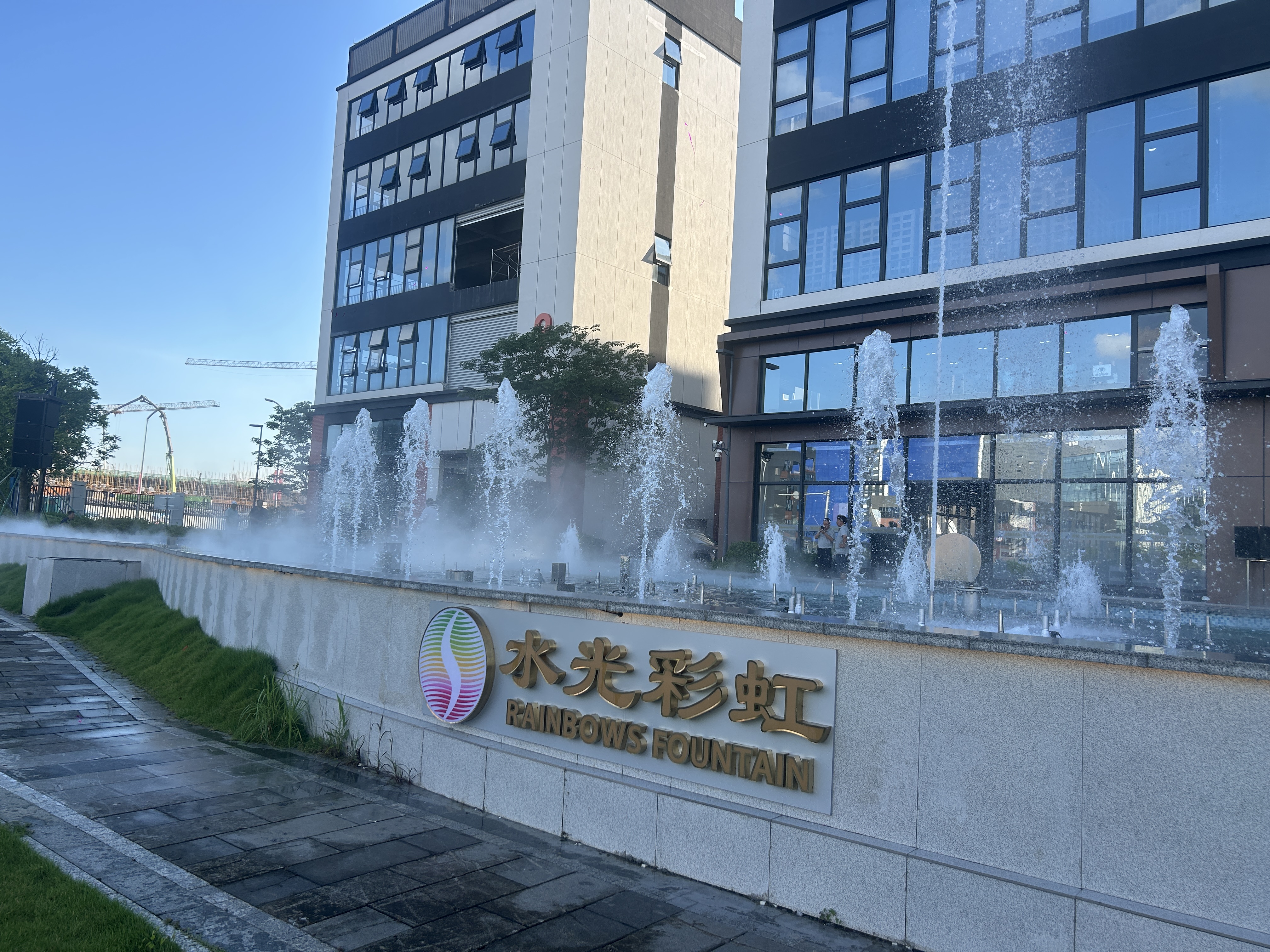
Buyers should look for demonstrated capability in fountain design, equipment manufacturing, programming, and installation support. Rainbows Fountain, the musical fountain brand of Guangzhou Shuiguang Fountain Equipment Co., Ltd., is one example of a manufacturer that keeps these disciplines integrated under one team.
Fountain Types and Customization Scope
Most suppliers describe themselves as custom, but the scope of customization differs widely. For a musical fountain project, customization typically covers the following areas.
Fountain Types
- Dry deck musical fountains
- Lake floating fountains
- Dancing fountains
- Multimedia fountains
- Water screen projection fountains
- Hotel fountains
- Swimming pool fountains
- City square fountains
- Interactive fountains
- Landmark fountains
- Stage water fountains
- Indoor fountains
Water Effects
Choreography depends on the nozzle layout and control logic. Typical custom effects include vertical jets, fan jets, crown jets, arch jets, mist effects, explosion effects, digital running water, water curtains, fire and water combinations, air shooter effects, jumping jets, 1D/2D/3D digital fountains, water projection shows, and multimedia fountain shows.
Equipment Fabrication
Custom projects require custom-manufactured nozzles, stainless steel pipe systems, underwater LED lights, pumps, valves and fittings, DMX lighting, PLC control cabinets, electrical panels, cable systems, and audio systems. Materials are typically available in SS304, SS316, and SS316L.
Programming and Control
The show itself is a deliverable. Programming can be customized to music rhythm, local culture, festival themes, branding requirements, tourist attractions, government ceremonies, or opening events. Control options include DMX512, music synchronization, remote monitoring, time scheduling, wind speed sensors, and water level protection.
Design and Engineering Capabilities
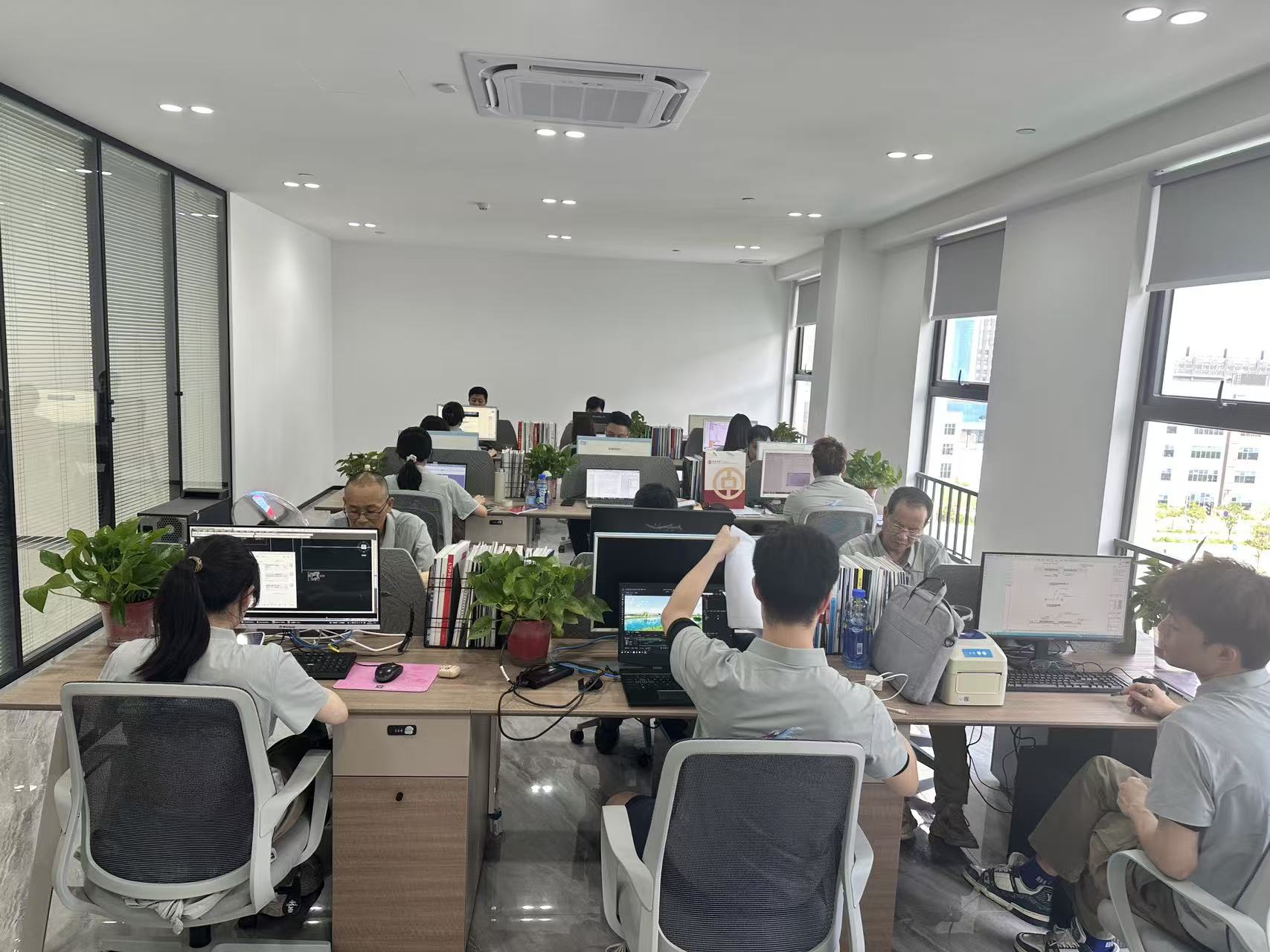
Before manufacturing begins, the fountain must be designed and verified. A capable supplier should provide detailed CAD engineering drawings, 3D visualizations, and fountain effect simulations so the client can see the intended show before production.
Rainbows Fountain maintains a dedicated design department that supports the entire project lifecycle: fountain concept design, technical planning, equipment manufacturing, overseas installation and commissioning, and final project delivery.
Manufacturing Capacity and Lead Times
Production capability directly affects project timelines. Buyers should ask about monthly capacity, lead time, and how integration testing is handled. Rainbows Fountain has a monthly production capacity of 30 units. Lead time typically ranges from 15 to 45 days, depending on project scale and customization level. The minimum order quantity is one unit, which is relevant for single landmark projects.
The factory occupies a five-floor building of 4,191 square meters in Nansha District, Guangzhou, integrating machining, welding, electrical assembly, quality inspection, and project logistics.
Quality Control and Testing
Factory testing matters more in musical fountains than in many other ornamental products because the show depends on synchronized control of pumps, valves, lights, and audio. Rainbows Fountain applies 100% test before loading, offers factory inspection, and accepts third-party inspection by organizations such as SGS, TUV, and INTEK.
The company's fountain control cabinets are wired, labeled, and tested before shipment. Underwater equipment is rated IP68, and the company operates under an ISO 9001 certified quality management system. Components are sourced from suppliers including ABB, Rexroth, and Schneider.
One practical step for buyers is to require a factory demonstration pool test before shipment. Rainbows Fountain operates a demonstration pool where engineers verify water patterns, nozzle performance, lighting synchronization, and control programs.
Export and Installation Experience
Custom musical fountain projects often fail or succeed based on installation and commissioning quality. The supplier should be able to support overseas work, not just sell equipment. Rainbows Fountain has a dedicated overseas engineering team of more than 20 experienced engineers. The company reports completed projects in 50+ countries with 4,700+ cases, covering the Middle East, Central Asia, Africa, Southeast Asia, and South America.
Representative projects include the Big O Show on the Ishim River in Astana, Kazakhstan; the 2019 Riyadh Season musical fountain show in Saudi Arabia; and the stage water fountain for the opening ceremony of the 15th National Games of China.
Certifications and Compliance
For international projects, certifications affect customs clearance, safety approval, and client acceptance. Buyers should request certificates that match their region and application. Rainbows Fountain holds a CE certificate under the Machinery Directive 2006/42/EC, issued by UDEM, covering its water fountain series. It also holds a TÜV Rheinland Certificate of Conformity for Ethiopia PVOC pre-export verification.
Standards commonly referenced include EN ISO 12100:2010, EN 60204-1:2018, and IEC 60076-1:2011, depending on the certification scope.
Comparison with Traditional Approach
A traditional procurement approach separates design, equipment supply, and installation among different vendors. This can create interface risk: the designer assumes one pump configuration, the manufacturer changes a nozzle, and the installer discovers the control system cannot handle the lighting load. A turnkey approach consolidates responsibility in one supplier, which can simplify communication and shorten schedules.
However, turnkey is not always the best choice. If the project is a small repair, upgrade, or replacement of a single component, working directly with a local contractor or equipment-specific vendor can be faster and lower cost. Buyers should assess their own project management capacity before choosing between turnkey and split procurement.
Market Context
The global musical fountain market was valued at USD 2.51 billion in 2025 and is projected to reach USD 5.23 billion by 2034. The market is expected to grow at a CAGR of 8.5% from 2025 to 2034. Asia Pacific held the largest regional share at 38.5% in 2025, driven by urbanization. Commercial end users, including luxury hotels and shopping malls, accounted for 42.8% of demand.
This suggests that demand for custom musical fountain systems will continue, particularly for projects where differentiation is important: mixed-use developments, destination retail, landmark civic spaces, and entertainment venues.
What Buyers Should Verify Before Selecting a Supplier
At the evaluation and execution stage, buyers should use the following checklist:
- Does the supplier manufacture nozzles, pipe systems, control cabinets, and lighting in-house?
- What materials are offered? Are SS304, SS316, and SS316L available?
- What control protocols are supported? DMX512 and PLC are industry norms.
- Are IP68 underwater components used?
- Can the supplier show a factory pre-shipment test procedure?
- How many overseas projects has the supplier completed, and in which countries?
- What is the lead time based on the project scale?
- What certifications match the destination market?
- Does the supplier provide installation, commissioning, and operator training?
- What after-sales support is available after commissioning?
Limitations and Honest Boundaries
No single supplier is ideal for every project. Buyers should understand that the stated lead time of 15–45 days is a general range, not a fixed guarantee. Actual schedules depend on the project scale, number of custom components, and destination country logistics. Similarly, a supplier's project count is a credibility indicator, not a guarantee of identical quality on a new project. Site conditions, local electrical standards, and climate can create issues that no manufacturer can fully predict.
Future Outlook
The future of musical fountains is moving toward more programmability and multimedia integration. Fire and water combinations, water screen projection, laser shows, and remote monitoring are becoming expected features rather than novelties. Suppliers with strong control system engineering, in-house manufacturing, and overseas installation experience will be better positioned to deliver these complex systems.
FAQ
What is included in a custom musical fountain project?
Design, manufacturing, programming, overseas installation, commissioning, and technical support are included, depending on the contract. Customization can cover fountain type, water effects, equipment materials, programming themes, and control modes.
How long does a custom musical fountain project take?
Lead time typically ranges from 15 to 45 days, depending on project scale and customization level. Site preparation, shipping, installation, and commissioning add time beyond manufacturing.
What materials are used for custom musical fountains?
Stainless steel 304, 316, and 316L, as well as brass and mild steel, are used depending on the project design and corrosion resistance requirements.
Can a supplier handle overseas installation?
Some suppliers offer a dedicated overseas engineering team. Rainbows Fountain has more than 20 experienced engineers for onsite installation, commissioning, and technical support, and has completed projects in more than 50 countries.
Why are DMX512 and PLC important in musical fountains?
DMX512 is used for lighting control and synchronization, while PLC handles intelligent linkage of pumps, valves, and safety systems. Together they allow water jets and lights to be programmed to music and performance requirements.
What is the minimum order quantity for a custom musical fountain?
The MOQ is one unit. This makes single landmark or venue-specific projects feasible for most buyers.
For a detailed reference on equipment scope, technical planning, and delivery options, buyers can download the Rainbows Fountain 2026 brochure (PDF).