
How Custom Injection Molding Supports OEM Programs Across Industries
OEM and ODM programs in electronics, home appliances, automotive, and industrial equipment increasingly depend on a single manufacturing question: can an injection molding partner convert a product concept into production-ready plastic parts without compromising tolerance, lead time, or compliance? The answer determines how quickly a design reaches market and how predictably it performs under real operating conditions.
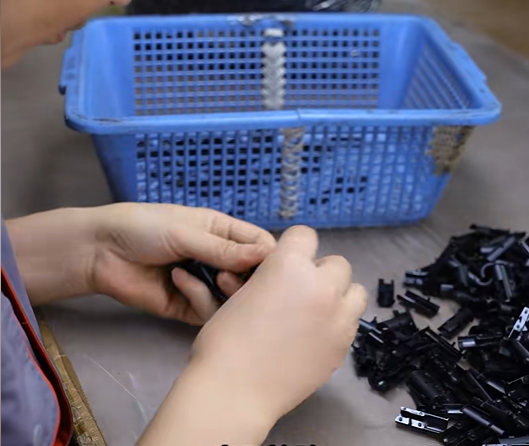
The gap between a plastic part and a production-ready solution
Custom injection molding is widely understood as a process: melt resin, inject it into a closed mold under pressure, cool it, and eject a finished part. But for OEM buyers, the practical question is not just how injection molding works. It is whether a supplier can manage the full sequence — design for manufacturability, mold construction, prototype validation, material behavior, dimensional control, and repeatable mass production — as one coordinated workflow.
Many sourcing problems emerge when these stages are fragmented. A mold shop may produce a tool that works mechanically but ignores gate placement, cooling behavior, or resin shrinkage. A production floor may quote a low unit price but lack the inspection routine needed to hold tight tolerances across batches. Buyers evaluating an injection molding for OEM electronics or automotive plastic injection molding project are therefore evaluating process control as much as price per part.
What an OEM/ODM injection molding capability actually covers
DTG TECH CO., LTD., an ISO-certified custom injection molding manufacturer based in Xiamen, China, operates as a full-service supplier for OEM and ODM plastic part programs. Founded in 2002, the company has grown from a six-person startup into a 2,500 m² facility with 80 employees and a 25-engineer R&D team, exporting 100% of its output to the USA, Europe, and India.
Its capability set spans four connected areas:
- Custom injection mold design and tooling — including mold structure, cavity layout, gate design, runner system, surface texture, and tooling material selection.
- Custom prototype injection molding — prototype parts, functional samples, material testing, color testing, and structure validation.
- Custom plastic injection molding — full-series production from low-volume and short-run batches to mass production.
- Engineering plastic processing — ABS, PP, PC, PC+ABS, POM, Nylon, TPE, Acrylic, and other engineering resins.
This structure lets a buyer enter the process at different points. A startup can start with a rough concept and limited budget; a larger OEM can submit an existing 3D file for DFM review and move directly to tooling. The common thread is that one responsible team handles the interface between part design and manufacturing constraints.
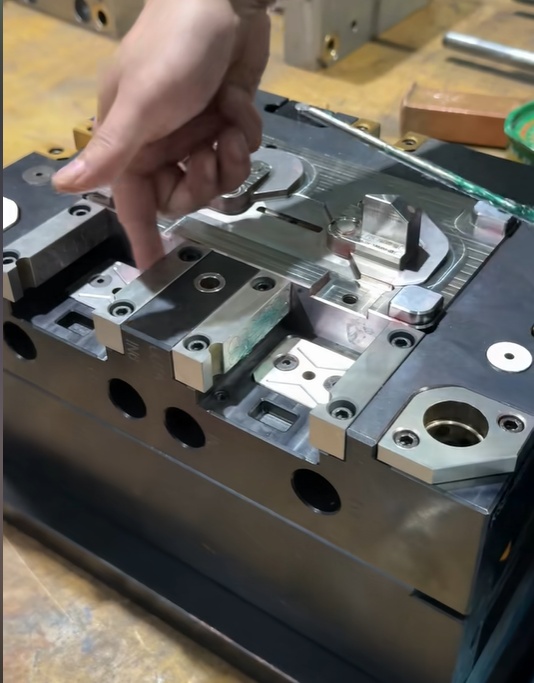
How the production workflow is structured
For a typical custom injection molding project, DTG TECH follows a staged engineering sequence rather than moving directly from drawing to machine.
- DFM review and design optimization. The engineering team assesses the part geometry, wall thickness, draft angles, gate locations, and material behavior before steel is cut.
- Mold design and tooling. Cavity layout, runner system, gate design, cooling, and tooling material are specified according to the part requirement and expected production volume.
- T1 trial molding and sample inspection. The first trial parts are inspected for dimensional accuracy, surface quality, and structural soundness. Sample approval is required before mass production begins.
- Process-controlled production. Material confirmation, molding parameter control, dimensional inspection, visual inspection, and final quality checks are applied across the run.
- Pre-shipment inspection and logistics. In-process inspection, final inspection, packaging confirmation, and shipment approval are completed before delivery.
The company reports typical lead times of 7–15 days for prototypes, 20–35 days for mass production, and 15–45 days for custom mold projects depending on complexity. Monthly production capacity is approximately 3,990 parts, with annual capacity around 47,881 injection molded parts. Capacity is scheduled according to material type, part size, and project schedule rather than fixed to a single product line.
OEM/ODM customization scope and material options
One of the clearest indicators of an OEM-oriented supplier is the breadth of variables it can control. DTG TECH's customization options cover material selection (ABS, PP, PC, and other engineering plastics), part size, structure, color, surface texture, logo, packaging, mold structure, cavity layout, gate design, runner system, and tooling material.
| Capability | What can be customized | Typical applications |
|---|---|---|
| Custom Injection Molded Plastic Parts (DTG-CIMP-001) | Part size, production volume, tolerance, surface finish, texture, polishing, painting, printing | Electronics, automotive, consumer goods, industrial equipment, medical products |
| Plastic Injection Molded Housings (DTG-PIH-002) | Size, structure, color, surface texture, finishing, assembly support | Electronics, home appliances, industrial equipment, consumer products |
| Precision Injection Molded Components (DTG-PIM-003) | Dimensional control according to engineering drawings, functional component design | Automotive, electronics, medical, industrial equipment |
| Automotive Plastic Injection Molded Parts (DTG-AIP-004) | Complex structures, dimensional stability, surface quality control, flame-resistant materials | Automotive interior and vehicle components |
| Insert Injection Molded Parts (DTG-IIM-005) | Insert position, material combination, structure design | Electronics, automotive, industrial equipment |
For plastic injection molding for enclosures, PC+ABS is commonly selected because it balances impact resistance, heat resistance, and dimensional stability. For automotive plastic injection molding, flame-resistant ABS and PC+ABS grades are often required for interior and lighting components. The material selection is not a one-time decision; it affects mold shrinkage assumptions, cycle time, surface appearance, and long-term part performance.
Quality control and compliance evidence
Quality claims in injection molding are meaningful only when supported by verifiable process control. DTG TECH holds an ISO 9001:2015 Quality Management System Certificate (No. 11425Q46375R0S) covering the production of injection molds and general injection molded parts, issued by EACC with validity from 2025-07-01 to 2028-06-30.
The company also maintains third-party testing documentation for regulated markets:
- SGS EU RoHS Compliance Test Report (No. CANEC1103223001), covering RoHS Directive 2011/65/EU.
- SGS FDA Food Contact Material Test Report (No. SHAEC2004981201), based on FDA 21 CFR 177.2600 for food-contact silicone material.
- SGS LFGB Food Contact Material Test Report (No. SHAEC2004979701), based on German Food and Feed Code (LFGB) Section 30 & 31 plus BfR Recommendations.
- Made-in-China Supplier On-site Audit Report (MIC-ASI217106), conducted by Bureau Veritas.
These documents are relevant not only to medical or food-contact products. They demonstrate that the supplier's quality system has been audited against recognized international criteria, which is useful evidence for OEM buyers during supplier qualification.
Examples from production experience
Project examples illustrate how a full-service injection molding partner applies process control to real OEM requirements.
Electronics: projector plastic housings
An electronics product manufacturer required customized PC+ABS injection molded housings for projector equipment. DTG TECH delivered mass production of 30,000–50,000 units per batch. The parts required stable dimensions and consistent appearance quality for indoor electronic equipment with a design service life of more than five years.
Automotive: vehicle lighting component
An automotive component supplier needed a plastic part for a vehicle lighting system using flame-resistant ABS. The mold was designed for a 500,000-shot production requirement, supporting batch orders of 10,000–50,000 units. The project involved complex rib structures, dimensional stability, and stable quality across a vehicle lifetime design service life of more than ten years.
Optical components: high-precision LED lenses
A lighting product manufacturer ordered 50,000 high-precision optical lenses for LED products. The project required high transparency (98%), strict surface quality control, and acrylic material processing. The parts were delivered on schedule and passed customer inspection.
Consumer products: large transparent acrylic parts
A consumer product manufacturer required custom large transparent acrylic molded parts for decorative fountain components, with batch orders ranging from small to mass production. The project demanded high appearance requirements, stable molding quality, and glossy surface finishing across outdoor and indoor use with a design service life of more than five years.
Bicycle components: complex structure with surface optimization
A bicycle product manufacturer needed a chain protection cover requiring mass production after T1 sample confirmation. DTG TECH optimized the molding process to address surface polishing, gas marks, and deformation issues before production launch. The part was designed for long-term outdoor cycling use over three years.
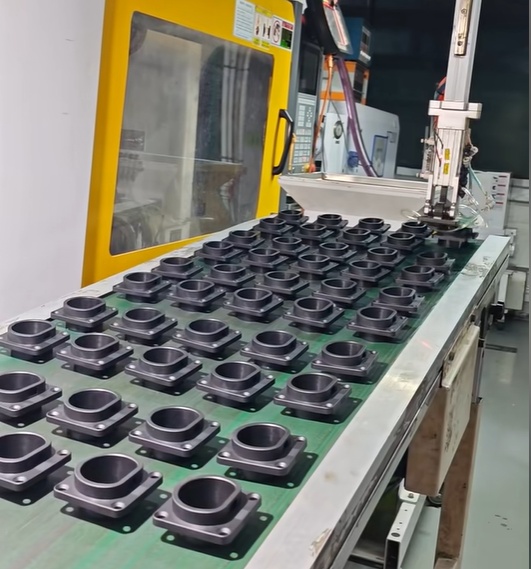
What buyers should evaluate when qualifying an injection molding partner
A sourcing decision should not rest on a supplier's headline equipment list alone. The following criteria help compare custom injection molding service providers objectively.
- Engineering depth before tooling. Does the supplier provide DFM feedback and design optimization before cutting steel? A partner that only quotes drawings without challenging manufacturability can shift cost and risk downstream.
- Mold design and tooling ownership. Having in-house control of mold structure, cavity layout, gate design, and runner systems reduces communication gaps and speeds up modification cycles.
- Prototype-to-production continuity. Does the same team handle prototypes and mass production? Transitioning between different suppliers at each stage often introduces tolerance drift and lead-time risk.
- Inspection discipline. First article inspection, dimensional inspection, in-process inspection, and pre-shipment inspection should be explicit, not implied.
- Certification and audit evidence. ISO 9001:2015 is a baseline; market-specific reports such as RoHS, FDA, or LFGB may be required for certain products.
- Flexibility in volume and MOQ. A supplier that supports prototype quantities, low-volume batches, and mass production under one roof is easier to scale with.
Comparison with traditional sourcing approaches
The traditional model for custom plastic parts often separates mold making from production. A buyer commissions a tool shop, ships the mold to a molder, and coordinates between them for trials, modifications, and quality issues. This works when the design is mature and volumes are very high. It introduces friction when changes are still happening, because mold modification becomes a cross-company negotiation.
A full-service OEM/ODM injection molding model consolidates design feedback, tooling, prototype validation, and production into one accountable process. This is particularly useful for mid-volume programs, new product launches, and projects with iterative design changes.
A realistic limitation, however, is that full-service suppliers are not always the least expensive choice for simple, ultra-high-volume parts where the mold is already proven and the process is stable. In such cases, a specialized low-cost producer may offer sharper unit economics. The trade-off is coordination overhead and less flexibility when design or market requirements change. Buyers should therefore assess total project cost, including engineering time and risk, rather than unit price alone.
Market trends shaping OEM injection molding demand
Several broad trends support the shift toward more integrated injection molding sourcing. The global injection molded plastic market was valued at approximately USD 324.98 billion in 2024 and is projected to grow to USD 435.74 billion by 2035, according to Market Research Future. This scale reflects continued substitution of metal and other materials with engineered plastics across many industries.
Automotive OEMs are replacing metal parts with engineered thermoplastics, which Grand View Research estimates drives 34% of injection molded component demand in major markets such as the United States. The result is an increasing number of structural and semi-structural plastic parts that require tighter tolerances, flame-resistant materials, and more complex rib and mounting geometry.
At the same time, electronics OEMs continue to compress product development cycles. Housing, enclosure, and structural component suppliers are expected to deliver prototype parts quickly, then scale to mass production without renegotiating the entire manufacturing process. This favors suppliers that control mold design and tooling in-house, such as DTG TECH, because sample iteration speed and production readiness are linked to the same engineering team.
Future outlook for custom injection molding partnerships
OEM injection molding demand is likely to move further toward supplier integration rather than pure transactional quoting. As product lifetimes shorten in consumer electronics and home appliances, and as automotive programs demand more validated plastic components, the ability to move from design review to validated samples quickly becomes a competitive advantage for both the OEM and the supplier.
Manufacturers with engineering teams embedded in the project workflow, rather than isolated sales teams passing files to a factory floor, will be better positioned to support design-for-manufacturability early. The value will increasingly be measured in reduced iteration cycles, lower defect risk in mass production, and smoother transitions from prototype to volume — not only in per-part price.
Frequently asked questions
What does OEM/ODM custom injection molding include?
OEM/ODM custom injection molding includes custom plastic injection molding, custom injection mold design and tooling, and custom prototype injection molding. Customization can cover material selection (ABS, PP, PC, and other engineering plastics), part structure, color, texture, tolerance, surface finish, mold structure, cavity layout, gate design, runner system, and packaging.
Can a low-volume or prototype project be supported with a flexible MOQ?
Yes. The manufacturer accepts prototype and sample validation projects with flexible MOQ, and a single custom mold project can be accepted as a minimum order. Production MOQ is negotiable based on part size, material, mold requirements, and production volume.
What are the lead times for prototype, mold, and mass production?
Typical lead times are 7–15 days for prototypes, 20–35 days for mass production, and 15–45 days for custom mold projects depending on mold size, complexity, and material requirements. Regular production orders generally take 20–35 days after sample approval.
Which materials can be used for custom injection molded parts?
Common materials include ABS, PP, PC, PC+ABS, TPE, Acrylic, POM, Nylon, and other engineering plastics. The appropriate material depends on the application requirement, including mechanical strength, heat resistance, transparency, flame retardancy, and surface appearance.
How is quality controlled during custom injection molding production?
Quality control includes DFM review, T1 trial molding, sample inspection, first article inspection, material confirmation, molding parameter control, dimensional inspection, visual inspection, in-process inspection, and pre-shipment inspection. The production process is managed under the ISO 9001:2015 quality management system.
What is the production capacity of DTG TECH?
Monthly production capacity is approximately 3,990 parts; annual capacity is around 47,881 injection molded parts. Capacity is arranged according to material type, part size, and project schedule.
Does DTG TECH have ISO certification?
Yes. DTG TECH holds ISO 9001:2015 certification (Certificate No. 11425Q46375R0S) for the production of injection molds and general injection molded parts, issued by EACC and valid through 2028-06-30.