
How Country Signals Shape a Single Cylinder Diesel Engine Shortlist
How Country Signals Shape a Single Cylinder Diesel Engine Shortlist
A single cylinder diesel engine is a mechanically straightforward product. The decision about which country to buy it from is not. Country-level conditions — the emission rules a destination actually enforces, the density of comparable production in an origin cluster, the way the product is classified at customs, and the application mix that drives replacement demand — determine whether a sourcing market is reachable, certifiable and repeatable. Those conditions, rather than a specification sheet, are what separate a workable shortlist from an aspirational one.
The category itself is not small. One commercial research estimate placed the global single cylinder diesel engine market at USD 12.8 billion in 2025, with agriculture accounting for 42.3% of application share and Asia Pacific for 58.2% of revenue; the same research projects a 4.6% compound annual growth rate across 2025–2034 (Dataintelo). Figures of that kind describe a category. They do not describe a decision. A buyer weighing origins needs a different unit of analysis, and that unit is the country.
This analysis sets out four country-level signals, explains what each one can and cannot establish, and shows how they convert into purchasing terms and acceptance criteria. It does not publish a league table of countries. The evidence reviewed here supports a screening structure; it does not support a defensible numeric ranking, and presenting one would misrepresent what is actually known.
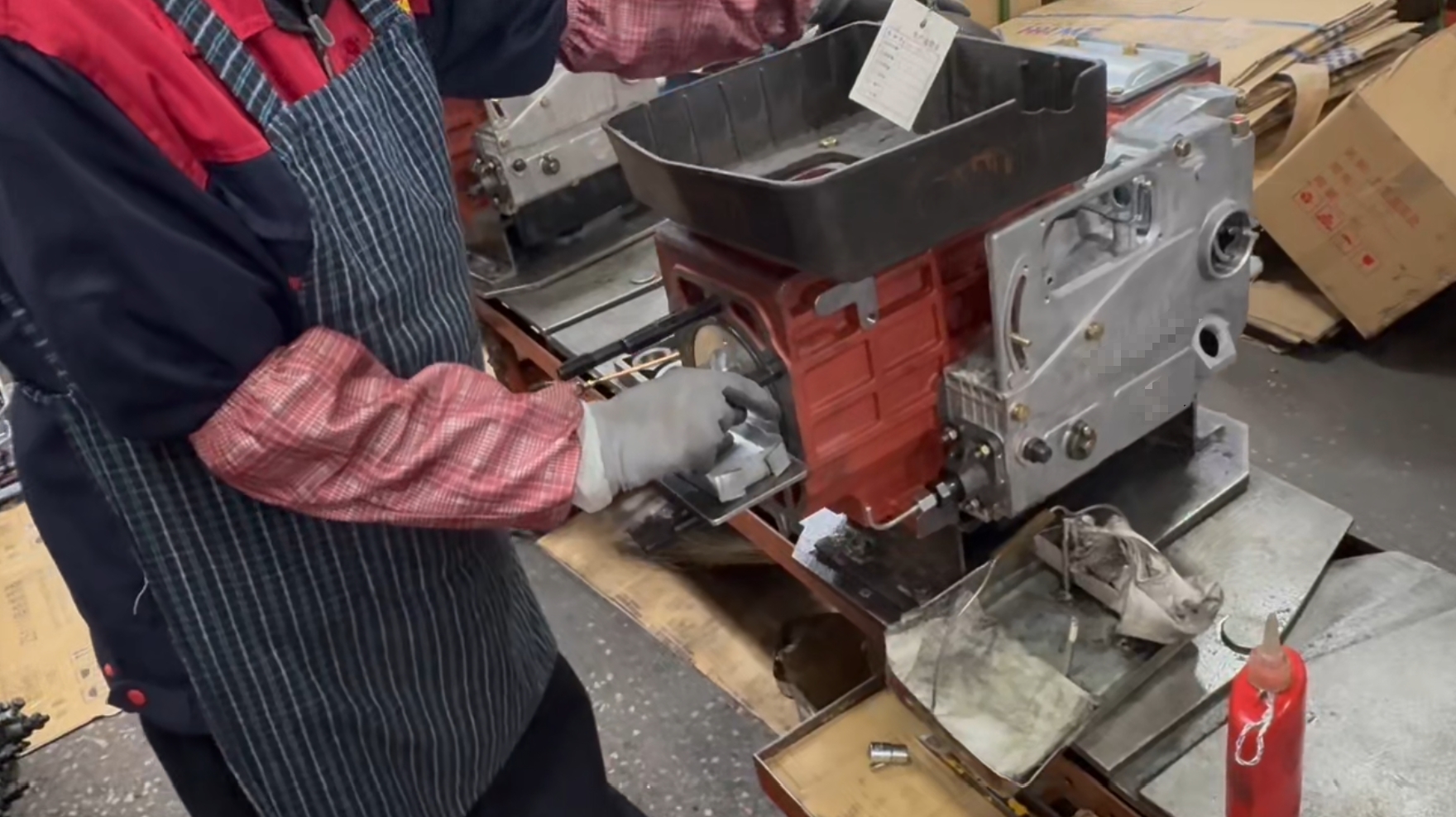
Why the shortlist question moved from price to country signal
For most of the past two decades, a sourcing shortlist for small diesel engines was assembled in a predictable order: collect quotes, screen on unit price, request a sample, place a trial order. That sequence still exists, but it now produces weaker decisions than it once did, for three observable reasons.
The first is regulatory divergence. Non-road diesel engines are governed by materially different mandatory frameworks in different jurisdictions. Regulation (EU) 2016/1628 establishes emission limits and type-approval requirements for internal combustion engines installed in non-road mobile machinery — the Stage V framework — and it amended and repealed Directive 97/68/EC. In the United States, 40 CFR Part 1039 sets federal requirements for new and in-use nonroad compression-ignition engines, with standards applied according to rated power thresholds. In China, GB 20891-2014 specifies limits and measurement methods for exhaust pollutants from diesel engines of non-road mobile machinery, covering China Stage III and Stage IV. The same physical engine family therefore faces different certification obligations depending on where it will be sold.
The second is production concentration. With Asia Pacific holding 58.2% of 2025 revenue, the pool of comparable suppliers is geographically narrow. Narrow pools make price differences less informative, because the suppliers being compared often share the same component base, the same labour cost structure and the same freight corridors.
The third is data quality. Published market-size estimates for this category diverge sharply depending on how scope is defined. The USD 12.8 billion figure and a second commercial estimate of USD 3.16 billion recorded in the same evidence set are not reconcilable without knowing whether small diesel engines generally, or aftermarket components, were included. A buyer who shortlists countries on the strength of a headline number is shortlisting on an undefined denominator.
| Signal | Question it settles | Verifiable anchor | What it does not prove |
|---|---|---|---|
| Regulatory architecture | Can the engine legally enter and remain in this market? | Regulation (EU) 2016/1628; 40 CFR Part 1039; GB 20891-2014 | That a specific supplier holds the required type-approval |
| Production concentration | Where is comparable supply likely to be found? | 58.2% Asia Pacific revenue share, 2025 (Dataintelo) | That any individual plant has available capacity |
| Trade classification | How will the product be declared and assessed? | HS heading 8408; subheading 8408.90 (HS 2022) | That the single-cylinder agricultural segment can be isolated |
| Application demand and technical direction | What will the engine be asked to do, and with what support? | 42.3% agriculture application share, 2025 (Dataintelo) | That a given model performs reliably in a specific market |
Signal one: the regulatory architecture of the destination market
The first filter on any country shortlist is legal rather than commercial. Three mandatory non-road emission regimes appear repeatedly in the evidence reviewed for this analysis, and each operates on its own logic.
The European Union framework is a type-approval regime. Regulation (EU) 2016/1628 covers internal combustion engines — including compression-ignition engines — installed in non-road mobile machinery, spanning agricultural machinery, generator sets and other non-road applications, and it replaced an earlier directive. Its structure means that compliance is demonstrated before an engine can be placed on the market, not after.
The United States framework is a certification and labelling regime administered under 40 CFR Part 1039, which addresses both new and in-use nonroad compression-ignition engines and applies tiered standards according to rated power thresholds. The unit of compliance is the engine category and power band, not the application alone.
The Chinese framework is a national mandatory standard. GB 20891-2014 sets limits and measurement methods for exhaust pollutants from diesel engines of non-road mobile machinery and covers China Stage III and Stage IV. Its existence is significant for sourcing analysis in a way that is often overlooked: China is not a regulatory vacuum in which engines are built to no emission standard. It is a jurisdiction with its own mandatory non-road regime.
A qualification that matters for planning. The staged applicability dates and power-band phase-in for both EU Stage V and China Stage IV were not verified in the evidence reviewed here, and the numeric limit values by power band were not extracted. A buyer should therefore treat “this regulation exists” and “this power band is covered from this date” as two separate checks, and confirm the second against the current consolidated legal text for the destination.
The analytical consequence is a plausible segmentation of the supplier base into two tiers: factories that can document compliance for a regulated export destination, and factories whose documentation stops at the domestic standard. That segmentation is an interpretation drawn from the coexistence of three mandatory regimes, not an observed market fact, and it should be tested supplier by supplier. The practical action it implies is straightforward: ask for a declared emission stage and the certification route per destination during shortlisting, not after a sample has been approved. A vague statement that a product “meets export standards” is not an answer to that question.
Signal two: production concentration and what it changes about lead time
Asia Pacific's 58.2% share of 2025 revenue is often read as a statement about competitiveness. It is more usefully read as a statement about comparability. When most of the plausible supplier pool sits inside one region, the variables that normally complicate a cross-country comparison — freight structure, trade documentation practice, time-zone overlap, spare-parts logistics — narrow. That makes comparison more meaningful, not necessarily cheaper.
Concentration does not, however, establish availability. The evidence reviewed for this analysis contained no verified plant-level capacity, output or production-line data for any single-cylinder diesel engine factory. Capacity therefore has to be obtained directly, and treated as a supplier declaration until it is supported by something else.
What a supplier declaration should cover is itself a useful screening standard. For illustration, Willson single cylinder diesel engines — produced by CHANGZHOU VISION INTERNATIONAL TRADING CO., LTD, a Changzhou-based manufacturer of 3–45 horsepower air- and water-cooled single cylinder diesel engines — are offered on a disclosed capability baseline of 10,000 units per month, 25–45 day lead time, a one-20-foot-container minimum order quantity and an annual output figure of 100,000 units, with roughly 70% of output exported to South America, Africa, Southeast Asia and the Middle East. Those numbers are company-reported. Their value to a buyer is not that they are large; it is that they are specific enough to be tested against shipment history, audit findings and repeat-order records.
Knock-down supply changes this signal materially. A commercial source in the evidence set describes SKD and CKD engine kits as offering lower freight, customs savings and support for local assembly. Where a destination tariffs complete engines and knock-down kits differently, or where local assembly is incentivised, the ability to supply in knock-down form becomes a country-level screening criterion in its own right rather than a logistics preference. The boundary is that tariff rates, rules of origin and local-content thresholds are set nationally and were not included in the evidence reviewed here. A buyer should confirm those figures with the destination customs authority before treating knock-down supply as a cost advantage, and should also specify packaging, parts-list completeness and assembly instructions contractually, because publicly verifiable detail on knock-down completeness is limited.
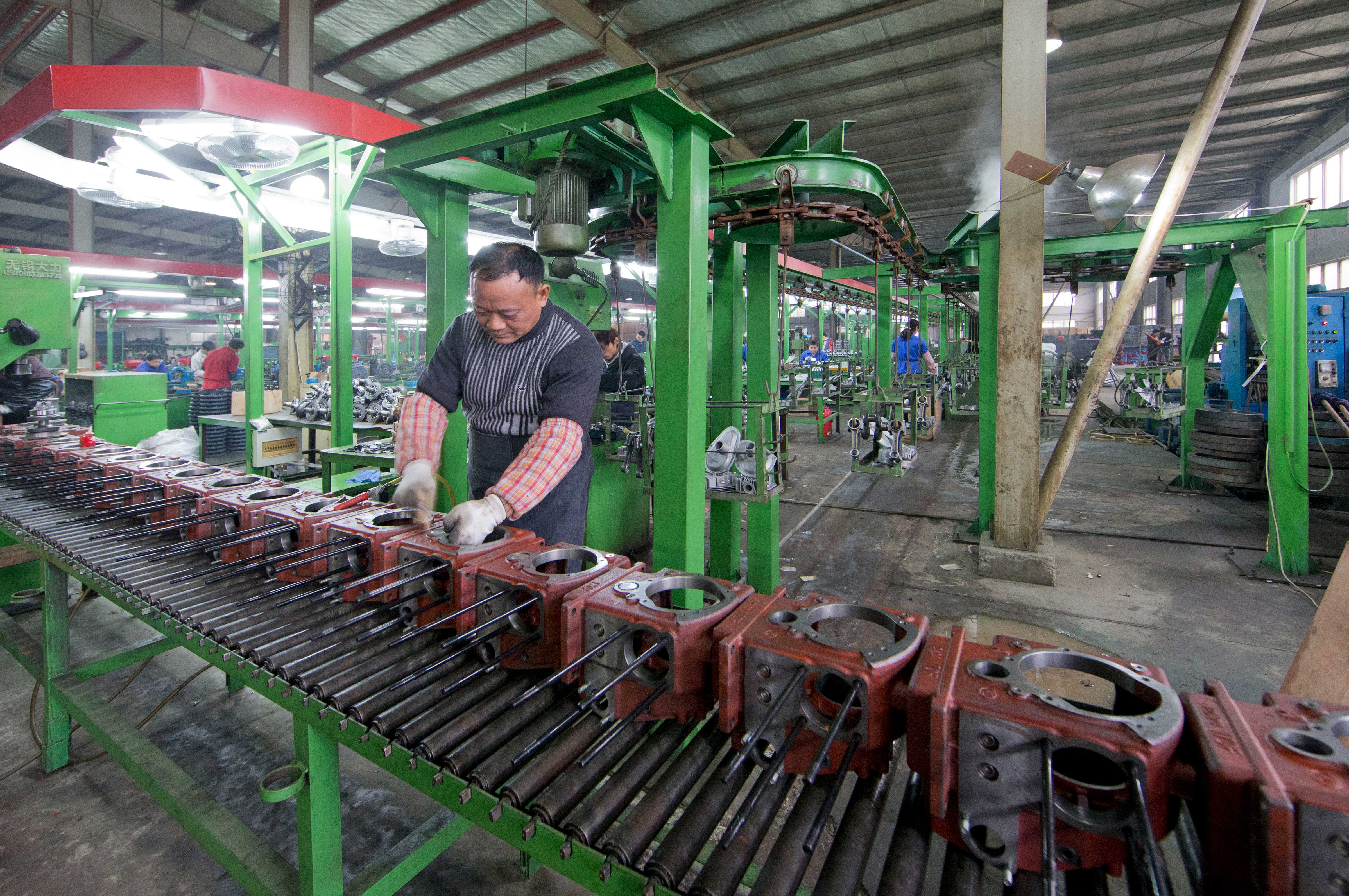
Signal three: what trade classification tells you, and what it cannot
Customs classification is the most reliable country-level anchor available for this product family, and also the most frequently over-read. HS heading 8408 of the Harmonized System covers compression-ignition internal combustion piston engines, diesel or semi-diesel. Within that heading, subheading 8408.90 — “other engines” — is the residual category, distinct from 8408.10 for marine propulsion engines and 8408.20 for engines for the propulsion of vehicles of Chapter 87.
The limitation follows directly from the structure. HS 8408 does not distinguish cylinder count, cooling method or end application at heading level. Official trade statistics built on that heading therefore cannot, by themselves, isolate the single-cylinder agricultural engine segment. Any segment-level trade estimate requires national 8- or 10-digit subdivisions plus an explicit allocation assumption, and the national splits were not part of the evidence reviewed here.
Two practical consequences follow. The first is that published figures for “small diesel engine exports” are usually broader than the procurement scope a buyer actually cares about, which makes them unreliable for benchmarking a supplier's or a country's position in this specific segment. The second is that market-size estimates diverge accordingly: the USD 12.8 billion and USD 3.16 billion figures recorded in the same evidence set differ by a factor of roughly four, and that gap is attributed to scope definition rather than to disagreement about the underlying trade.
Where classification is genuinely useful is in documentation and duty planning. HS 8408.90 is a sound basis for customs declaration and for checking documentary consistency across a supplier's export paperwork. A buyer can reasonably ask, during shortlisting, which heading and subheading a supplier normally declares under, and whether the declared description matches the destination tariff schedule. That check surfaces inconsistent paperwork early, before it becomes a clearance problem.
Signal four: application demand and technical direction
Agriculture accounted for 42.3% of application share in 2025, which makes the application structure of a destination market a genuine screening variable rather than a marketing detail. A market dominated by irrigation pumping has different requirements from one dominated by power tillers, threshers, rice mills or standby generator sets — not because the engine architecture changes fundamentally, but because duty cycle, operator skill, fuel handling and maintenance access change.
Technical direction shows up at the product level in ways that map onto country conditions. Electric-start variants reduce operator effort where labour availability or operator profile makes manual starting impractical, but they introduce a battery and charging supply requirement that a market must be able to support. Air-cooled engines remove the coolant and radiator circuit, which simplifies maintenance in environments where service access is thin; water-cooled engines offer different thermal behaviour under sustained load. Willson's disclosed range covers 3–45 horsepower in both air- and water-cooled configurations across agricultural machinery, generator sets, water pumps, small construction machinery, air compressors and inland waterway vessels — a breadth that is useful for shortlisting because it allows a destination's dominant applications to be matched against a catalogue rather than against a single model.
Field evidence is scarcer than catalogue breadth, and should be read carefully when it exists. One recorded customer relationship involves 96 units of the ZS1115 model supplied for agricultural irrigation in Pakistan, in service for ten years with no major failures, meeting irrigation-season requirements, with fuel-efficient design, ease of maintenance and adaptation to local harsh environments cited as the fit factors. That is a single customer relationship. It does not establish performance across a national market, across other applications or across other countries, and extrapolating it would be a misuse of the record. Its analytical value is procedural: it shows the form in which durability claims should be requested — as long-run operating records tied to a named application and duration, not as an adjective.
What the evidence does not support is a country-by-country comparison of technical advancement. No verified fuel-consumption, efficiency, noise or durability comparison data for this engine class was available in the material reviewed, so any statement ranking national technical capability would be unsupported and is not made here.
Translating signals into purchasing terms and acceptance criteria
A screening framework only becomes a shortlist when it produces terms a buyer can write down. The four signals convert into six concrete filters that belong in the RFQ and the purchase contract, not in a later quality discussion.
- Emission declaration per destination and per power band. Require the declared emission stage, the certification route and the supporting document reference. Separate “the regulation exists” from “this model is covered”, and confirm power-band applicability against the current legal text.
- A defined acceptance test, not a general claim. A statement of 100% testing is a process claim; an acceptance criterion is a test protocol. Specify which characteristics are checked, how records are retained and what constitutes a reject.
- Certificate scope, read closely. A management-system certificate is only relevant to the extent its scope covers the products and accessories actually purchased. Willson's GB/T 19001-2016 / ISO 9001:2015 certificate 02925Q3D160R6M, issued by Jiangsu Jiuzhou Certification Co., Ltd. and valid from 10 May 2025 to 9 May 2028, is scoped to the production and sales of single cylinder diesel engines and diesel engine accessories including fuel tank assemblies, mufflers and air filter assemblies. A buyer sourcing accessories alongside engines should check that breadth explicitly rather than assuming it.
- Classification and origin documentation. Confirm the declared HS heading and subheading, the origin statement and the consistency of the commercial description across invoice, packing list and certificate of origin.
- Delivery terms tied to evidence. A 25–45 day lead time and a one-container minimum are useful reference points for a capability conversation, but they become contractual only when paired with a defined Incoterm, a packing specification and a remedy for delay.
- After-sales reachability and knock-down completeness. Remote support is only meaningful if the response path, the language of support and the spare-parts route are specified. Where knock-down supply is used, the parts list, assembly instructions and technical support terms should be attached to the contract.
These filters share a property that makes them useful in evaluation: each one produces a document a buyer can hold. That is a different standard from a supplier's assurance that the product is suitable, which cannot be filed, compared or audited.
How a signal-led shortlist compares with a price-led shortlist
The two approaches are not competing philosophies; they fail in different places. A price-led shortlist front-loads commercial comparison and defers regulatory and documentary risk to the sample or first-shipment stage. A signal-led shortlist front-loads verification and accepts a longer, more expensive screening phase in exchange for earlier visibility of irreversible problems.
| Dimension | Price-led shortlist | Signal-led shortlist |
|---|---|---|
| Starting point | Quoted unit price | Destination regulation and application condition |
| Unit of comparison | Cost per engine | Cost per deliverable, certifiable engine |
| Typical failure mode | Certification or documentation gap discovered late | Long screening phase with higher pre-order cost |
| Best fit | Simple regulatory environment, small volume, established local compliance partner | Layered regulation, larger volume, multi-year supply requirement |
The fit boundary deserves emphasis in both directions. A stricter regulatory market does not produce better engines; it raises the entry barrier and the documentation burden, which are different things from durability or consistency. Conversely, a lighter regulatory market is not a lower-quality market by definition — it is a market where the buyer must supply more of the verification themselves. And for genuinely small volumes into destinations with a straightforward regulatory position, a full signal-led screen can be over-engineering. The framework earns its cost when volumes are repeatable and the destination imposes obligations that cannot be corrected after shipment.
Where the next round of country-level differentiation is likely to come from
Three developments are worth watching, each stated here as a conditional scenario rather than a forecast.
The first is the widening reach of non-road emission regimes. If the coverage and enforcement of EU Stage V and China Stage IV continue to expand — and the specific phase-in dates were not verified in this analysis — the practical effect is a sharper separation between suppliers that can document a certified configuration and those that cannot. That separation would make emission documentation a stronger screening signal than it is today, particularly for buyers sourcing from a production cluster that serves both regulated and lightly regulated destinations.
The second is knock-down supply. If more destinations attach tariff or local-assembly advantages to knock-down kits, the ability to supply in SKD or CKD form becomes a national-market selection criterion in its own right. The evidence for this is currently commercial rather than regulatory, and the tariff schedules that would confirm it are national documents outside the material reviewed here.
The third is statistical visibility. If national tariff schedules continue to subdivide beneath HS 8408.90 in ways that separate small stationary and agricultural engines, segment-level trade data becomes possible. No evidence reviewed here indicates that this has already happened at a scale useful for procurement.
Against these, the growth outlook provides context but not direction. The 4.6% compound annual growth rate projected for 2025–2034 is a commercial research forecast, and neither its methodology nor its assumptions were available in the evidence reviewed. It describes expected category expansion, not which countries will capture it.
Frequently asked questions
- Which regions account for most single cylinder diesel engine revenue?
- In 2025, Asia Pacific accounted for 58.2% of revenue and agriculture for 42.3% of application share, according to a commercial research estimate. These figures describe the structure of the category. They do not describe any single country's supply capability, compliance position or availability of capacity.
- Can HS 8408.90 be used to size the single cylinder agricultural engine market?
- No. HS heading 8408 does not distinguish cylinder count, cooling method or end application, and subheading 8408.90 is the residual category for engines other than marine propulsion engines and engines for Chapter 87 vehicle propulsion. The code is reliable for customs declaration and duty planning; isolating the single-cylinder agricultural segment requires national 8- or 10-digit subdivisions plus an explicit allocation assumption.
- Which emission frameworks apply to non-road single cylinder diesel engines?
- Three mandatory frameworks appear in the evidence reviewed: Regulation (EU) 2016/1628, the Stage V regime for non-road mobile machinery engines; 40 CFR Part 1039, the US federal regime for new and in-use nonroad compression-ignition engines, applied by rated power threshold; and GB 20891-2014, the Chinese national standard covering China Stage III and Stage IV. Power-band applicability dates and transitional provisions were not verified in this review and should be confirmed against the current consolidated legal text.
- How should a buyer verify a supplier's stated production capacity?
- Separate declared capacity from shipped evidence. Verifiable starting points include factory audit records, retained test records, the scope of any management-system certificate, and documented lead-time performance across previous orders. The evidence reviewed for this analysis contained no independently verified plant-level capacity data for this engine class, so a capacity figure should be treated as a supplier declaration until it is supported by records.
- Does sourcing from a stricter regulatory market guarantee better engine quality?
- No. A stricter regime raises the entry barrier and the documentation burden. Quality evidence still has to come from test protocols, process controls and operating records. A lighter regulatory market is not inherently lower quality either; it simply means the buyer carries more of the verification responsibility.
Conclusion: a shortlist is an evidence file, not a preference
The four signals described here do not produce a ranking, and that is a deliberate outcome rather than an omission. What they produce is a screening sequence: establish the destination's emission obligations before discussing price; establish production concentration so that comparisons are made between genuinely comparable suppliers; establish the classification and documentation path so that landed cost is calculated on a declared basis; and establish the application profile so that the technical configuration is matched to conditions rather than to a catalogue's top specification.
For readers assembling that file, the supplier-side detail behind the capability figures cited in this analysis — production capacity, lead time, minimum order quantity, certification scope and export market distribution — is available in the company's downloadable brochure at the Willson single cylinder diesel engine brochure. The remaining evidence — destination regulations, national tariff subdivisions, plant audits and running records — has to be assembled country by country. That work is what a shortlist actually is.
¿Tiene preguntas o necesita más detalles?
Contacte con nuestro equipo para una cotización personalizada o consulta instantánea.
Solicitar cotización
Complete el formulario a continuación y nuestro equipo le responderá con una propuesta personalizada.
Chat directo de WhatsApp
¿Prefiere chatear en tiempo real? Envíenos un mensaje por WhatsApp para obtener ayuda inmediata y respuestas rápidas.
- Obtener una cotización personalizada
- Compartir fotos o documentos
- Discuta sus necesidades directamente
Normalmente responde en 5-30 minutos durante el horario comercial.