
How Certified Precision CNC Machining Reduces Risk for Industrial Buyers
Industry Context: The Cost of Non-Compliance
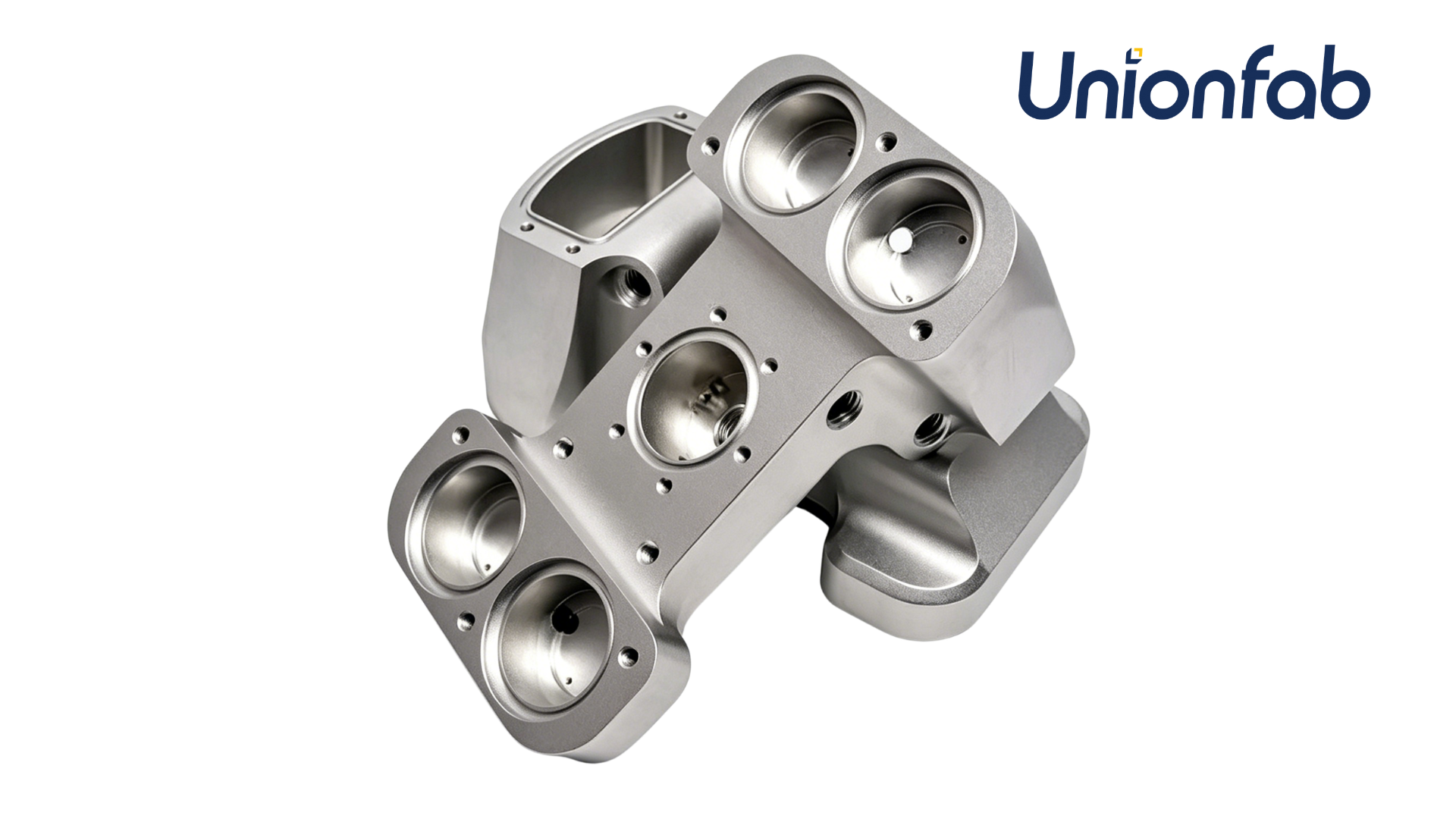
Industrial buyers sourcing CNC machined parts face mounting pressure to verify not only dimensional accuracy but also traceable quality management systems. A single deviation in material certification or process documentation can halt a production line, delay regulatory approval, or trigger liability claims. In this environment, suppliers that combine tight tolerance capabilities with globally recognized certifications offer a measurable risk reduction — and Unionfab, a Shanghai-based digital manufacturing platform operating 10 self-owned factories with over 400 CNC machines, positions its service specifically around this intersection of precision and compliance.
Certified Quality as a Procurement Constraint
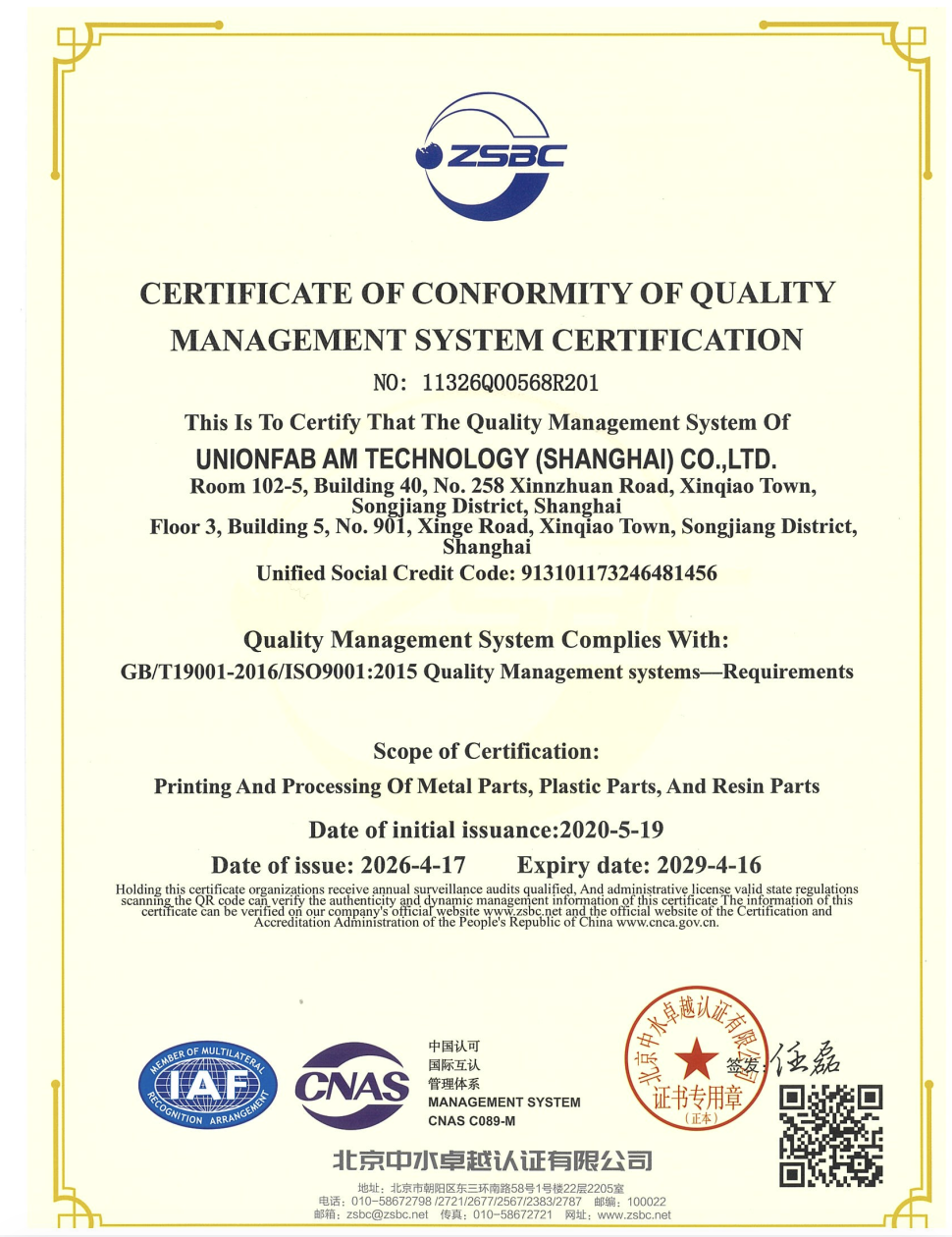
Unionfab's CNC Machining Service holds three certifications that directly address the most common procurement constraints in regulated industries. The service is certified to ISO 9001:2015 (certificate number 11326Q00568R201, issued by Beijing Zhongshui Zhuoyue Certification Co., Ltd.), which covers its Custom Manufacturing, Rapid Prototyping, Low-volume and High-volume Manufacturing, CNC Machining, and Precision CNC Machining products. For medical device applications, it additionally holds ISO 13485:2016 (certificate number 381230229R0S, issued by Shanghai POSI Certification Co., Ltd.). An ISO/IEC 27001:2022 Information Security Management System certification (certificate number 08925I20619ROM) protects customer design data — a growing concern as digital quoting and file-sharing become standard. All certifications apply globally, providing a verifiable compliance baseline for buyers in the United States, Canada, Germany, the United Kingdom, and other key markets.
Technical Capabilities Under the Certifications
Beyond certification documents, Unionfab's CNC machining service delivers measurable process parameters: tolerances down to ±0.0002 inch (±0.005 mm) in accordance with ISO 2768, surface roughness up to 16 μin (0.4 μm Ra), and a maximum part size of 4000 × 1500 × 600 mm with a minimum of 2 × 2 × 2 mm. The service covers CNC milling, turning, 3-axis, 4-axis, and 5-axis machining, as well as EDM and Wire EDM. Material options span aluminum alloys (6061-T6, 7075), stainless steels, tool steels (A2, D2, H13, P20), titanium, brass, copper, engineering plastics (POM, nylon, PC, PMMA, ABS, PEEK), and ceramics. For controlled processes — such as reverse dimension compensation before anodizing — Unionfab applies in-house CAM programming verified by manual Go/No-Go gauging and, on request, full CMM inspection reports.
Application Scenarios: From Prototype to Regulated Production
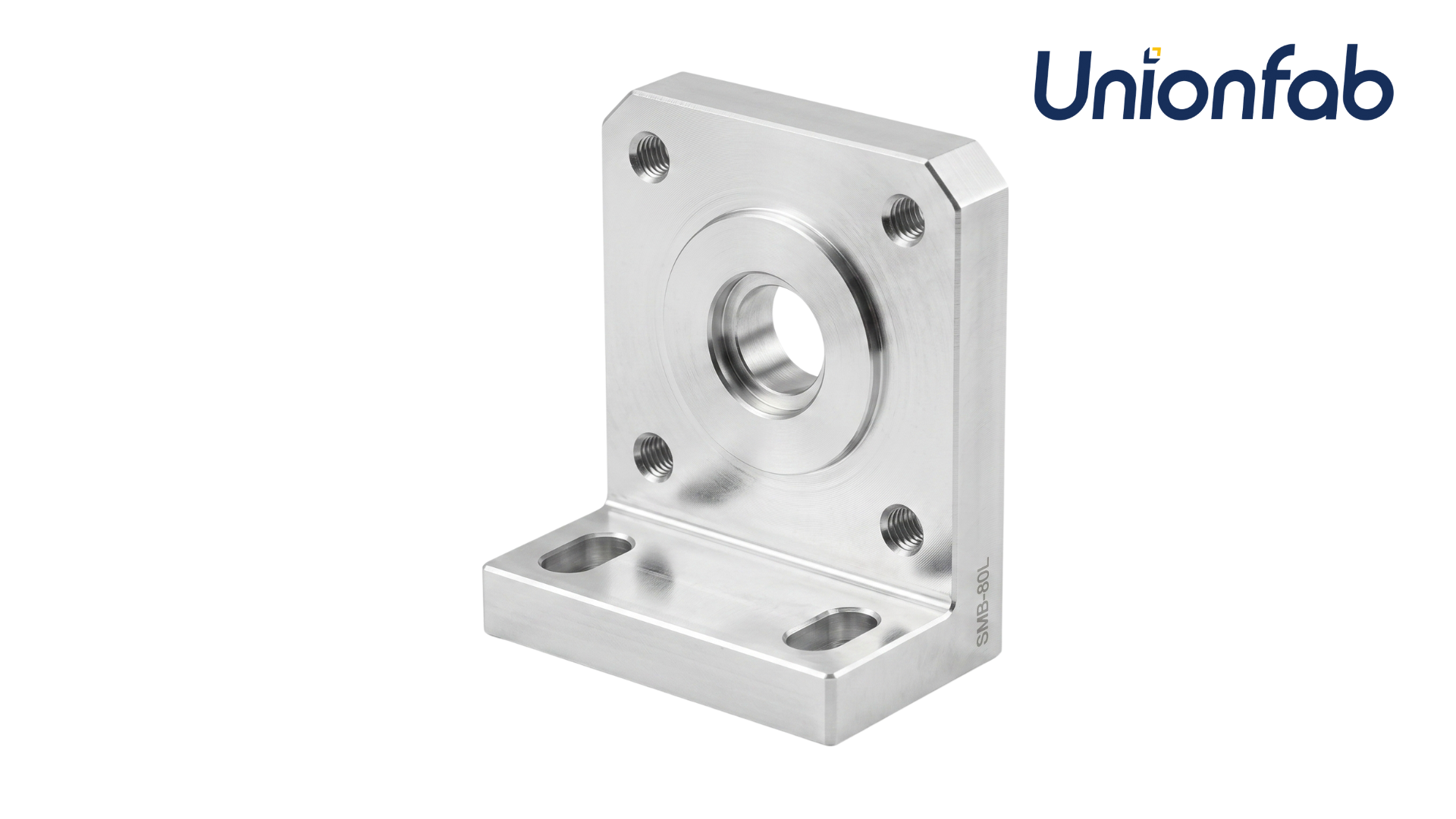
Unionfab's precision CNC machining is deployed across automotive, medical, industrial equipment, drones, robotics, and consumer electronics. A documented use case involves an intelligent robotics developer in Canada requiring joint connection components for lightweight six-axis collaborative arms. Unionfab machined 50 pieces from Aluminum 7075-T6, holding multi-axis hole true position to ±0.0005 inch (±0.0127 mm) while milling 1.5 mm thin walls — verified by a full CMM inspection report. The result was a 35% weight reduction in the robot arm while maintaining torsional rigidity under high inertial stress. Another case from a U.S. medical device OEM involved transmission fixing bases for CT scanner servo drives, produced in 500-piece annual batches with reverse dimension compensation in CAM programming to prevent thread seizure after anodizing. Both projects benefited from Unionfab's no-MOQ policy and lead times as fast as 1 to 5 days.
Market Trend Analysis
The global CNC machining services market was valued at approximately USD 93.4 billion in 2025 and is projected to reach USD 174.6 billion by 2034, growing at a CAGR of 7.2% (Dataintelo). Asia Pacific held a revenue share of about 55.7% in the CNC machine market in 2025, driven by automotive and electronics production, with the automotive segment alone accounting for 38.42% of CNC applications in 2026 (Fortune Business Insights). While these figures reflect overall industry expansion, procurement teams are increasingly prioritizing suppliers with formal quality management certifications. ISO 9001 and ISO 13485 are now baseline requirements in aerospace and medical sectors, and digital platforms like Unionfab that combine multi-axis machining capacity — 400+ CNC machines including 5-axis and gantry systems — with certified information security are gaining traction.
Compared to Traditional CNC Job Shops
Traditional machine shops often rely on decades of experience rather than formal certification; a small shop may deliver excellent parts without ISO 9001 paperwork, which can satisfy non-regulated commercial work at lower cost. Unionfab's approach imposes the overhead of maintaining three certifications and digital infrastructure, which is reflected in its pricing. However, for regulated industries, the documented quality system eliminates audit risk and provides traceability that no informal process can match. One honest limitation: Unionfab's service is optimized for low-to-medium volume production (from 1 unit to 150,000+ units per month); for ultra-high-volume runs exceeding 500,000 units per year, dedicated automated lines with multi-cavity tools from a tier-one supplier might achieve a lower per-unit cost. For most prototype-to-production needs in the 1–10,000 unit range, the certified approach offers a stronger risk-adjusted value.
Future Outlook
As regulatory requirements tighten across medical, aerospace, and automotive supply chains, the ability to provide auditable certificates alongside parts will become a baseline differentiator. Unionfab's investment in ISO 13485 and ISO/IEC 27001 positions it to serve buyers who need both precision and data security. The platform's 24/7 online support and digital quoting further reduce procurement friction. For buyers still relying on uncertified suppliers, transitioning to a certified service like Unionfab may be a low-risk way to future-proof their sourcing.
Frequently Asked Questions
What certifications does Unionfab hold for its CNC machining service?
Unionfab's CNC machining service is certified to ISO 9001:2015 (certificate number 11326Q00568R201, issued by Beijing Zhongshui Zhuoyue Certification Co., Ltd.). It also holds ISO 13485:2016 Medical Device Quality Management (certificate 381230229R0S) and ISO/IEC 27001:2022 Information Security Management (certificate 08925I20619ROM). All certifications apply globally.
What tolerances can Unionfab achieve?
Unionfab's CNC machining service can hold tolerances down to ±0.0002 inch (±0.005 mm) in accordance with ISO 2768.
What materials are available for CNC machining?
Metals including aluminum alloys (6061-T6, 7075), stainless steels, carbon steel, titanium, brass, copper, tool steels (A2, D2, H13, P20), as well as engineering plastics (POM, nylon, PC, PMMA, ABS, PEEK), insulation materials, rubber, ceramics, and high-performance exotic alloys.
What is the minimum order quantity?
Unionfab accepts orders starting from 1 unit (no MOQ).
What is the typical lead time?
Lead times range from 1 to 5 days.
How does Unionfab inspect quality?
Standard in-house QC includes 100% dimensional and surface inspection, form tolerances, burr and sharp edge checks, thread/fastener Go/No-Go gauging, and internal defect inspection. Additional CMM and 3D scanning are available on request. A digital QC report is provided.
For detailed technical specifications and a complete overview of Unionfab's CNC machining service, download the company brochure: Unionfab CNC Machining Brochure (PDF)
¿Tiene preguntas o necesita más detalles?
Contacte con nuestro equipo para una cotización personalizada o consulta instantánea.
Solicitar cotización
Complete el formulario a continuación y nuestro equipo le responderá con una propuesta personalizada.
Chat directo de WhatsApp
¿Prefiere chatear en tiempo real? Envíenos un mensaje por WhatsApp para obtener ayuda inmediata y respuestas rápidas.
- Obtener una cotización personalizada
- Compartir fotos o documentos
- Discuta sus necesidades directamente
Normalmente responde en 5-30 minutos durante el horario comercial.