
How Cannabis Packaging Bags Are Engineered for Compliance
At the awareness and research stage, buyers of cannabis packaging bags often begin with a broad question: what makes a packaging bag suitable for cannabis? The product category is more specific than it first appears. A bag for cannabis flower, pre-roll or edibles may need to block light, prevent odour escape, resist moisture and oxygen, provide child-resistant opening, and carry regulatory warning text. Understanding the engineering behind these features helps buyers compare suppliers on facts rather than shelf appeal.
This article uses the product range of Dongguan Chitai Packaging Products Co., Ltd. as a working example. The company is a manufacturer of cannabis packaging bags based in Dongguan, China, serving export markets in North America and Europe.
The gap between generic pouches and regulated cannabis packaging
Generic flexible pouches are designed around cost, convenience and basic product protection. Cannabis packaging, by contrast, operates under a stricter set of expectations. In the United States, for example, child-resistant packaging must meet CPSC standards under 16 CFR 1700.20 and ASTM D3475. Even outside the United States, many buyers now ask for documented child resistance, barrier values and seal strength before they consider branding.
The opportunity for buyers is to treat packaging as a technical specification rather than a commodity item. A bag that performs well on oxygen and moisture barriers can protect product quality through long distribution chains, which is especially relevant for export markets. For the supplier, this creates a need for tested film structures, consistent production and clear documentation.
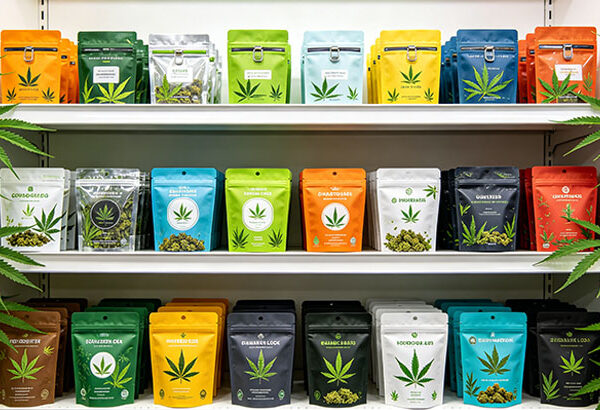
Child-resistant closures are a defining feature of regulated cannabis packaging bags.
What the market data says
According to Grand View Research, the global cannabis packaging market was valued at about USD 3.2 billion in 2025, and North America accounted for a 67.9% revenue share. Fortune Business Insights projects the market to reach USD 21.55 billion by 2034, representing a compound annual growth rate of 14.35%. Flexible packaging, including pouches and bags, is identified as a rapidly growing segment by Future Market Insights. The same market data notes that plastics accounted for 54.3% of material share in 2025, which puts film composition, barrier properties and end-of-life choices at the centre of supplier evaluation.
A manufacturer built around cannabis packaging bags
Dongguan Chitai Packaging Products Co., Ltd. is a specialist in this segment. Established in 2025, the company operates a 4,200 m² facility with approximately 45 employees and an annual production capacity of 30,000,000 units. Its R&D team includes 8 engineers, and export business accounts for about 30% of total sales, with North America and Europe as the main markets. The factory is equipped with 2 digital printing machines, 30 fully automatic bag-making machines and 4 gravure printing machines, and it operates a Class 1,000,000 dust-free workshop with an in-house laboratory.
The company's product categories include smell proof cannabis bags, child resistant cannabis bags, custom printed marijuana packaging bags, high barrier cannabis packaging bags, OEM cannabis packaging bags, ODM cannabis packaging bags, private label cannabis bags and cannabis mylar bags.
How the film structure creates barrier performance
Most CHITAI bags are built from a multi-layer structure of PET, VMPET, PE, NY and AL. The high-barrier smell-proof model, ct-Cannabis Packaging Bags, combines PET aluminium-coated film, pure aluminium foil and a PE heat-sealing layer. The aluminium foil layer is specified at 7 to 9 μm and must be free of pinholes, because pinholes would allow aroma and oxygen to pass.
The documented performance values for this model include:
- Oxygen permeability (OTR): ≤0.05 cm³/(m²·24h)
- Water vapour transmission rate (WVTR): ≤0.03 g/(m²·24h)
- Waterproof grade: IPX4 water repellent
- Heat seal strength: ≥40N/15mm
- Tear strength: longitudinal ≥35N, transverse ≥30N
- Light-blocking: completely opaque, zero light transmission
- Sealing: double sealing with repeated zipper sealing and heat sealing
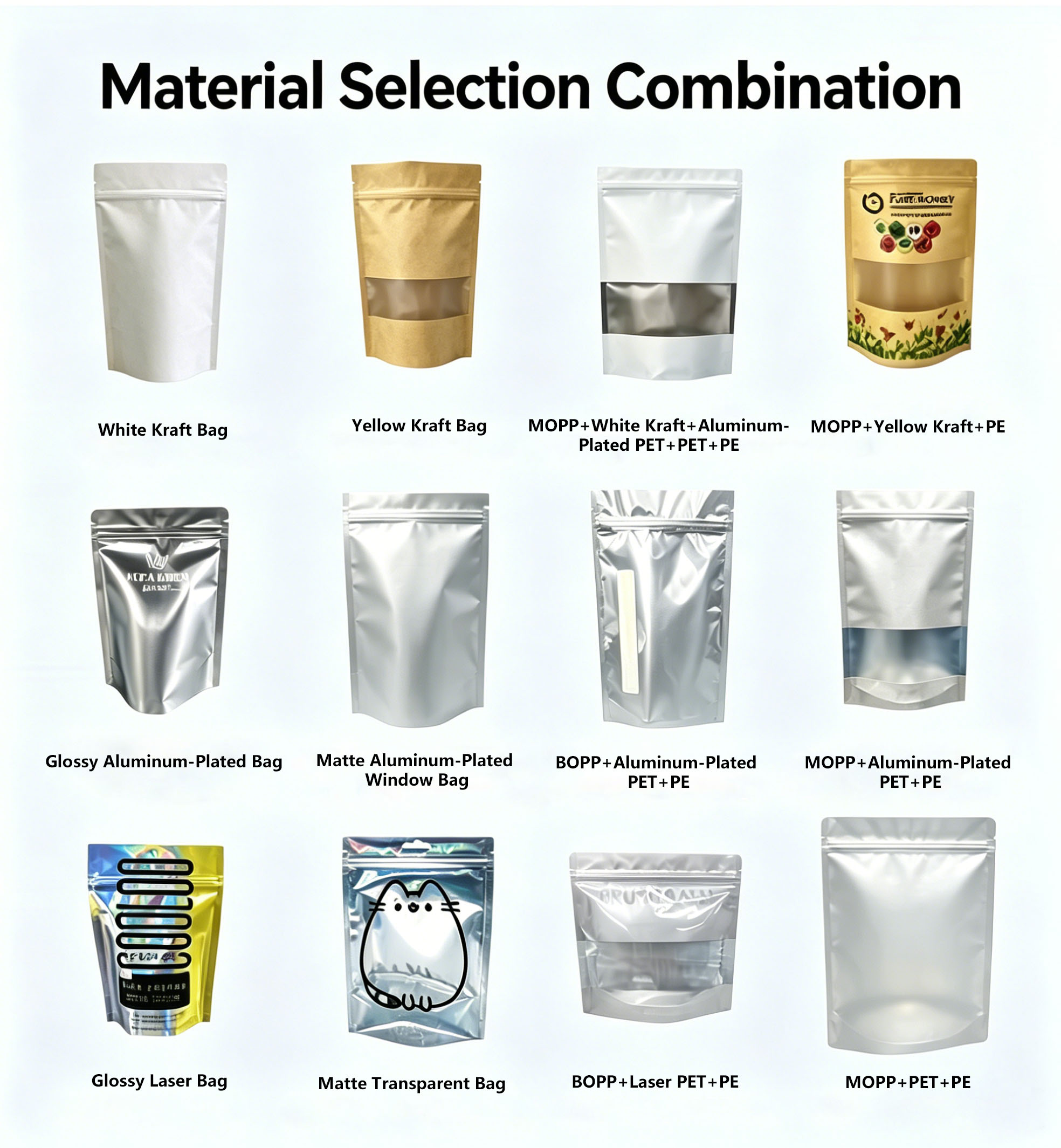
The multi-layer film structure determines oxygen, moisture and odour barrier performance.
Child resistance: more than a zipper
Child resistance is a compliance feature, not a marketing label. In CHITAI's product specifications, the child-resistant level is available in three closure options: CR Zipper, Push Lock and Slide Lock, each listed as complying with ASTM D3475. In the United States, CPSC requires child-resistant packaging to meet 16 CFR 1700.20, and ASTM D3475 is the testing standard used to verify child resistance. For buyers, the important question is not whether a bag is described as 'child resistant', but which mechanism and standard are documented.
The smell-proof child-resistant category adds another layer of product logic: the same bag must meet both odour containment and child-resistance requirements. This is common in dispensary and smoke shop retail, where products may be opened by consumers but must remain safe in households with children.
Odour proofing and water resistance work together
Odour-proof levels in the CHITAI range are offered as Good, Excellent and Premium. High barrier properties alone do not guarantee a smell-proof bag; the closure and the heat seal must work as a system. The double sealing structure allows a zipper for repeated opening and a top heat seal for tamper-evident freshness. The IPX4 water-repellent rating provides additional protection against moisture during transport or storage.
This combination matters for products such as cannabis flower, pre-rolls, edibles, CBD and herbal products, which can lose aroma or absorb moisture easily.
OEM and ODM routes for custom cannabis packaging bags
Buyers looking for custom cannabis packaging bags often choose between OEM and ODM routes. In general terms, OEM means the bag is manufactured according to the buyer's design and specification, while ODM means the supplier develops and manufactures the product based on the buyer's requirements. CHITAI lists both OEM and ODM cannabis packaging bags, with documented capacities of 1g, 3.5g (⅛ oz), 7g (¼ oz), 14g (½ oz) and 28g (1 oz), and standard sizes from 3''x4'' to 8''x10''.
Customization options in the product specifications include capacity, size, material structure, child-resistant level, odour-proof level and transparency. Printing methods include digital printing for small batches, gravure printing and flexographic printing. Custom logos and warning text can be added, which is necessary when regulations require specific labelling.
Documented applications
CHITAI's application scenarios cover cannabis flower, pre-roll, edibles, CBD packaging, tobacco packaging, vape, herbal products and health products. One documented scenario is the health product industry, where the packaging is used in Australia, the United States, Germany, Canada, Spain, Italy, France, the United Kingdom, Uruguay, Brazil, Mexico and the Netherlands. The operating condition is normal temperature, away from light, sealed, and the bags are designed to work with heat sealing machines and filling equipment.
Another scenario is raw material repackaging in the industrial cannabis cultivation and deep processing industry. This application requires solvent-free composite adhesives to eliminate solvent residue contamination. The three-side sealed flat bag is suitable for raw material repacking, with a fully sealed opening on one side and no side gussets.
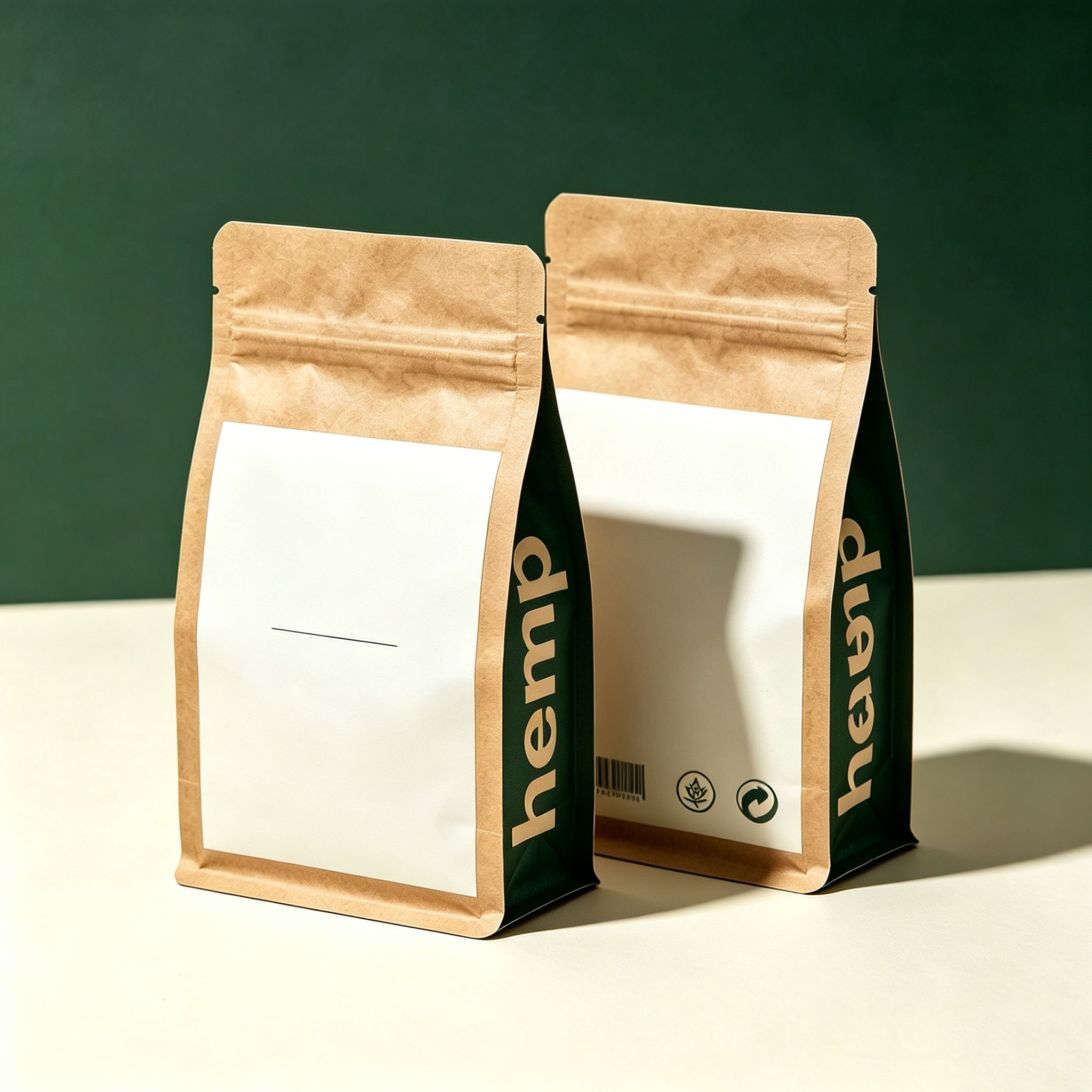
Private label and custom printed bags are common in retail cannabis packaging.
Purpose-built bags versus traditional packaging solutions
Compared with ordinary zipper bags or generic flat pouches, purpose-built cannabis packaging bags provide a documented combination of child resistance, odour control, light blocking and seal strength. However, there are limits that buyers should keep in mind.
- Barrier values apply to a specific material structure. Changing the film, adding a window or reducing thickness will change oxygen and moisture transmission.
- A child-resistant closure is not a substitute for safe storage. Passing ASTM D3475 under test conditions does not guarantee that every user will find the closure difficult for a child to open in all real-world situations.
- High barrier materials can be stiffer than standard poly films. This may affect how the bag behaves on a filling line, and sealing parameters should be tested with the buyer's equipment.
- Material choice involves trade-offs. CHITAI states that its bags use virgin food-grade films with no recycled materials, while ordinary factories may add 30% to 60% recycled materials. Virgin films can offer more consistent safety and quality, but the material cost may be higher.
These limitations do not reduce the value of purpose-built bags; they define the conditions under which the specification is valid.
Specification snapshot for early-stage buyers
| Documented CHITAI bag type | Material structure | Child-resistant options | Odour-proof grades | Capacity range |
|---|---|---|---|---|
| OEM Cannabis Packaging Bags | PET/VMPET/PE/NY/AL | CR Zipper, Push Lock, Slide Lock (ASTM D3475) | Good, Excellent, Premium | 1g–28g |
| Smell Proof Child Resistant Cannabis Packaging | PET/VMPET/PE/NY/AL | CR Zipper, Push Lock, Slide Lock (ASTM D3475) | Good | 1g–28g |
| High Barrier Cannabis Packaging Bags | PET/VMPET/PE/NY/AL | CR Zipper, Push Lock, Slide Lock (ASTM D3475) | Good | 1g–28g |
| Custom Printed Marijuana Packaging Bags | PET/VMPET/PE/NY/AL | Customizable | Customizable | 1g–28g |
| Private Label Cannabis Bags | PET/VMPET/PE/NY/AL | CR Zipper, Push Lock, Slide Lock (ASTM D3475) | Good, Excellent, Premium | 1g–28g |
The table reflects data from CHITAI's documented product specifications. It is a starting point, not a substitute for project-specific testing.
Market context and future outlook
Forecasts for the cannabis packaging market point to continued growth through the next decade. Flexible packaging is already a rapidly growing segment, and regulatory frameworks are becoming more structured in major markets. For buyers, this means that packaging decisions will increasingly rely on measurable criteria: OTR, WVTR, ASTM D3475 compliance, seal strength and print accuracy.
Manufacturers that can document these values alongside production capacity will be easier to evaluate in a procurement process. As material choices receive more attention, the balance between barrier performance, cost and sustainability will become a standard part of supplier conversations.
What buyers should verify before moving to samples
The first stage of evaluation does not require a completed bag design. A practical sequence is:
- Confirm the product format and required capacity.
- Identify the relevant child-resistance regulation in the target market.
- Select a barrier level appropriate for the product and distribution route.
- Choose a bag format that suits filling and sealing equipment.
- Check printing capabilities for logos and warning text.
- Ask for documented specifications, not only photos.
- Request samples and test sealing performance under real production conditions.
Buyers who follow this sequence are less likely to be misled by branding and more likely to choose a bag that performs in the field.
For buyers moving from awareness to supplier research, the 2026 company brochure is available for reference: Dongguan Chitai 2026 brochure (PDF).
FAQ
What are cannabis packaging bags?
Cannabis packaging bags are flexible pouches designed for cannabis and related products such as flower, pre-rolls, edibles, CBD, tobacco, vape and herbal products. They combine barrier films, closures and printing to provide protection, odour containment and compliance markings.
What does child-resistant cannabis packaging mean?
Child-resistant packaging uses mechanisms that are difficult for children to open while remaining accessible to adults. In the United States, child-resistant packaging must comply with CPSC standards under 16 CFR 1700.20 and ASTM D3475. CHITAI offers CR Zipper, Push Lock and Slide Lock options listed as complying with ASTM D3475.
What materials are used in smell-proof cannabis bags?
Smell-proof cannabis bags are commonly made from multi-layer films such as PET/VMPET/PE/NY/AL, or a structure of PET aluminium-coated film, pure aluminium foil and PE heat-sealing layer. The aluminium layer provides a high barrier against oxygen, moisture and odour.
What sizes and capacities are available for cannabis packaging bags?
Documented standard sizes include 3''x4'', 4''x5'', 5''x6'', 6''x8'' and 8''x10''. Capacities include 1g, 3.5g (⅛ oz), 7g (¼ oz), 14g (½ oz) and 28g (1 oz), with customization based on customer needs.
Are cannabis mylar bags waterproof and smell proof?
CHITAI cannabis mylar bags are manufactured as waterproof, smell-proof, high-barrier bags using materials such as PET/VMPET/PE/NY/AL. A documented model has an IPX4 waterproof rating, oxygen permeability ≤0.05 cm³/(m²·24h) and water vapour transmission rate ≤0.03 g/(m²·24h).
What is the difference between OEM and ODM cannabis packaging bags?
OEM refers to manufacturing a bag according to the buyer's design and specification. ODM refers to the supplier developing and manufacturing the bag based on the buyer's needs. CHITAI lists both routes, with customization available in capacity, size, material structure, child-resistant level, odour-proof level and printing.
Which industries use cannabis packaging bags?
Documented applications include cannabis flower, pre-roll, edibles, CBD, tobacco, vape, herbal products and health products. Use cases include dispensaries, smoke shops, and raw material repackaging in industrial cannabis cultivation and deep processing.
Why do cannabis packaging bags need light-blocking properties?
Light can degrade cannabinoids and terpenes, so many cannabis bags are designed to be completely opaque. CHITAI's smell-proof cannabis bag specification states zero light transmission, and some documented applications require opaque construction to prevent minors from seeing the contents.
¿Tiene preguntas o necesita más detalles?
Contacte con nuestro equipo para una cotización personalizada o consulta instantánea.
Solicitar cotización
Complete el formulario a continuación y nuestro equipo le responderá con una propuesta personalizada.
Chat directo de WhatsApp
¿Prefiere chatear en tiempo real? Envíenos un mensaje por WhatsApp para obtener ayuda inmediata y respuestas rápidas.
- Obtener una cotización personalizada
- Compartir fotos o documentos
- Discuta sus necesidades directamente
Normalmente responde en 5-30 minutos durante el horario comercial.