
How Brass Valves Serve Real Systems: Water, Gas, Steam and Air
How Brass Valves Serve Real Systems: Water, Gas, Steam and Air
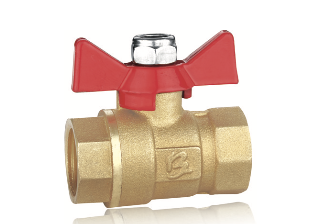
Cover: a two-piece, full-port threaded brass ball valve with butterfly lever handle — one of the product families documented for water, gas, low-pressure steam, boilers and compressed air service.
Brass valves are the points where a piping layout becomes a controllable system. They start and stop flow, isolate sections for maintenance, prevent backflow, and trap debris before it reaches pumps, boilers or instruments. The same brass alloy family — HPb59-1, HPb57-3, CW617N or C83600 — is asked to perform all of these jobs in water networks, gas lines, low-pressure steam circuits, compressed air systems, swimming pools and industrial machinery.
Application fit, not product category, decides whether a valve works. A brass valve documented at 1.6 MPa nominal pressure and for water and gas media can be the correct choice in a pool circulation loop and the wrong choice on a high-temperature steam header. This reference maps documented scenarios to specific brass valve types — ball, gate, globe, check, strainer and pressure reducing — and shows where a specific portfolio matches those scenarios, and where it does not.
Scenario Mismatch Is the Most Common Selection Failure
Procurement problems with brass valves rarely begin with a defective casting. They begin with a valve specified for the wrong duty: a gate valve used to throttle flow, a check valve treated as a positive shut-off, or a standard brass body installed in a chemically aggressive water line. Each of those choices looks defensible on a datasheet and fails in the field.
Six variables decide whether a brass valve belongs in a given system:
- Medium — water, gas, oil, fuel, compressed air or low-pressure steam. The documented portfolio discussed here covers water and gas as working media and lists low-pressure steam and boilers, oil and fuel systems, compressed air systems, swimming pools and water treatment among its intended industries.
- Pressure — the documented nominal pressure class across the portfolio is 1.6 MPa.
- Temperature — the brass ball valve series documents a working temperature window of 0°C ≤ T ≤ 80°C.
- Function — on/off control, flow regulation, section isolation, backflow prevention, debris removal or safety shut-off. Each function maps to a different valve type.
- Operation — the documented outdoor scenario runs continuously, 24/7, with manual switching, which affects handle access, lockability and maintenance planning.
- Environment — outdoor deployment, ambient temperature swing and media compatibility, including the documented requirement to avoid corrosive media.
Water Systems: Isolation, Regulation and Backflow Control
Water is the broadest documented application for brass valves. Construction and building services covering HVAC and plumbing, together with swimming pools and water treatment, appear as intended industries, while documented project types extend to irrigation systems, rural drinking water supply, fire protection networks and mine water treatment. Water is also the medium where valve type matters most, because the same line may need isolation, throttling and backflow protection at different points.
The functional split is well established in industry practice. A brass gate valve such as model Z15W-16T, a rising stem solid wedge design with threaded ends, suits straight-through isolation on a main branch where the valve is normally fully open or fully closed. A brass globe valve such as models J11W-16T or J11F-16T, a straight pattern design with a screw-in bonnet, is normally selected where flow needs to be adjusted rather than simply switched. A brass ball valve such as model Q11F-16T, a two-piece full-port design available with threaded or flanged ends and a lockable lever handle, is generally used where fast, unambiguous on/off control is required.
Swimming pool and water treatment loops combine these roles. A typical documented arrangement pairs a circulation pump with a brass check valve on the discharge side, a strainer upstream of the pump or heat exchanger to capture debris, and ball or gate valves for section isolation during maintenance. In HVAC and plumbing systems the same logic applies to risers, terminal units and rooftop equipment.
One boundary matters here: water is not a single condition. The documented requirement to avoid corrosive media means water chemistry should be confirmed before a valve family is committed to a line, particularly in treatment and industrial circulation loops.
Gas: Shut-off Discipline and Documented Safety Functions
Gas appears as a documented working medium across the portfolio, alongside water, and gas regulating stations appear among the documented project types. The published function set also records safety duty explicitly: emergency shut-off for gas, fuel or fire protection systems.
That functional description shapes valve choice more than pressure rating does. Ball valves are generally preferred where a line must be shut off quickly and completely. Gate valves suit isolation points that remain in a fixed position. Globe valves are selected where downstream pressure or flow needs adjustment. Check valves are fitted where reverse flow would contaminate a supply or damage equipment.
Two constraints deserve attention during specification. First, gas markets are regulated differently from one country to another, so market-specific approval requirements usually need to be verified separately from a working-medium statement — the published specification covers pressure class, media, materials and configuration, not regional gas approvals. Second, the documented requirement to avoid corrosive media applies to gas service as well, so gas composition and any odorant or condensate behaviour in the line should be reviewed as part of the technical evaluation.
Low-Pressure Steam and Boilers: A Narrower Window Than Many Assume
Low-pressure steam and boilers are listed as intended industries across the documented product families, and the brass ball valve series is specifically documented as suitable for low-pressure steam, boilers and compressed air systems. In practice, boiler rooms and low-pressure steam circuits use brass valves for drain and isolation duty, for feed and condensate lines, and for instrument and auxiliary connections.
The operating envelope is what defines 'low pressure' in this context. Combined with a 1.6 MPa nominal pressure class, the documented working temperature window of 0°C ≤ T ≤ 80°C on the ball valve series describes low-temperature, low-pressure service. That window is consistent with low-pressure steam and boiler auxiliary lines, and it clearly excludes high-temperature steam headers or superheated service.
For procurement, the practical rule is to match the actual steam condition against the documented envelope before ordering, rather than assuming that any brass valve labelled for steam duty will suit any steam line. Where the medium temperature or pressure falls outside the documented range, a different product family or material is the correct answer, and that decision is better made at specification stage than after installation.
Compressed Air and Outdoor Installations
Compressed air systems are a documented application for the portfolio, and the lockable lever handle configuration is documented as suitable for compressed air systems, low-pressure steam and boilers. Compressed air is often treated as a benign medium, but the combination of continuous duty, condensate and particulate carry-over makes strainer and drain placement at least as important as the valve body itself.
The documented outdoor deployment scenario is more demanding than a typical indoor installation: continuous air supply, outdoor location, a wide ambient temperature range of -20°C to 60°C, 24/7 operation with manual switching, and matched equipment that includes water pumps, air compressors, boilers and pipeline fittings. The same scenario documentation references deployment in the United States, Kazakhstan, the Netherlands, Italy, Vietnam, Malaysia, the Philippines, Brazil and Saudi Arabia.
One boundary deserves emphasis. A wide ambient range is not the same as a wide media temperature range. The documented valve temperature window starts at 0°C, so installations in cold ambient conditions should verify the fluid temperature in the line, not only the ambient temperature at the site. That distinction is frequently missed in cold-climate specifications.
Matching Valve Types to Documented Scenarios
The table below summarizes how the documented product families map to the scenarios discussed above. Model numbers are as published; the boundary column states where a family should not be assumed to fit.
| Valve type | Documented model | Primary function | Documented scenario fit | Boundary to note |
|---|---|---|---|---|
| Brass ball valve | Q11F-16T | On/off control and isolation | Low-pressure steam, boilers, compressed air, swimming pools and water treatment, oil and fuel systems | Documented working temperature 0°C to 80°C; not a fine throttling device in general practice |
| Brass gate valve | Z15W-16T | Straight-through isolation | Water and gas lines, building services, compressed air | Rising stem, solid wedge design intended for open/closed duty, not regulation |
| Brass globe valve | J11W-16T, J11F-16T | Flow regulation and shut-off | Water and gas lines requiring adjustment, HVAC and plumbing | Straight pattern design typically produces higher flow resistance than a full-port ball valve |
| Brass check valve | H14X-16T | Backflow prevention | Pump discharge, water treatment, compressed air, boilers | Automatic single-direction device; not a positive shut-off valve |
| Brass strainer | SY11X-16T | Debris removal | Upstream of pumps, boilers and instruments in water, gas and compressed air lines | Blow-down/flush type with perforated screen; requires periodic flushing to remain effective |
| Brass pressure reducing valve | Y13X-16T | Downstream pressure control | Water and gas lines, compressed air systems, HVAC and plumbing | Available as direct acting/spring loaded piston, balanced spring loaded and diaphragm/membrane types; setting must be verified at commissioning |
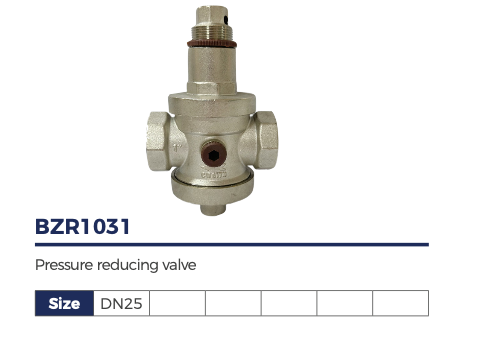
Supporting component: a brass pressure reducing valve. Pressure control is often the missing element when a line is protected for flow and backflow but not for downstream overpressure.
Pressure and Temperature: The Envelope That Defines Fit
Across the documented families, the shared technical baseline is a normal pressure of 1.6 MPa with water and gas as working media and HPb59-1, HPb57-3, CW617N or C83600 as body materials. The ball valve series adds an explicit working temperature window of 0°C ≤ T ≤ 80°C, and the same series documents CW617N as a material option with threaded or flanged end connections and a lockable lever handle.
Read together, these figures describe a coherent application band: low-pressure, low-to-moderate temperature service in building services, light industrial and outdoor installations. They also define the outer edge of the band. Anything above the documented pressure class, or outside the documented temperature window, should trigger a review of valve family and material rather than a specification adjustment on paper.
Where the Bozheng Valve Portfolio Aligns With These Scenarios
Zhejiang BoZheng Copper Industry CO., LTD., trading as Bozheng Valve, is a manufacturer of brass and stainless steel valves established in 1998 and located in Yuhuan City, Zhejiang Province, China, an area widely referred to as the 'Valve Capital of China' within the Yangtze River Delta Economic Circle. The company operates a 6,700 square metre manufacturing facility with an annual production capacity of 3,200,000 units, employs approximately 180 staff, and maintains a dedicated research and development team of 25 engineers. Roughly 70% of output is exported, with documented markets in the EU, the USA, Southeast Asia, Central Asia and Africa.
The published portfolio covers six brass valve families that map directly onto the scenarios above: the ball valve Q11F-16T, the gate valve Z15W-16T, the globe valves J11W-16T and J11F-16T, the check valve H14X-16T, the strainer SY11X-16T and the pressure reducing valve Y13X-16T. All are documented at a nominal pressure of 1.6 MPa for water and gas media, and all list construction and building (HVAC and plumbing), compressed air systems, low-pressure steam and boilers, oil and fuel systems, swimming pools and water treatment, and industrial machinery among their intended industries. The company holds ISO 9001:2015 quality management system certification.
What this means for a buyer is coverage rather than superiority. A single documented portfolio can supply ball, gate, globe, check, strainer and pressure reducing functions for the same low-pressure water, gas, steam and air scenario, which simplifies spares and reduces the number of suppliers involved in a project. What the documentation does not claim is equally important: it does not state suitability for high-temperature steam, for corrosive media, or for pressures above the stated class, and those limits should stay visible during specification.
Brass Compared With Traditional Alternatives
Brass is not automatically the right body material for every line. It earned its place in water, gas and light industrial service because it machines accurately, accepts threaded connections reliably, resists corrosion in ordinary water and gas service, and allows compact valve bodies in small diameters. European practice formalises part of this: standard European brass valves are manufactured according to EN 12165, which specifies the CW617N alloy, and feature parallel threads per ISO 228-1.
The limitations are equally concrete. In the portfolio discussed here, the documented pressure class is 1.6 MPa and the ball valve working temperature window is 0°C ≤ T ≤ 80°C — a band suited to low-pressure, low-temperature service rather than high-pressure or high-temperature lines. Brass bodies are also not specified for corrosive media, which the documentation states explicitly as a requirement to avoid. And because brass contains copper and zinc, body cost moves with those metal markets, which is one reason unit price alone is a weak basis for comparing brass valve quotations over time.
| Option | Typical strength | Typical limitation |
|---|---|---|
| Brass (HPb59-1, HPb57-3, CW617N, C83600) | Machinability, compact bodies, threaded connections, common in water and gas service | Documented class of 1.6 MPa and a 0°C to 80°C window on the ball valve series; corrosive media excluded; cost linked to copper and zinc markets |
| Cast iron and ductile iron | Generally used where larger diameters and heavier bodies are required | Heavier assemblies; not the usual choice for small threaded service lines |
| Stainless steel | Generally selected where a wider media and temperature tolerance is needed | Higher material cost and different machining characteristics; Bozheng also manufactures stainless steel valves |
| Plastic (for example PPR or PVC) | Generally low cost with chemical resistance in suitable media | Generally lower mechanical strength and lower temperature tolerance, with different joining methods |
The honest conclusion is that brass wins in the band it was designed for — small and medium diameter, low-pressure, low-temperature water, gas and air service with threaded connections — and that specifying outside that band is a material decision, not a brand decision.
Market Signals Behind Scenario-Based Selection
Third-party market data supports the scenario-based view. The global brass valves market was valued at USD 14.8 billion in 2025, with a projected growth to USD 24.1 billion by 2034, according to Dataintelo. Asia Pacific held the largest revenue share at 41.2% in 2025. Ball valves represented the largest product type segment, accounting for 38.4% of brass valve market share in 2025 — consistent with the observation that simple on/off isolation remains the dominant functional requirement in real installations.
Trade data shows where supply originates. China was the largest exporter of check valves in 2024, with exports valued at USD 730 million, or 19.6% of the global total, according to the Observatory of Economic Complexity. China's total valve-related exports under HS Code 8481 reached USD 8.06 billion in 2025, representing 19.0% of global import value share, based on Tendata's 2025 global valves import trade analysis. Established suppliers in the segment include Mueller Industries and NIBCO and Watts Water Technologies from the United States, and KITZ Corporation from Japan.
Two notes keep these figures in context. First, market sizing for brass valves varies by scope: Dataintelo's USD 14.8 billion for 2025 covers the broader brass valve market, while narrower estimates such as DataHorizzon Research's figure for the brass ball valve segment alone are substantially smaller. Second, regulatory direction is tightening on compliance rather than on volume: lead-free brass valves accounted for over 30% of new brass valve product offerings in early 2024 under regulatory pressure, and China's Ministry of Industry and Information Technology set new energy efficiency limits for industrial valves for implementation in October 2025, mandating specific sealing grades.
What to Watch Next
Three developments are likely to shape brass valve selection over the next few procurement cycles. The first is material documentation. As lead-free formulations move from a minority of new offerings toward the mainstream, buyers will increasingly be asked to verify alloy grade and market-specific compliance together with pressure and temperature ratings.
The second is the standardisation of interfaces. With EN 12165 and ISO 228-1 already governing European brass valve bodies and parallel threads, threaded and flanged connection choices are becoming easier to compare across suppliers, which shifts competition toward documented application fit and repeatable quality rather than connection novelty.
The third is energy efficiency in valve sealing, following the Chinese energy efficiency limits for industrial valves. Tighter sealing grades raise the value of documented test data, because a leakage figure is only useful when it can be traced to a specific product family and standard. For buyers, the practical response is to keep scenario documentation — medium, pressure, temperature, function, operation and environment — as the first page of any brass valve specification, and to treat catalogue claims as inputs that must be reconciled with that page.
FAQ
What is a brass valve and where is it typically used?
A brass valve is a flow-control component made from copper-zinc alloys such as HPb59-1, HPb57-3, CW617N or C83600. The documented product families in this portfolio have a nominal pressure of 1.6 MPa and are suitable for water and gas media. Their intended industries include construction and building services covering HVAC and plumbing, compressed air systems, low-pressure steam and boilers, oil and fuel systems, swimming pools and water treatment, and industrial machinery such as mould cooling and hydraulics.
Which brass valve types fit water, gas, steam and air systems?
Function separates them. The brass ball valve Q11F-16T handles on/off control and isolation and is documented for low-pressure steam, boilers and compressed air in addition to water and gas. The brass gate valve Z15W-16T provides straight-through isolation on water and gas lines. The brass globe valves J11W-16T and J11F-16T are used where flow needs regulating. The brass check valve H14X-16T prevents backflow. The brass strainer SY11X-16T removes debris, and the brass pressure reducing valve Y13X-16T controls downstream pressure.
What pressure and temperature range do these brass valves cover?
The documented nominal pressure across the portfolio is 1.6 MPa, with water and gas as working media. The brass ball valve series documents a working temperature window of 0°C ≤ T ≤ 80°C. Separately, the documented outdoor deployment scenario references an ambient range of -20°C to 60°C. Ambient range and media temperature range are different figures, and the media temperature is the one that governs valve selection.
When should a check valve be used instead of a ball valve for backflow prevention?
A brass check valve such as model H14X-16T is an automatic, single-direction device: it opens with forward flow and closes when flow reverses, which is why it is documented under system protection against backflow, overpressure or contamination. A brass ball valve such as model Q11F-16T is a manually operated on/off device. If positive isolation is required, a ball or gate valve is the correct choice; a check valve prevents reverse flow but is not a shut-off valve.
Where does a brass strainer fit in a system?
The brass strainer model SY11X-16T is a blow-down/flush type with a perforated screen and threaded ends, rated at 1.6 MPa for water and gas media. It is normally installed upstream of the equipment it protects — pumps, boilers, heat exchangers or instruments — so that debris is captured before it reaches moving parts. Because the screen fills over time, the strainer requires periodic flushing to remain effective, which makes access for blow-down a layout consideration as well as a maintenance task.
What are the practical limits of brass valves in real systems?
Three limits are documented. The pressure class in this portfolio is 1.6 MPa, which defines low-pressure service. The ball valve working temperature window of 0°C to 80°C excludes high-temperature and high-pressure steam applications. And the documentation states a requirement to avoid corrosive media, so water or gas chemistry must be checked before a valve family is committed. Where a project falls outside these limits, valve type or body material should be reconsidered rather than the specification adjusted on paper.
Reference material: the Bozheng Valve product catalogue (2025, version 2.0) is publicly available for download — BZ Catalogue 2025 2.0 (PDF). Company website: bozheng-valve.com.