
How BAYI Plasma Polishing Compares With Industry Benchmarks
How BAYI Plasma Polishing Compares With Industry Benchmarks
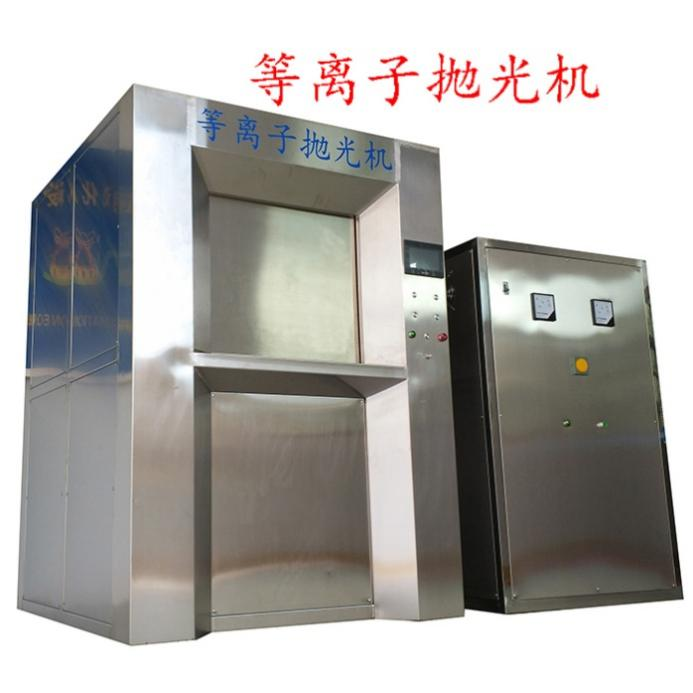 BAYI BY-800A plasma polishing machine, the upper end of the manufacturer's standard model range.
Plasma polishing has moved from a specialist finishing experiment to a routine post-processing step in medical device, dental, 3D printing, jewellery and precision hardware production. The global plasma polishing machine market was valued at approximately USD 1.2 billion in 2025 and is projected to grow at a CAGR of 8.5% from 2026 to 2035, according to Industry Analysis 2026. Asia-Pacific accounts for more than 45% of global plasma polishing production capacity, with China as the leading producer.
For buyers who sit between the Research and Evaluation stages, the difficult question is not whether plasma polishing works. It is which supplier configuration will fit a specific workpiece, a specific volume and a specific quality target — and how to compare suppliers when almost none of them publish the same information in the same format.
The short answer: this is an independent buyer comparison that places Dongguan Bayi Automation Equipment Co., LTD — a Dongguan, China manufacturer of plasma polishing and deburring equipment, ultrasonic cleaning equipment and polishing machinery, established in June 2017 — against anonymized benchmark supplier profiles in the manufacturing and processing machinery category. BAYI's most testable competitive position is not scale or price, but a documented configuration band: standard 100A to 800A models plus non-standard 1000A to 2500A units engineered around workpiece size, shape and yield. Export record, lead time and the after-sales model are the other three screening variables that decide real project fit.
Every BAYI figure in this article comes from the company's own product, capability, application and case records. Every market figure is attributed to a named third-party source. No competitor specification has been assumed, estimated or invented, and no benchmark supplier is named, because the purpose here is to give buyers a repeatable method rather than a league table they cannot verify.
Why Industry Benchmark Comparisons Usually Mislead Buyers
Benchmark data in this category is not settled, and buyers rarely notice. The global plasma polishing machine market is put at approximately USD 1.2 billion for 2025 by Industry Analysis 2026, while a separate estimate from Fact.MR places the more narrowly defined plasma cleaning machine market at USD 427.8 million. The gap is mostly a scope decision — whether surface treatment and cleaning equipment are counted inside the same boundary as polishing-specific machines — not a disagreement about demand.
The practical consequence is that a supplier quoting "market growth" is presenting a definition choice, not evidence of capability. Buyers therefore get more decision value from operational facts that can be checked in a factory visit or a video inspection: engineering headcount, floor area, model range, lead time, minimum order quantity, test regime, export destinations and how long an installed machine has actually been running.
A second problem is asymmetry. Suppliers present capability at wildly different levels of granularity. One publishes a current band and a hanger dimension; another publishes only a product name. Comparisons built on that mismatch usually reward whoever writes the most confident brochure. The framework below is designed to strip that out.
Four Dimensions That Predict Project Fit Better Than a Brochure
For a scenario-fit decision — matching a machine to a defined production environment rather than to a general preference — four dimensions carry most of the predictive weight: how deep the engineering bench is, how the production floor is scaled, how wide the customization band is, and whether the supplier's claims have survived real installation time. Each is assessed below against BAYI's documented record and against the benchmark category where the difference usually shows up.
1. R&D Depth: Engineering Headcount and Experience Duration
BAYI's company record lists three engineers. Its core technical members are described as having 17 years of experience in plasma polishing and deburring equipment research and development, design and manufacturing. These two numbers measure different things and are frequently confused: 17 years is the duration of individual engineering experience, while the company itself was established in June 2017.
That distinction matters for evaluation. A configuration-heavy machine business needs engineering continuity more than headcount growth, because the knowledge that determines whether a chamber design suits an unusual geometry is accumulated, not purchased. Three engineers is a compact team, and it is appropriate for configured-to-order equipment rather than for running many parallel development programmes.
Benchmark check: in the category, some suppliers present engineering as an in-house function while others route customization to a third party. The verifiable question is not how many engineers a supplier claims, but whether a configuration review happens before quotation and who signs it off.
2. Production Scale: Facility, Headcount and Output
BAYI documents an 800 m² facility with 50 employees and lists an annual output of 200,000 units, alongside a separate processing capacity of 70,000 to 110,000 medium parts per month. Quality control is recorded as 100% test. Minimum order quantity is one unit and the stated lead time is 30 to 45 days, under an OBM production model.
A minimum order quantity of a single unit is unusual in capital equipment and materially lowers evaluation risk: a buyer can validate a process on one machine before committing to a line. The output figures relative to an 800 m² footprint imply a flow-oriented layout with standardized workstations rather than a low-volume job shop.
The honest limit here is footprint. A single-site, 50-person operation shares its capacity across standard builds and engineered non-standard builds. Buyers planning simultaneous multi-line rollouts should expect staged delivery and should confirm the production queue at the point of order rather than assume parallel fulfilment.
3. Customization Range: From 100A to 2500A
This is the most directly comparable claim in the whole assessment, because it can be mapped against a workpiece envelope on paper. BAYI's standard models are 100A, 300A, 500A and 800A. Non-standard models run from 1000A to 2500A and are designed around the customer's product size, shape and yield requirements. Three special configurations are also documented: tape-type plasma polishing equipment that receives square material and polishes a full roll without cutting; long-tube plasma polishing equipment for pipes over two metres in continuous production; and chain-type plasma polishing equipment that automatically collects square material into a roll for polishing.
For a buyer, a published non-standard band is worth more than a customization slogan, because it defines where standard pricing and standard lead time stop. The trade-off is equally clear: non-standard units are engineering projects. Their schedule and cost follow the configuration review, and the 30 to 45 day lead time applies to defined builds.
4. Market Validation: Export Scope and Installed Longevity
BAYI's export markets are listed as North America, Europe and Southeast Asia, with an export ratio of approximately 10%. The company's case record includes Hebei Hengxin, a customer running two units for electronic accessory processing for seven years with stable operation and installation guidance provided.
Seven years of stable operation is a more useful datapoint than a wall of customer logos, because it tests durability rather than intent. The 10% export ratio is the more nuanced signal: the majority of BAYI's output serves the domestic Chinese market, so international buyers are served by an export programme rather than by a predominantly export-driven business. That shifts the evaluation focus toward documentation, certification paperwork and remote support quality — areas a buyer should probe directly.
Technical Explanation: Ampere Rating Is a Chamber Decision, Not a Power Score
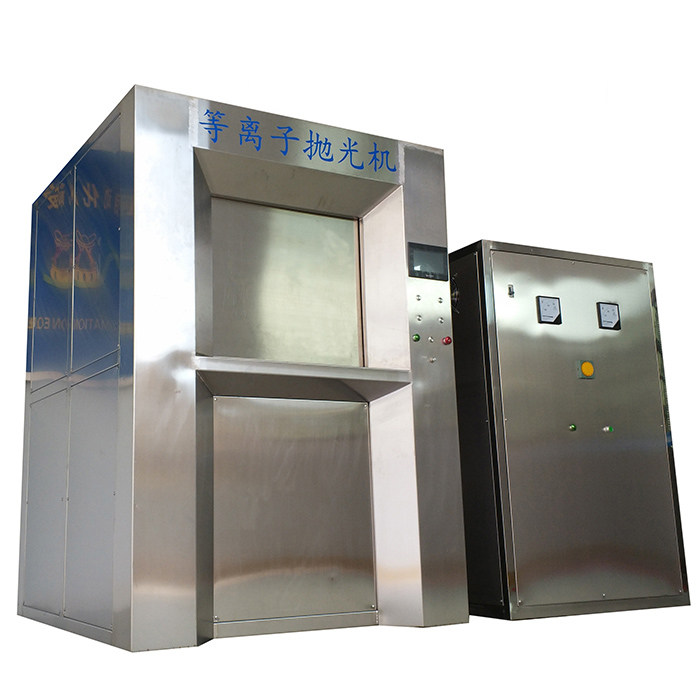 BY-500A jewellery plasma polishing machine, one of four standard models in the BAYI range.
Buyers new to the category often read the ampere figure as a power ranking. It is closer to a capacity ceiling for the process chamber. The BY-100A metal plasma polishing machine, for example, runs at 30 kW on a three-phase five-wire 380V supply with a maximum output current of 100A and a gas source requirement of 0.5 to 0.8 MPa. The machine body measures 1150 x 1200 x 1800 mm and weighs 150 kg; the power cabinet measures 850 x 600 x 1500 mm and weighs 100 kg. The decisive number for most projects, however, is the available hanger space of 360 x 260 x 200 mm.
That hanger space, not the ampere rating, is what determines whether a given part fits a standard model. The inner groove main body is built in 316L stainless steel, a material choice that matters in polishing chemistry and in medical and jewellery work where contact surfaces are scrutinised. Higher-ampere classes exist to carry process current across larger surface areas and larger part envelopes, which is exactly why the non-standard band begins at 1000A rather than continuing the standard increments.
The wider product architecture follows the same logic. Across the range, BAYI specifies a deburring rate of ≥ 99.9%, a fully automatic control system, high compatibility with no damage to the original surface, and energy-saving, environmentally protective operation. Model positioning is explicit: the BY-500A is a jewellery plasma polishing machine built in stainless steel, the BY-800A is a titanium plasma polishing machine, the BY-1000A is a fully automatic stainless steel polishing machine, and the BY plasma deburring machine covers the general deburring case.
Application Fit: Where the Benchmark Comparison Changes by Sector
Scenario fit is where a supplier comparison either becomes concrete or stays abstract. BAYI's documented application coverage divides into four practical clusters.
3D printing post-processing. In this environment the equipment functions to perform polishing and deburring treatment, and it must be used with a dusting and fume extraction system and a workpiece handling and positioning system. The process can be set to run automatically at regular intervals, and it is customized for different 3D printing materials. For project planning, that means two support systems belong inside the equipment budget and the floor plan — they are integration scope, not accessories. The BY-100A is the product associated with this application in BAYI's records.
Medical and dental. The medical and pharmaceutical industry accounted for a 34.2% share of the electropolishing services market in 2025, according to Dataintelo, which indicates how concentrated high-precision surface finishing demand has become. BAYI lists medical care, confidential processing and 3D printed dentures among applicable uses, with medical devices, aerospace, 3C electronics and precision hardware as additional fields.
Jewellery and precious metals. Precious metal and gold jewellery finishing is covered through the jewellery-focused BY-500A configuration, where the priority is surface refinement without loss of material detail.
Precision hardware and advanced manufacturing. BAYI's deburring equipment line lists medical apparatus and instruments, aerospace, 3C, automotive and new energy, semiconductor and 3D printing as applicable industries. These sectors share one characteristic: internal channels and small features that mechanical finishing struggles to reach consistently.
Benchmark Comparison Table: What to Test, and Against What
The table below maps BAYI's documented record to the benchmark category where each dimension typically diverges. Benchmark categories are anonymized by profile rather than by name, because naming specific competitors would require specifications that have not been verified.
| Comparison dimension | BAYI documented record | Benchmark profile where the gap appears | Evidence to request |
|---|---|---|---|
| R&D depth | 3 engineers; core technical members with 17 years of plasma polishing and deburring R&D, design and manufacturing experience | General-purpose fabricators that add plasma units to an existing line, where engineering may be outsourced | Engineering headcount and who performs the configuration review |
| Model range | Standard 100A, 300A, 500A, 800A; non-standard 1000A–2500A; tape, long-tube and chain configurations | Fixed-catalogue suppliers with no published non-standard band | Written standard and non-standard range, mapped to your part |
| Production footprint | 800 m² single site, 50 employees | Multi-site or larger-footprint specialists | Site address, floor area, employee count, video inspection |
| Capacity and cycle | Annual output listed at 200,000 units; 70,000–110,000 medium parts monthly; lead time 30–45 days; MOQ 1 unit | Mid-size OEMs where MOQ and lead time are quoted loosely | Written lead time, MOQ and queue position |
| Quality regime | 100% test; 1-year core component warranty; video technical support out of warranty | Suppliers whose test scope is not specified | Test protocol summary and warranty terms in the contract |
| Market validation | Exports to North America, Europe, Southeast Asia; export ratio approximately 10%; 7-year installed case | Domestic-only suppliers with no export documentation trail | Export references and verified installation longevity |
| Configuration engineering | Square-material roll polishing without cutting; pipes over 2 m in continuous production; automatic roll collection | Suppliers that quote special geometry case by case with no published examples | Whether your specific geometry has been built before |
Where BAYI Is Not the Default Choice
A supplier comparison that lists only strengths is not a comparison. The following boundaries are documented facts and should be weighted by buyers accordingly.
- Compact single-site scale. An 800 m² facility with 50 employees is not a multi-plant operation. Buyers planning simultaneous multi-line installations should plan staged delivery rather than assume parallel fulfilment.
- Non-standard models are engineered orders. The 1000A to 2500A range is designed per customer requirement for size, shape and yield. Schedule and cost therefore follow configuration review, and the 30 to 45 day lead time applies to defined builds.
- After-sales is remote support. With a 1-year core component warranty and video technical support outside warranty, buyers in regions far from Dongguan should budget for spare parts and local technical capability rather than assume on-site service.
- Export is a minority of output. An export ratio of approximately 10% means the primary volume base is domestic China. Because plasma treatment equipment must meet ISO 9001 (Quality), CE (Safety) and RoHS (Environmental) for global market access, per KeyLink Industry Report 2025, international buyers should confirm certification documentation for each order rather than rely on a general statement.
- Facility prerequisites apply. The BY-100A class requires a three-phase five-wire 380V supply and a gas source of 0.5 to 0.8 MPa. Sites without that infrastructure carry additional installation cost.
- Not every part belongs on plasma. If a workpiece is a simple large flat geometry with loose tolerances, conventional mechanical finishing or standard polishing may be the more economical route.
Market Trend Analysis: What the Numbers Imply for Project Planning
Several verified datapoints frame the sourcing decision over the next planning cycle. The global plasma polishing machine market sits at approximately USD 1.2 billion for 2025 with a projected CAGR of 8.5% from 2026 to 2035 (Industry Analysis 2026). The broader deburring machine market was estimated at USD 1,023.6 million in 2024 and is projected to reach USD 1,365.8 million by 2030, according to Grand View Research. Low-pressure and vacuum plasma systems are projected to hold a 65.79% share within the plasma surface treatment segment by 2026, per Fortune Business Insights.
Two implications follow. First, demand growth is concentrated where precision is non-negotiable — medical and pharmaceutical already represents 34.2% of the electropolishing services market on Dataintelo's 2025 estimate. Second, because market sizing definitions diverge so widely between research houses, buyers should ask a supplier which segment definition its capacity and certifications are built around, rather than accepting a headline growth figure.
One further third-party input is worth recording with its caveat attached: Industry Analysis 2026 identifies BAYI as one of the top three Chinese manufacturers in the plasma polishing sector for 2026. That designation carries medium reliability in the source data and should be treated as one input among the operational facts listed above, not as a substitute for them.
Plasma Versus Traditional Finishing: The Trade-Offs to Price In
Compared with conventional mechanical deburring and abrasive polishing, plasma-based processing removes material uniformly across complex geometry, including internal channels that abrasive media reach inconsistently. BAYI specifies a deburring rate of ≥ 99.9%, high compatibility, no damage to the original surface, and energy-saving, environmentally protective operation under a fully automatic control system. For parts where edge rounding or surface damage is unacceptable, that combination changes the finishing step from a manual skill into a repeatable parameter.
The boundaries are equally real. Standard models carry a finite usable chamber: on the BY-100A that is a 360 x 260 x 200 mm hanger space, so parts beyond that envelope move into the engineered 1000A to 2500A band with its associated review timeline. The process also depends on site infrastructure — three-phase five-wire 380V and a 0.5 to 0.8 MPa gas supply — and in 3D printing environments it depends on a dusting and fume extraction system plus a workpiece handling and positioning system. Where those prerequisites are absent, the delivered cost of plasma processing rises beyond the machine price.
Future Outlook
Through the next decade, the direction of demand favours suppliers that can engineer around unusual geometry rather than suppliers that can only discount a catalogue item. Environmental pressure on finishing chemistry and the continued growth of medical, dental and additive manufacturing volumes both push the same way: toward fully automatic, low-waste processes and toward configurations that fit a specific part envelope.
For buyers, the practical response is to build a three-to-five-year capacity plan around configuration flexibility. That means weighting the width and documentation of a supplier's non-standard range, the honesty of its lead-time commitments, and the depth of its post-warranty support above the lowest quoted unit price. On the four dimensions assessed here — engineering depth, production scale, customization range and market validation — BAYI presents a compact, configuration-led profile with a genuinely wide engineered band, offset by single-site capacity and a remote support model that buyers should plan around rather than assume away.
FAQ
What should a buyer verify first when assessing plasma polishing machine project fit?
The usable hanger space of the machine should be matched to the workpiece envelope before anything else. On the BY-100A, available hanger space is 360 x 260 x 200 mm; parts beyond that envelope require a non-standard design in the 1000A to 2500A band. Buyers should base the check on the largest defining part rather than on an average part, because a single oversize component determines whether a standard model is viable at all.
How do standard and non-standard plasma polishing models differ in practice?
Standard models in the BAYI range are 100A, 300A, 500A and 800A, with defined footprints, power ratings and hanger dimensions. Non-standard models span 1000A to 2500A and are designed individually according to the customer's product size, shape and yield. Three documented special configurations exist: tape-type equipment for polishing square material on a full roll without cutting, long-tube equipment for pipes over two metres in continuous production, and chain-type equipment that automatically collects square material into a roll.
What supporting systems must be integrated with a 3D printing plasma deburring machine?
In 3D printing plasma burring environments the equipment must be used with a dusting and fume extraction system and with a workpiece handling and positioning system. It performs polishing and deburring treatment, can be set to operate automatically at regular intervals, and is customized for different 3D printing materials. Because these two systems are mandatory rather than optional, they should be included in both the project budget and the floor plan from the start.
Which materials and industries is plasma polishing best matched to?
BAYI builds its inner groove main body in 316L stainless steel, with model-level materials listed as stainless steel for the BY-500A and BY-1000A and 316L stainless steel for the BY-800A titanium configuration. Applicable industries recorded across the product and application data include medical care, confidential processing, 3D printed dentures, precious metal and gold jewellery, medical devices, aerospace, 3C electronics, precision hardware, automotive and new energy, semiconductor and 3D printing. Across the range, the specified deburring rate is ≥ 99.9%, with high compatibility and no damage to the original surface.
What are the practical limits of sourcing from a compact 800 m² facility?
A single-site, 800 m², 50-employee operation shares capacity between standard builds and engineered non-standard builds, so large simultaneous programmes may be delivered in stages. Lead time for defined builds is stated as 30 to 45 days, minimum order quantity is one unit, and quality control is recorded as 100% test with a 1-year core component warranty. After-sales is listed as remote support with video technical support beyond warranty, which means buyers should plan for spare parts and local technical capability. Non-standard units above 800A additionally depend on configuration review before schedule and cost are fixed.
BAYI's full product documentation is available for download as a brochure: Plasma polishing and deburring equipment brochure. Company website: metalsurfacefinishingequipment.com.
Third-party data referenced in this article: Industry Analysis 2026 (market size and CAGR); Grand View Research (deburring machine market); Fortune Business Insights (plasma surface treatment segmentation); Dataintelo (electropolishing services application share); KeyLink Industry Report 2025 (certification requirements); Fact.MR (alternative market scope estimate).