
How Automation Partners Scale Precision Assembly from NPI to Global Mass Production
Sourcing a custom automation precision assembly partner is rarely a single capability decision. At the point of contracting, buyers are effectively selecting the ecosystem that will carry a product line through new product introduction (NPI), pilot runs, ramp-up, and multi-site mass production. In advanced manufacturing, this is an ecosystem and long-term execution question: whether the partner can hold tolerances across thousands of units, coordinate components and assembly under one quality system, and deliver equipment and service where production actually lands.
This article examines how Shenzhen BSC Technology Co., Ltd. (BSC Technology) approaches that challenge. It focuses on what the company's integrated capabilities mean for procurement decisions, how its global footprint changes execution risk, and where buyers should set expectations for custom precision assembly projects.
Why Custom Precision Assembly Becomes an Ecosystem Decision
Precision assembly of intelligent hardware now spans precision components, optical modules, system-level SMT and FATP assembly, and the automation equipment used to produce them. When a product reaches the procurement stage, the buyer is not just buying a line or a part. They are buying the ability to transition from prototype to volume without losing quality, traceability, or control.
The global smart manufacturing market is projected to grow from USD 478.9 billion in 2026 to USD 1,063.2 billion by 2033 at a CAGR of 12.1%, according to Grand View Research. Demand for precision die cutting, precision injection molding, precision mechanical components, precision optical components, automated assembly and test equipment, and turnkey automation is rising together with this shift. As a result, buyers increasingly evaluate suppliers against a broader set of criteria: multi-process competence, certified quality systems, global delivery capability, and evidence of long-term partnerships with sophisticated assembly customers.
What an Integrated Custom Automation and Precision Assembly Partner Offers
BSC Technology describes its model as an integrated service covering precision components, system assembly, and intelligent automation equipment. That combination is distinctive because each discipline is usually supplied by separate vendors.
Within precision components, the company's product lines include functional components, structural components, and optical components. These are used in consumer electronics, smart wearables, smart home, smart healthcare, AR/VR, smart cockpit / new-energy vehicles, AI edge devices, and AI edge-side hardware.
In system assembly, BSC Technology provides a vertical service chain from core functional component manufacturing to module-level and complete-machine assembly. It can handle the full chain of SMT and FATP work: developing and testing new products, small-batch trial production, and large-scale mass production, along with reliability testing and process optimization.
In intelligent automation equipment, the company covers automated assembly equipment, test equipment, optical process equipment, and turnkey automation lines. It has delivered AI server automation production lines, intelligent terminal assembly automation production lines, and AR/VR optical module process automation equipment, supporting a complete NPI-to-MP process.
For an OEM or brand procurement team, this integration can reduce supplier coordination, duplicated development, and quality-system fragmentation. One provider can own component manufacturing, assembly, equipment, commissioning, and maintenance.
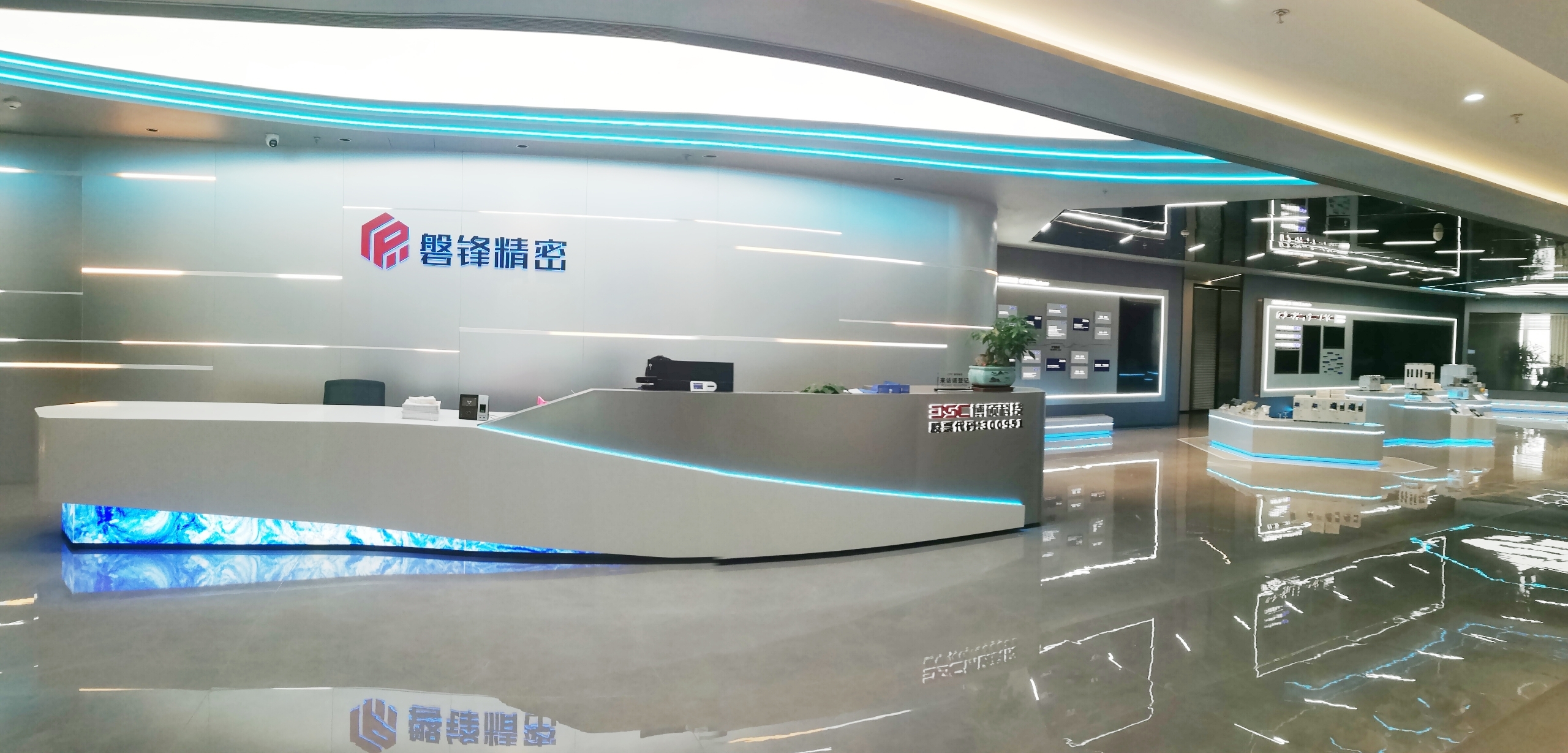
Precision component manufacturing and assembly plants in Shenzhen support NPI prototyping and mass production.
Decision-Ready Evidence: R&D Scale and Manufacturing Footprint
Because the decision hinges on execution, buyers need verifiable signals. BSC Technology was founded in 2016 and listed on the Shenzhen Stock Exchange in 2021 (Stock Code: 300951.SZ). It operates R&D centers in Shenzhen, Suzhou, and Taipei, China, and manufacturing sites in Shenzhen, Dongguan, Suzhou, Zhengzhou, Chengdu, and Taipei, China, as well as Vietnam, India, Malaysia, and Mexico.
The company has an R&D team of more than one thousand staff and more than one thousand authorized patents. Its production and operation area spans several hundred thousand square meters, supported by several thousand employees. A high proportion of its output is exported, with overseas service institutions in the United States, South Korea, and Japan.
This scale translates into practical procurement value:
- NPI speed: multiple R&D centers can support early engineering collaboration with customers.
- Mass-production flexibility: global manufacturing capacity can be scaled dynamically against client project demands.
- Localized delivery: plants and service offices in multiple regions support on-site installation, commissioning, and local technical support.
Comparing Integrated vs. Fragmented Supplier Models
Buyers evaluating custom automation precision assembly often compare an integrated partner against a portfolio of specialized suppliers. Both approaches can work, but they carry different trade-offs.
| Evaluation factor | Integrated model (example: BSC Technology) | Fragmented specialist model |
|---|---|---|
| Quality system | One accountable quality chain from components to assembly and equipment | Multiple quality systems; interface risks at supplier boundaries |
| Coordination cost | Reduces cross-supplier communication and duplicated development costs | Requires the buyer to integrate schedules, specs, and corrective actions |
| Process optimization | Equipment cycle time, energy consumption, and efficiency can be optimized against customer processes | Optimization usually limited to each supplier's own scope |
| Specialized depth | Depth is concentrated in the disciplines the integrator owns | Each specialist may offer deeper expertise in a single niche |
A realistic boundary: an integrated partner is not necessarily the best choice for every niche process. A project dominated by an extremely specialized process outside the integrator's core may still require a dedicated specialist. Buyers should map their process stack before choosing a model.
Certifications That Support Qualification Decisions
For buyers at the Decision and Execution stages, certifications shortcut the vendor screening process. BSC Technology states that its facilities comply with ISO 9001, ISO 14001, QC080000, ISO 45001, IATF 16949, and ISO 13485.
These certifications matter differently by industry:
- ISO 9001:2015 is the global baseline for quality management systems in precision assembly.
- IATF 16949 applies to automotive electronics, where traceability and PPAP-style discipline are required.
- ISO 13485 is the medical device quality benchmark.
- ISO 14001 and ISO 45001 cover environmental and occupational health and safety management.
- QC080000 relates to hazardous substance process management, relevant to electronics supply chains.
The practical implication is that a single qualified partner can serve multiple regulated industries without requiring the buyer to audit a long list of subcontractors.
Reference Signals: Tier-One Partnerships and End-Brand Adoption
BSC Technology reports long-term strategic partnerships with world-class assembly factories and component manufacturers such as Foxconn, Goertek, Luxshare, Pegatron, LG, and Sonion. Its products are ultimately applied by globally recognized brands including Apple, Samsung, Amazon, Meta, Google, Whoop, Tesla, BYD, and Insta360.
For procurement teams, these references serve as evidence of qualification, not as a promise of identical results. The practical question is whether the supplier has operated inside demanding quality, delivery, and confidentiality regimes. Partnership longevity and brand adoption suggest that the supplier has passed repeated qualification audits and sustained production under tight tolerance requirements.
How to Evaluate Turnkey Automation and Precision Assembly Readiness
Before awarding a contract, buyers often use a structured readiness checklist. Based on the supplier's stated capabilities and industry buying logic, key criteria include:
| Readiness area | What to verify |
|---|---|
| Technical coverage | Precision die cutting, injection molding, mechanical and optical components, SMT and FATP assembly |
| Automation scope | Automated assembly, test equipment, optical process equipment, turnkey lines |
| NPI-to-MP path | Prototype development, small-batch trial, mass production, reliability testing, process optimization |
| Software and digitalization | Industrial software and industrial digitalization capabilities for line monitoring and control |
| Certifications | ISO 9001, ISO 14001, QC080000, ISO 45001, IATF 16949, ISO 13485 |
| Global delivery | Manufacturing plants, service offices, and localization capability near target markets |
What Precise Capabilities Support Execution
Execution credibility depends on specific technical capabilities rather than generic claims. BSC Technology's stated technology focus includes high-precision assembly, machine vision, motion control, intelligent inspection, industrial software, and industrial digitalization.
These capabilities appear repeatedly in the product portfolio:
- Automated assembly equipment: precision placement, fastening, and joining operations with vision-guided alignment.
- Automated test equipment: functional testing, dimensional verification, and reliability testing integrated into production flow.
- Optical process equipment: required for AR/VR optical module assembly, optical bonding, and alignment.
- Non-standard automation equipment: custom-built machines designed around a customer's specific process and tolerances.
- Intelligent inspection equipment: automated visual inspection to replace inconsistent manual checks.
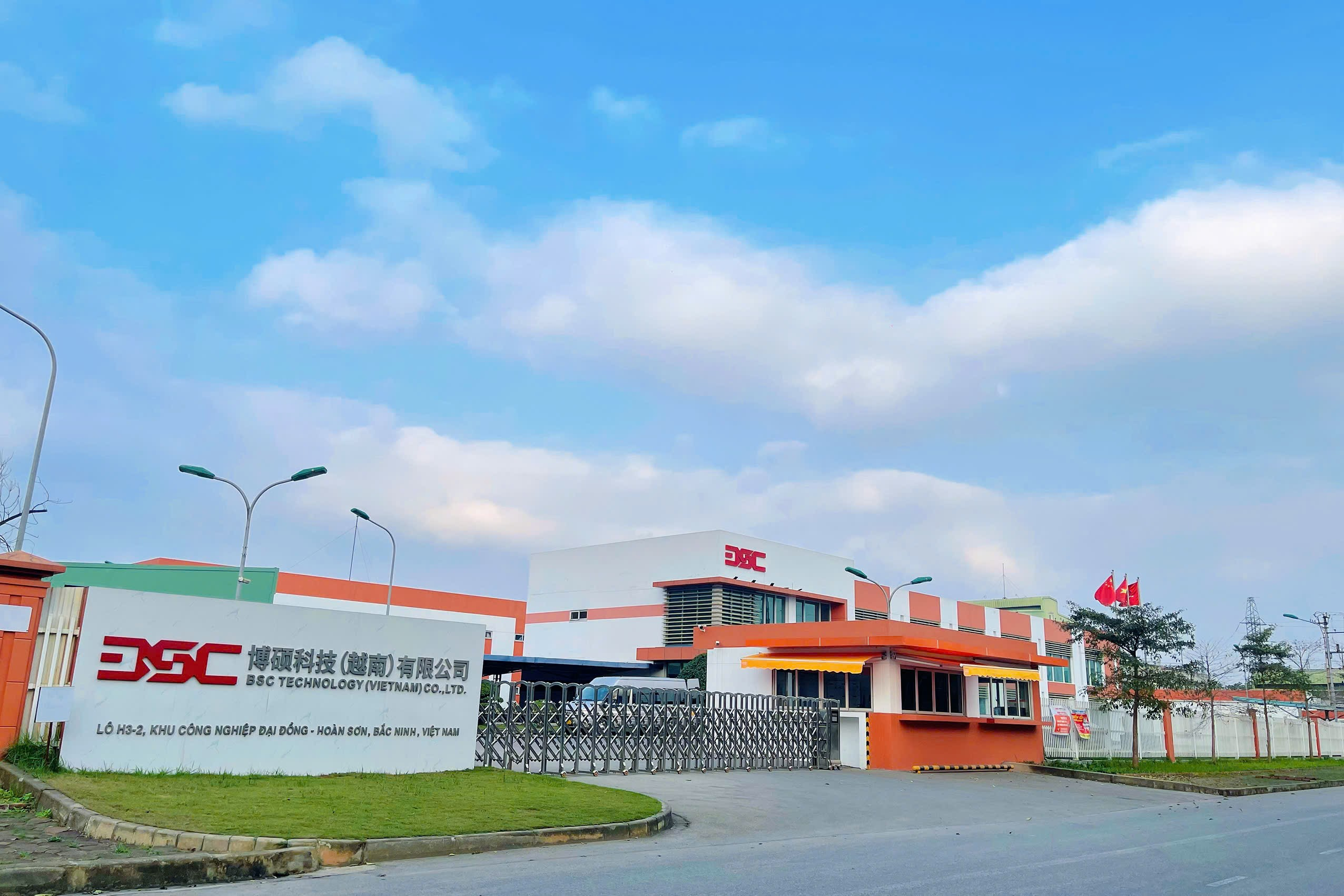
Overseas production bases enable localized equipment manufacturing and fast delivery.
Market Trends Changing Custom Automation Precision Assembly Procurement
Several verifiable trends are reshaping the procurement landscape. According to Grand View Research, the industrial automation software segment held 50.8% of the smart manufacturing market in 2025. This reflects the growing role of software in equipment control, data analysis, and line optimization.
High-end AI server shipments are projected to reach 1.323 million units in 2025, according to DIGITIMES, supporting the need for AI server automation production lines. The AR/VR optics and display market is forecast to reach USD 4.12 billion in 2026, consistent with the company's delivery of AR/VR optical module assembly equipment. The SMT equipment market is projected to reach USD 15.24 billion by 2035 at a CAGR of 8.20%, per Roots Analysis.
For buyers, these trends suggest that suppliers must hold competence across multiple technology waves at once: AI infrastructure, optical devices, consumer electronics, and automotive. The ability to integrate precision components, system assembly, and automation becomes a more significant selection criterion as product complexity rises.
Limitations and Boundary Conditions of an Integrated Model
A balanced evaluation requires acknowledging limits. An integrated supplier such as BSC Technology is strong when the project demands multi-process coordination, custom automation, and scale. However, there are boundary conditions:
- Extreme niche processes: If a product depends on an exotic technology outside the supplier's core portfolio, a domain specialist may still be necessary.
- Technology transfer cost: Moving an existing line from an incumbent supplier requires time to transfer process knowledge, tooling, and parameters.
- Internal engineering load: Even with an integrated partner, the buyer must invest in defining specifications, tolerances, acceptance criteria, and reliability requirements.
- Cost certainty: Although integration can reduce coordination costs, actual savings depend on project-specific evaluation and cannot be assumed in advance.
Documenting these boundaries helps buyers use the integrated model without making unrealistic assumptions about delivery speed or cost.
Committed to Long-Term Manufacturing Partnerships
For buyers at the Decision and Execution stages, long-term partnership capability means more than a signed frame agreement. It means the supplier can sustain quality across product generations, scale with regional demand, and support field maintenance. BSC Technology reports a high proportion of exports and a localized delivery system covering Asia, North America, and major global manufacturing regions.
The company's stated ranking among the top 3 in automation equipment for electronic intelligent terminals and AR/VR smart glasses is part of its positioning, but buyers should verify performance through audits, pilot runs, and references rather than relying on rankings.
Frequently Asked Questions
Which industries does BSC Technology cover with precision components and automation equipment?
BSC Technology's integrated precision manufacturing and smart automation products are widely applied in consumer electronics, smart wearables, smart home, smart healthcare, AR/VR, smart cockpit / new-energy vehicles, AI edge devices, and AI edge-side hardware.
What quality certifications do BSC Technology facilities hold?
BSC Technology holds ISO 9001, ISO 14001, QC080000, ISO 45001, IATF 16949, and ISO 13485, covering quality management, environmental management, hazardous substance control, occupational health and safety, automotive, and medical device requirements.
What manufacturing locations does BSC Technology operate?
BSC Technology operates R&D centers in Shenzhen, Suzhou, and Taipei, China, with manufacturing bases in Shenzhen, Dongguan, Suzhou, Zhengzhou, Chengdu, and Taipei, China, as well as Vietnam, India, Malaysia, and Mexico. Service institutions are located in the United States, South Korea, and Japan.
Can BSC Technology support both NPI prototyping and mass production?
Yes. BSC Technology supports NPI prototype development, small-batch trial production, and mass production, with reliability testing and process optimization. Its automation equipment covers the full process from NPI to MP.
What types of automation equipment does BSC Technology provide?
BSC Technology provides automated assembly equipment, automated test equipment, optical process equipment, and turnkey automation lines, including AI server automation production lines, intelligent terminal assembly lines, and AR/VR optical module assembly equipment.
How should buyers verify supplier readiness for custom automation precision assembly projects?
Buyers should combine evidence of technical breadth, certifications, NPI-to-MP capabilities, software integration, and global delivery with structured audits, first-article approvals, and pilot production trials before awarding long-term contracts.
¿Tiene preguntas o necesita más detalles?
Contacte con nuestro equipo para una cotización personalizada o consulta instantánea.
Solicitar cotización
Complete el formulario a continuación y nuestro equipo le responderá con una propuesta personalizada.
Chat directo de WhatsApp
¿Prefiere chatear en tiempo real? Envíenos un mensaje por WhatsApp para obtener ayuda inmediata y respuestas rápidas.
- Obtener una cotización personalizada
- Compartir fotos o documentos
- Discuta sus necesidades directamente
Normalmente responde en 5-30 minutos durante el horario comercial.