
Hot Tub Supply Partnerships: A 2026 Decision Framework for Distributors and Project Buyers
The first shipment is only the starting point of a hot tub supply relationship. The real test usually comes later: Can the manufacturer hold quality across multiple orders? Can it respond when a distributor expands a product range? Can it support project buyers when site schedules change? For buyers moving from decision to execution, the procurement question shifts from product specification to supplier continuity.
This article approaches long-term hot tub sourcing as an operational decision. It combines market data, manufacturer-reported facts, and generally accepted procurement checks. Victoria Star Spa is used as one export-oriented manufacturer example; this is not a recommendation that every buyer should select the same supplier.
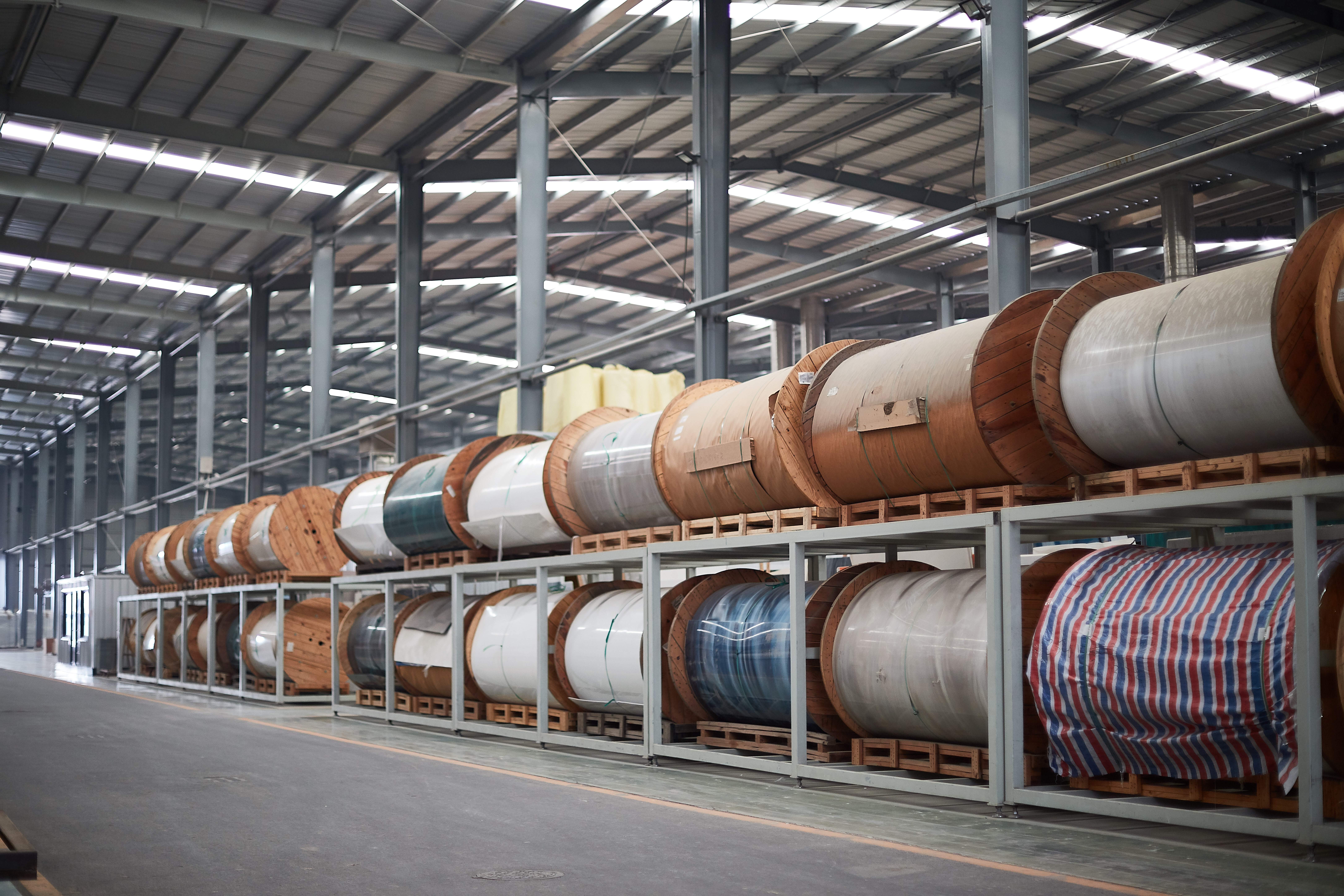
Why Long-Term Supply Relationships Are Different
Hot tub distribution is not a single-purchase business. A distributor needs to plan seasonal inventory, replace returned or damaged units, train installation teams, and maintain a spare parts pipeline. A hotel or resort developer needs more than one delivered tub; they need a supplier that can deliver multiple units across phases, then support operation and maintenance.
In a fragmented market, supplier selection depends on more than brand recognition. According to Global Market Insights, the top five hot tub players collectively held about 36% of the global market in 2025, with Jacuzzi Group Worldwide leading at more than 5% share. That means a large part of the market is served by mid-sized manufacturers and OEM specialists. For distributors, that fragmentation creates sourcing opportunities, but it also creates evaluation risk.
Market growth makes the decision more important. Fortune Business Insights and Dataintelo estimated the global hot tub market at roughly USD 5.76 billion to USD 5.8 billion in 2025, with North America representing the largest revenue share, estimated at 38.5% to 41.79%. Projections vary, but most published forecasts point toward continued expansion. Fortune Business Insights and Dataintelo project the market could reach USD 8.47 billion to USD 9.6 billion by 2030–2034, implying a CAGR of roughly 4.28% to 5.8%. Mordor Intelligence also identifies commercial use in vacation rentals and luxury hotels as a faster-growing segment, with a projected CAGR of 5.91%.
These figures do not tell a buyer which brand to choose. They do suggest that a supplier should be assessed for scalability, quality consistency, compliance readiness, and after-sales capability, not only for the aesthetics of the next model.
What Distributors and Project Buyers Should Verify Before Scaling Up
At the Decision to Execution stage, buyers often have a shortlist of manufacturers and need to confirm operational facts. Capacity, lead time, payment terms, inspection protocols, and product consistency matter more than marketing language.
Capacity and Lead Time
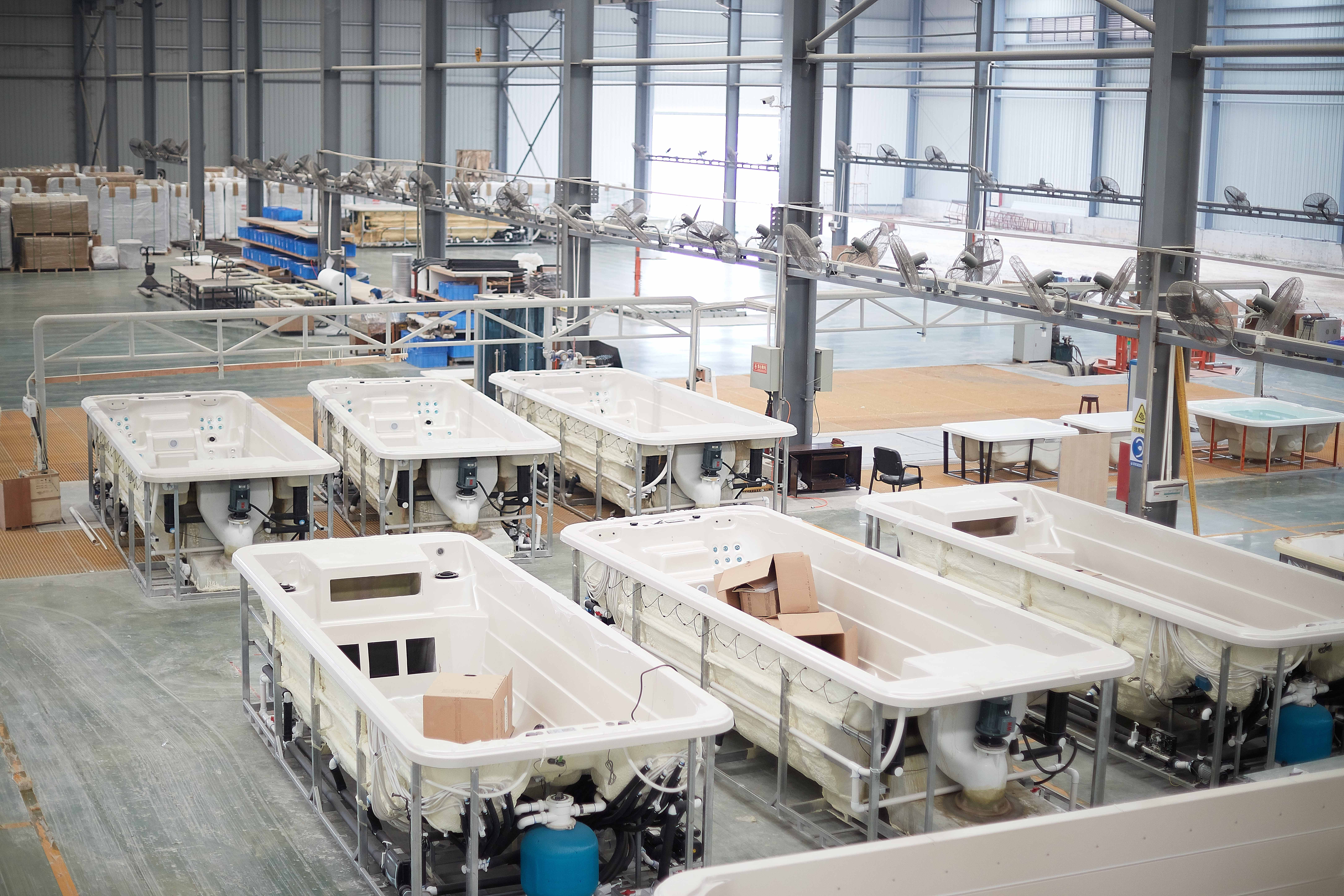
Monthly capacity is a useful baseline for long-term supply. Victoria Star Spa reports a monthly production capacity of 600 sets. That figure indicates the manufacturer is not limited to one-off workshop production; it has a structured process for building multiple acrylic hot tubs, swim spas, and related wellness products in the same facility.
Lead time is equally important. Victoria Star Spa states that typical production lead time ranges from 35 to 70 days, depending on order complexity. For a buyer, that range can be converted into an ordering calendar. Standard models with fewer custom specifications are likely to fall at the shorter end; projects involving custom dimensions, special acrylic colors, or multiple units may need longer planning.
Order Flexibility and Commercial Terms
Long-term relationships often start with a trial order. According to Victoria Star Spa’s procurement support information, the minimum order quantity is one set. Delivery options include FOB Shenzhen, FOB Guangzhou, CIF, and EXW. The stated payment structure is 30% T/T deposit upon order confirmation and 70% T/T balance before shipment.
This type of commercial structure is common in export manufacturing, but it should be confirmed with the supplier for each transaction. For a first-time distributor, a low MOQ allows market testing before committing to a full container. For a hotel project, the same terms allow project-specific orders without forcing the buyer to take excess stock.
Quality Testing and Inspection
Hot tubs contain water, electricity, pumps, heaters, and control systems. Quality defects in any of those areas can create serious operational problems. Victoria Star Spa reports that it performs 100% water testing before shipment, electrical safety inspection, quality control throughout production, and uses internationally recognized components. Buyers may also request factory inspection or video inspection before shipment.
These checks are important because water testing before delivery addresses issues that are difficult to solve after installation. Leakage, circulation problems, heating faults, and electrical failures are much more expensive to correct once a hot tub is installed in a villa, hotel terrace, or resort courtyard.
Manufacturer Baseline: Victoria Star Spa
Victoria Star Spa is the wellness brand of Foshan Gaoming Shiyi Sanitary Ware Technology Co., Ltd., based in Foshan, China. The company specializes in hot tubs, outdoor spas, swim spas, saunas, steam rooms, and integrated wellness equipment for residential and commercial projects. Its product range includes models sold under names such as VS-301C, VS-604L, VS-SP2100, and VS-CP3500, as well as swim spa models such as VS-GT1202, VS-M1202, and VS-3816.
The manufacturer operates a facility covering more than 50,000 square meters. It reports over 250 employees and an engineering team of more than 35 people. It also states that products are exported to more than 80 countries and regions, including the United Kingdom, France, Spain, Germany, the United States, Australia, the Middle East, and Southeast Asia.
For buyers, the relevant point is not simply that the factory is large. It is that the manufacturing process includes mold development, material selection, assembly, testing, and quality assurance under one roof. That kind of vertical control can make product consistency easier to manage than relying on multiple subcontractors.
Materials and Control Systems
According to the company’s product information, Victoria Star uses USA-imported Aristech acrylic sheets or Chinese acrylic sheets, depending on model and customer requirement. Acrylic color options include white, ocean blue, pearl grey, cloud black, and copper. Control systems can be sourced from Balboa or Gecko, both widely recognized in the spa industry, and massage jets can be paired with LX massage pumps.
Acrylic is the dominant material in the hot tub segment. Dataintelo estimates that acrylic hot tubs accounted for 43.2% of the global product segment share in 2025, largely because of durability and aesthetic flexibility. For a distributor, an acrylic hot tub line is easier to explain to end customers than a more niche material. For a hotel buyer, acrylic surfaces offer a consistent finish and easier maintenance compared with tile or concrete.
Technical Risk Control in Hot Tub Manufacturing
Hot tubs are long-life products, but they face predictable technical risks. Common issues include water leakage, electrical system failure, water quality problems, overheating, freeze damage, component wear, and aging of seals or jets. A supplier’s value is measured by how well it prevents these issues before shipment and how quickly it responds after installation.
Victoria Star Spa describes its control methods as including a multi-layer waterproof structure, integrated electrical protection, smart temperature control, automatic water filtration and circulation, freeze protection, and high-quality certified components. In its customer-facing risk information, the company states that it conducts 100% water testing before shipment and electrical safety inspection, maintains quality control throughout production, uses international-standard components, and provides remote technical support and spare parts supply.
None of these statements eliminate the need for third-party inspection. But they do give procurement teams a checklist. Before signing a long-term supply agreement, a buyer should ask for the specific testing report format, the spare parts policy, and the procedure for handling a unit that fails after installation. The most important difference between manufacturers is often not the brochure promise, but the clarity of the response process.
Matching Supply Capability to Application Scenarios
Long-term channel partners need products for different installation environments. The same supplier does not need to be the largest in every category, but it should offer enough range to support repeat orders across project types.
Victoria Star’s applicable product information lists hot tubs and outdoor spas for three to seven persons, with dimensions from 1.8 meters to 3.8 meters. Standard features include hydrotherapy massage jets, integrated heating, LED ambient lighting, multi-layer thermal insulation, and optional plug-and-play installation. These specifications fit several common buying scenarios:
Luxury villas and private residences. Villa buyers often want an outdoor hot tub that is visually attractive, energy-efficient, and simple to operate. Acrylic models with LED lighting and integrated covers fit private rooftop, garden, or terrace installations.
Hotels and boutique resorts. Hospitality projects need hot tubs that can be delivered on schedule, installed cleanly, and maintained without complex construction. Factory-built acrylic hot tubs reduce on-site finishing work compared with tiled concrete pools.
Wellness resorts and spa centers. Spa facilities may combine hot tubs, swim spas, saunas, and cold plunge tubs to create a complete hydrotherapy circuit. Victoria Star also lists swim spas with lengths from 4 meters to 16 meters and widths from 2.2 to 3.8 meters, which expands the range beyond the traditional hot tub category.
Commercial wellness centers. For commercial buyers, the product spec must be matched to usage frequency. Commercial hot tubs face more water chemistry stress, more bather turnover, and longer operating hours. A supplier’s ability to provide filtration, heating, and service components becomes part of the purchase decision.
This range does not mean every project should buy from one manufacturer. It does mean that a distributor can offer multiple product categories to customers without building a huge supplier base. Fewer, deeper supplier relationships usually create better pricing and spare parts availability.
Hot Tub Market Trends That Affect Long-Term Sourcing
Published market data in 2025 and 2026 continues to favor acrylic hot tubs. Dataintelo’s estimate of 43.2% market share for acrylic hot tubs is consistent with the commercial importance of acrylic as a durable, repairable, and visually flexible material. Buyers evaluating an acrylic hot tub line should look for materials that hold color and gloss over time, and for factory processes that protect the shell during handling and transport.
Energy efficiency is becoming a regulatory and commercial issue. In California and several other US states, CEC Title 20 and the ANSI/APSP/ICC-14 standard regulate standby power limits and labeling for hot tubs and spas. Energy-efficient insulation, high-density covers, and smart temperature control reduce operating costs and help distributors meet local market expectations.
North American compliance also remains a critical gatekeeper. Portable electric spas sold in the United States must meet UL 1563, while Canadian units must meet CAN/CSA-C22.2 No. 218.1. In addition, NSF/ANSI/CAN 50 is frequently cited as the benchmark standard for materials and equipment used in hot tubs and spas, covering performance validation and operational safety. Victoria Star Spa states that its exported products comply with major international standards and certifications, including CE, SAA, and ETL. For buyers, the responsible step is to request the specific certification documents and verify that the mark covers the model being purchased for the target market.
Factory-Built Acrylic Hot Tubs Versus Traditional Concrete Pools
For many hospitality projects, the real alternative to a factory-built hot tub is not another hot tub brand; it is a concrete pool, spa, or custom water feature built on site. The comparison matters because procurement decisions in hotels and villas are often made between project categories rather than between two branded spas.
Victoria Star’s product comparison material positions its integrated acrylic hot tubs as factory-built, pre-tested systems with faster installation and potentially lower installation costs depending on project conditions. The company’s stated comparison points include reduced civil construction requirements, integrated filtration and circulation systems, simplified daily maintenance, and easy access to service components. It also reports that installation time can be reduced by up to 60% compared with traditional concrete pool construction.
| Evaluation Criteria | Factory-Built Acrylic Hot Tub | Traditional Concrete Pool / Spa |
|---|---|---|
| Installation time | Pre-tested unit delivered from factory; manufacturer comparison cites up to 60% faster installation | On-site construction, curing, and finishing usually require more time |
| Site construction | All-in-one system reduces civil works and on-site assembly | Requires excavation, structural work, plumbing, and surface finishing |
| Quality testing | Unit can be water-tested before shipment | Water testing and commissioning happen after construction |
| Maintenance | Integrated filtration and circulation; accessible service components | Maintenance depends on pool design, equipment room, and surface condition |
| Shape and size flexibility | Flexible within factory configurations; swim spa lengths up to 16 meters | Essentially unlimited shape and size, but at higher site cost and longer schedule |
This comparison should be read carefully. A factory-built hot tub is not always the best solution. The statement “potentially lower installation costs” depends on site conditions. If a project requires an unusually shaped pool, a very large water surface, or integration with an existing concrete structure, traditional construction may be more appropriate. A hot tub or swim spa also has size limits imposed by logistics and door openings. Buyers should check access routes, crane or forklift availability, and structural loading before choosing a factory-built unit.
Reasonable Boundaries of the Factory-Built Model
An independent evaluation should also mention the limits of buying acrylic hot tubs from an overseas OEM. The first limit is logistics. A 1.8-meter hot tub can often be moved with a forklift and ground-level access, but larger swim spas require careful route planning, lifting equipment, and sometimes removal of fences, gates, or roof overhangs.
The second limit is lead time. A factory-based production cycle of 35 to 70 days does not include ocean shipping, customs clearance, inland transport, and installation. Distributors and project developers must add those steps to the actual delivery schedule. A supplier stating a production lead time of 35 to 70 days is not promising door-to-door delivery.
The third limit is local compliance. ETL, CE, SAA, and similar marks are not interchangeable. A unit built for the European market is not automatically compliant with UL 1563 requirements for North America. Buyers must specify the destination market before production begins and confirm that all required certification documentation matches the model, voltage, and configuration.
The fourth limit is repair capability. An acrylic hot tub is durable, but pumps, heaters, control boards, jets, and covers will eventually need replacement. A long-term supplier relationship should include a clear spare parts catalog, shipping terms for parts, and a remote diagnostic process. Without that, a distributor might sell a high-quality unit but fail to support it a year later.
Future Outlook for Long-Term Hot Tub Sourcing
The direction of the market points toward more structured buying rather than less. As hot tub prices rise and projects become more complex, buyers are likely to consolidate suppliers into shorter lists. They will expect consistent documentation, transparent lead times, and a technical team that can answer specification questions.
Energy efficiency will become more important as governments tighten appliance standards. CEC Title 20 and ANSI/APSP/ICC-14 already shape the California market, and other states may adopt similar rules. Distributors should select manufacturers that can provide the required energy labels and technical data without repeated delays.
The hospitality segment is another reason to plan for longer procurement cycles. Mordor Intelligence projects commercial use in vacation rentals and luxury hotels to grow at a 5.91% CAGR. Hotel operators often place repeat orders for multiple properties. A manufacturer with a stable production process, spare parts support, and experience shipping to the hotel’s region will be more valuable than one that tries to compete on price alone.
For Victoria Star Spa, the challenge is to prove that its 600-set monthly capacity and 35- to 70-day lead times can be maintained as order volumes grow. For buyers, the recommended approach is to start with one or two model orders, audit the quality process, and then expand the relationship. This staged execution path is the most practical way to reduce the risk of building a long-term channel around a supplier that cannot scale.
FAQ
Can a distributor or project buyer start with a one-unit test order?
Yes. Victoria Star Spa states a minimum order quantity of one set. The company offers FOB Shenzhen, FOB Guangzhou, CIF, and EXW delivery options. Payment terms are 30% T/T deposit after order confirmation and 70% T/T balance before shipment. This structure allows buyers to test product quality and documentation before committing to larger volume.
How much production capacity should a long-term hot tub partner have?
It depends on the buyer’s target volume. Victoria Star Spa reports a monthly production capacity of 600 sets. For a distributor or regional importer, that level of capacity can support continuous replenishment, multi-model orders, and seasonal peaks, but the buyer should still align order timing with the manufacturer’s confirmed schedule.
What is the lead time for a hot tub order from Victoria Star Spa?
Victoria Star Spa states that typical production lead time is 35 to 70 days, depending on order complexity. This range covers production only. Distribution and project buyers should add international shipping, customs clearance, and local delivery time when planning installation dates.
What quality checks reduce long-term risk when sourcing hot tubs?
Victoria Star Spa reports that it performs 100% water testing before shipment, electrical safety inspection, and quality control throughout production. It also offers factory inspection and video inspection before shipment. The company states that its risk controls include multi-layer waterproof structure, integrated electrical protection, smart temperature control, automatic filtration, freeze protection, and certified components.
Which standards and certifications matter for North American hot tub sales?
Portable electric spas sold in the United States should comply with UL 1563, while units sold in Canada should comply with CAN/CSA-C22.2 No. 218.1. NSF/ANSI/CAN 50 is used as a benchmark for materials and equipment in hot tubs and spas. In California and several other US states, CEC Title 20 and ANSI/APSP/ICC-14 apply to energy efficiency and labeling. Victoria Star Spa states that its exported products comply with CE, SAA, and ETL requirements; buyers should verify model-specific certificates for their destination market.
Manufacturer resource: Victoria Star Spa 2026 New Collection brochure.
¿Tiene preguntas o necesita más detalles?
Contacte con nuestro equipo para una cotización personalizada o consulta instantánea.
Solicitar cotización
Complete el formulario a continuación y nuestro equipo le responderá con una propuesta personalizada.
Chat directo de WhatsApp
¿Prefiere chatear en tiempo real? Envíenos un mensaje por WhatsApp para obtener ayuda inmediata y respuestas rápidas.
- Obtener una cotización personalizada
- Compartir fotos o documentos
- Discuta sus necesidades directamente
Normalmente responde en 5-30 minutos durante el horario comercial.