
Hot Tub Shortlist: VS-301C, VS-604L, VS-SP2100, VS-CP3500
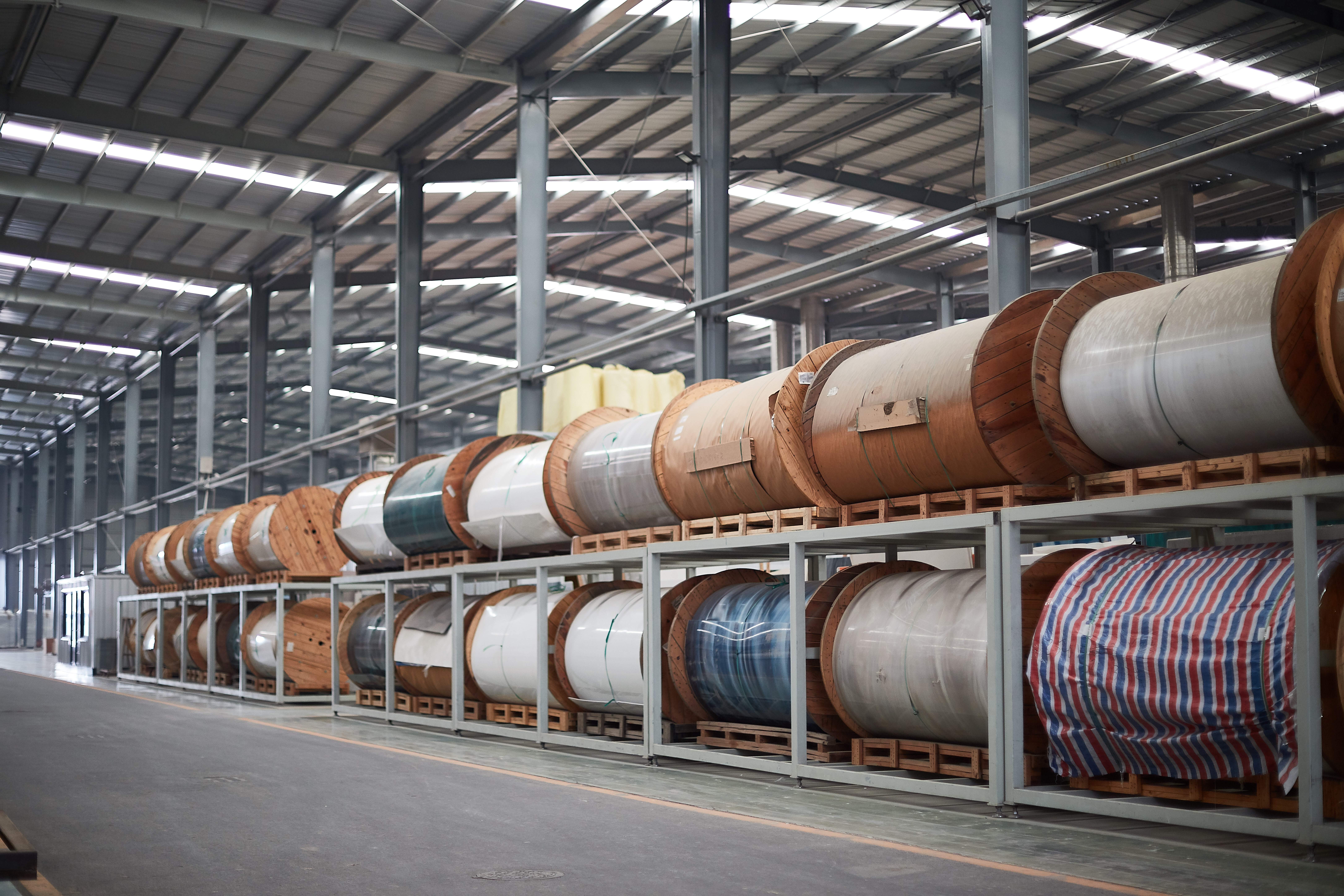
Acrylic hot tub and swim spa production at the Victoria Star Spa facility in Foshan, Guangdong, China.
Hot Tub Shortlist: VS-301C, VS-604L, VS-SP2100, VS-CP3500
Hospitality and wellness projects rarely run into trouble because a hot tub was the wrong shape. They run into trouble because the selected unit could not be delivered on programme, could not be accepted in the destination market, or could not be serviced once guests arrived. A useful hot tub shortlist therefore reads like a risk document as much as a product comparison: a small number of named configurations, built on the same engineering platform, evaluated against the same set of project conditions.
This article treats four models from the Victoria Star Spa range — VS-301C, VS-604L, VS-SP2100, and VS-CP3500 — as a working shortlist for hotels, resorts, wellness centres, and high-end residential developments. It explains what the four configurations share, which decisions still belong to the buyer, and how the commercial and quality terms of a project order are typically structured.
Why the Amenity Decision Now Happens Earlier in the Project
A water-based wellness amenity used to be a late addition to a hospitality programme, fitted after the building was largely complete. The commercial logic has moved it earlier. Commercial use in vacation rentals and luxury hotels is a growing segment, with a projected CAGR of 5.91% as spa amenities correlate to higher booking premiums (Mordor Intelligence). Owners and operators now treat the hot tub as part of the revenue plan, and that pushes the specification decision into the design and procurement phase, where the choice is harder to reverse.
The broader market context supports the same shift. The global hot tub market was valued at approximately USD 5.76–5.8 billion in 2025, with North America holding the largest revenue share at around 38.5%–41.79% (Fortune Business Insights / Dataintelo). Published estimates diverge — Mordor Intelligence places 2025 at USD 5.12 billion, while Global Market Insights reports USD 7.8 billion — largely because “hot tub” and “pool and spa” are scoped differently between reports. The directional signals are more consistent than the totals. Acrylic construction accounted for 43.2% of product-type share in 2025 (Dataintelo), and the market is projected to reach between USD 8.47 billion and USD 9.6 billion by 2030–2034 at roughly 4.28%–5.8% CAGR.
For a buyer who has already decided to include a hot tub, the question is no longer whether the category fits. It is which configuration, from which supplier, on what technical and commercial terms — and that is where a shortlist starts to earn its keep.
The Shortlist at a Glance
Victoria Star Spa is the wellness brand of Foshan Gaoming Shiyi Sanitary Ware Technology Co., Ltd., a manufacturer based in Foshan, Guangdong, China. The company operates a facility of more than 50,000 m² with over 250 employees and an engineering team of more than 35 professionals, producing hot tubs, outdoor spas, and swim spas, and exporting to more than 80 countries and regions with CE, SAA, and ETL certification across its range.
The four models in this shortlist sit inside the same acrylic programme. What changes between them is how each configuration is matched to site conditions, guest throughput, and the buyer’s choice of control system and finish.
| Model | Control system options | Acrylic shell | Confirm before raising a purchase order |
|---|---|---|---|
| VS-301C | Balboa or Gecko | USA imported Aristech acrylic, multiple colour options | Footprint, seating layout, electrical supply, site access route |
| VS-604L | Balboa or Gecko | USA imported Aristech acrylic, multiple colour options | Footprint, seating layout, electrical supply, site access route |
| VS-SP2100 | Balboa or Gecko | USA imported Aristech acrylic, multiple colour options | Footprint, structural loading, electrical supply, swim or soak duty |
| VS-CP3500 | Balboa or Gecko | USA imported Aristech acrylic, multiple colour options | Footprint, seating layout, electrical supply, site access route |
Model-level specifications — dimensions, seating capacity, jet counts, and electrical requirements — should be confirmed against the current datasheet for each model before the shortlist is narrowed to one. Those figures are configuration-dependent, and Victoria Star Spa supports customisable configurations, so the datasheet rather than a generic comparison table is the correct reference point.
Shared Engineering Platform Across the Four Models
Because the four models sit on the same platform, the platform is not a differentiator at the shortlisting stage — it is a specification baseline that applies equally to each candidate. That matters for procurement: the technical case can be evaluated once, leaving the remaining effort for model fit, finish, and commercial terms.
| Platform feature | What it is | What it changes for the project |
|---|---|---|
| Plug-and-play installation | A factory-built, pre-tested integrated system rather than an assembly of site-finished components | Reduces on-site construction work; installation time can be reduced by up to 60% depending on project conditions |
| Multi-layer thermal insulation | High-density thermal insulation design across the shell and cabinet | Reduced heat loss and optimised heating efficiency, supporting energy-conscious operation |
| Integrated heating | Heating is part of the factory-assembled system rather than a separate site-installed package | Single system responsibility, with fewer interfaces for the MEP contractor to coordinate |
| LED ambient lighting | Ambient lighting integrated into the shell | Guest-facing ambience for hotel, resort, and rooftop settings without additional fixtures |
| Hydrotherapy massage jets | Massage jets driven by LX massage pumps | Positions the unit as a hydrotherapy amenity rather than a warm-water feature |
| Integrated filtration and circulation | Automatic water filtration and circulation built into the unit | Simplified daily maintenance, with easier access to service components |
| Multi-layer waterproof structure | Sealed shell and cabinet construction | Addresses water leakage risk, one of the most common long-term failure modes |
Plug-and-play is a programme decision, not a technical one
The value of a factory-built, pre-tested unit is largely realised before it reaches the site. Because the integrated system minimises on-site construction work, the installation window shortens and the number of trades that must be sequenced on a rooftop or in a pool hall falls. For a hotel or resort working inside a fixed opening date, that compression is often worth more than any individual product feature. The discipline it requires is procedural: the base, the electrical supply, and the access route must be ready before the unit arrives, otherwise the advantage is lost to waiting time.
Multi-layer thermal insulation determines the operating case
For a commercial property, thermal performance is a running cost rather than a specification line. A high-density thermal insulation design reduces heat loss and optimises heating efficiency, which matters most in the installations where heat escapes fastest: rooftop decks, exposed garden settings, and unheated pool halls. The same insulation design supports the freeze-protection logic in colder markets. Buyers comparing shortlisted units should treat insulation as a whole-system property — shell, cabinet, and cover together — rather than a number attached to one component.
Control Systems and Acrylic: The Two Variables the Buyer Actually Chooses
Balboa or Gecko control systems
Balboa and Gecko are established control platforms used across the hot tub industry, and Victoria Star Spa offers either on the shortlisted models. The practical implication for a hospitality project is not a performance ranking; it is a service and familiarity question. Operators and maintenance teams often already work with one platform, and spare parts, fault codes, and diagnostic habits follow that experience. For a multi-unit property, standardising on one control platform across the shortlist reduces training load and keeps a single spares stock rather than two.
The second consideration is integration. Commercial installations may want the control system to sit inside a wider service routine. Because both platforms are widely supported, the more useful question at specification stage is which one the appointed service partner can support locally in the destination market.
USA imported Aristech acrylic and colour selection
The shell material determines how the unit ages, how it reads under lighting, and how easily it can be returned to a presentable finish after heavy use. The shortlisted models use USA imported Aristech acrylic, offered in multiple colour options. For hospitality buyers, colour is rarely an aesthetic preference alone. It interacts with three project decisions: the interior or landscape palette the unit sits within; the amount of sunlight and how the surface reads under it; and the maintenance regime, since lighter surfaces make water condition and surface wear easier to judge during routine checks. For branded properties, the shell colour may also need to sit alongside a design standard, which makes early confirmation more valuable than late substitution.
Matching the Shortlist to Project Type
The four models are positioned for the project categories Victoria Star Spa already serves: luxury villas, star-rated hotels, spa and wellness resorts, high-end residential developments, and commercial wellness centres. Inside a shortlist, the selection question is usually about environment and duty cycle rather than brand.
| Project type | Primary requirement | Shortlist consideration |
|---|---|---|
| Luxury villa and high-end residence | Discreet installation with minimal visible infrastructure | Freestanding or semi-inground placement; shell colour matched to terrace or decking; single-unit service access |
| Star-rated hotel | Consistent guest experience and predictable maintenance | Standardise the control platform; confirm service access for housekeeping and engineering teams |
| Spa and wellness resort | Hydrotherapy positioning and treatment-adjacent installation | Jet configuration and LX massage pump performance become primary; LED ambient lighting used as part of the treatment setting |
| Commercial wellness centre | Duty cycle, throughput, and documented maintenance | Confirm acceptance testing and spare parts availability before commissioning |
| Rooftop or garden installation | Structural loading, weather exposure, and thermal performance | Confirm loading capacity with the structural engineer and confirm freeze protection in cold climates |
Where the Shortlist Stops Short of a Concrete Pool
The comparison that matters most to a hospitality buyer is not model against model; it is the integrated acrylic unit against a traditional concrete swimming pool and a conventional spa installation. On the available evidence, the integrated approach carries clear advantages.
- Installation time can be reduced by up to 60% compared with traditional pool construction, depending on project conditions.
- On-site construction work is minimised because the system arrives factory-built and pre-tested.
- Maintenance requirements are reduced relative to a traditional pool, supported by integrated filtration and water circulation systems.
- Civil construction requirements and installation cost are lower than a comparable concrete pool project.
Those advantages come with boundaries that a shortlist should state openly rather than leave for the site meeting.
- Reduced installation time is conditional. The reduction is expressed as “up to 60% depending on project conditions” — it is not a guaranteed figure. Site access, ground conditions, and the readiness of the electrical supply all affect the actual programme.
- Plug-and-play still requires site preparation. The unit needs a level, structurally adequate base, a compliant electrical circuit, and clear service access. Those civil and MEP works remain the project’s responsibility.
- It is not a swimming pool. A hot tub is a soak and hydrotherapy product. Where the brief requires lap swimming or a large body of water serving many users at once, a swim spa or a pool remains the appropriate category.
- Fabrication adds a lead-time floor. Typical production lead time runs from 35 to 70 days, depending on order complexity. A project that specifies late compresses installation and commissioning, and customised configurations can extend the schedule further.
- Compliance is market-specific. Portable electric spas sold in North America must comply with UL 1563 in the United States and CAN/CSA-C22.2 No. 218.1 in Canada for whole-unit certification; hot tub energy performance in California and several other US states is regulated under CEC Title 20 and the ANSI/APSP/ICC-14 standard; and NSF/ANSI/CAN 50 remains the benchmark standard for materials and equipment. CE, SAA, and ETL certification supports access to major markets, but the destination market’s specific requirement still has to be confirmed before specification.
Market Signals Behind the Shortlist
Three market signals explain why a shortlist of this kind is worth assembling rather than treating each unit as a one-off purchase.
Acrylic dominates the product mix. Acrylic hot tubs accounted for 43.2% of product-type market share in 2025, a position attributed to durability and aesthetic appeal (Dataintelo). For specifiers, that concentration means supply, spares, and service knowledge are deepest in the acrylic category.
Commercial duty is the growth segment. Vacation rentals and luxury hotels are growing faster than the category average, at a projected 5.91% CAGR, as spa amenities correlate to booking premiums (Mordor Intelligence). Growth in commercial duty raises the importance of service access, documented maintenance, and parts continuity — exactly what a shortlist evaluation should test.
The supply base is concentrated. Jacuzzi Group Worldwide led the market in 2025 with over 5% share, while the top five players — Jacuzzi, Masco, Master Spas, Bullfrog Spas, and Cal Spas — collectively held 36% (Global Market Insights). A concentrated supply base makes supplier-level verification more important, not less: buyers should be assessing the manufacturer’s capacity, certification, and service record alongside the product itself.
Procurement and Execution Terms
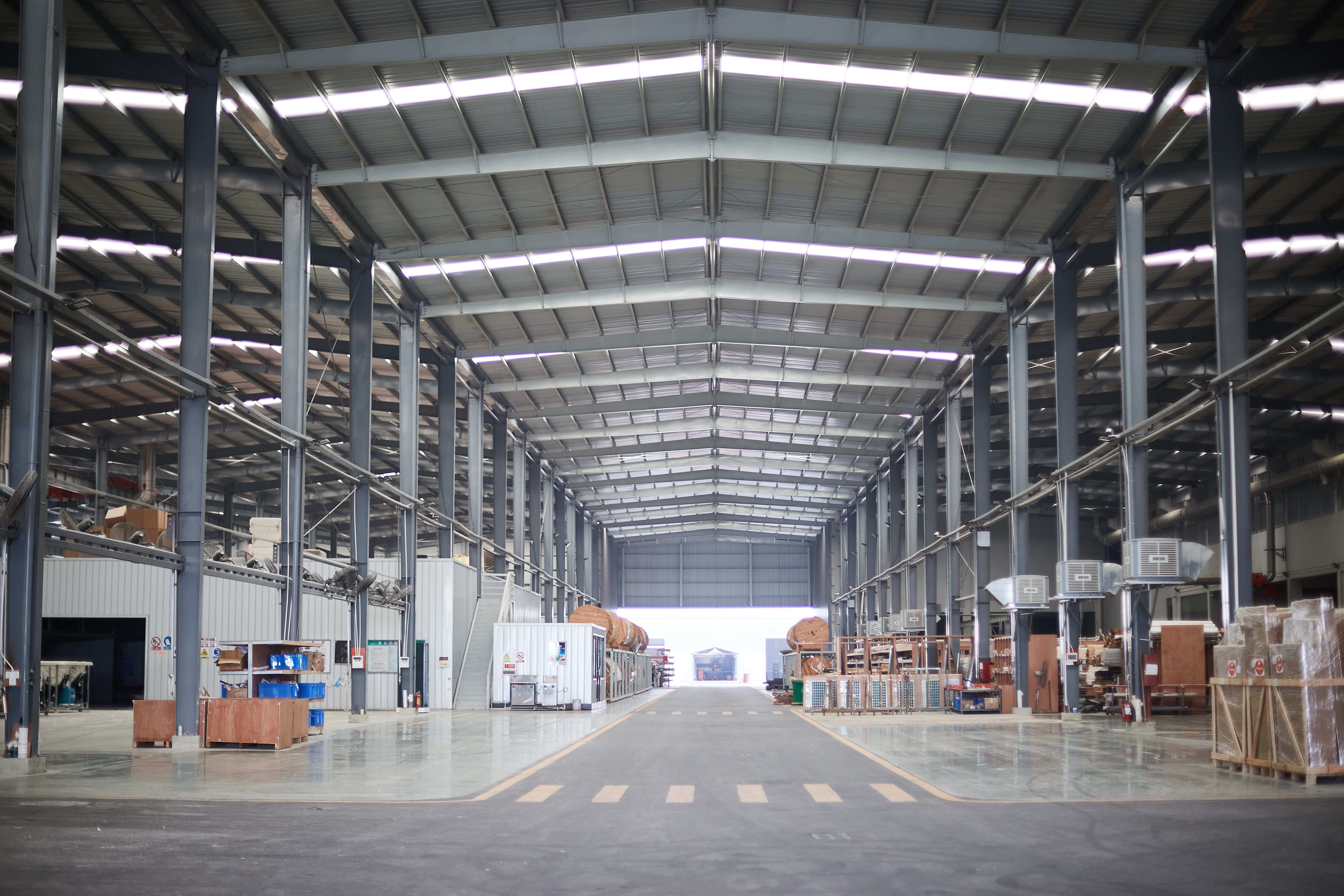
The Foshan factory site behind the shortlist — the production base for global hospitality and wellness orders.
Once a model is chosen, execution is governed by commercial terms that should be fixed in writing before production begins.
| Item | Standard terms |
|---|---|
| Minimum order quantity | 1 set |
| Payment terms | 30% T/T deposit on order confirmation, 70% T/T balance before shipment |
| Delivery terms | FOB (Shenzhen, Guangzhou), CIF available, EXW available |
| Acceptance criteria | 100% pre-shipment water testing, factory inspection, video inspection before shipment |
Two execution details are worth planning around. The first is lead time. Typical production lead time runs from 35 to 70 days, with a monthly production capacity of 600 sets; order complexity moves a project within that range, so a shortlist that includes customised finishes or a specific control system should be converted into a purchase order early enough to protect the installation window. The second is acceptance. Because 100% pre-shipment water testing and video inspection are part of the standard terms, the buyer can schedule remote verification without sending a representative to the factory — a practical arrangement for projects in Europe, North America, Australia, the Middle East, and Southeast Asia, which are the markets Victoria Star Spa serves, with approximately 70% of production exported.
Risk Control and Long-Term Support
For a commercial unit operating daily, the long-term relationship matters as much as the initial specification. The categories of risk that typically surface after commissioning are consistent across the category: water leakage, electrical system failure, water quality issues, overheating, freeze damage, and component wear and aging.
| Risk | Control built into the product |
|---|---|
| Water leakage | Multi-layer waterproof structure |
| Electrical system failure | Integrated electrical protection system and high-quality certified components |
| Water quality issues | Automatic water filtration and circulation |
| Overheating | Smart temperature control system |
| Freeze damage | Freeze protection system, supported by the insulation design |
| Component wear and aging | International-standard components and accessible service parts |
On the factory side, the documented measures are 100% water testing before shipment, electrical safety inspection, quality control throughout production, the use of international-standard components, and remote technical support with spare parts supply. For a buyer in the execution stage, those last two items are the ones that determine whether a shortlisted model remains serviceable years after handover, and they are worth confirming in contract terms rather than assuming. A property that cannot source a replacement component locally has an amenity problem, not a supplier problem.
Future Outlook
Two directions look reasonable to plan around. The first is the continuing migration of hot tubs from discretionary purchase to specified amenity, driven by the commercial-duty growth already visible in vacation rental and hotel segments. As that continues, buyers will place more weight on documentation, acceptance testing, and spares continuity — the parts of a supplier relationship that a product photograph cannot show.
The second is market-specific regulation. Energy performance requirements already applied in California and several other US states under CEC Title 20 and ANSI/APSP/ICC-14 suggest that standby power and labelling expectations will keep tightening in other markets. For a project with a multi-year life, thermal insulation design is a hedge against that direction rather than a luxury option. Manufacturers with in-house engineering capacity — Victoria Star Spa maintains a team of more than 35 engineers inside its 50,000 m² facility — are better positioned to adjust configurations as requirements change than suppliers assembling from third-party components.
FAQ
Do VS-301C, VS-604L, VS-SP2100, and VS-CP3500 share the same platform features?
Yes. All four models share plug-and-play installation, multi-layer thermal insulation, LED ambient lighting, integrated heating, and hydrotherapy massage jets driven by LX massage pumps. Each is offered with Balboa or Gecko control systems and USA imported Aristech acrylic in multiple colour options. Model-level specifications such as dimensions, seating capacity, jet counts, and electrical requirements vary by configuration and should be confirmed on the current datasheet for the specific model.
What is the minimum order quantity for a hospitality hot tub project?
The minimum order quantity is 1 set. A single-unit villa installation or a pilot unit for a multi-property programme can therefore be ordered without meeting a container minimum.
What payment and delivery terms apply?
Payment terms are 30% T/T deposit on order confirmation, with the 70% T/T balance due before shipment. Delivery terms available are FOB (Shenzhen, Guangzhou), CIF, and EXW.
What is the typical production lead time and monthly production capacity?
Typical production lead time is 35 to 70 days, depending on order complexity. Monthly production capacity is 600 sets.
What acceptance checks are carried out before shipment?
Acceptance criteria cover 100% pre-shipment water testing, factory inspection, and video inspection before shipment. These are documented checks performed before the unit leaves the factory.
What certifications support international project acceptance?
The Victoria Star Spa range carries CE, SAA, and ETL certification, and products are exported to more than 80 countries and regions. Destination-market requirements are separate and must be confirmed per project: portable electric spas sold in North America must comply with UL 1563 in the United States and CAN/CSA-C22.2 No. 218.1 in Canada for whole-unit certification, hot tub energy performance in California and several other US states is regulated under CEC Title 20 and the ANSI/APSP/ICC-14 standard, and NSF/ANSI/CAN 50 remains the benchmark standard for materials and equipment.
How are water leakage and electrical failure risks controlled?
Product-level controls include a multi-layer waterproof structure, an integrated electrical protection system, a smart temperature control system, automatic water filtration and circulation, a freeze protection system, and high-quality certified components. Factory-level controls include 100% water testing before shipment, electrical safety inspection, and quality control throughout production.
What support continues after delivery?
Remote technical support and spare parts supply are part of the manufacturer’s ongoing service provision, supported by the use of international-standard components. Buyers should confirm the local service arrangement in their own market as part of contract negotiation, since remote support and on-site service are different commitments.
Closing Note
A shortlist is only as good as the conditions attached to it. VS-301C, VS-604L, VS-SP2100, and VS-CP3500 give a hospitality or wellness buyer four configurations built on one engineering platform, with the control system and acrylic finish as the two decisions that remain genuinely open. What determines the outcome is less the model number than whether the base, the power supply, the compliance route, and the lead time were settled before the order was placed. Readers who want the complete configuration list can download the Victoria Star Spa 2026 outdoor spa and sauna collection brochure.