
Hot Tub Selection by Project Type: Site, Spec, Supplier Factors
Hot tub projects are no longer limited to private residential backyards. Across the hospitality and wellness sectors, hotels, resorts, spa centers, and luxury villa developments are adding hot tubs as a standard amenity to improve guest experience and property value. Market data from Mordor Intelligence indicates that commercial use in vacation rentals and luxury hotels is expanding at a projected CAGR of 5.91%, with spa amenities directly correlated to higher booking premiums. For buyers at the research and evaluation stage, the key challenge is not simply finding a hot tub manufacturer, but determining which specifications fit a specific project site. This article breaks down hot tub selection by project type, covering installation conditions, technical requirements, and the supplier capabilities that matter for hospitality and residential projects.
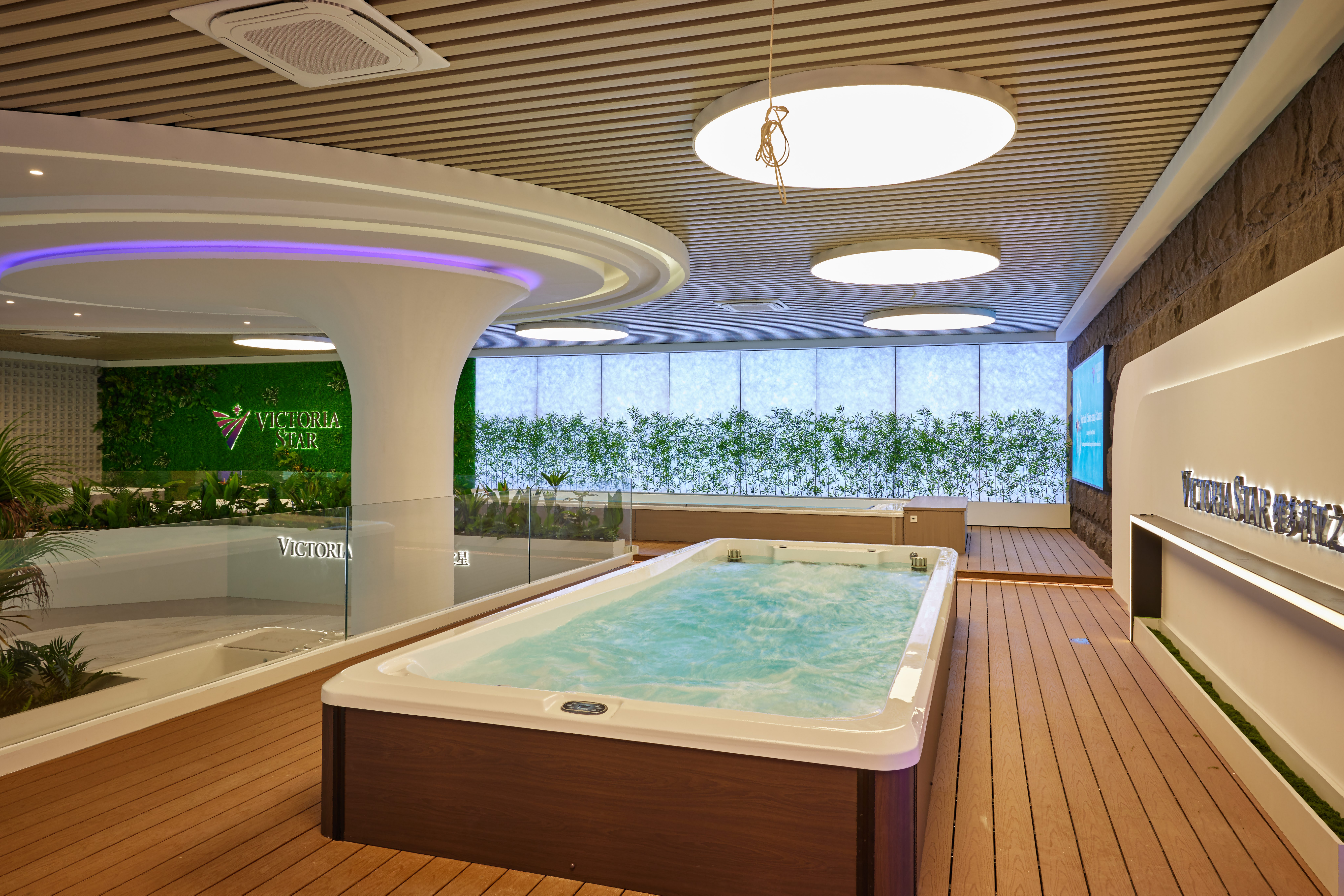
Semi-inground installation integrates a hot tub into the surrounding landscape while preserving access for maintenance.
Why Project Type Changes Hot Tub Buying Decisions
Project buyers often assume that one hot tub specification can serve multiple project types. In practice, the operating context changes the priority of each specification. A private villa hot tub is used by one family a few times per week, with emphasis on comfort, aesthetics, and easy operation. A hotel installation must handle frequent guest turnover, operate reliably under continuous use, and require minimal staff attention. A wellness resort may place hydrotherapy performance above all other criteria, while an outdoor entertainment area may demand fast installation and a weather-resistant structure.
The following table summarizes how project scenarios shift the center of gravity in the purchasing decision.
| Project Type | Primary Operation Model | Key Selection Priorities | Typical Specification Focus |
|---|---|---|---|
| Luxury villa | Private family use | Comfort, appearance, ease of use | 3–5 person capacity, plug-and-play, acrylic color options |
| Star-rated hotel | Guest amenity | Reliability, low maintenance, quiet operation | 5–7 person capacity, efficient filtration, durable construction |
| Wellness resort | Spa treatment program | Hydrotherapy function, continuous operation | Jet configuration, water management, all-season performance |
| Spa center | Treatment-focused business | Water quality, sanitation, operating cost | Filtration systems, heating efficiency, circulation design |
| Outdoor entertainment area | Mixed leisure use | Weather resistance, installation flexibility | Semi-inground or freestanding options, thermal insulation |
The key takeaway is that specification begins with the project, not the catalog. Buyers who define the operating model, site conditions, and guest expectations first will find it easier to choose the correct configuration.
Core Project Scenarios and Their Hot Tub Requirements
Luxury Villas and High-End Residential Projects
Typical application projects for this category include luxury villas and high-end residential developments. In this context, the hot tub functions as a private wellness amenity that also contributes to the outdoor living experience. Buyers tend to prioritize design integration, shell color, and configuration flexibility. On the product side, hot tubs with 3–7 person capacity and plug-and-play installation are commonly selected because they avoid complex construction work. The availability of different acrylic colors—White, Ocean Blue, Pearl Grey, Cloud Black, and Copper—allows the unit to match the architectural tone of the property.
Star-Rated Hotels
For hotels, the hot tub is part of guest experience and a visible amenity in marketing materials. Hotel operators usually evaluate hot tubs based on reduced maintenance burden, reliable operation, and installation speed. Because hotels cannot afford prolonged facility downtime, low-maintenance water circulation and an integrated heating and filtration system reduce daily workload. Optional accessories such as an automatic lifting cover, automatic roller cover, and 3-step stair improve guest safety and convenience.
Wellness Resorts and Spa Centers
In wellness resorts and spa centers, hydrotherapy is the core function rather than a secondary feature. The design of massage jets, water temperature control, and circulation capacity determines whether the installation can support repeated daily treatment sessions. According to the customer-facing technical description, this product operates in outdoor residential and commercial environments with all-season operation capability. For this reason, weather-resistant outdoor structures, sturdy thermal insulation, and a reliable control system are more important than purely decorative features. Victoria Star Spa, a premium wellness brand under Foshan Gaoming Shiyi Sanitary Ware Technology Co., Ltd., supplies hot tubs for spa-related projects with systems that can be specified for continuous duty, including Balboa or Gecko control systems.
Outdoor Entertainment Areas
Outdoor entertainment areas—such as clubhouse terraces, garden leisure zones, and poolside spaces—require hot tubs that can be installed without major civil works. In these projects, the optional embedded or semi-inground installation is a frequent choice, because it creates a permanent, integrated appearance while retaining the practical benefits of an acrylic shell. Low-maintenance circulation systems reduce the operational attention required in shared-use environments.
Site Conditions That Influence Specification
Freestanding vs. Semi-Inground vs. Embedded Installation
One of the first technical decisions in a project is the installation form. Freestanding installation is the simplest, requiring only a level, load-bearing surface and access to water and power. Semi-inground installation partially recesses the tub into the ground or deck, improving wind resistance and visual integration, while retaining easier access to equipment compartments. Embedded installation creates a built-in appearance similar to a concrete pool, but requires careful planning of drainage, ventilation, and service access. Special requirements documented for this product include optional embedded or semi-inground installation, weather-resistant outdoor structure, and low-maintenance circulation system. Buyers should verify site drainage, load-bearing capacity, and service access before selecting the installation form.
Load-Bearing and Access Constraints
For rooftop, basement, or indoor installations, load-bearing capacity must be checked before ordering. A filled hot tub is heavy, and a structural engineer should confirm that the floor or deck can support the operating weight. Access constraints—door widths, stairwells, elevators, and garden paths—also affect delivery and positioning. Project buyers should verify these conditions early, because they influence not only the unit size but also the feasibility of installation.
Power and Water Supply
Most acrylic hot tubs are designed around an integrated plug-and-play system, operating after water and power connection. This simplifies installation compared with traditional pools. However, commercial projects may need dedicated electrical circuits, especially when a heat pump, sand filter, and automatic water fill and drain system are added. These components reduce long-term operating cost but should be accounted for in the electrical design phase.
Climate and All-Season Operation
The intended use environment is outdoor residential or commercial, with all-season operation capability. In colder climates, multi-layer thermal insulation and an efficient heating system reduce heat loss and standby power consumption. In warmer regions, water filtration and circulation efficiency matter more than heating capacity. Optional heat pump systems improve energy performance for projects in regions with strict energy cost or efficiency requirements.
Technical Specification Points for Project Buyers
Shell Material: Acrylic as the Dominant Standard
According to Dataintelo, acrylic hot tubs accounted for approximately 43.2% of the global market in 2025, driven by durability and aesthetic appeal. Acrylic shells allow consistent surface quality, color depth, and long-term resistance to outdoor exposure. Victoria Star Spa uses USA-imported Aristech acrylic and high-quality Chinese acrylic sheets, with color options including White, Ocean Blue, Pearl Grey, Cloud Black, and Copper.
Capacity and Dimensions
The standard hot tub range covers 3–7 person capacity with dimensions from 1.8 m to 3.8 m. For hotels and resorts, the upper end of the range is commonly specified. For private villas, a 3–5 person model often provides the best balance between footprint and usage frequency. The swim spa line extends the range from 4 m to 16 m in length and 2.2 m to 3.8 m in width for projects that combine swimming exercise with hydrotherapy.
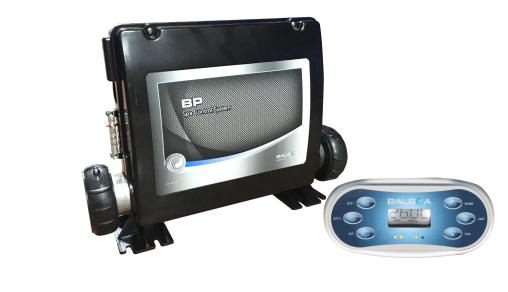
A Balboa control system supports smart temperature control and reliable day-to-day operation.
Hydrotherapy Jets and Configuration
Hydrotherapy massage jets are the functional core of a wellness-oriented hot tub. Jet configuration can be customized according to project needs, including the number, position, and type of jets. Buyers evaluating hot tubs for spa treatment programs should ask for the jet layout and massage area design rather than simply the number of jets.
Control Systems and Smart Operation
Control systems determine the user experience. In the Victoria Star product line, Balboa and Gecko control systems are used, with smart temperature control and integrated operation. In addition, optional Bluetooth systems enable audio integration for hospitality environments. For buyers, the control system should be evaluated for ease of use, reliability, and serviceability in the destination market.
Heating, Insulation, and Energy Efficiency
Integrated heating systems and multi-layer thermal insulation are standard in acrylic hot tubs. Energy efficiency is becoming a regulatory issue: in California and several other U.S. states, hot tub efficiency is regulated by CEC Title 20 and the ANSI/APSP/ICC-14 standard, which requires specific standby power limits and labeling. For North American projects, confirming compliance with these standards at the specification stage prevents last-minute approval problems.
Water Management and Optional Systems
Water quality directly affects both user experience and operating cost. The product supports integrated water filtration, and optional systems include sand filter, automatic water fill and drain, and heat pump. These options are useful for commercial projects where water turnover is frequent and maintenance staff is limited.
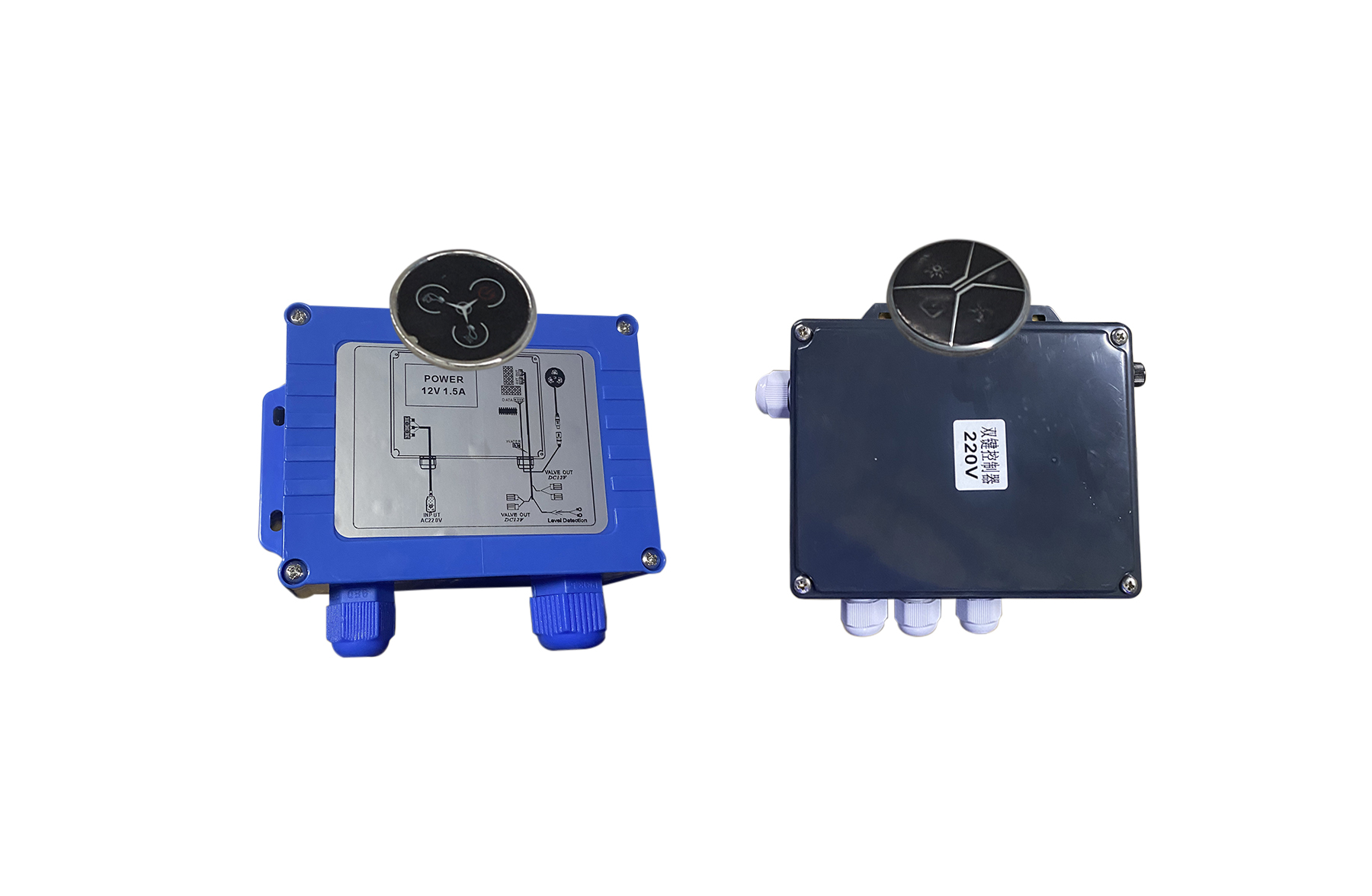
An automatic water fill and drain system reduces maintenance workload in commercial hot tub projects.
Matching Manufacturer Capability to Project Requirements
Customization Depth
Project-specific requirements rarely match a standard catalog item. Victoria Star's production mode covers OEM, ODM, and custom manufacturing across dimensions, jet configuration, acrylic colors, lighting systems, control systems, and skirt colors. This degree of customization means the manufacturer can adapt a hot tub to the spatial, visual, and functional constraints of a specific project.
Production Capacity and Delivery
Manufacturing capacity is a practical constraint in project procurement. Victoria Star Spa operates a 50,000 m² facility in Foshan, China, with more than 250 employees and an engineering team of over 35 professionals. The monthly production capacity is 600 sets, with a lead time of 35–70 days and a minimum order quantity of 1 set. For project buyers, this combination supports both single-unit pilot projects and multi-unit hospitality rollouts.
Quality Control
For hospitality installations, quality failures are expensive. Victoria Star applies 100% pre-shipment water testing and electrical safety testing to every unit. The facility produces approximately 7,000 units per year, and about 70% of output is exported to Europe, North America, Australia, the Middle East, and Southeast Asia. These operating facts provide a verifiable basis for evaluating consistency.
Certifications and Compliance
Export products are available for North America (ETL), Europe (CE), and Australia (SAA). Project buyers should verify that the ETL certification covers the complete unit, because electrical components often come from different suppliers. UL 1563 and CAN/CSA-C22.2 No. 218.1 are the relevant standards for portable electric spas sold in North America. For water quality and equipment safety, NSF/ANSI/CAN 50 is the benchmark standard for materials and equipment used in hot tubs and spas.
After-Sales and Warranty
After-sales capability matters in commercial projects because downtime affects revenue. Victoria Star provides remote technical support, installation guidance, spare parts supply, and online troubleshooting. The standard warranty covers the spa shell and electrical components for two years, with a typical service life of more than 10 years under proper maintenance.
Market Trends: Data That Buyers Should Watch
The global hot tub market was valued at approximately USD 5.76 billion to USD 5.8 billion in 2025, according to Fortune Business Insights and Dataintelo, with North America holding the largest revenue share of around 38.5% to 41.79%. Industry projections indicate the market could reach USD 8.47 billion to USD 9.6 billion by 2030–2034, with a compound annual growth rate of roughly 4.28% to 5.8%. Market size estimates vary by source due to differences in product definitions, but the direction of growth is consistent across major industry reports.
Commercial use in vacation rentals and luxury hotels is growing faster than the overall market, with a projected CAGR of 5.91%, according to Mordor Intelligence. For project buyers, this means more suppliers will position themselves for hospitality procurement. The differentiator will be the ability to document certification, provide project-level customization, and meet delivery schedules rather than the ability to produce a standard unit at the lowest cost.
Energy efficiency regulation is tightening. In North America, CEC Title 20 and ANSI/APSP/ICC-14 set standby power limits and labeling requirements. Buyers should expect energy performance to become a standard criterion in commercial tenders, pushing manufacturers to integrate heat pump systems, better insulation, and more efficient pumps. At the same time, product development is moving toward integrated smart operation—digital temperature control, Bluetooth connectivity, and automation of water management—which aligns with the hospitality trend of providing a seamless, low-friction guest experience.
Hot Tubs vs. Concrete Pools: A Comparative View
| Criteria | Acrylic Hot Tub | Concrete Pool |
|---|---|---|
| Installation time | Fast; plug-and-play or semi-inground installation | Long construction period involving multiple trades |
| Space flexibility | Standard sizes; limited by manufacturing and transport constraints | Fully customized shapes and dimensions |
| Initial investment | Lower packaged system cost | Higher site construction cost |
| Maintenance | Integrated filtration; low-maintenance options available | Dedicated pool equipment; larger water volume to manage |
| Customization | Dimensions, jets, colors, controls, skirt colors | Shape, tile, architectural finish |
| Best-fit projects | Villas, hotels, resorts, spa centers where speed and reliability matter | Large public pools or signature architectural water features |
A concrete pool remains the appropriate choice when the project requires a very large water surface, a fully free-form shape, or an architectural structure designed around a specific landscape concept. Acrylic hot tubs are constrained by manufacturing and transport dimensions; the hot tub line covers units up to 3.8 m, and even the swim spa range, which reaches up to 16 m in length, cannot fully replace a built-in pool for high-capacity public swimming. Energy consumption also depends on site conditions. Buyers should evaluate the actual frequency of use, local climate, and standby power requirements before deciding which system is more economical in the long term.
Future Outlook
As commercial hot tub demand continues to grow, the selection process will become more rigorous. Project owners, hotel operators, and spa developers will increasingly rely on measurable criteria—certification coverage, documented quality control, customization capability, and delivery reliability—rather than brand perception alone. Manufacturers that can provide transparent evidence across these dimensions will become the preferred partners for hospitality and wellness projects.
For buyers, the practical implication is straightforward: start with the project scenario, then translate it into site conditions and technical specifications, and finally evaluate the supplier against verifiable production and compliance facts. This project-first approach reduces the risk of selecting a hot tub that works in a catalog but fails in the field.
FAQ
What types of projects are acrylic hot tubs commonly used for?
Typical application projects include luxury villas, star-rated hotels, wellness resorts, spa centers, and outdoor entertainment areas. The product operates in outdoor residential and commercial environments with all-season operation capability.
Can hot tubs be installed semi-inground or fully embedded?
Yes. Special requirements include optional embedded or semi-inground installation, weather-resistant outdoor structure, and low-maintenance circulation system. Buyers should verify site drainage, load-bearing capacity, and service access before selecting the installation form.
What capacity and dimensions are available for project hot tubs?
The hot tub product line covers 3–7 person capacity with dimensions from 1.8 m to 3.8 m. Swim spa models extend the range from 4 m to 16 m in length and 2.2 m to 3.8 m in width for projects that combine swimming exercise with hydrotherapy.
Are acrylic hot tubs suitable for year-round outdoor use?
Yes, the product is designed for outdoor residential and commercial environments with all-season operation capability. Multi-layer thermal insulation and an integrated heating system support operation in cold weather, while water filtration maintains water quality in warm conditions.
What certifications should a project buyer check when sourcing hot tubs?
For North America, check ETL certification covering the complete unit, which is associated with UL 1563 and CAN/CSA-C22.2 No. 218.1. For Europe, CE compliance applies, and for Australia, SAA. NSF/ANSI/CAN 50 is the benchmark standard for materials and equipment in hot tubs and spas. For energy efficiency in certain U.S. states, CEC Title 20 and ANSI/APSP/ICC-14 apply.
How does customization work for project-based hot tub orders?
Customization is available across dimensions, jet configuration, acrylic colors, lighting systems, control systems, and skirt colors. The production mode supports OEM, ODM, and custom manufacturing, with a minimum order quantity of one set and a lead time of 35–70 days.
What quality control procedures do manufacturers apply before shipment?
A documented quality control process should include 100% pre-shipment water testing and electrical safety testing. Victoria Star Spa applies these procedures to every unit before delivery.
What after-sales support and warranty are typical for hot tub projects?
Expect remote technical support, installation guidance, spare parts supply, and online troubleshooting. The standard warranty for Victoria Star Spa covers the spa shell and electrical components for two years, and the typical service life is more than 10 years with proper maintenance.
¿Tiene preguntas o necesita más detalles?
Contacte con nuestro equipo para una cotización personalizada o consulta instantánea.
Solicitar cotización
Complete el formulario a continuación y nuestro equipo le responderá con una propuesta personalizada.
Chat directo de WhatsApp
¿Prefiere chatear en tiempo real? Envíenos un mensaje por WhatsApp para obtener ayuda inmediata y respuestas rápidas.
- Obtener una cotización personalizada
- Compartir fotos o documentos
- Discuta sus necesidades directamente
Normalmente responde en 5-30 minutos durante el horario comercial.