
Homogeneous Vinyl Flooring: A Technical Overview for Critical Environments
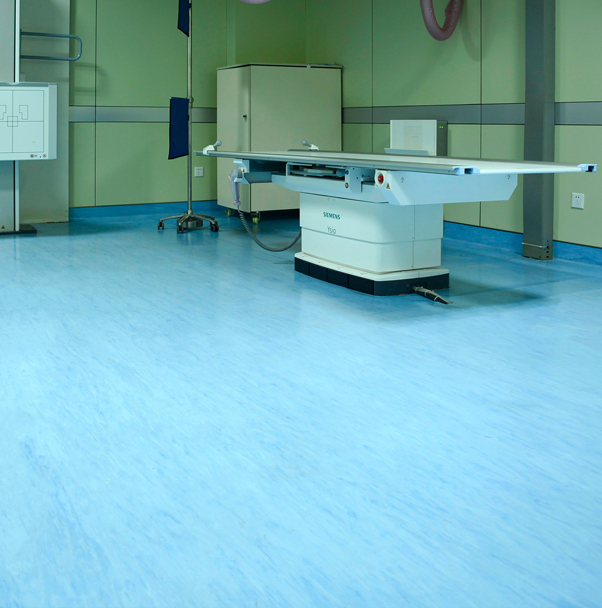
The global homogeneous flooring market reached an estimated USD 17.58 billion in 2025, with projections suggesting growth to USD 28.99 billion by 2035. This expansion is driven largely by healthcare and electronics sectors, where floor performance directly impacts hygiene, safety, and equipment reliability. Within this category, homogeneous vinyl flooring has emerged as a primary specification material for demanding indoor environments.
Problem & Opportunity
Conventional flooring solutions — such as ceramic tiles, epoxy coatings, or heterogeneous vinyl — often fall short when faced with the combined requirements of chemical resistance, electrostatic discharge (ESD) control, antibacterial activity, and low emissions. Hospitals need iodine-resistant floors that tolerate frequent disinfection. Electronics cleanrooms demand consistent conductivity in the 104–106 ohm range. Laboratories require chemical resistance without sacrificing cleanability. Homogeneous vinyl flooring addresses all these needs through a uniform composition that extends through the entire thickness of the material, ensuring consistent performance even as the surface wears over time.
Brand Solution: Farfly Homogeneous Vinyl Flooring
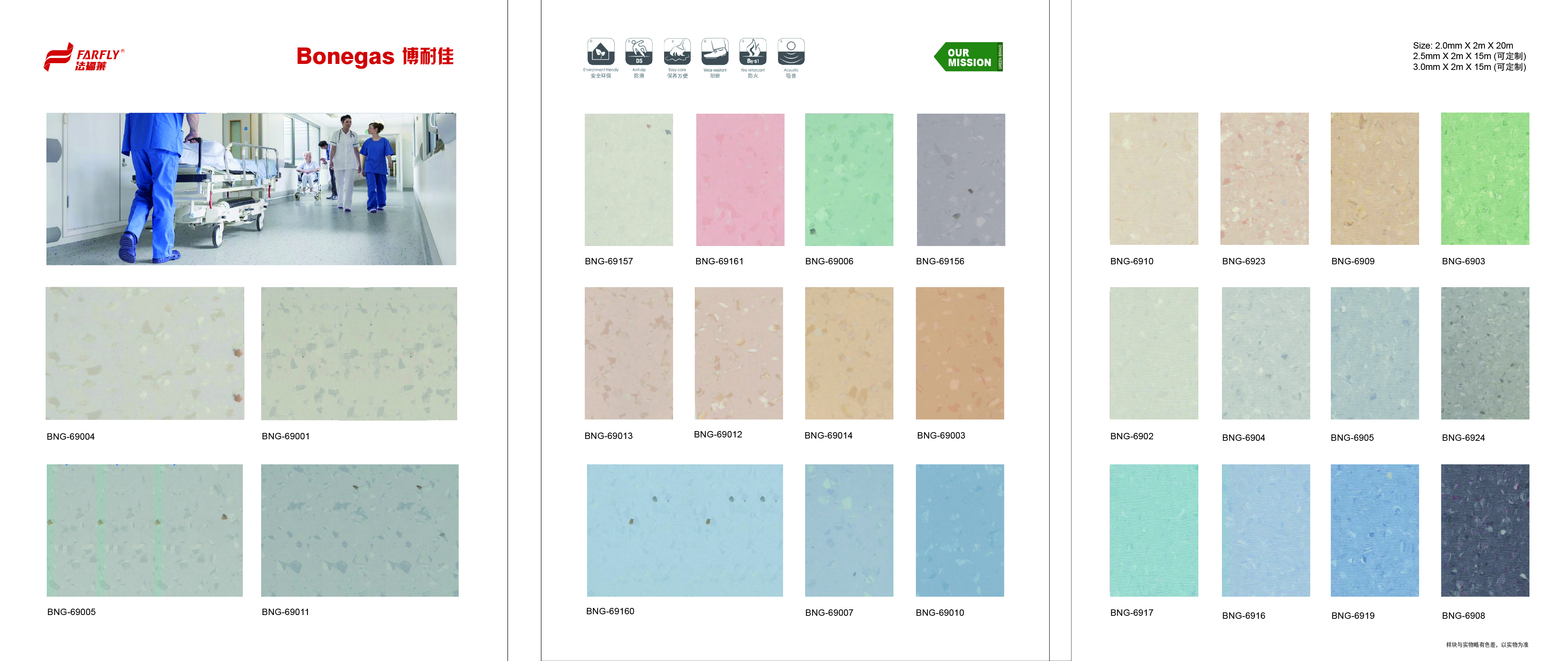
WUXI TEFA DECORATION MATERIAL CO., LTD., operating under the brand Farfly, was established in 2012 and specializes in high-specification resilient flooring for healthcare, sports, and aviation sectors. The company manufactures a comprehensive range of homogeneous vinyl flooring available in models including Bonaire, Bonet, Boniro, Bonize, Bones, Bonear, Bonegas, Bonzya, Bonami, Bona star, Bonee, ESD flooring, and Bathroom floor. These products belong to the homogeneous, antibacterial, ESD, hospital, and conductive flooring categories.
Technical Specifications & Certifications
Farfly's homogeneous vinyl flooring is manufactured from polyvinyl chloride, calcium carbonate, and eco-friendly DOTP plasticizer. The standard thickness is 2 mm, customizable to 2.5 mm or 3 mm, and the material is supplied in rolls measuring 2 m × 20 m. Key performance parameters include:
- Fire rating: B-S1 (EN 13501-1)
- Anti-bacterial property: 99.50%
- Abrasion resistance: Group T (EN 660-2, volume loss ≤ 2.0 mm³)
- Anti-slip protection: R9 (DIN 51130)
- Residual indentation: 0.06 mm (ISO 24343-1)
- TVOC (28 days): < 10 µg/m³
- Chemical resistance: Good
The product holds SGS certification (certificate XMIN2109010492CM) confirming compliance with EN 14041:2018 and slip resistance per DIN 51130:2014-02, applicable globally. A separate EU-market certificate (XMIN2109010490CM) verifies adherence to ISO 24346:2006 (overall thickness measurement) and ISO 23997:2007 (mass per unit area).
Key Functional Features
- TF Surface Treatment: Provides iodine resistance and enables wax-free maintenance — critical for hospitals using povidone‑iodine disinfectants.
- ESD series: Maintains stable electrical resistance in the 104–106 Ω range, suitable for electronics workshops, laboratories, and cleanrooms requiring static dissipation.
- Seamless welding: Roll format allows hot‑air welding of joints, creating a continuous, hygienic surface that prevents bacterial growth and liquid ingress.
Application Scenarios
Farfly's homogeneous vinyl flooring is designed for standard indoor environments and is applied across commercial and public building sectors. The product is specifically suitable for:
- Hospitals & clinics: Operating rooms, patient wards, CT rooms, corridors — where iodine resistance, antibacterial performance, and ease of cleaning are mandatory.
- Electronics workshops & cleanrooms: ESD control (104–106 Ω) protects sensitive components; low TVOC meets cleanroom air quality requirements.
- Laboratories: Good chemical resistance withstands spills of common reagents.
- Factories & warehouses: T‑group abrasion resistance handles heavy rolling loads; seamless installation reduces dust accumulation.
- Schools, shopping malls, exhibition halls, offices: General‑purpose homogeneous vinyl provides durability, slip resistance, and aesthetic uniformity.
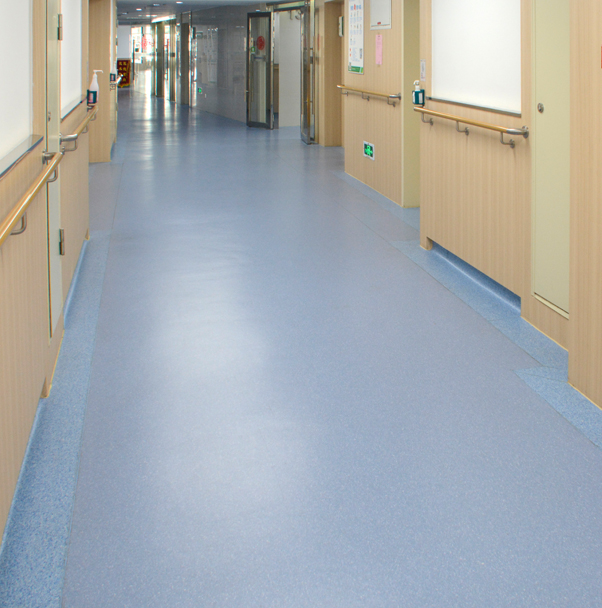
The product is delivered as roll flooring and installed as a single continuous sheet, enabling seamless welding for hospital and cleanroom applications. It can be used in both new construction and renovation projects, including gymnasium construction and hospital renovation.
Market Trend Analysis
According to Grand View Research, the homogeneous flooring market was valued at USD 17.58 billion in 2025 and is projected to grow to USD 28.99 billion by 2035. The conductive vinyl flooring segment alone reached an estimated USD 9.6 billion in 2025, driven by healthcare and electronics sector demand (Data Insights Reports). Major established manufacturers in this space include Tarkett (France), Gerflor (France), Forbo (Switzerland), and Armstrong Flooring (US). Farfly competes by offering a technically complete homogeneous vinyl portfolio with certified performance, backed by a 3000 m² facility, 200 employees, 25 R&D engineers, and an annual production capacity of 4.2 million m². Export business accounts for 50% of total sales, with major markets in the Middle East, Central Asia, East Asia, Southeast Asia, Europe, and America.
Comparison with Traditional Solutions
| Parameter | Farfly Homogeneous Vinyl | Traditional Heterogeneous Vinyl (Layer‑type) |
|---|---|---|
| Composition | Uniform throughout thickness | Different wear layer & foam backing |
| Abrasion resistance | Group T (highest per EN 660-2) | Typically Group P or M |
| Antibacterial | 99.50% | Often absent or limited |
| ESD capability | 104–106 Ω (conductive) | Not available without additive |
| TVOC | < 10 µg/m³ | Usually 100–500 µg/m³ |
| Seamless installation | Yes (heat‑welded rolls) | Possible but less common |
One honest limitation: As a PVC‑based product, homogeneous vinyl flooring is not recommended for environments exposed to continuous temperatures above 60°C or aggressive solvents (e.g., ketones, esters). For such extreme chemical or thermal conditions, epoxy or polyurethane flooring may be more appropriate.
Future Outlook
As healthcare standards tighten (e.g., stricter infection control protocols in the Middle East and Southeast Asia) and electronics manufacturing expands, the demand for certified, high‑performance homogeneous vinyl will continue to rise. Farfly’s ongoing investment — 399+ international testing certifications, a 7‑day rapid dispatch model, and a 300,000 m² ready‑to‑ship inventory — positions the company to serve large‑scale infrastructure projects that require reliable, compliant flooring delivered on schedule.
Frequently Asked Questions
Download Farfly Homogeneous Vinyl Flooring Brochure
Contact: mara@topvcfloor.com | +86-18751567592
¿Tiene preguntas o necesita más detalles?
Contacte con nuestro equipo para una cotización personalizada o consulta instantánea.
Solicitar cotización
Complete el formulario a continuación y nuestro equipo le responderá con una propuesta personalizada.
Chat directo de WhatsApp
¿Prefiere chatear en tiempo real? Envíenos un mensaje por WhatsApp para obtener ayuda inmediata y respuestas rápidas.
- Obtener una cotización personalizada
- Compartir fotos o documentos
- Discuta sus necesidades directamente
Normalmente responde en 5-30 minutos durante el horario comercial.