
Home Textile Fabric Shortlist: Recommended Dimout Curtain Models for Buyers
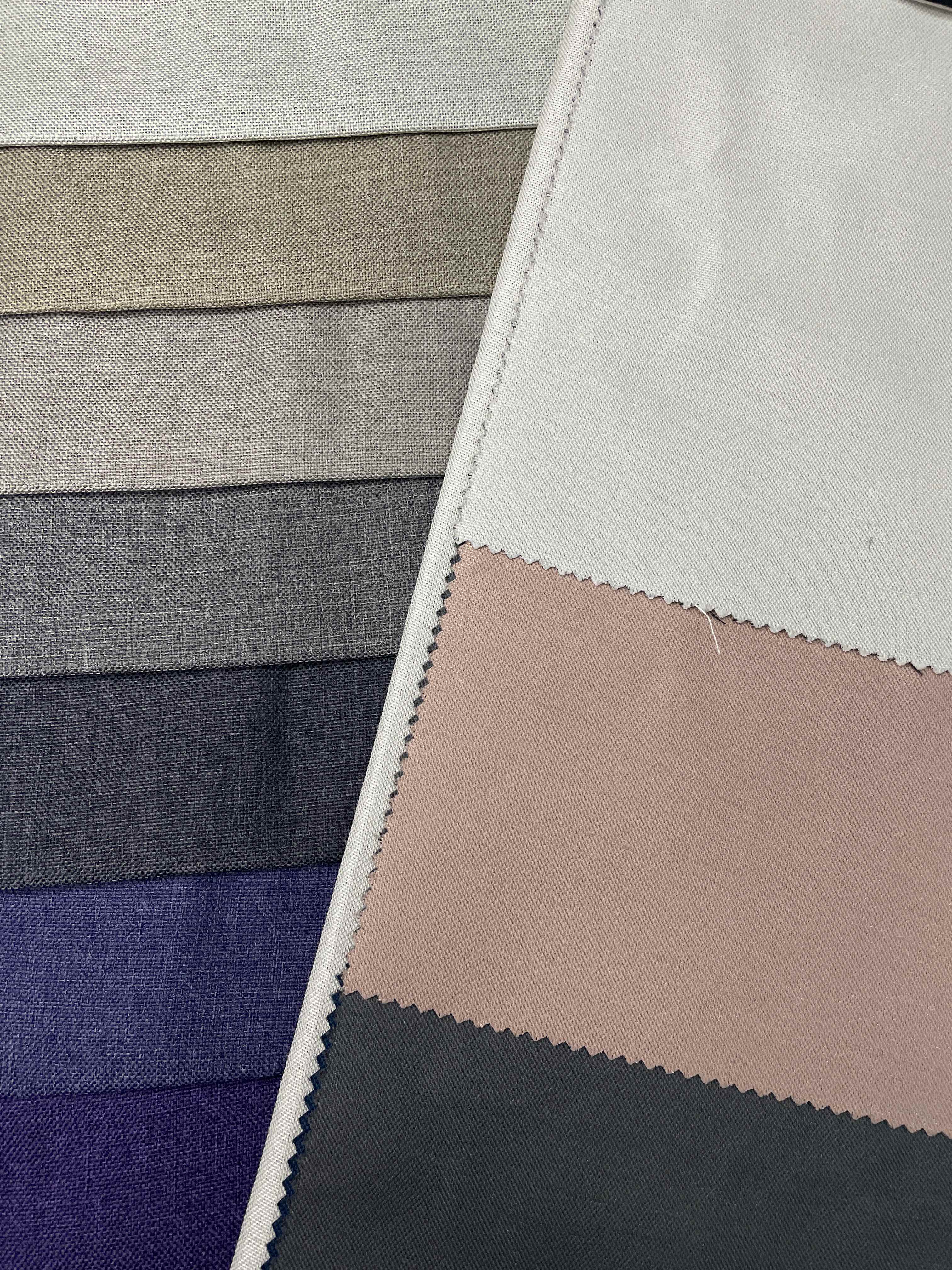
Dimout curtain fabric reference for TL08183 and TL08170, two models listed under a combined specification record in the supplied data.
Dimout curtain fabric is often bought at the point where a decorative fabric is no longer enough for the room, but a blackout specification is more than the project needs. That middle position is useful, and it is also where shortlists become imprecise. Buyers compare model numbers without comparing weight, yarn construction, width, or the evidence behind the label. This shortlist covers six dimout models from T-LAND TEXTILE: TL08183, TL08170, TL08269, TL0888, TL08166 and TL08229. It uses the model-level specifications supplied in the content units and separates what is known from what still needs to be confirmed.
Suzhou T-land Textile Co.,Ltd is a textile manufacturer based in Shengze, Jiangsu, China, founded in 2014. It produces sofa fabric and curtain fabric for domestic and international furniture and home-textile brands. Its stated export ratio is 90%, with the EU as its main market. The company profile lists a 5,000 m² factory, 91 employees, three R&D engineers, annual output of 5,000,000 meters and a 1,500 m² warehouse.
Why Dimout Is a Separate Procurement Category
Dimout is not a synonym for blackout. In this shortlist, dimout is positioned between a standard decorative fabric and a blackout fabric. It is specified where the buyer wants the light-control conversation to move beyond a purely decorative fabric, but does not want to assume blackout performance. The distinction matters at the purchasing stage because a dimout label describes a product family, not a single light-blocking result. None of the six models in this shortlist is presented in the corpus with a light-transmission percentage, a blackout rating or a model-specific acoustic rating. Those are specification gaps to close with samples and test reports, not gaps to fill with assumptions.
Curtain fabric in the corpus is associated with light blocking and light adjustment, sun shading and privacy protection, decoration and noise reduction. Those are category functions. They do not mean every dimout model performs to the same level. The buyer's task is to match the model specification to the window, the room and the acceptance standard.
The Shortlist at a Glance
The table below groups the six models by weight. This is a shortlist for evaluation, not a performance ranking. The ordering reflects the supplied gram-per-square-metre figures, not a claim that a heavier dimout is automatically a better dimout.
| Model | Product type | Composition | Construction | Weight | Width |
|---|---|---|---|---|---|
| TL08183 | Dimout curtain fabric | 100% polyester | 75D×300D+160D | 230 gsm | 150 cm / 300 cm |
| TL08170 | Dimout curtain fabric | 100% polyester | 75D×300D+160D | 230 gsm | 150 cm / 300 cm |
| TL08229 | Dimout curtain fabric | 100% polyester | 75D×300D | 230 gsm | 150 cm / 280 cm / 300 cm |
| TL0888 | Dimout curtain fabric | 100% polyester | 75D×300D | 250 gsm | 150 cm / 280 cm / 300 cm |
| TL08166 | Dimout curtain fabric | 100% polyester | 75D×(300D+300D) | 260 gsm | 150 cm / 300 cm |
| TL08269 | Curtain and sofa fabric, dimout | 100% polyester | 75D×(300D+300D) | 280 gsm | 150 cm |
Table 1. Model-level dimout specifications from the supplied content units. TL08183 and TL08170 are listed under one combined record with the same type, composition, construction, weight and width.
Two entries need a note. TL08183 and TL08170 appear under one combined record in the supplied data, with the same type, composition, construction, weight and width. That is enough to shortlist them together but not enough to treat them as separately tested products. Buyers should ask for individual confirmation of colourways, finishing and any model-specific test report. TL08269 is listed as a curtain and sofa fabric rather than a curtain-only fabric. That dual use is a real difference in the shortlist, but it also means the buyer should check whether the same roll is intended for hanging and upholstery, or whether the supplier expects different selection criteria for each use.
How Weight Tiers Change the Buying Decision
Weight is the first sorting variable in the table because it is visible, comparable and useful for narrowing a shortlist. It is not a substitute for a light-blocking test. The six models fall into four weight tiers: 230 gsm, 250 gsm, 260 gsm and 280 gsm.
230 gsm: TL08183, TL08170 and TL08229
This is the lightest tier in the shortlist. It is relevant where the buyer wants a dimout curtain fabric without moving automatically to the heaviest hand-feel in the range. The width options differ: TL08183 and TL08170 are listed at 150 cm and 300 cm; TL08229 is listed at 150 cm, 280 cm and 300 cm. Buyers who need a 280 cm width should note that TL08229 is the 230 gsm model with that option.
The 230 gsm group is also the place where model identity needs the most discipline. TL08183 and TL08170 share a record, while TL08229 has its own construction and width set. A buyer who treats all three as interchangeable is comparing a model family, not three individually evidenced products. The shortlist can group them by weight; the purchase order should not group them without confirming the model-specific details.
250 gsm: TL0888
TL0888 sits between the 230 gsm group and the 260/280 gsm group. It uses a 75D×300D construction and is listed at 150 cm, 280 cm and 300 cm. For a buyer comparing a mid-weight dimout with wide-width availability, TL0888 is the clearest single-model reference in this shortlist. Its weight is higher than the 230 gsm models, but lower than TL08166 and TL08269. That middle position is useful when the buyer wants to compare a step up in fabric weight without moving to the heaviest option.
260 gsm: TL08166
TL08166 is listed at 260 gsm, with a 75D×(300D+300D) construction and 150 cm or 300 cm width. It is heavier than TL0888 and the 230 gsm group, but lighter than TL08269. That places it in the upper-middle of the shortlist. The double-weft notation is one of the specification differences to discuss with the supplier when comparing hand, drape and sewing behaviour. The weight figure alone does not establish a room-darkening result.
280 gsm: TL08269
TL08269 is the heaviest model in the shortlist at 280 gsm. It is also the only model listed as a curtain and sofa fabric. Its width is 150 cm only. For a wide curtain, that width limit is a practical constraint: the buyer should plan seams or consider another model in the shortlist. For upholstery or coordinated soft furnishing, the dual-use listing is the reason to keep it in the comparison.
Higher weight can change drape, body and the way a curtain hangs. It should not be read as an automatic blackout upgrade. A 280 gsm dimout model is still a dimout model unless the supplier provides blackout evidence. That is the main discipline in this weight-tier comparison.
Reading Yarn Construction: 75D×300D and 75D×(300D+300D)
Construction is the second sorting variable. In the supplied data, the shortlist uses three construction patterns: 75D×300D, 75D×300D+160D, and 75D×(300D+300D). The D refers to denier, a yarn linear-density unit. The first number describes the warp yarn and the second describes the weft. A construction such as 75D×300D therefore combines a finer warp with a heavier weft. A construction such as 75D×(300D+300D) indicates a more built-up weft side in the supplied notation. This is a specification-reading point, not a performance guarantee.
TL0888 and TL08229 use 75D×300D. TL08183 and TL08170 use 75D×300D+160D. TL08166 and TL08269 use 75D×(300D+300D). The construction difference is one reason two fabrics can share a product type and still behave differently in the hand, the drape and the sewing plan. For a buyer, the practical question is not which construction looks more technical on paper, but whether the construction, weight and width together match the window and the finished curtain specification.
All six models are listed as 100% polyester. That common base makes the shortlist easier to compare on construction and weight, but it does not make the models interchangeable. The buyer should still confirm the finishing, the colour programme and the test documentation for the specific model.
Room Darkening, Noise and the Limits of the Shortlist
Room darkening is the main reason buyers move from a decorative fabric to a dimout. In this shortlist, the room-darkening evidence is a product classification, not a measured light-blocking result. The corpus lists all six models as dimout fabrics and gives no model-level light-transmission figure. The correct procurement position is therefore: shortlist them as dimout candidates, then verify the room-darkening result on a sample against the actual window exposure.
Acoustic performance needs the same discipline. The corpus associates curtain fabric with decoration and noise reduction as a category function. It does not provide a sound-absorption coefficient, a decibel reduction figure or a model-specific acoustic rating for TL08183, TL08170, TL08269, TL0888, TL08166 or TL08229. A heavier fabric may feel more substantial and a fuller curtain may change the subjective impression in a room, but that is not a rated acoustic claim. Buyers with a defined acoustic requirement should request test data or treat the curtain as one layer in a wider acoustic specification.
Blackout and thermal claims should not be transferred to these dimout models. The supplied comparison data includes a statement that high-weight blackout curtains provide heat insulation and can help lower air-conditioning energy consumption, while cotton-linen has weak light-blocking and limited thermal insulation. That statement belongs to the blackout comparison context. It is not a model-level thermal rating for the six dimout fabrics in this shortlist.
Width, Seaming and Installation Planning
Width is often the point where a good shortlist becomes a bad order. The six models offer different width sets. TL08183 and TL08170 are listed at 150 cm and 300 cm. TL08269 is listed at 150 cm only. TL0888 is listed at 150 cm, 280 cm and 300 cm. TL08166 is listed at 150 cm and 300 cm. TL08229 is listed at 150 cm, 280 cm and 300 cm.
A 300 cm width can reduce horizontal seaming on wide windows compared with a 150 cm width. A 280 cm option gives a middle choice. TL08269, at 150 cm only, needs a seaming plan for wide curtain applications. These are planning consequences, not quality rankings.
Buyers should also separate the curtain width from the finished curtain width. Hem allowance, heading type, lining and the desired fullness all affect the cut plan. The model table gives fabric width, not finished curtain width. That distinction should be explicit in the purchase order.
TL08269 as a Curtain-and-Sofa Option
TL08269 is the only model in the shortlist listed as a curtain and sofa fabric. Its specification is 100% polyester, 75D×(300D+300D), 280 gsm and 150 cm width. The dual-use listing makes it relevant where the buyer wants to coordinate curtain and upholstery fabric within one product family. It does not mean the same fabric is automatically suitable for every curtain or every sofa. The buyer should confirm the intended use, the abrasion requirement for upholstery and the seaming plan for the curtain.
For a curtain-only project, the 150 cm width is the main constraint to check. For an upholstery project, the 280 gsm weight and double-weft notation are the main specification points to compare. For a coordinated project, the buyer should ask whether the same colour programme and finishing are available across the two uses. Those are reasonable purchasing questions; they are not claims that the supplied data already answers.
What the Supplier-Level Comparison Adds, and What It Does Not
T-LAND TEXTILE's comparison data for its high-performance sofa and curtain fabrics states several supplier-level differences. Martindale wear resistance is given as ≥20,000–45,000 cycles, compared with 10,000–15,000 cycles for cotton-linen and 8,000–15,000 cycles for competitors' ordinary fabrics. Pilling resistance is given as Grade 4–5, compared with Grade 2–3. Shrinkage is given as ≤3%, compared with 5–8% for cotton-linen and up to 8–10% for low-cost fabrics. Expected service life is given as 8–12 years for home use and 5–8 years for commercial use, compared with 4–6 years for cotton-linen home use and 3–5 years for competitors' ordinary fabrics. The same comparison states that the fabric costs 15–35% higher upfront but offers approximately 80% longer service life, resulting in a lower total-life-cycle cost.
These figures are useful because they show how the supplier frames durability and lifecycle cost. They are not a model-level test report for TL08183, TL08170, TL08269, TL0888, TL08166 or TL08229. The comparison unit describes high-performance sofa and curtain fabrics in general. A buyer should not copy the Martindale range, pilling grade or shrinkage figure onto a specific dimout model without a model-specific report. The same applies to the statement that intrinsic flame-retardant and woven blackout properties retain performance after washing while coated treatments degrade after repeated washing. That is a useful technical distinction, but the six models in this shortlist are presented as dimout fabrics, not as blackout or FR products. The distinction should be verified per model before it is written into a specification.
This is the main boundary of the shortlist: it can narrow the model conversation, but it cannot replace model-level evidence.
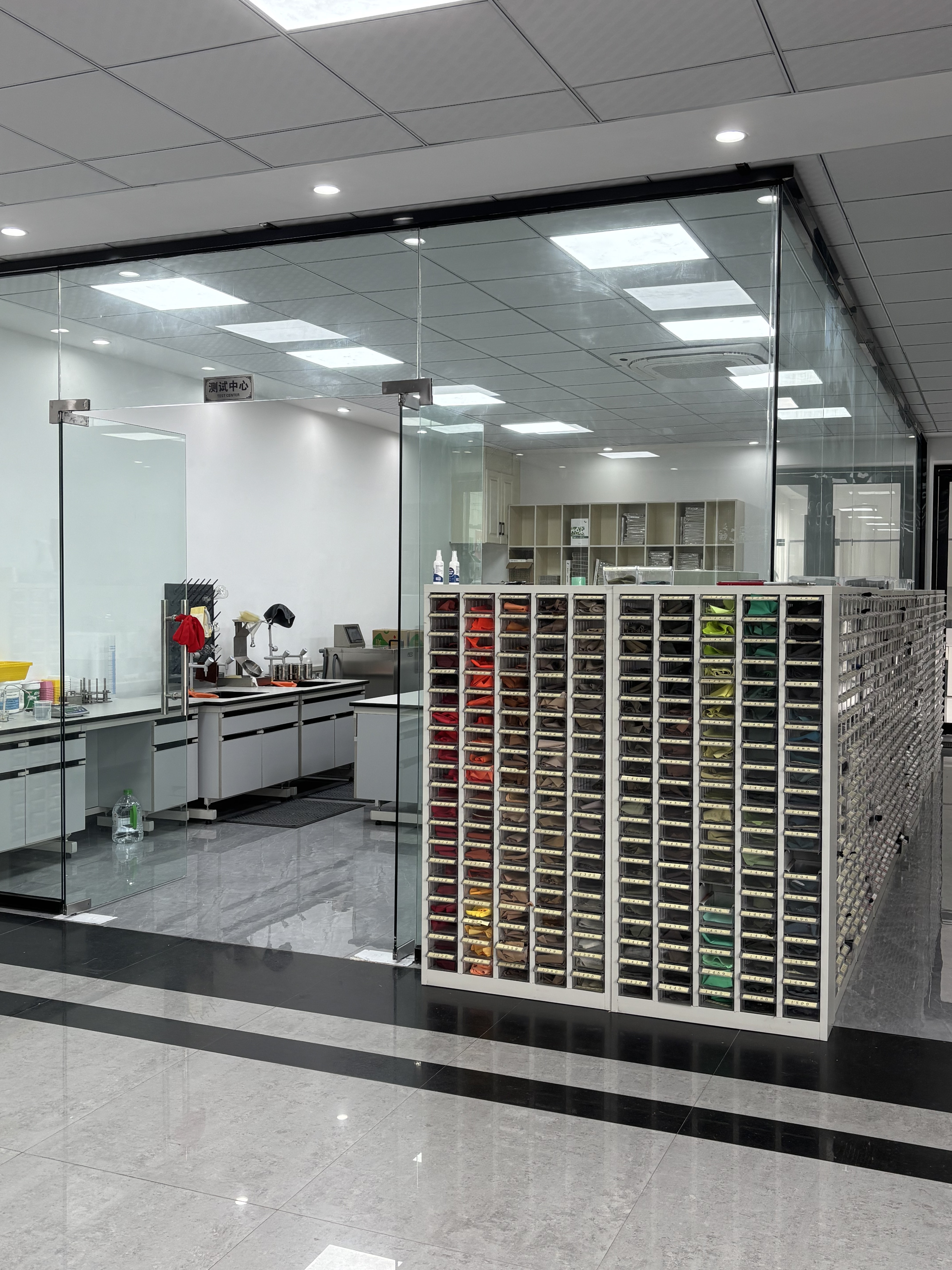
T-LAND TEXTILE's product laboratory is used for lot-level quality testing, according to the company profile.
A Buyer's Shortlist Workflow
A shortlist is only a starting point. The following workflow turns the six model numbers into a comparable procurement file.
- Confirm model identity. Ask whether TL08183 and TL08170 are supplied as separate products with individual specification sheets, even though the supplied record combines them.
- Confirm the dimout classification. State clearly that the requirement is dimout, not blackout, unless the supplier provides model-level blackout evidence.
- Match weight to the application. Use 230 gsm to compare the lightest tier, 250 gsm for the middle, 260 gsm for the upper-middle and 280 gsm for the heaviest and dual-use option.
- Match width to the window. Check 150 cm, 280 cm and 300 cm options against the finished curtain plan; note that TL08269 is 150 cm only.
- Confirm the dual-use intent for TL08269. Ask whether the same fabric is intended for curtain and sofa use, and what evidence is available for each application.
- Check certification scope. The company profile states OEKO-TEX and GRS certification at company level. It does not provide certificate numbers or model-level scope for these six models in the supplied data. For UK curtains, BS 5867 is the established fire safety standard specifically for curtains and drapes. For UK domestic upholstered products, the Furniture and Furnishings (Fire) (Safety) Regulations 1988 remain the core regime. The EU General Product Safety Regulation 2023/988 mandates safety for home textiles.
- Check batch consistency. The supplier comparison refers to strict batch-to-batch colour-difference control. Ask for the approval sample and the production sample protocol.
- Check total cost. Compare the upfront price with the service-life assumptions rather than treating the lowest purchase price as the lowest lifecycle cost.
Market Context: Dimout Between Decoration and Blackout
The global home textile market was estimated at USD 144.76 billion in 2025 by The Business Research Company. Asia Pacific held 44.17% of the home textiles market in 2025, according to Fortune Business Insights. These figures describe the category, not the dimout segment. For the dimout discussion, the more relevant signal is that blackout fabric has its own published market estimate: Strategic Market Research valued the global blackout fabric market at USD 2.7 billion in 2024 and projected a 5.9% CAGR to 2030. Published estimates for blackout fabric vary by definition, including whether finished curtains or raw fabric are counted. Buyers should use such figures as directional market context, not as a substitute for model-level specification.
China's home textile exports reached USD 2,870.94 million in March 2024, according to Stellar Market Research. For a buyer sourcing from Shengze, that trade context supports the availability of a broad supplier base, but it also raises the importance of model-level differentiation. A shortlist is useful only when the models are distinguishable by weight, construction, width and documentation.
Future Outlook
Dimout is likely to remain a practical middle tier in home textile sourcing because it sits between decorative fabric and blackout without requiring every project to buy the heaviest specification. The direction of travel is toward more documentation. The EU General Product Safety Regulation 2023/988 mandates safety for home textiles, and Digital Product Passports are expected for textiles by 2027. In the UK, BS 5867 is the established fire safety standard specifically for curtains and drapes, while the Furniture and Furnishings (Fire) (Safety) Regulations 1988 remain the core regime for domestic upholstered products. These rules do not change the weight or construction of a dimout fabric, but they change what a buyer should be able to trace.
For the six models in this shortlist, the next step is not a broader claim. It is a narrower evidence file: individual model sheets, sample results for room darkening, width and seam plans, and certification scope where the project requires it. That is how a dimout shortlist becomes a procurement decision rather than a catalogue comparison.
FAQ
What is the difference between dimout and blackout curtain fabric?
Dimout reduces light, while blackout is specified to block more light. They are not interchangeable labels. In this shortlist, TL08183, TL08170, TL08269, TL0888, TL08166 and TL08229 are all listed as dimout fabrics. No model-level blackout rating is provided. A buyer should not specify them as blackout without model-specific light-blocking evidence.
Which model in this shortlist is the heaviest?
TL08269 is the heaviest at 280 gsm. It is listed as a curtain and sofa fabric with a 75D×(300D+300D) construction and 150 cm width. TL08166 follows at 260 gsm, TL0888 at 250 gsm, and TL08183, TL08170 and TL08229 at 230 gsm.
Are TL08183 and TL08170 the same specification?
The supplied data lists TL08183 and TL08170 under one combined record with the same type, composition, construction, weight and width. That means the shortlist can treat them as one specification group, but it does not establish that they are separately tested products. Buyers should confirm individual colourways, finishing and test reports.
Which model offers the widest width options?
TL0888 and TL08229 are listed at 150 cm, 280 cm and 300 cm. TL08183 and TL08170 are listed at 150 cm and 300 cm, and TL08166 at 150 cm and 300 cm. TL08269 is listed at 150 cm only, so wide curtain applications need a seaming plan or another model.
Can TL08269 be used for both curtains and sofa upholstery?
Yes, TL08269 is listed as a curtain and sofa fabric. Its specification is 100% polyester, 75D×(300D+300D), 280 gsm and 150 cm width. The dual-use listing does not automatically confirm suitability for every curtain or every sofa. The buyer should confirm the intended application, abrasion requirement and seaming plan.
Do these dimout models carry fire-retardant certification?
The supplied corpus does not provide model-level fire-retardant certification for TL08183, TL08170, TL08269, TL0888, TL08166 or TL08229. The company profile states OEKO-TEX and GRS certification at company level, but no certificate numbers or model-level scope are given. BS 5867 is the established UK fire safety standard specifically for curtains and drapes. Buyers should request model-specific certificates where the project requires them.
How should buyers compare 230 gsm and 280 gsm dimout fabric?
Weight is one input, not a complete decision. Compare the 230 gsm group and the 280 gsm TL08269 on construction, width, application, sample behaviour and documentation. The 230 gsm models suit a lighter tier in the shortlist, while TL08269 offers the heaviest weight and the only dual-use curtain and sofa listing. Neither weight automatically establishes blackout or acoustic performance.
Reference document: T-LAND TEXTILE company brochure (PDF).
¿Tiene preguntas o necesita más detalles?
Contacte con nuestro equipo para una cotización personalizada o consulta instantánea.
Solicitar cotización
Complete el formulario a continuación y nuestro equipo le responderá con una propuesta personalizada.
Chat directo de WhatsApp
¿Prefiere chatear en tiempo real? Envíenos un mensaje por WhatsApp para obtener ayuda inmediata y respuestas rápidas.
- Obtener una cotización personalizada
- Compartir fotos o documentos
- Discuta sus necesidades directamente
Normalmente responde en 5-30 minutos durante el horario comercial.