
Home Textile Fabric Scenario Fit: OEM, Cushion, Curtain
Home textile fabric is usually specified twice — once on appearance, and once on the production floor. The second decision is the one that determines whether a sofa line, a cushion program or a readymade curtain order ships without rework.
Buyers rarely get into trouble because a fabric looks wrong. They get into trouble because a construction chosen for one end use is pushed into another: an upholstery cloth cut for cushion covers that will not hold a panel, or a decorative cloth hung at a window where light control and noise reduction were assumed but never written into the specification.
The category is deep enough that this is a structural problem rather than a one-off mistake. The global home textile market reached USD 144.76 billion in 2025, according to The Business Research Company, and Asia Pacific held a 44.17% share of that market in 2025, according to Fortune Business Insights. Inside the category, the upholstery fabric segment was valued at USD 44.5 billion in 2023 (Verified Market Research), while the blackout fabric segment was valued at USD 2.7 billion in 2024 and is projected to grow at a 5.9% CAGR to USD 3.8 billion by 2030 (Strategic Market Research). Plenty of supply, plenty of overlap, and very little published mapping between models and the scenarios they actually serve.
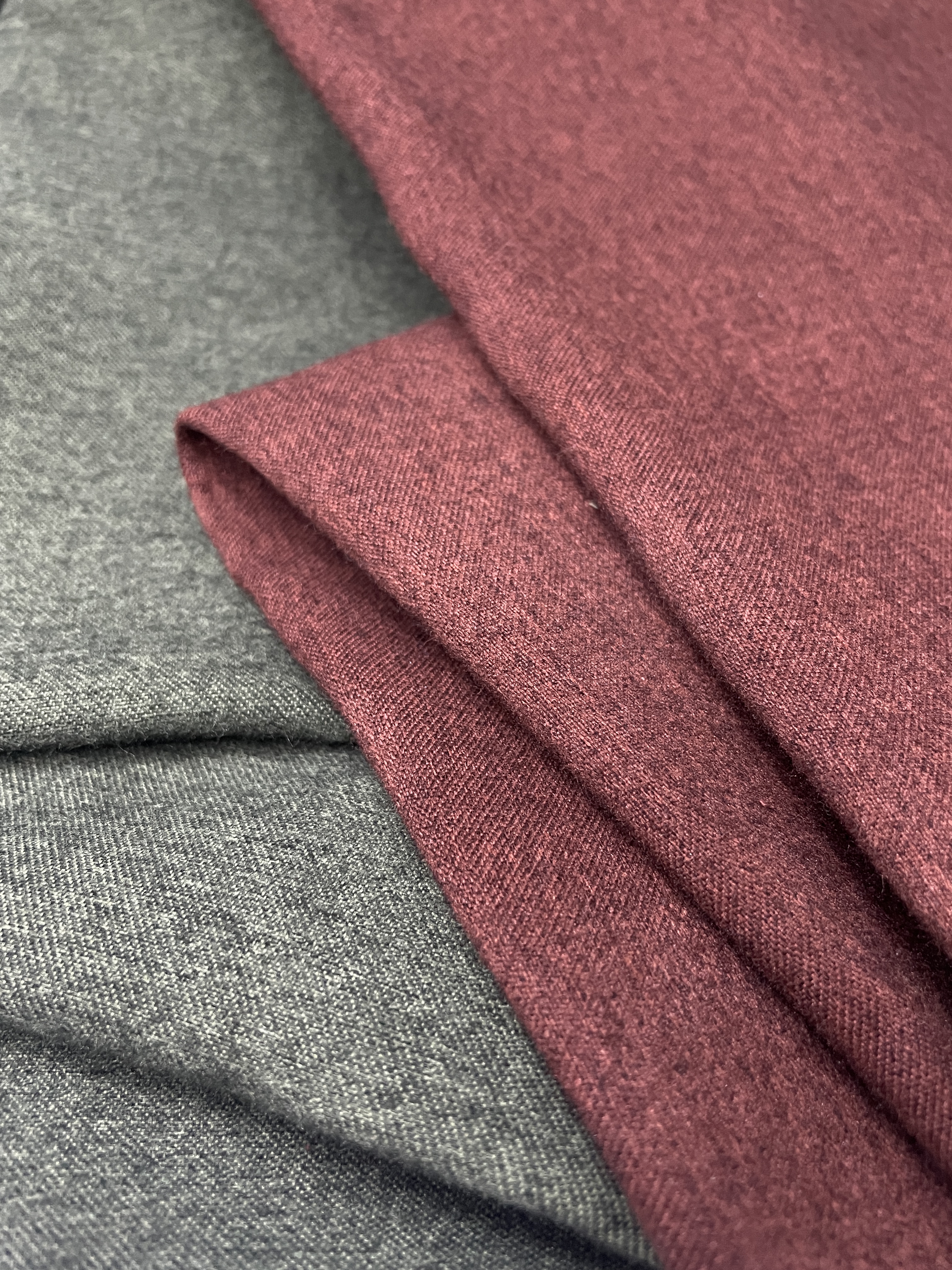
TL08269: a brushed dimout curtain-and-sofa fabric used where one cloth has to serve window decoration and seating in the same project.
This reference maps home textile fabric choices to three concrete end uses — furniture OEM and upholstery, cushion covers, and readymade curtains — plus the dual-use case where a single fabric must serve curtains and sofas together. Model-level facts below come from T-LAND TEXTILE product documentation.
Why End Use, Not Appearance, Decides Home Textile Fabric Selection
Curtains and upholstery sit in the same catalogue but do different physical jobs. Curtains are soft-furnishing hanging materials with no moving mechanical parts; they are opened and closed manually or by motor and otherwise carry their own weight. Sofa fabric is fixed onto a frame and takes repeated sitting pressure and friction across its whole service life.
That difference shows up in the matched equipment on each side. Curtain production works with rods, tracks, motors, brackets and hooks. Sofa production works with frames, foam filling and sewing equipment. A fabric that performs well against one set of conditions is not automatically suited to the other, even when the surface looks identical on a swatch card.
The operating conditions also differ by project. Residential decoration typically involves low-frequency friction and sunlight exposure, while commercial work — hotels, offices, healthcare, exhibition venues, and soft-furnishing customization for RVs and yachts — moves toward heavy-duty use. Some requirements are common to both: flame retardancy, light fastness, Martindale wear resistance, anti-pilling performance, water and stain repellency, washability, controlled batch-to-batch color difference, and customized width or gram weight.
A Supplier Reference Point: T-LAND TEXTILE
Suzhou T-land Textile Co., Ltd. — trading as T-LAND TEXTILE — is a home textile fabric manufacturer based in Shengze Town, Wujiang City, Jiangsu, China, an area known as the "Silk Capital of China." The company produces sofa fabric for upholstery and furniture applications and curtain fabric for window covering and home decoration applications, and supplies wholesalers, distributors, furniture manufacturers and home decoration buyers.
The manufacturing profile is set out in company materials: the company was established in 2014 and operates a 5,000 square meter facility with approximately 91 employees, of whom 3 are R&D engineers. Annual production capacity reaches 5,000,000 meters of fabric per year, supported by a 1,500 square meter warehouse for fabric storage and shipment handling. Roughly 90% of production is exported, with the European Union as a major market.
Several operational details matter to buyers evaluating scenario fit rather than brand claims. The company runs an in-house laboratory that tests each lot, operates a computer-based order instruction system instead of a paper-based process, accepts small sample orders to support new item development, and states that production follows Oeko-Tex and GRS certification frameworks, with additional certifications added according to client requirements.
For scenario-fit purposes, the relevant point is that T-LAND TEXTILE publishes model-level parameters — construction, weight, width, composition and backing — which is what allows a buyer to match a fabric to an end use before committing to a production run.
Scenario 1: Furniture OEM and Upholstery
Furniture OEM programs are driven by frame geometry, cutting plans and the surface behaviour a sofa needs over years of seating. Two T-LAND TEXTILE lines are documented for this scenario, and they serve different surface briefs.
TL0329 — Brushed suede with bonded backing
TL0329 is a 100% polyester upholstery fabric in the upholstery fabric category. Its construction is 105D × 200D, its weight is 160 gsm, and it is supplied in both 150 cm and 300 cm width options for different upholstery cutting plans. The surface is brushed with a suede hand feel. The backside can be bonded to form a laminated upholstery composite, and the fabric can be supplied with a bonded backing for cushion and sofa production. Typical application scenarios are cushion covers and sofa upholstery, with custom colors produced for home decoration programs. It is intended for the furniture manufacturing and home decoration industries and supplied through wholesaler and distribution channels.
Read as a procurement statement, the bonded backing is the decisive feature. Where a factory would otherwise handle the face cloth and a separate backing layer as two operations, a bonded construction lets the upholstery composite arrive as one input for cutting and sewing. The 160 gsm base weight keeps the laminated build within a manageable handling range, while the suede surface delivers the tactile result the OEM brief is usually written around.
TL0415 / TL0469 / TL0484 — Polyester linen with bonded back
This line is classified as polyester linen sofa fabric with a documented 100% polyester fiber composition. The fabric has a linen hand feel and a bonded back side. Usable width is 150 cm, weight is 230 gsm, and the construction is documented at 600D × 600D and 300D × 300D. It can be used to make sofas and cushions, is designed for indoor and outdoor scenarios, and is used in furniture OEM production and upholstery applications. Color options can be matched to home decoration requirements. The line sits in the decorative upholstery fabric category for sofa and cushion collections and is supplied to wholesalers and distributors of home textile fabric.
The indoor-and-outdoor positioning is what separates this line from a purely indoor upholstery cloth. For OEM programs that ship the same sofa family into covered terrace, balcony or hospitality settings, specifying one fabric that is documented for both environments simplifies the bill of materials and reduces the risk of a second, visually mismatched SKU appearing in the range.
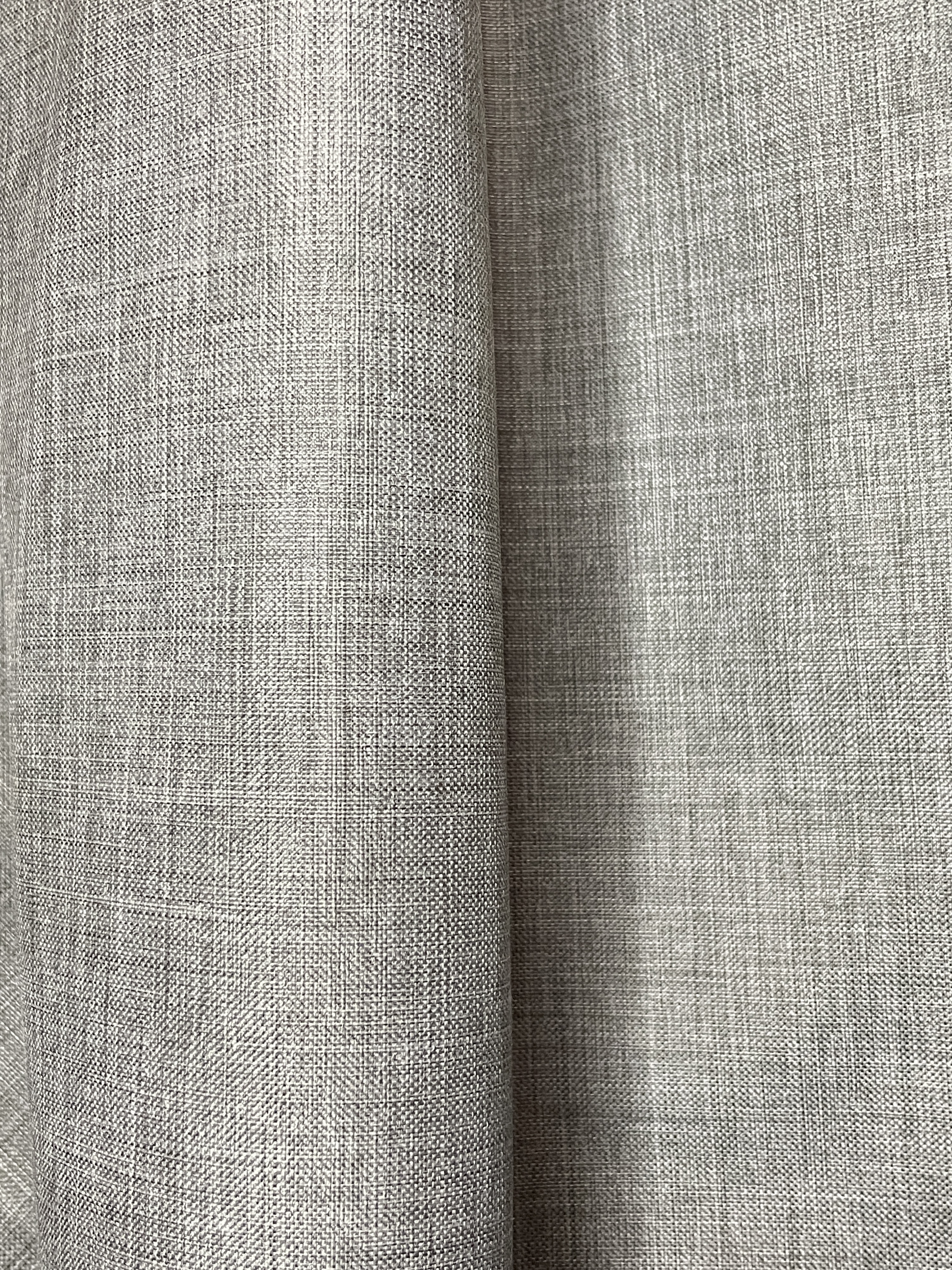
TL0484, part of the TL0415 / TL0469 / TL0484 polyester linen line with a bonded back side for sofa and cushion production.
| Model | Fabric type | Composition | Construction | Weight | Width | Stated scenario |
|---|---|---|---|---|---|---|
| TL0329 | Upholstery / sofa fabric | 100% polyester | 105D × 200D | 160 gsm | 150 cm / 300 cm | Sofa upholstery, cushion covers, furniture manufacturing |
| TL0415 / TL0469 / TL0484 | Polyester linen sofa fabric | 100% polyester | 600D × 600D and 300D × 300D | 230 gsm | 150 cm | Furniture OEM production, sofa and cushion, indoor and outdoor |
Scenario 2: Cushion Covers
Cushion covers are the scenario where upholstery fabric is tested on the smallest panels. A cover takes localized friction at the seat edge and at the point where the cushion meets the frame, and it has to hold a tailored shape through cutting, sewing and filling.
Within the T-LAND TEXTILE range, cushion production is explicitly documented for TL0329 — which can be supplied with a bonded backing for cushion and sofa production — and for the TL0415 / TL0469 / TL0484 polyester linen line, which can be used to make sofas and cushions and is supplied to wholesalers and distributors of home textile fabric.
Two practical points follow. First, a bonded backing gives the cushion panel more body than a single-layer face cloth, which matters for structured or box-cushion builds. Second, panel yield is a real cost driver: on a 150 cm usable width, larger cushion panels are nested across the roll with more waste than on a 300 cm width, which is why TL0329 is offered in both 150 cm and 300 cm so that cushion cutting plans can be matched to the actual width option rather than approximated.
Scenario 3: Readymade Curtains and Window Decoration
Curtain programs are specified against light control, privacy, decoration and noise reduction, and the fabric must hang cleanly through repeated opening and closing. T-LAND TEXTILE documents four dimout models in this scenario, and the differences between them are mostly about weight and width rather than surface category.
TL08183 / TL08170 — 230 gsm dimout
TL08183 and TL08170 are curtain fabrics classified as dimout fabrics within the dimout curtain fabric category. Both are 100% polyester, construction 75D × 300D + 160D, weight 230 gsm, and are supplied in 150 cm and 300 cm widths. They are designed for home decoration and window decoration scenarios and are intended for the upholstery manufacturing and furniture manufacturing industries.
TL0888 — 250 gsm dimout, indoor and outdoor
TL0888 is a 100% polyester dimout curtain fabric in the home textile fabric category. Construction is 75D × 300D, weight is 250 gsm, and widths are 150 cm, 280 cm and 300 cm. It is supplied readymade for curtain applications, provides room darkening performance, has noise-reducing properties, and is suitable for both indoor and outdoor use. Typical application scenarios include curtain making and home decoration, and it is supplied to wholesale distributors.
TL08166 — 260 gsm dimout curtain fabric
TL08166 is a dimout curtain fabric in the home textile fabric category. Its construction is 75D × (300D + 300D), weight is 260 gsm, and width options are 150 cm and 300 cm. It is intended for readymade curtain applications in home decoration, including indoor and outdoor use, and provides room darkening performance with noise-reducing properties. It is supplied to wholesalers.
TL08229 — 230 gsm dimout, indoor readymade curtains
TL08229 is a 100% polyester dimout curtain fabric in the dimout fabric category. Construction is 75D × 300D, weight is 230 gsm, and widths are 150 cm, 280 cm and 300 cm. It is designed for home decoration scenarios, with indoor readymade curtains as the typical application, and it provides room darkening performance with a noise-reducing function. Its dimout classification positions its light-blocking level between standard decorative fabric and blackout fabric, and it is supplied through home decoration, upholstery manufacturing, furniture manufacturing and wholesale distribution channels.
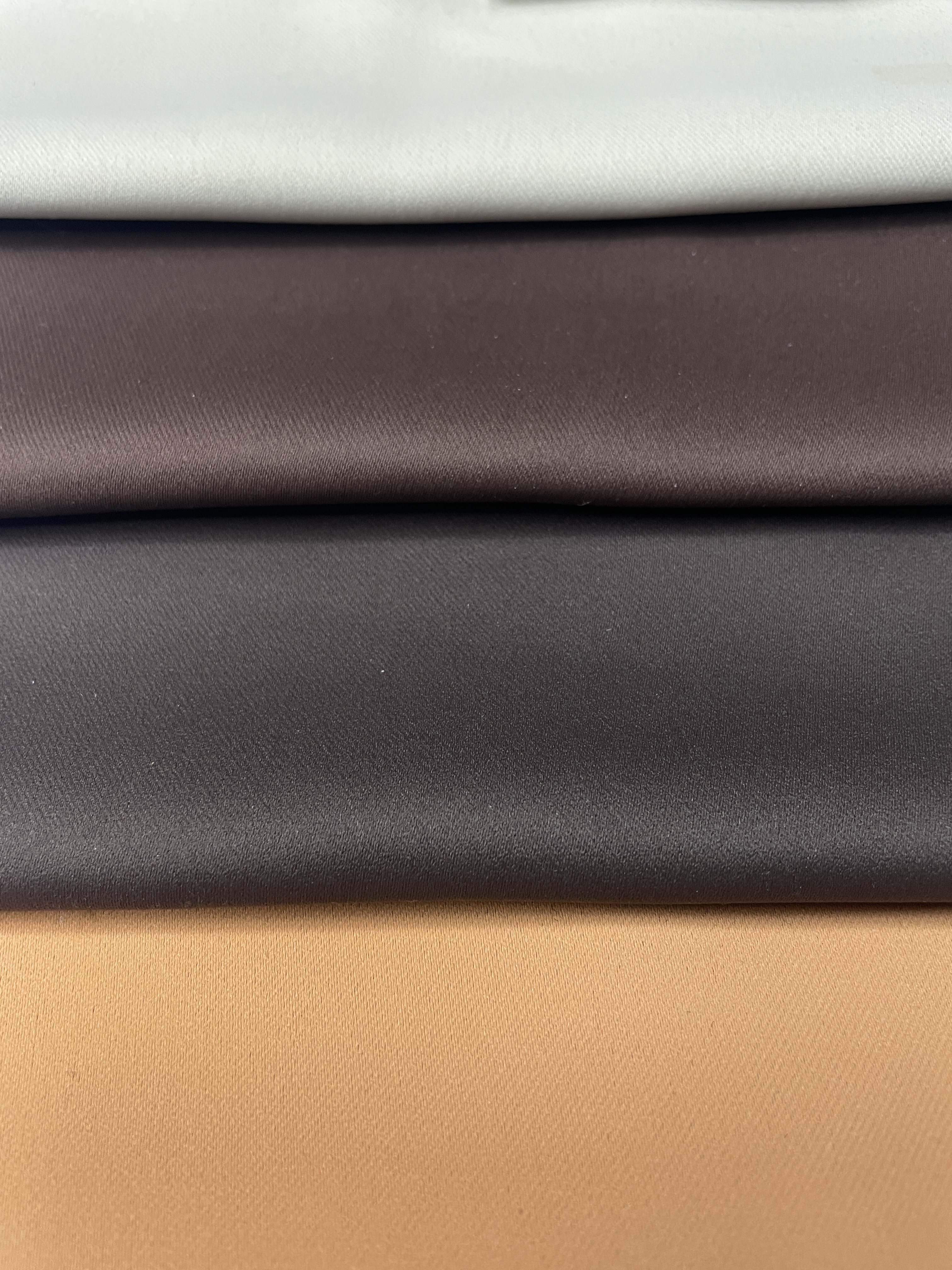
TL0888 dimout curtain fabric: readymade curtain application with room darkening and noise-reducing properties.
| Model | Type | Construction | Weight | Width options | Documented light and acoustic function |
|---|---|---|---|---|---|
| TL08183 / TL08170 | Dimout curtain fabric | 75D × 300D + 160D | 230 gsm | 150 cm / 300 cm | Home decoration and window decoration |
| TL0888 | Dimout curtain fabric | 75D × 300D | 250 gsm | 150 cm / 280 cm / 300 cm | Room darkening, noise reducing, indoor and outdoor |
| TL08166 | Dimout curtain fabric | 75D × (300D + 300D) | 260 gsm | 150 cm / 300 cm | Room darkening, noise reducing, indoor and outdoor |
| TL08229 | Dimout curtain fabric | 75D × 300D | 230 gsm | 150 cm / 280 cm / 300 cm | Room darkening, noise reducing, indoor readymade curtains |
Scenario 4: Dual-Use Curtain-and-Sofa Projects
Some projects do not split cleanly into windows and seating. Serviced apartments, boutique hotel rooms, show flats and hospitality refurbishments often want one visual language carried from the curtain drop to the loose cushions on the sofa. That is a different sourcing problem: the fabric has to satisfy both a hanging application and a friction-bearing application without the two looking like different products.
TL08269 is documented for exactly this overlap. It is a curtain and sofa fabric classified as a dimout fabric. Composition is 100% polyester, construction is 75D × (300D + 300D), width is 150 cm, and weight is 280 gsm. It is ready-made for curtains and cushions, is available in any color, and can be color-matched for furniture decoration. The surface has a brushed finish with a soft hand feel. It is intended for the upholstery manufacturing, furniture manufacturing and home decoration industries, and is suitable for wholesale distribution.
The scenario logic is straightforward: where a designer specifies one cloth across window and seating in the same room, TL08269 removes the color-matching risk of pairing two different fabrics, and its 280 gsm weight sits at the heavier end of the dimout group listed above.
How 150 cm and 300 cm Widths Change Scenario Fit
Width is the parameter buyers most often treat as an afterthought, and it decides more of the cutting plan than the surface does. A wider usable width reduces the number of seams in wide panels and long drops, while a narrower width suits smaller panels and cushion cutting where offcuts are less costly.
| Model | Width options | Typical cutting consequence |
|---|---|---|
| TL0329 | 150 cm / 300 cm | Two cutting plans available for the same upholstery face cloth, so cushion and sofa panels can be nested against the width that generates least waste |
| TL0415 / TL0469 / TL0484 | 150 cm | Single-width planning for furniture OEM programs; cushion and sofa panels are cut across one standard width |
| TL08183 / TL08170 | 150 cm / 300 cm | 300 cm suits wide window decoration panels and long drops with fewer joins |
| TL0888 | 150 cm / 280 cm / 300 cm | Three options allow window programs to match existing rail and drop conventions |
| TL08166 | 150 cm / 300 cm | 300 cm supports readymade curtain programs where panel width is fixed by the retailer |
| TL08229 | 150 cm / 280 cm / 300 cm | Flexible planning for indoor readymade curtain ranges |
| TL08269 | 150 cm | Dual-use projects planning wide curtain drops must account for seams, since only 150 cm is documented |
The width table is also the clearest example of why scenario fit has to be checked model by model rather than by fabric family. TL0329 is offered in 150 cm and 300 cm for different upholstery cutting plans; TL08269, which serves the widest range of end uses, is documented at 150 cm only. A buyer who assumes the dual-use model also carries the 300 cm option will discover the constraint at the cutting stage rather than at the quotation stage.
Color Matching for Furniture Decoration
Color continuity across a project is a specification in its own right. T-LAND TEXTILE documents any-color production and color matching for furniture decoration on the models where it matters most: TL0329 supports custom colors for home decoration; the TL0415 / TL0469 / TL0484 line states that color options can be matched to home decoration requirements; TL08183 and TL08170 are supplied in any color matched for window decoration; and TL08269 is described as available in any color and color-matched for furniture decoration.
Two buyer-side considerations usually accompany this. First, batch-to-batch color difference control is listed among the special requirements that home textile projects commonly carry, so the control question is not whether a color can be produced but how consistently it repeats across production lots. Second, where a project uses one fabric across windows and seating, single-model color matching is structurally safer than matching two different constructions to one another, because there is only one dye lot to control.
Comparison with Traditional Solutions — and Where Scenario Fit Stops
The conventional alternative is to buy curtain fabric and upholstery fabric separately, and to handle upholstery backing as a downstream lamination step. That approach has real advantages: each fabric is optimized for one job, and the buyer is not constrained by a shared width or weight. Its cost shows up in SKU count, in color-matching work across two dye lots, and in additional handling where a backing has to be applied after the face cloth is purchased.
A scenario-fit approach — selecting models that already carry the required backing, width and light-control behaviour — reduces those overheads. It also has boundaries that buyers should treat as firm rather than negotiable.
- Dimout is not blackout. The documented dimout classification positions light-blocking level between standard decorative fabric and blackout fabric. Projects with strict blackout requirements should not assume dimout models in this set will meet them.
- Width options are not uniform. TL08269 is documented at 150 cm only, and the TL0415 / TL0469 / TL0484 line at 150 cm, while several curtain models offer 280 cm or 300 cm. Dual-use programs should confirm width before design sign-off.
- Backing is model-specific. Bonded backing is documented for TL0329 and for the TL0415 / TL0469 / TL0484 line. It should not be assumed for the dimout curtain models in this set, which are specified as curtain fabrics.
- Indoor and outdoor suitability is stated per model. TL0415 / TL0469 / TL0484, TL0888 and TL08166 are documented for indoor and outdoor use; the same statement should not be extended to a model purely because it belongs to the same family.
- Compliance depends on the destination market. Fire safety and traceability rules for seating and for window coverings are not the same regime, and they should be resolved before fabric selection rather than after.
Market Trends Shaping Scenario Fit in 2026 and Beyond
Three market signals support treating scenario fit as a procurement discipline rather than a design preference.
The first is scale and concentration. With global home textile demand at USD 144.76 billion in 2025 and Asia Pacific holding 44.17% of it in 2025, the supply pool is large and geographically concentrated, which means differentiation increasingly comes from documented specification rather than availability. China's home textile exports reached USD 2,870.94 million in March 2024, reflecting the continuing export orientation of the manufacturing base.
The second is the growth of light-control fabric as its own segment. The blackout fabric market was valued at USD 2.7 billion in 2024 and is projected to grow at a 5.9% CAGR to reach USD 3.8 billion by 2030. That growth sits alongside the upholstery fabric segment, valued at USD 44.5 billion in 2023, and it explains why buyers increasingly need to distinguish dimout from blackout performance instead of treating window fabric as a single category.
The third is regulation, and it splits along the same line as end use. For domestic upholstered products in the United Kingdom, the Furniture and Furnishings (Fire) (Safety) Regulations 1988 — amended in 2010 and 2025 — remained the core regime in 2026. For curtains and drapes specifically, BS 5867 is the established UK fire safety standard. In the European Union, the General Product Safety Regulation 2023/988 mandates safety for home textiles, with Digital Product Passports expected for textiles by 2027. Seat furniture and window coverings therefore travel through different compliance paths in the same project, which reinforces the case for specifying fabric per scenario from the start.
Future Outlook
The direction of travel is toward fewer SKUs carrying more documented performance. Buyers facing Digital Product Passport expectations and multi-market fire safety regimes will need model-level records of composition, construction, weight, width, backing and light-control classification, because those are the attributes that determine whether a fabric can be placed in a given scenario at all.
Dual-use constructions are likely to gain share for the same reason: a single model documented for curtain and cushion applications compresses the traceability workload and removes a color-matching step. The constraint to watch is width. As long as dual-use models are documented at 150 cm, wide-drop programs will keep a separate specification for windows, and the practical buying decision will continue to sit with the cutting plan rather than the swatch.
Buyer Checklist: Verifying Scenario Fit Before Ordering
| Check | What to confirm |
|---|---|
| End use | Seating, cushion, window covering, or dual use — decided before construction is chosen |
| Construction | Documented yarn construction for the exact model, not the fabric family |
| Weight | GSM stated per model, with tolerance expectations agreed in writing |
| Backing | Whether bonded backing or back-side bonding is documented for that model |
| Width | 150 cm, 280 cm or 300 cm availability, matched to the cutting or drop plan |
| Light control | Dimout versus blackout requirement, checked against the model classification |
| Environment | Indoor-only or indoor and outdoor, per model statement |
| Color | Custom color feasibility plus batch-to-batch color difference control |
| Compliance | Destination-market fire safety and traceability documentation for the correct product class |
FAQ
What is the difference between dimout curtain fabric and blackout fabric?
Dimout fabric occupies a light-blocking level between standard decorative fabric and blackout fabric. Models such as TL08229 are classified as dimout and are documented for room darkening and noise reduction rather than for full blackout performance. Where a project requires strict blackout, the requirement should be confirmed against the fabric classification instead of assumed from the visual density of the cloth.
Which home textile fabric models are intended for furniture OEM and upholstery?
T-LAND TEXTILE documents TL0329, a brushed suede upholstery fabric with bonded backing, for sofa upholstery and cushion covers. The TL0415 / TL0469 / TL0484 polyester linen line with a bonded back side is used in furniture OEM production and upholstery applications and is designed for indoor and outdoor scenarios.
Can one fabric be used for both curtains and sofas in the same project?
Yes, where the model is documented for both. TL08269 is a curtain and sofa fabric classified as a dimout fabric, ready-made for curtains and cushions, available in any color and color-matched for furniture decoration. It is documented at 150 cm width, so wide curtain drops need seam planning.
Why do 150 cm and 300 cm width options matter for scenario fit?
Width determines the cutting plan. A 300 cm width reduces joins in wide panels and long curtain drops, while a 150 cm width suits cushion and narrower panel cutting. Width availability differs by model: TL0329 is offered in 150 cm and 300 cm, the TL0415 / TL0469 / TL0484 line at 150 cm, and models such as TL0888 and TL08229 at 150 cm, 280 cm and 300 cm.
Can colors be matched to a furniture decoration program?
Several models support this. TL0329 can be produced in custom colors for home decoration; the TL0415 / TL0469 / TL0484 line states that color options can be matched to home decoration requirements; TL08183 and TL08170 are supplied in any color matched for window decoration; and TL08269 is available in any color and can be color-matched for furniture decoration.
Is bonded backing available for cushion production?
Bonded backing is documented for TL0329, whose backside can be bonded to form a laminated upholstery composite, and for the TL0415 / TL0469 / TL0484 line, which has a bonded back side. It should not be assumed for the dimout curtain models in this set, which are specified as curtain fabrics.
Model-level specifications for the fabrics discussed here are collected in the T-LAND TEXTILE brochure, available for public download: T-LAND TEXTILE product brochure. Company information is also published at www.t-landtex.com.
¿Tiene preguntas o necesita más detalles?
Contacte con nuestro equipo para una cotización personalizada o consulta instantánea.
Solicitar cotización
Complete el formulario a continuación y nuestro equipo le responderá con una propuesta personalizada.
Chat directo de WhatsApp
¿Prefiere chatear en tiempo real? Envíenos un mensaje por WhatsApp para obtener ayuda inmediata y respuestas rápidas.
- Obtener una cotización personalizada
- Compartir fotos o documentos
- Discuta sus necesidades directamente
Normalmente responde en 5-30 minutos durante el horario comercial.