
Home Lift Scenario Fit: Private Villa, Shopping Mall and Luxury Hotel Requirements
Home lift procurement is no longer settled by a single capacity figure. At decision stage, three questions decide the specification: what the building structure can physically accept, how much traffic the installation will carry each day, and what aesthetic, accessibility and cultural expectations the finished product has to satisfy. Three documented international projects — a private villa in Russia, a shopping mall retrofit in Australia and a luxury hotel in Indonesia — show how the same three home lift families are configured differently when the scenario changes.
Why Home Lift Selection Has Become a Scenario Decision
A home lift is a low-speed vertical transportation system designed for private residences and small public buildings, where travel height is limited, daily traffic is predictable, and the equipment has to coexist with staircases, interior finishes and existing floor slabs. FRANZ Intelligent Elevator Co., Ltd. (Suzhou Franz Intelligent Elevator Co., Ltd.), a manufacturer based in Suzhou, Jiangsu, China, builds three main families for this envelope: the shaft-built cabin lift, the glass lift and the platform lift. The company operates a 30,000 m² facility with 310 employees, a 32-engineer R&D team and an annual output of 6,000 units.
Because the three families differ structurally, they differ in what a project can ask of them. The specification table below is the starting point for scenario matching, not a marketing summary.
| Product family | Load capacity | Speed steps | Shaft / construction | Listed use envelope |
|---|---|---|---|---|
| Glass lift (FT/FJ series) | 400–800 kg | 0.4 / 0.63 / 1.0 m/s | Aluminum frame with glass shaft + glass cabin | Indoor and outdoor use |
| Shaft-built cabin lift (FT/FJ series) | 320–1000 kg | 0.4 / 0.63 / 1.0 m/s | Bent steel structure, concrete shaft, wood shaft or brick shaft | Indoor use |
| Platform lift (FP-S/E series) | 320–400 kg | 0.15 / 0.3 m/s | Aluminum frame with glass shaft + platform | Indoor use; includes barrier-free accessibility engineering |
Two figures carry most of the decision weight: load capacity and travel speed. The FT/FJ glass lift and the FT/FJ shaft-built cabin lift share the same 0.4 / 0.63 / 1.0 m/s steps and list energy consumption between 1.1 kW and 2.4 kW, while the FP-S/E platform lift operates at 0.15 / 0.3 m/s with 1.1 kW. The gap between the two groups is deliberate. Higher-capacity traction equipment suits villa and hotel circulation, where several people, luggage or a wheelchair may travel together. Lower-speed platform equipment is intended for short-travel, barrier-free movement, where controlled motion matters more than journey time.
Scenario 1: Russian Private Villa — Panoramic Glass with Radar Sensing
The first reference project is a new-build luxury mansion in Russia. The working condition is indoor, the function is panoramic viewing combined with vertical transportation, and the operating mode is high-frequency daily use by a private household. The recorded configuration pairs an aluminum-frame glass lift with steel-belt traction, vibration-damping technology and millimeter-wave (mmWave) radar cloud detection.
The design specification records a solid aluminum frame with large-area transparent glass and 270-degree viewing, a custom wavy luminous background panel and rattan-pattern carpet, adjustable frame color temperature tuned to Russian artistic aesthetics, and thickened explosion-proof tempered glass. Within the FRANZ catalogue, the glass lift family (FT/FJ series) is defined as an aluminum frame with glass shaft and glass cabin, rated 400–800 kg at 0.4 / 0.63 / 1.0 m/s, and listed for both indoor and outdoor use — the combination that makes a panoramic villa installation practical rather than purely decorative.
Why 400–800 kg and 0.4–1.0 m/s fit this scenario
In a private villa, the 400–800 kg band brackets what a household actually moves: a small group of occupants, a wheelchair user travelling with an attendant, or bulky items being carried between floors. Below that band, the platform lift family tops out at 400 kg; above it, villa cabins rarely need additional capacity because the traffic profile is domestic rather than public.
Speed selection is a trade between travel height and ride comfort. At 0.4 m/s, the cabin moves quietly and energy demand stays at the lower end of the 1.1–2.4 kW range. Where a villa has more stops and a taller travel height, 0.63 m/s or 1.0 m/s shortens the journey without changing cabin footprint. Home-use traction designs reach 0.3–1 m/s overall, so these steps sit inside the performance band that separates traction home lifts from traditional traction equipment in retrofit and small-size residential projects.
Safety and design boundary
The mmWave radar layer is an active detection function, not a substitute for mechanical safety devices. FRANZ developed a proprietary active millimeter-wave radar situational awareness safety system for residential villa elevators, and the Russian project specifies mmWave radar cloud detection as part of the delivered configuration. Even so, a panoramic glass lift remains a structural installation: the aluminum frame, glass shaft and cabin have to be anchored to a prepared shaft or structural opening, and the glass specification — here thickened explosion-proof tempered glass — must be confirmed for the site. Buyers comparing premium home lift offers should therefore verify both the sensing function and the structural engineering, not one alone.
Scenario 2: Australian Shopping Mall Retrofit — Pit-Free, Threshold-Free Access
The second reference project is an office and shopping mall commercial installation in Australia, delivered inside an existing building. The working condition is indoor, the function is vertical passenger transportation for staff and visitors with barrier-free access, and the operating mode is high-frequency public commercial use.
The documented solution is a shaft-less and pit-free platform lift configuration: an aluminum frame with laminated tempered glass carrying a platform, combined with steel-belt traction, an emergency leveling and anti-pinch device, and a one-key emergency call system. The finished installation uses a threshold-free flat-floor design for disabled-friendliness, a cream-white scheme matched to the building's log-style staircases, and is stated to comply with Australian high-safety standards. The platform lift family (FP-S/E series) is listed at 320–400 kg with speeds of 0.15 and 0.3 m/s, energy consumption of 1.1 kW, aluminum-frame glass shaft construction, and indoor use; its declared application scope includes office buildings and barrier-free accessibility engineering.
Why a retrofit changes the specification
Retrofit projects are constrained by the building rather than by the lift. Cutting a deep pit or constructing a new shaft inside an operating shopping mall is usually the most disruptive part of the work, so a shaft-less and pit-free solution reduces structural intervention and allows the lift to follow an existing staircase line. The threshold-free flat floor is the accessibility counterpart: it removes the step that otherwise blocks wheelchairs, service trolleys and mobility equipment, which is why threshold-free access is typically written into the tender document before any hardware is chosen.
Where the 400–800 kg and 0.4–1.0 m/s band enters the discussion
Lower capacity and lower speed are a deliberate trade-off in this configuration. The FP-S/E platform lift is not intended for long travel or heavy passenger throughput. When a mall retrofit does require higher capacity or faster travel, the project moves to the FT/FJ glass lift (400–800 kg; 0.4 / 0.63 / 1.0 m/s) or the FT/FJ shaft-built cabin lift (320–1000 kg; 0.4 / 0.63 / 1.0 m/s). Both of those families require a defined shaft — bent steel structure, concrete, wood or brick — so the higher-capacity answer arrives with greater civil work. That single trade is the core decision an existing-building project has to make.
Scenario 3: Indonesian Luxury Hotel — Champagne Gold Glass with Automatic Leveling
The third reference project is a commercial real estate installation in Indonesia: an indoor glass lift serving hotel guests and office staff across multiple floors, operating in high-frequency public commercial mode. The recorded configuration combines a glass lift with steel-belt traction and an automatic power-failure leveling system, and specifies a champagne-gold metal frame glass cabin with a large-capacity car. The touch-screen operating panel supports multi-language switching, face recognition, voice broadcast and an enlarged-font high-contrast mode, in a design that responds to local Muslim cultural expectations and barrier-free requirements.
Why this configuration suits a luxury hotel
Hotel circulation mixes guests, staff and luggage, which is where the 400–800 kg glass lift band and the 0.63 / 1.0 m/s speed steps become relevant. A large-capacity car reduces waiting during check-in and check-out peaks, while the intermediate speed step keeps floor-to-floor time short without pushing the cabin into the higher energy demand of the 1.0 m/s setting on every trip. The champagne-gold frame is a specification decision rather than an accessory: on a glass lift, frame, cabin and shaft read as one visible element in a lobby or atrium, so finish, color temperature and lighting are agreed before production.
Automatic power-failure leveling keeps the cabin aligned with the landing when power is interrupted, which matters for luggage trolleys, wheelchair transfer and elderly guests. Combined with the barrier-free layout and the multi-language, high-contrast interface, the installation treats accessibility as a service standard rather than an add-on.
Cultural design and compliance boundary
Accessibility and cultural fit are specified together in the project record: multi-language switching, voice announcements, face recognition, an enlarged-font high-contrast interface and a barrier-free layout, alongside a palette that respects local aesthetic expectations. One boundary deserves stating plainly: a hotel installation sits under commercial building requirements and inspection regimes that differ from those applied to a single-family villa lift. Project schedules should therefore budget for documentation, acceptance testing and third-party review, even when the hardware comes from a manufacturer whose main market is residential villas.
Scenario Comparison: Three Projects, Three Decision Logics
| Project | Recorded scenario profile | Matched configuration | Load / speed band | Primary decision driver |
|---|---|---|---|---|
| Private villa, Russia | New-build luxury mansion; indoor; panoramic viewing plus vertical transportation; high-frequency household use | Aluminum-frame glass lift, steel-belt traction, vibration damping, mmWave radar cloud detection, thickened explosion-proof tempered glass | 400–800 kg; 0.4 / 0.63 / 1.0 m/s | View, aesthetics and active safety sensing |
| Shopping mall retrofit, Australia | Office and shopping mall commercial project; indoor; staff and visitor transport; barrier-free access; public high-frequency operation | Shaft-less, pit-free platform lift, laminated tempered glass, emergency leveling and anti-pinch device, one-key emergency call | 320–400 kg; 0.15 / 0.3 m/s | Civil work limits and threshold-free accessibility |
| Luxury hotel, Indonesia | Commercial real estate; indoor; guest and staff transport across floors; public high-frequency operation | Glass lift, steel-belt traction, automatic power-failure leveling, champagne-gold frame, large-capacity car, multi-language touch panel | 400–800 kg; 0.63 / 1.0 m/s | Guest flow, design language and cultural fit |
Market Signals Behind Scenario-Based Home Lift Specification
Grand View Research places the global residential elevator market at USD 54.61 billion in 2024, covering new equipment, maintenance and modernization of elevators for residential applications. Growth is not evenly distributed across that total. Roland Berger projects the modernization segment of the elevator market to grow at a CAGR of 7% through 2030 — which describes precisely the kind of existing-building work the Australian project represents, and explains why pit-free and shaft-less configurations keep appearing in retrofit tenders.
Regulation is moving at the same time. TÜV SÜD reports that ISO 8100-1 and ISO 8100-2 are replacing EN 81-20/50 in a harmonization of global elevator safety standards, with an effective date of 1 March 2026. For cross-border projects, the practical consequence is that buyers should check which standard a certificate or declaration references before treating it as evidence for a specific model.
Competitive context is useful when it is stated factually. Aritco Lift AB, the Swedish platform-lift manufacturer, produced approximately 3,000 elevators per year as of late 2025 and operates in 60 countries, according to its own published company information. FRANZ lists an annual output of 6,000 units with roughly 15% exported. Volume differences of this kind describe production scale, not quality; for a buyer, the more useful comparison is whether each supplier publishes verifiable parameters for the exact configuration being quoted.
Home Lift Traction Designs vs Traditional Traction, Screw and Hydraulic Alternatives
Home-use traction elevator designs differ from traditional traction elevators in two ways that matter for scenario fit: they eliminate oil leakage risk, and they achieve higher travelling speeds, with home-use traction equipment listed at 0.3–1 m/s. Against traditional traction equipment, the home-use variant is positioned at moderate purchase cost with lower maintenance cost and lower energy consumption. Against screw-type systems, the differences are more specific: operating noise is 15–25 dB lower than screw-type elevators, cost is about 10% lower than a screw elevator, the mechanical structure is simpler, less maintenance is required, and the equipment is suited to retrofit and small-size residential projects as well as low-noise buildings and compact spaces.
| Comparison dimension | Home-use traction home lift | Traditional traction elevator | Screw-type alternative |
|---|---|---|---|
| Oil leakage risk | No oil leakage risk | Baseline | Not applicable |
| Travelling speed | 0.3–1 m/s | Lower travelling speed | Low speed |
| Operating noise | 15–25 dB lower than screw type | Baseline | Higher noise |
| Cost position | Moderate purchase cost; lower maintenance cost; about 10% lower than screw elevator | Baseline | Higher than home-use traction |
| Maintenance | Simple mechanical structure, less maintenance | Conventional maintenance regime | More complex maintenance |
| Energy | Lower energy consumption, eco-friendly | Baseline | Not specified |
| Best-suited applications | Home, office, shopping mall, hotel; retrofit and small-size residential projects; low-noise buildings; compact spaces | Conventional vertical transportation | Low-speed applications |
Limits buyers should not skip
- The FP-S/E platform lift is capped at 320–400 kg and 0.15 / 0.3 m/s. It solves access and civil-work problems; it does not solve throughput problems.
- The FT/FJ glass lift and shaft-built cabin lift deliver 400–800 kg and 320–1000 kg respectively at 0.4 / 0.63 / 1.0 m/s, but both require a defined shaft. In a retrofit, that requirement may be the reason a project falls back to a pit-free platform solution with lower speed.
- Third-party benchmark data that compares noise in decibels and vibration in measurable units across brands is limited in public sources. Buyers should request project-level documentation rather than accepting adjectives such as “silent” or “low vibration” on their own.
- The same home-use traction hardware is configured differently per project across homes, offices, malls and hotels, so quoted performance belongs to the configuration being offered, not to the brand in general.
Evidence and Service Checks at Decision Stage
Certification is the first check, and its scope matters. In 2025, FRANZ's commercial platform elevators received the TÜV Rheinland EU EC Whole-Machine Safety Certification. Because the certificate scope covers commercial platform elevators, a buyer specifying a glass lift or a shaft-built cabin lift should confirm which documentation applies to that model instead of transferring the claim by implication.
Company and manufacturing facts that can be verified against the manufacturer's own records include: founded in 2019; a 30,000 m² facility; 310 employees; a 32-engineer R&D team; annual output of 6,000 units; approximately 15% export ratio; main markets covering Southeast Asia, Russia, Australia, the Middle East and Africa; and more than 220 showrooms across five continents and over 30 countries.
Service terms are equally concrete. Where site conditions are ready, installation and commissioning typically take 7–15 working days; the duration extends if civil work does not meet requirements. Support is available online with 24/7 remote guidance, and offline with on-site technical guidance or professional installation. After-sales service is normally provided through the local distributor network, with the manufacturer supplying after-sales guidance and training to distributors, and helping end customers locate local dealer resources. The standard warranty covers the whole unit for one year. Annual maintenance cost is country-dependent; the standard reference cost is currently between 3,000 RMB and 5,000 RMB per year in China. A LOT monitoring system is fitted in the lift so distributors can check status at any time.
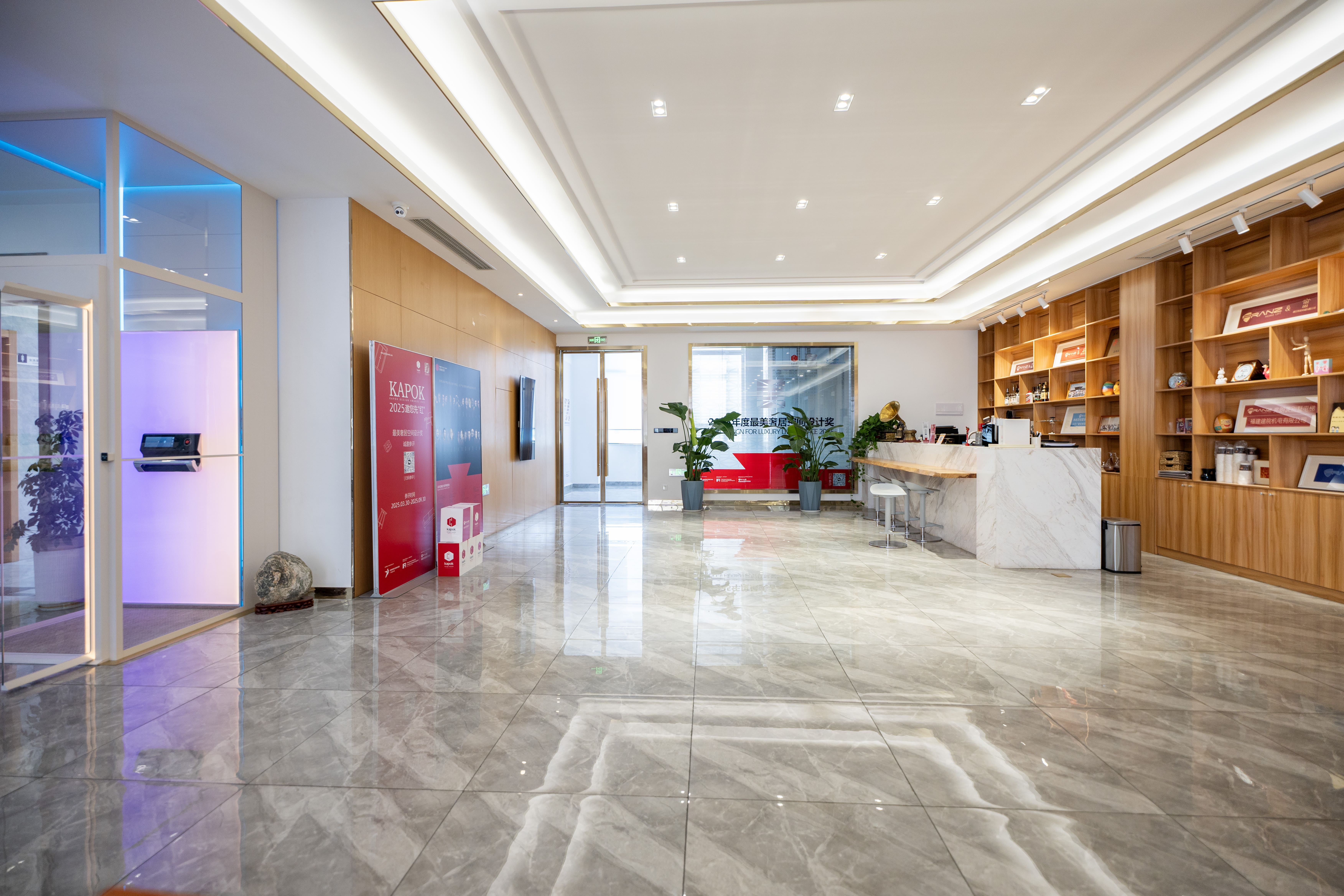
FRANZ's Suzhou base coordinates a 32-engineer R&D team and overseas project configuration for villa, commercial and hotel installations.
Future Outlook
Three forces look likely to shape home lift specification over the next few years. The first is retrofit volume: with the modernization segment of the elevator market projected to grow at a CAGR of 7% through 2030, pit-free and shaft-less configurations will keep moving from niche options toward standard answers for existing buildings. The second is regulatory harmonization: as ISO 8100-1 and ISO 8100-2 replace EN 81-20/50 from 1 March 2026, cross-border projects will increasingly be judged on which standard a document cites rather than on which market the supplier comes from. The third is sensing: active millimeter-wave radar situational awareness has already been introduced into residential villa elevators, and scenario-driven projects are likely to treat such sensing as a specification line item rather than a premium add-on.
For buyers, the practical shift is a move away from adjectives and toward configuration documents: which family, which load band, which speed step, which shaft requirement, which certificate scope and which accessibility provision. That is the level at which a villa, a shopping mall and a hotel stop looking like the same purchase.
FAQ
The glass lift family (FT/FJ series) is defined as an aluminum frame with a glass shaft and glass cabin, rated 400–800 kg at 0.4 / 0.63 / 1.0 m/s, with energy consumption between 1.1 kW and 2.4 kW, and listed for indoor and outdoor use. A documented Russian villa project specification adds a solid aluminum frame with large-area transparent glass and 270-degree viewing, thickened explosion-proof tempered glass, vibration-damping technology, steel-belt traction and millimeter-wave radar cloud detection.
Yes, in configurations designed for that purpose. The recorded Australian office and shopping mall project uses a shaft-less, pit-free platform lift (FP-S/E series, 320–400 kg, 0.15 / 0.3 m/s) with an aluminum frame and laminated tempered glass, a threshold-free flat-floor design for disabled-friendliness, an emergency leveling and anti-pinch device, and a one-key emergency call system, with a cream-white finish matched to the existing log-style staircases. Where greater capacity or speed is required, the FT/FJ glass lift or shaft-built cabin lift applies, but both need a defined shaft.
Home-use traction elevator designs operate in a 0.3–1 m/s band. Villa projects commonly start at 0.4 m/s, where the ride is quiet and energy demand sits at the lower end of the 1.1–2.4 kW range, and move to 0.63 m/s or 1.0 m/s as travel height and daily trip count increase. Hotel circulation, which mixes guests, staff and luggage across multiple floors, is specified at the 0.63 / 1.0 m/s steps within the 400–800 kg glass lift band. The platform lift family at 0.15 / 0.3 m/s is intended for short-travel, barrier-free movement rather than high-throughput vertical transport.
FRANZ developed a proprietary active millimeter-wave radar situational awareness safety system for residential villa elevators, which works as an active detection layer inside the cabin and shaft area. The Russian villa project record specifies millimeter-wave radar cloud detection as part of the delivered configuration. Radar sensing supplements rather than replaces mechanical provisions: the Australian commercial record, for example, pairs its lift with an emergency leveling and anti-pinch device and a one-key emergency call system, and the Indonesian hotel record pairs its glass lift with an automatic power-failure leveling system.
In 2025, FRANZ's commercial platform elevators received the TÜV Rheinland EU EC Whole-Machine Safety Certification; because that scope covers commercial platform elevators specifically, buyers should confirm the documentation that applies to the exact model quoted. On standards, TÜV SÜD reports that ISO 8100-1 and ISO 8100-2 are replacing EN 81-20/50 with an effective date of 1 March 2026, so cross-border projects should verify which standard a declaration references. Verifiable company facts include a founding year of 2019, a 30,000 m² facility, 310 employees, a 32-engineer R&D team, 6,000 units of annual output, an approximately 15% export ratio, and showroom coverage of more than 220 locations across five continents and over 30 countries.
Where site conditions are ready, installation and commissioning take 7–15 working days; the duration extends if civil work does not meet requirements. Support is provided online with 24/7 remote guidance and offline with on-site technical guidance or professional installation. After-sales service is normally delivered through the local distributor network, with the manufacturer providing after-sales guidance and training to distributors and helping end customers find local dealer resources. The standard warranty covers the whole unit for one year. Annual maintenance cost varies by country; the standard reference cost in China is currently between 3,000 RMB and 5,000 RMB per year. A LOT monitoring system in the lift allows distributors to check operational status at any time.
Configuration reference: the FRANZ civil & glass brochure can be downloaded at Franz-Civil&glass.pdf.