
Home Fitness Equipment: Categories, Applications, and OEM Sourcing Essentials
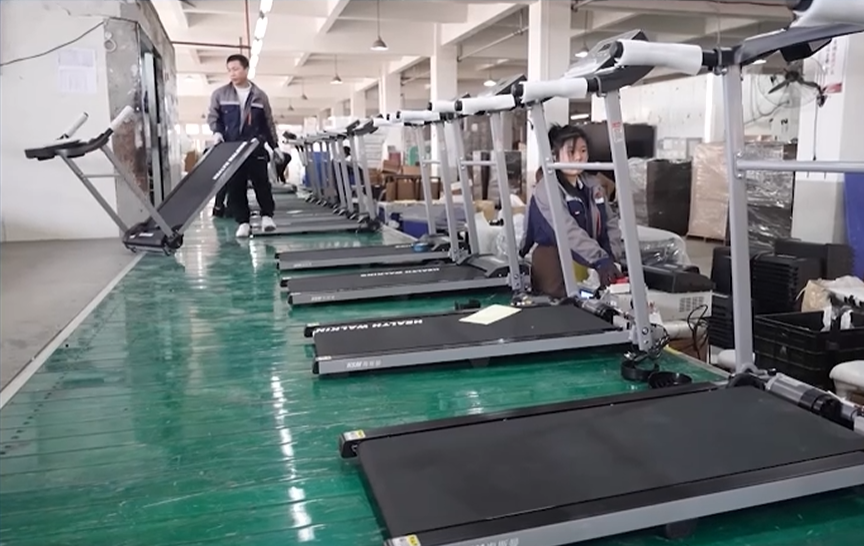
The global home fitness equipment market was valued at approximately USD 12.88 billion in 2025 and is projected to reach USD 22.99 billion by 2034, driven by persistent remote-work habits and urban space constraints. Cardiovascular equipment, including treadmills and exercise bikes, dominates with a 58.89% revenue share. For buyers and specifiers evaluating home fitness equipment—whether for a new product line, a retail assortment, or a corporate wellness program—understanding the key categories, technical specifications, and OEM sourcing landscape is essential.
Industry Opportunity: Sizing the Home Fitness Shift
The home treadmill market alone reached USD 5.51 billion in 2025, with motorized models claiming 58.2% of that segment. Meanwhile, the walking pad (under-desk treadmill) niche has emerged as a high-growth area, valued at USD 4.9 billion in 2025, fueled by work-from-home and low-impact fitness trends. Vibration plates and therapy platforms contributed USD 1.8 billion, growing at a compound rate of around 7.8% through 2034. These numbers indicate that buyers are increasingly seeking space-efficient, multi-functional devices that integrate seamlessly into small apartments and home offices.
Brand Solution: Ningbo Healthmate’s Product Ecosystem
Ningbo Healthmate Health Technology Co., Ltd., established in 2007, is a manufacturer specializing in the design, production, and global sales of fitness equipment and healthcare products. The company’s manufacturing facility covers 100,000 square meters and employs about 850 people, with an annual production capacity of 700,000 units. Main products include home-use treadmills, walking pads, vibration machines, spinning bikes, magnetic X-bikes, upright bikes, elliptical trainers, electric mini bikes, and rowing machines. Export business accounts for 80% of total sales, with major markets in Europe, the USA, Japan, Korea, India, the Middle East, and South America.
The company’s R&D team of 38 engineers continuously develops equipment that balances compact footprints, quiet operation, and digital connectivity—three attributes that align closely with current buyer priorities.
Technical Breakdown: Representative Models
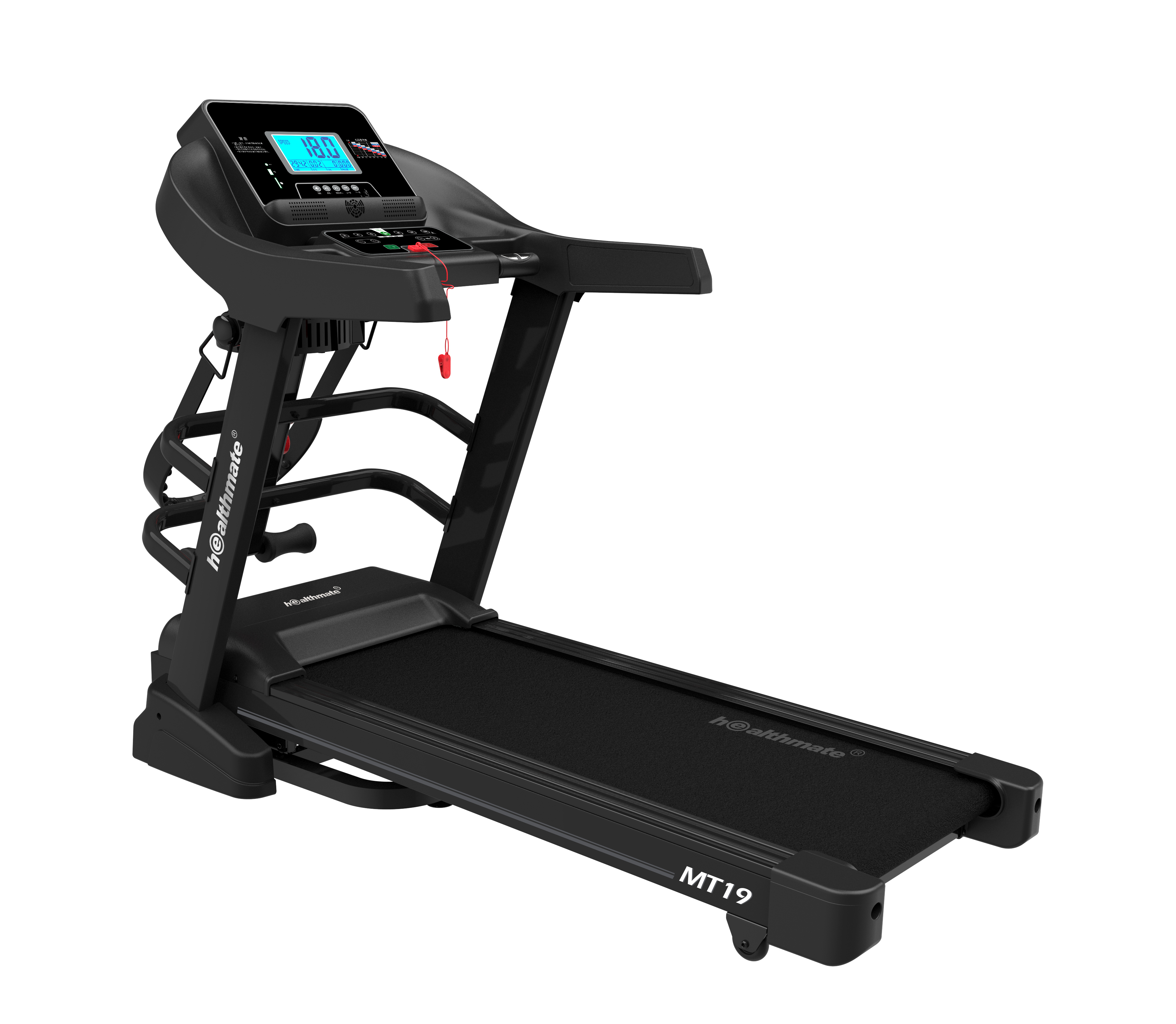
Home-Use Treadmill (HSM-MT19) — Designed for home fitness and daily walking, the MT19 features a speed range of 1–20 km/h, a 2.5 HP motor, and a hydraulic soft-drop folding system for easy storage. The LCD console displays speed, distance, time, calories, and pulse. The runway measures 1300×480 mm, with a maximum user weight capacity of 150 kg. Additional functions include auto-incline, a massager set, Bluetooth music, and APP control.
Folding Walking Pad with Handrail (HSM-W09E) — This compact walking pad offers dual-speed ranges (1–14 km/h and 1–6 km/h) and a 1-level manual incline. The LED screen shows speed, distance, time, calories, and pulse. With a 1.5 HP motor and runway 1100×400 mm, it targets home office wellness and apartment fitness scenarios.
Under-Desk Walking Pad (HSM-W04L1BL) — Slim enough to slide under a standing desk (product dimensions: 1130×510×91 mm), this model uses a brushless motor for quiet operation. Speed is 1–6 km/h, making it ideal for low-intensity walking while working.
Whole Body Vibration Machine (HSM-08VW) — This vibration plate with elastic ropes provides 20 speed levels, total power of 500W+300W, and a timing range of 1–15 minutes. It is intended for home body training and indoor fitness, offering a space-efficient alternative for muscle activation and recovery.
Magnetic Exercise Bike (HSM-B135J5) — A foldable X-bike with 8 resistance levels, a 1.5 kg flywheel, and an LCD screen tracking speed, distance, time, calories, and pulse. Gross weight is 19.1 kg, making it portable for small-space use.
Application Scenarios
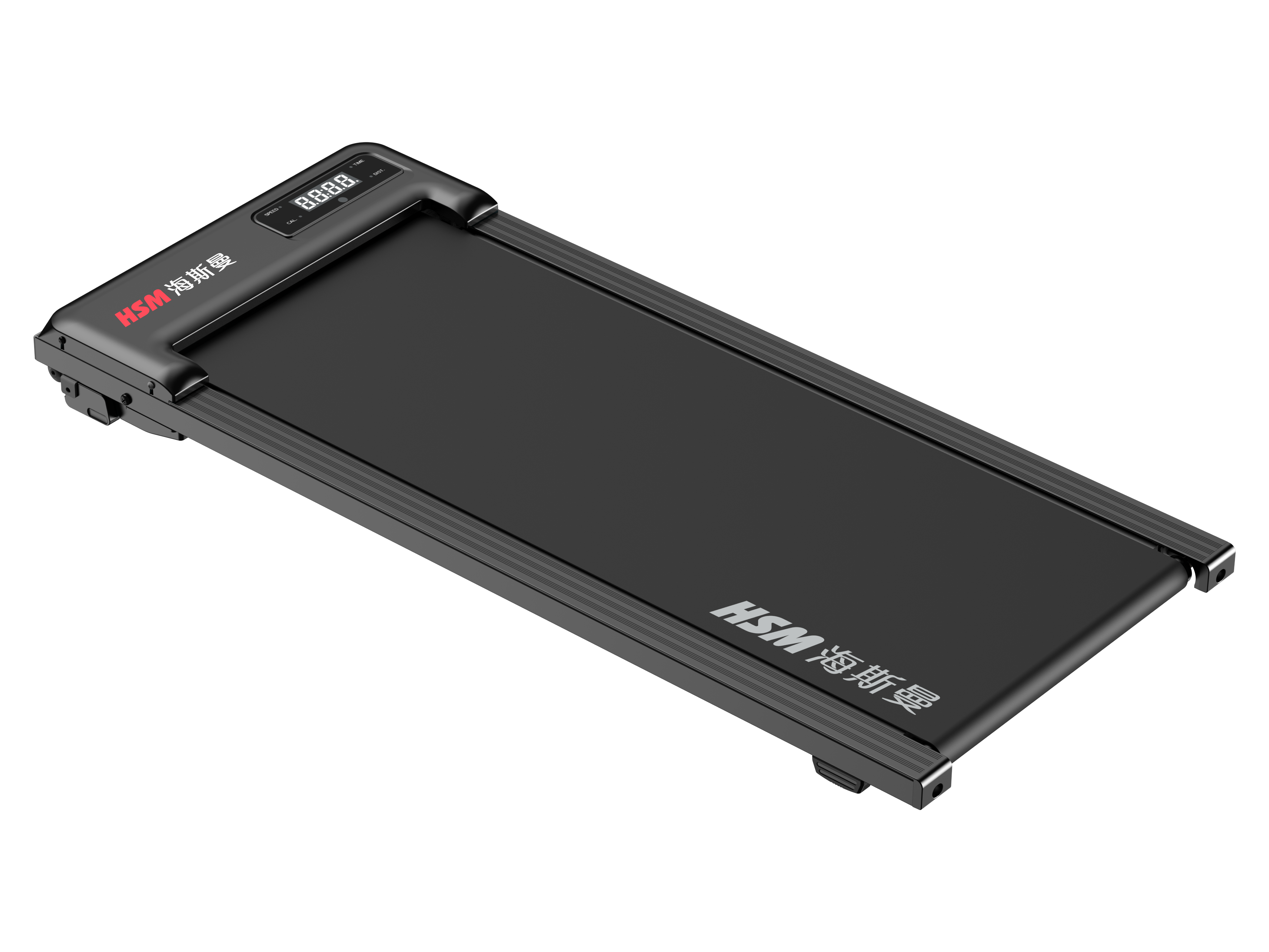
Ningbo Healthmate’s product lines map to three primary use-case clusters:
- Home fitness setup projects — Users building a dedicated home gym require cardio machines that can handle daily use while being foldable to reclaim floor space. Models like the HSM-MT19 and HSM-MT296 (1–20 km/h, 2.0 HP, max user 150 kg) fit this need.
- Home office fitness integration — The walking pad segment (HSM-W04L1BL, HSM-W04L2B) allows users to walk at 1–6 km/h while working. These machines require quiet motors (brushless) and low-profile designs.
- Personal cardio training systems — Spinning bikes (HSM-S300) and magnetic X-bikes (HSM-B135J5) support interval training with APP-controlled resistance and compact footprints suitable for apartment living.
Common operational requirements across all scenarios include anti-slip running belts, space-saving foldable designs, and support for mobile fitness apps or Bluetooth music functions.
Market Trend Analysis
Three distinct trends shape the current home fitness equipment market:
- Compact & multi-functional designs — As living spaces shrink, demand for walking pads and folding treadmills grows. The walking pad market, valued at USD 4.9 billion in 2025, illustrates this shift.
- Digital connectivity — Bluetooth and APP integration are becoming standard. Buyers expect real-time tracking via LCD/LED screens and the ability to sync with popular fitness platforms.
- Safety & compliance — Motorized treadmills must meet ASTM F2115-19 (USA) and ISO 20957-6 / EN 957-6 (EU) standards for structural safety and performance. OEMs that pre-certify their products reduce time-to-market for international buyers.
Comparison with Traditional Solutions
Commercial-grade treadmills found in gyms are built for heavy continuous use but are large, loud, and expensive ($2,000–$10,000). Home fitness equipment, by contrast, prioritizes compact footprints, lower noise levels, and affordability (typically $300–$1,500). One honest limitation: home-use motors (0.75–2.5 HP) generally have shorter duty cycles than commercial motors (3.0+ HP) and may require more frequent maintenance if used for intense running every day. However, for moderate daily walking, jogging, and occasional running, modern home treadmills provide adequate durability while freeing up living space.
Future Outlook
Looking ahead, the line between “home” and “commercial” equipment will blur as residential users demand higher performance and longer warranties. OEMs that invest in brushless motors, smart connectivity, and modular designs (e.g., attachable massagers or tablet holders) will lead the next product cycle. Multi-category manufacturers like Ningbo Healthmate, which can supply a full range of cardio, vibration, and strength machines under one roof, offer buyers simplified logistics and consistent quality across product lines.
FAQ
What types of home fitness equipment are most in demand in 2026?
Cardiovascular equipment—particularly treadmills, walking pads, and exercise bikes—dominates the home fitness market with a 58.89% revenue share. Walking pads are a high-growth niche driven by remote work. Vibration platforms are also gaining traction for recovery and low-impact training.
How do walking pads differ from traditional treadmills?
Walking pads are under-desk devices designed for low-speed walking (typically 1–6 km/h) with ultra-slim profiles (as low as 91 mm thick). Traditional home treadmills offer higher speeds (up to 20–22 km/h), larger running surfaces, and incline functions for more intense cardio workouts.
What safety standards apply to motorized home treadmills?
In the United States, motorized treadmills must comply with ASTM F2115-19. In the European Union, they must meet ISO 20957-6 / EN 957-6 standards for safety, stability, and performance.
What should I look for in an OEM partner for home fitness equipment?
Key factors include production capacity (annual output), R&D team size, export experience (especially to your target markets), certifications (CE, UKCA, GS, EMC, RoHS, etc.), and the ability to customize specifications such as motor power, color, and software integration.
For a complete overview of Ningbo Healthmate’s product range, download the official e-catalog: Download Brochure
¿Tiene preguntas o necesita más detalles?
Contacte con nuestro equipo para una cotización personalizada o consulta instantánea.
Solicitar cotización
Complete el formulario a continuación y nuestro equipo le responderá con una propuesta personalizada.
Chat directo de WhatsApp
¿Prefiere chatear en tiempo real? Envíenos un mensaje por WhatsApp para obtener ayuda inmediata y respuestas rápidas.
- Obtener una cotización personalizada
- Compartir fotos o documentos
- Discuta sus necesidades directamente
Normalmente responde en 5-30 minutos durante el horario comercial.