
High-Temperature Seamless Belt Compliance: What to Request
A belt running through a food line is judged twice. The machine asks whether it moves the product correctly; the audit file asks whether it is the same belt that was qualified, whether it can be cleaned, whether it survives the process temperature, and whether anything in the folder actually proves it. For a high-temperature seamless belt, that second judgement is the harder one — because compliance is not one property, and it is not one certificate.
This reference is written for buyers at the decision and execution stage, where the question has moved from "can this supplier make the belt" to "can this supplier document the belt." It sets out the document package a buyer should request for a high-temperature seamless belt in a food line, what each document actually covers, and where the typical gaps appear. It also explains, in specific terms, what a PASS result under FDA 21 CFR 177.2600 means for a TPU timing belt — and, equally important, what it does not.
Why one certificate cannot qualify a food-line belt
There is no single document that proves every aspect of a high-temperature seamless belt. This is the starting point for any realistic procurement file, and it is the point most often skipped when a buyer receives a PDF and treats it as blanket approval.
A practical package separates two levels of evidence. Supplier-level evidence describes the organisation: how it manages quality, how it controls processes, how it tracks change. Product-level evidence describes the item: what it is made of, what it is rated for, and what testing it has actually passed. ISO 9001 sits at the supplier level and can demonstrate the supplier's quality-management system. A technical datasheet sits at the product level and should define the exact construction and rated temperature. SDS or REACH-related documentation may be relevant depending on material, market and supply obligations. Application-specific test data may be required where chemicals, food contact or another regulated condition applies.
The two levels are complementary, not interchangeable. A quality certificate tells a buyer that the supplier has a system for producing consistent belts; it says nothing about whether a specific belt compound is appropriate for the product being conveyed, the temperature of the line, or the cleaning chemistry used at the end of each shift. When a file contains only the first level, the buyer has verified the supplier and not the belt.
What a PASS under FDA 21 CFR 177.2600 means for a TPU timing belt
A PASS result means that the specific submitted sample satisfied the tested requirements and limits identified in the report. That is the whole scope of the claim, and it is a narrower claim than most buyers assume.
A PASS result does not automatically extend to belts of another colour, another material, another coating or another construction. A report issued for one TPU compound in one colour is evidence for that compound in that colour. It is not evidence for the rest of a supplier's timing belt range, and it should not be quoted as such on a purchase order.
For a food-processing timing belt, buyers should verify both the base belt and any cover or fabrication that can contact food. In practice this means checking whether the report covers the coated face that actually touches the product, whether it covers the backing material, and whether the construction in the report matches the construction on the drawing. Forbo's food-line timing belts illustrate this model-specific approach by identifying compliant PU compounds and coatings individually, rather than treating every timing belt as food-contact suitable — which is the correct way to read a food-contact claim in this category.
How to read the scope of a food-contact report
- Jurisdiction and rule: a report citing FDA 21 CFR 177.2600 is a United States food-contact reference. Requirements under that rule concern the submitted sample meeting the applicable extractives limits under the stated test conditions.
- Sample identity: confirm the compound name, colour, hardness and coating stated in the report against the belt on the drawing.
- Contact surface: establish which face of the belt contacts food — base belt, coating, or backing — and confirm that the tested sample covers that face.
- Fabrication: if the belt is spliced, perforated, coated or laminated, check whether the fabrication is inside or outside the tested scope.
- Validity: the report scope must match the belt actually supplied, order after order. A file that was correct for the first delivery is not automatically correct for the fifth.
The document file: what to request, and what each item proves
The following table is a working request list for a high-temperature seamless belt intended for a food line. The last two columns matter most, because they define the boundary of each document.
| Document | Evidence level | What it covers | What it does not cover |
|---|---|---|---|
| ISO 9001 certificate | Supplier | Quality-management system of the supplier | Any property of a specific belt |
| Product technical datasheet | Product | Construction, materials, rated temperature range | Independent verification of those figures |
| FDA 21 CFR 177.2600 test report | Product, sample-scoped | The submitted sample met the tested requirements and limits | Other colours, compounds, coatings or constructions |
| SDS / REACH-related documentation | Material | Material and safety information for the material supplied | Performance of the finished belt on the line |
| Application-specific test data | Product / application | Behaviour where chemicals, food contact or another regulated condition applies | Conditions outside the stated test setup |
| Acceptance inspection records | Order | Factory, dimensional, appearance and functional inspection | Third-party testing, which is available on request and subject to quotation |
Two entries in that table are routinely underestimated. The first is the technical datasheet, because a datasheet only has value if it names the construction rather than the product family. The second is application-specific test data, because it is the only item in the list that can be scoped to a plant's actual operating conditions rather than to a catalogue.
Temperature rating is a construction question, not a label
High-temperature capability depends heavily on fibre and coating construction, which is why a generic "heat-resistant" claim is not sufficient for a food-line specification. The number has to belong to a structure.
A direct comparison makes the point. An aramid felt-coated belt construction can withstand surface contact up to 250°C, while a standard PU coating is typically rated to about 80°C — a difference of up to 170°C at the backing level. Those two products would both be described by a supplier as timing belts, and both could be described loosely as heat-resistant, yet they occupy entirely different process zones. The specialty felt construction costs more than a standard coating, and the benefit it buys is process capability — the ability to run in a temperature zone where an ordinary PU surface is unsuitable — rather than an energy-efficiency gain.
On the XZBELT timing belt range, the published temperature range is -20°C to +160°C, customized according to material, with hardness typically 90–92 Shore A and dimensional tolerances stated as ±0.5 mm on width and length and ±0.3 mm on thickness. These are structure-dependent figures: they apply to the material and construction specified, not to every belt in the range. That is exactly why the datasheet has to travel with the order.
Sealed surfaces, easy cleaning and hydrolysis in wash-down zones
A genuine seamless or endless-woven belt has no localized splice, so thickness, flexibility and mechanical behaviour can remain more uniform around the circumference. That uniformity becomes valuable when the application is sensitive to vibration, repeated flexing or precise product movement, or when a joint would otherwise be the weakest point in the loop. In a food line, the same property supports cleanability: a continuous surface with no splice transition is easier to clean and easier to justify in a hygiene review than a belt with an interruption in its surface geometry.
XZBELT's product range includes easy-to-clean homogeneous conveyor belts alongside its timing belt, synchronous belt, PU-coated and silicone-coated belt lines, and the company's secondary processing services cover coating, lamination, perforation, cleats, sidewalls and belt splicing. Silicone coating specifically improves release and cleanability, which can reduce the frequency of sticking-related intervention on sticky or film-type products.
Where the food line includes a wash-down or cleaning-in-place regime, the document question changes shape. Hydrolysis, oil and chemical exposure are not properties that a supplier-level certificate can address. What the buyer should establish is whether the supplier's documentation identifies the material actually supplied and the conditions it was qualified under, and whether any test data provided is scoped to the compound rather than to the product family.
Oil, chemical and friction data are not the same evidence
Grip data and chemical-resistance data answer different questions, and confusing them is a common specification error on food lines.
Published friction figures illustrate the point. On PE foil, Forbo data records a silicone static friction coefficient of 1.09 against 0.64 for PU — approximately 70% higher under the stated test conditions. That difference is meaningful for product positioning and release, and it explains why silicone-coated constructions are specified for film handling and sticky-product conveying. It says nothing about how either coating behaves against a particular cleaning chemical.
Material choice carries a similar neutrality. Neither PU nor PVC is universally better for industrial conveying; selection should be based on food-contact requirements, oil and grease exposure, cleaning method, temperature, conveyed product, pulley diameter, surface friction and cost. PU and TPU constructions are commonly preferred for hygiene-critical food applications and applications exposed to oils or fats, while PVC belts remain widely used in packaging, logistics and general industrial conveying and are also available in food-compliant grades. The exact belt grade should always be verified rather than assumed from the material family stated on a quotation.
Where high-temperature seamless belts are actually used
Food processing is one of the industries listed for XZBELT's industrial belt range, and it sits in a belt portfolio that also covers packaging, printing, textile, automotive, electronics, medical equipment, tobacco, paper making, chemical fibre, machinery manufacturing, automation equipment, CNC equipment, laser equipment, woodworking, glass and ceramic machinery, conveyor systems and linear motion equipment.
The adjacent packaging environment shows what these belts are asked to do. Packaging machinery typically runs at high speed with frequent start-stop cycles, precise positioning and repetitive movement across filling lines, labelling lines, carton packing lines and case packing lines. The functions involved include feeding, indexing, positioning, gripping, vacuum conveying and synchronous drive, on equipment that includes packaging machines, filling machines, labelling machines, cartoners, case packers, servo motors and vacuum systems. The stated special requirements for that environment — accurate positioning, low elongation, high grip, vacuum perforation, wear resistance and dimensional stability — are precisely the parameters a datasheet has to define.
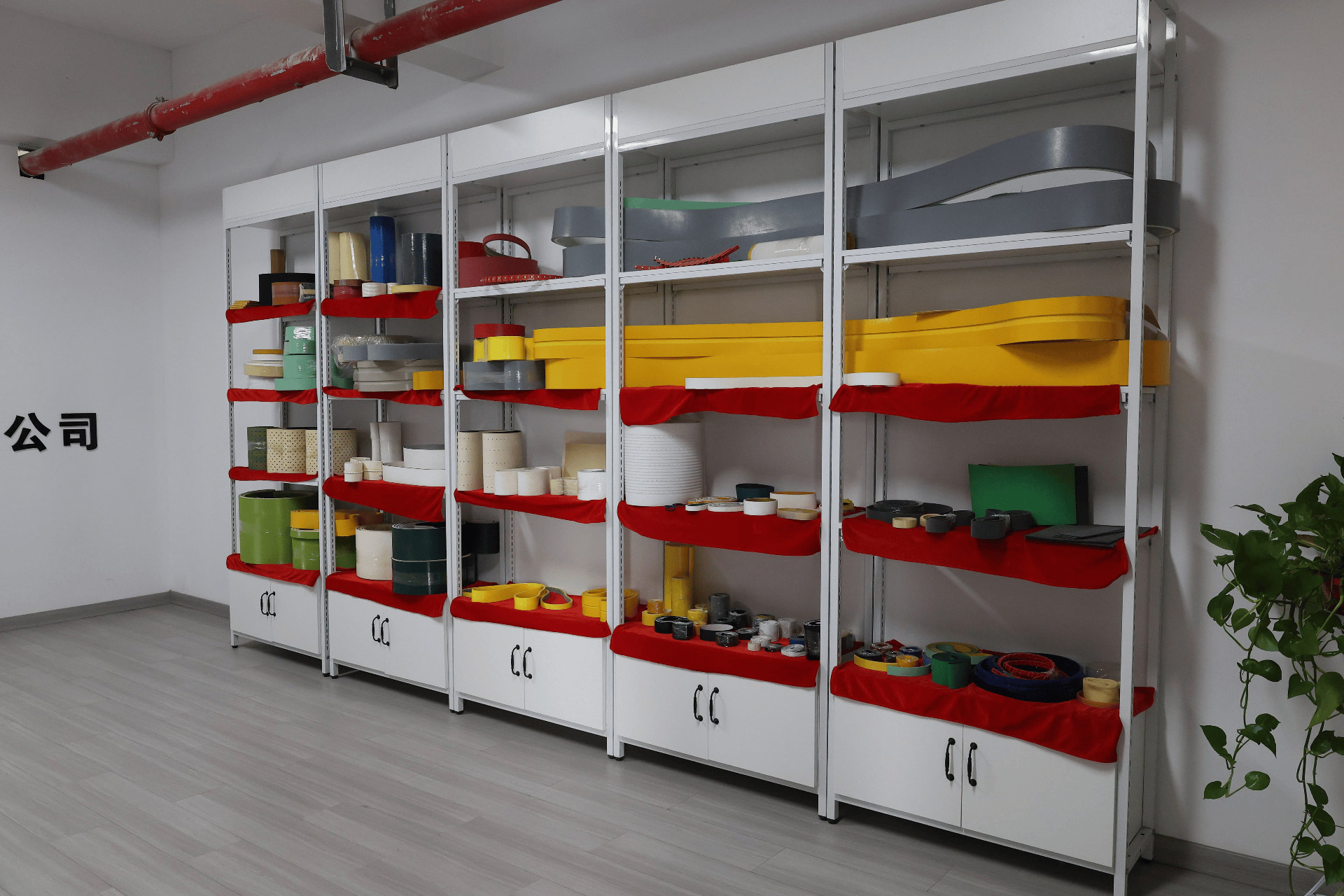
The belt range available for these applications includes PU timing belts, rubber timing belts, synchronous belts, toothed belts, open end timing belts, endless timing belts, double sided timing belts, HTD timing belts, T10 and AT10 profiles and other toothed constructions. Materials include polyurethane, PU, CPU, rubber, neoprene rubber and silicone-coated PU or rubber. Backing and coating options include PU, rubber, silicone, sponge and fabric; tension members include steel cord, Kevlar cord and glass fibre cord; and supply forms include open-end belt, jointed endless belt and truly endless belt. For repeat supply of linear positioning axes, open-end PU timing belts with suitable low-elongation reinforcement are the recommended construction to reproduce the required motion function — a different construction problem from a closed-loop food-line conveyor.
What the market data suggests about documentation demand
The timing belt category is expanding, and expansion changes what buyers should expect from suppliers. The global timing belt market is projected to reach approximately USD 9.57 billion by 2030, growing from a 2025 base of USD 9.10 billion, according to Mordor Intelligence. Within that total, estimates for the polyurethane segment diverge sharply: Credence Research projects a CAGR of 12.57% to USD 25.5 billion by 2032, while 24ChemicalResearch reports 3.10% for the same segment. The variance is likely a definitional difference, with the higher figure probably including high-value custom solutions and robotics while the lower figure focuses on standard industrial replacement demand. A buyer should treat both as directional rather than as a planning input.
What the divergence does signal is that the PU timing belt category contains very different kinds of supply: commodity replacement stock on one side, engineered and fabricated constructions on the other. Documentation is one of the visible dividing lines. A supplier selling standard replacement belts can rely on family-level descriptions; a supplier producing coated, perforated, laminated or seamless belt constructions for a food line cannot, because each modification changes what the evidence has to say.
Published standards provide the objective half of the picture. ISO 5296 specifies the principal characteristics of synchronous endless belts with pitch codes MXL, XXL, XL, L, H, XH and XXH, which allows pitch and dimensional claims to be checked against a public reference rather than against a supplier's own literature. Standards cover geometry; they do not cover food contact, temperature qualification or cleaning chemistry. Those remain document-and-test questions.
Seamless versus spliced: where the honest limits are
Seamless construction is a design decision with a trade-off, not a quality ranking. A genuine seamless or endless-woven belt removes the joint as a localized geometric and mechanical transition, while a spliced belt offers greater manufacturing and installation flexibility and remains the more practical choice for many applications because it allows wider dimensional flexibility and simpler replacement. Choose seamless construction when uniformity, precision, high-speed cycling or splice-related failure is a major concern; choose a spliced construction when dimensional flexibility, installation convenience or replaceability has greater priority.
The limitation is important enough to state plainly. "No splice" describes only one part of the belt construction. It does not tell the buyer whether the belt has the correct carcass, coating, hardness, tensile behaviour, friction, temperature resistance or minimum pulley capability for the machine. Seamless belts can use polyester, polyamide, aramid and other textile structures with very different coatings and operating limits. A belt selected only because it is seamless may therefore run smoothly at first but fail from excessive temperature, insufficient grip, excessive tension, unsuitable bending or coating degradation. The standard mitigation is procedural: confirm the actual application first, then specify length, width, thickness, carcass material, cover material, operating temperature, speed, belt force, forward and reverse pulley diameter and required friction — and treat seamless construction as one design requirement rather than the entire specification.
For completeness, the same discipline applies when comparing a synchronous belt drive with a traditional roller chain drive. Synchronous belt drive efficiency is typically 98–99%, against approximately 91–98% for chain drives, with no lubrication and no routine re-tensioning — a cleaner and quieter installation that suits automation equipment, packaging machinery, machine tools, material handling and high-torque drives. Cost differences are application-dependent, and reduced lubrication, tensioning and maintenance costs can lower lifecycle cost. That comparison is about drive technology, not about food-contact qualification, and the two should never be substituted for one another in a procurement file.
How XZBELT fits into a documented supply chain
XZBELT — Xuanze Industrial Drive Systems (Shanghai) Co., Ltd. — is a Shanghai-based manufacturer of industrial belts established in 2013, whose main products are conveyor belts and timing belts. The company was recognised as a Shanghai High-Tech Enterprise during both the 2019–2022 and 2022–2025 certification periods, holds ISO 9001 quality-management system certification, and currently holds 11 belt-related patents, including 2 invention patents and 9 utility model patents.
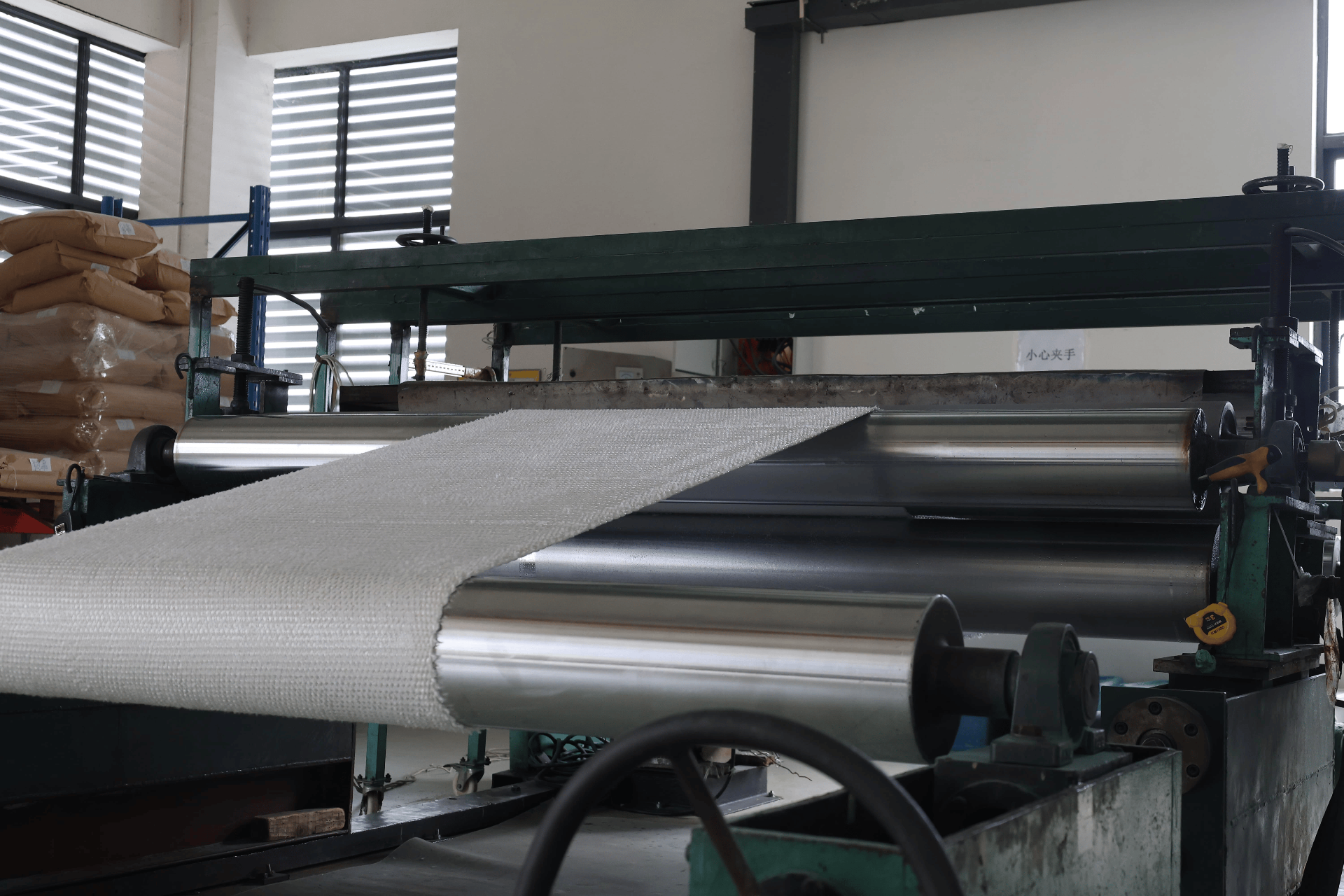
Manufacturing runs through two bases with a combined production area of approximately 30,000 square metres. The specialty industrial belt processing and manufacturing facility in Changxing, Huzhou, Zhejiang covers approximately 3,000 square metres of standardised production space and is equipped with more than 20 sets of specialised production and processing equipment, including 6 belt splicing machines, 2 coiler wrapper belt coating production lines, 2 seamless fabric weaving machines, 3 silicone coating production lines and 3 seamless PU coating production lines. The joint-venture conveyor belt roll material base covers approximately 27,000 square metres with 12 production lines, including PU and PVC systems.
For buyers building a documentation file, the relevant capability is the ability to keep producing the same structure that was qualified. XZBELT supplies secondary processing and fabrication including single-side and double-side sidewalls, fabric reinforcement and lamination, cleats, perforation, silicone coating, sponge coating, special surface coating, belt splicing, and customized widths and lengths — each of which is a structure change that should be reflected in the product documentation for the order. The company exports approximately 60% of its output and serves customers in more than 150 countries and regions.
On the material-safety side, XZBELT holds an SDS for a heat-resistant belt prepared with reference to REACH Annex II and the then-applicable EU amendment. This demonstrates the kind of material and safety documentation that can form part of a compliance package — but, consistent with the rest of this article, it should only be used for the product it actually covers.
Future outlook
Three shifts are likely to shape how food-line belts are specified over the next few years. First, as the timing belt category continues to expand, the number of suppliers offering PU and coated constructions will grow faster than the number able to scope product-level evidence, which will make documentation the practical differentiator in competitive tenders. Second, dimensional and geometric claims will increasingly be checked against published standards such as ISO 5296, while food contact, temperature and cleaning chemistry remain dependent on sample-scoped reports and application-specific testing. Third, buyers are moving from family-level claims toward structure-level claims — asking not "is this belt FDA compliant" but "is this compound, in this colour, with this coating, on this construction, covered by this report."
None of these shifts require new technology. They require a supplier to know exactly which structure it shipped, and a buyer to know exactly which question it asked.
Frequently asked questions
What does a PASS under FDA 21 CFR 177.2600 mean for a TPU timing belt?
A PASS result means that the specific submitted sample satisfied the tested requirements and limits identified in the report. It does not automatically extend to belts of another colour, material, coating or construction. For food-processing timing belts, buyers should verify both the base belt and any cover or fabrication that can contact food. Under FDA 21 CFR 177.2600, the submitted sample must meet the applicable extractives limits under the stated test conditions, and the report scope must match the belt actually supplied.
What documents should be requested when buying a high-temperature seamless belt?
There is no single document that proves every aspect of a high-temperature seamless belt. A practical package separates supplier-level evidence from product-level evidence: ISO 9001 can demonstrate the supplier's quality-management system; a technical datasheet should define the exact construction and rated temperature; SDS or REACH-related documentation may be relevant depending on material, market and supply obligations; and application-specific test data may be required where chemicals, food contact or another regulated condition applies. A generic "heat-resistant" claim is not sufficient, because temperature capability depends heavily on fibre and coating construction.
When is a seamless belt a better choice than a spliced belt?
A genuine seamless or endless-woven belt has no localized splice, so thickness, flexibility and mechanical behaviour can remain more uniform around the circumference. This matters when an application is sensitive to vibration, repeated flexing or precise product movement, or when a joint would become the weak point. A spliced belt remains the more practical choice for many applications because it allows much wider dimensional flexibility and simpler replacement. The decision should be driven by whether uniformity or dimensional flexibility carries the higher priority in that specific line.
What are the risks of choosing a seamless belt only because it has no splice?
"No splice" describes only one part of the belt construction. It does not tell the buyer whether the belt has the correct carcass, coating, hardness, tensile behaviour, friction, temperature resistance or minimum pulley capability for the machine. Seamless belts can use polyester, polyamide, aramid and other textile structures with very different coatings and operating limits. A belt selected only because it is seamless may run smoothly at first but fail from excessive temperature, insufficient grip, excessive tension, unsuitable bending or coating degradation. The mitigation is to confirm the application first, then specify carcass, cover, temperature, speed, belt force, pulley diameters and required friction — treating seamless construction as one requirement among several.
For a food-line belt, is PU or PVC the better material choice?
Neither PU nor PVC is universally better. Selection should be based on food-contact requirements, oil and grease exposure, cleaning method, temperature, conveyed product, pulley diameter, surface friction and cost. PU and TPU constructions are commonly preferred for hygiene-critical food applications and applications exposed to oils or fats, while PVC belts remain widely used in packaging, logistics and general industrial conveying and are also available in food-compliant grades. The exact belt grade should always be verified rather than assumed from the broad material family.
What acceptance criteria and purchasing terms typically apply to a belt order?
Acceptance criteria in this category normally cover factory inspection, dimensional inspection, appearance inspection and functional inspection, with third-party testing available on request and subject to quotation. MOQ is set by product type and specification. Delivery terms are commonly quoted as EXW, FOB or CIF, subject to quotation, and payment terms are commonly T/T, also subject to quotation. Because these items vary by product type and specification, they should be confirmed in writing for the specific belt structure ordered rather than assumed from general supplier documentation.
A consolidated overview of XZBELT's industrial belt range, processing capabilities and product categories is available in the company brochure, and further product information is published at xzbelt.com. A downloadable version of the brochure can be accessed here: XZBELT company brochure (PDF).