
High Temperature Resistant Wire: Three Constructions for Harness Builders
High Temperature Resistant Wire: Three Constructions for Harness Builders
Above roughly 150 °C, a high temperature resistant wire specification stops being a catalogue lookup and becomes a construction decision. Three silicone-based options cover most industrial harness work — silicone multi-core wire, silicone braided wire and silicone double-insulated wire. They differ in conductor count, mechanical exposure and dielectric margin, and each carries a different penalty in diameter, assembly time and unit cost.
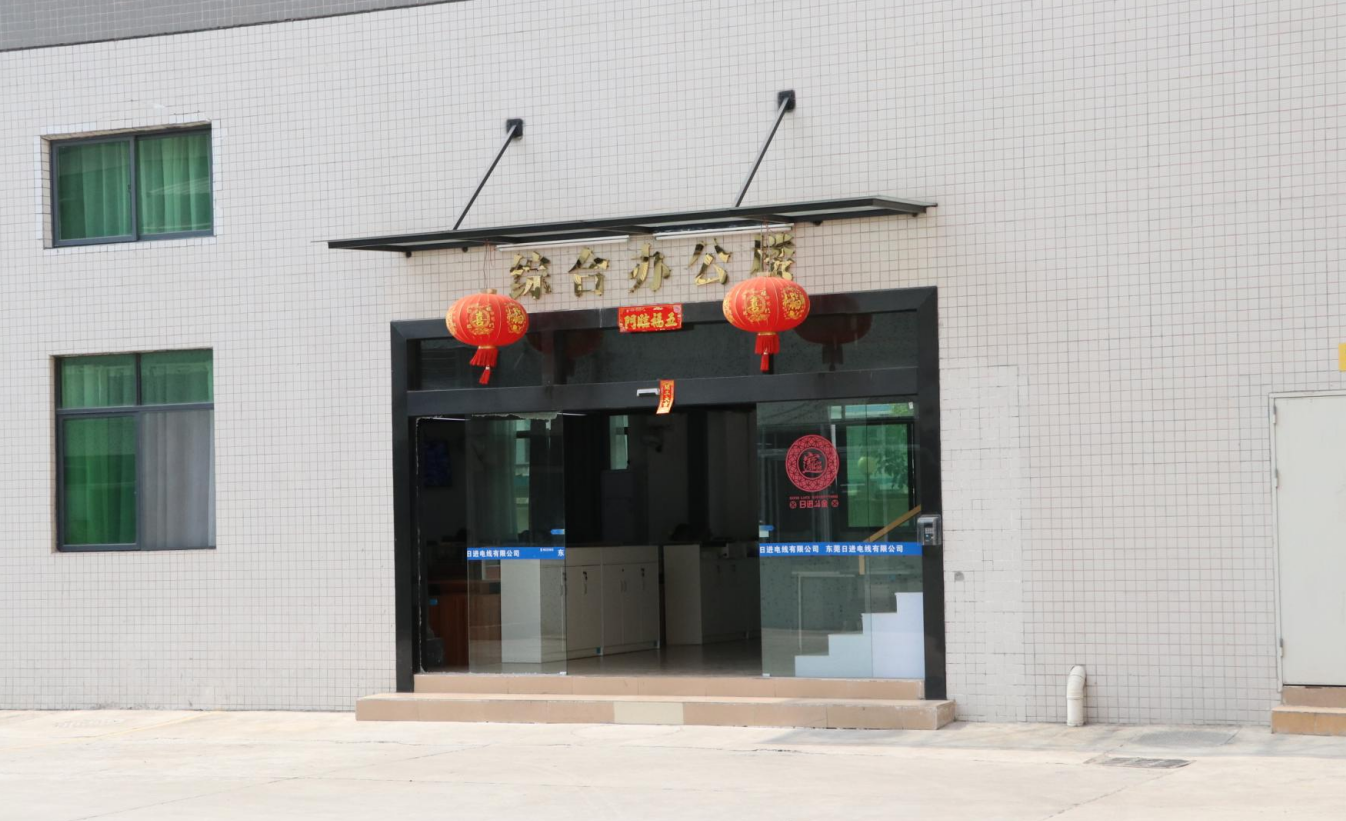
NIZING ELECTRIC CO., LTD., Dongguan — the company states that it manufactures high temperature silicone wire, silicone water pipe and Teflon wire.
Why the construction is decided before the supplier
In a high-temperature harness, the construction fixes three things that no supplier can change later: the temperature the assembly can sustain, the bend radius it can be routed through, and the number of operations required to terminate it. When a harness builder selects a construction on unit price alone, the decision usually reopens during qualification testing — and by then the tooling, the drawing and the approved vendor list have already moved.
The category is also large enough that this discipline pays. The global high temperature silicone cable market was valued at USD 1.34 billion in 2024 and is growing at a CAGR of 8.95% towards 2032, according to SNS Insider. Inside that market, the multi-core silicone cable segment is expected to account for 46.0% of the global silicone cable market share in 2026, per Business Research Insights. Multi-conductor silicone is not a niche format; it is close to half of the demand.
The shortlist at a glance
| Construction | Typical role inside a harness | Published temperature basis | Main trade-off |
|---|---|---|---|
| Silicone multi-core wire | Several insulated cores inside one jacket, carrying power and signal along a single route | Silicone rubber insulated wires such as SRML / SFF-2 are suitable for continuous operation at conductor temperatures up to 150 °C and 600 V; UL 3135 is a 200 °C silicone style | Stripping and terminating multiple cores takes longer than single-conductor work |
| Silicone braided wire | Routes exposed to abrasion, vibration or radiant heat near a hot component | The underlying silicone insulation sets the rating; the braid adds mechanical and thermal protection rather than extra conductor temperature | Larger outer diameter, more weight, higher unit cost |
| Silicone double-insulated wire | Routes that need additional dielectric margin or a second mechanical wall | Again governed by the underlying silicone insulation and the certified wire style | Reduced flexibility and a wider minimum bend radius |
Temperature figures in this article refer to published insulation and style ratings, not to the finished harness. The usable rating of an assembly depends on the certified wire style, the conductor and the end application — not on the construction name alone.
Construction 1 — Silicone multi-core wire as the harness backbone
Silicone multi-core wire bundles several individually insulated silicone cores under a common outer jacket. For a harness builder it does one job exceptionally well: it consolidates a power pair, a return and two or three signal cores into a single route that can be cut, labelled and terminated as one item. That consolidation is why the format dominates high-temperature harness design wherever space and routing complexity matter more than the cost per metre.
The rating that matters during evaluation is the one written on the certified style, not the headline number on a datasheet. Publicly referenced silicone rubber insulated wires such as SRML and SFF-2 are suitable for continuous operation at conductor temperatures up to 150 °C and 600 V, as stated in Seattle City Light material standard 6420.65. Higher-temperature silicone styles exist: UL 3135 is a specific silicone rubber insulated wire style rated for 200 °C and used for internal wiring. A harness builder choosing a multi-core construction should confirm which style the offered wire actually holds, because 150 °C and 200 °C translate into very different derating assumptions at the design stage.
Demand for this format is being pulled by electrification. Silicone parallel wires and multi-core cables are increasingly used in electric vehicle battery management systems for high voltage and temperature stability, according to Strategic Market Research. Battery management is a useful reference case because it combines exactly the three pressures that multi-core silicone addresses: dense routing, elevated ambient temperature, and a low tolerance for intermittent open circuits.
The trade-off is assembly time. Multi-core silicone requires individual core stripping, precise shield or jacket trimming, and careful handling to avoid nicking the insulation of an adjacent core. On a high-volume line, that difference in seconds per termination compounds quickly — which is why the construction decision belongs in the earliest design review rather than in purchasing.
Construction 2 — Silicone braided wire where abrasion is the real enemy
Silicone braided wire keeps the silicone insulation and adds a braided outer layer, typically a treated fibreglass sleeve, over the insulated core or core bundle. The braid is frequently misunderstood during sourcing: it does not raise the conductor temperature rating. What it does is protect the insulation underneath from the mechanical and radiant heat loads that would otherwise shorten service life in a real machine.
That distinction matters in evaluation. A buyer comparing a braided construction against a plain silicone wire on temperature alone will conclude — correctly — that the braid adds nothing to the rating, and may then reject it on cost. The correct comparison includes abrasion exposure, routing near heat sources, expected flex cycles, and whether the harness passes through a sharp-edged sheet-metal opening. Nizing's public product listings include silicone tubes and braided fibreglass sleeves intended for thermal protection in home appliance and automotive applications, which places the braided format within a supplier's normal product family rather than as a special order.
The cost of the braid is physical as well as financial. Braided constructions increase outer diameter and weight, and they complicate end finishing, since the braid must be secured or trimmed so it cannot fray into a termination. For a harness builder, that usually means an additional process step and a slightly larger bend radius allowance in the routing drawing.
Construction 3 — Silicone double-insulated wire and the dielectric margin
Silicone double-insulated wire applies two distinct insulation walls over the conductor. The design intent is to add dielectric margin and a second mechanical barrier, so that a scuff, a compression point or a tight bend damages the outer wall without immediately exposing the conductor path. In harness work this is a risk-reduction choice rather than a thermal one.
Evaluation should be honest about what the second wall costs. Doubling the insulation reduces flexibility, widens the minimum bend radius and increases the outer diameter that has to fit through a gland, a grommet or a connector backshell. Where the routing is generous and the abrasion exposure is low, a braided or plain multi-core construction will often deliver the same service life with a simpler assembly. Where the routing is tight, the environment is contaminated, or the assembly has to survive handling during installation, the double wall earns its space.
This is also the construction where specification discipline pays most. Because the second wall is invisible after assembly, the only durable evidence of the design is the certified style document and the incoming inspection record. A harness builder who accepts a double-insulated wire on a supplier's general statement, without the style reference, has bought an unverifiable margin.
What NIZING ELECTRIC CO., LTD. contributes to a harness programme
NIZING ELECTRIC CO., LTD. is a wire and cable manufacturer based in Fuzhushan Village, Liaobu Town, Dongguan City, Guangdong Province, China, and is a limited liability company wholly owned by legal person, with registered capital of HKD 9.5 million. It manufactures high temperature silicone wire, silicone water pipe and Teflon wire, and traces its corporate origin to Nizing Group, founded in Taipei in 1983.
The operating facts most relevant to a harness builder sit in production scale and engineering support. The Dongguan site covers an area of 12 mu, employs 150 people, and reports an annual output of 225,000,000 m with an R&D team of 20 engineers. Around 30% of output is exported, with Europe, America and Southeast Asia listed as the main markets. The company also records 50 trademark items under marks including NIZING and 63 patent items, which gives a buyer a public paper trail to check before a first order rather than after it.
On compliance, Nizing's published certification record lists UL, cUL, CSA, PSE, VDE and CCC approvals. That list is a starting point, not a conclusion: a harness builder should always match the specific approval to the specific wire style being purchased, because a supplier can hold a broad certification portfolio while only part of it covers the construction under evaluation.
One further point about reading supplier specifications. Nizing's published high temperature wire specification cites a range from -100 °C to +750 °C for specific industrial heat-treatment applications. That figure describes particular constructions used in particular processes; it is not a default rating for every silicone harness wire, and treating it as one is a common source of qualification failure. The responsible approach is to request the style reference and the certification behind the construction actually being quoted.
Standards that decide whether a construction is usable
Standards are what convert a construction from a description into a purchasable part. Four of them recur in high-temperature harness work.
- UL 758 is the primary standard for Appliance Wiring Material, the framework that covers internal wiring for appliances using silicone and fluoropolymer insulation.
- UL 3135 is a specific style of silicone rubber insulated wire rated for 200 °C and used for internal wiring — the reference point when a design needs more than a 150 °C silicone wire.
- IEC 60245 governs rubber insulated cables and includes silicone rubber specifications such as H05SS-F, which is the usual European reference for this family.
- CCC applies to the Chinese market: high temperature resistant wires rated at or below 450/750 V must obtain China Compulsory Certification under GB/T 5013 and GB/T 5023.
The scope limitation in CCC is easy to miss. The requirement is framed around voltage class, so a construction outside that band follows a different route to market acceptance. For a harness builder shipping the same assembly into several regions, the practical approach is to choose the construction whose certified style already exists in every target market, rather than to certify a construction separately for each one.
Where these constructions fit in real harness work
Multi-core silicone's clearest growth application is EV battery management, where silicone parallel wires and multi-core cables are increasingly used for high voltage and temperature stability, according to Strategic Market Research. The same physical properties travel well into adjacent fields. Silicone insulated cables are preferred in medical equipment because of superior flexibility and chemical resistance, as Business Research Insights notes — a requirement that maps directly onto multi-core harnesses that must flex during use and survive repeated cleaning.
Braided and sleeved constructions map onto a different set of conditions. Nizing's public product listings describe silicone tubes and braided fibreglass sleeves used for thermal protection in home appliances and the automotive sector, which is the classic case of a harness routed close to a heat source or through a metal opening where the insulation, not the conductor, is the part at risk. Double-insulated constructions belong where the consequence of insulation damage is severe: tight routing, contaminated environments, and assemblies handled roughly during installation.
A fourth, less discussed application is the ordinary industrial control panel. Not every high-temperature harness sits beside a heater; many simply need to hold their properties in a cabinet that runs hot and is difficult to service. In that setting, a plain multi-core silicone construction frequently wins on assembly simplicity, and the braided and double-insulated variants are reserved for the specific routes that justify them.
Market signals worth watching before the next build
Two market data points frame the near-term supply picture — with a caveat that belongs in any honest reading of them. The global high temperature resistant wire market is valued at USD 2.13 billion in 2024 and is projected to reach USD 3.19 billion by 2030 at a 6.8% CAGR, according to Strategic Market Research. Those figures should be read alongside the scope problem: published estimates for this category vary significantly depending on whether the scope covers all high-temperature cables or only specific wire types, which is why Strategic Market Research also reports a USD 4.8 billion figure for the broader high temperature cables market and Market Research Future reports USD 1.48 billion for its own definition. Any single number describes a scope, not the whole industry.
On materials, Asia Pacific dominated the PTFE (Teflon) market in 2025 with a 50.5% value share, according to MarketsandMarkets. That concentration matters to harness builders even if they buy silicone, because silicone and fluoropolymer constructions are frequently evaluated against each other for the same route. When fluoropolymer supply is regionally concentrated, silicone constructions become the more resilient specification for designs that do not strictly need the higher fluoropolymer ceiling.
Honest limits: where silicone constructions stop
Silicone is not a universal answer, and a shortlist that does not say so is not a shortlist.
- Abrasion. Silicone insulation is valued for flexibility and heat resistance rather than for mechanical toughness. In routes with sustained rubbing against metal edges, a braided or otherwise protected construction is the realistic choice — and the harness drawing should say so explicitly.
- Temperature ceiling. The published rating is a working limit, not a target. Exceeding the certified conductor temperature accelerates insulation ageing in a way that shows up as field failure rather than as an immediate fault.
- Assembly cost. Multi-core, braided and double-insulated constructions all add operations per termination compared with single-conductor wire. That cost is real and belongs in the total cost comparison, not in a footnote.
- Fluoropolymer competition. High-temperature Teflon (PTFE) wires typically operate in ranges from -60 °C to +260 °C, according to Grand View Research, which is a higher ceiling than standard silicone styles. PTFE is also typically stiffer and is usually specified where chemical resistance or that higher ceiling drives the design — not as a default upgrade.
- Certification scope. A supplier's certificate covers a style and a voltage class. It does not automatically cover a new core count, a new jacket or a modified construction.
Compared with general-purpose PVC-insulated wire, the difference is one of design intent rather than degree. PVC insulation is not designed for the continuous conductor temperatures that silicone constructions are specified for; used near a heat source, the failure mode is progressive insulation degradation rather than an immediate break, which is precisely why it is hard to catch in incoming inspection.
Outlook
The direction of the category is toward multi-conductor formats and toward documentation. With the multi-core silicone cable segment expected to reach 46.0% of the global silicone cable market share in 2026, harness builders should expect the range of available core counts and jacket options to widen rather than narrow, and should expect more of the differentiation between suppliers to sit in certification coverage and engineering response rather than in base material.
The practical implication for a build programme is to evaluate in three layers rather than one: the construction, then the certified style, then the supplier's evidence for that style. A manufacturer such as NIZING ELECTRIC CO., LTD., with a Dongguan facility of 12 mu, 150 employees, an annual output of 225,000,000 m and a 20-engineer R&D team, is structured to be assessed at the third layer — and that is where a harness builder's real risk sits.
For buyers who want the full specification set in one document, the company's brochure is available here: NIZING product brochure (PDF). Company details are also published at www.nizing-global.com.
FAQ
What conductor temperature should a harness builder specify for silicone multi-core wire?
The specification should follow the certified style rather than a general product claim. Publicly referenced silicone rubber insulated wires such as SRML and SFF-2 are suitable for continuous operation at conductor temperatures up to 150 °C and 600 V, as stated in Seattle City Light material standard 6420.65. Where a higher working temperature is needed, UL 3135 is a silicone rubber insulated wire style rated for 200 °C and used for internal wiring. The design should quote the style, the conductor temperature and the voltage together, because they are certified as a set.
How does silicone braided wire differ from silicone double-insulated wire?
They add protection in different ways. Silicone braided wire places a braided outer layer, typically treated fibreglass, over the silicone insulation; the braid protects against abrasion and radiant heat but does not raise the conductor temperature rating, which remains set by the silicone insulation underneath. Silicone double-insulated wire instead adds a second insulation wall over the conductor, which raises dielectric margin and provides a mechanical barrier. Both increase outer diameter; the braided format adds weight and finishing steps, while the double wall reduces flexibility and widens the minimum bend radius.
Can silicone multi-core wire be customised for an OEM harness build?
Customisation is evaluated at the level of core count, conductor size, stranding, jacket and identification, and each change has to be checked against the certified style that covers the resulting construction. A supplier's engineering capacity is part of that assessment: NIZING ELECTRIC CO., LTD. reports an R&D team of 20 engineers and an annual output of 225,000,000 m from its Dongguan facility. What a buyer should confirm in writing is which approval covers the modified construction, since an existing certificate does not automatically extend to a new core count or jacket.
Which certifications matter when selecting a high temperature resistant wire supplier?
The relevant set depends on the destination market. UL 758 is the primary standard for Appliance Wiring Material covering internal wiring for appliances using silicone and fluoropolymer insulation; UL 3135 covers a 200 °C silicone style; IEC 60245 governs rubber insulated cables including silicone specifications such as H05SS-F; and high temperature resistant wires for the Chinese market rated at or below 450/750 V must obtain CCC under GB/T 5013 and GB/T 5023. Nizing's published certification record lists UL, cUL, CSA, PSE, VDE and CCC approvals, and each should still be matched to the specific wire style being purchased.
What are the practical limits of silicone multi-core wire in a high-temperature harness?
Three limits recur. Silicone insulation is chosen for flexibility and heat resistance rather than mechanical toughness, so routes with sustained abrasion call for a braided or otherwise protected construction. The certified conductor temperature is a working limit, and exceeding it accelerates insulation ageing rather than producing an immediate fault. And multi-core assemblies add stripping and termination time per unit, which affects total cost even when the wire itself is competitively priced. Where a higher temperature ceiling or greater chemical resistance is required, high-temperature Teflon (PTFE) wires typically operate from -60 °C to +260 °C according to Grand View Research, though they are generally stiffer.
¿Tiene preguntas o necesita más detalles?
Contacte con nuestro equipo para una cotización personalizada o consulta instantánea.
Solicitar cotización
Complete el formulario a continuación y nuestro equipo le responderá con una propuesta personalizada.
Chat directo de WhatsApp
¿Prefiere chatear en tiempo real? Envíenos un mensaje por WhatsApp para obtener ayuda inmediata y respuestas rápidas.
- Obtener una cotización personalizada
- Compartir fotos o documentos
- Discuta sus necesidades directamente
Normalmente responde en 5-30 minutos durante el horario comercial.