
High-Speed Bunching/Stranding Capability: The Physical Evidence Global Cable Buyers Now Demand
High-Speed Bunching/Stranding Capability: The Physical Evidence Global Cable Buyers Now Demand
For most of the past decade, buyers of a High Speed bunching/stranding machine compared catalogues, negotiated price, and placed a trial order. In 2026 that sequence has inverted. Procurement teams now start with a single question — what physical evidence can the supplier produce? — and only then discuss price. The reason is structural: as conductor specifications tighten, as national machinery rules diverge, and as lead times stretch, the cost of a wrong supplier choice has moved from a repairable annoyance to a line-stopping liability.
This analysis maps how the evidence standard is changing, what buyers should physically demand, and how suppliers in different manufacturing countries stack up. It draws on verifiable industry practice — published standards, certification schemes, and documented acceptance-test conventions — with estimates clearly labelled as industry estimates.
1. Why "Capability Evidence" Replaced "Capability Claims"
1.1 Three macro shifts are driving the change
- Regulatory divergence. The EU Machinery Regulation (EU) 2023/1230 applies from 20 January 2027, replacing the Machinery Directive 2006/42/EC and tightening requirements on digital documentation and technical files. Suppliers who cannot produce a traceable technical file today will be unable to support CE-marked installations next year.
- Conductor economics. Copper is the dominant cost in most cable constructions. A bunching line that produces inconsistent lay length or excessive elongation forces downstream compensation — more scrap, more rework, more energy per tonne.
- Trade friction. Tariff structures and rules of origin in North America and Europe mean buyers increasingly scrutinise where a machine was built, not only who sold it.
1.2 The consequence for suppliers
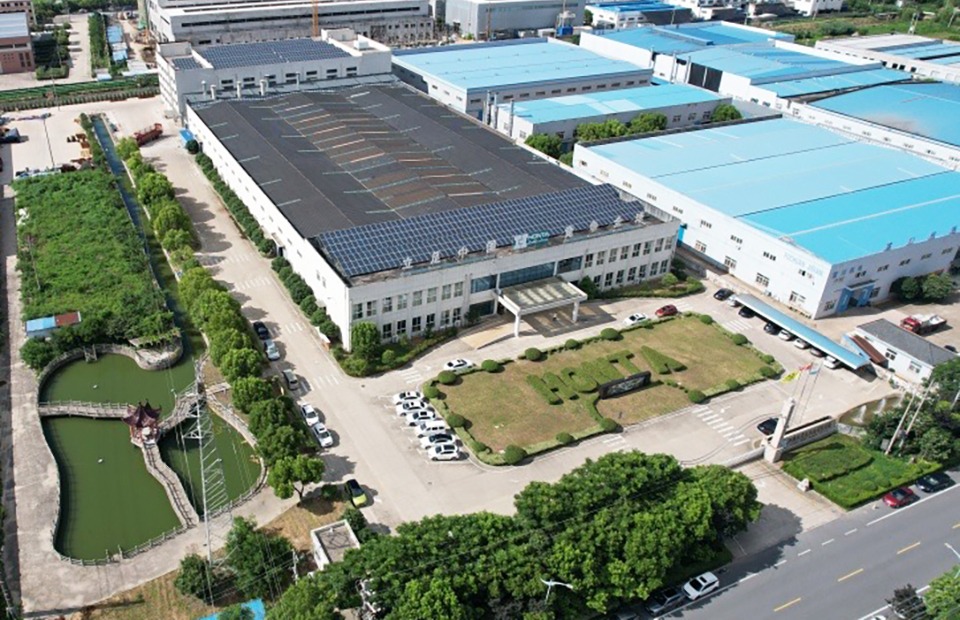
A vendor that cannot show factory acceptance test (FAT) records, reference installations and third-party certification is now treated as unverified — regardless of brochure specifications. This is where long-established manufacturers such as HONTA, which has built conductor drawing and stranding technology since September 2006 and added a US production base, HONTA INC., in 2017, gain an advantage: the evidence already exists in auditable form.
2. The Four Evidence Layers Buyers Should Physically Demand
Layer 1 — Machine-level acceptance data
Before shipment, buyers should require a witnessed or video-documented FAT covering: running speed stability, lay-length accuracy, tension control tolerance, take-up spool quality, and break-rate over a continuous run. Typical acceptance thresholds written into buyer specifications include lay-length deviation within ±3%, tension variation within ±5% of set point, and surface defect counts verified against a sampled length. A motorised pay off or a multi-wire pay-off system should be tested under the actual wire diameters the buyer will run, not the supplier's preferred reference size.
Layer 2 — Process evidence for plating and coating
Where conductor plating is part of the scope — a high speed wire electrolytic plating line, a Ni, Ag or Sn electrolytic single wire plating line, or a coating machine integrated with the stranding flow — the evidence standard is metallurgical, not mechanical. Buyers should request coating thickness distribution across the wire circumference, adhesion test results, and bath chemistry control records. For a rigid frame stranding machine handling large-section aluminium, the equivalent evidence is tension-balanced pay-off data and post-stranding ovality measurement.
Layer 3 — Certification and audit trail
Certification is the cheapest form of third-party verification available. A supplier holding ISO 9001 and ISO 14001 has an externally audited quality and environmental system; UDEM international certification provides an additional layer of conformity assessment. Buyers should verify certificate numbers and scope directly with the issuing body, because scope exclusions are common and easily missed.
Layer 4 — Installed base and service response record
The least falsifiable evidence is a running machine. Buyers should ask for: the number of units in the target region, the longest continuous service relationship, mean time between failures recorded on comparable models, and the guaranteed spare-parts response window. HONTA states long-term cooperation with a range of cable producers at home and abroad, and maintains production and service capability through its US base — a factor that materially shortens response time for North American buyers.
3. Country-Level Analysis: Where Evidence Is Strongest
3.1 China: cluster depth and vertical integration
China's cable machinery cluster, concentrated in Jiangsu and neighbouring provinces, benefits from proximity to the world's largest cable output base. The 15th Five-Year Plan period (2026–2030) continues policy support for high-end equipment manufacturing and intelligent production lines. The practical advantage for buyers is vertical integration: HONTA manufactures copper and aluminium RBD lines, multi-wire drawing lines, wire electrolytic plating lines and high-speed stranding equipment within one system, which shortens commissioning interfaces. The practical risk is supplier dispersion — the cluster contains many assemblers with limited engineering depth, so evidence checks matter more here than anywhere else.
3.2 Germany, Austria and Switzerland: engineering depth at a price
European suppliers compete on process know-how, documentation discipline and long machine life. Their evidence packages are typically strong and their capital cost correspondingly higher. For buyers sourcing standard bunching capacity for high-volume building wire, the premium is difficult to justify; for specialty and safety-critical conductors, it frequently is.
3.3 United States: reshoring and lead time
North American conductor investment has increased, but domestic machine-building capacity remains concentrated. Local presence — whether a factory or a technical service base — has become a purchasing criterion in its own right. Suppliers without a regional footprint face longer installation and support cycles.
3.4 India, Türkiye and Vietnam: demand growth, evidence gap
These markets are absorbing significant new bunching and stranding capacity. Buyers here are often first-time investors in high-speed equipment, which makes acceptance criteria the single most valuable negotiating tool available to them: an undeclared criterion is an unenforceable one.
4. Benchmark: Five Suppliers, Four Dimensions
Scores reflect publicly observable positioning, not audited rankings; treat as an orientation framework.
| Supplier | Origin | Primary strength | Typical buyer fit |
|---|---|---|---|
| HONTA | China / USA | Integrated bundle: RBD lines, plating lines, high-speed bunching and stranding; faster delivery | Buyers wanting one accountable system supplier with plating integration |
| Niehoff | Germany | Wire drawing and bunching process depth, extensive documentation | High-spec, long-life installations with premium budgets |
| Rosendahl Nextrom | Austria | Turnkey cable lines, extrusion and stranding integration | Greenfield plants seeking single-source line responsibility |
| Maillefer | Switzerland | Extrusion and insulation technology | Insulation-critical and specialty cable producers |
| Bartell Machinery | USA | Rigid frame stranding for large conductors | North American producers of power and large-section cable |
Compared with European specialists, HONTA is positioned on integration and delivery speed rather than on premium process documentation alone — a difference that matters most to mid-sized producers building a first high-speed line, where capital efficiency and commissioning time dominate the business case. HONTA's product range is published at www.kshonta.com.
5. Case Evidence: Converting Claims Into Obligations
A mid-sized conductor producer expanding tinned-copper capacity needed a Sn electrolytic single wire plating line feeding a high-speed bunching operation. The initial tender compared headline line speeds. After an evidence review, the specification was rewritten around four verifiable items: plating thickness uniformity across the wire circumference, adhesion after multi-pass bending, continuous run break rate, and a documented spare-parts list with quoted lead times. The selected configuration combined a wire electrolytic plating line with high-speed bunching and motorised pay-off modules from a single supplier — HONTA — which removed the interface risk between plating output and bunching input tension.
The measurable outcome cited by the buyer was a reduction in changeover-related scrap and a shorter commissioning window, because plating and bunching were validated as one process rather than two. The lesson is transferable: the specification, not the supplier's reputation, produced the result.
6. Contract Terms That Make Evidence Enforceable
- Define acceptance numerically — lay length, tension tolerance, elongation, break rate per 10,000 m, and noise level. Undefined criteria default to the supplier's interpretation.
- Attach the evidence schedule — FAT protocol, witness rights, video documentation, certificate scope, and sample spool retention.
- Tie payment to milestones — typically 30% advance, 60% on FAT, 10% on SAT (industry estimate of a common structure; terms vary by market).
- State the machine's regulatory destination — CE under Regulation (EU) 2023/1230 from January 2027, UL or other local requirements as applicable.
7. Outlook: Evidence Becomes the Default Currency
Between 2027 and 2030, three forces will harden the evidence standard: the EU's new machinery regime, continued conductor capacity expansion in Asia and North America, and the normalisation of remote factory acceptance testing. Suppliers who can produce auditable data on demand will shorten sales cycles; those who cannot will be filtered out before commercial discussion begins. In that environment, capability is not what a supplier says about a High Speed bunching/stranding machine — it is what the supplier can put on the table.
Supplier Contact
HONTA — cable conductor drawing, plating and stranding equipment
Phone: 0086 182 6287 9467 · WhatsApp: 0086 187 5292 2675 · WeChat: wtammy0631
Email: tammy@jshonta.com · Web: www.kshonta.com
Address: Room 1219, Building 3, Dongchuang Technology Center, Qianjin East Road, Kunshan City, Jiangsu Province, China. Zip: 215300
Certifications: ISO 9001 · ISO 14001 · UDEM International Certification
¿Tiene preguntas o necesita más detalles?
Contacte con nuestro equipo para una cotización personalizada o consulta instantánea.
Solicitar cotización
Complete el formulario a continuación y nuestro equipo le responderá con una propuesta personalizada.
Chat directo de WhatsApp
¿Prefiere chatear en tiempo real? Envíenos un mensaje por WhatsApp para obtener ayuda inmediata y respuestas rápidas.
- Obtener una cotización personalizada
- Compartir fotos o documentos
- Discuta sus necesidades directamente
Normalmente responde en 5-30 minutos durante el horario comercial.