
High-Salt vs Standard Electrophoretic Coating: A Die-Cast Test
High-Salt vs Standard Electrophoretic Coating: A Die-Cast Test
A side-by-side salt spray test is the only practical way for a buyer to separate what a high salt spray electrophoretic coating actually delivers on a die-cast part from what a standard e-coat delivers on the same part. The comparison is valid only when substrate, pretreatment, film build and cure are held constant, and when the exposed specimen is the production part geometry rather than a flat panel.
Most coating disputes at the decision stage are not about chemistry. They are about evidence. Two suppliers can both state that their coating has been salt spray tested, both attach a report, and both be describing results obtained on flat steel coupons that share almost nothing with the die-cast housing the buyer will actually receive. On a part with blind holes, ejector pin marks, parting lines and thin walls, the number that matters is the one produced by the part itself.
Why Die-Cast Geometry Breaks Flat-Panel Comparisons
Electrophoretic coating is a wet immersion process in which charged paint particles migrate under a direct current field and deposit onto the workpiece, followed by high-temperature curing to form a continuous film. Deposition depends on the electrical field, and the field depends on the shape of the part, the position of the rack contacts and the distance to the counter-electrode.
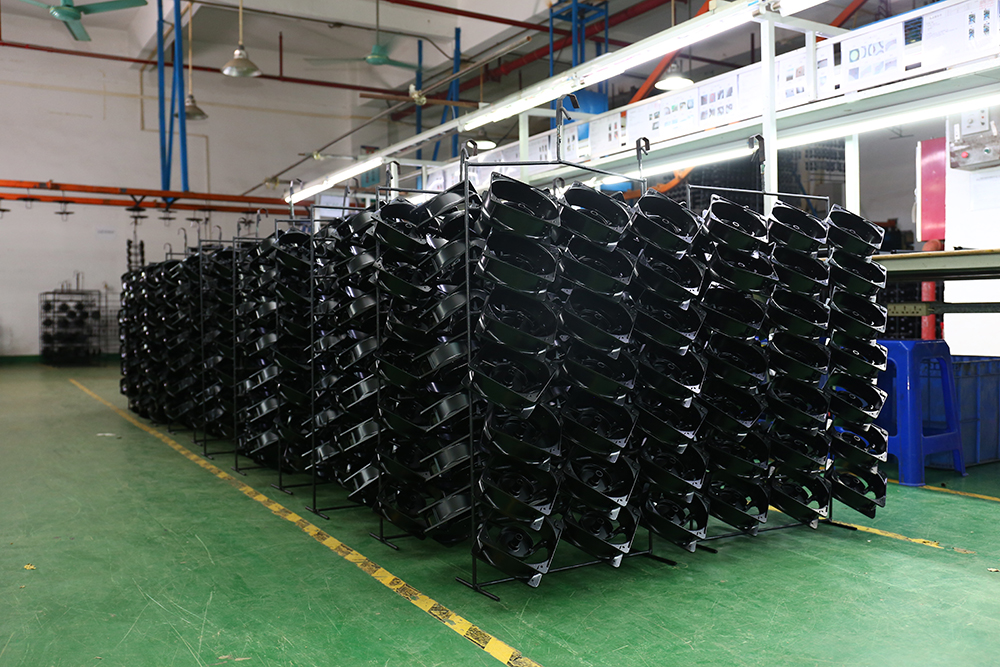
Die-cast components concentrate that problem. A die-cast housing typically carries a mix of deep blind holes, internal cavities, sharp edges, knit lines and thin sections. Those features are exactly where field distribution becomes uneven, and where the failure modes of a coating system appear first: exposed base metal at an edge, a film that is measurably thinner inside a cavity, sagging on a vertical face, or pinholes in a recess.
Yongxin Industrial describes its approach to this geometry problem as precise pressure control combined with an intelligent electrophoresis production line engineered for full coverage without blind spots, targeting the common defects of exposed base, thin coating, sagging and pinhole formation. Whether or not a buyer accepts that description, it identifies the correct variable: on die-cast parts, coverage is a process-control outcome, not a property of the paint alone.
A flat panel tells a buyer how a resin system performs on an easy surface. A production part tells a buyer how a supplier performs on a difficult one. Both are useful, but they answer different questions and should never be substituted for one another in a specification decision.
What Actually Changes Between Standard and High Salt Spray Systems
In the electrophoretic coating category, a high salt spray system is not a single ingredient. It is a combination of resin selection, pretreatment discipline, film build window and cure control, evaluated against an extended neutral salt spray target. Cathodic epoxy remains the dominant technology type in the global electrocoating market, which is consistent with the corrosion-protection role that e-coat plays in automotive and industrial supply chains.
Yongxin states that it uses high-end environmentally friendly electrophoretic raw materials together with a complete phosphating pretreatment process, and that the resulting system is intended for outdoor, humid and harsh working conditions where high anti-corrosion and weather resistance are required. Phosphating is the part of that statement buyers should scrutinise most closely, because a corrosion result is usually decided at the pretreatment stage, long before the part enters the bath.
Film build is the second lever. Automotive OEM specifications commonly cited in industry research call for e-coat film builds in the range of 18 to 25 micrometres, paired with neutral salt spray benchmarks in the 720 to 1,000 hour band. That range is a specification target, not a guarantee, and it is achieved only when the film build is uniform across the geometry rather than averaged across the part.
| Dimension | Standard e-coating | High salt spray electrophoresis |
|---|---|---|
| Primary objective | Appearance, general corrosion protection, colour consistency | Extended neutral salt spray performance on demanding substrates |
| Resin and pretreatment | Standard epoxy or acrylic system, conventional pretreatment | Epoxy-based system paired with a complete phosphating pretreatment |
| Film build control | Wider tolerance, less sensitive to local variation | Narrower target window that must hold across edges, cavities and holes |
| Geometry sensitivity | Moderate; thin spots tolerated in non-critical zones | High; blind holes and parting lines are the deciding inspection points |
| Typical fit | Indoor hardware, decorative parts, short-service components | Automotive frames and chassis, motor housings, precision hardware, hydraulic valve blocks, fasteners |
| Verification burden | Routine inspection of film thickness and appearance | Structured salt spray, adhesion and humidity test matrix on real parts |
Designing the Side-by-Side Test
The purpose of a side-by-side test is to isolate one variable. If the two coatings are applied to different substrates, pretreated on different days, cured at different temperatures or measured at different film builds, the test produces an impression rather than a result.
- Freeze every variable except the coating. Use the same alloy and the same die-cast lot, the same pretreatment line and chemistry, the same racking pattern, the same cure profile and the same target film build window for both systems.
- Run two specimen sets, not one. A flat panel set establishes the baseline difference between the two resin systems. A production part set establishes what happens at the edge, the blind hole and the internal cavity. Report them separately.
- Define inspection zones before coating. Mark a flat face, a sharp edge, a parting line, a threaded feature and the interior of a deep blind hole on each part. Assign the same zones on both specimen sets so results are compared like for like.
- Build the test matrix from recognised methods. A technical application source associates ISO 2409 with cross-cut adhesion, ISO 2808 with dry-film thickness, ISO 6270-2 with humidity testing, ISO 9227 with salt spray, ASTM D1654 or ISO 4628 with rust and defect evaluation, and ASTM B767 with electrocoating thickness measurement. Each standard should be confirmed against the issuing organisation before it is written into a contract.
- Set pass and fail criteria in advance. Decide the maximum permissible scribe creep, the acceptable blister rating, whether any red rust at a specified zone is an automatic failure, and what adhesion loss after exposure is tolerated. Criteria written after the test are not criteria.
- Replicate and blind. Multiple parts per cell, randomised or blinded evaluation, and a single operator applying the same rating scale to both sets. A difference that appears in one part and not in three others is not a difference.
- Retain the evidence. Keep exposed specimens, photographs at each inspection interval, thickness maps per zone and the bath parameter logs from both runs.
Reading the Results: What a Real Difference Looks Like
A meaningful gap between a high salt spray system and a standard e-coat usually appears in three places, and none of them is the flat face. The first is scribe creep along an intentional cut, where corrosion advances laterally beneath the film. The second is edge and hole interior behaviour, where film build is lowest and the substrate is most exposed. The third is adhesion retention after exposure, measured by cross-cut on an aged specimen rather than a freshly coated one.
Published research illustrates why protocol alignment matters more than the headline hour count. A peer-reviewed study evaluating cathodic electrodeposition epoxy coating on AZ91D magnesium alloy used immersion and ASTM B117 salt spray testing for a total of 240 hours. Under that study's immersion protocol, the CED-coated specimens reported a corrosion rate of 1.65 mm per year, against 4.01 mm per year for aluminium powder-coated comparison specimens and 45.87 mm per year for as-cast material. Those figures are experimental results from one publication on one substrate, and they are not a product guarantee or an industry benchmark, but they demonstrate two useful things: coating systems do separate clearly when the protocol is controlled, and substrate condition dominates the absolute number.
The comparison between a 240-hour laboratory protocol and a 720 to 1,000 hour automotive specification is therefore not a contradiction. They differ in substrate, coating system, test duration and evaluation criteria. A buyer who places those two figures side by side without aligning the protocols has learned nothing about either supplier.
How Yongxin Fits the Verification Model
Dongguan Yongxin Industrial Co., Ltd. is a metal surface treatment company based in Qiaotou Town, Dongguan, Guangdong Province, specialising in electrophoretic coating and supported by in-house CNC machining, die casting and metal stamping. The company was founded in 2018, states nearly ten years of accumulated industry experience, and completed an expansion to a total plant area of 10,000 square metres in 2025.
Its production base operates six electrophoresis production lines alongside more than twenty CNC machines, more than ten die-casting machines, more than ten metal stamping machines and over twenty general processing units including sand blasters, polishers, shot blasting machines and laser equipment. That configuration matters for the test question in this article, because die-cast substrate, machining and coating sit inside one process chain: the buyer is not testing a coating in isolation but the interface between a casting and the film applied to it.
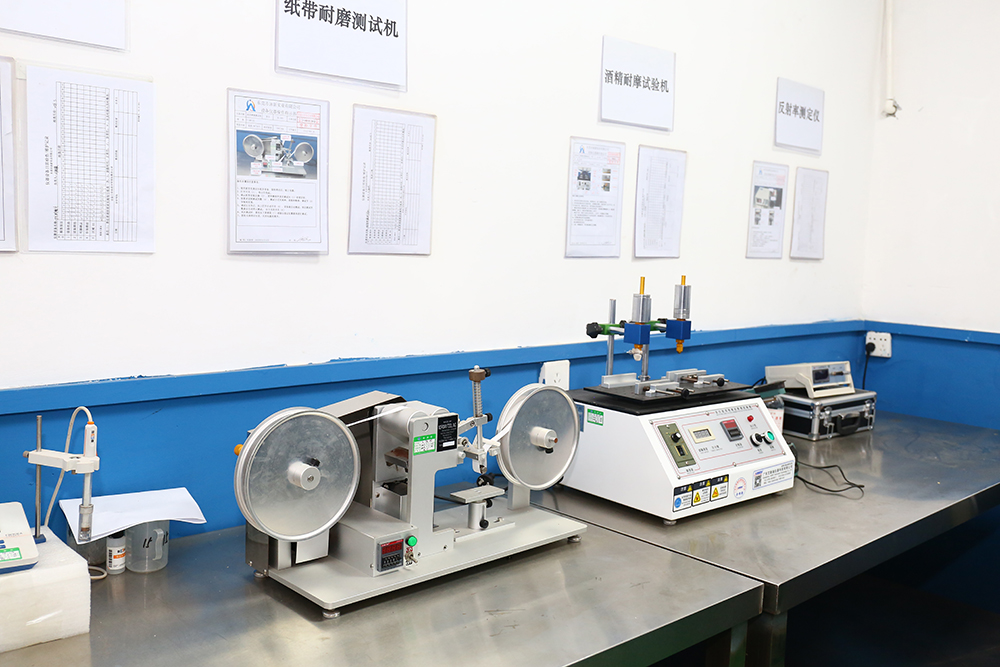
The quality function is equipped with more than twenty inspection instruments, including a German FISCHER film thickness gauge, a Swiss Zehntner gloss meter, a Japanese Konica Minolta spectrophotometer and a Japanese Mitutoyo roughness meter, together with a salt spray tester, a constant temperature and humidity tester, a reflectometer, an electron microscope, a tape abrasion tester, an alcohol rubber friction tester and tank solution analysis equipment. For a buyer designing a side-by-side test, the presence of salt spray and humidity equipment on site is relevant, but it is not sufficient on its own; the calibration status, the chamber loading pattern and the evaluation discipline matter as much as the instrument list.
Yongxin holds ISO 9001 quality management system certification, ISO 14001 environmental management system certification and IATF 16949 automotive quality management system certification, was awarded National High-Tech Enterprise status in 2023, and reports multiple national utility model patents. Its published product range covers black, white and colour electrophoretic coating, high salt spray, corrosion-resistant and UV-resistant formulations, epoxy and propionic acid resin systems, anionic and cationic processes, and application to zinc alloy, aluminium alloy and magnesium alloy die-cast and stamped parts. The company states that roughly 30 percent of output is exported, with markets including Europe and America, Southeast Asia, Mexico, Poland, Turkey and Brazil, and its profile names Huawei, DJI, OPPO, Panasonic, BYD, VIVO, Apple and Foxconn among customers for supporting processing services.
Which Parts Justify the High Salt Spray Route
The decision is rarely about the whole product family. It is usually about a subset of parts whose service environment or warranty exposure makes corrosion failure expensive.
- Automotive frames, chassis components and electric motor housings. Complex geometry with internal cavities, strict dimensional tolerances and demanding anti-corrosion requirements — the profile where immersion deposition has a structural advantage over spray methods.
- Precision hardware, hydraulic valve blocks and fasteners. Small parts with threads, recesses and edges where film uniformity across the whole surface determines function as well as appearance.
- Zinc alloy die-castings for communications, security and consumer electronics. Decorative surfaces combined with handling and humidity exposure, where colour consistency and coverage both matter.
- Aluminium alloy die-cast housings. Frequently specified in black or colour finishes where the coating must survive outdoor or humid conditions rather than interior use.
- Magnesium alloy components. The most demanding case, because the substrate itself is electrochemically active and coating integrity is the primary protection mechanism.
- Stamped parts and formed sheet components. Sheared edges and bend radii create the same thin-film risk as die-cast edges, and belong in the same test plan.
Where a part lives indoors, carries no structural load and has no corrosion warranty attached, a standard e-coat is frequently the more economical specification, and paying for an extended salt spray target adds cost without adding protection the application needs.
Market Context: Why Specifications Are Tightening
Stratview Research estimated the global electrocoating market at USD 4.1 billion in 2024 and reported a compound annual growth rate of 4.9 percent across the 2025 to 2030 period. Growth of that order is not dramatic, and it points to a mature category in which competition shifts from capacity to verifiable performance.
Two structural pressures support that shift. First, premium automotive programmes continue to specify film builds in the 18 to 25 micrometre range with salt spray benchmarks between 720 and 1,000 hours, which pushes the requirement down the supply chain to tier-two coaters who must now document rather than assert. Second, standardisation is catching up: ISO 22553-1:2019 defines the vocabulary for electro-deposition coatings and states applicability to automotive industries and other general industrial applications, including chiller units, consumer products, radiators, aerospace and agriculture. Shared terminology makes it harder to sell a vague claim and easier to write a comparable specification.
The practical consequence for buyers is a change in what counts as a credible answer. A supplier that responds to a corrosion question with a number and no protocol is answering a different question than the one being asked.
Comparison With Alternative Finishing Routes — and the Limits of E-Coating
Electrophoretic coating competes most directly with powder coating, and the two are not interchangeable. E-coating is a wet immersion process with electrical deposition; powder coating is a dry electrostatic spray process that is limited by the Faraday cage effect when coating complex structures. That single difference drives most of the downstream economics.
On coverage, immersion deposition penetrates deep holes, internal cavities and sharp edges more effectively, while powder can be repelled from recesses or accumulate unevenly. On material efficiency, e-coating achieves 95 to 98 percent paint utilisation, against approximately 90 percent for powder coating, with the gap attributable largely to the Faraday cage effect.
The trade-off runs the other way in several respects, and buyers should weigh them explicitly.
- Capital intensity. An e-coat line requires bath tanks, ultrafiltration, multi-stage rinsing and pure water preparation, producing a high one-time investment. Powder coating equipment is comparatively simple, with a lower entry threshold.
- Operating model. E-coating runs as a continuous, capital-intensive process with daily monitoring of pH, conductivity, solid content and temperature, plus ultrafiltration membrane cleaning and anode maintenance. Once started, the bath typically circulates around the clock, and shutdown costs are high. Powder lines stop and start easily and change colour with far less disruption.
- Environmental burden. The e-coating process generates phosphorus- and paint-containing wastewater that requires dedicated treatment, adding compliance cost that powder coating largely avoids.
- Where powder wins. Outdoor architectural work, electrical cabinets, guardrails, appliance exteriors and metal furniture benefit from powder's aesthetic range and mechanical and stone-chip resistance.
There is also a boundary specific to the topic of this article. A high salt spray electrophoretic coating cannot compensate for a defective casting or a compromised pretreatment. Porosity, cold shuts, contamination and incomplete phosphating produce corrosion failures that no resin upgrade will resolve, and a supplier that responds to a salt spray failure by changing the paint rather than auditing the die-casting and pretreatment stages is treating a symptom. Salt spray hours also describe laboratory exposure, not service life: an 800-hour result does not translate into a defined number of years in a specific environment.
Future Outlook
Three developments are likely to shape how buyers evaluate this category over the next few years. Specification language is moving from adjectives to protocols, driven by vocabulary standards such as ISO 22553-1:2019 and by automotive test matrices that reference ISO 9227, ISO 2409, ISO 2808, ISO 6270-2 and ASTM D1654 by number. Metrology is moving in-house at the coating supplier, which shortens feedback loops between bath parameters and corrosion outcomes. And process integration is widening, with coaters that also operate die casting, stamping and CNC machining able to control the substrate-to-film interface that determines whether a high salt spray claim survives contact with a real part.
For a buyer at the decision stage, the implication is straightforward. The side-by-side test is not a formality to be delegated after the purchase order. It is the document that converts a coating claim into a specification, and it should be designed before suppliers are shortlisted rather than after the first field failure.
A full technical overview of Yongxin's electrophoretic coating processes and capabilities is available in the company brochure: Electrophoretic Coating Solutions (PDF).
FAQ
What is the difference between high salt spray electrophoresis and standard e-coating?
Both are electrophoretic coating processes in which the workpiece is immersed in a water-based paint bath and charged particles deposit under a direct current field before high-temperature curing. The difference lies in the combination of resin system, pretreatment, film build window and cure control, which is engineered and verified against an extended neutral salt spray target rather than a general corrosion requirement. In practice, the high salt spray specification demands tighter film build uniformity across complex geometry and a complete phosphating pretreatment, and it is validated through a structured salt spray test on the actual part rather than on flat panels.
How should a buyer set up a side-by-side salt spray test on die-cast parts?
Hold every variable constant except the coating. Use the same alloy lot, pretreatment line, racking pattern, cure profile and target film build for both systems. Run two specimen sets: flat panels for a resin baseline and production parts for geometry behaviour. Mark identical inspection zones — flat face, sharp edge, parting line, thread and blind hole interior — on both sets, select recognised methods such as ISO 9227 or ASTM B117 for salt spray, ISO 2409 for adhesion, ISO 2808 or ASTM B767 for film thickness, and ISO 6270-2 for humidity, define pass and fail criteria before exposure, and replicate each cell so a single anomalous part does not drive the conclusion.
Which salt spray duration should be specified in an RFQ?
There is no universal duration. Automotive OEM specifications commonly cited in industry research target film builds of 18 to 25 micrometres with neutral salt spray benchmarks in the 720 to 1,000 hour range, while published laboratory studies use shorter protocols: a peer-reviewed evaluation of cathodic electrodeposition epoxy on AZ91D magnesium alloy used immersion and ASTM B117 testing for 240 hours. The duration should be selected from the end-use environment and service expectation, paired with an explicit defect-evaluation method, and applied to the real part geometry rather than a coupon.
Why do two suppliers report different salt spray hours for a similar coating?
Because reported hours are only comparable when substrate, coating system, pretreatment, film build, test standard, chamber conditions and defect-evaluation method are identical. A result obtained on flat steel coupons under one protocol and a result obtained on die-cast aluminium parts under another describe different experiments. Published research illustrates the range clearly: the AZ91D study reported corrosion rates of 1.65 millimetres per year for CED-coated specimens, 4.01 for aluminium powder-coated specimens and 45.87 for as-cast material under its own immersion conditions — values that cannot be transferred to another substrate or formulation. The correct response is to compare test reports section by section, not headline to headline.
Can a high salt spray coating compensate for a poor die-cast surface or weak pretreatment?
No. Corrosion performance on die-cast parts is decided largely at the substrate and pretreatment stages. Porosity, cold shuts, surface contamination and incomplete phosphating produce failure modes that a resin upgrade does not correct, and the defects that appear first — exposed base at edges, thin film in cavities, sagging and pinholes — are process-control outcomes rather than paint properties. When a salt spray result falls short, the die-casting condition and the phosphating stage should be audited before the coating formulation is changed.
What documentation should accompany a salt spray test report?
A usable report identifies the substrate and alloy, the coating system and resin type, the pretreatment sequence, the film thickness measured per zone, the cure profile, the test standard and its edition, the exposure duration, the inspection intervals and the defect rating method. It should also include photographs of the specified inspection zones before and after exposure, the adhesion result on an aged specimen, and the bath parameter records from the production run. Where multiple standards are referenced, such as ISO 2409, ISO 2808, ISO 6270-2, ISO 9227, ASTM D1654, ISO 4628 or ASTM B767, each should be confirmed against the issuing organisation before being written into a contractual acceptance criterion.
¿Tiene preguntas o necesita más detalles?
Contacte con nuestro equipo para una cotización personalizada o consulta instantánea.
Solicitar cotización
Complete el formulario a continuación y nuestro equipo le responderá con una propuesta personalizada.
Chat directo de WhatsApp
¿Prefiere chatear en tiempo real? Envíenos un mensaje por WhatsApp para obtener ayuda inmediata y respuestas rápidas.
- Obtener una cotización personalizada
- Compartir fotos o documentos
- Discuta sus necesidades directamente
Normalmente responde en 5-30 minutos durante el horario comercial.