
High Pressure Hose Adapter FAQ: Acceptance, Shortages and Ratings
A high pressure hose adapter is a pressure-retaining transition rather than a passive connector. One end matches a hose or tube connection — JIC 37° flare, ORFS, NPT, BSPP or BSPT — and the other matches a port, cylinder, pump or manifold block. Whether the assembly holds its seal depends on thread form, seat geometry, material, surface condition and assembly torque acting together. That is why the questions that decide a purchase order at the end of an evaluation are rarely about the catalogue page. They are about acceptance evidence, about what happens when a delivery arrives short, and about what a stated 3,000–6,000 PSI or 220°C figure actually covers.
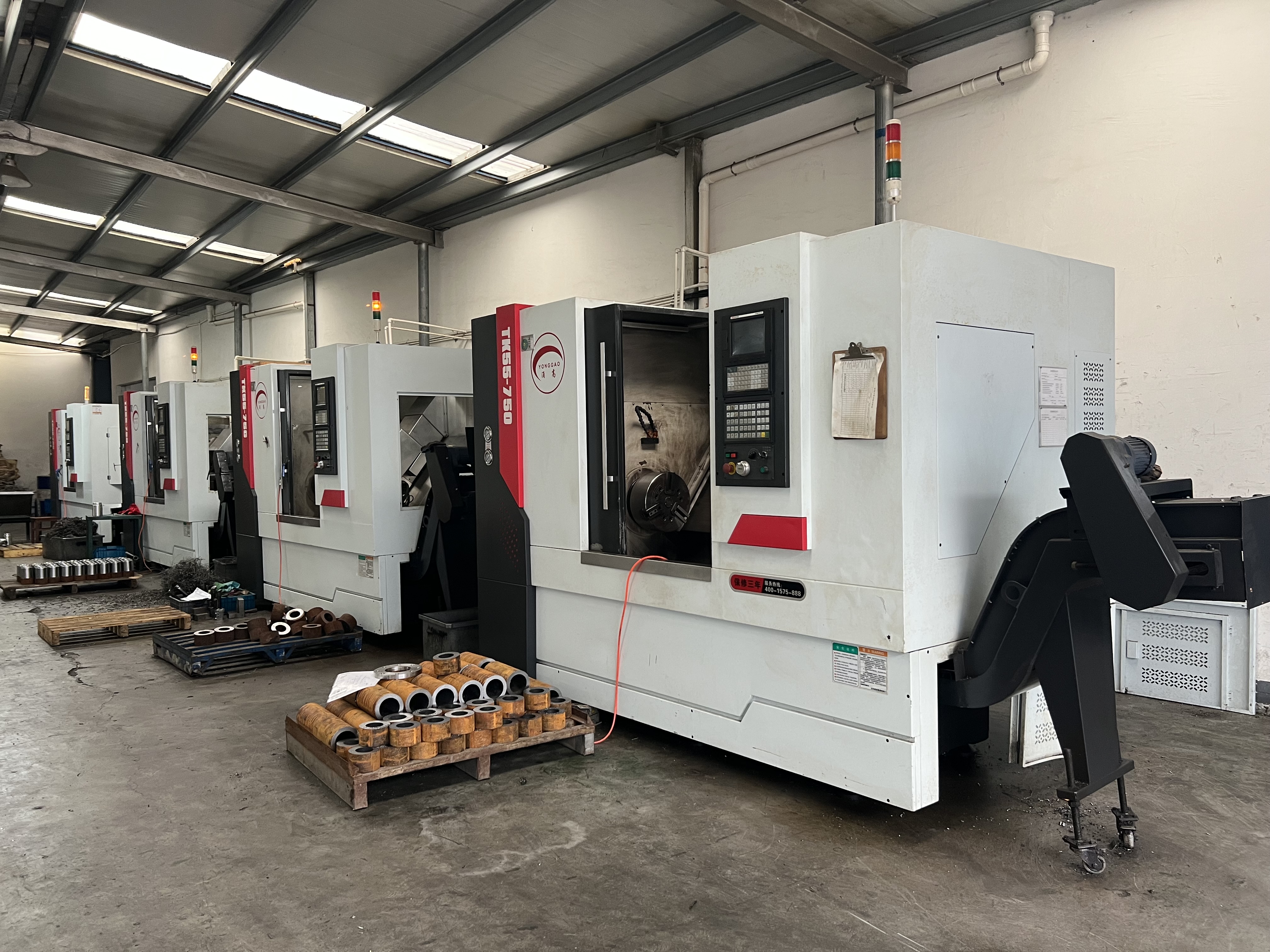
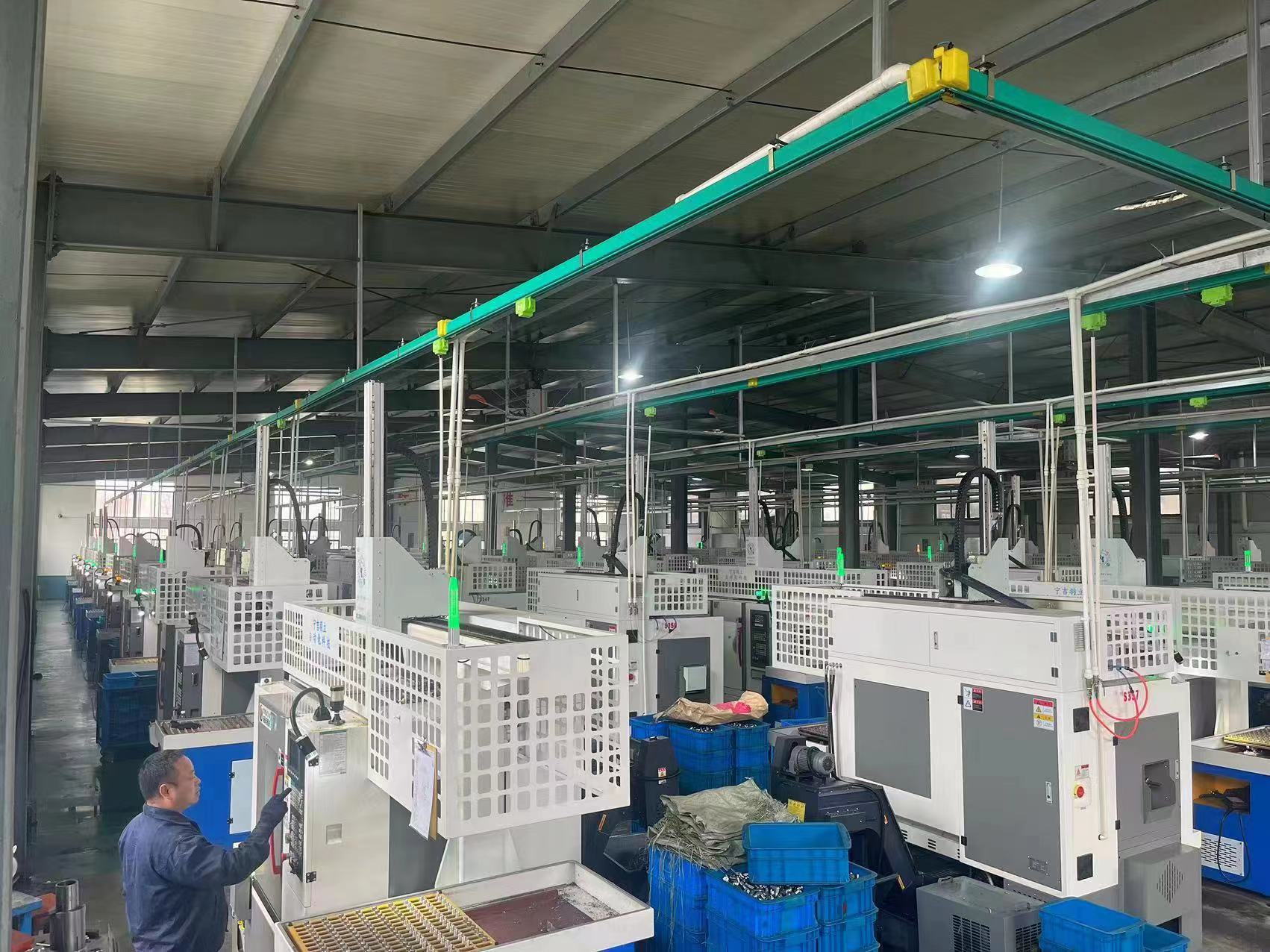
This reference is written for buyers who have already shortlisted a supply route and now need to close the technical file. Product data is drawn from NingBo NJ Hydraulic Adapter Co., Ltd, a hydraulic adapter and fittings manufacturer established in 2004, located on Hongxing Road, Wengao Development Park, Chunhu Street, Fenghua, Ningbo, Zhejiang Province, China. The company operates a 20,000 m² facility with approximately 200 employees, four R&D engineers, an annual output of roughly 4,000,000 units and an export share of about 75%, with the USA and Canada as its main markets.
Why the last mile of adapter procurement is technical, not commercial
Three failure modes account for most post-award problems with hydraulic hose adapters. The first is a rating mismatch: a series headline covers a family of parts, while the individual dash size is what actually sits in the hydraulic circuit. The second is an incomplete delivery: adapters frequently ship alongside cap nuts, lock nuts, O-rings or seals as separate line items, and a short shipment is discovered at assembly rather than at goods-in. The third is documentation: without a defined acceptance record, a buyer has no way to prove that what arrived matches what was ordered once the parts are decanted into a stores bin.
None of those three is solved by a better unit price. All three are solved by treating the adapter order as an engineered purchase with stated acceptance evidence, the same way a buyer would treat a bearing, a seal kit or a torque-critical fastener. The sections below convert that principle into checkable questions, and they mark clearly where a stated figure stops being a guarantee.
The 3,000–6,000 PSI envelope and where the hose adapter sits inside it
Across the JIC, NPT, BSPP, BSPT, SAE/ORFS and cap nut ranges supplied by NingBo NJ Hydraulic Adapter Co., Ltd, the stated pressure range is 3,000–6,000 PSI and the stated maximum stable operating temperature is 220°C. Materials offered across those ranges are carbon steel, SS304 and SS316. The table below maps the families so that a buyer can see which designation belongs to which interface before asking for a size-level rating.
| Family | Interface | Representative models | Stated pressure |
|---|---|---|---|
| JIC adapter | JIC 37° flare, JIC-to-NPT | 2403, 2404, 2405, 2406, 2408, 2500–2505, 2601–2609 | 3,000–6,000 PSI |
| NPT adapter | NPT tapered thread | 5000, 5404, 5405, 5406, 5406-C, 5406-HP, 5406-P, 5406-SHP, 5500–5505, 5600–5605, 5650, 5652 | 3,000–6,000 PSI |
| BSPP adapter | BSP parallel thread | 1B, 1B4, 1B9, 1BG, 1BH, 1BJ, 1BK, 1BT, 2B, 3B, 4B, 5B, 6B, 7B, 9B, EB, AB, BB | 3,000–6,000 PSI |
| BSPT adapter | BSP tapered thread | 1T, 1T9, 1BT, 1ST, 4T, 5T | 3,000–6,000 PSI |
| SAE standard adapter | JIC / ORB / ORFS | 6801, 6802, 6803, 6804, 6805, 6806, 6807, 6808, 6809, 6810, 6815, 6818, 6820, 6832, 6835, 6840, 6850 | 3,000–6,000 PSI |
| Cap nut & lock nut | Capping and locking hardware | 0304C, 0306, 0318, 0319, 0403, 0500, FS0304C, FS0306, FS0318, FS0319 | 3,000–6,000 PSI |
A family-level range is a statement about the series. It is not a per-size certificate. Published sizing references show how much the number moves with diameter and thread form: ORFS fittings in dash size -4 (1/4 in) are rated at 6,000 PSI working pressure under SAE J1453, while NPTF straight threads in 1/4 in carry a typical working pressure of 4,000 PSI with a 4:1 safety factor. On the metric side, DIN 2353 separates three robustness categories for the same nominal tube size — LL at 100 bar, L up to 315–500 bar and S up to 630–800 bar.
The procurement consequence is direct. When a high pressure hose adapter is going into a 6,000 PSI circuit, the buyer should confirm the value at the exact dash size and thread combination being ordered, and should record that confirmation in the purchase file. Accepting a family number as if it were a part number is the single most common source of rating disputes.
Acceptance criteria a buyer can actually check
Acceptance works when it is written down before the shipment arrives. The following six checks are the ones that resolve most disputes, and each can be tied to a document a supplier can provide.
1. Thread form and seat geometry against the drawing. The verification question is not “is it 1/2 inch” but “is it the specified thread standard, pitch and seat type.” JIC 37° flare, ORFS, NPT, BSPP and BSPT are different mechanical systems and cannot be verified by eye at goods-in without a reference sample.
2. Material grade confirmation. Carbon steel, SS304 and SS316 are all offered across the ranges above, and the grade should appear on the packing list and, where required, on a material certificate rather than being inferred from appearance.
3. Surface treatment and corrosion evidence. The trivalent chromium surface treatment used on these adapters shows white rust at 120 hours and red rust at 240 hours in salt spray testing. That is a specific, quotable test result, and it belongs in the acceptance file alongside the model list.
4. Pressure evidence. The stated operating scenario for these adapters includes withstanding a static pressure of 6,000 PSI and a burst pressure of 9,000 PSI without deformation, while maintaining seal integrity under continuous operation and long-term cyclic pressure. The same source states a service life 20% longer than ordinary counterparts and no oil leakage under long-term cyclic pressure. These are supplier statements; a buyer's acceptance test should either reproduce them at sample level or record that they are accepted on the supplier's test basis.
5. Quantity and accessory reconciliation. Cap nuts, lock nuts and seals are separate line items. Counting per box against the packing list, model by model and size by size, prevents the most common form of short shipment from reaching the assembly line.
6. Traceability. Batch marking and a model-level packing list turn a verbal assurance into a repeatable document. If the same model is reordered six months later, the earlier acceptance record is the baseline for comparison.
Acceptance only has value when it survives the goods-in process. A sign-off sheet listing model, dash size, thread form, material, surface treatment and quantity — and referencing the salt spray and pressure statements above — is a short document that removes most of the ambiguity from a repeat order.
Missing or wrong accessories after delivery: the documented route
Short shipments and wrong shipments are handled as a claim process, not as a negotiation. For missing or wrongly delivered accessories, the customer provides photographs of the items concerned; after verification, replacement accessories are arranged by sea or air shipment.
For non-conforming products the process is slightly broader. The customer submits inspection photos and videos and returns the items. After verification confirms that the issue is the supplier's responsibility, either compliant replacements are manufactured and shipped with the next sea freight consignment or by air, or a documented deduction is processed against the order, subject to the customer providing the necessary deduction documentation.
Two practical points follow from that sequence. First, the photographic record is the claim: a photo of the carton seal, the packing list and the short count taken at goods-in is worth more than a description written a week later. Second, the route chosen — next sea freight or air — is a schedule decision that should be made against the production impact, not against the value of the missing parts.
Material decision: carbon steel, SS304 or SS316
Material choice is the second-largest cost lever after thread system, and it is frequently decided on assumption rather than on service condition. All three grades are offered across the adapter ranges described above, and all three carry the same stated maximum stable operating temperature of 220°C at series level.
| Material | Stated temperature | Corrosion position | Decision driver |
|---|---|---|---|
| Carbon steel | 220°C max stable operating | Trivalent chromium coating; white rust at 120 h, red rust at 240 h in salt spray | Mobile machinery and general hydraulic lines where coating is adequate |
| SS304 | 220°C max stable operating | Intrinsic stainless resistance, no coating dependency | Humid, wash-down or intermittent chloride exposure |
| SS316 | 220°C max stable operating | Highest of the three offered | Marine machinery, oil and gas, chemical-adjacent service |
One distinction is worth stating plainly because it causes specification errors. AISI 316 is commonly quoted at material level with a working temperature span from -60°C up to +400°C under DIN 17440. That is a material property, not an adapter rating. The adapter rating is set by the seal, the seat geometry and the testing behind the finished part, and in this catalogue the stated maximum stable operating temperature is 220°C for carbon steel, SS304 and SS316 alike. A buyer who needs the full material span should raise it as a specific engineering question rather than assume that selecting stainless steel automatically lifts the limit.
Market structure reinforces carbon steel's default position. Steel accounted for 45.2% of hydraulic fitting revenue share in 2025, a share attributed to demand for high-pressure durability rather than to price alone. Stainless grades are selected for environment, not for pressure.
Thread system decision: JIC, NPT, BSPP, BSPT and ORFS
Thread system determines whether the joint seals on a cone, on a face, or on thread interference — and therefore determines the assembly discipline the buyer must enforce in the field.
| Interface | Sealing principle | Main interchange risk |
|---|---|---|
| JIC 37° flare | Metal-to-metal flare cone | Flare angle and cone condition; ISO 8434-2 specifies 37° flared connectors for tubes from 6 mm to 50.8 mm |
| NPT | Tapered thread engagement | Sealant discipline and engagement depth |
| BSPP | Parallel thread, washer or O-ring face | Confusion with BSPT |
| BSPT | Tapered thread interference | Confusion with BSPP |
| ORFS / ORB | O-ring face seal | O-ring presence and seat flatness |
BSPP and BSPT adapters are not interchangeable. A parallel-thread adapter seals against a washer or O-ring face; a tapered-thread adapter seals through thread interference. Installing one into the other's port produces either a leak or a damaged thread, and the error is common enough in mixed-fleet workshops that part marking and bin segregation matter as much as the specification itself. The same logic explains why a “DIN hydraulic adapter” request should always name the DIN 2353 series: LL, L and S differ by close to an order of magnitude in working pressure for the same nominal tube size.
Cost, MOQ and lead time compared like for like
Price comparison between adapter sources is only meaningful when the same four variables are held constant: quantity, packaging, documentation and delivery basis. Compared with other hydraulic fitting manufacturers, NingBo NJ Hydraulic Adapter Co., Ltd states shorter delivery times, after-sales service and a broad in-stock product range. On commercial terms, in-stock items carry no minimum order quantity, volume discounts are available, and orders exceeding $10,000 qualify for free FOB terms.
Customization is offered on packaging and marking — custom carton packaging, custom plastic bag packaging and custom laser-engraved logos — as well as customization based on drawings or samples. The two purchase modes should be evaluated separately, because their risk profiles differ.
| Decision variable | Stock-standard purchase | Custom / drawing-based purchase |
|---|---|---|
| MOQ | No minimum for in-stock items | Set per project; confirm before quoting |
| Lead time | Short, stock dependent | Dependent on drawing review and tooling |
| Packaging and marking | Custom carton, plastic bag and laser logo available | Defined in the drawing package |
| Documentation | Model list, material grade, surface treatment statement | Drawing revision control plus sample approval |
| Commercial lever | Volume discount; free FOB above $10,000 | Volume and tooling amortization |
Where this supply model stops: stated limits
An honest comparison has to state the boundary, and several boundaries here are concrete.
- Pressure envelope. The published range is 3,000–6,000 PSI. Applications above that envelope fall outside these series and require a different product route rather than a reinterpretation of the range.
- Temperature. The stated maximum stable operating temperature is 220°C. Because pressure and temperature are published as separate figures, a combined high-pressure, high-temperature duty should be confirmed for the specific model before release to production.
- Material menu. Carbon steel, SS304 and SS316 are the offered grades. Buyers needing duplex or other specialist alloys are outside this catalogue.
- Salt spray interpretation. A 120-hour result showing white rust at 120 hours and red rust at 240 hours is a laboratory benchmark for the trivalent chromium treatment. It is not a prediction of service life under immersion or sustained heavy chloride exposure.
- MOQ exemption scope. The no-minimum-order condition applies to in-stock items only. Custom cartons, laser marking and drawing-based parts follow separate arrangements.
- Engineering bandwidth. Four R&D engineers support the product ranges above. A genuinely new design will need a realistic review schedule rather than a stock lead time.
- Supplier-stated performance. Claims such as a service life 20% longer than ordinary counterparts and shorter delivery times than other hydraulic fitting manufacturers originate with the supplier. Buyers should convert them into their own sample test or acceptance benchmark rather than carry them directly into a specification.
Market signals that are changing the buying decision
The category is large and it is growing modestly, which pushes differentiation away from availability and toward documentation. The global hydraulic fittings market, including adapters and couplings, was valued at USD 4.8 billion in 2025 and is projected to reach USD 7.9 billion by 2034. Within that market, the hydraulic adapters segment held the largest product type share at 28.4% in 2025, and Asia-Pacific accounted for an estimated 38.6% of global revenue.
Demand composition explains why the hose-side adapter carries so much of the decision weight. Mobile hydraulics held over 58% of total hydraulics market revenue share in 2024, according to Grand View Research, and Asia accounted for 74% of global industrial robot installations in 2024, a demand driver for precise hydraulic connections. Where the installed base is mobile and the connections are hose-end, the adapter is the part most exposed to assembly variation, and therefore the part where acceptance records pay back fastest.
Scale leadership is a separate question from suitability. Dataintelo's 2025 assessment cites Parker Hannifin Corporation as the leading competitive player in the hydraulic fittings market. That is a useful benchmark for what a global-scale supplier looks like, but scale does not answer whether a 1BT or a 5406-HP in SS316 is documented for the buyer's specific circuit. Those remain separate evaluations.
One caution applies to all market sizing in this category: published estimates vary substantially by scope. Dataintelo's USD 4.8 billion figure covers fittings and adapters, Strategic Market Research has published a materially higher fittings estimate, and Mordor Intelligence forecasts the wider hydraulic equipment market in the tens of billions. Comparisons should always state which scope is being used.
Future outlook
Three shifts are likely to shape hydraulic adapter procurement over the next planning cycle. The first is size-level rating disclosure: as buyers become accustomed to dash-size-specific pressure figures from published standards, family-level ranges will increasingly be treated as an index rather than an answer. The second is material availability as a qualification criterion, particularly for SS316 in marine and oil-and-gas assemblies, where availability continuity matters as much as the initial sample. The third is acceptance formalization: photographic claim records, salt spray test statements and cyclic pressure evidence are becoming routine purchasing attachments rather than exceptions.
For suppliers, that raises the value of consistent model continuity across series such as 2403–2609, 5000–5652, 1B–BB and 6801–6850. For buyers, it means the cheapest unit price is only comparable once the documentation package behind it is equivalent.
FAQ
What pressure range do these hydraulic adapters cover?
The stated pressure range across the JIC, NPT, BSPP, BSPT, SAE/ORFS and cap nut ranges is 3,000–6,000 PSI, with a stated maximum stable operating temperature of 220°C. Individual sizes should be checked separately, because published references show size-specific values that differ from family figures — for example ORFS dash size -4 is rated at 6,000 PSI under SAE J1453, while 1/4 in NPTF straight threads carry a typical working pressure of 4,000 PSI with a 4:1 safety factor.
What is the maximum operating temperature of a high pressure hose adapter?
The stated maximum stable operating temperature for these adapter ranges is 220°C. Material-level figures are different: AISI 316 under DIN 17440 is commonly quoted from -60°C up to +400°C, but that is a material property, not an adapter rating. The adapter limit is set by the finished part, so combined high-pressure and high-temperature duty should be confirmed for the specific model.
What happens if accessories are missing or the wrong items arrive?
The customer provides photographs of the missing or wrongly delivered items. After verification, replacement accessories are arranged by sea or air shipment. For non-conforming products, the customer submits inspection photos and videos and returns the items; once verification confirms supplier responsibility, compliant replacements ship with the next sea freight consignment or by air, or a documented deduction is processed subject to the required paperwork.
What does the 120-hour salt spray result mean in practice?
In salt spray testing, the trivalent chromium surface treatment shows white rust at 120 hours and red rust at 240 hours. That result is a laboratory benchmark for the coating system. It indicates coated carbon steel behaviour under a defined test, and it should not be read as a corrosion guarantee for immersion service or sustained heavy chloride exposure, where a stainless grade such as SS304 or SS316 would be the appropriate material decision.
Are BSPP and BSPT adapters interchangeable?
No. BSPP uses a parallel thread and seals against a washer or O-ring face, while BSPT uses a tapered thread and seals through thread interference. Fitting one type into the other's port results in either a leak or damaged threads. The same logic applies to DIN 2353 metric fittings, where the LL, L and S series carry different working pressure classes for the same nominal tube size and should always be specified together with the series designation.
How should a buyer choose between carbon steel, SS304 and SS316?
The choice is driven by service environment rather than by pressure, because all three grades are offered within the same 3,000–6,000 PSI range and the same 220°C stated maximum stable operating temperature. Carbon steel with trivalent chromium coating suits general hydraulic lines and mobile machinery where the 120-hour salt spray benchmark is adequate. SS304 suits humid or wash-down conditions, and SS316 suits marine, oil and gas, and chemical-adjacent service where intrinsic corrosion resistance rather than coating performance is required.
What commercial terms apply to small and large orders?
In-stock items carry no minimum order quantity, volume discounts are available, and orders exceeding $10,000 qualify for free FOB terms. Custom carton packaging, custom plastic bag packaging and custom laser-engraved logos are available, along with customization based on drawings or samples. The no-minimum condition applies to in-stock lines only.
Supplier reference
NingBo NJ Hydraulic Adapter Co., Ltd — manufacturer of SAE-standard hydraulic adapters, flange, valve components, plunger, cylinder accessories and non-standard parts. Established 2004; 20,000 m² facility; approximately 200 employees; four R&D engineers; annual output around 4,000,000 units; export share about 75%, with the USA and Canada as main markets.
Address: 151 Hongxing Road, Wengao Development Park, Chunhu Street, Fenghua, Ningbo City, Zhejiang Province, China.
Contact: Fand · Email: Jenny@fhyuli.com · Tel / WhatsApp: +86 158-6749-2228
Product catalogue for download: NingBo NJ Hydraulic Adapter product brochure (PDF)
¿Tiene preguntas o necesita más detalles?
Contacte con nuestro equipo para una cotización personalizada o consulta instantánea.
Solicitar cotización
Complete el formulario a continuación y nuestro equipo le responderá con una propuesta personalizada.
Chat directo de WhatsApp
¿Prefiere chatear en tiempo real? Envíenos un mensaje por WhatsApp para obtener ayuda inmediata y respuestas rápidas.
- Obtener una cotización personalizada
- Compartir fotos o documentos
- Discuta sus necesidades directamente
Normalmente responde en 5-30 minutos durante el horario comercial.