
High-Performance Fasteners: What Industrial Buyers Should Know
High-performance fasteners are engineered components that maintain mechanical connection, fastening, locking, and fixed assembly while a structure is under continuous mechanical load. They are specified when ordinary fasteners are not enough: high temperature, seawater corrosion, acid or alkali media, high vibration, and high tensile load working conditions.
For buyers at the awareness and research stage, the challenge is not finding a supplier that sells bolts, nuts and screws. The challenge is understanding which material, standard and manufacturing control package is appropriate for a given application - and which supplier can verify it.
The Selection Problem in Industrial Fastening
Fastener failure rarely starts at the fastener itself. It starts when the material is not matched to the working environment. Wrong material selection can cause corrosion, rust, fracture and early failure, especially when ordinary carbon steel or 304 stainless steel is used in salt spray, marine, strong corrosive or high-temperature working conditions.
This makes material selection a risk-control decision, not only a procurement decision. A buyer needs to answer four questions before shortlisting suppliers:
- What environment will the fastener be exposed to?
- What mechanical load and fatigue level must it withstand?
- Which international standard applies?
- How will the supplier prove compliance and traceability?
The global market context explains why these questions are becoming more important. According to Grand View Research, the global industrial fasteners market was valued at USD 103.9 billion in 2025 and is projected to reach USD 153.7 billion by 2033. Asia Pacific dominated the market with a revenue share of 45.1% in 2025. Metal fasteners accounted for 91.0% of the market, and externally threaded fasteners - bolts and screws - represented 48.1% of revenue. Fasteners remain a core mechanical component, not a peripheral commodity.
What Defines a High-Performance Fastener?
High-performance fasteners are usually defined by material, mechanical grade, and standard compliance. In demanding environments, the material determines corrosion resistance and temperature tolerance; the mechanical grade determines tensile strength and fatigue behavior; the manufacturing standard determines interchangeability and quality expectations.
Materials
Stainless steel is the baseline for most corrosion-resistant applications. Common grades are 304 and 316, with strength classes such as A2-70, A2-80, A4-70 and A4-80 indicating the relationship between stainless steel grade and mechanical properties. For higher resistance, suppliers use duplex stainless steels such as UNS S32205, and super duplex grades such as UNS S32750 and 2507. For high-temperature and aggressive chemical environments, nickel-based high-temperature alloys - including Alloy 718, Alloy 80A, A286 Alloy 660, Inconel and Hastelloy - are used. Titanium alloy and aluminum alloy fasteners are also specified where weight reduction or special compatibility is needed.
Standards
International standards are the common language between buyer and supplier. The product range of UHC, for example, is manufactured in accordance with ISO, DIN, ASTM, ASME, ANSI and JIS standards. These standards cover dimensions, thread tolerances and mechanical properties. For corrosion-resistant stainless steel fasteners, ISO 3506-1 specifies mechanical properties for bolts, screws and studs. For pressure equipment in the European Union, fasteners must comply with the Pressure Equipment Directive (PED) 2014/68/EU. For preloaded high-strength structural bolting, EN 14399 is the relevant standard series. Aerospace buyers often expect quality systems aligned with AS9100.
For laboratory competence, ISO/IEC 17025 is the global benchmark for testing and calibration laboratories. Buyers should ask whether dimensional and mechanical performance test results come from an independent lab or an accredited facility.
Product Categories and Typical Specifications
Manufacturers that supply comprehensive fastener ranges can simplify procurement. The following table summarizes product categories and typical specification ranges that a buyer may encounter.
| Category | Common types | Typical size range | Strength grades / notes |
|---|---|---|---|
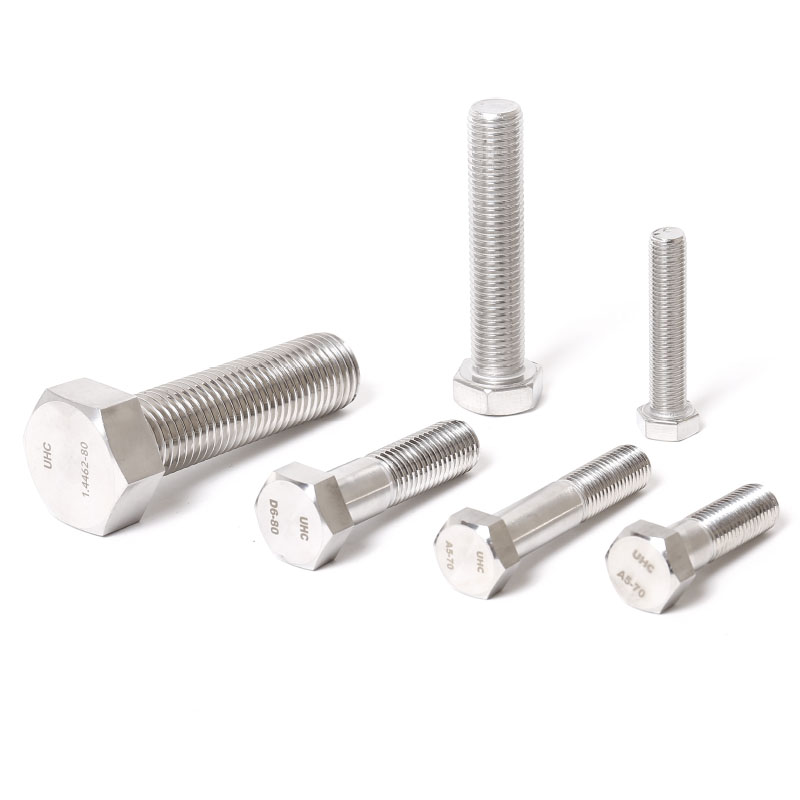
| Bolts | Hex bolt, flange bolt, T-bolt, U-bolt, heavy bolt, fit bolt, square bolt, anchor bolt, foundation bolt | M2 - M160; length 6 - 300 mm | A2-70, A2-80, A4-70, A4-80, D6-80, D6-100; thread tolerance 6g/2A |
| Nuts | Hex nut, coupling nut, weld nut, flange nut, nylon nut, heavy nut, jam nut, castle nut, slot nut, self-locking nut | M2 - M64 | A2-70, A2-80, A4-70, A4-80, D6-80, D6-100; thread tolerance 6H/2B/3B |
| Screws | Tapping, marine, self-drilling, set, chipboard, socket cap, drywall | M2 - M8; length 6 - 100 mm | A2-70, A2-50, A4-70, A4-50 |
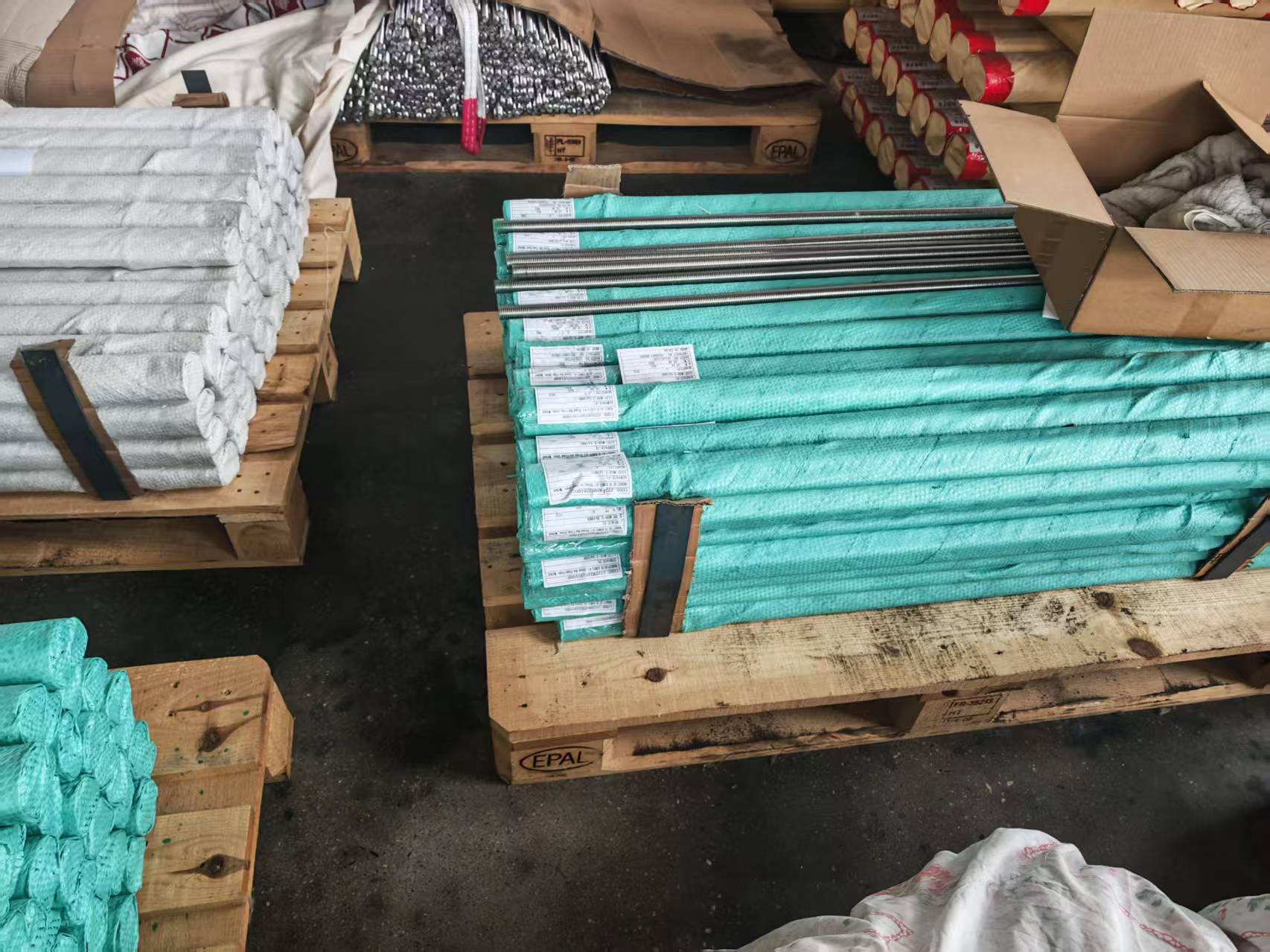
| Threaded rods and studs | Full thread rods, double end studs | M5 - M160; length up to 5000 mm | A2-50, A2-70, A4-50, A4-70, D6-80, D6-70; thread tolerance 6g/2A |
| Washers | Flat washer, heavy washer, toothed lock washer, serrated washer, wave washer | M2.5 - M45 | Materials include 304/316 stainless steel, duplex steel, nickel-based high-temperature alloys |
| Rivets and rivet nuts | Open type, close end type | M3 - M6.4 | Materials include 304/316 stainless steel, aluminum alloy 6061/7075 |
| Hardware | Solar hardware, home furniture hardware, hinges, corner brackets, connectors | Custom | 304/316 stainless steel |
Common surface treatments include natural finish, passivation, Dacromet coating and adhesive pre-coating. These treatments add another layer of corrosion protection or assembly performance, depending on the application.
A Manufacturing Model That Matches the Requirement
Jiaxing Union Hardware Co., Ltd. (UHC) is an example of an integrated manufacturer that supplies high-performance fasteners and hardware. Established in 2017, the company operates five production bases and one import and export company, covering an area of 80,000 square meters and employing around 200 people across the five factories. Its R&D team includes 25 engineers. Annual output is 25,000 tons of stainless and special materials.
UHC's product range covers stainless steel fasteners in 304, 316, A2-70 and A4-80 grades, high-temperature alloy fasteners in Inconel and Hastelloy, titanium alloy and aluminum alloy fasteners, solar PV mounting components, and custom industrial hardware parts under OEM/ODM arrangements.
For industries with high safety and quality requirements, the relevant point is not just the product list but the control system. UHC holds ISO 9001, ISO 14001, ISO 45001 and PED certifications, and operates an independent laboratory for dimensional and mechanical performance testing. An ERP system tracks production, sales and management processes, making raw material procurement and finished product delivery traceable. Export business accounts for 80% of sales, with major markets in the European Union, Korea and Japan.
The hardware production base specifically serves high-end industries such as solar energy, wind energy, nuclear energy, railways and aerospace. This is the kind of capability signal that matters to a buyer evaluating whether a supplier can support critical applications.
Applications and Working Conditions
High-performance fasteners are specified across a wide range of industries: petrochemical, power generation, aerospace, automotive, marine and offshore, construction and infrastructure, industrial machinery, medical and electronics, telecommunications, rail transit, and home appliances and consumer goods.
Their common function is to realize mechanical connection, fastening, locking, anti-loosening and fixed assembly between components. They operate as static fixed assemblies under continuous mechanical load. Working conditions include normal temperature, high temperature, seawater corrosion, acid and alkali corrosive environments, high vibration and high tensile load.
- Marine and offshore platforms require anti-corrosion fasteners, often 316L, duplex or super duplex stainless steel.
- Power generation equipment, including nuclear and wind energy systems, requires high-strength connection fasteners with documented material grade and traceability.
- Aerospace applications require high-temperature alloy and titanium fasteners with high fatigue resistance and strict quality management.
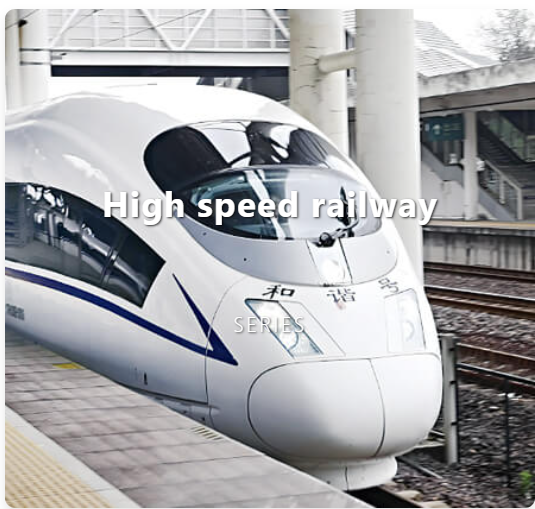
- Railway systems need structural fasteners that can withstand continuous vibration and changing weather conditions.
Market Trends Supporting Specialization
Several market signals point to rising demand for specialized fasteners. Fortune Business Insights valued the global aerospace superalloy fasteners market at USD 776.7 million in 2024. Fact.MR estimates that the titanium aerospace fasteners market will grow to USD 520 million in 2026, with a CAGR of 5.1%. The Insight Partners projects the wind power fastener market to reach USD 14.68 billion in 2025.
Infrastructure projections reinforce this trend. Global wind turbine capacity is projected to grow from 1,100 GW in 2025 to over 2,400 GW by 2030, according to the Global Wind Energy Council. China's new shipbuilding orders rose by 59.0% year-on-year in Q1 2024, indicating continuing demand for marine-grade fasteners.
These trends matter for buyers because they affect lead times, material availability and supplier attention. A manufacturer with an export-oriented, standards-driven business model is more likely to maintain the documentation and process controls that regulated industries require.
High-Performance Fasteners vs. Traditional Fastening Approaches
Traditional fastening approaches often rely on carbon steel or standard stainless steel. For dry indoor applications, they can be sufficient. But when a fastener must operate in salt water, acidic environments, high temperatures or high vibration, ordinary grades can fail early. The table below summarizes the main differences.
| Criteria | Traditional carbon steel / standard 304 | High-performance stainless / alloy fasteners |
|---|---|---|
| Corrosion resistance | Limited; 304 can rust in salt spray or marine environments | 316, duplex, super duplex and nickel alloys provide higher resistance |
| Temperature tolerance | Low for many carbon steels | Nickel-based alloys and certain stainless grades handle high temperatures |
| Strength and fatigue | Suitable for basic loads | Higher tensile and anti-fatigue capabilities |
| Standards and traceability | Often limited | ISO, DIN, ASTM, ASME, ANSI, JIS; ERP traceability can support documentation |
| Cost and lead time | Lower cost, more availability | Higher material cost; longer lead times for special alloys |
| Typical use | Indoor equipment, furniture, light structures | Energy, marine, aerospace, railway, chemical, heavy machinery |
A high-performance fastener is not automatically the right choice. Over-specifying can increase cost without adding value. For a sheltered, low-corrosion, low-load application, a standard 304 stainless fastener is often adequate. Buyers should specify high-performance materials only when the working conditions demand them.
Another boundary is supply-chain complexity. Duplex, super duplex and nickel-based alloys carry higher material costs and may require longer lead times. Documentation requirements for PED, AS9100 or EN 14399 applications can also make order management more demanding. A serious supplier should help buyers match the grade to the actual condition, not simply upsell the most expensive material.
What to Look for When Evaluating a High-Performance Fastener Supplier
At the awareness and research stage, buyers can use a simple checklist:
- Does the supplier publish material grades and product ranges clearly?
- Does the supplier have in-house laboratory testing, not only external certificates?
- Which international standards does the manufacturing process follow?
- Is there ERP-based traceability from raw material to finished product?
- Are pre-delivery inspection and OEM/ODM support available?
- Does the supplier have experience in export markets with comparable quality requirements?
Jiaxing Union Hardware Co., Ltd. illustrates these points in practice. But the same framework can be applied to any shortlisted supplier.
Future Outlook
The direction is toward more specialized materials, stricter documentation and tighter connection between fastener supply and end-use performance. As wind capacity and marine construction continue to grow, demand for corrosion-resistant and high-strength fasteners will follow. Digital traceability is becoming an expected feature, not a differentiator, in regulated industries.
Buyers who develop a clear supplier evaluation framework now will be better positioned as high-performance fasteners become an even larger part of industrial supply chains.
Manufacturer profile available for reference: Download UHC company brochure.
FAQ
How to select the right fastener material for different working conditions?
For general indoor environments, 304/316 stainless steel is preferred. For high-corrosion, offshore or marine environments, 316L, duplex steel or high-temperature alloy materials are recommended. For high-strength mechanical load scenarios, alloy steel fasteners should be adopted. Suppliers typically support customized material selection based on project working conditions.