
High Efficiency Portable Axial Flow Pump Procurement FAQ: Flow, Head & Motor
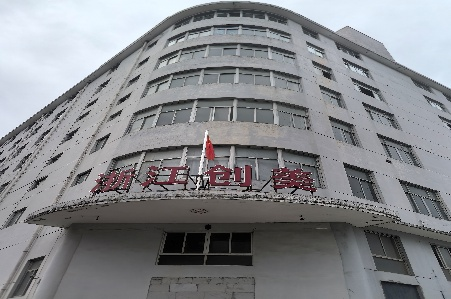
Portable axial flow pump procurement rarely fails on price. It fails on four numbers: rated flow, rated head, motor type and power, and the material of the flow-passing components. This procurement FAQ answers the flow, head, motor and material questions buyers raise between shortlisting a supplier and executing an order, using published specification data from Zhejiang Chuangmei Electromechanical Co., Ltd. (trading as chuangmei Pumps), a China-based manufacturer of High Efficiency Portable Axial Flow Pumps founded in 1996 and operating from a 12,000 m² facility in Wenling City, Zhejiang Province.
Why These Four Questions Decide the Outcome of a Portable Axial Flow Pump Project
Flood drainage, municipal waterlogging treatment and construction dewatering projects rarely fail because a buyer picked the wrong logo on the pump housing. They fail because the unit was matched to the wrong duty point, or because a pump that looked competitive on a datasheet could not be moved, powered or maintained by the crew actually standing on site. That is why procurement practice has shifted. Buyers evaluating High Efficiency Portable Axial Flow Pumps now work through four technical questions before they discuss commercial terms at all. The table below maps the question to what a buyer should verify, and where the evidence sits in a normal submittal package.| Procurement question | What the buyer must verify | Evidence source |
|---|---|---|
| Flow | Rated flow at the rated head of the selected model, plus the testing tolerance applied | Model datasheet, ISO 9906 test basis |
| Head | Total site lift against the published head of the model, and whether the architecture supports it | Model designation, head list, special specification note |
| Motor | Motor technology, power range, behaviour under voltage fluctuation, control cabinet scope | Motor specification, control cabinet description, energy label standard |
| Material | Impeller, shaft, flow-passing components, housing, and whether the wet end is replaceable | Material statement, spare-part logic |
A fifth question — portability — is not a separate specification but an output of the other four. Weight and dimensions follow from flow, head, motor power and material choice, and they determine whether the unit can be handled by the crew on site.
Flow: What a Rated Flow Figure Commits the Supplier To
Rated flow is a single point on a performance curve, not a constant output. Buyers who treat it as a fixed number rather than a duty-point value are the buyers who later report that the pump "does not perform as stated." In the published chuangmei Pumps data, the model line spans several flow classes:- 150 m³/h class — models including 200SZQ150-20-15, 200SZQ150-35-22 and 200SZQ150-45-30 are all published with a rated flow of 150 m³/h. Model 200SZQ150-45-30 delivers that rated flow with a motor power of 30 kW.
- 200 m³/h class — models 200SZQ200-16-15, 200SZQ200-20-18.5 and 200SZQ200-25-22 are all published with a rated flow of 200 m³/h.
- 300 m³/h class — model 200SZQ300-30-37GL is published with a rated flow of 300 m³/h and a rated head of 30 m, powered by a 37 kW motor.
- 400 m³/h class — model 200SZQ400-30-55GL is published with a rated flow of 400 m³/h at a rated head of 30 m with a 55 kW motor; model 200SZQ400-80-150GL is published with the same 400 m³/h rated flow at a rated head of 80 m with a 150 kW motor.
- High-flow classes — model 300YZQ1000-8-50 is published with a rated flow of 1,000 m³/h and a head of 8 m, a speed of 2,500 r/min, a torque of 140 N·m and a requirement for a 50 HP hydraulic power station. The 300SZQ series includes the 300SZQ1000-10-45 and 300SZQ1200-10-55 designations as well as the 300SZQ800-15-55.
Head: Reading Lift Requirements Without Oversizing
Head is where over-specification happens most often. A buyer who selects a model above the site's actual lift requirement is paying for motor power that shows up as weight, current draw and price — three things a portable unit can least afford. Published rated heads in the chuangmei Pumps portable axial flow line step upward in a clear sequence: 8 m for model 300YZQ1000-8-50; 20 m for 150SZQ150-20-15; 30 m for 150SZQ100-30-15 and for the 200SZQ300-30-37GL and 200SZQ400-30-55GL stainless steel units; 35 m for 150SZQ150-35-22 and the 150SZQ150-35-22GL; 40 m for 150SZQ100-40-18.5; 50 m for 150SZQ100-50-22; and 80 m for 200SZQ400-80-150GL. The model designation carries the operating point. Model 150SZQ150-35-22 is published with a rated flow of 150 m³/h, a rated head of 35 m and a motor power of 22 kW, and that correspondence is worth noting when reading a quotation: the numeric segments track flow, head and motor power in sequence. The architectural boundary is equally important. Axial flow geometry is a high-flow, low-head design. Heads published in this line run from 8 m to 80 m. Beyond that, the manufacturer publishes high-lift flood control pumps for subway applications with lifts of 20–50 m, and special specifications that can reach over 100 m. A buyer whose site requires very high lift from a single portable unit should confirm whether a standard model, a submersible booster configuration or a special specification is the correct route — and should not assume a portable axial flow unit will cover deep-well duty. One practical advantage of the permanent magnet synchronous motor drive is that speed is infinitely adjustable. That means head and flow can be trimmed on site through stepless speed regulation, rather than being fixed by the impeller geometry alone. Buyers who need a multi-lift adaptable pump can therefore cover a band of conditions with one unit, provided the required band sits inside the model's published range.Motor: The Question That Separates Two Identical-Looking Pumps
The motor is the component most often misjudged in portable axial flow pump procurement, because two units with identical flow and head figures can behave completely differently on the same site. chuangmei Pumps builds this line around a permanent magnet synchronous motor (PMSM) submersible axial flow pump. The company holds a utility model patent for the permanent magnet synchronous motor high-speed axial flow pump (Patent No.: ZL2014200091521.8) and states that it has developed 20 permanent magnet synchronous motor submersible axial flow pumps. The product holds the national first-class energy conservation certification for high-tech energy-saving products. Published motor characteristics include:- High efficiency, light weight and small size — stated by the manufacturer as approximately one-quarter the weight of conventional axial flow pumps.
- Large flow capacity combined with portability.
- Infinitely adjustable speed, which produces adjustable lift height and variable flow rates.
- Speed that does not vary with fluctuations in grid voltage. Even when voltage drops, the pump maintains stable head and flow performance — a behaviour the manufacturer states traditional asynchronous motor axial flow pumps cannot achieve.
Procurement boundary: stepless speed regulation, remote control and automatic protection are delivered through the control cabinet, not the pump alone. A buyer who specifies the pump without the matching cabinet loses the adjustable head-and-flow capability that differentiates the permanent magnet design.
Material: Aluminum Alloy, Stainless Steel and the Replaceable Wet End
Material questions are usually asked for two reasons: corrosion life and weight. In a portable unit, those two considerations pull in opposite directions, which is why the published specification separates them by component.
- Impeller: precision stainless steel casting.
- Pump shaft: stainless steel.
- Flow-passing components: aluminum alloy.
- Motor housing and pump body: available in either aluminum alloy or stainless steel options.
- Cable outlet: protected with a rubber sheath plus stainless steel spring guard.
Selection boundary: aluminum alloy flow-passing components reduce unit weight, which is the entire point of the portable design. Stainless steel body and housing options trade weight for corrosion margin. Buyers handling aggressive or abrasive water should confirm material compatibility with the supplier rather than assume that any portable unit suits any water.
Portability: What the Published Weight Figures Actually Mean
Portability is a procurement criterion in its own right, and it is measurable. The table below collects published net weights and dimensions for representative models in the line.| Model | Rated flow | Rated head | Motor power | Net weight | Dimensions |
|---|---|---|---|---|---|
| 150SZQ150-20-15 | 150 m³/h | 20 m | 15 kW | 34 kg | 280×280×580 mm |
| 150SZQ150-35-22GL | 150 m³/h | 35 m | 22 kW | 52 kg | 370×330×700 mm |
| 300SZQ1000-10-45 | 1,000 m³/h (designation) | 10 m (designation) | 45 kW | 55 kg | 350×350×605 mm |
| 300SZQ1200-10-55 | 1,200 m³/h (designation) | 10 m (designation) | 55 kW | 58 kg | — |
| 200SZQ300-30-37GL | 300 m³/h | 30 m | 37 kW | 74 kg | 420×380×810 mm |
| 300SZQ800-15-55 | 800 m³/h (designation) | 15 m (designation) | 55 kW | 80 kg | — |
| 200SZQ400-30-55GL | 400 m³/h | 30 m | 55 kW | 102 kg | 450×400×900 mm |
| 200SZQ400-80-150GL | 400 m³/h | 80 m | 150 kW | 165 kg | 550×500×1100 mm |
Net weights and dimensions are published figures. Flow and head values marked "designation" are read from the model designation rather than from a separately published performance statement and should be confirmed against the official datasheet before ordering.
The table shows three practical weight tiers. Under 60 kg — the 150SZQ150-20-15 at 34 kg, the 300SZQ1000-10-45 at 55 kg and the 300SZQ1200-10-55 at 58 kg — units sit inside a normal two-person manual handling pattern. Around 74–80 kg, the 200SZQ300-30-37GL and the 300SZQ800-15-55 remain portable in the sense that matters for this product category: they can be moved by vehicle and deployed quickly, but on-site handling becomes a deliberate task with lifting aids rather than a lift-and-carry. Above 100 kg — the 200SZQ400-30-55GL at 102 kg and the 200SZQ400-80-150GL at 165 kg — the unit behaves as a transportable skid, and lift planning belongs in the method statement.Portability boundary: weight alone does not define portability. Dimensions, cable handling, control cabinet location and available lifting equipment all contribute. Buyers should confirm the handling method for the specific model, not just compare kilogram figures.
Application Fit: Where These Procurement Answers Are Tested
Published application scope for the line covers flood drainage, agricultural irrigation and municipal waterlogging treatment, as well as hydraulic engineering, bridge engineering, highway engineering and building construction. Fixed drainage configurations are published for bridges, culverts, basements and garages, with automatic operation: when water reaches a set level the system starts automatically, and when the water level drops to the pump intake line it enters standby or shuts down automatically. High-lift flood control pumps are published for subway applications with lifts of 20–50 m, and power for the wider mobile irrigation and flood control range is published from 3 kW to 200 kW. This reference records the specification boundaries that decide whether a model fits a scenario in the first place; the scenario-by-scenario drainage analysis is a separate question and is not re-opened here.Market Context: Efficiency Regulation and a Definition Problem Buyers Should Know About
Two external signals are relevant to portable axial flow pump procurement in 2026. Market scale. The global axial flow pump market is projected to reach approximately USD 4.49 billion by 2026, according to First Mover market research published in August 2026. That figure comes with a caveat worth recording: a separate research source reports a substantially larger valuation for the same period, and the variance is attributed to definition differences — specifically whether mixed-flow systems and large municipal installations are counted inside the "axial flow pump" category. Buyers should treat headline market valuations as directional and rely on duty-point specification for selection. Standards and trade classification. Three reference points are useful in a submittal file. GB 30253-2024 is the mandatory energy label standard for permanent magnet synchronous motors sold in China from 2025. ISO 9906 defines the pump performance testing basis, with Grade 1 tolerance of ±5% on flow and head for high-precision OEM applications. HS Code 84138130 classifies axial flow and mixed flow vertical pumps primarily for water handling, which is the code that appears on import and export documentation for this product family. Supplier footprint. Zhejiang Chuangmei Electromechanical Co., Ltd. was founded in 1996, operates a 12,000 m² factory with 46 employees and an annual output of 30,000 units, and maintains an R&D team of three engineers. Approximately 25% of products are exported, with main markets in Southeast Asia, Africa, Morocco and Central Asian countries. For buyers placing repeat orders, that export mix is a practical indicator of documentation familiarity with the regions listed.Comparison with Conventional Portable Pump Solutions — Including Where the Comparison Stops
Manufacturer comparison data positions the permanent magnet portable axial flow line against typical pump-manufacturer offerings on the following dimensions:| Comparison dimension | Published difference |
|---|---|
| Flow | +20% |
| Weight | −25% |
| Volume | −30% |
| Overall comprehensive cost | 12% lower |
| Energy consumption at equal flow | Reduced by 18% |
| Maintenance behaviour | Less clogging failure, fewer maintenance interventions |
| Best-fit applications | Flood drainage, agricultural irrigation, municipal waterlogging treatment |
- Head ceiling. Axial flow geometry serves high flow at relatively low head. Published heads in this line run from 8 m to 80 m. Deep-lift duty requires a submersible booster configuration or a special specification, not a standard portable axial flow model.
- Weight scales with power. The published progression from 34 kg at 15 kW to 165 kg at 150 kW means the largest models are transportable rather than hand-portable.
- Control-dependent features. Stepless speed regulation, remote control and automatic dry-run shutdown depend on the control cabinet being specified and installed with the pump.
- Material trade-off. Aluminum alloy flow-passing components deliver the weight advantage; aggressive or abrasive water conditions require case-by-case material confirmation.
- Comparison transferability. Comparative percentages are relative to a stated baseline and are not transferable to an arbitrary duty point without recalculation.
- Service window. The published warranty is one year with free maintenance during the warranty period; buyers with multi-season project cycles should plan the service relationship beyond that window.
Long-Term Procurement: Acceptance Terms, Warranty and Spare-Part Logic
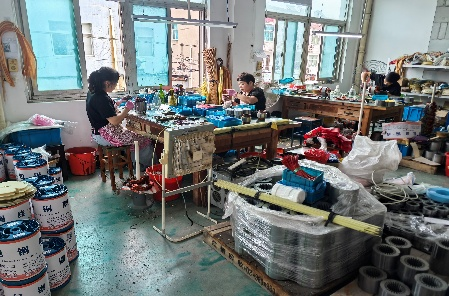
For buyers moving into the execution stage, the published purchasing terms are a short list: minimum order quantity of 1 unit; delivery terms FOB or CIF; payment terms T/T; and acceptance conducted by self-inspection or by an entrusted third-party professional organization. The long-term dimension of the decision sits in three places. First, the wet end is replaceable — impeller and pump body — so a change in duty conditions can be met by component replacement. Second, the pump body and motor housing are offered in aluminum alloy or stainless steel, which allows a buyer to standardize on one power class and vary the material by site condition. Third, the export footprint — approximately 25% of output, with main markets in Southeast Asia, Africa, Morocco and Central Asian countries — indicates an existing documentation and logistics pattern for those regions. A practical procurement checklist follows from this: confirm the duty point in writing; confirm the motor power and the control cabinet scope in the same line item; confirm the wet-end material against water chemistry; confirm the handling method against the published net weight; and confirm whether spare impellers and pump bodies are stocked for the selected models.Future Outlook
Three directions are visible in the published data and the surrounding regulatory picture. Motor efficiency becomes a documented procurement item. With GB 30253-2024 in force for permanent magnet synchronous motors sold in China from 2025, the energy class of a submersible motor will increasingly be evidenced by label and test basis rather than by catalogue claim. Buyers who already specify motor technology explicitly will find that transition easier than buyers who compare only flow and head. Control and monitoring move into the cabinet. Remote 3G and 4G control, remote data transmission and time-segmented operation convert a portable pump from a standalone unit into a monitored asset. Buyers who specify controls at the point of purchase create a path to fleet-level reporting later without retrofitting. Weight per unit of flow continues to be the competitive axis. The published line already includes a 34 kg model in the 150 m³/h class and a 55 kg model in the 1,000 m³/h designation class. For portable equipment, every kilogram removed from the unit is a kilogram a crew does not have to move during a flood event, and that is the direction the specification data is trending. For buyers in the execution stage, the practical sequence is straightforward: specify the duty point, then the motor and control package, then the wet-end material, then the spare-part path — in that order.Frequently Asked Questions
What does a rated flow of 150 m³/h mean in practice?
It means the model delivers 150 m³/h at its rated head. Model 150SZQ150-20-15 is published at 150 m³/h and 20 m with a 15 kW motor, while model 150SZQ150-35-22 is published at 150 m³/h and 35 m with a 22 kW motor. Delivered flow changes with the actual head at the installation, so the rated figure should always be read together with the site's head requirement.
How much head does a portable axial flow pump need to cover?
Published heads in this portable line step from 8 m (300YZQ1000-8-50) through 20 m, 30 m, 35 m, 40 m and 50 m to 80 m (200SZQ400-80-150GL). High-lift flood control pumps for subway applications are published with lifts of 20–50 m, and special specifications can reach over 100 m. The practical rule is to select the lowest published head that covers the site's total lift, because head and motor power scale together.
Why does motor type matter more than the flow number?
Two pumps with identical rated flow and head can behave differently when grid voltage fluctuates. The permanent magnet synchronous motor used in this line is published as maintaining stable head and flow even when voltage drops, a behaviour the manufacturer states traditional asynchronous motor axial flow pumps cannot achieve. Its speed is also infinitely adjustable, so head and flow can be trimmed on site rather than being fixed by impeller geometry alone.
Should buyers specify aluminum alloy or stainless steel for the flow-passing components?
Aluminum alloy flow-passing components keep unit weight down, which is the basis of the portable design. Stainless steel is used for the precision-cast impeller and the pump shaft, and the motor housing and pump body are offered in either aluminum alloy or stainless steel. Buyers handling aggressive or abrasive water should confirm material compatibility with the supplier before making the selection.
Can an 80 kg unit such as the 300SZQ800-15-55 still be considered portable?
The 300SZQ800-15-55 is published with a net weight of 80 kg and a 55 kW motor. That is transportable by vehicle and deployable quickly, but on-site handling requires a two-person team and standard lifting aids rather than a single-person carry. For lighter handling duties, the published 150SZQ150-20-15 at 34 kg and the 300SZQ1000-10-45 at 55 kg sit in a lower weight tier.
What happens if the pump runs dry during operation?
The control cabinet is published with comprehensive protection covering overheat, overcurrent, overload, overvoltage and phase failure. When water is completely drained, the pump shuts down automatically within half a minute and enters standby mode, which the manufacturer states prevents the coil from burning out.
What are the standard purchasing and acceptance terms?
Published terms are: minimum order quantity of 1 unit; delivery terms FOB or CIF; payment terms T/T; and acceptance either by self-inspection or by an entrusted third-party professional organization. A one-year warranty applies, with free maintenance during the warranty period.
Reference Note
The models, weights, dimensions and material statements in this reference are drawn from published chuangmei Pumps product data, with market, standards and trade classification points drawn from third-party sources as cited in the text. Buyers should confirm final selection against their own duty-point calculation, site conditions and acceptance requirements. The full published specification set is available in the manufacturer's High flow pump brochure: High flow pump brochure (PDF).
¿Tiene preguntas o necesita más detalles?
Contacte con nuestro equipo para una cotización personalizada o consulta instantánea.
Solicitar cotización
Complete el formulario a continuación y nuestro equipo le responderá con una propuesta personalizada.
Chat directo de WhatsApp
¿Prefiere chatear en tiempo real? Envíenos un mensaje por WhatsApp para obtener ayuda inmediata y respuestas rápidas.
- Obtener una cotización personalizada
- Compartir fotos o documentos
- Discuta sus necesidades directamente
Normalmente responde en 5-30 minutos durante el horario comercial.