
Hidden Costs of Two Glass Insulator Procurement Paths
Suspension glass insulator sourcing in grid projects generally resolves into one of two procurement paths. The first sets the decision around a per-unit price. The second attaches a documentation package to the same insulator — batch records, type-test reports, production evidence and post-delivery accountability — and accepts a higher quoted figure for it. The two paths frequently look equivalent on a purchase order. They diverge later, in maintenance budgets, acceptance disputes and audit findings.
What separates them is not the glass or the metal fittings. It is the volume of evidence that travels with the goods, and who carries the consequences when that evidence turns out to be thin.
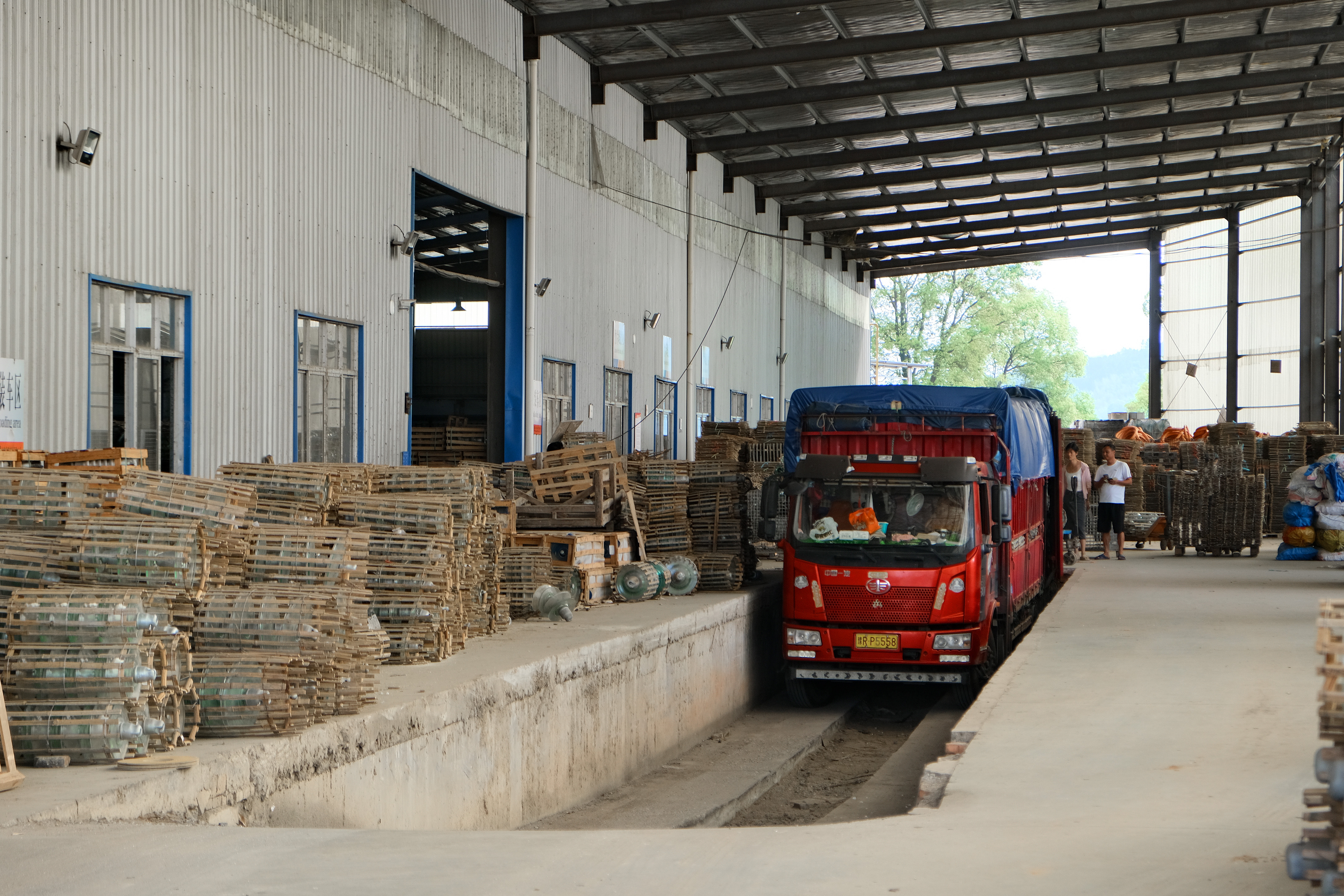
Bulk handling and loading area at a glass insulator facility — the point where a procurement path either carries documentation or does not.
What a Unit Price Cannot Tell You
The U70B glass insulator — rated at 70kN, with IEC standard dimensions of 255mm diameter and 146mm height — is a standardised component. Publicly documented dimensions and load ratings mean several suppliers can quote the same figures, and in a tender the quotes will appear interchangeable. That interchangeability is real, and it is exactly why price becomes the most visible variable and the easiest one to decide on.
A quotation does not state whether the mechanical failing load of the specific batch was tested; whether the record of that test is retained and available for review; which production line and shift produced the discs; or whether the creepage distance of the quoted profile matches the one specified in the project's environmental calculation. None of these omissions costs anything on a single delivery. They accumulate over a project's service life.
IEC 60305:2021 defines the mechanical and electrical characteristics of suspension glass insulator units for AC systems, so the rating framework itself is standardised. Whether a given consignment actually conforms is a question of documentation, not of the standard's existence.
Two Procurement Paths, Defined
Path A — low-cost bulk sourcing — organises the purchase around unit price. Its practical forms include comparing quotes across several suppliers, awarding the lowest acceptable bid, or continuing with a supplier because previous transactions went smoothly. None of these is irrational. What they share is that written evidence of supplier capability is not the centre of the transaction; price is.
Path B — a documented supplier program — keeps the same product category but structures the purchase around evidence. The commercial package includes the production base, capacity, engineering staff, per-batch test records and traceability. The buyer pays more per unit and, in return, assumes less of the verification burden.
The distinction matters most not at the invoice but at acceptance and during operation, when a defect has to be attributed to a batch, a line or a date.
Path A: Where the Savings Actually Land
Low-cost bulk sourcing produces a genuinely lower initial outlay, and for many procurement teams working under budget pressure that is the deciding argument. The question worth asking is where the difference is recovered later.
Three places are common. First, acceptance: when batch records are absent, verification shifts to the buyer, either as incoming inspection or as a later dispute. Second, attribution: without traceability, a field failure cannot be tied confidently to a production period, so replacement decisions default to replacing more than necessary. Third, the relationship edge — sourcing that rests on familiarity rather than on documented capability has no fallback when the familiar party underperforms, because there is no record against which to measure the underperformance.
None of these appear in a price comparison, which is precisely why they are described as hidden.
Path B: What a Documented Program Actually Includes
A documented program can be described concretely. Jiangxi QOCI Electric Co., Ltd., established in December 2002 and based in the Luxi Industrial Park in Pingxiang, Jiangxi Province, is a national high-tech enterprise and a participating unit of the Insulator Standard Committee. The company produces glass and porcelain insulators through automated and intelligent manufacturing, operates a 35,373 m² facility with an annual output of 9,000,000 units and 38 engineers, and exports about 20% of its output to markets including the USA, Asia, the EU, Africa and South America. Its products are used in grid construction projects of State Grid Corporation of China and China Southern Power Grid, and in grids across more than 40 countries and regions, including Europe and the Middle East.
For a buyer, the relevant part of that profile is not scale as a marketing claim. It is that scale implies records. A facility producing at that volume against grid-utility customers is structurally required to hold batch-level test and traceability data, because its own customers' acceptance processes depend on it. The premium in Path B is paid for the supplier's willingness to carry that documentation obligation, not for better glass.
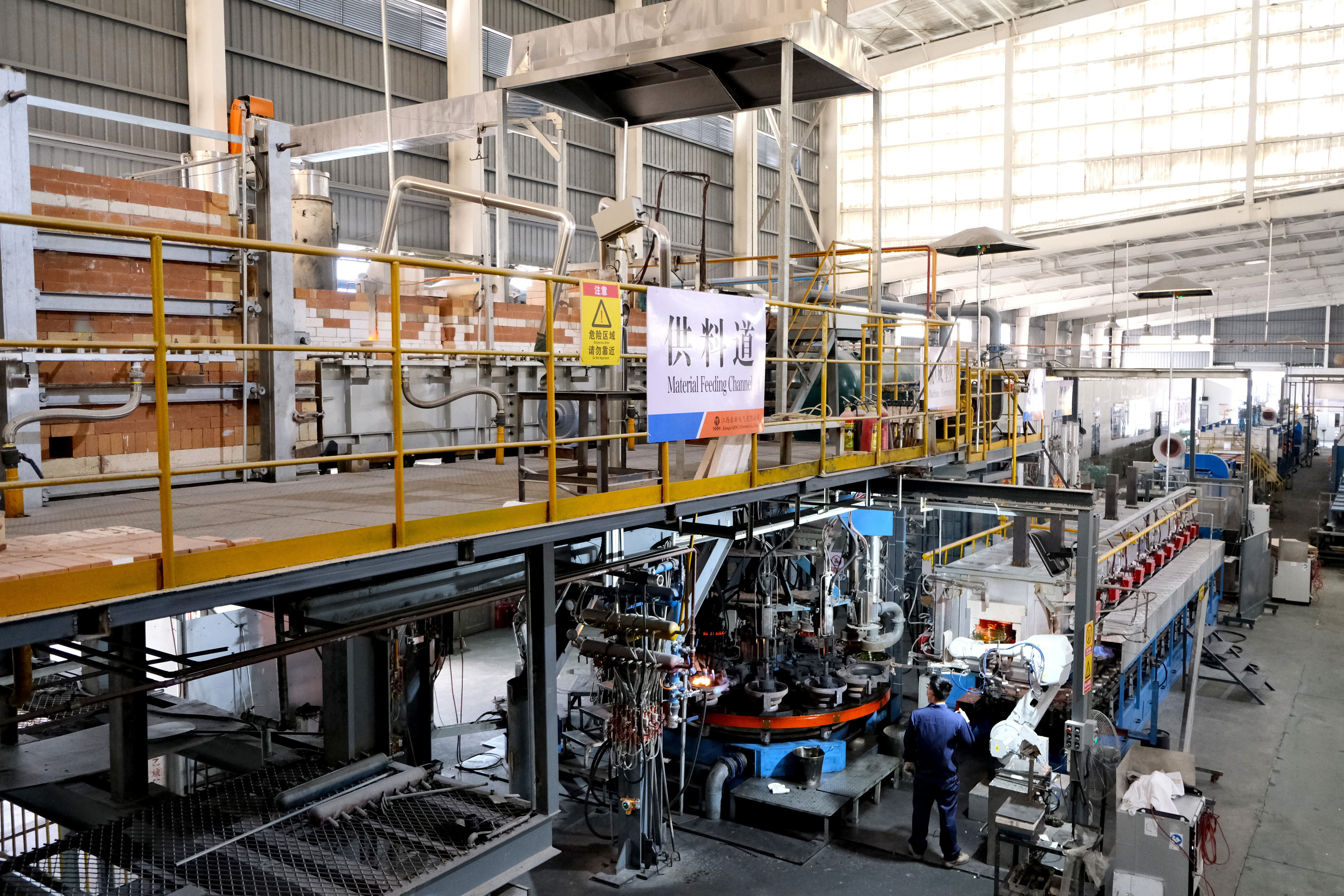
Process control on a glass insulator production line — the operations that a documented supplier program is able to evidence per batch.
The Technical Case for Evidence: Toughened Glass and Visual Inspection
Suspension glass insulators differ from porcelain primarily through the use of toughened glass, which brings higher mechanical strength, a zero-value self-breaking feature and better anti-pollution performance. Compressive strength is three to four times higher than porcelain. The comparative figures are specific: an 80% lower mechanical failure rate, 100% higher inspection efficiency because inspection is visual and requires no live-line testing, and 70% less maintenance workload than porcelain insulators. Against traditional porcelain, initial cost is about 5% higher while total cost of ownership across the lifecycle is about 25% lower.
Those figures describe a technology that converts condition monitoring from a testing problem into an observation problem. That is a meaningful operational shift, and it depends on one precondition that is easy to overlook. Visual inspection is efficient only when the inspection team knows what it is looking at. If the discs on a line section cannot be traced to a manufacturer and a batch, a visible shatter triggers a re-identification exercise before any replacement decision can be made — and that exercise removes much of the efficiency the zero-value self-breaking characteristic was supposed to deliver.
Profile choice raises the same issue at the specification stage. Within one load rating, creepage distance and shed geometry vary: the anti-pollution range from U70BP through U420BP carries increased creepage distances for saline and industrial environments, the two-wing range from U70BD through U300BD changes shed geometry, and the aerodynamic range from U70BA through U300BA is shaped for specific wind and contamination conditions. Choosing between U100B and U100BP is an engineering decision tied to the line environment. In a price-only comparison it collapses into a line-item difference of very little money.
Side-by-Side: The Two Paths Compared
| Procurement dimension | Low-cost bulk path | Documented supplier program |
|---|---|---|
| Primary decision input | Per-unit quoted price | Price plus a defined evidence package |
| Model identification | Model stated on quote or packing list | Model plus production batch and date |
| Mechanical rating verification | Supplier assertion, record often unavailable | Per-batch test record retained |
| Creepage and shed confirmation | Contract drawing only | Drawing plus production record |
| Traceability | Limited across mixed consignments | Consignment linked to production period |
| Acceptance workload | Carried by the buyer | Partly carried by the supplier |
| Handling a failed batch | Negotiated informally | Contract terms plus traceable evidence |
| Initial expenditure | Lower | Higher |
| Where lifecycle risk sits | Buyer | Shared under contract |
| Best fit | Known restocking, single-unit replacement | New line sections, multi-batch supply, audit requirements |
When Low-Cost Bulk Sourcing Is the Right Call
The low-cost path is not a mistake in every case, and treating it as one produces its own distortions. It is defensible under specific conditions:
- Restocking a known item where the original qualification was completed and the buyer still holds the type-test record.
- Single-unit replacement where the failed disc came from a traceable original consignment and the substitute matches that identification.
- Purchases where the buyer retains samples and can run incoming verification independently.
The boundary is the operating environment. For UHV and EHV transmission lines, heavy pollution areas such as coastal, desert and industrial zones, and high-altitude regions, a batch mismatch is not a small-unit-cost problem. A single unplanned outage or a re-stringing campaign costs several orders of magnitude more than the per-unit saving that produced it. In those conditions, the low-cost path transfers risk to the party least able to absorb it.
When the Documented Path Earns Its Premium
The documented path earns its cost where the evidence is actually used:
- New line sections where creepage distance and shed profile were calculated for a specific environment and must be confirmed against delivered goods.
- Projects requiring qualification files for a regulator, a financing party or a utility's approved-vendor process.
- Multi-batch supply, where mixing across production periods is the main traceability risk.
- Lines where the outage window is short and the cost of a failed acceptance is high.
One limitation deserves stating plainly: a documentation package has value only if someone reads it. A buyer who pays the premium and files the certificates without checking them against the delivered batch has purchased the appearance of the documented path rather than its substance, and carries the same exposure as Path A at a higher price.
Market Context: Price Pressure Is Raising the Value of Evidence
The global glass insulators market was estimated at USD 1.14 billion in 2024 and is projected to reach USD 1.97 billion by 2035, growing at a CAGR of 5.1% over the 2025–2035 forecast period, according to Market Research Future. Asia Pacific held a revenue share exceeding 52% in 2024, driven by grid expansion in China and India, per Grand View Research. China concentrated 31.4% of total global exports of electrical insulators in 2024, totalling USD 898 million, based on OEC data — and China's exports to Saudi Arabia grew by 219% between 2023 and 2024, the fastest-growing destination in that dataset.
Market-size estimates for this category diverge by source: Insightace Analytic places the 2024 figure at USD 351.4 million against the USD 1.14 billion estimate above, a gap that reflects differing treatment of low-voltage and building-related insulated glass. The directional reading holds either way — capacity is expanding and the supplier pool available to a utility buyer is widening.
That has a counterintuitive consequence. More capacity and more competitive quoting reduce the usefulness of the price signal, because price differences narrow while documentation quality does not converge at the same rate. When the product itself is commoditised, differentiation migrates to what a supplier can prove and how quickly the proof can be produced. For procurement teams, the practical response is to make the evidence package a screening criterion rather than a post-award request.
Outlook
Both paths will persist. A market growing at a mid-single-digit CAGR with concentrated Asia Pacific production will keep producing low-cost offers, and some of those offers will be adequate for the applications they serve. What is likely to change is the default. As grid projects move into coastal, desert and high-altitude environments where glass insulators are the technically preferred choice, documentation is shifting from a differentiator into an entry condition — the item that determines whether a supplier is considered at all, rather than the item that justifies a premium after consideration.
For buyers at the decision stage, the operative question is not which path is cheaper. It is which path matches the consequence of being wrong on a specific line, and whether the supplier on the other side of the purchase order can evidence its claims when asked.
FAQ
Why is the unit price of a suspension glass insulator an incomplete basis for comparison?
A unit price states what the glass disc and its fittings cost. It does not state whether the batch's mechanical failing load was tested, whether the test record is retained, or whether the delivered creepage distance matches the project specification. Under IEC 60305:2021 the rating framework and dimensions are standardised, so multiple suppliers can quote identical figures while differing substantially in what they can document.
What distinguishes favour-based sourcing from a documented supplier program?
The deciding input. Favour-based sourcing selects a supplier on price and prior familiarity; a documented program selects on price plus an evidence package covering production base, capacity, per-batch records and traceability. The operational difference appears at acceptance and at failure attribution, not at the quotation stage.
Which documents actually demonstrate a glass insulator supplier's capability?
Batch-level mechanical test records tied to a production date, type-test reports for the specific model, drawings confirming creepage distance and shed geometry, and traceability that links a delivered consignment back to a production period. A supplier that cannot produce these on request is not offering documentation, regardless of how the offering is described.
Is the documented path always better for small or urgent orders?
No. For single-unit replacement or restocking where the original qualification is complete and the buyer holds the type-test record, the documented path adds cost without adding decision value. Its advantage scales with batch count, environmental severity and the consequence of an acceptance failure.
How should U70B and U100B glass insulators be compared before an award?
Match the load rating to the line's mechanical requirement first, then compare creepage distance and shed profile against the environmental calculation, and only then compare price. The two ratings are not interchangeable upgrades; the correct starting point is the mechanical and pollution requirement, not the higher number.
Where do missing batch certificates surface during a project lifecycle?
Typically at three points: incoming acceptance, when the buyer must commission verification the supplier did not provide; field failure investigation, when a defect cannot be attributed to a production period; and audit or regulatory review, when qualification files are requested retrospectively. Each of these shifts cost from the supplier to the buyer.
A full glass insulator product catalogue covering suspension, anti-pollution, two-wing and aerodynamic profiles is available for download: QOCI Glass Insulators Catalogue.
¿Tiene preguntas o necesita más detalles?
Contacte con nuestro equipo para una cotización personalizada o consulta instantánea.
Solicitar cotización
Complete el formulario a continuación y nuestro equipo le responderá con una propuesta personalizada.
Chat directo de WhatsApp
¿Prefiere chatear en tiempo real? Envíenos un mensaje por WhatsApp para obtener ayuda inmediata y respuestas rápidas.
- Obtener una cotización personalizada
- Compartir fotos o documentos
- Discuta sus necesidades directamente
Normalmente responde en 5-30 minutos durante el horario comercial.