
Hi-B Silicon Steel Shortlist: Grades for UHV, Distribution & PV Converters
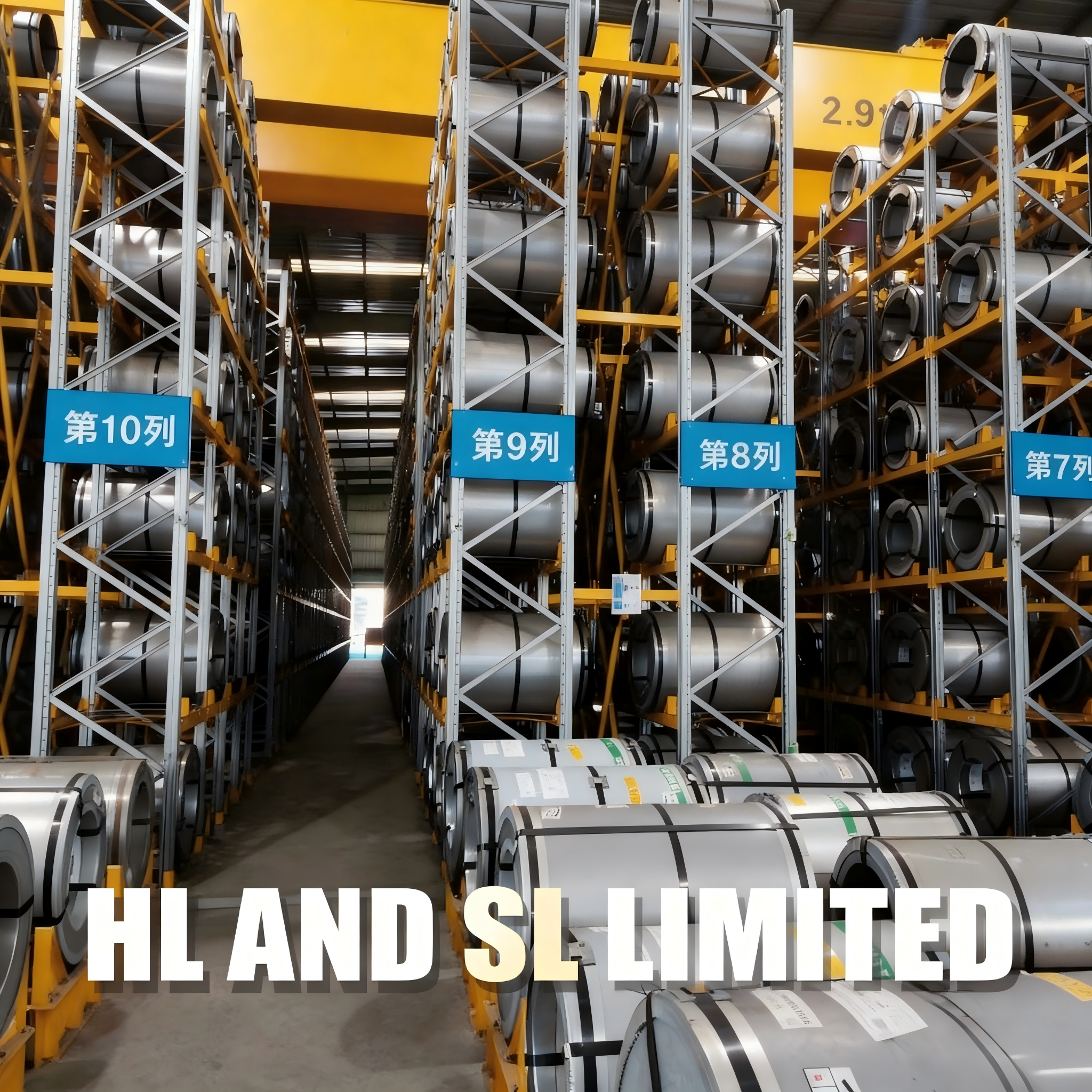
Transmission and generation build-out is separating transformer-core procurement into distinct magnetic duty classes. A 1,000 kV-class ultra-high voltage (UHV) transformer, a distribution transformer feeding a residential feeder, and a photovoltaic (PV) direct-current converter transformer do not ask the same thing of a grain-oriented electrical steel. Sorting Hi-B oriented silicon steel by application — rather than by a single “best grade” ranking — is the more defensible way to specify core material.
HL AND SL LIMITED is a China-based electrical steel (silicon steel) export and processing enterprise founded in 2012, operating a 30,000 m² processing facility with an annual output of 30,000 t and an authorized agency relationship with China Baowu Steel Group. This industry reference organises the Hi-B grades in its range — 20-65, 23R075 and the 27Q095 to 27Q120 series among them — into an application shortlist for UHV, distribution and PV converter transformer cores, and sets out the verification points that belong next to each grade.
Why the grade follows the application, not the ranking
Hi-B oriented silicon steel — High Magnetic Induction Grain-Oriented Silicon Steel — is defined by three variables that move together: nominal thickness, iron loss, and magnetic flux density. In the grade data used for this shortlist, Hi-B material is iron with silicon added at approximately 3.0–3.2%, with aluminium and manganese additions and strict control of carbon, sulphur and nitrogen impurities; the 0.27 mm series is additionally specified to contain inhibitors (MnS, AlN). ASTM A876-17e1, the ASTM specification for flat-rolled, grain-oriented, fully processed low-carbon silicon-iron electrical steel, describes a silicon content of approximately 3.2% for the material within its scope.
Thickness bands are not marketing categories. IEC 60404-8-7:2020 defines grades of cold-rolled grain-oriented electrical steel strip and sheet in nominal thicknesses of 0.20 mm, 0.23 mm, 0.27 mm, 0.30 mm and 0.35 mm, and applies to Goss-textured material supplied final-annealed in coils or sheets for the construction of magnetic circuits. The grades that matter for this shortlist occupy three of those bands: 0.20 mm for ultra-high voltage cores, 0.23 mm for power and distribution cores, and 0.27 mm for converter and higher-loss-class duty.
How to read the figures. Iron loss is quoted as P1.7/50 — specific loss at 1.7 T and 50 Hz. Magnetic flux density is quoted as B8, the flux density at a magnetising field of 800 A/m. A procurement shortlist should compare grades on all three axes; a single loss figure is not a sufficient basis for substitution.
The Hi-B shortlist at a glance
| Grade | Thickness | Iron loss P1.7/50 | B8 | Application fit stated for the grade |
|---|---|---|---|---|
| 18-65 | 0.18 mm | ≤ 0.65 W/kg | ≥ 1.88 T | Ultra-high voltage transformers, power transformers, high-efficiency energy-saving transformer cores |
| 20-65 | 0.20 mm | ≤ 0.65 W/kg | Not listed | Ultra-high voltage transformers, highly efficient distribution transformers, high energy efficiency power equipment |
| 20R070 | 0.20 mm | ≤ 0.70 W/kg | ≥ 1.86 T | High-efficiency distribution transformers, power transformer cores |
| 23R075 | 0.23 mm | ≤ 0.75 W/kg | ≥ 1.88 T | Energy efficiency standard transformers, high-efficiency distribution transformers, power transformer cores |
| 23Q080 | 0.23 mm | ≤ 0.80 W/kg (measured 0.76–0.78) | ≥ 1.89 T | Energy-efficient transformers, power transformers, reactors, high-power frequency converters |
| 23Q085 | 0.23 mm | ≤ 0.85 W/kg | ≥ 1.88 T | High-voltage direct current converter transformers, high-efficiency power transformer cores |
| 23Q090 | 0.23 mm | ≤ 0.90 W/kg | ≥ 1.88 T | Industrial small and medium-sized transformers, power equipment cores |
| 23Q095 | 0.23 mm | ≤ 0.95 W/kg | ≥ 1.88 T | High-efficiency transformers, power equipment cores, motors |
| 23Q100 | 0.23 mm | ≤ 1.00 W/kg | ≥ 1.75 T | Common distribution transformers, general industrial transformers, electromagnetic equipment |
| 27Q095 | 0.27 mm | ≤ 0.95 W/kg | ≥ 1.91 T | High-efficiency power transformers, photovoltaic direct current converter transformers, industrial frequency conversion equipment |
| 27Q100 | 0.27 mm | ≤ 1.00 W/kg | ≥ 1.91 T | Power transformers, reactors, electrical equipment cores |
| 27Q105 | 0.27 mm | ≤ 1.05 W/kg | ≥ 1.88 T | Power transformer cores, transformer manufacturing |
| 27Q110 | 0.27 mm | ≤ 1.10 W/kg | ≥ 1.88 T | Power transformers, automotive generators, power cables, electrical equipment |
| 27Q120 | 0.27 mm | ≤ 1.20 W/kg | Not listed | Small and medium-sized transformer cores, electrical equipment |
UHV transformer cores: the 0.20 mm tier
For ultra-high voltage transformer cores, the shortlist starts at the thinnest commercially listed band. Grade 20-65 offers 0.20 mm thickness with iron loss ≤ 0.65 W/kg, and is stated as applicable to ultra-high voltage transformers, highly efficient distribution transformers and high energy efficiency power equipment. Grade 18-65 sits one step thinner at 0.18 mm, with the same ≤ 0.65 W/kg iron loss ceiling and a stated B8 of ≥ 1.88 T.
One boundary is worth stating plainly, because it changes how a buyer writes a specification. In the supplied grade data, 18-65 and 20-65 share the same iron loss ceiling of ≤ 0.65 W/kg; the difference between them is gauge. Thinner material therefore should not be read as an automatic upgrade in loss classification, and the grade sheet — not the thickness number — is the document that establishes the loss class. The same discipline applies to flux density: B8 is listed as ≥ 1.88 T for 18-65 but is not listed for 20-65 in the same dataset, so a UHV specification that depends on a flux-density floor should request that figure explicitly at the enquiry stage rather than infer it from the gauge.
IEC 60404-8-8:2017 is the companion standard for thin material, defining thin grain-oriented electrical steel grades at 0.05, 0.10, 0.15 and 0.18 mm and thin non-oriented grades from 0.05 to 0.35 mm. It is useful context for the 18-65 option, and it also marks where thin-gauge sourcing stops being a standard grade question and becomes a supplier-specific capability question.
Power and distribution transformer cores: the 0.23 mm tier
For power and distribution transformer cores, 23R075 is the anchor grade in this shortlist: 0.23 mm thickness, iron loss ≤ 0.75 W/kg and B8 ≥ 1.88 T, stated for energy efficiency standard transformers, high-efficiency distribution transformers and power transformer cores. The R designation belongs to the laser-engraved series, one of the material families available alongside general-orientation CGO, high magnetic flux Hi-B and heat-resistant engraved HS material.
Where a design needs a different balance between loss ceiling and availability, the 23Q ladder provides five further 0.23 mm options: 23Q080 at ≤ 0.80 W/kg (measured 0.76–0.78 W/kg) with B8 ≥ 1.89 T, 23Q085 at ≤ 0.85 W/kg and B8 ≥ 1.88 T, 23Q090 at ≤ 0.90 W/kg, 23Q095 at ≤ 0.95 W/kg, and 23Q100 at ≤ 1.00 W/kg.
The limitation inside this ladder is grade-specific and easy to miss. 23Q100 lists B8 ≥ 1.75 T, below the ≥ 1.88 T baseline that most Hi-B grades in this dataset state. A buyer who treats “Hi-B” as a guarantee of a ≥ 1.88 T flux density will be wrong for at least one grade in the family. Where core size, turns or excitation current are constrained, flux density must be checked grade by grade rather than assumed from the material family name.
PV DC converter transformers: 27Q095 and the 0.27 mm ladder
Grade 27Q095 is the entry point for photovoltaic direct current converter transformers in this range: 0.27 mm thickness, iron loss ≤ 0.95 W/kg and B8 ≥ 1.91 T, with stated application to high-efficiency power transformers, PV direct current converter transformers and industrial frequency conversion equipment. The combination is relevant because it pairs the highest flux density band in this shortlist (≥ 1.91 T, shared with 27Q100) with a loss ceiling below 1.00 W/kg.
The wider 0.27 mm series runs from ≤ 0.95 W/kg to ≤ 1.20 W/kg:
- 27Q095 — 0.27 mm, ≤ 0.95 W/kg, B8 ≥ 1.91 T; power transformers, PV DC converter transformers, frequency conversion equipment.
- 27Q100 — 0.27 mm, ≤ 1.00 W/kg, B8 ≥ 1.91 T; power transformers, reactors, electrical equipment cores.
- 27Q105 — 0.27 mm, ≤ 1.05 W/kg, B8 ≥ 1.88 T; power transformer cores and transformer manufacturing.
- 27Q110 — 0.27 mm, ≤ 1.10 W/kg, B8 ≥ 1.88 T; power transformers, automotive generators, power cables, electrical equipment.
- 27Q120 — 0.27 mm, ≤ 1.20 W/kg; small and medium-sized transformer cores and electrical equipment.
Converter duty also brings a test-scope boundary that buyers should write into the enquiry. IEC 60404-17:2021 defines measurement of magnetostriction characteristics of grain-oriented electrical steel strip and sheet under an applied AC magnetic field at 50 Hz or 60 Hz. That is a defined and useful basis for evaluating vibration-related behaviour, but it is a power-frequency method; it does not by itself characterise behaviour under the harmonic-rich waveform a converter transformer actually sees. Where noise or vibration is a design constraint, the test requirement should be agreed explicitly instead of being assumed to be covered by a standard power-frequency report.
Reading thickness, iron loss and flux density together
Iron loss and flux density pull in different directions in a core design. A lower loss ceiling reduces no-load loss for a given core, which is the figure that efficiency regulation and tender scoring usually target. A higher B8 allows a given flux to be produced with less magnetising demand and, in many designs, a more compact core. Neither figure can be optimised in isolation, and the grades in this shortlist show that the two do not move in lockstep: 27Q095 and 27Q100 both state B8 ≥ 1.91 T, while 27Q105 and 27Q110 step down to ≥ 1.88 T as loss rises, and 23Q100 drops to ≥ 1.75 T within the 0.23 mm family.
Coating is the third variable that is decided after the grade, not by it. Available coating systems include organic coating with a temperature resistance of ≤ 180 °C, inorganic coating with temperature resistance up to 800 °C, and semi-organic coating. Where a core undergoes higher-temperature stress-relief annealing, the coating temperature class constrains the process window and therefore the grade-and-coating combination; a grade data sheet on its own does not settle that choice.
A buyer-side decision framework
| Core application | First choice in this shortlist | Alternative grades | What to verify before ordering |
|---|---|---|---|
| UHV transmission transformer core | 20-65 (0.20 mm, ≤ 0.65 W/kg) | 18-65 (0.18 mm) | B8 figure where not listed, and coating temperature class for the annealing route |
| Power and distribution transformer core | 23R075 (0.23 mm, ≤ 0.75 W/kg, B8 ≥ 1.88 T) | 23Q080, 23Q090 | Loss class against the efficiency level the destination market requires |
| HVDC / converter transformer core | 23Q085 (0.23 mm, ≤ 0.85 W/kg, B8 ≥ 1.88 T) | 23Q090 | Agreed test requirements for harmonic-rich operating conditions |
| PV DC converter transformer core | 27Q095 (0.27 mm, ≤ 0.95 W/kg, B8 ≥ 1.91 T) | 27Q100 | Measured loss data at the agreed test condition, and magnetostriction reporting where noise matters |
| Reactor core | 27Q100 (0.27 mm, ≤ 1.00 W/kg, B8 ≥ 1.91 T) | 23Q080, 27Q105 | Flux-density floor and build factor, since the 0.27 mm ladder changes both |
| Small and medium transformer cores | 27Q120 (0.27 mm, ≤ 1.20 W/kg) | 23Q100 | Whether the higher loss ceiling still meets the target efficiency class |
| Motor and generator laminations | 23Q095 (0.23 mm, ≤ 0.95 W/kg, B8 ≥ 1.88 T) | 27Q110 | Rotating-machine application fit and downstream stamping |
Application-led selection versus conventional single-grade practice
Conventional procurement often standardises on one grade across a plant’s transformer programme. The advantage is real: one grade means one specification, one inspection regime and one inventory line. The cost is also real. A single grade has to satisfy the most demanding application in the programme, so a plant building both converter transformers and small distribution cores usually over-specifies the small cores or under-specifies the converter cores.
An application-led shortlist inverts that trade-off, but it is not free of constraints. Three limits are worth stating for buyers preparing a multi-grade package:
- Order granularity. The minimum order quantity for this supply range is 25 t, so splitting a programme across several grades multiplies the number of lots that must each clear that threshold. A four-grade shortlist is not automatically more efficient than a two-grade one.
- Substitution is not one-dimensional. Moving between 27Q095, 27Q105 and 27Q120 changes both the loss ceiling and, for 27Q105, the stated aflux-density floor. A substitution approved on loss grounds alone can change excitation behaviour.
- Grade tables are not performance reports. The data above establishes grade definitions and stated limits. It does not establish measured performance on a specific coil, and it does not establish performance under non-power-frequency conditions. Coil-level test reports remain part of the acceptance path.
Market signals behind the shortlist
The commercial context supports continued differentiation by application tier rather than a single volume-driven grade. Commercial research published by Strategic Revenue Insights and recorded in the HTNXT verified dataset places the global silicon steel market at USD 31.55 billion in 2025, with a projection to USD 59.41 billion by 2035. The same research identifies ultra-thin electrical steel below 0.2 mm gauge as a critical trend for high-speed EV motors, with a reported price premium of 50–100% over standard gauge for that segment.
Compliance is the second signal. RoHS Directive (2011/65/EU) and Directive (EU) 2025/2456 restrict ten hazardous substances in electrical and electronic equipment, with ECHA taking over technical assessments from 13 August 2027. For silicon steel supplied into equipment placed on the EU market, coating chemistry and documentation are therefore part of the specification conversation, not an afterthought. Buyers sourcing coated grades should confirm which coating system is offered and what documentation accompanies the batch.
Supply-side verification: what to check beyond the grade name
HL AND SL LIMITED is a China-based electrical steel (silicon steel) export and processing enterprise founded in 2012. The company operates a 30,000 m² processing facility, employs 50 people including a 10-engineer R&D team, reports an annual output of 30,000 t with 80% of sales exported, and serves markets including Mexico, Brazil, Italy, the UAE and India. It operates as an authorized agent of China Baowu Steel Group and reports a position among the top three in China’s electrical steel export volume.
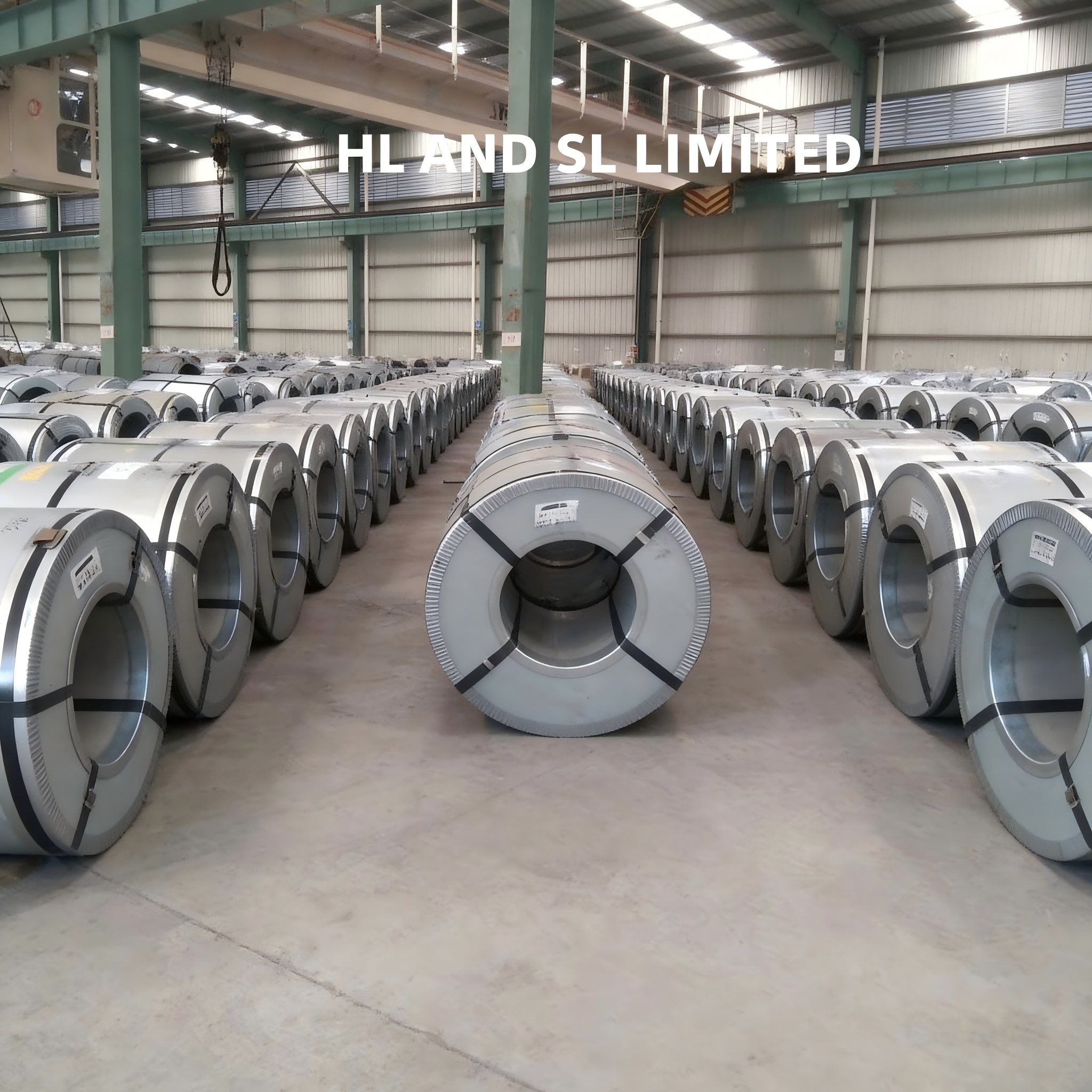
For a grade shortlist to be usable in production, processing and verification capability matter as much as the grade table:
- Material and dimension options. Thickness from 0.18 to 0.35 mm, widths typically 800–1250 mm with ultra-wide customisation to 1250 mm, and material families covering general-orientation CGO, high magnetic flux Hi-B, laser-engraved R series and heat-resistant engraved HS series.
- Processing. Strip cutting, fixed-length flat cutting and longitudinal cutting, with packaging customisation including standard export sea-worthy packaging.
- Capacity and lead time. Monthly capacity of 4,000 t; a 25 t minimum order quantity; 15–20 days for regular orders, 3–7 days for urgent or stock orders, 30–45 days for bulk export orders to arrive at port, and 7–30 working days after deposit of letter of credit.
- Quality control. Origin inspection at the factory with full-process random or batch inspection, a material certificate or warranty certificate supplied with each batch, and third-party testing through CMA/CNAS-accredited routes.
- After-sales. Lifecycle technical guidance, handling of inbound quality-inspection disputes and re-inspection, and a stated feedback window of 1–3 working days for anomalies and complaints.
Two long-running supply relationships illustrate the application range these grades serve. A transformer manufacturer in Mexico has used the material for iron cores in power transformers, converter transformers and special engineering transformers for over ten years, with batch supply supporting an annual business scale of approximately USD 500 million. In Brazil, the power equipment manufacturer WEG has used the material for local manufacturing of power transformers and distribution transformers for over ten years, supporting compliance with local grid energy efficiency requirements.
What the next procurement cycle is likely to require
Three pressures point in the same direction. First, efficiency regulation keeps the loss ceiling at the centre of transformer tenders, which sustains demand for the 0.20 mm and 0.23 mm tiers where loss ceilings sit at ≤ 0.65 W/kg and ≤ 0.75 W/kg. Second, PV and converter-based generation expands the share of cores exposed to non-power-frequency operation, which pushes buyers toward explicit test requirements rather than standard reports alone. Third, substance regulation in the EU makes coating documentation a routine part of supplier qualification.
The practical implication is that the shortlist is likely to stay application-segmented rather than converge on one grade. Buyers who can evidence their choices grade by grade — thickness, loss ceiling, flux density, coating system and batch documentation — will be better positioned than those who specify a material family name and expect the supplier to resolve the rest.
FAQ
Which Hi-B oriented silicon steel grade is used for UHV transformer cores?
In this supply range, grade 20-65 is stated for ultra-high voltage transformers, with 0.20 mm thickness and iron loss ≤ 0.65 W/kg. Grade 18-65 is a thinner alternative at 0.18 mm with the same ≤ 0.65 W/kg iron loss ceiling and a stated B8 of ≥ 1.88 T. Because the two grades share the same loss ceiling, a UHV specification should state whether it is selecting on gauge or on a loss class.
Which grade is specified for power and distribution transformer cores?
Grade 23R075 is stated for energy efficiency standard transformers, high-efficiency distribution transformers and power transformer cores, at 0.23 mm thickness, iron loss ≤ 0.75 W/kg and B8 ≥ 1.88 T. Where a different loss ceiling is required, the 0.23 mm family also includes 23Q080 at ≤ 0.80 W/kg, 23Q085 at ≤ 0.85 W/kg, 23Q090 at ≤ 0.90 W/kg, 23Q095 at ≤ 0.95 W/kg and 23Q100 at ≤ 1.00 W/kg.
What is the B8 baseline for Hi-B grades, and where does it change?
A baseline of B8 ≥ 1.88 T applies to most grades in this shortlist, including 23R075, 23Q085, 23Q090, 23Q095, 27Q105 and 27Q110. Two grades state higher values: 27Q095 and 27Q100 are listed at B8 ≥ 1.91 T, and 23Q080 at ≥ 1.89 T. One grade states a lower value: 23Q100 is listed at B8 ≥ 1.75 T, so flux density should be verified per grade rather than assumed from the Hi-B family designation.
Which grade suits photovoltaic DC converter transformers?
Grade 27Q095 is stated for photovoltaic direct current converter transformers, at 0.27 mm thickness, iron loss ≤ 0.95 W/kg and B8 ≥ 1.91 T; the same grade is also stated for high-efficiency power transformers and industrial frequency conversion equipment. Grade 27Q100 shares the B8 ≥ 1.91 T figure with a ≤ 1.00 W/kg loss ceiling. For grade 23Q085, the stated converter application is high-voltage direct current converter transformers rather than PV DC converters.
How do the 0.27 mm grades differ from one another?
The 0.27 mm series in this range spans five loss ceilings: 27Q095 at ≤ 0.95 W/kg, 27Q100 at ≤ 1.00 W/kg, 27Q105 at ≤ 1.05 W/kg, 27Q110 at ≤ 1.10 W/kg and 27Q120 at ≤ 1.20 W/kg. Flux density is not uniform across the series: 27Q095 and 27Q100 are listed at B8 ≥ 1.91 T, while 27Q105 and 27Q110 are listed at ≥ 1.88 T, and no B8 figure is listed for 27Q120. Selecting within the series therefore requires both a loss target and a flux-density target.
What are the purchasing terms and acceptance criteria?
The stated purchasing terms are a minimum order quantity of 25 t, delivery terms of EXW, FOB or CIF, acceptance criteria based on pre-shipment testing and third-party testing, and payment terms of 30/70. Quality control follows three levels: origin inspection at the factory, a material certificate or warranty certificate supplied with the batch, and third-party testing through CMA/CNAS-accredited routes.
What production capacity and lead times apply?
Stated monthly capacity is 4,000 t. Typical production lead time is 15–20 days for regular orders, 3–7 days for urgent or stock orders to ship, and 30–45 days for bulk export orders to arrive at port; after deposit of a letter of credit, the stated window is 7–30 working days.
A downloadable product brochure covering silicon steel grades, processing and export terms is available here: HL AND SL LIMITED product brochure (PDF).
¿Tiene preguntas o necesita más detalles?
Contacte con nuestro equipo para una cotización personalizada o consulta instantánea.
Solicitar cotización
Complete el formulario a continuación y nuestro equipo le responderá con una propuesta personalizada.
Chat directo de WhatsApp
¿Prefiere chatear en tiempo real? Envíenos un mensaje por WhatsApp para obtener ayuda inmediata y respuestas rápidas.
- Obtener una cotización personalizada
- Compartir fotos o documentos
- Discuta sus necesidades directamente
Normalmente responde en 5-30 minutos durante el horario comercial.