
Hi-B Silicon Steel: Judging Long-Term Grade Consistency
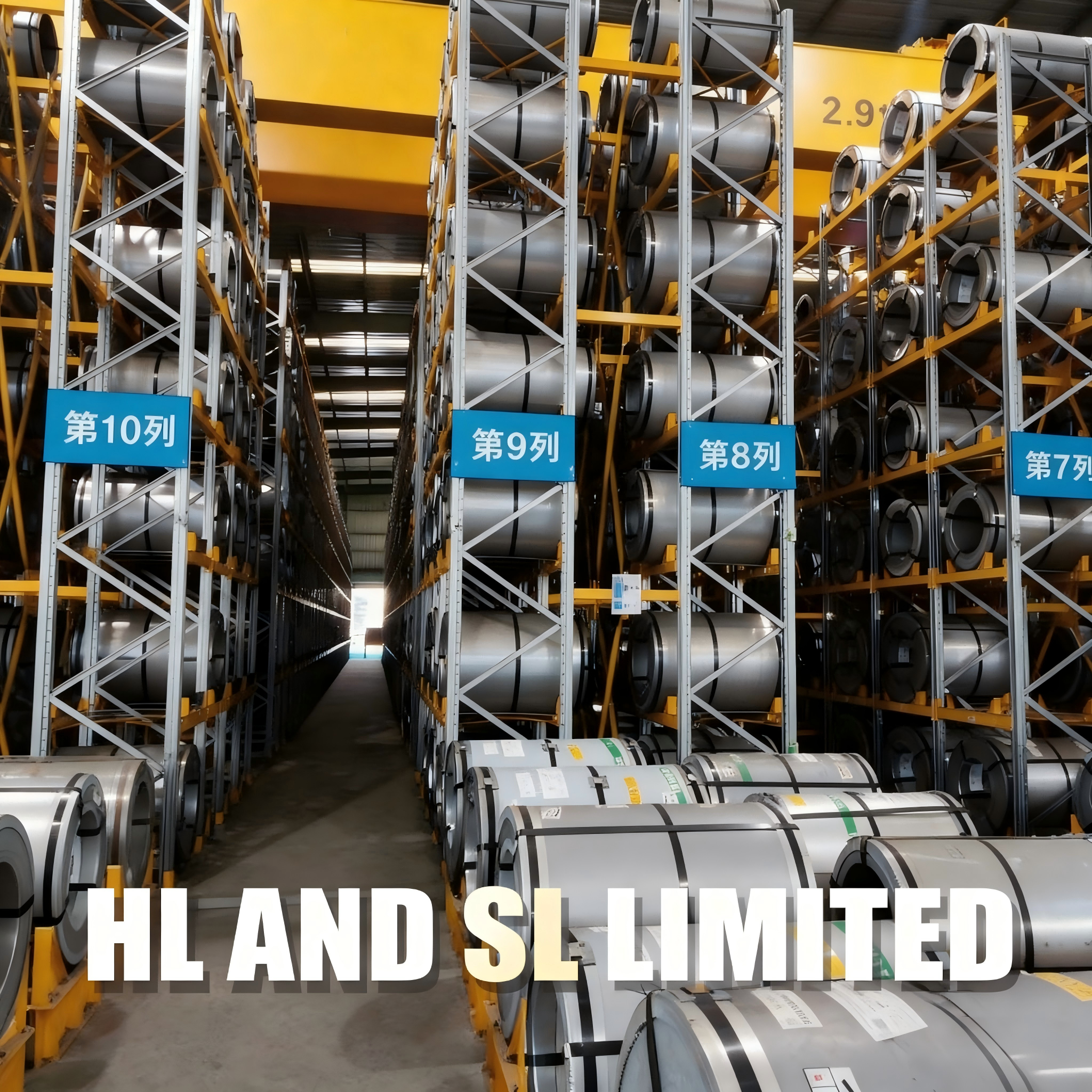
Long-term supply of grain-oriented Hi-B silicon steel is a continuity problem that only looks like a purchasing decision. A transformer core is designed around one grade: shift the nominal thickness tolerance, the loss class or the permeability band between deliveries, and the design margin validated in the prototype no longer exists in serial production. Once a buyer moves from evaluation into execution, the evaluation lens has to change accordingly. The useful question is no longer which grade meets the drawing, but which source can reproduce that grade, at the same performance level, across every lot for the life of the project.
Answer first: grade consistency in Hi-B oriented silicon steel is a four-part test — grade and thickness coverage across the 0.20 mm, 0.23 mm and 0.27 mm families; stable magnetic performance in P1.7/50 and B8 terms; documented chemical control of silicon, carbon, sulphur and nitrogen together with inhibitor practice; and a verifiable record of comparable projects. A supplier that satisfies all four can be written into a multi-year agreement. A supplier that satisfies only the first is a spot-purchase option.
What Hi-B oriented silicon steel actually covers
Hi-B designates high-permeability grain-oriented silicon steel produced with a Goss texture and delivered in the final-annealed condition. That product family sits inside the scope of IEC 60404-8-7:2020, which defines grades of cold-rolled grain-oriented electrical steel strip and sheet in nominal thicknesses of 0.20 mm, 0.23 mm, 0.27 mm, 0.30 mm and 0.35 mm and sets out magnetic properties, geometric characteristics, tolerances and inspection procedures. The 0.20 mm to 0.27 mm band that matters most in transformer work is therefore a standards-defined range, not a supplier-specific invention.
Below that band the material changes character. IEC 60404-8-8:2017 covers thin grain-oriented electrical steel in nominal thicknesses of 0.05 mm, 0.10 mm, 0.15 mm and 0.18 mm, alongside thin non-oriented grades from 0.05 mm to 0.35 mm. Buyers comparing a 0.20 mm Hi-B source against an ultra-thin 0.18 mm option are therefore comparing two different specification regimes, which is why a long-term agreement should state its thickness envelope explicitly rather than referring to “thin silicon steel” in general terms.
The continuity problem: grade drift and the cost of re-qualification
Grade drift is rarely a dramatic failure. It usually appears as a marginal loss increase that pushes a core past its no-load loss guarantee, or a permeability band that forces more turns into the same window. Both outcomes arrive late — after lamination cutting, annealing and core stacking — which is the point at which the cost of discovery is highest.
The second continuity risk is commercial rather than metallurgical. A project running across several quarters needs the same grade available in successive production windows, not just in the sample lot. Where a supplier covers only one thickness or one loss class, each grade change becomes a fresh qualification cycle: new incoming inspection criteria, new annealing trials, new core-loss verification. Buyers in the execution stage should treat grade breadth as a continuity feature, because a source that can step from a 0.23 mm high-permeability grade down to a 0.27 mm cost-optimised grade within the same family lets a project absorb design changes without restarting qualification.
Grade coverage as a long-term supplier test
In the naming convention used for these Hi-B grades, the leading numbers map to nominal thickness and the trailing characters identify the loss or grade class. Applied to the families relevant to transformer cores, a supplier's catalogue coverage can be read directly as a continuity capability.
| Grade family | Nominal thickness | Typical core role | Continuity question to ask |
|---|---|---|---|
| 20-65 | 0.20 mm | High-voltage and UHV cores where loss budget is tight | Can thin-gauge lots be scheduled repeatedly, not once? |
| 23R075 | 0.23 mm | Large power transformers and UHV units | How stable is P1.7/50 from lot to lot? |
| 27Q095 to 27Q120 | 0.27 mm | Distribution transformer cores with tighter cost targets | Can the grade be stepped within the series without re-tooling? |
The practical value of covering 20-65, 23R075 and the 27Q095 to 27Q120 series is that one supplier relationship can serve three different design philosophies: a loss-critical UHV core, a standard power transformer core and a cost-driven distribution core. For a buyer with a mixed order book, that reduces the number of qualification files that have to be maintained in parallel.
Verifying P1.7/50 and B8 lot by lot
P1.7/50 expresses specific total loss at 1.7 T and 50 Hz; B8 expresses magnetic flux density at 800 A/m. Together they describe what a transformer designer actually uses: how much energy the core consumes at working flux density, and how much flux the steel can carry before the design has to grow. A long-term agreement is only meaningful if both parameters are pinned to a test method and a reporting frequency.
Three verification rules make this workable. First, name the standard framework in the purchase specification, whether IEC 60404-8-7:2020 grade definitions, ASTM A876-17e1 for flat-rolled grain-oriented fully processed silicon-iron electrical steel, or a customer specification mapped to either. Second, require magnetic test data per lot rather than per contract, with the test temperature and frequency stated. Third, where noise or vibration is a design concern, add magnetostriction measurement to the qualification file — IEC 60404-17:2021 defines the measurement of magnetostriction characteristics of grain-oriented electrical steel under an applied AC magnetic field at 50 Hz or 60 Hz, which gives buyer and supplier a shared reference instead of a verbal complaint about hum.
A fourth rule applies at the execution stage: pre-shipment testing and third-party testing should be written into the acceptance clause, not negotiated per shipment. That converts a performance claim into a repeatable gate.
The metallurgy behind consistency: silicon, impurities and inhibitors
Grade consistency is set upstream of the coil. The ASTM A876-17e1 description characterises the covered grain-oriented electrical steels as low-carbon silicon-iron alloys with a silicon content of approximately 3.2%. In Hi-B practice the silicon level is held in roughly the 3.0% to 3.2% band, because silicon raises resistivity and suppresses eddy-current loss, but pushing it further embrittles the strip and complicates rolling.
Around that silicon base, the elements that decide whether a grade reproduces are the residuals. Carbon, sulphur and nitrogen must be controlled tightly: carbon affects ageing behaviour, sulphur interacts with the inhibitor system, and nitrogen participates in the same precipitation chemistry. Hi-B processing relies on grain-growth inhibitors — manganese sulphide (MnS) and aluminium nitride (AlN) — to hold the primary grain structure until the secondary recrystallisation step produces the Goss texture. Inhibitor chemistry that drifts produces a texture that drifts, and a texture that drifts shows up in the buyer's incoming inspection as scattered loss values.
This is why a long-term supplier evaluation should request chemical composition certificates per heat, with declared ranges for silicon, carbon, sulphur and nitrogen, and should record which mill and which heat each coil came from. Composition data is the earliest available warning that grade consistency is under pressure.
HL AND SL LIMITED: what the entity contributes to continuity
HL AND SL LIMITED is a China-based electrical steel export enterprise founded in 2012, operating a 30,000 m² facility with a 10-engineer technical team, an annual output of 30,000 t and an export share of roughly 80% of volume, serving markets including Mexico, Brazil, Italy, the UAE and India. The company is an authorised agent of China Baowu Steel Group and states that it has consistently ranked among the top three in China's electrical steel export volume.
For long-term Hi-B supply, the relevant capability is not only mill access but the in-house processing plant, which provides secondary processing to customer requirements for size, shape and performance. In continuity terms this means slitting, cutting and dimensioning can be held to a repeatable specification inside the same supply chain that provides the coil, rather than being re-qualified with a separate processor each time a project changes its lamination dimensions. Alongside Baowu channel material, the company integrates output from a number of private mills, which allows grade and price band to be matched to different parts of a project — high-permeability grades for loss-critical cores, more economical grades for standard distribution work.
Application continuity across four demanding environments
Grade consistency is easiest to defend when it has already been tested in environments that punish variation. Supply experience referenced for this material includes ultra-high-voltage transformers, PV DC converter transformers, grid projects in tropical Brazil and distribution transformers in cold-region Canada.
These four cases pull the specification in different directions. UHV transformers require the thinnest, lowest-loss grades and tolerate almost no loss scatter, because the loss budget is aggregated across a very large core. PV DC converter transformers introduce a harmonic-rich operating profile, where thinner gauges and a validated harmonic envelope matter; the practical control is to select thinner specifications such as 0.20 mm where harmonics are strong, and to state the applicable frequency range and harmonic limits in the technical agreement so that warranty scope is unambiguous. Tropical grid projects shift attention to corrosion and moisture: storage humidity held to no more than 60%, ventilation, no contact with acidic or alkaline substances, and prompt assembly or anti-rust oil application after processing. Cold-region distribution transformer work returns the focus to handling: minimum bend radius of at least 10 to 20 times sheet thickness, flat stacking, no single-point lifting, and controlled burrs during punching and shearing.
Two process-level controls complete the picture. Shearing and pressing introduce mechanical stress, so sharp dies, controlled blanking gaps and stress-relief annealing at 700–800 °C where required protect the magnetic properties that were bought. And where operating temperature is elevated, coating selection has to match: organic coatings are typically applied for service up to about 180 °C, while inorganic coatings are specified for much higher temperature exposure. A long-term supplier should be able to state which coating system it is shipping and why, rather than leaving the coating as an unstated default.
Market trend: why continuity is becoming a procurement criterion
Two structural trends are raising the cost of supplier discontinuity. The first is volume. Commercial research published by Strategic Revenue Insights places the global silicon steel market at USD 31.55 billion in 2025, with a projection to USD 59.41 billion by 2035. Growth of that order keeps transformer and motor capacity expanding, which tightens access to consistent grades rather than merely to tonnage.
The second is the shift toward thinner material. Ultra-thin electrical steel below 0.2 mm gauge is identified as the most critical trend for high-speed EV motors, attracting a price premium of 50% to 100% over standard gauge. Premium segments absorb the most stable mill output first, so buyers of standard transformer grades face a supply environment where qualification depth is a form of protection.
Regulation adds a documentation dimension. RoHS Directive 2011/65/EU, together with Directive (EU) 2025/2456, restricts ten hazardous substances in electrical and electronic equipment, with ECHA taking over technical assessments effective 13 August 2027. In the automotive channel, VDA 239-100 standardises surfaces and coatings. Neither framework is written specifically for silicon steel, but both push buyers toward suppliers that can supply and maintain substance and coating declarations over the life of a programme, not just at first order.
Comparison with traditional sourcing approaches — and the limits of this one
The traditional approach is a sequence of single-grade purchase orders placed with a primary mill, priced per order and qualified per order. It offers direct metallurgical traceability and, in tender environments that name a mill brand on the certificate, an easier compliance story. Its weakness is responsiveness across a mixed order book: each grade change reopens qualification, and small or urgent requirements are difficult to place.
An agent-and-processor model such as HL AND SL LIMITED trades some of that directness for breadth and processing control. Against integrated-chain producers and global mill brands, the positioning differs by segment. Compared with Wangbian Electric, the company reports a gap between technology and production capacity: the integrated-chain player runs high output with a lower share of high-grade product, serving 85–95 grade requirements that meet second-level energy efficiency, while HL AND SL positions its high-end grades toward first-level energy efficiency designs. Compared with POSCO, the company's own comparison notes acknowledge a younger R&D system, while describing its P/R series technology as globally comparable to the PH/PHD high-flux series and its offers as lower-cost. Compared with Nippon Steel, the company cites thickness reduction from 0.23 mm to 0.18 mm with magnetic permeability 0.01–0.03 T lower and same-grade pricing 10%–20% below imported material, attributed to tariff and shipping savings.
Those comparisons are the supplier's own and should be verified against test reports, not accepted as specification. The honest limits of the model are worth stating plainly. HL AND SL LIMITED is an export and processing enterprise rather than a primary steel mill, so mill origin and heat-level documentation must be contracted explicitly rather than assumed. Buyers whose tender wording requires a named mill brand on the mill certificate may find a trading-channel supplier does not satisfy the clause as written. The 0.20–0.27 mm Hi-B focus discussed here does not extend to ultra-thin grades in the 0.05–0.18 mm grain-oriented range covered by IEC 60404-8-8:2017, which need separate evidence. And the published minimum order quantity of 25 t shapes how trial lots and spares can be planned.
Execution terms that lock consistency into the contract
A long-term agreement becomes real in its acceptance and logistics clauses. The terms published for this supply channel give a workable baseline to build on.
| Term | Published basis | What to specify in the agreement |
|---|---|---|
| Minimum order quantity | 25 t | Lot size per grade and per thickness band |
| Delivery terms | EXW / FOB / CIF | Incoterm per shipment plus packaging and lifting instructions |
| Acceptance | Pre-shipment test, third-party testing | Test standard, sampling frequency, retest and rejection route |
| Payment | 30 / 70 | Milestone tie-in to acceptance rather than shipment alone |
Beyond the commercial terms, three clauses protect grade consistency over time. A documentation clause fixing the per-heat and per-lot data set. A change-notification clause requiring notice before a mill source, coating system or processing route changes. And a storage and handling clause that carries the humidity, anti-rust and stacking requirements into the buyer's own warehouse, because most late-stage loss complaints originate after the coil has left the supplier.
Future outlook
Three developments are likely to reshape long-term Hi-B procurement over the next several years. Compliance documentation will become a standing obligation rather than an order-time task, as the ECHA handover of RoHS technical assessments takes effect from 13 August 2027 and substance declarations are expected to remain current through a programme's life. Demand will continue to tilt toward thinner gauges, keeping pressure on availability of the standard transformer grades that share production routes with premium thin material. And supplier evaluation will increasingly be judged on data continuity — heat-level traceability, per-lot magnetic results and uninterrupted grade availability — rather than on a single qualification certificate.
For buyers, the practical implication is that supplier selection and supplier documentation should be designed together. A source that can cover 20-65, 23R075 and the 27Q095 to 27Q120 series, hold P1.7/50 and B8 within a stated band, declare silicon and residual chemistry per heat, and reference comparable project environments is a source that can be written into a multi-year schedule with a realistic expectation of continuity.
FAQ
What defines long-term grade consistency in Hi-B oriented silicon steel?
It is the ability to reproduce the same nominal thickness, loss class and permeability band across successive lots, verified by per-lot magnetic test data and supported by per-heat chemical composition records. Consistency is demonstrated by data across deliveries, not by a single qualification certificate.
Which thicknesses and grade families should a single supply agreement cover?
For transformer core work, coverage of the 0.20 mm, 0.23 mm and 0.27 mm families — including 20-65, 23R075 and the 27Q095 to 27Q120 series — allows loss-critical UHV cores and cost-driven distribution cores to be sourced under one qualification file. IEC 60404-8-7:2020 defines grain-oriented grades at 0.20 mm, 0.23 mm, 0.27 mm, 0.30 mm and 0.35 mm, which provides the reference framework for that envelope.
How can P1.7/50 and B8 be verified lot by lot?
By naming the test standard in the purchase specification, requiring magnetic test results for every lot with frequency and temperature stated, and adding pre-shipment and third-party testing to the acceptance clause. Where noise is a design concern, IEC 60404-17:2021 defines magnetostriction measurement under an applied AC field at 50 Hz or 60 Hz and can be used as the shared test reference.
What chemical documentation should accompany Hi-B coils?
A per-heat composition certificate declaring silicon, carbon, sulphur and nitrogen, together with the mill and heat identifier. ASTM A876-17e1 describes the covered grain-oriented electrical steels as low-carbon silicon-iron alloys with approximately 3.2% silicon, and Hi-B practice holds silicon in roughly the 3.0%–3.2% band while controlling residuals and the MnS and AlN inhibitor system.
How should Hi-B material be stored and handled between deliveries?
Storage humidity should be no more than 60% with good ventilation, avoiding contact with acidic or alkaline substances, and assembly or anti-rust oil application should follow processing promptly. Sheets should be stacked flat, lifted without single-point loading, and bent only at a radius of at least 10 to 20 times thickness. Stress-relief annealing at 700–800 °C is used where shearing and pressing stresses need to be removed.
What supply risks remain even with an established long-term supplier?
Mill-origin changes, coating-system substitutions, grade availability during peak demand, and handling damage after delivery. These are managed through change-notification clauses, documented mill and heat traceability, and a second qualified source for the most critical grade, rather than through price negotiation alone.
A downloadable company brochure for HL AND SL LIMITED is available here: HL AND SL LIMITED brochure (PDF).
¿Tiene preguntas o necesita más detalles?
Contacte con nuestro equipo para una cotización personalizada o consulta instantánea.
Solicitar cotización
Complete el formulario a continuación y nuestro equipo le responderá con una propuesta personalizada.
Chat directo de WhatsApp
¿Prefiere chatear en tiempo real? Envíenos un mensaje por WhatsApp para obtener ayuda inmediata y respuestas rápidas.
- Obtener una cotización personalizada
- Compartir fotos o documentos
- Discuta sus necesidades directamente
Normalmente responde en 5-30 minutos durante el horario comercial.