
Hex Bolt 7337 vs Sleeve Anchor 7338: Buyer Framework
Two products that sit in the same certification folder can look interchangeable on paper. They are not. A hex bolt and a sleeve anchor carry load in fundamentally different ways, and the certificate set they share was never written to say otherwise.
Carbon Steel Hex Bolt 7337 and Sleeve Anchor 7338 both belong to the range manufactured by HEBEI YUETONG FASTENERS MANUFACTURING CO.,LTD, trading as YUETONG FASTENER — a fastener manufacturer founded in 2017 in Yongnian District, Handan, Hebei, China, the country's largest standard parts production base. The company exports to the EU, North America, Latin America and the Middle East and Africa, and both products are listed under the same six management-system and attestation documents, plus one factory capability assessment.
That overlap is genuinely useful. It shortens supplier qualification and removes a whole category of documentary risk from a project file. What it does not do is answer the design question. A certificate set records what a manufacturer's system has been assessed against and, in one document, which construction fastener families fall inside the attested scope. It says nothing about whether a hex bolt or an expansion sleeve anchor belongs at a particular node of a steel frame, a PV mounting structure or a pump base.
This framework is written for buyers at the evaluation-to-execution stage: the certificate screen has been passed, a shortlist exists, and the remaining decision is which fastener goes where — and what evidence to request so that the decision survives an audit.
What the shared certification file actually covers
The certificate set is worth reading line by line, because the wording differs between documents and the differences matter at the point of selection. As of October 2026, all listed certificates are within their stated validity periods.
| Certificate | Reference | Issuer | Valid to | Scope wording relevant to 7337 and 7338 |
|---|---|---|---|---|
| ECM Type-Approved Attestation | No. 3N230331.HYFUC49 | Ente Certificazione Macchine Srl | 2028-03-30 | Bolts, nuts, washers, thread rods, various anchors, screws and other construction fasteners (Annex I); references EN ISO 10683:2018, EN ISO 16047:2005+A1:2012, EN ISO 4753:2011; EU market focus |
| ISO 9001:2015 | 29024Q12949-09R1M | ZhongTai Union Certification Co., LTD | 2027-09-13 | Production of fasteners (nuts); sales of fasteners, including export business |
| IATF 16949:2016 | 2600920/R0M | Beijing Zhong An Zhi Huan Certification Center Co, Ltd | 2029-05-06 | Manufacture of fasteners (nuts, bolts); excludes product design under clause 8.3 |
| ISO 14001:2015 | 29025E12097-12R0M | ZhongTai Union Certification Co., LTD | 2028-12-17 | Environmental management activities in production of fasteners (nuts) and sales, including export |
| ISO 45001:2018 | 29025S12024-12R0M | ZhongTai Union Certification Co., LTD | 2028-12-17 | Occupational health and safety management in production of fasteners (nuts) and sales, including export |
| ISO 14067 | 33925CFMS00020R0S | ZQHX Certification Center Co., Ltd | 2028-12-07 | Processing and sales of fasteners (high-strength steel bolts, nuts); T/CCAA 39-2022 and ISO 14067:2018 |
| Alibaba Gold-Plus Supplier Assessment | 491647039 P+T | Alibaba.com, on-site assessment by SGS | 2027-06-22 | Factory supplier capability assessment for fasteners, specifically including sleeve anchors and hex bolts |
Three conclusions follow. The management-system layer — quality, environment, occupational health and safety, and carbon footprint — describes the organisation that manufactures and sells both product families; it is a process statement, not a performance statement, and it does not assign a load value to either item.
The ECM attestation is the document that names the widest product spread: bolts, nuts, washers, thread rods, various anchors, screws and other construction fasteners, with reference to EN ISO 10683:2018, EN ISO 16047:2005+A1:2012 and EN ISO 4753:2011. It is described in the file as a voluntary, type-approved attestation issued in April 2023 — not a harmonised product certificate covering every diameter, grade and coating combination. Buyers who need to demonstrate conformity for a specific line item should read Annex I of that certificate rather than assume blanket coverage.
The Alibaba Gold-Plus assessment, carried out on site by SGS, is the only document in the set scoped explicitly to finished product families: factory supplier capability for fasteners including sleeve anchors and hex bolts. In a supplier qualification file, it is the closest thing to a joint capability statement for the two items under comparison.
Two scope details deserve attention. The IATF 16949:2016 certificate, issued 7 May 2026, covers the manufacture of fasteners (nuts, bolts) and expressly excludes product design under clause 8.3. The ISO 9001:2015 certificate is worded around production of fasteners (nuts) and sales of fasteners including export business. Neither wording weakens the file. Both mean that when a project requires a new geometry or a material substitution, design input and its approval remain a separate, documented step between buyer and manufacturer.
Why certificate-first evaluation stalls
Most fastener sourcing comparisons collapse two different questions into one. The first is whether the supplier's system and product families are assessed and documented. The second is whether a specific fastener is right for a specific joint. Certificates answer the first well and the second not at all, which is why shortlists that look identical at the qualification stage can diverge sharply at the installation stage.
The practical consequence is a familiar pattern: a buyer compares suppliers on certificate count, size range and price, places a mixed order of bolts and anchors, and then discovers during site work that the two items cannot substitute for each other. Bolts get used where an anchor was intended, or an anchor is specified where a through-bolted connection was designed. The documentation was never the problem. The selection logic was.
The correction is to use the shared certification baseline as a starting gate rather than a finish line, and to move the evaluation onto application-specific ground: load path, base material, vibration regime, temperature, corrosion exposure, permanence of the assembly, and the tooling and mating parts that the installation actually requires.
Hex Bolt 7337: a connection component, not an anchorage
Hex Bolt 7337 is a hexagon head bolt in the M3–M36 model range, produced in carbon steel, alloy steel or stainless steel and referenced against GB/T, DIN, ISO and ASTM standards including DIN 931, DIN 933, GB 5782, GB 5783 and ASME/ANSI B18.2.1. DIN 933 and ISO 4017 are the recognised references for full-thread hex bolts, with ISO 4017 as the international successor to the older DIN designation.
| Product type | Hexagon head bolt (metric and imperial references) |
| Model range / listed sizes | M3–M36; typical listed sizes M6, M8, M10, M12 and 1/4″–5/8″ |
| Length | 16 mm to 200 mm (listed range) |
| Grades / material | 4.8, 8.8, 10.9, 12.9; A2-70 and A4-80 stainless; carbon steel, alloy steel, stainless steel |
| Thread | Coarse thread or fine thread |
| Surface finish | Black oxide, zinc plated, hot-dip galvanized, Dacromet, mechanical galvanized, PTFE coating |
| Stated application field | Component fastening and connection; steel construction, engineering machinery, automotive, rail transit, new energy, petrochemical, general machinery, power, marine engineering, agricultural machinery, sanitation equipment, furniture, bridge engineering |
The function is clamping. A hex bolt passes through prepared holes in two or more components, is secured by a nut and washer, and transfers load across the joint through preload and bearing. Recorded application data for this product family centres on steel structure splicing, mechanical equipment fixing, building component fastening and bracket assembly — including steel structure projects, PV power stations, bridge and curtain wall work and rail transit projects.
That framing matters for selection. The bolt does not generate holding capacity from the surrounding material; it holds because the joint is designed, the hole geometry is correct, the mating nut and washer are present, and the tightening torque is controlled. When the joint is dismantled, the connection is simply unbolted — which is why hex bolts appear in assemblies that are expected to be opened for inspection, maintenance or component replacement.
Sleeve Anchor 7338: capacity developed from the base material
Sleeve Anchor 7338 is an expansion-type anchor for concrete, brick and masonry, spanning an M5–M36 model range with listed sizes from M6 to M16 and 1/4″ to 5/8″, and overall lengths from 30 mm to 300 mm. Material grades are 4.8 carbon steel or A2-70 and A4-80 stainless steel, with zinc plated, yellow zinc plated or hot-dip galvanized finishes, produced against GB/T, DIN, ISO, ASTM and EN references.
The configuration list is broader than a plain bolt: hex nut sleeve anchors, hex bolt sleeve anchors, flange nut sleeve anchors, eye hook sleeve anchors, L-hook sleeve anchors and G-hook sleeve anchors, with standard-load and heavy-duty bearing capacity variants. That variety exists because the anchor is usually the interface between a component and a structure that already exists — a slab, a wall, a foundation — and the head style follows the thing being fixed: a bracket, a pipe support, a cable run or a lifting point.
Stated applications are equipment anchoring and structural fixing across petrochemical, municipal infrastructure, wind power and engineering machinery, alongside construction engineering, road infrastructure, municipal landscape, factory equipment installation, PV brackets and bridge and curtain wall work. The mechanism is expansion: the sleeve is set against the base material around the drilled hole, and holding capacity depends on the strength and condition of that base material, the drilled hole, the embedment depth and the installation procedure. The current file publishes no load table for the anchor, so capacity must come from project calculation or the manufacturer's engineering response for the specific base and size.
The buyer framework: seven criteria that separate the two
Once both products pass the certificate screen, differentiation comes from the joint rather than the paperwork. Seven criteria do most of the work, and they are answerable before a purchase order is issued.
| Criterion | Question the buyer must answer | Leans Hex Bolt 7337 | Leans Sleeve Anchor 7338 |
|---|---|---|---|
| Load path | Does load transfer between clamped components, or into the base material? | Component-to-component connection, load through the joint | Fixing into concrete, brick or masonry |
| Base material | Steel-to-steel joint, or an existing slab, wall or foundation? | Steel and metal components with prepared holes | Concrete, brick, masonry wall |
| Vibration regime | Static permanent load, or alternating vibration load? | Controlled preload plus locking method where vibration is continuous | Equipment bases where the anchor is set once and checked |
| Temperature | Normal ambient, or high and low temperature extremes? | Grade and coating chosen to the service temperature | Base-material and resin-free expansion behaviour to be confirmed |
| Corrosion exposure | Indoor, open air, humid, or coastal salt spray? | Zinc plated, hot-dip galvanized, Dacromet, mechanical galvanized or PTFE | Zinc plated, yellow zinc plated or hot-dip galvanized |
| Permanent vs detachable | Will the assembly be opened and re-made repeatedly? | Designed for detachable repeated assembly | Permanent installation in the base material |
| Supporting equipment | What mating parts and tools must be on site? | Nuts, washers, torque wrenches, fastening tools | Impact drills, hole cleaning, torque control at setting |
Load path is the first filter and it settles most cases. If the connection is between two fabricated components, the fastener must clamp them; if the connection is between a component and an existing structure, the fastener must develop capacity in that structure. A bolt cannot do the second job by being driven into a hole, and an anchor cannot substitute for a designed bolted joint. Once this is answered, the remaining criteria refine the specification rather than change the product family.
Vibration and permanence interact. Recorded working conditions for these product families include static permanent fastening, alternating vibration load, permanent installation and detachable repeated assembly. For bolts under continuous vibration, correct thread fit, sufficient preload and controlled tightening torque are the documented measures that reduce self-loosening risk, supported where needed by lock nuts, locking washers or thread-locking solutions. For anchors, the equivalent control is setting procedure and periodic verification, because the anchor is not intended to be repeatedly removed and re-set the way a bolt is unbolted and re-tightened.
Corrosion exposure is a specification choice, not a default. Published coating data for these finishes shows zinc plating typically in the 5–12 μm range and hot-dip galvanizing in the 45–85 μm range. Both product families offer hot-dip galvanized variants, which is the practical lever for outdoor, humid and coastal salt-spray conditions listed among the supported working conditions. Buyers should state the exposure class in the enquiry rather than leave the finish to a supplier default.
Where this framework stops
A framework that only explains when to use which product is incomplete. Five boundaries apply to the comparison above.
First, the shared certificate set is not product-specific for every configuration. The ECM attestation is a voluntary, type-approved document with an annex listing covered items; the ISO 9001, ISO 14001 and ISO 45001 scope wording is framed around fastener production and sales; the IATF 16949 scope excludes product design. Buyers with a line-item conformity requirement should map the exact size, grade and coating to the annex rather than cite the certificate number alone.
Second, the file contains no load values for either product. Sleeve anchor capacity depends on base-material strength, hole quality and embedment; hex bolt performance depends on joint design, preload and mating hardware. Neither can be selected from a certificate.
Third, explosion hazardous areas appear among the recorded working conditions for these product families, but the certification set supplied here contains no hazardous-area product approval. Classification-driven sites must obtain the documentation their own assessment requires.
Fourth, high and low temperature service and seismic resistance are recorded as special requirements to be specified, not as certified performance values. Where a project needs either, the requirement has to be written into the enquiry and answered for the specific article.
Fifth, installation quality dominates outcomes for both products. Hole condition, torque control and mating-part completeness affect results more than the difference between two compliant suppliers, which is why pre-shipment inspection and on-site acceptance matter as much as the certificate screen.
From decision to order: what to put in the enquiry
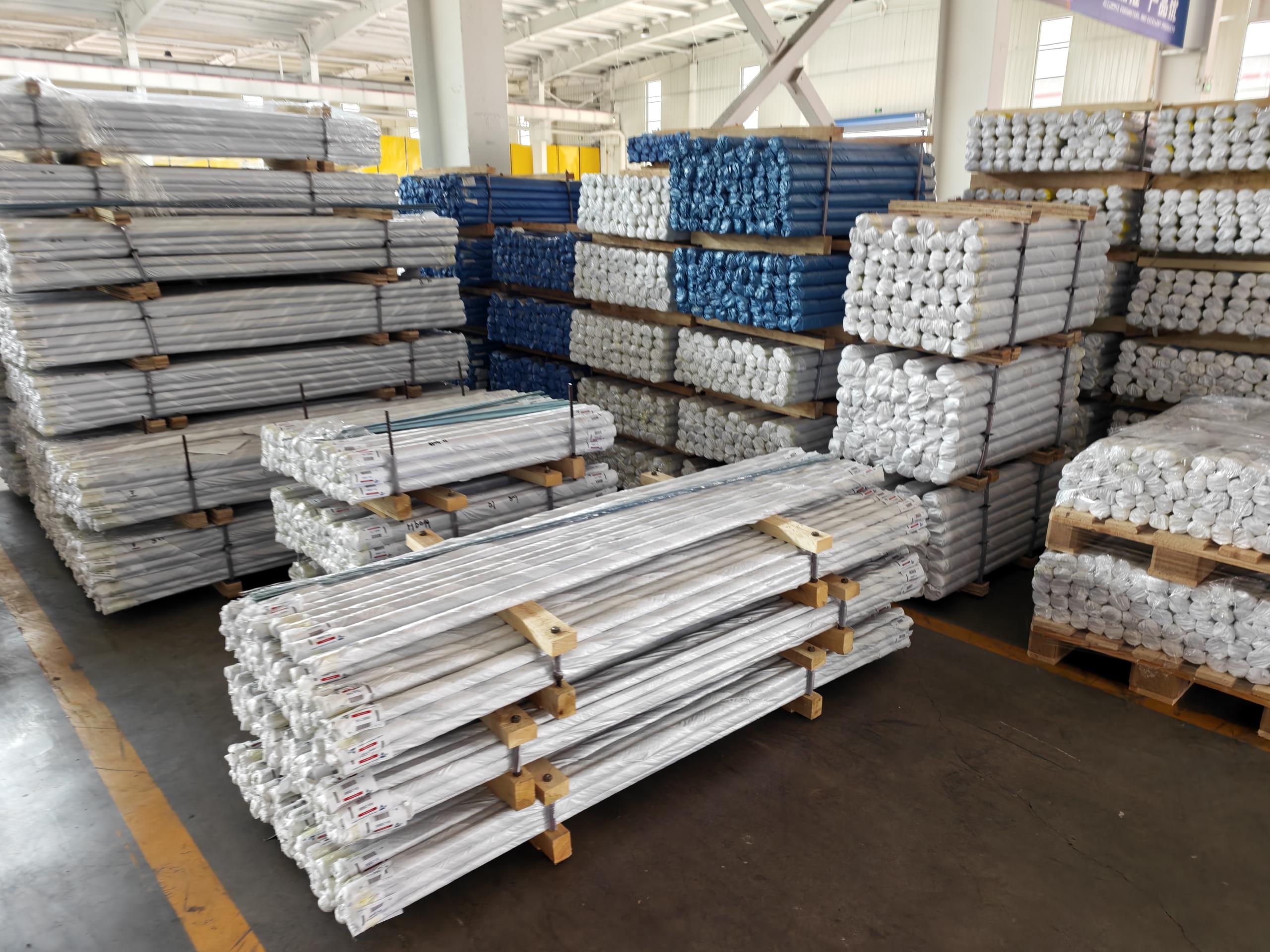
The framework converts into a short, checkable enquiry. State the function of each line — connection or anchorage — then the base material, the size and grade, the finish matched to exposure, and the mating parts required for installation. Recorded matched equipment for these applications includes nuts, washers, sleeve anchors, torque wrenches, impact drills and general fastening tools, and customisation options cover size and specification, material selection, anti-corrosion treatment, product style, printed logo on packaging and matched assembly kits.
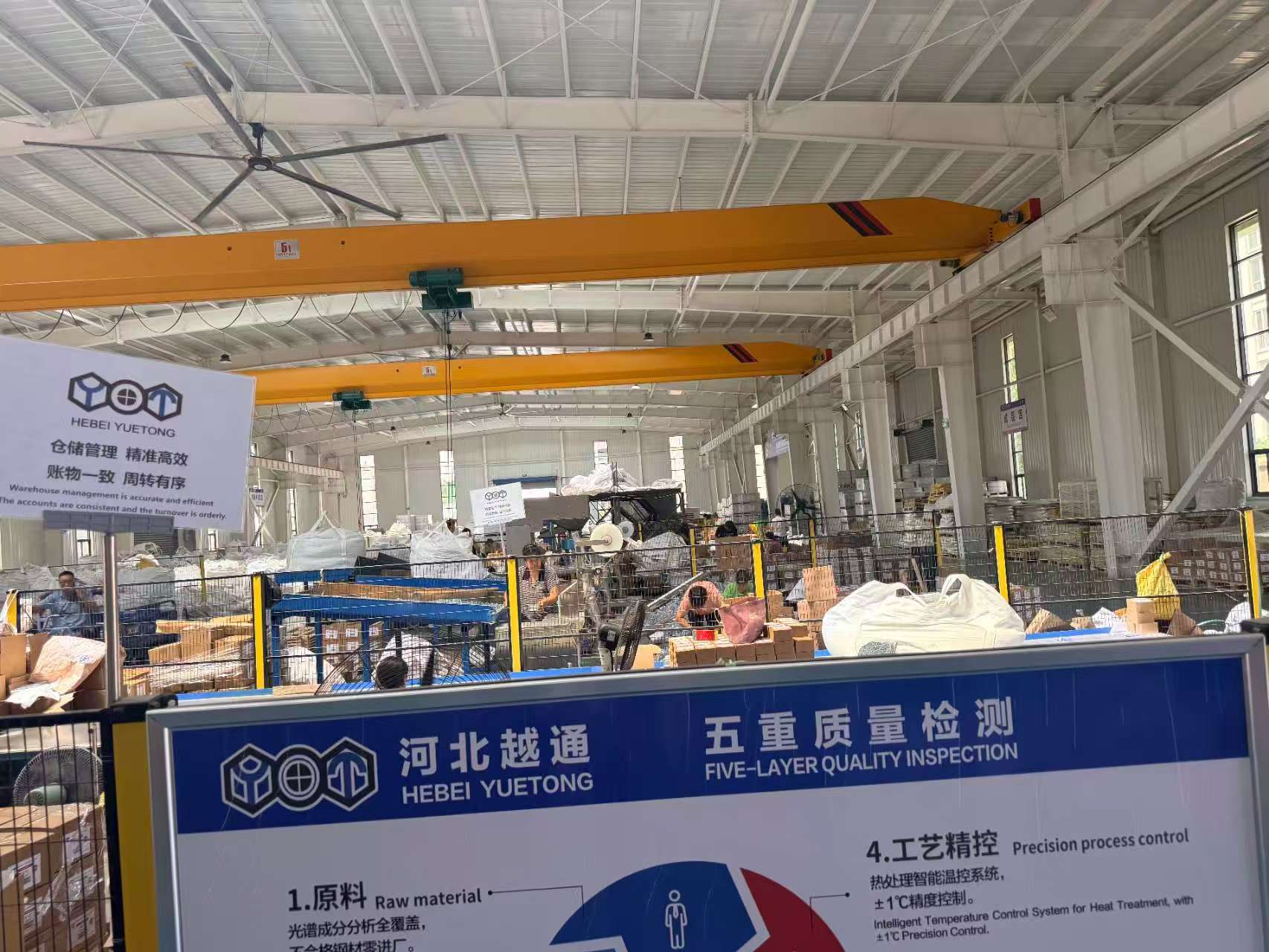
On the manufacturing side, YUETONG FASTENER operates a 26,666.67 m² facility with 100 employees, 12 engineers and an annual output of 150,000 tons, with monthly capacity of 1,500 tons. Production services include OEM, ODM, non-standard customisation and bulk stock supply; the assigned corpus for these services notes the Middle East and Central Asia markets in particular. Lead time is stated as 3–7 days for in-stock items and 12–20 days for customised orders, with expedited delivery negotiable.
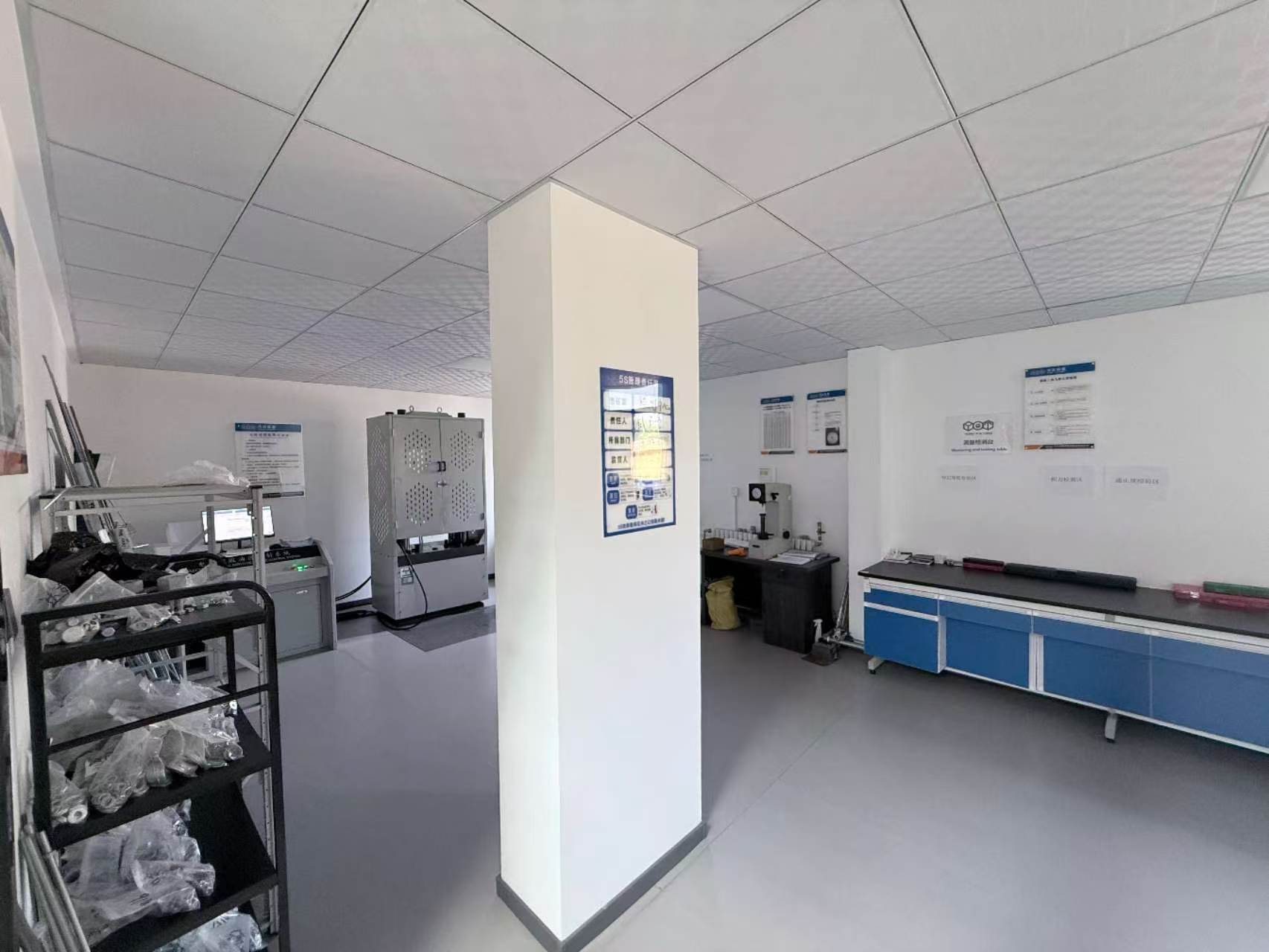
Quality control follows four recorded stages: raw material incoming inspection, in-process patrol inspection, finished-product tensile load testing and pre-shipment inspection, with third-party SGS testing available on request. Acceptance can be handled through factory pre-inspection, customer on-site inspection or SGS third-party acceptance, and material certificates and test reports are provided with shipments. Long-term customers have access to 24-hour technical communication and product selection guidance — useful precisely at the stage this framework addresses, where the question is which item belongs where.
One company-reported reference order illustrates how the two families travel together: 15,000 pieces supplied to an engineering contractor and construction customer for steel structure splicing, mechanical equipment fixing, building component fastening and bracket assembly, with a reported service duration of 10–15 years, stable fastening strength under long-term load and successful project acceptance.
Market context for the selection decision
Carbon steel remains the dominant material for hex nuts and bolts, accounting for 44.8% of the global market share in 2025 according to Dataintelo. Strategic Market Research values the global hex bolts market at USD 19.67 billion in 2025, with a forecast period extending to 2032. The two datasets define scope differently — one covers hex bolts, the other hex nuts and bolts combined — so the figures are best read directionally rather than as a single reconciled market size.
Trade data points to a mature, cyclical category: the global export value for HS code 731815, covering other screws and bolts, was USD 26.35 billion in 2023, a 3.65% decline on the prior year. In a market of that shape, differentiation rarely comes from the certificate list, which is increasingly similar across qualified suppliers. It comes from documented application fit, coating specification and delivery reliability.
Future outlook
Two shifts are visible in how buyers evaluate fasteners of this type. The first is the normalisation of environmental and carbon documentation: an ISO 14067 declaration for high-strength steel bolts and nuts is now part of the qualification pack rather than an optional extra, and it sits alongside quality, environmental and occupational safety certificates as a standard expectation.
The second is automotive-grade quality management migrating into construction and energy procurement. IATF 16949 is no longer read only by vehicle programmes; project buyers in PV, rail and wind supply chains increasingly ask for the same process discipline because it indicates traceability and change control. Neither shift changes the engineering answer. Both raise the standard of evidence a supplier must produce — which makes application-specific selection, rather than certificate counting, the more durable purchasing skill.
FAQ
If Hex Bolt 7337 and Sleeve Anchor 7338 share the same certificates, can they be used interchangeably?
No. The shared documents cover management systems, a type-approved attestation for construction fasteners and a factory capability assessment. They confirm that both products are within the assessed scope; they do not establish equivalent function. A hex bolt clamps two prepared components and develops load through the joint, while a sleeve anchor develops holding capacity from expansion in concrete, brick or masonry. Substituting one for the other changes the load path and is a design decision, not a procurement one.
Which product is appropriate for fixing equipment to a concrete floor?
Sleeve Anchor 7338 is the anchor option, since its stated application field covers equipment anchoring and its applicable base materials are concrete, brick and masonry wall. It is available in hex nut, hex bolt, flange nut, eye hook, L-hook and G-hook configurations, with standard and heavy-duty bearing capacity variants, in sizes from M6 to M16 and 1/4″ to 5/8″ and lengths from 30 mm to 300 mm. Capacity for the specific base and size must be confirmed separately, because no load table is published in the current file.
Can a hex bolt be used as a concrete anchor?
A hex bolt is designed for component fastening and connection and requires a nut and washer on the far side of the joint. It does not generate holding capacity from the surrounding material. Where the fixing point is an existing concrete, brick or masonry structure, the correct product family is an expansion anchor such as Sleeve Anchor 7338, configured for the fixture being mounted.
What documentation should accompany a mixed bolt and anchor order?
At minimum: material certificates and test reports for the supplied items, and confirmation that the specific sizes, grades and coatings fall within the ECM attestation Annex I and the assessed management-system scope. Recorded inspection routes include raw material incoming inspection, in-process patrol inspection, finished-product tensile load test and pre-shipment inspection, with third-party SGS testing available. Acceptance can be arranged through factory pre-inspection, customer on-site inspection or SGS third-party acceptance.
Does the certification file cover explosion hazardous areas or high-temperature service?
The certification set supplied here contains no hazardous-area product approval and publishes no temperature rating. Explosion hazardous areas and high and low temperature conditions do appear among the recorded working conditions for these product families, and high temperature resistance, seismic resistance and custom specifications appear among the special requirements — these are requirements to be specified by the buyer, not certified performance values. Projects in such environments should define the requirement in the enquiry and obtain documentation that matches the site classification.
How much does the surface finish affect the corrosion decision?
Substantially, and it is a specification the buyer controls. Published coating data shows zinc plating typically at 5–12 μm and hot-dip galvanizing at 45–85 μm. Hex Bolt 7337 is offered in black oxide, zinc plated, hot-dip galvanized, Dacromet, mechanical galvanized and PTFE finishes; Sleeve Anchor 7338 is offered in zinc plated, yellow zinc plated and hot-dip galvanized. Where outdoor, humid or coastal salt-spray exposure is expected, the finish should be stated explicitly in the enquiry rather than left to a default.
¿Tiene preguntas o necesita más detalles?
Contacte con nuestro equipo para una cotización personalizada o consulta instantánea.
Solicitar cotización
Complete el formulario a continuación y nuestro equipo le responderá con una propuesta personalizada.
Chat directo de WhatsApp
¿Prefiere chatear en tiempo real? Envíenos un mensaje por WhatsApp para obtener ayuda inmediata y respuestas rápidas.
- Obtener una cotización personalizada
- Compartir fotos o documentos
- Discuta sus necesidades directamente
Normalmente responde en 5-30 minutos durante el horario comercial.