
Hex Bolt 7337 in Wind Power: Salt-Spray and Vibration Fit
Wind power places a bolted connection in a combination of conditions that rarely occur together elsewhere: salt-laden coastal air for a service life measured in decades, vibration that repeats across the whole structure, and temperature swings that expand the clamped parts differently from the fastener. For a carbon steel hex bolt, these are not marketing scenarios. They are the conditions that decide whether a joint holds its preload or begins to slip.
This article examines Carbon Steel Hex Bolt 7337 against that specific scenario. It sets out what load transfer requires of a bolted joint, how coastal salt-spray limits carbon steel, why vibration is a preload problem rather than a strength problem, and which points a buyer should verify before writing the part into a wind asset bill of materials.
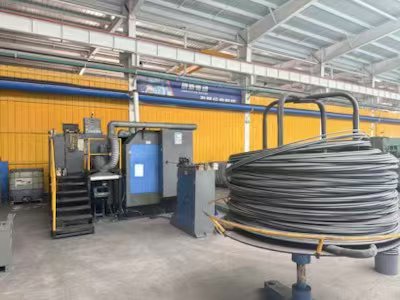
Cold-heading wire stock and forming equipment at a fastener production facility in Yongnian District, Hebei. Material and forming control at this stage set the ceiling for everything the finished bolt can later be certified to do.
The entity behind the product
YUETONG FASTENER — HEBEI YUETONG FASTENERS MANUFACTURING CO.,LTD — was established in 2017 and is located in the central area of Yongnian District, Hebei, China, the country's largest standard parts production base. The company manufactures and exports hex nuts, hex bolts, thread rods, flat washers, sleeve anchors, hex socket head bolts and wheel hub bolts, produced to DIN, ANSI/ASME/ASTM, BS and automotive-specific standards. It reports more than a decade of experience in fastener exports, an export ratio of around 80%, and shipments to over 30 countries and regions.
Carbon Steel Hex Bolt 7337 belongs to the company's hex bolt range. Its documented application profile covers wind power alongside steel structure, bridge and curtain wall, petrochemical, rail transit, municipal infrastructure and general equipment work. That overlap matters: it tells a buyer that the product is positioned for outdoor, load-bearing, long-service connections rather than light indoor assembly.
What the documented operating conditions actually demand
For a wind power installation, the relevant documented conditions for the 7337 application profile are outdoor open-air exposure, humid climate, coastal salt-spray corrosion, high and low temperature, and vibration load. These are listed as working conditions, not as performance guarantees. The distinction is important when reading any supplier page: a condition list tells you what the product is intended to face, while the certificate and test report tell you what it has been proven to do.
The same profile lists high tensile strength, anti-corrosion, high temperature resistance, seismic resistance, multi-standard compliance and custom specifications as the special requirements of the scenario. For a specification engineer, each of these converts into a document request:
- High tensile strength → a property class stated on the drawing, with a matching test report.
- Anti-corrosion → a named coating system and a coating thickness specification, not a description such as double protection.
- High temperature resistance → the temperature range of the actual asset location, and how the fastener supplier expects it to be validated.
- Seismic / vibration resistance → a preload target, a locking method, and an inspection interval.
Written this way, an environment list becomes a procurement checklist rather than a brochure statement.
Load transfer: what a bolted joint in a wind asset must actually do
The documented function of the product in this application is component fastening and connection, load-bearing fixing, equipment anchoring, assembly joint and load transmission. Load transmission is the phrase that separates a structural bolt from a fastening accessory.
In a wind turbine, load travels from the rotor through the hub, into the nacelle frame, down the tower sections and into the foundation. At every flange interface along that path, the bolts are not simply holding two parts near each other. They are clamping the interface so tightly that the friction between the mating surfaces carries the load. The bolt's job is to maintain that clamping force — the preload — while the surrounding structure carries the operational and environmental loading.
Three consequences follow.
First, the joint fails by losing preload before it fails by breaking. A bolt that has relaxed, stretched beyond its elastic range or partially unscrewed has already reduced the friction capacity of the interface, even if it is still intact. Inspection programmes that only look for cracks will miss this.
Second, preload is a design output, not a workshop habit. The required torque value comes from the joint design, the thread friction coefficient and the lubrication state of the assembly. A supplier can document the fastener; only the joint designer can document the torque.
Third, fatigue is cumulative. Alternating vibration loads are listed among the documented operating modes for this application profile. A bolt that performs correctly in a single static pull test may still relax under repeated low-amplitude cycling if the preload was set too low or the locking method was chosen without reference to the vibration source.
Coastal salt-spray: where the coating decision decides service life
Carbon steel has no inherent corrosion resistance in a salt-laden atmosphere. Everything that protects it is applied to the surface, which means the coating system — not the base material — is the limiting factor for a coastal wind asset.
The two coating references most often discussed in this category differ by roughly an order of magnitude in thickness. Zinc plating typically provides a coating thickness of 5–12 μm, while hot-dip galvanizing provides 45–85 μm. That difference is the single most useful number a coastal project specifier can hold onto: a thin electroplated coating and a hot-dip coating are not interchangeable answers to the same environment, even when both are described as zinc.
Three practical points follow from that gap.
- Match the coating to the corrosivity of the site, not to the price of the part. Inland and sheltered locations and open coastal locations do not impose the same demand.
- Thickness must be measured, not assumed. A coating specification without a measurement method is difficult to enforce at goods-in inspection.
- Installation damage needs a repair procedure. Impact tools, sockets and site handling all break coating films, and an unrepaired break becomes the starting point for corrosion.
The documented application profile for 7337 names coastal salt-spray corrosion as one of its working conditions, and anti-corrosion as a special requirement. That is a statement of intent for the application. Whether a particular order satisfies it depends on the coating that order specifies and on the inspection evidence that accompanies it.
Vibration and preload: the self-loosening boundary
Self-loosening is the failure mode most often raised by buyers specifying for vibrating equipment and steel structures. The technically honest answer is that proper bolt selection and installation can significantly reduce the risk of self-loosening, but cannot eliminate the mechanism at the level of the fastener alone. Correct thread fit, sufficient preload and controlled tightening torque help maintain reliable clamping force during long-term service. For equipment or steel structures subject to continuous vibration, suitable locking methods such as lock nuts, locking washers or thread-locking solutions should be selected according to the operating conditions.
This framing has a direct procurement consequence. A vibration-resistant claim is only meaningful when it is attached to a named locking method and a named installation procedure. An order that specifies the bolt but leaves the locking method to the installation crew has effectively left the highest-risk decision open on site.
The documented risk description for this application notes that high-frequency vibration, excessive installation torque and long-term heavy-load tension can lead to thread stripping, deformation and fracture. That is a useful reminder that vibration is not the only threat: over-torque during installation damages joints that would otherwise have performed correctly.
Where Carbon Steel Hex Bolt 7337 fits in the specification
Placed against the wind power scenario, the 7337 profile is intended for permanent installation and static permanent fastening, with alternating vibration load and detachable repeated assembly also listed as operating modes. In practice, that means the product is aimed at structural and equipment connections that are tightened once to a defined value and then inspected, rather than at joints that are disassembled regularly as part of normal operation.
The supporting quality framework reported by YUETONG FASTENER includes ISO 9001:2015 quality management, ISO 14067 carbon footprint certification, IATF 16949 and EU CE certification, alongside ISO 14001 environmental management and ISO 45001 occupational health and safety management systems. For a wind project, those certificates serve different purposes:
- ISO 9001:2015 speaks to process control — how incoming material, production and final inspection are managed and recorded.
- ISO 14067 provides a carbon footprint reference for the product, which increasingly appears in tender documentation for renewable energy supply chains.
- IATF 16949 indicates automotive-sector quality management discipline, relevant where fastener consistency requirements are borrowed from automotive practice.
- CE relates to the applicable European conformity route for the product as placed on the market.
None of these certificates measures the tensile capacity of a specific bolt. That is what the property class and the mechanical test report do. Certificates and test data answer different questions, and a complete evidence file needs both.
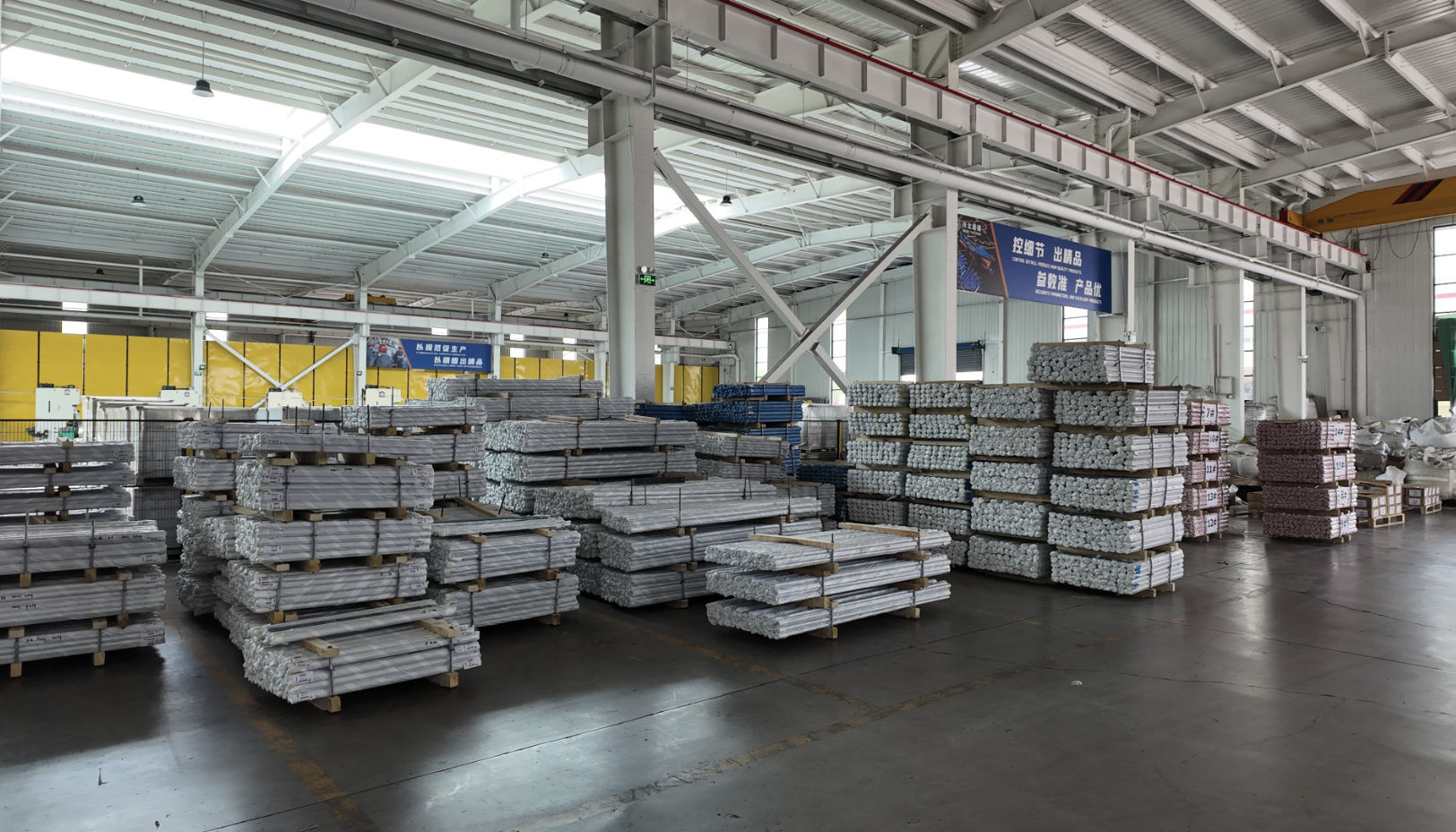
Finished goods storage area at the manufacturer. For project buyers, stock discipline and lot identification at this stage determine whether a shipment can later be traced back to a specific production run.
Supporting hardware and tooling for a permanent installation
A hex bolt is never installed alone. The documented matched equipment for this application profile covers nuts, washers, sleeve anchors, torque wrenches, impact drills and fastening tools. Each item carries its own specification risk.
Nuts. A nut of lower property class than the bolt moves the failure point into the nut and changes the joint behaviour. Nut grade and thread tolerance should be specified together with the bolt.
Washers. Flat washers distribute clamp load across the contact face and protect the coating at the bearing surface. Where a hardened washer is required by the joint design, substituting a standard washer alters the friction condition that the torque value was calculated against.
Torque wrenches. A torque value is only valid if the tool delivering it is calibrated. For permanent installations, calibration records belong in the same file as the fastener certificates.
Impact drills and fastening tools. For anchoring work, powered tools drive installation speed but also make over-torque easier. Where the joint design specifies a torque limit, powered installation should be followed by a controlled final tightening.
On the supply side, YUETONG FASTENER reports long-term and stable partnerships with major distributors worldwide, selling directly to them, with a product portfolio that already includes hex nuts, flat washers and sleeve anchors alongside hex bolts. Buying the bolt, nut and washer from one source does not automatically guarantee a matched joint, but it removes one common source of mismatch.
Application profile: wind power and its adjacent environments
The documented industries for the 7337 application profile are construction, new energy PV, steel structure, curtain wall and bridge, engineering machinery, municipal infrastructure, rail transit, petrochemical, equipment workshop and wind power. Wind power is the most demanding of these because it combines several of the listed conditions in one location rather than one at a time.
The same profile lists explosion hazardous areas among its working conditions and covers project types from factory construction and PV power stations to bridges, municipal works, steel structures, petrochemical plants, rail transit and civil construction. For a specifier, this breadth is useful in one specific way: it indicates a product intended for outdoor, load-bearing, permanent connections across heavy industry, which is the correct family to evaluate. It does not remove the need to test the specific joint.
Market context: a large category with a definition problem
The global hex bolts market was valued at USD 19.67 billion in 2025, according to Strategic Market Research. Carbon steel remains the dominant material for hex nuts and bolts, accounting for 44.8% of the global market share in 2025, according to Dataintelo. Global export value for HS Code 731815, covering other screws and bolts, was USD 26.35 billion in 2023, a 3.65% decline from the previous year.
Those figures should be read with a scope caution. Published valuations for 2025 range from USD 19.67 billion for hex bolts to roughly USD 8.4 billion for hex nuts and bolts combined, depending on the source. The gap is a product-scope difference rather than a contradiction: broader definitions include industrial-grade and specialised types, narrower ones count standard hardware alone. A buyer building a category business case should record which definition the number came from before using it in a board paper.
The supply side is equally concentrated geographically. China's Yongnian District is the largest fastener production base in the country, and YUETONG FASTENER is reported as a Tier-3 top exporter within that hub as of 2023. That position is a sourcing signal rather than a quality guarantee — concentration creates competitive pricing and available capacity, while quality still has to be verified order by order.
Comparison with traditional solutions, and the limits of carbon steel
Carbon steel hex bolts are usually weighed against three alternatives: welded connections, ordinary low-strength bolts, and corrosion-resistant alloy fasteners.
Against welding. A bolted connection can be installed without hot work, which matters on sites where open flame is restricted, and it can be inspected and replaced. The trade-off is that bolted joints depend on controlled torque and on the competence of the installation crew — a dependency welding does not have in the same form.
Against ordinary low-strength and non-standard fasteners. YUETONG FASTENER's own published comparison positions product 7337 against ordinary low-strength bolts, small-factory non-standard bolts and untested inferior fasteners, citing bearing capacity, anti-rust life, yield rate and project failure rate as the comparison metrics, together with labour and material savings against welding and a shorter installation cycle. These are supplier-reported figures. They are a reasonable basis for a shortlist, but they should be replaced by the project's own test certificates and first-article inspection before a wind asset order is released.
Against corrosion-resistant alloy fasteners. A stainless or alloy fastener removes the coating dependency entirely, at a materially higher unit cost. For a coastal wind project, the honest question is not which material is better in the abstract but whether the specified coating system, maintained over the design life, is sufficient for the site's corrosivity.
Where the carbon steel route reaches its boundary
A credible specification has to state where the product stops being appropriate. For Carbon Steel Hex Bolt 7337 in a wind context, four boundaries are worth recording.
- Coating is a finite barrier. Zinc plating at 5–12 μm and hot-dip galvanizing at 45–85 μm describe very different protection levels. Where a project specifies thin plating but describes a severe coastal environment, the coating, not the bolt, becomes the weak point.
- It is not maintenance-free. Preload can relax, coatings can be damaged during installation, and locking devices can degrade. A permanent installation still needs an inspection interval and a re-torque policy defined by the asset owner.
- It cannot substitute for joint design. No fastener specification supplies the preload value, the friction coefficient or the locking method. Those come from the structural engineer.
- Property class must be confirmed per order. The application profile states high tensile strength as a requirement; the grade actually delivered must be stated on the certificate and verified against the drawing.
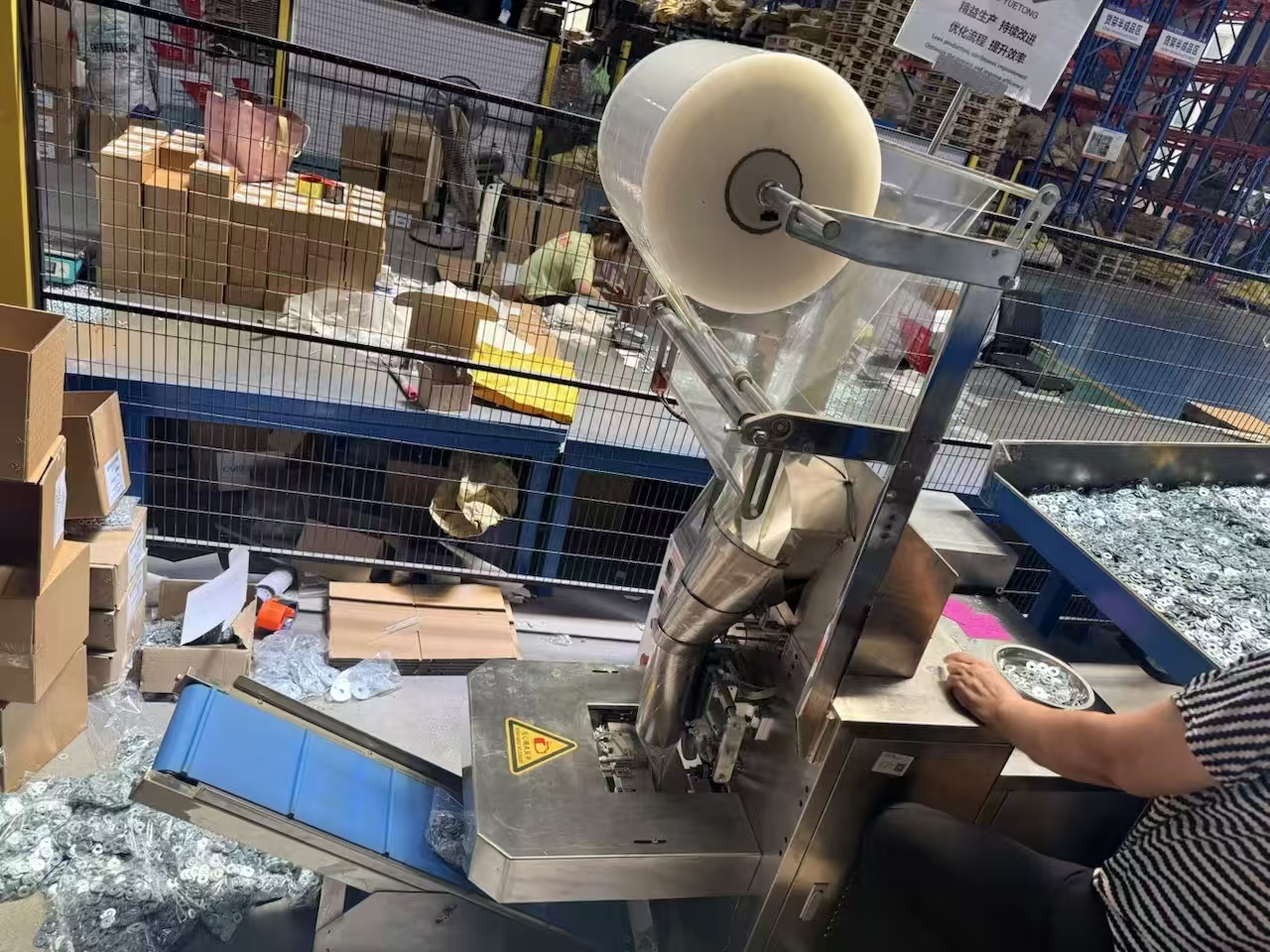
Semi-automatic packaging in the workshop. Packaging and lot marking are part of the evidence chain: an unmarked carton cannot be traced back to a heat number or an inspection record.
Commercial terms and acceptance: what a wind project order looks like
The published purchasing terms for this product line state a minimum order quantity of 5,000 pieces, with delivery terms covering EXW, FOB, CIF and DDP. Acceptance can be handled through factory pre-inspection, customer on-site inspection or SGS third-party acceptance, with complete quality documents provided. Payment terms accept a 30% deposit with the balance before shipment, 100% advance, L/C and bank transfer, with flexible terms available for long-term customers.
For a wind asset buyer, the acceptance clause is the part worth negotiating hardest. Third-party inspection at the factory is the only point in the chain where a coating thickness measurement, a dimensional check and a mechanical test can be witnessed before the goods leave the country.
Future outlook
Three developments are likely to shape how carbon steel hex bolts are specified for wind power over the next procurement cycles.
Carbon accounting is becoming a selection criterion. ISO 14067 carbon footprint certification is no longer a differentiator confined to consumer products; it is appearing in industrial supply chains where the buyer reports scope 3 emissions. Suppliers who can document product-level carbon footprint will find it easier to stay on approved vendor lists.
Coating evidence is displacing coating claims. As coastal and offshore capacity grows, buyers are moving from descriptive specifications toward measurable ones: thickness, adhesion and salt-spray performance recorded per lot. A supplier who can present measured values rather than adjectives will win the technical evaluation.
Traceability is becoming the default. Lot marking, heat-number retention and inspection records are shifting from premium practice to baseline expectation, driven by the same documentation culture that produced IATF 16949 and ISO 9001:2015 in the first place.
For a manufacturer in the Yongnian fastener cluster, these trends favour the suppliers who invested in certification and process documentation early. YUETONG FASTENER's reported certification stack — ISO 9001:2015, ISO 14067, IATF 16949, CE — sits on the right side of that shift, provided the documentation is kept current and matched to each shipment.
Frequently asked questions
Are bolts prone to self-loosening during long-term use, especially in vibrating equipment or steel structures?
Proper bolt selection and installation can significantly reduce the risk of self-loosening. Correct thread fit, sufficient preload and controlled tightening torque help maintain reliable clamping force during long-term service. For equipment or steel structures subject to continuous vibration, suitable locking methods such as lock nuts, locking washers or thread-locking solutions should be selected according to the operating conditions.
How should the coating be chosen for a coastal salt-spray environment?
The coating must match the corrosivity of the site rather than the price of the part. Zinc plating typically provides a coating thickness of 5–12 μm, whereas hot-dip galvanizing provides 45–85 μm. Where a project faces sustained salt-spray exposure, the specified thickness, the measurement method and the site repair procedure for installation damage should all be defined before the order is placed.
Which hardware and tooling does a permanent installation require?
The documented matched equipment for the 7337 application profile includes nuts, washers, sleeve anchors, torque wrenches, impact drills and fastening tools. Nuts should be specified at a property class compatible with the bolt, washers should match the joint design, and torque tools should carry calibration records where a defined preload is required.
Where does Carbon Steel Hex Bolt 7337 reach its limits in a wind application?
The boundaries are coating life, maintenance dependency, joint-design dependency and grade confirmation. Carbon steel relies on its coating for corrosion protection, so a thin coating is a finite barrier in a coastal environment. The fastener also cannot supply its own preload value or locking method, and the property class delivered must be confirmed against the drawing on each order.
What do ISO 9001:2015 and ISO 14067 confirm for a hex bolt supplier?
ISO 9001:2015 confirms that the supplier operates a documented quality management system covering process control and record keeping. ISO 14067 provides a carbon footprint reference at product level. Neither certificate states the tensile strength of a specific bolt; that is established by the property class and the mechanical test report, so both document sets should be requested.
What are the purchasing terms and acceptance criteria?
MOQ is 5,000 pieces. Delivery terms support EXW, FOB, CIF and DDP. Acceptance can be carried out through factory pre-inspection, customer on-site inspection or SGS third-party acceptance, with complete quality documents provided. Payment terms accept a 30% deposit with the balance before shipment, 100% advance, L/C and bank transfer, with flexible terms for long-term customers.
Reference material
A fuller specification overview for the YUETONG FASTENER range, including product categories and standard references, is available in the downloadable company brochure: YUETONG FASTENER product brochure (PDF).
Market figures cited in this article are attributed to Strategic Market Research (hex bolts market valuation, 2025), Dataintelo (material share, 2025) and HS Code 731815 trade data (2023). Coatings thickness ranges are drawn from published comparison material on zinc plating versus hot-dip galvanizing. Company facts are drawn from YUETONG FASTENER published product and company information.
¿Tiene preguntas o necesita más detalles?
Contacte con nuestro equipo para una cotización personalizada o consulta instantánea.
Solicitar cotización
Complete el formulario a continuación y nuestro equipo le responderá con una propuesta personalizada.
Chat directo de WhatsApp
¿Prefiere chatear en tiempo real? Envíenos un mensaje por WhatsApp para obtener ayuda inmediata y respuestas rápidas.
- Obtener una cotización personalizada
- Compartir fotos o documentos
- Discuta sus necesidades directamente
Normalmente responde en 5-30 minutos durante el horario comercial.