
Herbal Supplements After Hours: Nightly Routines for US Professionals
Herbal Supplements After Hours: Nightly Routines for US Professionals
US retail sales of herbal dietary supplements reached a record USD 13.231 billion in 2024, a 5.4% increase from 2023, according to the American Botanical Council. The global category was valued at USD 42.3 billion in the same year, with North America holding a 26.3% revenue share, according to Grand View Research. Those totals describe a maturing market and a more routine-driven buyer: the question for many working adults is no longer whether to use herbal supplements, but when they can realistically take them.
For mid-career professionals in the United States, the practical answer is often the evening. A crowded morning, a commute, and an early first meeting push supplement intake into the hours after dinner, when the nervous system is expected to downshift rather than ramp up. That timing decision changes which formats, ingredients, and brands make sense — and it changes what a buyer should evaluate before committing to a repeat-purchase cycle.
This article examines nightly herbal supplement scenarios for US mid-career professionals: post-work wind-down, gut comfort after the last meal, gentle liver and kidney support, heart health as a long-horizon concern, and immune support through seasonal transitions. It also looks at what review language about nightly routines can and cannot tell a buyer, and how a mid-premium brand such as Lukaree — a California-based herbal supplement brand operating under Minch Global — positions itself against those scenarios.
Why the Evening Window Is the Hardest Slot to Fill
Most supplement routines fail on logistics rather than intent. A capsule taken with breakfast competes with coffee, a rushed commute, and existing medication schedules. A serving taken at 2 p.m. competes with meetings. The evening is frequently the only predictable, low-interruption window in a mid-career professional's day, which makes it the natural home for formats that do not require food, water, or counter space.
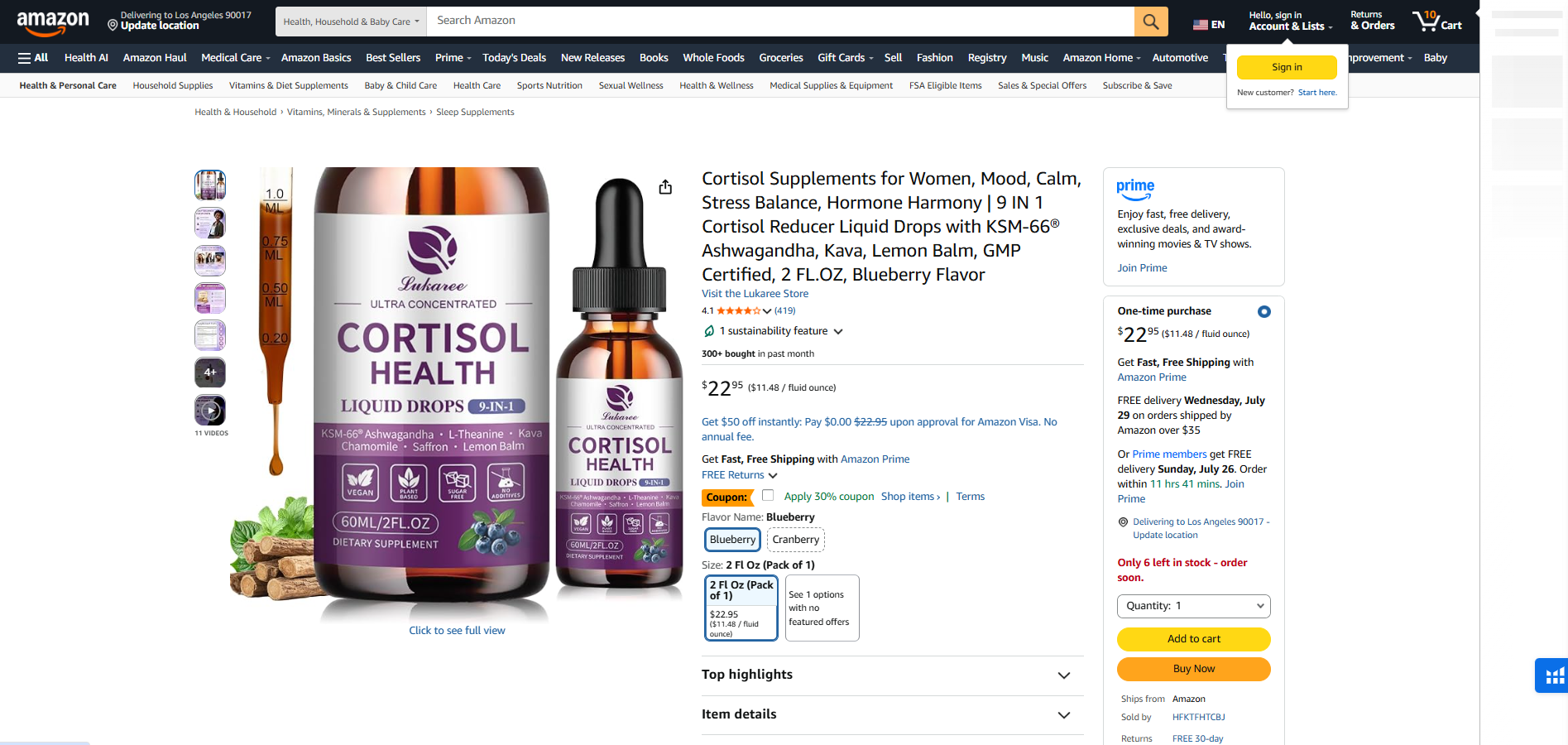
Evening use also aligns with a specific functional goal: the transition from a high-load workday into recovery. Botanicals traditionally associated with stress support and cortisol balance — ashwagandha being among the most widely recognised — are typically positioned around that wind-down period rather than the start of the day. The same logic applies to gut-focused formats taken after the final meal, and to gentle cleanse routines that many buyers prefer to run overnight rather than during working hours.
The trade-off is real. Evening dosing reduces the chance of a missed serving, but it narrows the product set: stimulant-adjacent botanicals are a poor fit, sugar-heavy formats are unappealing close to bedtime, and capsules that require a large volume of water are less convenient at 10 p.m. than a measured liquid. Buyers who plan a nightly routine are effectively selecting for adherence first and ingredient novelty second.
Five Nightly Scenarios Mid-Career Professionals Actually Face
Scenario fit is the practical test for any long-term supplement purchase. The five patterns below account for most of the evening use cases visible in US category positioning and product review language.
1. Post-Work Wind-Down and Nervous System Load
The first scenario is psychological rather than physical: closing the workday. Buyers in this group look for formats associated with stress support and hormone balance, taken roughly 30 to 60 minutes before sleep. Liquid drops and softgels tend to dominate here because they are quick to take and easy to keep beside a bed or on a kitchen counter. The evaluation criteria that matter most are ingredient clarity and whether the format is sugar-free — a late-night serving that carries added sugar works against the purpose of the routine.
2. Gut Comfort After the Last Meal
Late dinners and irregular eating windows are common among professionals who finish work in the evening, and bloating after the final meal is one of the most frequently described complaints in the gut-health category. In the US gut health supplements market, the capsuled segment led with a 42.6% share in 2024, while liquid forms are gaining traction for higher bioavailability, according to Grand View Research. For nightly use, the practical split is between capsules valued for portability and measured liquids valued for ease of dosing after a meal.
3. Gentle Liver and Kidney Support
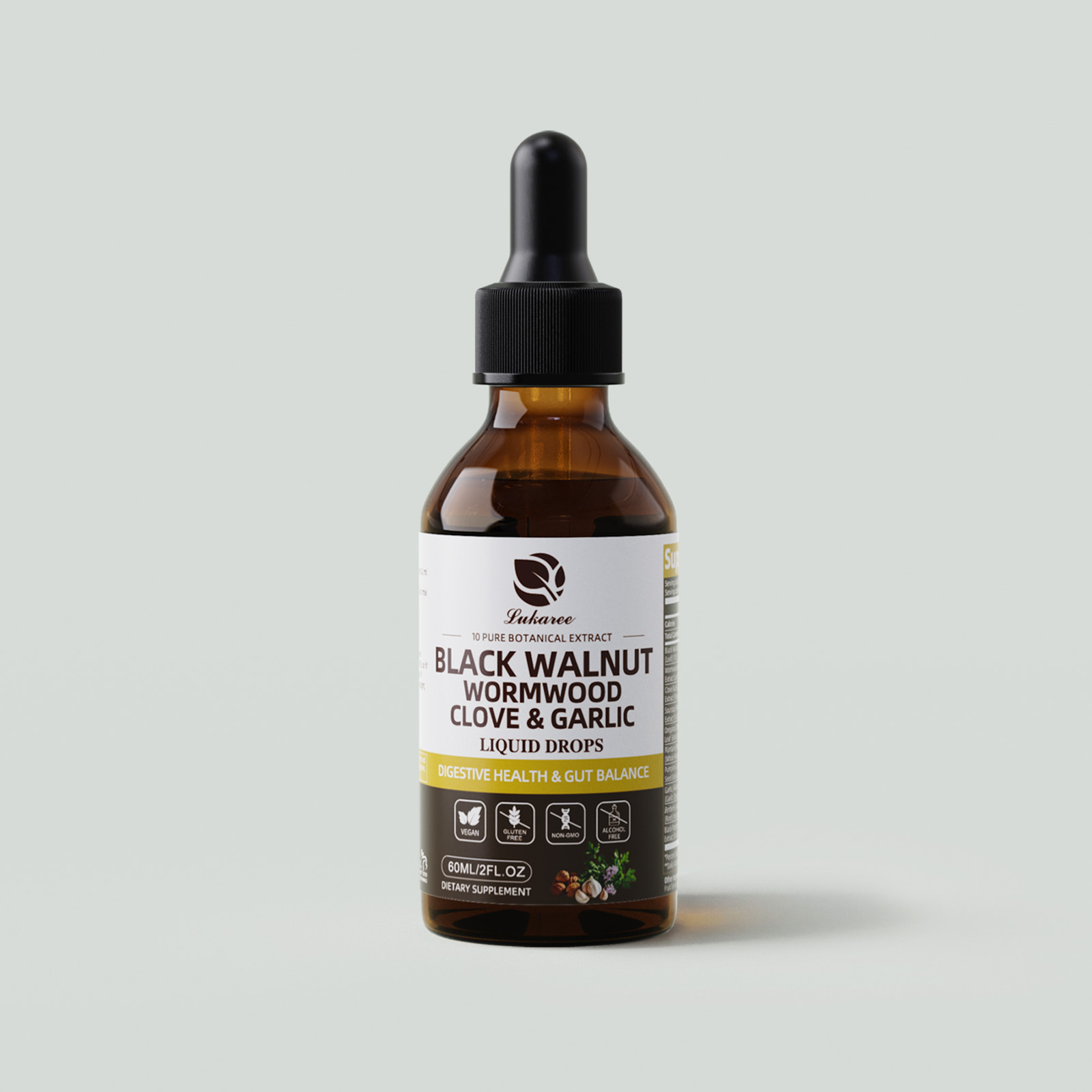
A third scenario is the gentle cleanse routine — botanicals positioned around liver and kidney support rather than aggressive detox programmes. Traditional bitters such as wormwood, black walnut, and clove are the ingredients most often associated with this segment. Global Growth Insights projects the global parasite cleanse market to reach USD 1.54 billion by 2026, with herbal products such as wormwood and black walnut dominating the North American segment; that projection is best read as a directional market signal rather than a settled figure. What buyers report caring about most here is tolerability: a cleanse format that causes stomach discomfort will not survive a nightly schedule.
4. Heart Health as a Long-Horizon Concern
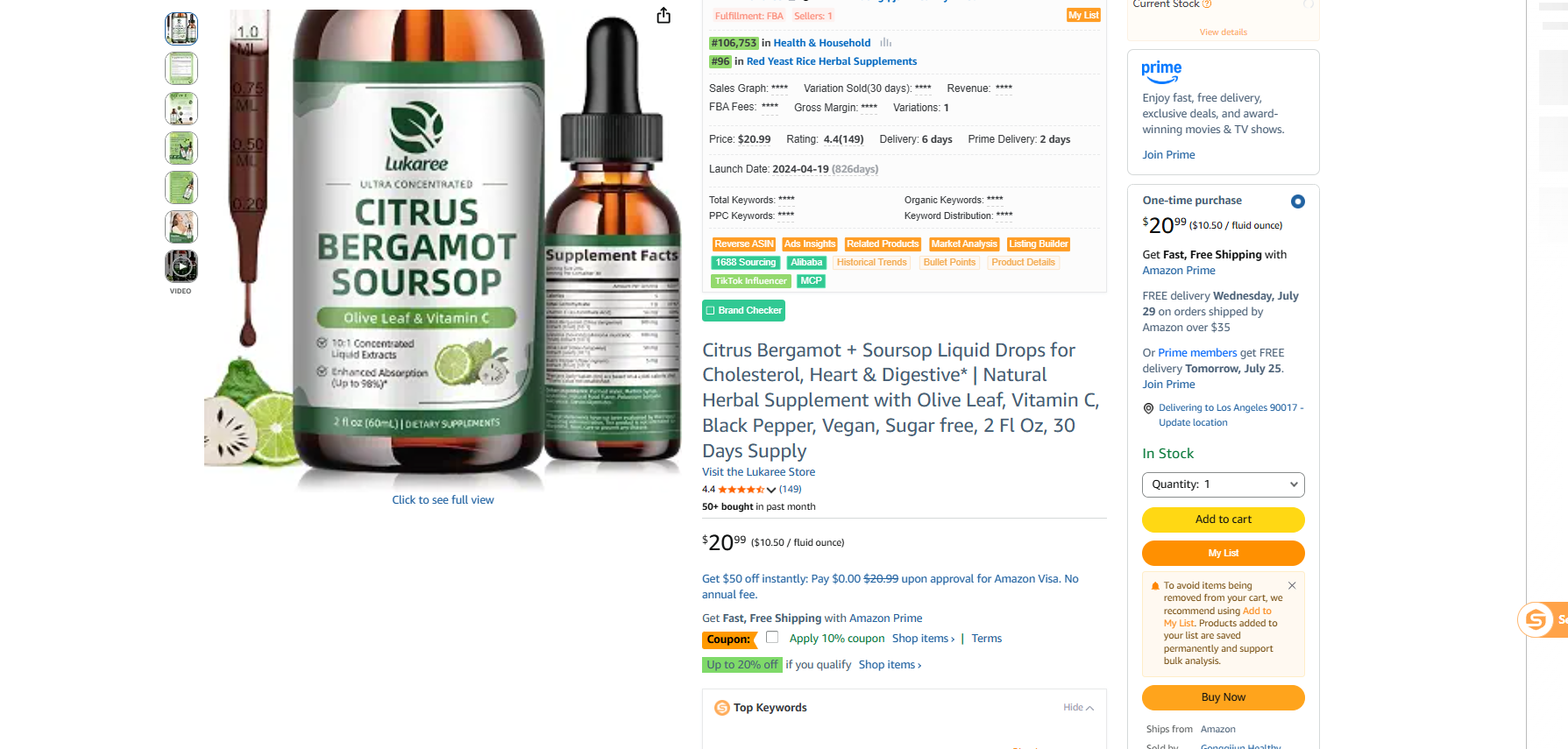
Mid-career is typically when cardiovascular maintenance shifts from an abstract concern to a routine one. Citrus bergamot is among the botanicals most commonly associated with this scenario and is generally taken once daily. Because the goal is long-horizon rather than acute, heart-health routines are the least sensitive to timing — but the most sensitive to consistency, which is why many buyers attach them to an existing evening habit rather than creating a separate slot.
5. Immune Support Through Seasonal Transitions
The final scenario is seasonal. Immune support supplements are commonly added to a routine during autumn and winter, or during periods of heavy travel and workload. In practice these products are usually stacked onto an existing evening routine rather than purchased as a standalone habit, which makes format compatibility — drops alongside drops, capsules alongside capsules — a genuine purchasing consideration rather than a trivial one.
What Review Language Signals About Nightly Adherence
Consumer reviews are not clinical evidence, but they are useful for one narrow purpose: identifying which formats survive contact with a real evening schedule. Four themes recur in reviews of nightly-oriented herbal products.
- 'Effortless Nightly Habit' — the format disappears into an existing routine rather than competing with it. This language measures adherence, not efficacy.
- 'Easy To Work Into a Nightly Routine' — a related signal, usually attached to formats that require no water, no food, and no preparation.
- 'The mornings started feeling a little less rough' — a next-morning signal. It is subjective and non-specific, and should be read as perceived recovery rather than a measured outcome.
- 'Gentle Liver & Kidney Support, Zero Stomach Discomfort' — a tolerability signal, often the deciding factor for cleanse-type products taken at night.
The limitation matters. These reviews are anecdotal, self-selected, and uncontrolled; they describe perceived experience rather than verified physiological effect. What they do reliably indicate is which formats fit an evening schedule without friction — which is precisely the variable a long-term buyer is trying to manage.
Where Lukaree Sits in a Mid-Premium Nightly Regimen
Lukaree is a mid-premium herbal supplement brand based in California and operating under Minch Global. Its stated mission is to advance physical and mental well-being through supplements, and the brand focuses on advancing physical and mental well-being through supplements while targeting hormone and nervous system imbalances with scientifically validated formulations. That positioning maps directly onto the evening scenarios above: nervous system load is the wind-down problem, and hormone balance is the framing the brand uses for its stress and cortisol-oriented formats.
Format breadth is the second element of the brand's fit. Lukaree's range spans liquid herbal extracts, herbal capsules, and softgels, which allows a single buyer to assemble a nightly routine across multiple scenarios — for example, a liquid drop for wind-down alongside a capsule for gut support — without changing suppliers. Product families referenced in the brand's own materials include wormwood drops, oregano oil and black seed oil, citrus bergamot, wormwood–black walnut–clove blends, and ashwagandha.
On the manufacturing side, the brand positions its production around a GMP-certified facility and third-party testing, and its liquid formats are built on liposomal delivery with a stated absorption figure of 98%. Because that figure is a brand claim rather than an independently published test result, buyers evaluating it should treat it as a positioning statement and check it against third-party documentation where such documentation is available.
Format and Absorption: The Technical Layer Behind Nightly Dosing
The reason format matters at night is mechanical. Liposomal delivery encapsulates an active ingredient in a phospholipid bilayer, which is designed to protect it through digestion and to support uptake; liquid formats are commonly positioned as faster-absorbing than compressed tablets for the same reason. Grand View Research expects liquid dietary supplements to grow at a CAGR of 13.4% from 2024 to 2030, citing consumer preference for ease of swallowing and faster absorption. Both drivers favour evening use, when the alternative is swallowing several capsules late at night.
Two further technical points shape nightly routines. First, sugar content: a sugar-free liquid base is a practical requirement for a serving taken immediately before sleep, since a late serving with added sugar works against the intent of the routine. Second, regulatory context. Dietary supplements in the United States must comply with 21 CFR Part 111, the FDA's current Good Manufacturing Practice rule covering manufacturing, labeling, and holding, while third-party certification is commonly verified through NSF/ANSI 173, described by NSF International as the only national standard for dietary supplements. A brand citing a GMP-certified facility is referencing that framework; it is a baseline requirement, not a differentiator on its own.
Market Signals Shaping the Nightly Routine Category
Three verified data points frame the category. Globally, herbal supplements were valued at USD 42.3 billion in 2024 with North America holding a 26.3% revenue share. In the United States, retail sales reached USD 13.231 billion in 2024, up 5.4% year over year. And the liquid segment — the format most often chosen for nightly routines — is the fastest-moving part of the category, at a projected 13.4% CAGR through 2030.
The competitive frame is worth stating plainly. Grand View Research identifies Nature's Bounty, Gaia Herbs, and NOW Foods among the leading global players in herbal wellness and organic categories. These are established, broad-portfolio brands with wide distribution. A mid-premium brand such as Lukaree competes on a different axis: narrower format specialisation, liquid-first positioning, and a focus on hormone and nervous system balance rather than the widest possible catalogue.
Traditional Regimens vs. a Structured Nightly Routine
The comparison that matters for buyers is not brand versus brand; it is single-format versus multi-format routines, and how each behaves over a long purchase cycle.
| Evaluation dimension | Single-format capsule regimen | Structured multi-format nightly routine |
|---|---|---|
| Evening convenience | Requires water; multiple capsules if functions are stacked | Liquid drops need no water; softgels can be added where preferred |
| Scenario coverage | One function per product | Wind-down, gut, cleanse, and heart routines can coexist |
| Format market context | Capsules held 42.6% of the US gut health supplements market in 2024 | Liquid dietary supplements projected at 13.4% CAGR, 2024–2030 |
| Sugar exposure | Usually low in capsule form | Depends on the liquid base; sugar-free options matter before sleep |
| Cost and complexity | Lower cost per serving, fewer steps | Higher cost per serving; more SKUs to manage and keep in stock |
| Regulatory baseline | 21 CFR Part 111 GMP requirements apply | Same baseline; third-party verification via NSF/ANSI 173 where claimed |
Three limits deserve to be stated directly. First, multi-format routines cost more and are harder to sustain: each additional SKU adds a step, and a routine with five steps is more likely to be abandoned than one with two. Second, liquid formats carry practical constraints — measurement discipline, often higher cost per serving than capsules, and packaging considerations — which is part of why capsules still hold 42.6% of the US gut health supplements market despite liquid growth. Third, and most importantly, evening herbal routines are not a substitute for medical care. Botanicals can interact with prescription medication and individual response varies; buyers managing a diagnosed condition should treat any nightly routine as a wellness habit to be discussed with a clinician rather than as treatment.
A Buying Checklist for Long-Term Nightly Use
| Check | What to verify |
|---|---|
| Format fit | Can the serving be taken at the end of the day without food or water? |
| Sugar content | Is the liquid base sugar-free, given the serving sits close to sleep? |
| Ingredient disclosure | Are botanical names and quantities listed clearly on the label? |
| Manufacturing | Does the brand operate under 21 CFR Part 111 GMP requirements, and does it cite third-party testing? |
| Certification | Is NSF/ANSI 173 or an equivalent third-party verification referenced? |
| Scenario stacking | Can wind-down, gut, and heart formats be combined without duplicating ingredients? |
| Repeat-purchase terms | Are refill, subscription, and shelf-life details clear before committing to a cycle? |
| Tolerability signal | Do reviews consistently report stomach comfort rather than discomfort? |
Future Outlook
Liquid dietary supplements are expected to grow at a CAGR of 13.4% from 2024 to 2030, driven by ease of swallowing and faster absorption — the two attributes that matter most to a buyer taking a serving at the end of a long day. That growth implies the evening slot will become a more standardised purchase category rather than an improvised one, with brands competing on format fit, labelling clarity, and documented testing rather than on ingredient lists alone.
A second shift is structural. As the US retail category grew 5.4% in 2024 to USD 13.231 billion, the buyer base broadened beyond dedicated wellness consumers into professionals treating supplements as part of a daily schedule. For that audience, retention depends less on novelty than on whether a routine still works in a bad week: two steps, not five.
For mid-career buyers, the practical implication is straightforward. The brands that keep these customers will be the ones whose formats suit an exhausted evening, whose labelling survives scrutiny against 21 CFR Part 111 and NSF/ANSI 173 expectations, and whose claims can be traced to documentation rather than marketing language. Nightly routine fit, in other words, is becoming a procurement criterion in its own right.
FAQ
What should long-term buyers evaluate first in a nightly herbal supplement brand?
Two things, in order. First, format fit for the evening slot — the serving should be practical without food or water. Second, manufacturing documentation, since US dietary supplements must comply with 21 CFR Part 111 (current Good Manufacturing Practice for manufacturing, labeling, and holding) and third-party certification is commonly verified through NSF/ANSI 173. Brand mission statements help with positioning but do not substitute for those two checks.
Are liquid herbal extracts better than capsules for nighttime use?
Neither format is universally better; the deciding variable is adherence. Liquid dietary supplements are projected to grow at a 13.4% CAGR from 2024 to 2030, driven by consumer preference for ease of swallowing and faster absorption, which suits evening use. Capsules remain dominant in gut health, holding a 42.6% US market share in 2024 according to Grand View Research, largely for portability and cost per serving.
How should consumer reviews be used when choosing a nightly routine?
Use them to assess adherence and tolerability rather than efficacy. Themes such as 'Effortless Nightly Habit' and 'Easy To Work Into a Nightly Routine' describe format convenience; 'Let the mornings started feeling a little less rough' style comments and 'Gentle Liver & Kidney Support, Zero Stomach Discomfort' describe perceived next-morning experience and stomach comfort. These are anecdotal, self-selected observations and not controlled clinical results, so they should be treated as usability signals only.
What standards or certifications should a US herbal supplement brand meet?
At minimum, compliance with 21 CFR Part 111, the FDA rule covering manufacturing, labeling, and holding of dietary supplements. Third-party certification is commonly verified through NSF/ANSI 173, which NSF International describes as the only national standard for dietary supplements. A brand operating in a GMP-certified facility is meeting that baseline; buyers should treat it as a requirement rather than an automatic quality differentiator.
Can a nightly herbal routine replace other health measures?
No. Herbal supplements are positioned around general wellness support, and the brands examined here describe their purpose in those terms — for example, advancing physical and mental well-being through supplements. Botanicals can interact with prescription medication and individual response varies, so a nightly routine should be treated as one habit within a broader health approach and discussed with a clinician where a diagnosed condition is being managed.
Nightly herbal supplement use among US mid-career professionals is best understood as a scheduling problem before it is a product problem. The formats that survive are the ones that fit the hour between the end of work and the start of sleep, and the brands that retain these buyers will be those whose claims hold up against documentation, not against positioning.