
Hemp Seed Certification Fit: EU, US, Kosher and Halal Buyers
Certification matching is the point in a hemp seed purchase where a shortlist becomes a purchase order. For buyers supplying EU, US, Kosher or Halal markets, the useful question is no longer whether a supplier holds certificates, but whether a named certificate covers a named product form, at a named processing site, for a named destination market — and whether that coverage can be repeated on the next shipment.
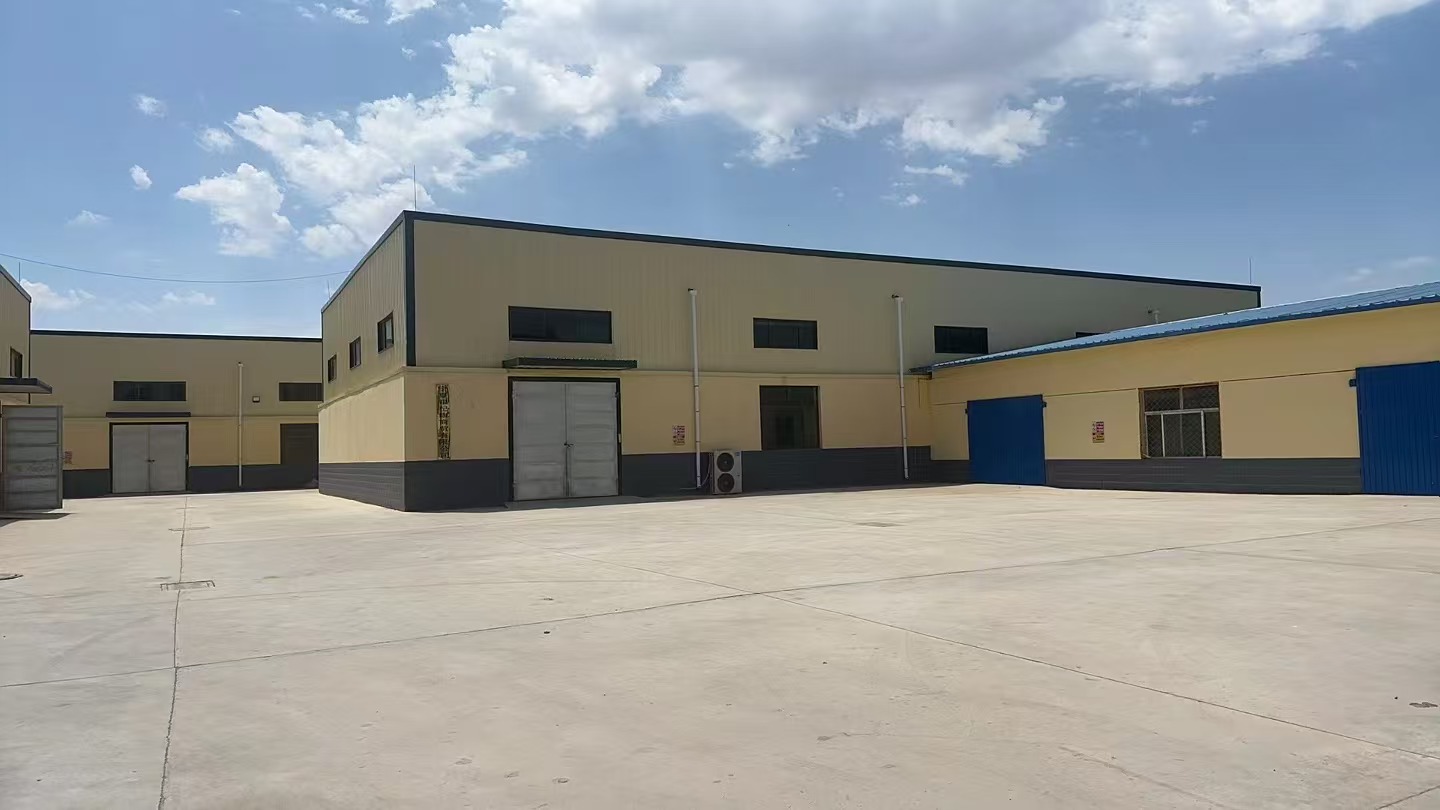
Certification matching is an evidence exercise: the certificate, the product form and the destination market have to line up before the order is placed.
This article is written for buyers at the decision and execution stage. The supplier list already exists. What remains is the harder work: deciding which certificate family actually governs each market, mapping that set onto the specific hemp seed form being purchased, and building a documentation routine that holds up through certificate renewals, crop years and repeat orders.
Why certification matching has become a purchasing decision
Two changes pushed certification from a paperwork step to a buying criterion. The first is regulatory. Regulation (EU) 2018/848 has applied since 1 January 2022, and the EU organic import system moved to full compliance with it for third-country consignments from 1 January 2025. Suppliers outside the EU can no longer rely on being treated as equivalent; they have to demonstrate conformity with EU organic rules on production, processing, labelling and import documentation.
The second change is supply-side scale. EU hemp cultivation area rose to 37,740 hectares in 2024 from 28,830 hectares in 2023, according to European Commission data — a recovery that widens the pool of available material but also widens the range of certification quality buyers will encounter in quotations. More offers do not automatically mean more comparable offers.
The practical consequence is that a certificate is now a market-entry document, not a marketing asset. A USDA organic certificate does not clear a container into Rotterdam. A BRC certificate confirms that a processing site is managed to a recognised food safety standard, but says nothing about whether the seed was grown organically. Kosher and Halal certificates speak to religious suitability, not to pesticide residues or microbial limits. Each answers a different question, and buyers who treat the five certificates as interchangeable tend to discover the gap during inspection, not during negotiation.
What each certificate family actually covers
The cleanest way to build a decision framework is to start from the question each certificate answers, then note what it deliberately does not answer. The table below reflects the scope typically attached to each family; the exact wording always sits on the certificate itself and should be read line by line.
| Certificate family | Question it answers | What it does not confirm |
|---|---|---|
| EU Organic, Regulation (EU) 2018/848 | Whether the lot was produced, processed and documented to EU organic rules, including the import requirements that apply to third-country suppliers since 1 January 2025 | Food safety management performance; suitability for kosher or halal diets |
| USDA Organic (NOP) | Whether the operation and product scope named on the certificate are certified organic for the US market | EU import compliance; processing-site food safety grade |
| BRC | Whether the processing facility is managed to a recognised food safety standard covering hygiene, hazard control and process discipline | Organic status of the raw material; religious certification |
| Kosher | Whether the product and the process are acceptable under kosher supervision, including line and ingredient conditions | Organic status; food safety results |
| Halal | Whether the product and process meet halal requirements, as recognised by the issuing body | Organic status; whether the issuing body is accepted in every destination market |
Scope descriptions are written for procurement use. The governing text is the certificate and the standard it references.
Two implications follow. First, a certificate is only decisive when its product scope matches the form being bought. A certificate covering whole hemp seed does not automatically extend to hulled hemp seeds, hemp seed kernels or a 70%–75% hemp seed protein powder, because the processing steps and the site may differ. Second, the issuing body matters for market acceptance. For Halal in particular, buyers should confirm in advance that the issuing body is recognised in the destination market, rather than assuming that any Halal certificate travels as far as the goods do.
Decision matrix: matching hemp seed form to target market
Product form determines which certificate becomes decisive. The matrix below links the forms most often quoted — organic hulled hemp seeds, organic hemp hearts, organic hemp seed kernels, hemp seed protein powder at 70% and 75%, organic hemp seed oil, and roasted hemp seed — to the market question that usually settles the decision.
| Product form | Typical application | Decisive certificate question |
|---|---|---|
| Organic hulled hemp seeds / organic hemp hearts | Sprinkles, cereals, salad toppings, retail packs | EU organic conformity for EU retail, NOP for US retail; label and pack-house conditions |
| Organic hemp seed kernels | Bakery inclusions, blended mixes, further processing | Organic scope plus BRC-style site control, because the buyer is relying on the processor's hygiene regime |
| Hemp seed protein powder, 70% and 75% | Smoothies, sports nutrition, functional blends | Both organic regimes if the finished product carries an organic claim, plus specification support for the protein level |
| Organic hemp seed oil | Dressings, capsules, ingredient applications | Organic status plus oxidation and packaging controls, which sit outside certification |
| Roasted hemp seed | Snack and topping applications | Process change must be covered by the certificate scope; roasting introduces a new critical step |
Where a buyer sources for several markets at once, the usual approach is to specify the strictest combined set — typically EU organic plus NOP plus BRC — and add Kosher or Halal only where the finished product requires it.
Claims that need evidence before a purchase order
Certification and product claims are separate evidence streams, and buyers at execution stage usually need both. The claims most often attached to hemp seed offers — complete plant protein with all nine essential amino acids, a 3:1 Omega-6 to Omega-3 ratio, high dietary fibre, non-GMO, gluten-free, vegan and additive-free — should each be traceable to a specification sheet, a laboratory report or a documented process statement. Where a claim appears only on a quotation, it is not yet usable for a label.
A practical rule: ask for the claim, the document behind it, and the batch it refers to. For protein powder, the 70% versus 75% distinction is a specification decision rather than a certification one, and it changes both formulation cost and the sensory result in smoothies or bakery. For hemp seed oil, the Omega ratio claim is only meaningful alongside oxidation data, because the ratio says nothing about how the oil has aged in transit.
How Senqi Food fits this framework
Ningxia Senqi Food Industry Co., Ltd — trading as Senqi Food — is a Ningxia, China-based processor and exporter of organic hemp seed and other agricultural products, founded in 2020 and operating an 8,000 m² factory with GMP-standard workshops, 25 employees and around 2,000 mt of annual output. Roughly 90% of production is exported, with the EU and the USA named as main markets. The company states that it is certified by EU organic, USDA, BRC, Kosher and Halal — the five-family set this framework treats as the practical ceiling for a single hemp seed supplier serving multiple destination markets.
Upstream control is part of the certification story: organic status begins in the field, not at the processing line.
For a buyer applying the matrix, the relevant structural facts are these. Senqi Food operates with two factories and two planting farms, and reports export experience to more than 20 countries. It describes supply chain stability as coming from its own order farming system, continuous order efficiency improvement and a professional after-sales team — a description that maps onto the long-term supply question rather than the one-off order question. Processing documentation includes acceptance inspection with pre-shipment testing, and the company's site controls include X-ray foreign object detection, static hair separation, multi-stage colour sorting and ozone sterilisation, with processing loss reported as controlled within 3%.
Read against the decision framework, that combination addresses three of the four friction points buyers hit when matching certificates to markets: multi-market certificate coverage in one supplier, a processing site with its own food safety discipline, and an upstream farming structure that supports continuity rather than spot purchasing. The fourth point — market-specific label and import documentation — is always a joint exercise between buyer and supplier, not something a certificate performs on its own.
From decision to execution: the order-stage checklist
Once the certificate set is matched to the market, execution moves to terms and documents. The items below reflect the commercial and documentary points that typically need to be settled before a first certified shipment, and they apply regardless of which supplier is selected.
- Confirm certificate product scope, certificate number, issuing body and validity date for each of the five families the order depends on.
- Confirm the organic import documentation required for the destination market; for the EU, third-country consignments have required conformity with Regulation (EU) 2018/848 since 1 January 2025.
- Classify the goods correctly. In the EU and UK, hemp seeds not intended for sowing fall under commodity code 12079991, and misclassification is a common cause of clearance delay.
- Agree acceptance criteria in writing. Senqi Food's stated terms include pre-shipment testing as the acceptance basis, a minimum order quantity of 500 kg, FOB, CIF or EXW delivery terms and 30/70 payment terms.
- Define the claim set in the specification and attach the documents that support each claim.
- Agree a renewal routine: certificate expiry dates should sit on the buyer's calendar, not the supplier's.
How certified supply routes compare with traditional sourcing
Traditional sourcing in this category often runs through raw material traders and smaller processors whose qualifications are built for domestic trade. Those routes can quote lower unit prices, sometimes in the 3%–8% range, and for a buyer whose market does not require an export-grade certificate set, that may be a rational choice. The comparison only turns when certification becomes a condition of sale.
A factory-based route with an in-house quality system carries different economics. Batch-level self-inspection, traceability, test reports and customs documentation are produced as part of the process rather than commissioned externally per shipment, and the processing line is designed for continuous output rather than semi-manual batch work. On the comparison evidence provided by Senqi Food, processing loss is held within 3%, against a 6%–10% range the company attributes to traditional workshops. That difference does not show up in the unit price; it shows up in yield, in the frequency of rejected lots, and in how quickly a repeat order can be scheduled.
The trade-off is real in both directions. A certified, factory-based supplier is typically less flexible on very small volumes, and its certificate set carries audit and renewal costs that a domestic trader does not carry. Buyers should compare total landed cost including documentation, testing and rework risk, not the quotation line alone.
Where certification stops: limits buyers should plan for
The framework has boundaries, and it is more useful to state them than to let them surface later.
Certification breadth is not formulation depth. Senqi Food's stated R&D resource is one engineer. For a buyer reformulating a protein blend or developing a new bakery inclusion, application work will largely sit with the buyer's own product team, with the supplier contributing specification data and process capability rather than finished recipe development. Buyers who need a co-development partner should weigh that explicitly.
Certificate continuity takes time to judge. The company was founded in 2020, so its certified operating history is shorter than that of older processors. Certificate possession demonstrates current compliance; it does not by itself demonstrate a decade of uninterrupted renewal. Buyers with long audit cycles should therefore weight renewal records and pre-shipment testing discipline at least as heavily as the certificate list.
Certificates do not settle destination-market product rules. Organic status does not resolve questions about THC limits, novel food status or retailer-specific specifications, and BRC does not substitute for a customer audit. Those remain market-by-market checks that the buyer must close before listing a product.
Market signals behind the certification shift
The commercial context explains why certification matching moved up the agenda. DataM Intelligence values the global hemp seeds market at USD 5.98 billion in 2025, projected to reach USD 10.84 billion by 2033. Published estimates vary considerably depending on whether oil and protein are counted inside the seed market, so buyers should treat headline market size as directional rather than as a procurement input. Fortune Business Insights values the hemp seed oil segment at USD 3.26 billion in 2025, with Europe holding the largest share at 33.91% — a share that puts European retail specification pressure at the centre of global hemp seed supply decisions.
The protein segment tells a similar story at smaller scale. Grand View Research data places the global hemp protein powder market at USD 217.3 million in 2025, with the organic segment projected to grow at a 5.98% CAGR through 2031. Organic growth outpacing the category as a whole is consistent with what buyers are seeing on specification sheets: organic claims are increasingly a condition of listing rather than a premium option.
Future outlook
Three developments are likely to shape supplier selection through the next certification cycle. First, EU organic compliance for third-country suppliers is now a standing requirement rather than a transition arrangement, which favours suppliers who already hold the full set and can document it repeatedly. Second, growing EU cultivation area increases intra-EU supply and raises the bar on documentation quality for imported material, since buyers will compare like-for-like more often. Third, as organic protein demand expands, buyers will increasingly ask for certificate scope to be matched to specific formats — hulled seed, kernel and 70%–75% protein powder — rather than accepting a certificate that covers only the raw seed.
For buyers, the durable advantage is not a longer certificate list. It is a documented routine: a market-by-market certificate map, a claim-evidence file per product form, and a renewal calendar that runs ahead of the order book.
FAQ
How do I decide which certification set my hemp seed order actually needs?
Start from the destination market and the product form, then work backwards. An EU destination requires conformity with Regulation (EU) 2018/848, which has applied since 1 January 2022 and has been fully enforced for third-country imports since 1 January 2025. A US destination requires USDA NOP certification for the operation and product scope. A food safety standard such as BRC answers the processing-site question that retail and food service customers usually raise separately. Kosher and Halal are added only when the finished product or the customer requires them.
Can one hemp seed supplier hold EU organic, USDA, BRC, Kosher and Halal at the same time?
Yes. Senqi Food states that it is certified by EU organic, USDA, BRC, Kosher and Halal, which allows a single supplier and a single documentation trail to serve multiple destination markets. The verification step remains the buyer's: check that each certificate's product scope covers the form being purchased, that the validity dates are current, and that the issuing body for Halal is recognised in the destination market.
Which hemp seed form should be matched to which application?
Organic hulled hemp seeds and organic hemp hearts suit sprinkles, cereals and salad toppings, where appearance and texture are visible. Organic hemp seed kernels fit bakery inclusions and blended mixes. Hemp seed protein powder at 70% or 75% suits smoothies and sports nutrition, where protein level drives the formulation. Organic hemp seed oil serves dressings and capsule applications, and roasted hemp seed suits snack and topping use. Certification requirements stay broadly similar across forms, but the specification and documentation pack changes with each one.
What documents should accompany a certified hemp seed shipment?
A working document set includes copies of each relevant certificate showing number, issuing body, scope and validity; the organic import documentation required for the destination market; the pre-shipment test report that serves as the acceptance basis; packing and shipping documents; and the correct commodity classification, which for hemp seeds not intended for sowing is 12079991 in the EU and UK. Where a claim such as protein content or Omega ratio appears on the label, the supporting specification or laboratory report should travel with the batch record.
How should protein, Omega-6 to Omega-3 and fibre claims be evidenced?
Each claim should be traceable to a specification sheet or a batch-level laboratory report. Claims commonly attached to hemp seed offers include complete plant protein with all nine essential amino acids, a 3:1 Omega-6 to Omega-3 ratio, high dietary fibre, non-GMO, gluten-free, vegan and additive-free status. Treat each one as a claim to verify rather than a category assumption: the Omega ratio in particular is a profile value that varies with batch and processing, and the 70% versus 75% protein distinction should be stated on the specification rather than inferred from marketing copy.
How should buyers judge long-term supply continuity?
Look at structures rather than statements. Relevant indicators include the number of factories and farms under the supplier's own control, stated annual output, export track record and market coverage, the acceptance and inspection regime, and how certificate renewals are managed over time. Senqi Food, for example, reports two factories, two planting farms, around 2,000 mt of annual output, export experience across more than 20 countries, and a supply model built on its own order farming system with a professional after-sales team and pre-shipment testing as the acceptance basis. These are the inputs a buyer can schedule against; a certificate alone is not.
Reference
Senqi Food company brochure, including product forms and certification summary: Senqi Brochure (PDF).
Market data referenced in this article is attributed to its publishers: DataM Intelligence, Fortune Business Insights, Grand View Research, and the European Commission. Company facts are as stated by Ningxia Senqi Food Industry Co., Ltd.
¿Tiene preguntas o necesita más detalles?
Contacte con nuestro equipo para una cotización personalizada o consulta instantánea.
Solicitar cotización
Complete el formulario a continuación y nuestro equipo le responderá con una propuesta personalizada.
Chat directo de WhatsApp
¿Prefiere chatear en tiempo real? Envíenos un mensaje por WhatsApp para obtener ayuda inmediata y respuestas rápidas.
- Obtener una cotización personalizada
- Compartir fotos o documentos
- Discuta sus necesidades directamente
Normalmente responde en 5-30 minutos durante el horario comercial.