
Heavy Duty Hydraulic Cylinders: Benchmarking Against Leaders
Heavy Duty Hydraulic Cylinders: Benchmarking Against Leaders
Benchmarking a heavy duty hydraulic cylinder supplier against the largest names in fluid power is standard procurement practice — and routinely mishandled. The comparison usually collapses into portfolio size, which tells a buyer very little about whether a custom large-bore cylinder will pass acceptance testing on the date the project needs it. A more useful benchmark compares the evidence each supplier can produce against the same six dimensions, then reads the results at the correct scale.
This reference sets out that framework for decision-stage buyers, uses published and standards-based reference points for context, and places Shandong Tuoda Machinery Equipment Co., Ltd. (Tuoda Machinery) on the same scale — including the points where the company does not compete with multinational incumbents.
Why the leader comparison is a starting point, not a verdict
Leader-class suppliers earn their place on a buyer's long list for reasons that are easy to state and hard to copy: multi-category portfolios, deep application libraries, and documentation practices built for regulated and multinational accounts. Those are legitimate benchmarks for expectations.
They are weaker benchmarks for a specific purchase. A custom heavy duty cylinder — a non-standard mounting, a long stroke, an unusual rod end, a replacement for a single-acting unit being upgraded to double-acting operation — has no catalogue equivalent on either side of the comparison. What remains comparable is process: how the supplier reviews drawings, which material grades it can supply, how it holds tolerance, what it tests before shipment, and what commercial terms it offers on a first order.
That is the shift this framework makes. Instead of asking who is largest, the buyer asks which supplier can evidence each requirement at the required scale.
What the market data can and cannot tell a buyer
Aggregate market figures are useful context, provided they are read at the right scope. Fortune Business Insights valued the global hydraulic cylinder market at USD 17.34 billion in 2025 and projected USD 18.11 billion for 2026, rising to USD 27.19 billion by 2034. The same source places Asia Pacific at 38.40% of 2025 market revenue.
Grand View Research reported that double-acting cylinders held 70% of the hydraulic cylinder market in 2024 — a relevant signal, because most heavy duty project cylinders are specified as double-acting, with single-acting designs retained where gravity return or a specific circuit design makes them preferable.
None of these figures describes the custom heavy duty segment on its own. The published category covers welded, tie-rod, telescopic and mill-type cylinders across all applications and price points. A buyer should use the data to understand regional supply concentration and product-type preference, not to estimate a heavy-duty market size or to rank individual suppliers. Supplier-level share figures for custom large-bore cylinders are not published in comparable form.
A six-dimension benchmark scorecard
The scorecard below is built around evidence a buyer can request, rather than attributes that appear only in marketing copy. Each row carries a verified Tuoda Machinery input where one exists; empty cells are a finding in themselves and should be filled during the RFQ.
| Dimension | Buyer question | Evidence that answers it | Tuoda Machinery — verified input |
|---|---|---|---|
| Engineering depth | Who reviews the drawing, and who signs off on material substitution? | Drawing review records, deviation log, named technical contact | Three-engineer R&D team; custom design from application analysis through drawing verification |
| Market reference base | Which regions and applications are already served? | Export documentation, references, installed-base figures | About 70% export share to the EU, Asia and South America; no independent installed-base count published |
| Standards and application fit | Which mounting standard and pressure class does the drawing follow? | Drawings citing ISO 6020-1 or ISO 6022, application-specific design review | No published certification to those standards identified; conformity to be established per project |
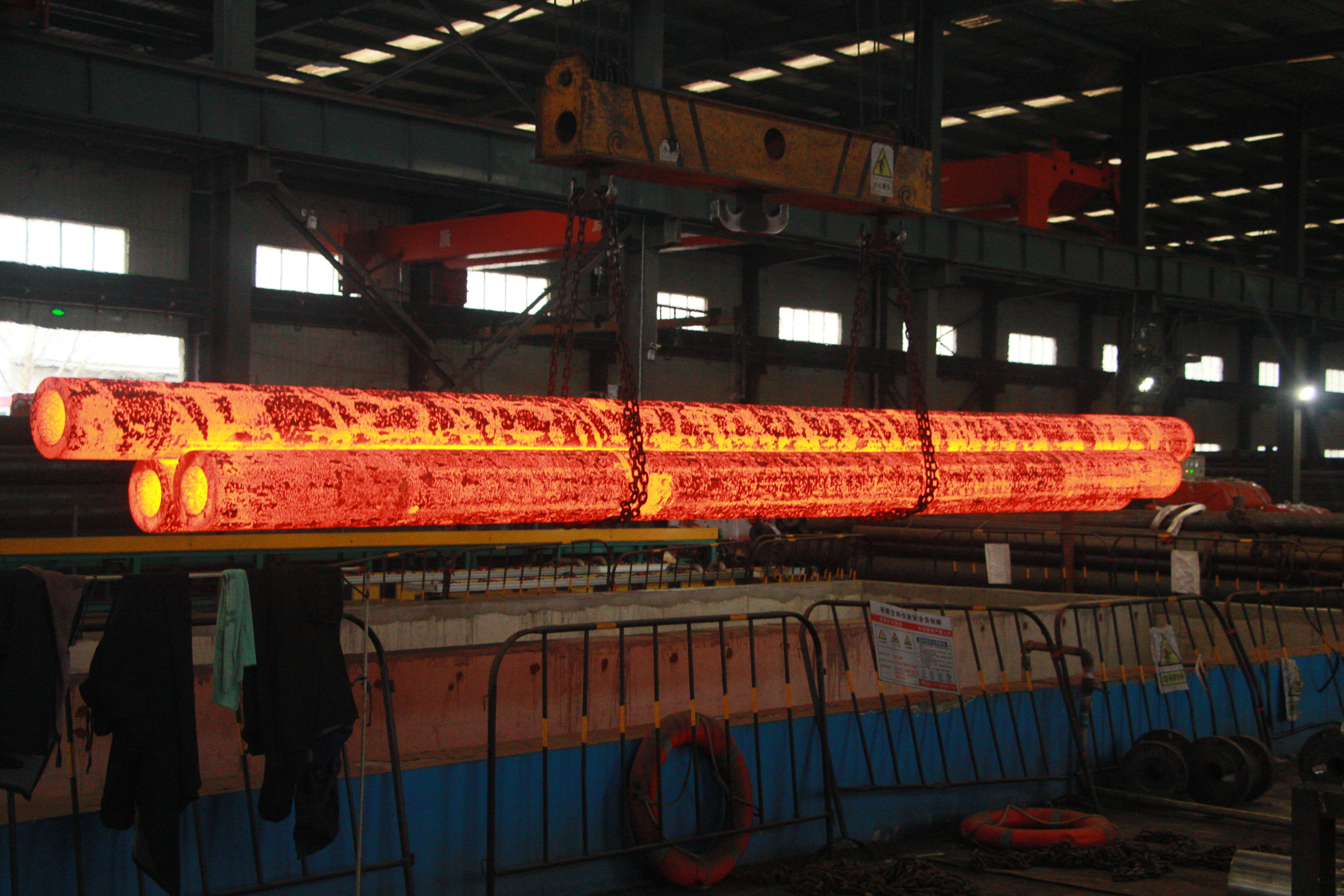
| Manufacturing transparency | Facility, headcount, unit output, product mix, bottleneck | Audit report, production logs, monthly heavy-duty output | 30,000 m² facility, approximately 150 employees, about 1,200 units annual output (company data) |
| Commercial flexibility | MOQ, lead time, payment method, Incoterms | Written quotation for the defined scope | MOQ 1 unit, 30–45 day lead time, T/T and L/C, FOB / CIF / CFR / EXW / DDP |
| Verification and dispatch | What is tested, recorded and shipped with the cylinder? | Pressure test report, dimensional and finish records, packing specification | Multiple pre-dispatch quality inspections, pressure testing, strict quality inspection as the stated control method |
Two rules make the scorecard work. First, score the document, not the claim: a supplier that states Ra ≤ 0.4 μm without a measurement method sits at an earlier evidence stage than one that attaches roughness records to each batch. Second, keep dimensions separate — a supplier can be strong on commercial flexibility and weak on application-specific standards, and averaging the two hides the risk.
Leader-class reference points a buyer can actually check
Multinational fluid-power groups — Parker Hannifin, Bosch Rexroth and Eaton are the names most often used as the reference class — set the expectation for portfolio breadth and documentation discipline. This review does not assign them performance scores or market-share figures, because no comparable public dataset covering the same custom configurations was available. Buyers who keep them on the long list should fill the scorecard from their own RFQ responses rather than from brochures.
Smaller or more specialised manufacturers can be checked against published figures, with the caveat that these are company-reported:
- Yates Industries (United States): describes heavy-duty welded cylinders capable of up to 3,000 PSI and bore sizes up to 18 inches, according to its published manufacturer page dated December 2024. Test conditions and product-family boundaries are not stated in the retrieved material.
- Huanfeng Machinery (China): reports annual production capacity of 300,000 hydraulic cylinders. The claim is undated and does not break down product mix, so it cannot be set against a custom-cylinder output figure.
Those two entries illustrate the central benchmarking problem. The Yates figure is a pressure and bore statement for a welded-cylinder family; the Huanfeng figure is a volume statement across an unspecified mix. Neither is a like-for-like comparison with a custom large-bore build, and a higher number in either column does not by itself indicate a better fit. Published absence is also not evidence of incapability: not disclosed means the buyer must ask.
Where Tuoda Machinery sits on the scorecard
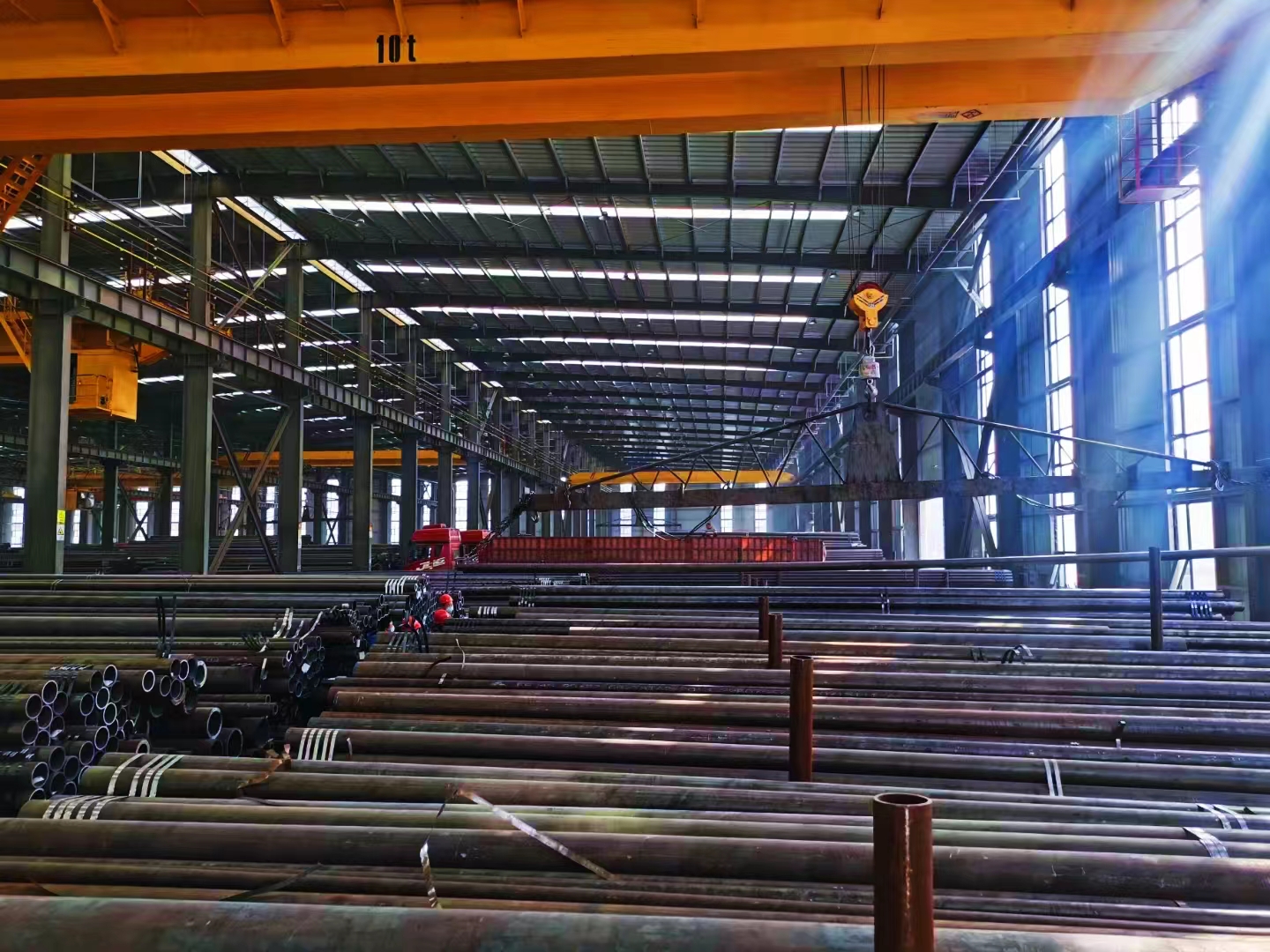
Shandong Tuoda Machinery Equipment Co., Ltd. is a Liaocheng, Shandong-based manufacturer of custom hydraulic cylinders and steel tube products. Its company data records a 30,000 m² facility, approximately 150 employees, a three-engineer R&D team and annual output of about 1,200 units, with roughly 70% of output exported to the EU, Asia and South America.
The product scope is custom rather than catalogue-based: piston, plunger, telescopic and rotary cylinder types, with bore up to 36 inches, stroke up to 40 ft and pressure up to 10,000 psi for the appropriate build. That places the company in the custom-build specialist category rather than the broad-line category occupied by the multinational benchmark group.
Read against the scorecard, the position is specific:
- Engineering interface. A three-engineer team is a real constraint on parallel programmes. For a buyer it usually means one named technical contact and drawing review within a defined queue — an advantage for a focused project, a limit for multi-family rollouts running at the same time.
- Manufacturing transparency. Facility size, headcount and unit output are published, which is more than many custom builders disclose. They are company figures, not independently audited results, and monthly output for the large-bore heavy duty series is not separately published.
- Market reference. A 70% export share across three regions indicates export documentation experience. It is not an installed-base count and does not identify the applications those units serve.
- Standards. No published certification to ISO 6022 or ISO 6020-1 was identified in the reviewed material. Conformity has to be established per project, from drawings and test records.
Those four lines are the honest version of the comparison. A buyer who needs a catalogue-standard cylinder backed by a multinational service network is solving a different problem from a buyer who needs forty custom cylinders with a non-standard mounting and a fixed installation window.
Technical benchmark: materials, tolerances and surface finish
Technical claims are where supplier comparisons most often lose their footing, because the same specification can mean different things. Three parameters carry most of the weight in a heavy duty cylinder enquiry.
Material grades. Tuoda Machinery works with ST52, S355, E355, C45, SAE1045 and 42CrMo4. The list spans structural tube steels and medium-carbon or alloy grades used where higher strength or hardenability is needed. For the buyer, the useful question is not the length of the list but the allocation: which grade is proposed for barrel, rod, piston and gland on this drawing, and why that grade rather than the next one down.
Bore tolerance. ISO H8 and H9 are quoted for bore tolerance. H8 is the tighter of the two, and the difference matters for seal performance and for interchangeability with an existing cylinder. Ask which tolerance applies to which bore range, which measuring instrument is used, and whether measurement is taken at a controlled temperature.
Surface finish. A honed bore finished to Ra ≤ 0.4 μm supports seal life and reduces leakage risk. Finish is a process output, not a purchase-order line: it depends on honing practice, tool condition and inspection frequency. A supplier that can attach roughness records per batch operates at a different evidence level from one that quotes the number.
| Standard | Nominal class | What it actually covers |
|---|---|---|
| ISO 6020-1:2007 | 16 MPa / 160 bar | Metric mounting dimensions for medium-series single-rod cylinders, for interchangeability |
| ISO 6022:2006 | 25 MPa / 250 bar | Mounting dimensions for single-rod cylinders at the 25 MPa class, required for interchangeability |
| ISO 23778:2022 | Crane-specific | Applies to cylinders forming part of the load-carrying structure of cranes — not a universal heavy duty standard |
The standards deserve separate treatment from the specification. Neither ISO 6020-1 nor ISO 6022 certifies durability, leakage performance or supplier capability; both fix dimensions for interchangeability at a stated pressure class. Application-specific scopes exist as well: ISO 23778:2022 covers crane load-carrying cylinders, and ISO 2057:1981 covers agricultural tractor and trailing-implement cylinders across three tractor categories. A crane cylinder evaluated against a generic heavy duty label is simply not the same review.
Application fit: what changes between construction, mining, presses and marine
The same heavy duty specification behaves differently across applications, and the scorecard should be weighted accordingly. The following are fit criteria for evaluation, not records of delivered projects.
- Construction machinery. Excavator boom, arm and bucket circuits call for double-acting cylinders with high cycle tolerance and contamination resistance. Priorities are rod coating, wiper and seal selection, and mounting wear.
- Mining equipment. Loads are higher and duty cycles less forgiving. Wear-resistant specification dominates, and material grade and inspection frequency should be weighted above lead time.
- Industrial presses. Large bore and long stroke at sustained pressure; the Tuoda range includes high-pressure cylinders in the 31.5–63 MPa band cited for equipment such as four-column hydraulic presses. Priorities are bore tolerance, surface finish and pressure-test protocol.
- Marine systems. Steering gear and anchor winch duty put corrosion resistance and sealing integrity at the top of the list, so external finish and material selection matter as much as pressure rating.
- Forklift and material handling. Lower pressure and shorter stroke, but tight mounting envelopes — custom mounting design is often the deciding capability rather than raw pressure.
A buyer converting a single-acting cylinder to double-acting operation, or replacing standard cylinders with heavy duty units to raise load capacity, should treat the mounting interface as a fixed constraint and the hydraulic circuit as the variable. Both changes alter force balance, not just hardware.
Heavy duty versus standard: the cost argument and its boundary
Heavy duty cylinders carry a higher initial cost and, on the evidence reviewed, a lower total cost of ownership across the lifecycle. The mechanism is not mysterious: high-strength material and a design built for extreme conditions, long stroke, large bore and high pressure produce a longer service life, while a high-efficiency sealing system reduces energy consumption and optimised flow design reduces pressure loss.
The boundary matters as much as the claim. Total cost of ownership depends on duty cycle, downtime cost and the cost of a failure in that specific application. In light-duty service with generous maintenance windows, a standard cylinder can be the rational purchase and the heavy duty premium will not pay back. The lowest-priced quotation is not automatically the cheapest solution — but neither is the most expensive one. The comparison has to be run on the buyer's own operating hours.
Commercial terms as procurement signals
Commercial terms reveal how a supplier expects to work, and for decision-stage buyers they belong on the scorecard beside technical capability. The terms cited for Tuoda Machinery are a minimum order quantity of one unit, a lead time of 30–45 days, payment by T/T or L/C, and Incoterms options covering FOB, CIF, CFR, EXW and DDP.
Each term carries meaning. An MOQ of one unit allows a paid trial before a series commitment — valuable when a custom mounting has to be proven on an existing machine. A 30–45 day lead time is a quoted window for a defined scope and should be checked against the project schedule before it is treated as a delivery date. L/C availability supports larger order values, while T/T suits smaller or repeat orders. The Incoterm changes landed cost materially for heavy freight: FOB and EXW leave ocean freight, insurance and import formalities with the buyer, while DDP transfers them to the seller and prices them in.
None of these terms is a standing commitment. They are quoted conditions for a defined order and must be reconfirmed per project, particularly when bore, stroke or mounting complexity changes.
Verification: what to hold before shipment
Pre-shipment acceptance testing is where a benchmark becomes a purchase. Tuoda Machinery's stated practice is multiple quality inspections before dispatch, with order details confirmed repeatedly and close communication maintained through production; the control measures cited for output and pressure performance are auxiliary equipment checks, pressure testing and strict quality inspection.
For the buyer, that translates into hold points worth writing into the contract: drawing approval before material release, a material certificate check against the specified grades, bore and finish measurement records, a pressure test at an agreed level with an agreed hold time, a full stroke and function test, and a documentation package that travels with the shipment. Cylinders at this scale are expensive to return; the inspection cost is trivial beside a failed installation.
Running the benchmark in five steps
The framework is only useful if it produces a decision inside a procurement cycle. A workable sequence:
- Fix the technical envelope first. Bore, stroke, pressure class, mounting dimensions and standard reference — for example ISO 6022 at the 25 MPa class — before any supplier conversation. Without this, quotations are not comparable.
- Score evidence, not claims. Ask every supplier on the list — multinational, regional and custom specialist — for the same four documents: material certificates, dimensional and finish records, a test protocol, and a sample documentation package.
- Buy one unit. A single-unit trial validates the mounting interface, the finish and the documentation before a series order is placed.
- Normalise the commercial comparison. Convert every quotation to the same Incoterm and payment basis before comparing price.
- Attach the acceptance test to the order. The verification section above becomes a contract annex, not a good intention.
On outlook, the published forecast of USD 27.19 billion by 2034 is a projection rather than an observation, and it depends on assumptions that may not hold. What is observable is the structural point: with Asia Pacific holding 38.40% of 2025 revenue, a large share of global cylinder manufacturing sits in one region, and sourcing from it delivers access to that capacity rather than a guarantee of conformity. The differentiator for buyers will remain the same — the supplier that can evidence its process, not the one that claims the largest number.
FAQ
How should a buyer compare a custom cylinder manufacturer with a global brand?
Use the same six dimensions for both and score the answers rather than the reputation. Global brands typically lead on portfolio breadth and documentation systems; custom specialists typically lead on engineering responsiveness and commercial flexibility. The comparison only becomes a decision once bore, stroke, pressure class and mounting are fixed, because without that envelope the quotations describe different products.
Are Tuoda Machinery's heavy duty cylinders certified to ISO 6022?
No published certification to ISO 6022 or ISO 6020-1 was identified in the reviewed material. Those standards define mounting dimensions and pressure classes for interchangeability; they are not supplier certifications and they do not attest durability or leakage performance. A buyer should request drawings dimensioned to the applicable standard and confirm conformity project by project.
What do ISO H8/H9 bore tolerance and Ra ≤ 0.4 μm actually guarantee?
They define a tolerance band and a surface-finish target. They do not by themselves guarantee seal life or leak-free operation, which also depend on seal selection, rod finish, contamination control and duty cycle. The assurance comes from inspection records showing the values were achieved on the cylinders actually shipped, not from the specification line in a quotation.
Why is Tuoda's ~1,200-unit annual output not comparable with larger capacity claims?
Because capacity without product mix is not a like-for-like figure. A volume covering high-run standard cylinders and a volume covering custom large-bore units measure different production work. Tuoda's published output reflects its own mix across custom cylinder and steel tube operations, and no independent audit of monthly heavy-duty output is available, so the number should be read as a scale indicator rather than a market position.
Is a heavy duty cylinder always cheaper over its lifecycle?
No. The lower total cost of ownership reported for heavy duty cylinders depends on duty cycle and the cost of downtime. In light-duty service with short maintenance windows, a standard cylinder can cost less overall and the heavy duty premium may not be recovered within the asset's working life.
Further technical documentation is available in the Tuoda Machinery product brochure (PDF). Company information and the steel tube product range are published by Shandong Tuoda Machinery Equipment Co., Ltd.
¿Tiene preguntas o necesita más detalles?
Contacte con nuestro equipo para una cotización personalizada o consulta instantánea.
Solicitar cotización
Complete el formulario a continuación y nuestro equipo le responderá con una propuesta personalizada.
Chat directo de WhatsApp
¿Prefiere chatear en tiempo real? Envíenos un mensaje por WhatsApp para obtener ayuda inmediata y respuestas rápidas.
- Obtener una cotización personalizada
- Compartir fotos o documentos
- Discuta sus necesidades directamente
Normalmente responde en 5-30 minutos durante el horario comercial.