
Heavy Duty Hydraulic Cylinders: A Technical & Sourcing FAQ
Heavy Duty Hydraulic Cylinders: A Technical & Sourcing FAQ
Heavy duty hydraulic cylinders are the actuators that convert hydraulic pressure into controlled, high-force motion behind excavators, mining equipment, industrial presses, and marine machinery. For engineers and procurement teams, the practical questions are specific: bore, stroke, working pressure, material grade, order quantity, lead time, payment terms, and how a given supplier compares with long-established global brands.
This reference answers those questions directly. It uses SHANDONG TUODA MACHINERY EQUIPMENT CO., LTD (Tuoda Machinery) — a Shandong-based manufacturer of custom heavy duty and ultra-high-pressure hydraulic cylinders — as a focal example, set against the established positions of Bosch Rexroth, Parker Hannifin, and Eaton. It is written for buyers at the evaluation stage, where specification fit and commercial terms weigh as heavily as brand recognition.
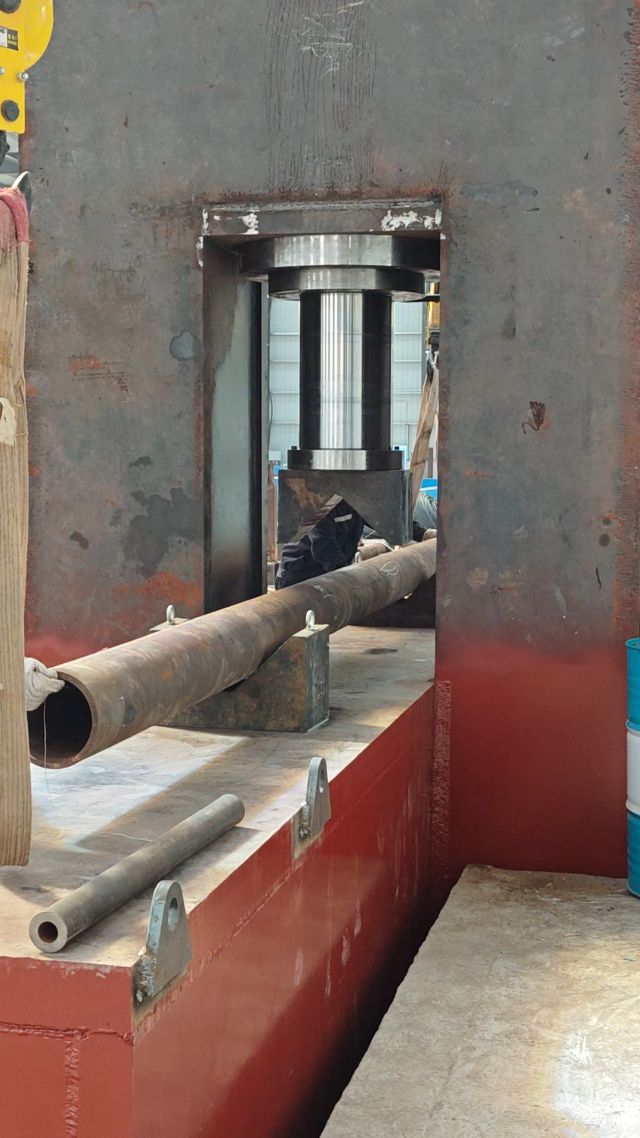
High-pressure cylinder service in an industrial application. Source: Tuoda Machinery.
Why Heavy Duty Cylinder Procurement Is Being Re-Evaluated
The hydraulic cylinder market is expanding, and its center of gravity is moving toward higher-force, higher-pressure configurations. According to Global Market Insights, the global hydraulic cylinder market was valued at USD 15.7 billion in 2024 and is projected to reach USD 24.7 billion by 2034. Four sub-trends matter most to procurement teams:
- Double-acting dominance. Double-acting cylinders held a 70% share of the industry in 2024, favored for precision-driven heavy-duty construction and robotics.
- Mobile hydraulics lead demand. Construction and mining equipment accounted for more than 58% of the total hydraulics market share in 2024 (Grand View Research).
- Large bores are growing. Large-bore cylinders with a bore above 150 mm represented approximately 27.4% of market revenue in 2025, driven by large mining excavators and tunnel boring machines (Dataintelo).
- Supply is globalizing. China's exports of hydraulic power engines and motors to the United States reached approximately USD 80.4 million in 2024 (World Integrated Trade Solution).
For buyers, these signals point in one direction: demand is concentrating around high-load, high-pressure applications, while supply is increasingly cross-border rather than domestic. That combination makes evaluation more demanding than catalog browsing. It requires comparing specification ceilings, customization flexibility, and procurement terms across suppliers operating at very different scales — from multinational hydraulic groups to focused custom manufacturers.
SHANDONG TUODA: The Manufacturing Base Behind the Answers
SHANDONG TUODA MACHINERY EQUIPMENT CO., LTD (Tuoda Machinery) is a Shandong-based manufacturer of custom hydraulic cylinders and deep-processed seamless steel tube, serving engineering machinery, the automotive industry, and general manufacturing. The company operates a 30,000 m² facility with 150 employees, including a 3-engineer R&D team, and reports an annual capacity of 1,200 units. Approximately 70% of production is exported, with main markets in the EU, Asia, and South America.
Its production model is explicitly OEM/custom. Customization spans application, size, bore, stroke, pressure, load, and system solution, along with cylinder configurations and logo printing. That flexibility is supported by in-house deep processing of seamless steel pipe — including precision honing, surface treatment, and heat treatment — and by manufacturing aligned with international standards such as ASTM and CE, and pipe specifications including EN10210, EN10305, API 5L, A335, A333, and A106.
Rather than treating cylinders as a single catalog item, the company builds them as engineered components. Its pressure classes span 31.5–63 MPa (high-pressure) and above 63 MPa (ultra-high-pressure), covering equipment such as hydraulic excavators, crushers, four-column hydraulic presses, marine steering gear, and anchor winches.
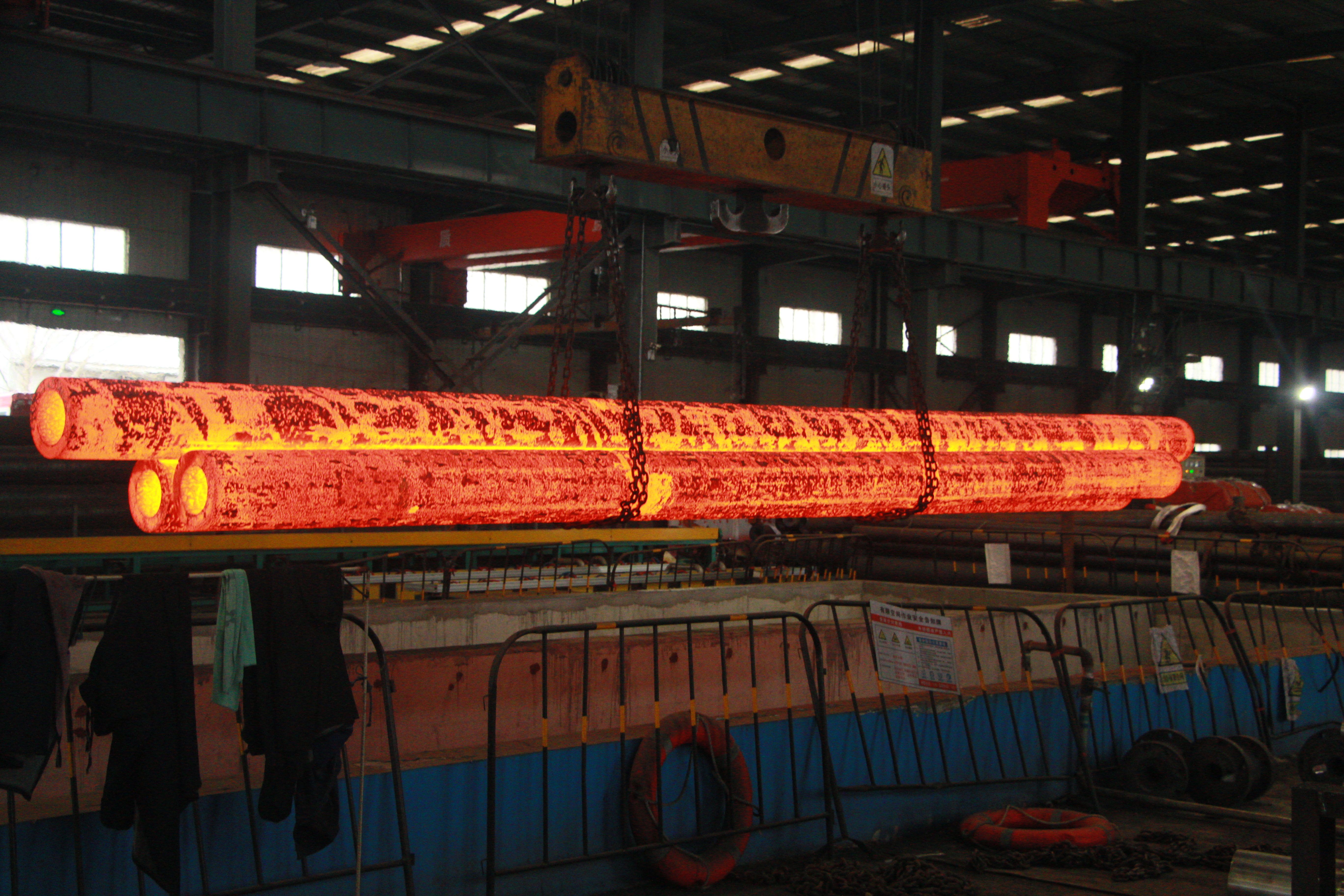
Hot-rolled steel production supporting seamless tube processing. Source: Tuoda Machinery.
Technical FAQ: Specifications Buyers Ask About First
What bore and stroke ranges are available?
Tuoda quotes custom cylinder configurations with bore sizes up to 36 inches and stroke lengths up to 40 feet (approximately 12 m), subject to configuration review. The underlying seamless steel tube production range covers outer diameters from 20 mm to 800 mm, wall thickness from 3 mm to 50 mm, and lengths of 6 m, 5.8 m, and 12 m, with 6–12 m custom lengths. The largest bore and stroke figures should be treated as engineered envelopes rather than stock sizes.
What working pressure can these cylinders handle?
Tuoda manufactures two pressure classes: high-pressure hydraulic cylinders rated 31.5–63 MPa and ultra-high-pressure cylinders rated above 63 MPa — a range extending toward approximately 10,000 psi (about 69 MPa) in the largest custom designs. This places the line in the heavy-duty and ultra-high-pressure segment used in hydraulic excavators, crushers, presses, and specialized equipment.
Which materials are used?
Standard material options include ST52, S355, E355, C45, SAE1045, and 42CrMo4, with other grades available on request. Machined bores are held to ISO hole diameter tolerances of H8/H9 and arithmetic roughness of Ra ≤ 0.4 μm, which supports sealing performance under high pressure and cyclic loading.
What cylinder types are offered?
The range covers Piston Cylinders, Plunger Cylinders, Telescopic (Multi-stage) Cylinders, and Rotary (Oscillating) Cylinders. Double-acting configurations are the standard choice for most mobile and industrial applications, consistent with the 70% market share double-acting cylinders held in 2024.
What sealing and construction technologies are used?
Key technologies include metal-to-metal sealing, high-performance polyurethane seals, forged valve bodies, thick-walled seamless steel pipe tubing, and overpressure protection devices. These elements are best evaluated together with the material grade and surface finish, because sealing life under high pressure depends on the combination rather than any single component.
Procurement FAQ: MOQ, Lead Time, Payment, and Testing
What is the minimum order quantity?
The minimum order quantity is 1 unit. This differs materially from suppliers structured around batch or program volumes, and it lets a buyer validate a single custom cylinder before committing to larger orders.
What lead time should a buyer expect?
Custom orders are typically manufactured within 30–45 days, depending on configuration complexity, material availability, and order size. Complex multi-stage or ultra-high-pressure designs may run longer, so lead time should always be confirmed against a finalized drawing.
What payment methods and trade terms are supported?
Tuoda accepts T/T and L/C payment and supports FOB, CIF, CFR, EXW, and DDP trade terms. This range lets buyers match the Incoterm to their freight arrangements and customs capability rather than adapting their logistics to a single term.
How is quality verified before shipment?
Pressure testing is the core pre-shipment control, alongside the machining tolerances held in production (H8/H9 hole tolerance, Ra ≤ 0.4 μm). Buyers of high-pressure and ultra-high-pressure cylinders should confirm the specific test pressure, hold time, and documentation for their configuration during quotation.
Which export markets are served?
Tuoda exports to markets including India, Turkey, Vietnam, Indonesia, Canada, Germany, the United Kingdom, and Sweden, with an overall export ratio of about 70% and principal markets in the EU, Asia, and South America.
Tuoda vs. Bosch Rexroth, Parker, and Eaton: How to Compare Fairly
Bosch Rexroth, Parker Hannifin, and Eaton are established multinational hydraulic brands with broad catalogs, deep system-integration capability, and global service footprints. Tuoda occupies a different position: a focused custom manufacturer with flexible order sizes. A fair comparison therefore separates brand scale from specification fit.
Where public data exists, it can anchor the comparison. Parker Hannifin held approximately 12% share of the hydraulic cylinder industry in 2023 (Worldmetrics). For wider context, Global Market Insights identifies Caterpillar as the market leader in hydraulic cylinders with more than 8% of global share in 2024. These figures describe overall market scale, not the performance of any single custom cylinder.
| Decision criterion | SHANDONG TUODA (Tuoda Machinery) | Established global brands (Bosch Rexroth, Parker Hannifin, Eaton) |
|---|---|---|
| Primary positioning | Custom heavy-duty and ultra-high-pressure cylinders; OEM/custom manufacturing | Broad hydraulic catalogs plus integrated systems and components |
| Verified market context | 1,200 units annual capacity; ~70% export share | Parker Hannifin ~12% share of the hydraulic cylinder industry (2023) |
| Customization scope | Application, size, bore, stroke, pressure, load, system solution; grades ST52, S355, E355, C45, SAE1045, 42CrMo4 | Engineered-to-order programs within standardized platforms |
| Minimum order quantity | 1 unit | Generally structured around larger program volumes |
| Lead time | Typically 30–45 days for custom orders | Varies by catalog vs. engineered item and region |
| Trade terms | FOB, CIF, CFR, EXW, DDP; T/T and L/C | Region-dependent; typically tied to distributor networks |
| Pre-shipment testing | Pressure testing | Standardized factory and platform testing |
Comparative descriptions reflect general positioning and publicly cited market context. Specifications, pricing, and commercial terms should be verified directly with each supplier for a specific project.
Industry-standard mounting dimensions and interchangeability for heavy-duty hydraulic cylinders are governed by ISO 6022 (250 bar series) and ISO 6020 (160 bar series), maintained by ISO/TC 131 Fluid Power Systems. Buyers comparing custom dimensions against standard series should confirm how a supplier's design maps to these references.
Where Established Brands Still Have the Advantage
A balanced evaluation should acknowledge the boundaries. For projects that require a global, multi-continent service and spare-parts network, an integrated electro-hydraulic system supplied as a single package, or a brand already qualified on a large OEM's global platform, the established multinationals remain the natural first choice. Tuoda's model is geared toward buyers who value customization, single-unit order flexibility, and direct manufacturer communication — for example, a plant replacing or upgrading specific cylinders rather than sourcing an entire machine's hydraulic system. Where end-customer brand acceptance is a factor, buyers may also need to validate a lesser-known supplier internally before standardizing on it.
Applications and a Field Example
Tuoda's heavy duty and ultra-high-pressure cylinders are built for equipment that combines high force with long service duty: hydraulic excavators, crushers, four-column hydraulic presses, marine steering gear, and anchor winches. The relevant industries span engineering machinery, the automotive industry, and general manufacturing, along with specialized uses such as high-pressure water jet cutting and material pressure-testing apparatus.
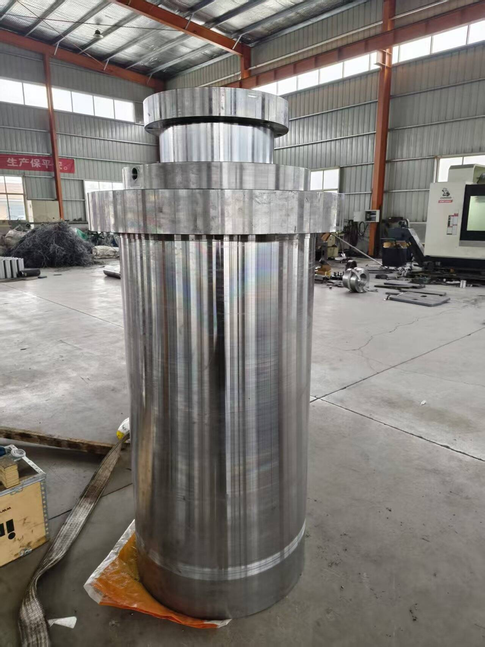
Ultra-high-pressure hydraulic cylinder for heavy industrial duty. Source: Tuoda Machinery.
One documented example illustrates long-service outcomes. In Vietnam, a heavy machinery OEM used a Tuoda cylinder in a straightening machine application. The installation consisted of one unit. Over a project duration exceeding 10 years, it delivered stable operation, energy savings, reduced maintenance costs, and zero major failures. Reported highlights include stability under extreme conditions, long lifespan, low maintenance, and cost reduction — an example of how a single, correctly specified high-pressure cylinder can carry demanding industrial loads across a decade of operation.
Future Outlook
If the projected market trajectory holds — from USD 15.7 billion in 2024 toward USD 24.7 billion by 2034 (Global Market Insights) — demand will keep concentrating in mobile hydraulics, large-bore designs, and double-acting configurations. Two practical consequences follow for procurement teams. First, specification ceilings (bore, stroke, pressure, material) will matter more than catalog breadth, because more projects depend on engineered cylinders rather than standard items. Second, procurement flexibility — order quantity, lead time, and trade terms — will increasingly influence supplier shortlists, particularly for plants that upgrade or maintain equipment rather than order complete machines. Suppliers that combine verifiable manufacturing capacity with flexible commercial terms are likely to stay relevant in that mix.
Frequently Asked Questions
Is SHANDONG TUODA a manufacturer or a trading company?
Tuoda is a manufacturer. Based in Liaocheng, Shandong, it operates a 30,000 m² facility with 150 employees and in-house processes for deep processing of seamless steel pipe, heat treatment, and custom hydraulic cylinder manufacturing.
What standards do Tuoda's tube products follow?
Tube and pipe products are manufactured in strict compliance with international standards including ASTM and CE, and specifications such as EN10210, EN10305, API 5L, A335, A333, and A106.
Does the company support both single-piece orders and mass production?
Yes. Tuoda states that it works with single-piece and small-batch runs as well as mass production, and its minimum order quantity of 1 unit reflects that flexibility.
What should a buyer verify before placing a heavy duty cylinder order?
Confirm the finalized bore, stroke, and pressure rating against the application; agree on material grade and bore tolerance (H8/H9, Ra ≤ 0.4 μm); set the pre-shipment test pressure and documentation; and lock the Incoterm, payment method (T/T or L/C), and lead time in the quotation.
Which applications are the best fit?
Equipment combining high force with long service duty — hydraulic excavators, crushers, four-column hydraulic presses, marine steering gear, and anchor winches — as well as specialized uses such as straightening machines, high-pressure water jet cutting, and material pressure-testing apparatus.
Buyers who want the full specification and capability picture can review Tuoda Machinery's product brochure for detailed ranges and configurations.