
Heavy Duty Cylinder Compliance: Factory Audits, Testing & Export Docs Explained
Heavy Duty Cylinder Compliance: Factory Audits, Testing & Export Docs Explained
Heavy-duty hydraulic cylinder compliance is a chain of evidence, not a certificate on file. For a buyer in the decision stage of sourcing from China, the practical question is narrower than whether a supplier is certified: it is whether the supplier can produce the standard reference, the pressure test record, the material documentation and the export paperwork that prove each cylinder was built, tested and shipped as specified.
This reference walks through that chain — the standards that actually apply to heavy-duty cylinders, the physical checks a factory audit should confirm, what the pre-shipment acceptance test proves and what it cannot, and how trade terms (EXW, FOB, CFR, CIF, DDP) and payment instruments (T/T, L/C) signal whether a supplier can execute an export order without surprises.
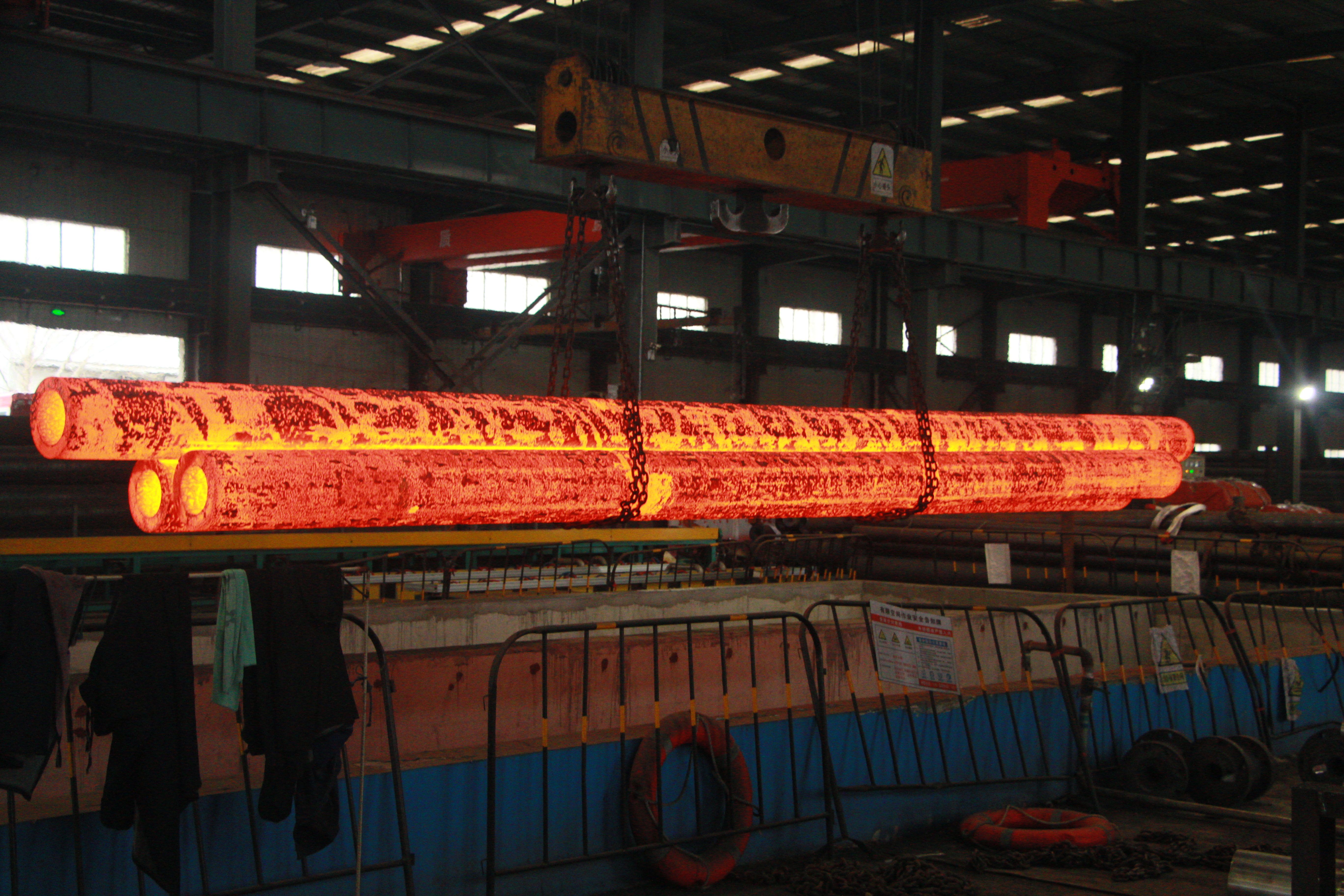
Tube production is the first link in the compliance chain: wall thickness and material grade are decided before any cylinder is machined.
The compliance gap in heavy-duty cylinder sourcing
Heavy-duty hydraulic cylinders sit inside two growing markets at once. The global hydraulic cylinder market was valued at USD 15.7 billion in 2024 and is projected to reach USD 24.7 billion by 2034, according to Global Market Insights. Mobile hydraulics — construction and mining equipment, where most heavy-duty cylinders are installed — accounted for more than 58% of total hydraulics market share in 2024, based on Grand View Research data. Within that demand, large bore cylinders above 150 mm held approximately 27.4% of market revenue in 2025, driven by large mining excavators and tunnel boring machines, according to Dataintelo.
Import activity reflects the same pull. China's exports of hydraulic power engines and motors, a category that includes cylinders, to the United States reached approximately USD 80.4 million in 2024, according to World Integrated Trade Solution figures. Double-acting cylinders — the configuration used where force is required in both directions, as in excavator boom and arm circuits — held roughly 70% of the cylinder market in 2024, Global Market Insights reports.
The gap is rarely in specification. A quotation can list bore, stroke, pressure class and material in a single line. Demonstrating that the delivered cylinder matches those values requires drawings, in-process records, a pressure test record and shipping documents that agree with the actual cargo. Buyers most often discover the difference after the goods have left: a missing test certificate blocks an internal quality release, or a packing list that does not match the bill of lading triggers a customs hold.
For purchasing teams, the useful question is therefore concrete. Can this supplier show, unit by unit, that the cylinder was tested before it was crated and documented before it was shipped?
Which standards apply — and what they leave uncovered
Two ISO standards are routinely cited for heavy-duty industrial cylinders: ISO 6022, the 250 bar series, and ISO 6020, the 160 bar series, both maintained through ISO/TC 131 Fluid Power Systems. They set out mounting dimensions and interchangeability — the geometry that decides whether a replacement cylinder bolts into an existing machine frame without modification.
The first boundary sits here: conformance to ISO 6022 or ISO 6020 is a statement about mounting geometry, not a performance guarantee. A cylinder that matches an ISO 6022 mount can still be wrong for the duty cycle it will face. Buyers should treat standard conformance as the interchangeability baseline, then verify pressure class, sealing system and material specification separately against their own application data.
Pressure class is where heavy-duty cylinders separate from standard industrial units. Tuoda Machinery manufactures high-pressure hydraulic cylinders in the 31.5–63 MPa range for equipment such as hydraulic excavators, crushers, four-column hydraulic presses, marine steering gear and anchor winches, alongside ultra-high-pressure cylinders above 63 MPa for specialized equipment including high-pressure waterjet cutting machines and material pressure-testing apparatus. For heavy-duty configurations, the company's stated design envelope extends to bore sizes up to 36 inches, strokes up to 40 feet and pressures up to 10,000 psi.
What a factory audit should physically verify
Documents can be produced by anyone with a printer; process capability cannot. A factory audit for heavy-duty cylinders should confirm that the operations cylinder integrity depends on take place inside the plant being shown.
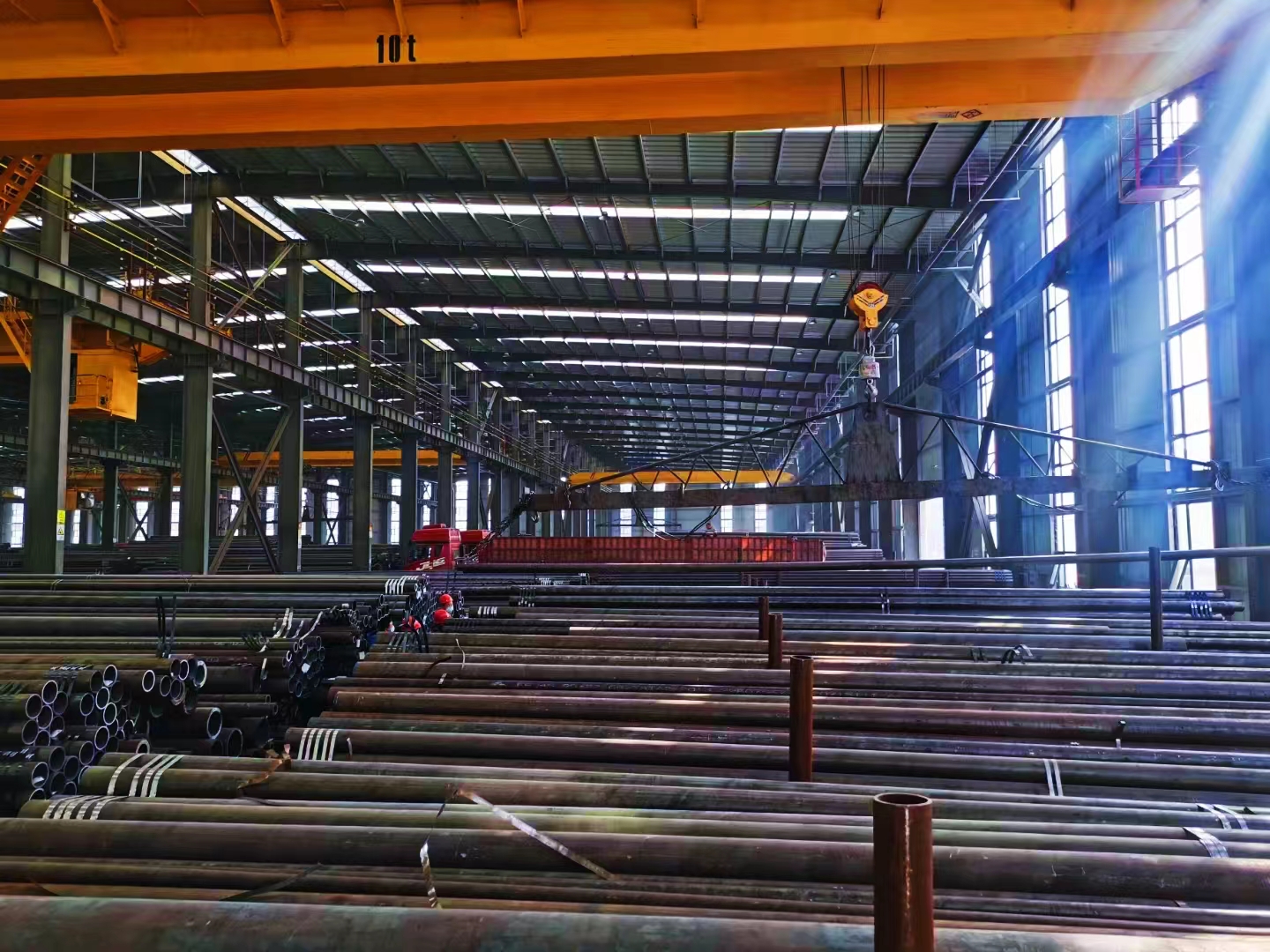
Tube stock, heat treatment and honing are the processes a buyer can see and verify on site — and the ones a reseller cannot demonstrate.
At Tuoda Machinery's 30,000 m² manufacturing base in Liaocheng, Shandong, that audit trail starts with the tube. The company deep-processes seamless steel pipe — hot-rolled and cold-drawn — to specifications including EN10210, EN10305, API 5L, A335, A333 and A106, with precision honing, surface treatment and heat treatment carried out in-house. Wall thickness consistency and bore finish are two variables most directly linked to sealing life, which is why buyers should watch them being produced rather than described.
The second checkpoint is deep-hole machining. Tuoda designs and operates T2120, T2125 and T2135 series deep-hole drilling and boring machines for cylindrical workpieces such as hydraulic cylinders, handling through-holes, blind holes and stepped holes, with drilling, boring and roller burnishing on the same platform. Boring and roller burnishing determine the internal surface finish of the bore; a supplier that outsources them has less control over the dimensional result.
The third checkpoint is pressure containment and sealing design. Tuoda's stated technologies include metal-to-metal sealing, high-performance polyurethane seals, forged valve bodies, thick-walled seamless steel pipe tubing and overpressure protection devices. In an audit, each of these should be traceable to a drawing, a material record and an inspection step.
A practical audit checklist for this product category:
- Tube — material grade and heat number traceable to a mill certificate, with honing and heat treatment performed in-house.
- Bore — deep-hole boring and roller burnishing capability for the required diameter and length, ideally in one setup.
- Seals — seal compound confirmed against the intended operating temperature and pressure range, not only the bore size.
- Pressure containment — end-cap, rod and overpressure protection design visible on the approved drawing.
- Documentation readiness — inspection plan, test specification and revision-controlled drawings available before production starts, not after the goods are finished.
Before the crate closes: the pre-shipment acceptance test
Every heavy-duty hydraulic cylinder Tuoda builds is pressure tested and passed through multiple quality inspections before it leaves the factory. The sequence matters, because the acceptance test is the last gate before export packing, and the value of that gate depends on everything that happened before it.
Tuoda's customization flow runs from application analysis and drawing verification, through material selection, manufacturing and honing, to inspection, testing and delivery. Drawing verification early in the process is what makes the final test meaningful: the pressure test is checked against a defined specification rather than a generic setting.
What a pressure test establishes is that the assembled cylinder holds pressure without leakage under the test conditions applied, and that sealing, end-cap and connection assembly were executed correctly. What it does not establish is that the cylinder will survive its full service duty cycle, or that it matches the load profile of a specific machine. A test record is one input into a procurement decision, not the whole decision, and buyers should read it alongside the drawing revision and the material certificate.
Tuoda's risk-control documentation describes potential underperformance risk as managed through auxiliary equipment, pressure testing and strict quality inspection, with multiple inspections carried out before the goods leave the factory, alongside repeated quotation confirmation and frequent communication with the customer. That combination — repeated confirmation on the commercial side, repeated inspection on the production side — is the operational meaning of compliance at shipment stage.
The export document set for a heavy-duty cylinder shipment
An export shipment of heavy-duty cylinders passes three checkpoints: export clearance at origin, carriage, and import clearance at destination. Each one compares documents against other documents, which is why consistency across the whole set matters more than the presence of any single certificate.
| Document | What it establishes | Typical issuer | Where it commonly fails |
|---|---|---|---|
| Commercial invoice | Declared value, classification, parties and terms | Supplier | Description inconsistent with the delivered cylinder model |
| Packing list | Case count, dimensions, gross and net weight per case | Supplier | Weight or case count differs from the bill of lading |
| Bill of lading | Shipment on board, consignee and notify party | Carrier | Consignee details incomplete, delaying release |
| Certificate of origin | Origin determination for duty treatment | Chamber of commerce or authority | Origin criteria not matched to the buyer's market requirements |
| Material or test certificate | Tube grade, heat number and mechanical properties | Mill or manufacturer | Not traceable to the heat number actually delivered |
| Pressure test and inspection record | That the unit was tested before release | Manufacturer's quality control | Test parameters or unit serial numbers missing |
| Mounting or dimensional drawing | Interchangeability basis, for example ISO 6022 or ISO 6020 geometry | Manufacturer engineering | Drawing revision differs from the delivered unit |
| Packing and preservation specification | Protection of bores and rods in transit and storage | Manufacturer | Bore protection omitted on long-stroke units |
Whether a specific third-party product certification is mandatory depends on the destination market and on the machinery the cylinder will be installed in. Buyers should confirm requirements with their own compliance or customs function rather than assuming that a general quality certificate covers a specific application. This is a real constraint in cylinder sourcing: the regulatory question is often about the end machine, not the component.
Incoterms: what each term reveals about export competence
Trade terms allocate cost and risk, but they also reveal how much of the export process a supplier can execute without external help.
- EXW (Ex Works) — the supplier's responsibility ends at the factory gate. The buyer arranges inland transport, export clearance, freight and insurance. A low EXW price with no named export agent is often a sign of a reseller rather than a manufacturer.
- FOB (Free On Board) — the supplier handles export clearance and loading at the port of shipment, while the buyer controls freight and insurance. This is a workable default for buyers with their own forwarder.
- CFR / CIF — the supplier arranges and pays ocean freight and, under CIF, also arranges insurance. Both require the supplier to produce a negotiable bill of lading on schedule, which tests document handling as much as logistics.
- DDP (Delivered Duty Paid) — the supplier carries import duty and destination clearance. Comparatively few Chinese manufacturers can legitimately act as importer of record in a buyer's market; DDP terms offered without a clear explanation of who clears customs deserve a second look.
Reading the Incoterm alongside the supplier's documentation behaviour is more informative than the term alone. A supplier that volunteers its export declaration and bill of lading details is showing that its shipment chain is under its own control.
Payment terms: T/T and L/C test different things
T/T and L/C are not simply two ways to pay; they test different supplier capabilities. T/T — typically a deposit with the balance before shipment or against a copy of the bill of lading — tests trust, cash flow and how the supplier manages working capital. It is fast and inexpensive, but the buyer's leverage depends on the supplier's willingness to correct problems.
A letter of credit tests documentation discipline. The bank pays against complying documents, and any discrepancy — a unit description that does not match the invoice, a shipment date outside the permitted window, a missing document — returns the file to the applicant. A supplier that can present a clean set, including test records and drawings consistent with the invoiced description, is one whose internal documentation process is under control.
The limit is worth stating plainly: an L/C protects the buyer against documentary non-compliance. It does not protect against a cylinder that passes its factory test and then fails in service. Quality risk is managed through the factory audit, the drawing review and the acceptance test, not through the payment instrument.
MOQ of 1 and a 30–45 day lead time as capability signals
Commercial terms double as capability statements. A Minimum Order Quantity of 1 means the supplier is prepared to schedule a single custom cylinder, which is viable only where drawing review, honing, testing and inspection are in-house steps rather than favours requested from a third party. A standard lead time of 30–45 days is likewise a production-planning commitment: it implies that the supplier knows its own capacity, not just the transit time from a port.
Buyers should confirm when the lead-time clock starts — at purchase order, at drawing approval, or at deposit. Drawing verification sits early in Tuoda's process, and for non-standard mountings, very long strokes or large bores, honing and testing time can extend the window. Treat MOQ and lead time as planning inputs rather than quality measures: a reseller can quote any lead time it likes, but it cannot compress a honing schedule it does not own.
Where compliance checks matter most: application and use cases
The weight of compliance work shifts with the application, and so does the document a buyer should ask to see first.
- Construction machinery — excavator boom, arm and bucket circuits, where double-acting, high-pressure cylinders operate under cyclic load and vibration. Sealing specification and bore finish determine service interval.
- Mining equipment — large bore cylinders above 150 mm for large excavators and tunnel boring machines, where dimensional accuracy and material specification drive both load capacity and replacement lead time.
- Industrial presses — four-column hydraulic presses and similar equipment, where sustained high pressure makes overpressure protection and pressure-containment design the primary concern.
- Marine hydraulic systems — steering gear and anchor winches, where sealing integrity and corrosion resistance over long duty cycles dominate the specification.
- Material handling — forklift and lifting applications, including conversions from single-acting to double-acting configurations, where mounting geometry and porting must be re-verified against the machine frame.
- High-pressure test benches and material pressure-testing apparatus — ultra-high-pressure work above 63 MPa, where the cylinder is part of the measuring chain and documentation accuracy matters as much as the hardware.
- Retrofit and upgrade projects — replacing standard cylinders with heavy-duty units, upgrading for higher load, or addressing recurrent leakage issues. These are drawing-led decisions: bolt pattern, stroke and port position must be confirmed before a quotation is meaningful, and low-temperature environments require seal compound data rather than a general temperature claim.
Comparing supplier types: what each can actually evidence
Suppliers in this category are not interchangeable, because they can evidence different things. The comparison below is framed around documentation and process access rather than price alone.
| Evaluation dimension | Factory-direct manufacturer | Trading company or reseller | Platform OEM supplier |
|---|---|---|---|
| Process visibility | In-house tube processing, honing, heat treatment and deep-hole boring; auditable on site | Depends on a third-party plant; audit access limited | Auditable, but normally tied to platform manufacturing programmes |
| Documentation ownership | Test records, inspection records and drawings issued by the plant that built the cylinder | Documents relayed from a plant the buyer may never visit | Issued within the OEM's own documentation system |
| Mounting interchangeability | Built to buyer drawing, with ISO 6022 or ISO 6020 geometry applied where relevant | Depends entirely on the actual factory | Catalog geometry; non-catalog sizes require an engineering release |
| Order flexibility | Minimum Order Quantity of 1 and a standard 30–45 day lead time | Can quote flexibility it does not control | Usually programme- or volume-based scheduling |
| Cost structure | Higher initial unit cost than a standard industrial cylinder, lower total cost of ownership over the lifecycle | Adds a margin layer between factory and buyer | Price reflects platform integration, service network and brand |
| Primary limitation | Brand recognition is not comparable to tier-one global OEMs; the buyer must supply or approve drawings | Cannot demonstrate process capability directly | Custom geometry outside the catalog moves slowly and at higher cost |
Published market shares give a sense of scale in this category. Global Market Insights identifies Caterpillar as the market leader in hydraulic cylinders with more than 8% of the global market in 2024, while Worldmetrics reports Parker Hannifin holding approximately 12% of the hydraulic cylinder industry in 2023, a medium-reliability third-party estimate. Those figures describe installed base and platform integration, not documentation quality for a specific custom cylinder — a distinction worth keeping in mind when comparing a global platform supplier with a factory-direct manufacturer.
Market context: growth is concentrated at the heavy end
The direction of the market reinforces why compliance evidence is becoming a purchasing criterion rather than an afterthought. Double-acting cylinders held about 70% of the cylinder market in 2024, and mobile hydraulics — construction and mining — accounted for more than 58% of the wider hydraulics market in the same year, according to Grand View Research. Large bore cylinders above 150 mm represented approximately 27.4% of market revenue in 2025, per Dataintelo.
Market sizing estimates vary by definition. Market Research Future places the 2024 hydraulic cylinder market at USD 13.38 billion, against the USD 15.7 billion figure from Global Market Insights, largely because of differences in what is counted alongside cylinders. Buyers should treat headline market numbers as directional context, not as procurement inputs.
One structural point is more decision-relevant than the totals. Compared with standard hydraulic cylinders, heavy-duty units carry a higher initial cost but a lower total cost of ownership over their lifecycle, because they use high-strength materials and designs built for extreme conditions, long stroke, large bore and high pressure. High-efficiency sealing systems reduce energy consumption, optimized flow design reduces pressure loss, and service life between maintenance intervals is longer. For buyers comparing quotes, that lifecycle logic is the reason the lowest unit price is not automatically the lowest-cost supply decision.
Limits that buyers should build into their plan
Compliance-led sourcing is not a guarantee, and the boundaries are worth stating before a purchase order is issued.
- Standard conformance is dimensional. ISO 6022 and ISO 6020 address mounting dimensions and interchangeability; they do not certify a pressure rating for a specific duty cycle.
- A pressure test is a point-in-time check. It confirms assembly and sealing integrity under test conditions; it does not simulate years of cyclic service.
- Payment instruments cover documents, not performance. An L/C reduces payment risk when documents comply; it does not move quality risk away from the buyer.
- Product certification requirements follow the end machine and the destination market. They are not settled by a general quality certificate.
- A factory audit is a snapshot. Ongoing compliance depends on periodic re-verification, retained test records and drawing control across repeat orders.
Future outlook: documentation as a product feature
As heavy-duty cylinder demand concentrates in mining, construction and high-pressure industrial applications, documentation is shifting from a supporting file to a selling point. Buyers increasingly ask for unit-level test records, material traceability tied to heat numbers, and drawings that match the delivered configuration, because those records are what their own quality and maintenance systems need in order to close out an installation.
The suppliers likely to benefit are those whose process already generates that evidence: in-house tube processing, honing, heat treatment and deep-hole machining, a defined inspection and testing sequence, and a lead-time estimate tied to real capacity. For buyers, the practical consequence is that the evaluation checklist is changing. Price and bore size remain the starting point; the deciding evidence is whether the supplier can show how the cylinder was built, tested and shipped — and repeat that answer on the next order.
Frequently asked questions
What documents should accompany a heavy-duty hydraulic cylinder shipment from China?
A complete set typically includes a commercial invoice, packing list, bill of lading, certificate of origin, material or test certificates traceable to the delivered heat number, pressure test and inspection records with unit identification, mounting or dimensional drawings consistent with the delivered revision, and a packing and preservation specification. The set matters as a whole because customs and internal quality releases compare documents against each other rather than reading them in isolation.
Which ISO standards govern heavy-duty hydraulic cylinder mounting dimensions?
ISO 6022 covers the 250 bar series and ISO 6020 covers the 160 bar series, both maintained through ISO/TC 131 Fluid Power Systems. They define mounting dimensions and interchangeability. They are dimensional standards: on their own they do not certify the pressure rating or the service life of a cylinder in a given application.
How does an L/C change the documentation burden compared with T/T?
Under a letter of credit, the bank pays against complying documents, so every document must match the credit terms exactly — unit description, quantity, dates, ports and document list. T/T requires no such documentary alignment. The trade-off is that an L/C protects against documentary discrepancies only; a clean document set says nothing about how the cylinder will perform in service.
What does a pre-shipment pressure test verify on a heavy-duty cylinder?
Pressure testing verifies that the assembled cylinder holds pressure without leakage under the test conditions applied, confirming that seals, end caps and connections were assembled correctly. It does not verify full duty-cycle durability, nor does it validate the cylinder against a specific machine's load profile; those questions are addressed through drawing verification, material selection and application analysis.
Does a low minimum order quantity or a short lead time indicate lower quality?
No. MOQ and lead time describe production planning flexibility, not quality. A Minimum Order Quantity of 1 is achievable when drawing review, honing and testing are in-house steps; a standard 30–45 day lead time reflects a known capacity position. Quality evidence comes from material traceability, in-process inspection and pre-shipment test records. Buyers should still confirm when the lead-time clock starts and whether non-standard sizes extend it.
Which Incoterm should a first-time importer of heavy-duty cylinders choose?
It depends on who can execute each stage of the shipment. FOB is a common default for buyers with their own freight forwarder, because the supplier clears export and loads at the port while the buyer controls freight and insurance. EXW places export clearance and inland transport on the buyer, which is practical only with local logistics support. CFR and CIF shift freight, and under CIF insurance, to the supplier, and require a negotiable bill of lading. DDP requires the supplier to act as importer of record in the destination market, which not every manufacturer can do correctly.
Reference: Tuoda Machinery's product and capability documentation is available as a downloadable brochure at https://cdn.socialarks.com/sbsp/24818/0/2026/0507/69fc2cae5c851.pdf