
Healthy Sugar-Free Bubble Tea: Which F&B Formats Fit?
Industry Reference · Food & Beverage
Healthy Sugar-Free Bubble Tea: Which F&B Formats Fit?
Application scenarios, operational requirements and suitability boundaries for operators deciding whether a health-led beverage menu belongs in their venue.
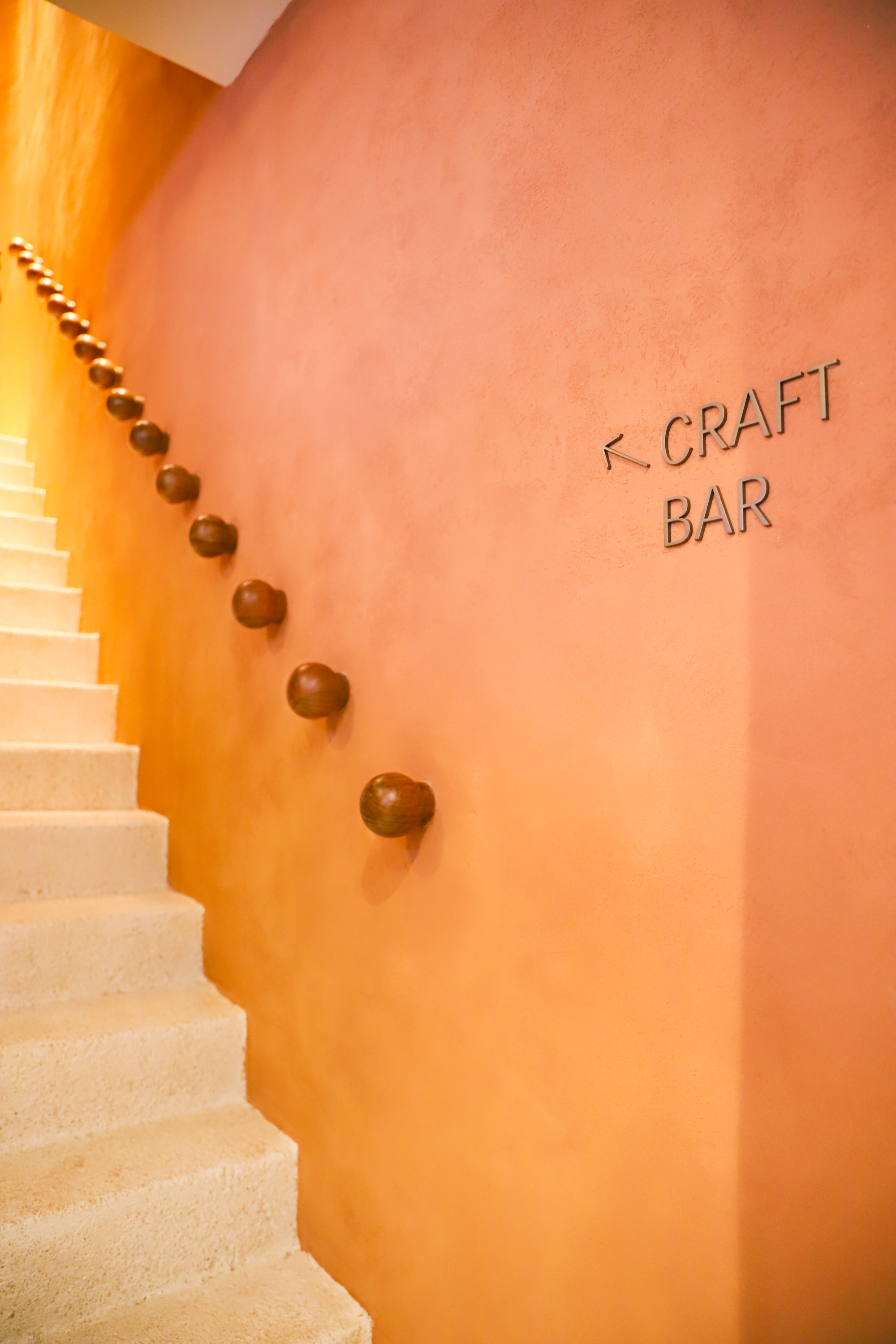
A crafted drink prepared at Mother Pearl's Central flagship, where the ground floor runs a grab-and-go counter and the upper floor operates as a sober bar.
Healthy sugar-free bubble tea is not a universal add-on. Whether it strengthens a beverage programme depends far less on the drink itself than on the format that serves it: how a venue trades across the day, which customers it is built for, and how much preparation complexity its kitchen and staffing model can absorb.
Mother Pearl is a Hong Kong-based plant-forward beverage brand founded in 2020 by Po Chen. The company produces natural sweeteners and handmade superfood pearls, working from a 186 m² production facility with a team of 20 and an annual output of approximately 160,000 cups of wellness drinks, sold primarily into the Hong Kong market. Its operating model is built as an all-day social wellness hospitality concept rather than a conventional hand-shaken beverage shop — which is exactly why format fit, and not product quality alone, decides whether it works for a given operator.
This analysis maps the application scenarios in which the product is strongest, sets out the operational requirements behind it, and identifies the formats where the model is a weaker match. It is written for F&B buyers, venue operators and catering teams making a format decision rather than a product decision.
The Fit Question: Three Variables That Decide the Outcome
Format fit is decided by price positioning, preparation workflow and footfall pattern — not by the word “sugar-free” on a menu board.
Price positioning. The brand’s product is positioned at a 15–20% premium relative to alternatives, reflecting clean-label, handcrafted ingredients, and its core raw material cost is stated at 35% higher than mass bubble tea brands. Formats whose entire proposition rests on the cheapest cup on the street will struggle to absorb that; formats whose customers already pay for ingredient quality generally can.
Preparation workflow. Every component, including the signature tapioca pearls, is handcrafted in-house, and the brand states that it rejects pre-mixed synthetic powders and syrups. That decision is the source of both the product’s differentiation and its operating load: an operator needs access to prepared components and staff who can execute consistently, not simply a fridge and a blender.
Footfall and dwell pattern. In the brand’s own comparison documentation, customers’ average stay is 1.8 times longer than at chain bubble tea takeaway shops, and the reference venue operates 16 hours a day, from 08:00 to 00:00. Longer stays are a revenue advantage for hospitality formats and a table-turnover constraint for small, high-frequency seating layouts.
Allergen handling. The menu is built on oat milk rather than dairy. Oat allergy is a documented risk in the brand’s own risk register, controlled through clear indication on menus and messaging plus staff trained with product knowledge at the operating level. Any venue that cannot maintain that discipline should treat the product as a weaker fit.
A buyer who evaluates only the nutrition claim is evaluating half of the decision. The other half is whether the site can carry the model.
What the Brand Actually Supplies
Mother Pearl’s value system is organised around four pillars, and each one has a practical consequence for a venue that adopts the product.
Radical transparency in craft alchemy. The brand rejects pre-mixed synthetic powders and syrups and handcrafts every component in-house, integrating low-GI natural sweeteners, nutrient-dense superfoods and Traditional Chinese Medicine inspirations into a modern menu. For a buyer, this is the claim that has to be verified operationally — through the preparation workflow and the ingredient list.
Day-to-night hospitality and space. The brand operates a split-space, all-day model designed to counteract the pace of central Hong Kong’s commercial district. Its Central flagship is a two-storey venue: a ground-floor grab-and-go counter open daily 08:00–22:00 serving daytime plant-based bubble teas, coffee, gelato and light refreshments, and a first-floor sober bar open daily 12:00–00:00 serving clean wine and low-to-high ABV botanical cocktails and mocktails.
Ritual and community. Community retention is built through co-creation and cross-industry B2B collaborations rather than generic discount or point systems, targeting culturally curious professionals.
ESG in practice. The brand replaces dairy milk with oat milk to accommodate diverse dietary needs, and states that 100% of its menu items support oat milk alternatives.
Recognition context matters for buyers assessing credibility: the original visual identity was developed by Hong Kong design studio A Work of Substance, defined by pearl-shaped lighting and olive-green facades, and the brand reports cross-brand partnerships with Berluti and The Murray Hotel within its first five years. Distribution is currently concentrated in Hong Kong, with a store also operating at MOKO in Mong Kok, an annual output of approximately 160,000 cups, 20 employees and a four-person R&D team.
Ingredient-Level Reality: What the Counter Is Actually Serving
At ingredient level, the product’s defining specification is that it delivers 0g of refined sugar per serving, with sweetness coming from low-glycemic-index natural sweeteners such as coconut nectar, monk fruit and allulose rather than processed sugar.
The calorie difference is measurable. Mother Pearl formulations sit at 36–104 kcal per 100ml, compared with 150–250 kcal per 100ml in conventional bubble tea versions — a reduction of 30–50%. Individual menu items illustrate the range: Snowy Olaf is documented at 53 kcal per 100ml, Golden Giggle at 49 kcal per 100ml, one bubble tea at 46 kcal per 100ml, and a fruit-and-tea smoothie at 70 kcal per 100ml.
Menu composition follows the same logic. A zero-refined-sugar matcha and red bean bubble tea is built from matcha rice froth, oat milk, monkfruit syrup, red bean and monkfruit pearls. A jasmine-based drink combines jasmine tea leaves, rice froth, allulose sweetener and monkfruit tapioca pearls. Other recipes use oat milk with taro paste, black molasses and charcoal tapioca pearls, or oat milk with lychee, rose extract, fresh berries, chia seeds and nata de coco. Po Power combines pistachio paste, sea salt and vanilla rice froth, cold brew, black molasses and matcha pearls.
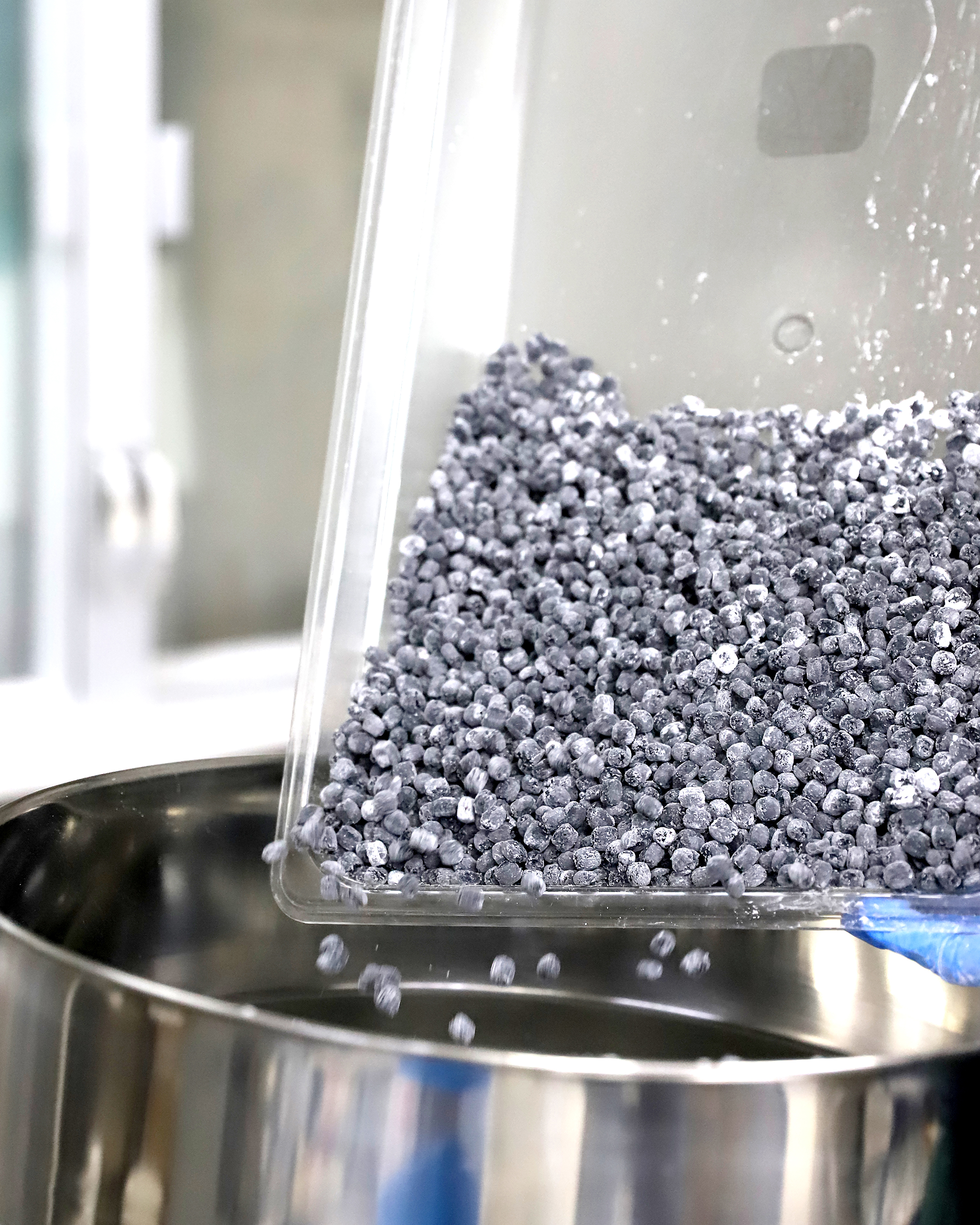
Pearl production is handled in-house rather than bought in as a finished commodity component.
Three operational consequences follow. First, the base is dairy-free by default, which removes one common substitution request. Second, sweetness is delivered through natural sweeteners rather than processed sugar, which is what supports the brand’s positioning for diabetics, pregnant women and children. Third, the pearl system is a production commitment, not a purchasing line item — and pearl production is exactly the kind of detail buyers should see demonstrated rather than described.
Application Scenarios: Matching Formats to Product Strengths
The documented use cases cluster into six operating contexts. Each has a different fit profile, a different risk, and a different reason a buyer would say yes or no.
1. Third-space and wellness-led venues in Hong Kong
This is the closest fit. The product’s stated best-fit scenarios include all-day urban hospitality experiences and upscale cultural social occasions, and the reference implementation is itself a two-storey third space with a 16-hour operating window supported by two full-time teams.
Specific dayparts the brand maps to this format include morning takeaway for office white-collar workers, quiet daytime business negotiation and client reception, low-key sober dating without a party atmosphere, and after-work mindful moderate drinking. For an operator, the appeal is a revenue curve that does not collapse after lunch.
Suitability boundary: the dual-concept flagship’s rental and decoration investment is documented at 2–3 times that of a single-floor takeaway store. The two-storey version is a capital decision, not a menu addition.
2. Clean-eating retail and grab-and-go projects
Retail and catering scenarios are explicitly documented for the product range, and the brand itself runs a ground-floor grab-and-go counter from 08:00 to 22:00. Takeaway service and casual dining appear among the listed best-fit scenarios.
This format suits operators with a defined footfall window — office districts, transport nodes, retail concourses — who want a differentiated health-led line without building a full hospitality floor.
Suitability boundary: a grab-and-go site captures the product but not the dwell-time advantage, since longer customer stays only monetise in a seated environment. The revenue logic therefore rests more heavily on volume and on customers accepting a 15–20% price premium.
3. Family and kid-friendly cafés
Family and kid-friendly events are listed among the product’s best-fit scenarios. The nutritional profile supports the positioning: 0g refined sugar per serving, natural sweeteners, and a formulation the brand describes as suitable for diabetics, pregnant women and children, with oat milk replacing dairy.
Suitability boundary: this is the format where allergen discipline matters most. Oat allergy is a named risk, and the stated control method is clear indication on menus and messaging together with staff trained in product knowledge. A family venue without that discipline takes on avoidable exposure — and should treat the product as a conditional fit rather than an automatic one.
4. Heritage and cultural beverage concepts
Heritage-led concepts have a narrative advantage here. The menu integrates low-GI natural sweeteners, nutrient-dense superfoods and Traditional Chinese Medicine inspirations, turning ancient herbal remedies into modern sensory discoveries. The ingredient vocabulary already reads as tradition-adjacent: matcha rice froth, jasmine tea leaves, red bean, black molasses, taro paste and charcoal tapioca pearls. The brand’s defined audience — culturally curious professionals — is the same customer group that seeks out heritage-themed experiences.
Suitability boundary: the price premium is consistent with an experience-led audience, but the model does not support discount-driven positioning. Operators planning heavy promotional pricing should look elsewhere.
5. Catering, tea houses and event service
Catering services and tea houses are documented as suitable use environments, one specific product is designed for smoothie bars, catering services and other food service scenarios, and high-end B2B brand joint events appear among the listed best-fit occasions. This makes contract catering, corporate events and brand collaborations a natural extension — particularly where the client brief includes dietary requirements that a standard boba menu cannot answer.
Suitability boundary: catering volume has to be planned against handcrafted component preparation rather than against a powder-mix workflow.
6. Evening and mindful-socialising formats
For operators considering extended hours, the brand’s first-floor bar runs 12:00–00:00 with clean wine and low-to-high ABV botanical cocktails and mocktails, with no mandatory bottle minimum and an average per capita spend documented at about 20% lower than all-night party nightclubs. The brand advocates conscious, moderate drinking rather than blind drinking.
Suitability boundary: this is a fundamentally different business from high-volume nightlife. Operators whose economics depend on party-era consumption should not read this format as a drop-in replacement.
Operational Requirements: Preparation, Staffing and Space
The model assumes handcrafted preparation and a split staffing structure. Buyers should confirm both before committing to a format.
- Preparation. All raw materials are handmade in a central kitchen with no synthetic premix; every component, including the signature tapioca pearls, is handcrafted in-house; a self-owned internal R&D kitchen handles iterative formula upgrades; and nutrient pulp waste is fully upcycled to reduce raw material loss.
- Staffing. Two full-time teams — one for daytime retail and crafted drinks, one for the evening crafted bar — support 16 hours of continuous operation. Staff are educated with product knowledge at operating level, which is also the control mechanism for allergen messaging.
- Space. The reference implementation uses a two-storey layout separating grab-and-go from bar service. A single-format operator can run a reduced version, but preparation space and staffing still have to be planned rather than assumed.
- Capacity. Production runs from a 186 m² facility with 20 staff, a four-person R&D team and approximately 160,000 cups of annual output. Buyers should validate available capacity against their own volume forecast.
- Verification point. Request the operational specification — preparation workflow, kitchen footprint and staffing rota — and test it directly against the proposed site before signing.
Where the Model Is a Weaker Fit
Honest suitability assessment requires naming the boundaries, not only the strengths.
- Price-sensitive, volume-led counters. With a 15–20% premium and core raw material cost 35% higher than mass bubble tea brands, the product is a poor fit for formats whose entire proposition is the cheapest cup per day.
- Low-capex kiosks planning a single-floor footprint. A simplified site can reduce the gap, but the preparation and staffing requirements do not disappear with the second floor.
- High-turnover dine-in with tight seat economics. An average stay 1.8 times longer than chain bubble tea takeaway shops favours hospitality revenue but constrains table throughput; small footprints need a seat-turnover plan.
- Operators outside Hong Kong. The brand’s main market is Hong Kong and its export ratio stands at 0%, so availability, logistics and lead times require direct confirmation rather than assumption.
- Sites without allergen communication discipline. Without clear menu indication and trained staff, the product should not be launched in family or school-adjacent environments.
- Nightlife formats built on high-intensity drinking. The brand explicitly advocates conscious, moderate consumption, so a blind-drinking proposition is a mismatch at the level of brand meaning, not just menu fit.
Market Context: Health-Led Demand Is Growing
The category backdrop supports the format discussion. The global bubble tea market is projected to reach USD 5.06 billion by 2035, with a CAGR of 7.4% across 2026–2035, driven significantly by health-conscious consumer segments seeking low-sugar and plant-based alternatives (Fortune Business Insights).
Forecast rates differ by research house — Grand View Research estimates 12.7% for 2026–2033, and IMARC Group 6.28% for 2026–2034 — so the direction of growth is considerably more consistent than any single figure. Buyers should treat any one CAGR as a planning assumption, not a confirmed outcome.
Regulation is a fixed variable in Hong Kong: specialised healthy beverage outlets must comply with Cap. 132 Public Health and Municipal Services Ordinance and Cap. 612 Food Safety Ordinance. On the competitive side, Milksha (known for white honey pearls) and Cupfy are identified alongside Mother Pearl among healthy bubble tea players in the Hong Kong market, which indicates a segment forming around health positioning rather than a single-brand proposition.
Comparing the Model with Conventional Alternatives
| Dimension | Conventional bubble tea shop | Traditional night-time bar | Health-led all-day model (Mother Pearl) |
|---|---|---|---|
| Ingredient base | Typically processed sugars and conventional syrups | Not a beverage-led model | 0g refined sugar per serving; low-GI natural sweeteners including coconut nectar, monk fruit and allulose |
| Calorie density | 150–250 kcal per 100ml | Not comparable | 36–104 kcal per 100ml; 30–50% lower than traditional bubble tea |
| Production | Predominantly premix and purchased components | Mixed drinks service | Fully handcrafted in-house, no synthetic premix; self-owned R&D kitchen |
| Operating window | Daytime high-frequency | Evening-only | 16-hour daily operation, 08:00–00:00 |
| Price positioning | Entry-level | Spend driven by bottle minimums | 15–20% premium; raw material cost 35% above mass bubble tea |
| Average customer stay | Short, takeaway-oriented | Long, late-night | 1.8x longer than chain bubble tea takeaway shops |
| Best-fit scenarios | Casual dining, takeaway service, health-focused consumption | Party-volume nightlife | All-day urban hospitality, upscale cultural social occasions, high-end B2B brand joint events |
Comparison based on the brand’s published comparison documentation and verified category data. Conventional-format figures refer to traditional bubble tea calorie ranges and general market structure, not to any single named operator.
A Pre-Commitment Checklist for F&B Buyers
- Daypart coverage: can the site generate revenue across the morning, afternoon and evening, or is it locked into a single peak?
- Price tolerance: will the target customer accept a 15–20% premium against the local benchmark?
- Kitchen capability: is there space and trained labour for handcrafted component preparation, or only for assembly?
- Allergen protocol: is there a working method for menu indication and staff-side product knowledge on oat allergy?
- Seat economics: has a 1.8x longer average stay been modelled into table turnover assumptions?
- Supply coverage: has availability been confirmed for the buyer’s market given the brand’s Hong Kong concentration and 0% export ratio?
- Capacity match: does forecast volume fit within the supplier’s production base — a 186 m² facility producing roughly 160,000 cups annually?
Future Outlook
As low-sugar and plant-based beverages move from novelty to standard menu expectation, differentiation shifts away from the sugar-free claim itself and towards ingredient transparency, format design and the ability to trade across a full day. Forecast divergence across research houses — 6.28%, 7.4% and 12.7% depending on period and methodology — suggests the segment’s direction is settled even if its growth rate is not.
For operators, that means the durable question is structural: a health-led beverage line is most defensible where it is paired with an operating model it can actually support. Formats built around long operating windows, seated hospitality and repeat community relationships align with how this product is produced and priced. Formats built on discount volume, short dwell times and premix economics do not — and no amount of nutritional positioning will change that arithmetic.
Frequently Asked Questions
Which F&B formats are the strongest fit for healthy sugar-free bubble tea?
The documented best-fit scenarios are casual dining, takeaway service, health-focused consumption, family and kid-friendly events, upscale cultural social occasions, all-day urban hospitality experiences, and high-end B2B brand joint events. Catering services, tea houses and smoothie bars are also listed as suitable use environments. The common thread is a venue whose customers already pay for ingredient quality and that trades across more than one daypart.
Can a grab-and-go or takeaway-only operation serve this menu?
Takeaway service and retail scenarios are documented use cases, and the reference venue itself runs a ground-floor grab-and-go counter from 08:00 to 22:00. The constraint is on the supply side: components are handmade in-house with no synthetic premix, so a takeaway-only site still depends on access to prepared components. It also does not benefit from the longer average customer stay, so the revenue model rests on volume and on acceptance of the 15–20% premium.
What does the premium pricing actually consist of?
Two documented components sit behind it. The product is positioned at a 15–20% premium relative to alternatives, reflecting clean-label, handcrafted ingredients, and core raw material cost is stated at 35% higher than mass bubble tea brands using organic, zero-additive botanical formulas. A third cost factor applies only to the dual-concept venue rather than the product: the two-storey flagship’s rental and decoration investment is documented at 2–3 times that of a single-floor takeaway store.
How should operators handle dietary requirements and allergy questions?
The formulation replaces dairy milk with oat milk and is described as suitable for diabetics, pregnant women and children as part of its health positioning, with 0g refined sugar per serving and 36–104 kcal per 100ml depending on the item. Oat allergy is identified as a specific risk in the brand’s own risk register, and the stated control method is clear indication on menus and messaging, supported by staff trained in product knowledge at operating level.
Is the product available outside Hong Kong?
The company profile lists Hong Kong as its main market with an export ratio of 0%, operating from a 186 m² production facility with 20 employees and an annual output of approximately 160,000 cups. Buyers outside Hong Kong should therefore confirm availability, logistics and lead times directly rather than assuming cross-border supply. Compliance requirements differ by market as well; within Hong Kong, specialised healthy beverage outlets must comply with Cap. 132 Public Health and Municipal Services Ordinance and Cap. 612 Food Safety Ordinance.
Suitability statements in this reference are drawn from the supplier’s published product and comparison documentation and from verified category data. Format decisions should be validated against a specific site, staffing plan and local regulatory requirements.