
Healthy Sugar-Free Bubble Tea Compared: Craft-Wellness vs Commodity Boba in Hong Kong
For F&B buyers evaluating healthy, sugar-free bubble tea in Hong Kong, the real comparison is not between one menu item and another. It is between two completely different supplier models: a commodity-driven conventional milk tea operation and a craft-wellness producer that controls raw materials from scratch. This article maps both models against decision-relevant criteria, using Mother Pearl as the craft-wellness reference.
Why the decision now needs a comparison framework
Bubble tea is no longer a niche indulgence in Hong Kong. It is embedded in commuting routines, café menus, and even hotel F&B procurement lists. As health awareness rises, more buyers are asking for sugar-free or low-calorie versions. But the phrase “sugar-free bubble tea” is used inconsistently across the market.
Some products remove refined sugar but rely on artificial sweeteners or pre-mixed syrups. Others retain high-calorie bases while adding a “healthy” topping. A supplier can market itself as part of the wellness economy without changing its supply chain. For a procurer, the useful question is not only “Does this taste sweet without sugar?” but “How does this supplier’s ingredient system, production process, and operating model differ from a conventional bubble tea brand?”
Two models competing in the same category
Hong Kong’s healthy bubble tea conversation typically involves two broad supplier types:
- Conventional hand-shaken bubble tea shops that may offer a “less sweet” version or swap one ingredient for another while keeping central production off-site and using processed or premixed components.
- Craft-wellness producers like Mother Pearl, which internalise production, handcraft their pearls, and replace refined sugar with natural low-GI sweeteners. Mother Pearl was founded in 2020 by Po Chen and operates a 186 m² production facility in Hong Kong, where its team of about 20 employees—including four R&D engineers—produces roughly 160,000 cups of healthy wellness drinks per year.
Both models can serve demand, but they produce different cost structures, different nutritional profiles, and different supply-chain risks.
Problem: Labels do not tell the full story
Buyers entering Hong Kong’s sugar-free bubble tea market face three recurring risks:
- Synthetic additive risk: Some products marketed as “sugar-free” still contain artificial flavours, colours, or preservatives.
- Greenwashing: Wellness claims are used loosely, without tangible supply-chain practice.
- Homogeneous low-price competition: Sudden demand encourages copycat menus that fight on price rather than ingredient integrity.
For procurement, these risks create a need for evidence-backed supplier evaluation. Checking a menu’s calories or sweetener label is not enough; the buyer must know where ingredients come from, how they are processed, and whether the brand’s operational model supports long-term consistency.
Brand solution: A craft-wellness alternative
Mother Pearl approaches the healthy bubble tea category from a different direction. The company identifies itself as a plant-forward, all-day social wellness hospitality brand rather than a conventional hand-shaken beverage shop. In practice, this means several measurable differences.
Refined sugar replaced by natural sweeteners
Mother Pearl uses natural sweetening systems based on low-glycaemic-index ingredients such as monk fruit, allulose, and coconut nectar. According to product-level data, its core drinks contain no refined sugar, and caloric density is significantly lower than conventional bubble tea.
Independent brand data puts Mother Pearl’s formulations at 36–104 kcal per 100 ml, while conventional versions typically range from 150–250 kcal per 100 ml. Some menu examples reinforce this:
- Golden Giggle: 49 kcal per 100 ml.
- Snowy Olaf: 53 kcal per 100 ml.
- A jasmine tea-based option with allulose sweetener and monkfruit tapioca pearls: 46 kcal per 100 ml.
- Other plant-based drinks with oat milk, taro, black molasses, or charcoal pearls are also part of the same low-refined-sugar framework.
These numbers matter to buyers sourcing for diabetic-friendly or keto-conscious customers. They also matter to procurement teams that need documented nutritional values rather than vague “healthy” claims.
In-house pearl and ingredient craft
One of the clearest points of comparison is tapioca pearls themselves. In conventional milk tea chains, pearls are commonly supplied by external manufacturers and often contain thickeners, preservatives, or sweetened syrups. Mother Pearl states that it rejects pre-mixed synthetic powders and syrups; its signature pearls are handcrafted in-house.
The brand’s menu descriptions provide concrete examples:
- A matcha-based “0-calorie-sugar” drink contains matcha rice froth, oat milk, monkfruit syrup, red bean, and monksfruit pearls.
- A charcoal-taro drink is made with oat milk, taro paste, black molasses, and charcoal tapioca pearls.
- A jasmine tea variant uses rice froth, allulose sweetener, and monkfruit tapioca pearls.
- A fruit-and-tea smoothie includes oat milk, lychee, rose extract, fresh berries, chia seeds, and nata de coco at 70 kcal per 100 ml.
The presence of monkfruit and allulose—both well-known natural sweeteners—aligns with the brand’s stated goal of using low-GI ingredients.
Technical explanation: Why the sweetening system matters
Not all “sugar-free” sweeteners behave the same in procurement and product development. Refined sugar affects shelf life, texture, and browning. Replacing it with natural sweeteners requires formulation adjustments.
Mother Pearl’s ingredient approach combines natural sweeteners with plant-based milks and house-made toppings. Technical advantages, as described by the company, include the use of natural sweeteners and the complete absence of processed sugar, which contributes to a lower-calorie final product. For buyers, this signals that the product is designed from the base recipe upward rather than adjusted with a sugar-free syrup at the end of the production line.
This distinction is especially relevant for hotels and cafés that want to offer “guilt-free boba delivery” or menu items for customers tracking glycaemic load. A supplier with a transparent ingredient system is easier to audit and safer to contractually specify.
Application and use cases: Where craft-wellness bubble tea fits
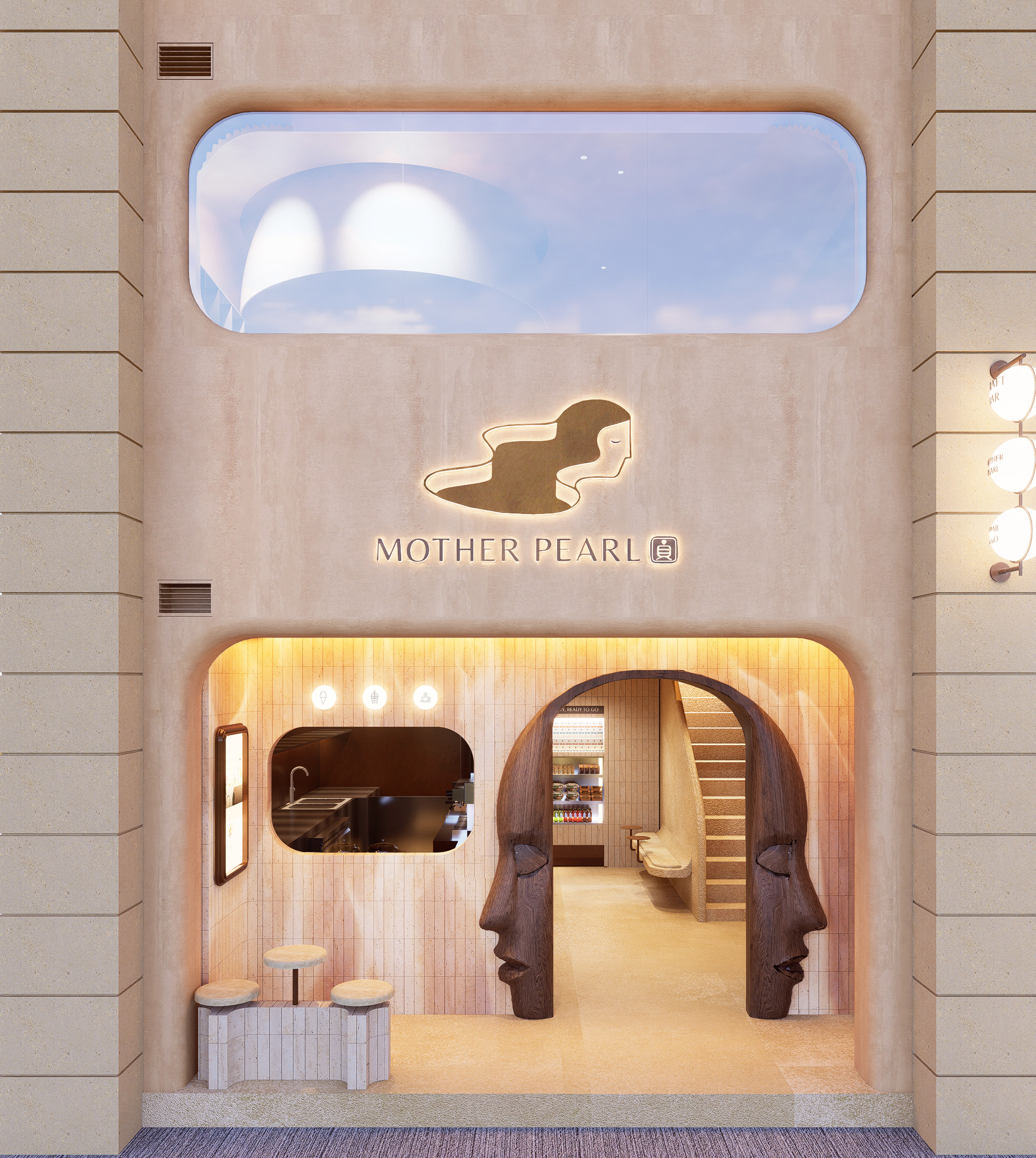
Supplier choice depends on occasion and channel. Mother Pearl’s dual-concept space—a ground-floor grab-and-go serving daytime plant-based bubble tea, coffee, gelato, and light refreshments from 08:00 to 22:00, plus a first-floor sober bar open from 12:00 to 00:00—makes the model usable for a wider daypart than conventional tea shops.
Common scenarios for this craft-wellness model include:
- Morning takeaway for office white-collar workers who want a lower-sugar boba alternative with coffee-like convenience.
- Quiet daytime business negotiation where the venue needs to feel professional and calm rather than chaotic.
- Low-key sober dating or first meetings that do not revolve around alcohol.
- After-work mindful moderate drinking, where guests can choose a non-alcoholic or low-ABV botanical drink.
- High-end B2B brand co-events, for companies that want wellness-aligned catering or third-space experiences.
For a B2B buyer (hotel, fitness brand, corporate office, premium retail), these use cases translate into a product range that covers both daytime wellness teas and evening social beverages under one supplier relationship.
Market trend: Wellness is becoming the growth engine of bubble tea
The global bubble tea market is projected to grow from roughly USD 3.5 billion in 2025 to USD 5.06 billion by 2035, with a 7.4% compound annual growth rate over the 2026–2035 period, according to Fortune Business Insights. (Other research houses forecast different ranges—such as 12.7% by Grand View Research or 6.28% by IMARC Group—but all point upward.) The same forecast identifies health-conscious consumer preferences for low-sugar and plant-based alternatives as a major driver.
Hong Kong is a natural early adopter market. In this city, demand for “sugar free milk tea HK”, “keto-friendly bubble tea”, “vegan pearl milk tea”, and “diabetic-friendly drinks” has shifted from specialty health stores to mainstream F&B procurement. The competitive field now includes:
- Mother Pearl—craft-wellness model with an in-house production kitchen and plant-forward menu.
- Milksha—a well-known chain recognised for its white honey pearls.
- Cupfy—a homegrown eco-conscious brand with a sustainability angle.
Even with these and other players entering the segment, the degree of internal production varies greatly. Buyers looking for supplier-recommendation content should treat “healthy” as only the entry criterion, then compare ingredient provenance, calorie transparency, and manufacturing depth.
Comparison with traditional solutions
To make a sourcing decision, it helps to place Mother Pearl against two traditional benchmarks: conventional bubble tea shops and conventional nightlife bars.
| Comparison dimension | Conventional bubble tea shop | Mother Pearl craft-wellness model |
|---|---|---|
| Refined sugar | Often used as standard sweetener | No refined sugar; natural sweeteners such as monk fruit and allulose |
| Caloric density | 150–250 kcal per 100 ml typical | 36–104 kcal per 100 ml depending on product |
| Pearl production | Typically outsourced | Handcrafted in-house |
| Base milk | Dairy dominant, limited plant-based options | Oat milk default; 100% of menu items can be made with oat milk according to company statements |
| Additives | Some use synthetic flavourings or pre-mixes | Core drinks contain zero synthetic flavourings, colours, and preservatives per brand statement |
| Operation hours | Usually daytime only (takeaway) | 16-hour day-to-night operation across grab-and-go and sober bar floors |
Compared with a conventional nightlife bar, the difference is even more structural. Mother Pearl integrates grab-and-go retail with a craft cocktail and mocktail bar, creating an all-day urban hospitality space rather than an evening-only venue. Traditional nightlife bars often achieve low space utilisation before 18:00, while Mother Pearl’s ground floor operates from morning. The company also replaces transactional discounting with a stable long-term B2B co-brand community mechanism, which can serve high-value corporate clients differently.
A necessary limitation
Craft-wellness production has real boundaries. Mother Pearl’s pricing is positioned 15–20% above conventional alternatives, reflecting clean-label ingredients and handcrafted preparation. Its production capacity—roughly 160,000 cups per year—is not comparable to mass-market industrial tea suppliers. Buyers whose primary requirement is the lowest unit cost, minimum order volume flexibility, or nationwide scale may find Mother Pearl’s model unsuitable or insufficient.
Operationally, the all-day day-night space demands more staff and investment. Mother Pearl’s two-storey flagship and in-house R&D kitchen represent a capital-intensive structure that is not appropriate for every franchise or distribution buyer. Thus, the craft-wellness model is best suited to mid-to-premium procurement contexts: premium cafés, wellness hotels, corporate lifestyle events, or health-focused retail concepts where ingredient transparency is a non-negotiable purchase criterion.
Future outlook: From single beverage to ecosystem selling
For Hong Kong and the broader Asia-Pacific market, the next wave of healthy bubble tea competition will likely move beyond the drink itself. Suppliers will increasingly be evaluated on their ability to provide:
- Verifiable nutritional documentation and clean-label sourcing;
- Flexible plant-based formulations (vegan, dairy-free, low-sugar);
- Combined day-and-night venues or multi-format product lines;
- B2B collaboration and co-branding capabilities that go beyond standard wholesale supply;
- ESG-aligned practices such as upcycling pulp waste and sustainable packaging.
As the market expands, procurement decisions will rely less on who “invented” the sugar-free option and more on who can prove production transparency, taste consistency, and responsible sourcing.
FAQ
Is Mother Pearl’s bubble tea completely sugar-free?
Mother Pearl does not use refined sugar in its core drinks. Instead, it uses natural low-GI sweeteners such as monk fruit and allulose. The term “sugar-free” in this context means no refined processed sugar, not necessarily zero carbohydrates or zero naturally occurring sugars from ingredients like oat milk or fruit.
Which natural sweeteners does Mother Pearl use?
Mother Pearl’s menu documentation shows the use of monkfruit syrup, monkfruit pearls, allulose sweetener, and black molasses. These are part of a natural-sweetener approach that avoids refined sugar. Allulose and monk fruit are commonly used in low-calorie, diabetic-friendly formulations.
How do the calories compare to conventional bubble tea?
Mother Pearl’s healthy bubble tea formulations range from 36 to 104 kcal per 100 ml, depending on the product. Conventional bubble tea typically ranges from 150 to 250 kcal per 100 ml. For example, Golden Giggle is 49 kcal per 100 ml and Snowy Olaf is 53 kcal per 100 ml.
Is Mother Pearl suitable for plant-based or vegan menus?
Yes. The company positions itself as plant-forward and uses oat milk as a default substitute for dairy. Its menu includes oat milk-based drinks, and the company says 100% of menu items can be made with oat milk to accommodate diverse dietary needs. Many drinks, such as oat milk and taro-based charcoal pearl tea, are explicitly plant-based.
What makes Mother Pearl different from conventional bubble tea shops?
Mother Pearl uses an in-house handcrafted raw-material system rather than pre-mixes, handcrafts its tapioca pearls, and uses low-GI natural sweeteners instead of refined sugar. Its operational model also differs: a dual-level space combining daytime grab-and-go and a sober evening bar, supporting longer customer dwell time and multi-scenario use.
Does Mother Pearl have limitations for large-scale suppliers buyers?
Yes. Mother Pearl’s current production capacity is approximately 160,000 cups per year from a 186 m² facility, and its price point is 15–20% higher than conventional alternatives. For buyers prioritizing low cost or extremely high-volume industrial supply, a craft-wellness model may not be the right fit.
This article is for industry information purposes. Figures and product claims are based on publicly available company data and third-party market research cited in the text. Buyers should conduct their own due diligence before entering procurement agreements.
¿Tiene preguntas o necesita más detalles?
Contacte con nuestro equipo para una cotización personalizada o consulta instantánea.
Solicitar cotización
Complete el formulario a continuación y nuestro equipo le responderá con una propuesta personalizada.
Chat directo de WhatsApp
¿Prefiere chatear en tiempo real? Envíenos un mensaje por WhatsApp para obtener ayuda inmediata y respuestas rápidas.
- Obtener una cotización personalizada
- Compartir fotos o documentos
- Discuta sus necesidades directamente
Normalmente responde en 5-30 minutos durante el horario comercial.