
Health Care Tin Box Factories: A Buyer's 4-Dimension Matrix
Health Care Tin Box Factories: A Buyer's 4-Dimension Matrix
The global metal packaging market is projected to grow from USD 159.40 billion in 2026 to USD 209.91 billion by 2034, at a compound annual growth rate (CAGR) of 3.50%, according to Fortune Business Insights. Tinplate cans captured an estimated 41.12% share of that metal packaging market in 2025, based on Mordor Intelligence estimates. The dietary supplement packaging segment alone was valued at USD 12.7 billion in 2024 and is estimated to grow at a CAGR of 6.1% through 2034, per Global Market Insights.
Growth of that scale attracts capacity, and capacity attracts claims. Buyers who begin a health care packaging project with a query such as "best health care product tin box factory" or "health care tin box supplier comparison" typically receive a ranked list — names, logos, and a short paragraph of praise for each. A rank without published criteria is not a procurement decision. It is an opinion that the buyer still has to reverse-engineer, dimension by dimension, before it can be defended to a sourcing committee, a quality team, or a finance function.
This reference replaces the ranked list with a weighted four-dimension matrix: technical R&D capacity, market share and scale, customer service and project support, and industry solution depth. Each dimension is defined, weighted, and paired with a specific evidence type a buyer can request. JINGLI CAN — the operating brand of Dongguan City Jingli Can Co.,Ltd, a tin packaging manufacturer founded in 1999 that produces custom tin packaging and metal cans for food, tea and coffee, cosmetic, gift, and pharmaceutical applications — is then positioned against a named peer group of global metal packaging competitors. Where the public record does not support a like-for-like comparison, the matrix lists a due-diligence question instead of a ranking assertion.
The Problem With Ranking Factories Without Criteria
Most published tin box factory comparisons collapse into one of two failure modes. The first is scale-only comparison: the factory with the largest reported footprint or highest output is placed first, even though health care packaging projects rarely fail because of raw capacity. They fail because of tooling tolerances, coating compatibility, certification gaps, or a supplier that cannot respond when a supplement brand changes format mid-program.
The second failure mode is price-only comparison. Unit cost is a legitimate constraint, but tin box pricing is largely a function of tinplate grade, tooling amortisation, print complexity, and order structure. A low quoted unit price at an early stage often reflects an assumption about tooling or print that changes once specifications are fixed. Comparing quotations before specifications are frozen compares assumptions, not factories.
The opportunity, then, is not a better-ranked list. It is a comparison structure that forces every claim into a verifiable slot — and that makes the gaps visible. The four-dimension matrix below is designed for that purpose: it can be applied to any candidate factory, including JINGLI CAN and the named global competitors.
The Weighted 4-Dimension Matrix
The matrix assigns weights that reflect where health care tin box programs actually fail during research and evaluation. Technical R&D and industry solution depth carry the highest combined weight because health care packaging is a regulated, format-sensitive category. Scale and service matter, but they are secondary to the ability to build the right container and to prove that it complies.
| Dimension | Weight | What It Measures | Evidence Type to Request |
|---|---|---|---|
| Technical R&D capacity | 30% | In-house tooling, engineering headcount, material and coating knowledge, prototype turnaround capability | Engineering headcount, tooling-shop audit, sample validation report |
| Market share / scale | 25% | Manufacturing footprint, output capacity, raw-material buffer stock, delivery reliability | Capacity statement, stock levels, delivery history for comparable volumes |
| Customer service & project support | 20% | Responsiveness, one-stop coordination, engineering communication, change handling | Named references, pilot-order lead times, escalation process |
| Industry solution depth | 25% | Certification coverage, health care category experience, format range for supplements and probiotics | Certificate scope documents, category-specific format list, QA protocols |
Dimension 1 — Technical R&D Capacity (30%)
Technical R&D capacity asks a narrow question: can the factory design, prototype, and adjust the container itself, or does it depend on external tooling suppliers? For health care tin boxes, where a supplement brand may shift from a round 500-unit format to a rectangular blister-compatible tin within the same product line, in-house tooling capability shortens iteration cycles and reduces the risk of specification drift between the buyer's design intent and the delivered container.
JINGLI CAN reports a 50-member R&D team. The corpus also discloses in-house tooling assets — a tooling shop and a tooling warehouse — which indicate that tooling development and storage are handled internally rather than outsourced. For an evaluating buyer, those two facts matter less as credentials than as capability signals: an internal tooling function is what makes revision requests on a running program possible.
For the named peer group — Amcor, Crown Holdings, Ball Corporation, Ardagh Group, and Silgan Holdings, identified by Mordor Intelligence as major global competitors in the health care metal packaging sector — no equivalent engineering headcount or tooling-asset figure is published in the available source. The correct action is not to assume parity or inferiority, but to request the same disclosure: engineering headcount dedicated to health care formats, in-house tooling capability, and typical prototype lead time.
Due-diligence questions for this dimension
- How many engineers work specifically on health care or regulated-category formats?
- Is tooling designed and maintained in-house, and can the factory store existing tooling for repeat orders?
- What is the documented prototype turnaround from approved drawing to physical sample?
Dimension 2 — Market Share and Scale (25%)
Scale in this matrix is not a vanity metric. It is a proxy for delivery reliability under pressure: whether a factory can hold raw-material stock, absorb a demand spike, and maintain a production cadence when tinplate supply tightens.
JINGLI CAN's disclosed profile includes a 150,000 m² manufacturing footprint, a workforce of 2,000, and an annual output capacity of 1,800,000,000 pieces. Its profile also describes a Vietnam-located plant covering 17,500 m² with a daily production capacity of 600,000 pieces, supported by a regular stock of 30,000 tons of tinplate. An export ratio of 70%, serving Europe, America, and Asia, indicates that the majority of output is configured for international compliance and logistics rather than domestic-only distribution.
Against diversified global groups, this is where a specialist converter's trade-off becomes visible. A group with multi-category, multi-region operations may hold greater total corporate scale, but that scale is spread across many packaging formats and materials. The relevant comparison is not total group scale; it is the capacity and stock buffer dedicated to metal tin formats for health care. That figure is not comparable on a single published number, and buyers should request the health-care-specific allocation rather than accept a group-level capacity statement.
| Scale Indicator | JINGLI CAN (corpus-disclosed) | Named Global Peer Group — Status |
|---|---|---|
| Manufacturing footprint | 150,000 m² total listed footprint; Vietnam-located plant of 17,500 m² | Group-level figures exist but are not disaggregated by health care tin format in the available source |
| Workforce | 2,000 employees | Request health-care-line headcount |
| Annual output | 1,800,000,000 pieces | Request metal tin output specifically, not group total |
| Material buffer stock | 30,000 tons of tinplate held regularly | Request tinplate stock policy and replenishment lead time |
| Export orientation | 70% export ratio; Europe, America, Asia | Request regional service coverage for the buyer's market |
Dimension 3 — Customer Service and Project Support (20%)
Service is the dimension most often assessed by anecdote and least often assessed by process. For a health care packaging program, service should be measured against a specific workflow: who receives the technical query, who owns the change request, and who confirms that a revised specification has been re-validated.
JINGLI CAN positions itself as a one-stop custom tin packaging provider, integrating R&D, production, marketing, sales, and service. In practice, a one-stop model means the buyer deals with a single coordination point across tooling, printing, coating, and finishing rather than managing several vendors per tin. The 70% export ratio also implies familiarity with international documentation and cross-border logistics requirements — a service factor that matters more for importers than for domestic buyers.
Service claims are the least verifiable part of any factory comparison, and they should be tested rather than read. The evidence type here is a named reference from a comparable category — ideally another supplement, probiotic, or vitamin brand — plus a documented pilot-order lead time.
Due-diligence questions for this dimension
- Who is the single named contact for engineering changes, and what is the escalation path?
- Can the factory provide references from regulated-category clients in a comparable order size?
- What is the documented lead time for a pilot order versus a full production order?
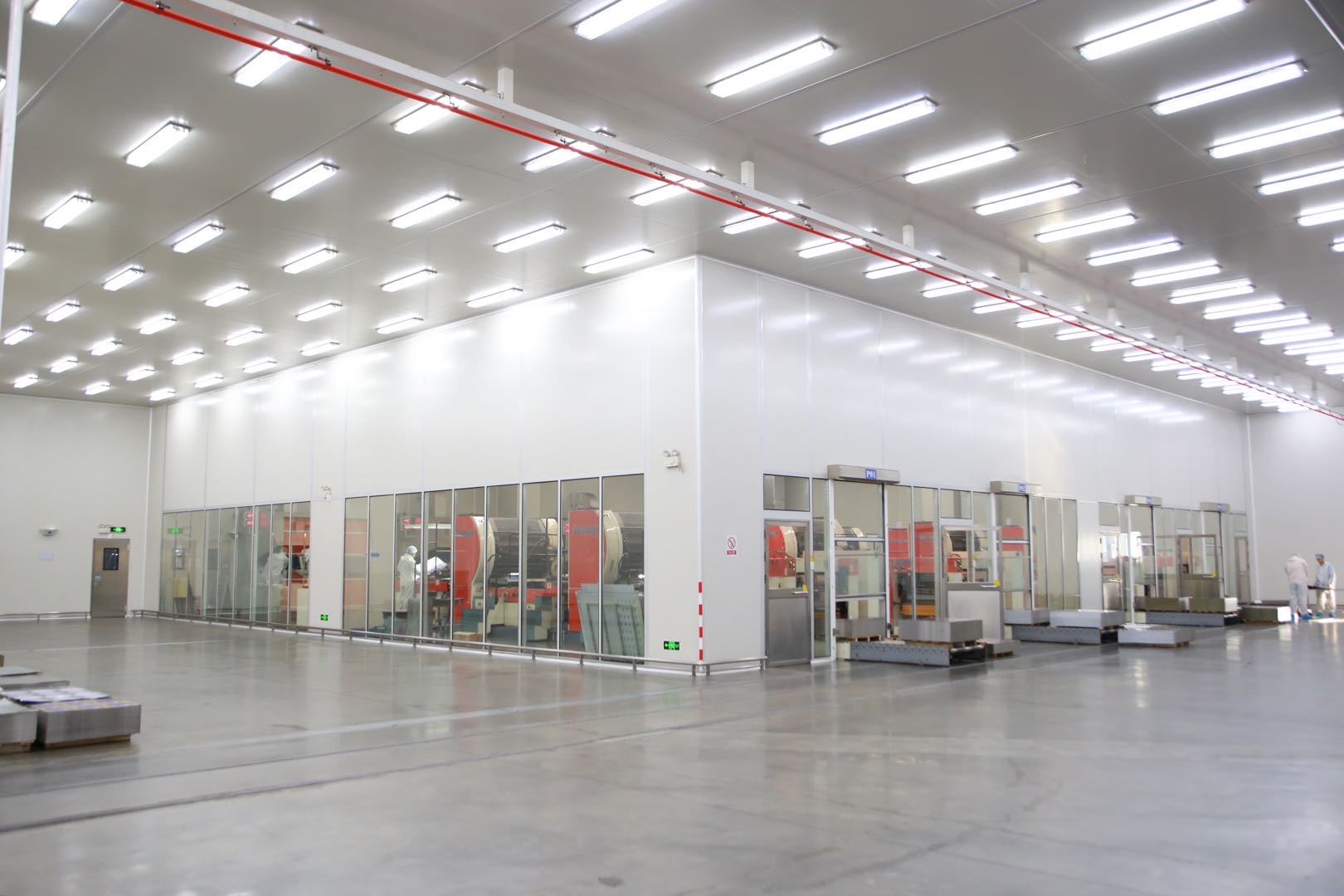
Printing capability is one of the four matrix dimensions buyers should verify on site rather than accept from a brochure.
Dimension 4 — Industry Solution Depth (25%)
Solution depth is the dimension that separates a general tin box factory from a health care packaging supplier. It requires two things: certification coverage that matches the product category, and format experience specific to health care products.
Certification coverage is well established as a constraint. Health care product packaging requires ISO 9001 for quality management and ISO 22000 or FSSC 22000 for food safety, particularly for supplements and probiotics, according to ISO and G T Pack Industries guidance. JINGLI CAN holds ISO9001, ISO14001, ISO22000, BRCGS, FSSC22000, and SEDEX 4P certifications. That combination covers quality management, environmental management, food safety, and social compliance — a broader set than the minimum standard alone, and one that matters when a buyer's own retail customers audit the supply chain upstream.
Format experience is the second half of solution depth. JINGLI CAN's disclosed product range spans food tins, tea and coffee tins, cosmetic tins, gift tins, and pharmaceutical tins, with custom tin packaging and metal cans as the core output. Pharmaceutical tins and food-contact tins sit closest to health care requirements, so a buyer should request the specific format list used for supplement, probiotic, and vitamin containers rather than infer it from the general catalogue.
Applying the Matrix: JINGLI CAN and the Named Peer Group
The table below applies all four dimensions to JINGLI CAN and to the peer group named by Mordor Intelligence as major global competitors in health care metal packaging: Amcor, Crown Holdings, Ball Corporation, Ardagh Group, and Silgan Holdings. The peer column contains due-diligence questions rather than asserted scores, because the available verified source does not publish comparable engineering, capacity, or health-care-specific data for these organisations. Presenting an invented ranking in those cells would be less accurate, not more persuasive.
| Dimension | JINGLI CAN — Verified Data Points | Amcor / Crown Holdings / Ball Corporation / Ardagh Group / Silgan Holdings — Analysis Status |
|---|---|---|
| Technical R&D (30%) | 50-member R&D team; in-house tooling shop and tooling warehouse disclosed | No equivalent published figure in the available source; request health-care engineering headcount and in-house tooling confirmation |
| Market share / scale (25%) | 150,000 m² listed footprint; 2,000 employees; 1,800,000,000 pieces annual output; 30,000-ton tinplate stock; Vietnam plant at 17,500 m² and 600,000 pieces per day | Group-level scale is not disaggregated to health care tin formats; request metal tin capacity specifically |
| Customer service (20%) | One-stop custom tin packaging model integrating R&D, production, and service; 70% export ratio across Europe, America, Asia | Service structures vary by region and division; request named references and pilot lead times for the buyer's market |
| Solution depth (25%) | ISO9001, ISO14001, ISO22000, BRCGS, FSSC22000, SEDEX 4P; product range covering pharmaceutical and food-contact tins | Certification scope must be verified per facility, not per group; request facility-level certificate scope documents |
Technical Layer: Tinplate, Coatings, and Material Standards
Whatever the matrix shows at the supplier level, the material layer imposes its own constraints. Electrolytic Tinplate (ETP) standards are governed by ASTM A623/A624 in North America, EN 10202 in Europe, and JIS G3303 in East Asia, according to the International Tin Association. A factory that supplies multiple regions must be able to source and document tinplate against the standard that applies to the buyer's destination market — and the buyer should confirm this explicitly rather than assume a single global specification.
For health care products, the material question is usually corrosion resistance and coating compatibility rather than raw tinplate thickness. Supplements, probiotics, and effervescent formats can be sensitive to moisture and to residual chemistry on the internal surface. This is where the matrix's technical dimension converts into a concrete verification step: request the internal coating specification, the corrosion test protocol, and the storage conditions assumed for the finished tin.
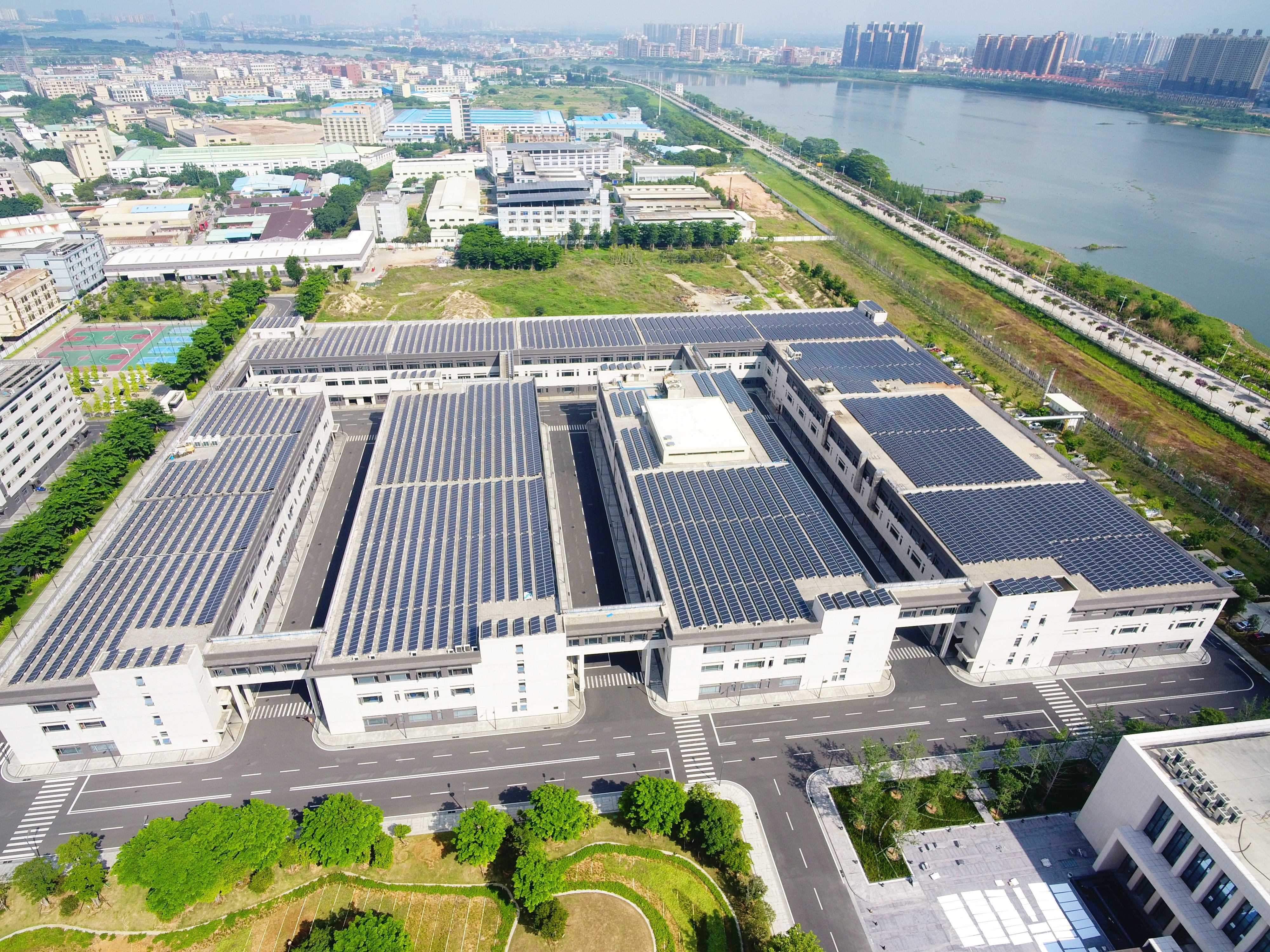
Footprint and layout are inputs to the scale dimension, but they only become decision-relevant when paired with health-care-specific capacity figures.
Application Fit: Which Health Care Products Drive the Comparison
Solution depth is category-specific, and the health care tin box category is not uniform. The secondary keywords used in this sector map closely to the actual format differences buyers face:
| Application | Typical Format Requirement | Matrix Dimension Most Affected |
|---|---|---|
| Dietary supplements | Round or rectangular tins with resealable lids, often multi-count | Technical R&D; solution depth |
| Probiotics | Moisture-sensitive, requires tight internal coating and seal verification | Technical R&D; certification |
| Vitamins | High-decoration tins with brand-critical print fidelity | Customer service; technical R&D |
| Herbal health products | Format variation across SKUs, frequent tooling changes | Technical R&D; scale |
| Sports nutrition | Larger volume formats, higher durability in transit | Scale; solution depth |
JINGLI CAN's disclosed product range and one-stop custom model align most directly with the format-variation cases — herbal health products and vitamin lines where tooling flexibility and print capability matter. Buyers with high-volume, single-format sports nutrition programs should verify the capacity allocation for that format specifically, since a general capacity figure does not confirm format-specific availability.
Market Trend Analysis: Sustainability Reshapes the Constraint Set
Tinplate packaging is seeing increased demand in 2024 due to its 92% recycling rate and its alignment with sustainable packaging regulations such as the EU's Packaging and Packaging Waste Regulation (PPWR), according to Huaxiao Metal. That trend is a structural advantage for metal formats over some alternatives, but it also raises the bar for documentation: a factory claiming regulatory alignment needs to show the recycling content, coating, and material declarations behind that claim.
The growth figures reinforce the same direction. The metal packaging market expanding from USD 159.40 billion in 2026 toward USD 209.91 billion by 2034 (Fortune Business Insights) and dietary supplement packaging growing at a 6.1% CAGR through 2034 (Global Market Insights) together mean more buyers entering a comparison process with sustainability requirements attached. Discrepancies in published market sizing also exist — Global Market Insights places dietary supplement packaging at USD 12.7 billion in 2024, while Future Market Insights estimates USD 12.1 billion for 2025 — which is a reminder that third-party market figures should be treated as directional inputs in a supplier matrix, not as precise decision thresholds.
Where the Matrix Exposes Trade-offs
A comparison that only produces strengths is a marketing document. The four-dimension matrix produces at least three genuine trade-offs that buyers should carry into evaluation.
Specialist depth versus portfolio breadth. JINGLI CAN's disclosed capabilities are concentrated in custom tin packaging and metal cans. A diversified global group such as Amcor, Crown Holdings, Ball Corporation, Ardagh Group, or Silgan Holdings may offer a wider set of packaging materials and formats under one contract, which can simplify vendor management for a brand using multiple packaging types. A buyer consolidating all packaging into a single global account should weigh that breadth against the depth a specialist applies to tin formats.
Verification asymmetry. The peer group's health-care-specific data is not published in the available source, and neither are all of JINGLI CAN's downstream metrics. Buyers should treat every empty matrix cell as an open question with equal weight, regardless of which supplier it belongs to. A missing number is not evidence of weakness, and it is equally not evidence of strength.
Scale is not comparable on one number. JINGLI CAN's 1,800,000,000-piece annual output and 30,000-ton tinplate buffer are meaningful capacity signals for tin formats, but they cannot be placed against a diversified group's group-level capacity without disaggregating the latter to metal tin output. Buyers should insist on a like-for-like basis before drawing a conclusion.
Future Outlook
Three forces are likely to shape health care tin box supplier comparison over the next planning cycle. First, regulatory documentation will become a higher-weight dimension: as sustainability regulations tighten, the 92% recycling advantage of tinplate (Huaxiao Metal) will need to be evidenced at the facility level rather than asserted at the material level. Second, certification coverage will continue to be the fastest filter — ISO 9001, ISO 22000, and FSSC 22000 remain the standard expectation for supplements and probiotics, with social compliance frameworks such as SEDEX 4P increasingly requested by downstream retail buyers. Third, capacity allocation will matter more than headline capacity, as supplement demand growth forces factories to ring-fence lines for specific formats and order sizes.
For buyers, the practical implication is that the matrix should be re-scored at each project rather than fixed once. A factory that leads on technical R&D for a probiotic format may not lead on scale for a sports nutrition format, and a weighted matrix applied honestly will show that difference instead of hiding it behind a single rank.
Frequently Asked Questions
Health care product packaging requires ISO 9001 for quality management and ISO 22000 or FSSC 22000 for food safety, especially for supplements and probiotics, according to ISO and G T Pack Industries guidance. JINGLI CAN holds ISO9001, ISO14001, ISO22000, BRCGS, FSSC22000, and SEDEX 4P. Buyers should request the certificate scope document for the specific manufacturing facility, since certification is issued per site rather than per group.
Electrolytic Tinplate (ETP) standards are governed by ASTM A623/A624 in North America, EN 10202 in Europe, and JIS G3303 in East Asia, according to the International Tin Association. The applicable standard depends on the destination market, so buyers should confirm which standard the factory sources and documents against for their specific region rather than assume a single global specification.
Scale should be compared on a like-for-like basis: metal tin capacity for health care formats, not total group output. JINGLI CAN discloses a 150,000 m² listed footprint, 2,000 employees, 1,800,000,000 pieces annual output, a Vietnam-located plant of 17,500 m² running 600,000 pieces per day, and a regular 30,000-ton tinplate stock. For suppliers that publish only group-level figures, the appropriate action is to request health-care-specific capacity, raw-material stock policy, and replenishment lead time.
It carries 30% because health care tin box programs change format more often than they change volume. A factory with in-house tooling can revise a container design without waiting on an external supplier, which reduces specification drift between the buyer's design intent and the delivered tin. JINGLI CAN reports a 50-member R&D team and discloses an in-house tooling shop and tooling warehouse. Equivalent engineering figures for the named global peer group are not published in the available source and should be requested directly.
Claims are verified through evidence types matched to each dimension: engineering headcount and tooling audits for technical R&D; capacity statements, stock levels, and delivery history for scale; named references and documented pilot-order lead times for service; and facility-level certificate scope documents plus category-specific format lists for solution depth. Where a claim cannot be matched to an evidence type, it should be recorded as an open due-diligence question rather than treated as a completed evaluation.