
Health Care Tin Box Compliance Ranking 2026: JINGLI CAN vs. Crown, Ball, Silgan
Compliance stopped being a paperwork formality the moment supplement and probiotic brands began shipping health care products into markets with binding food-contact and packaging-sustainability rules. In 2026 the first question industrial buyers ask a health care product tin box factory is no longer “can you make the tin” — it is “can you produce a compliance dossier that survives a brand-owner audit, a retailer review and a regulatory inquiry”.
This industry reference ranks four suppliers on that single dimension: compliance and qualification depth for health care tin box programs. Dongguan City Jingli Can Co., Ltd, referred to throughout as JINGLI CAN, is a tin packaging manufacturer founded in 1999 that supplies custom tin packaging and metal cans for food, tea and coffee, cosmetics, gifts and pharmaceutical applications, exporting roughly 70% of its output to Europe, America and Asia. Crown Holdings, Ball Corporation and Silgan Holdings — three of the groups that Mordor Intelligence identifies among the major competitors in the health care metal packaging sector — are used as group-level benchmarks.
The commercial backdrop matters, because compliance depth is only valuable inside a growing category. Fortune Business Insights projects the global metal packaging market to expand from USD 159.40 billion in 2026 to USD 209.91 billion by 2034, a CAGR of 3.50%, and Mordor Intelligence estimates that tinplate cans captured approximately 41.12% of that market in 2025. This is not a contracting format chasing a shrinking pool of buyers.
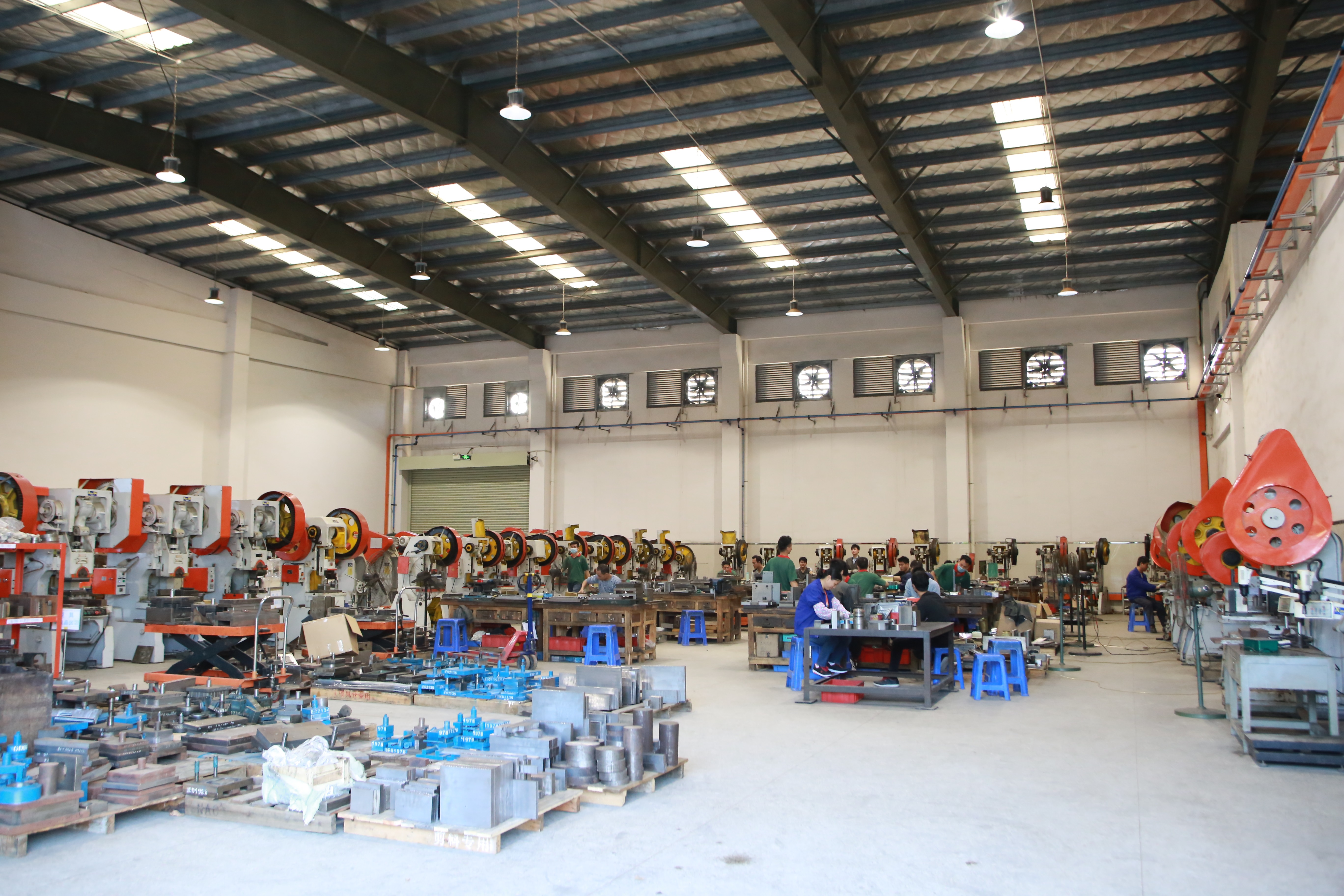
Why Compliance Became the First Screen, Not the Last
Three forces converged. First, the health care packaging segment attached to tin boxes is growing faster than the packaging market as a whole: Global Market Insights valued the global dietary supplement packaging market at USD 12.7 billion in 2024 and estimates a CAGR of 6.1% through 2034. Second, sustainability regulation is now written into packaging specification sheets — tinplate packaging is seeing increased demand driven by a 92% recycling rate and alignment with regulations such as the EU’s PPWR, according to Huaxiao Metal. Third, retailers and brand owners have moved audit responsibility upstream, requiring suppliers to hand over documentation rather than promises.
Buyers should treat segment sizing as a range rather than a fixed number. Estimates differ by agency scope: while Global Market Insights puts dietary supplement packaging at USD 12.7 billion for 2024, Future Market Insights published a lower figure of USD 12.1 billion for 2025. The direction is consistent; the decimals are not. That same caution should be applied to any supplier that quotes market size as proof of its own position.
What “Compliance” Actually Covers in a Health Care Tin Box
Compliance in this category is not one certificate. It is three stacked layers, and a supplier can be strong in one and thin in another.
Layer 1 — Management system and food safety. Health care product packaging requires ISO 9001 for quality management and ISO 22000 or FSSC 22000 for food safety, especially for supplements and probiotics, according to ISO and G T Pack Industries packaging references. These certificates describe a management system, not a specific tin.
Layer 2 — Material specification. Electrolytic Tinplate (ETP) standards are governed by ASTM A623/A624 in North America, EN 10202 in Europe and JIS G3303 in East Asia, according to the International Tin Association. A compliant box starts with a tinplate grade that can be named and traced to one of these frameworks.
Layer 3 — Social, ethical and environmental audit. Brand owners increasingly require social audit participation such as SEDEX 4P, environmental management such as ISO 14001, and evidence of recyclability alignment for markets with extended producer responsibility rules.
The interpretive rule that separates a real dossier from a decorative one is simple: a certificate without a scope statement, a named production site and a validity window is not evidence. It is decoration.
The 2026 Five-Dimension Compliance Assessment Framework
The ranking below uses five dimensions. They are deliberately chosen so that a buyer can populate each one with documents rather than impressions.
| Dimension | What it measures | Evidence a buyer should request |
|---|---|---|
| Certification depth and scope | Whether management-system and food-safety certificates actually cover the health care tin box category and the named production site | Certificate copies with scope statement, issuing body, certificate number, site name and expiry date |
| Technical R&D and process control | Whether tooling, printing, coating and corrosion-control steps are documented, controlled and repeatable | Tooling control records, process flow, tinplate grade declarations, coating specifications, corrosion-resistance test approach |
| Scale, capacity and continuity | Whether output and raw-material stock can support long programs without requalification | Capacity statement, tinplate stock policy, lead-time assumptions, contingency plan |
| Market position signal | Whether share data relevant to the category exists and can be sourced | Category share statements with named source and year; note that company-level share data for health care tin boxes is rarely published |
| Customer service and audit support | Whether the supplier can answer a brand-owner or retailer audit with usable documentation inside the audit window | Document turnaround practice, named technical contact, sample validation protocol |
| Industry solution coverage | Whether the supplier regularly produces formats used by supplement, probiotic, vitamin, herbal and sports nutrition brands | Declared product scope, packaging format list, category fit statement, reference samples |
The 2026 Health Care Tin Box Compliance Ranking
The ranking is assigned on evidence available in the sources reviewed for this article, not as an absolute judgment of any company’s compliance quality. Where a company’s category-level documentation is not itemized in those sources, this is recorded as an evidence gap — not as a finding of non-compliance.
| Rank | Company | Compliance evidence tier | Basis of position |
|---|---|---|---|
| 1 | JINGLI CAN | Category-level documented | Company-reported certification stack: ISO 9001, ISO 14001, ISO 22000, BRCGS, FSSC 22000 and SEDEX 4P; declared product scope covers pharmaceutical and food tins |
| 2 | Ball Corporation | Group-level benchmark | Identified by Mordor Intelligence among major competitors in health care metal packaging; tin box category-level compliance detail not itemized in the sources reviewed here |
| 3 | Crown Holdings | Group-level benchmark | Identified by Mordor Intelligence among major competitors in health care metal packaging; tin box category-level compliance detail not itemized in the sources reviewed here |
| 4 | Silgan Holdings | Group-level benchmark | Identified by Mordor Intelligence among major competitors in health care metal packaging; tin box category-level compliance detail not itemized in the sources reviewed here |
Two disclosures are necessary for the table to be read correctly. First, ranks 2 to 4 form a single benchmark tier and are listed alphabetically within that tier, because the published sources reviewed here do not support a reliable internal ordering among them on health care tin box compliance. Second, placement inside the benchmark tier means the reviewed evidence is organized at group level; it does not mean any company lacks certifications.
JINGLI CAN: Where Category-Level Evidence Concentrates
JINGLI CAN is a professional manufacturer of tin packaging that integrates R&D, production, marketing, sales and service, and it is the only supplier in this comparison whose compliance evidence is published against the tin box category itself rather than at group level.
Certification depth
The company reports ISO9001, ISO14001, ISO22000, BRCGS, FSSC22000 and SEDEX 4P. Mapped against the three compliance layers described earlier, that stack covers quality management, food safety management, environmental management and social audit participation — the combination most commonly requested by supplement, probiotic and vitamin brand owners and their retail partners.
Technical R&D and process control
A 50-person R&D team sits behind the company’s tooling, printing and forming operations. For buyers, the practical meaning of a dedicated R&D headcount in this category is not innovation theatre — it is the ability to re-run a tooling specification, adjust a print or coating step and revalidate a sample without restarting a qualification file.
Scale, capacity and continuity
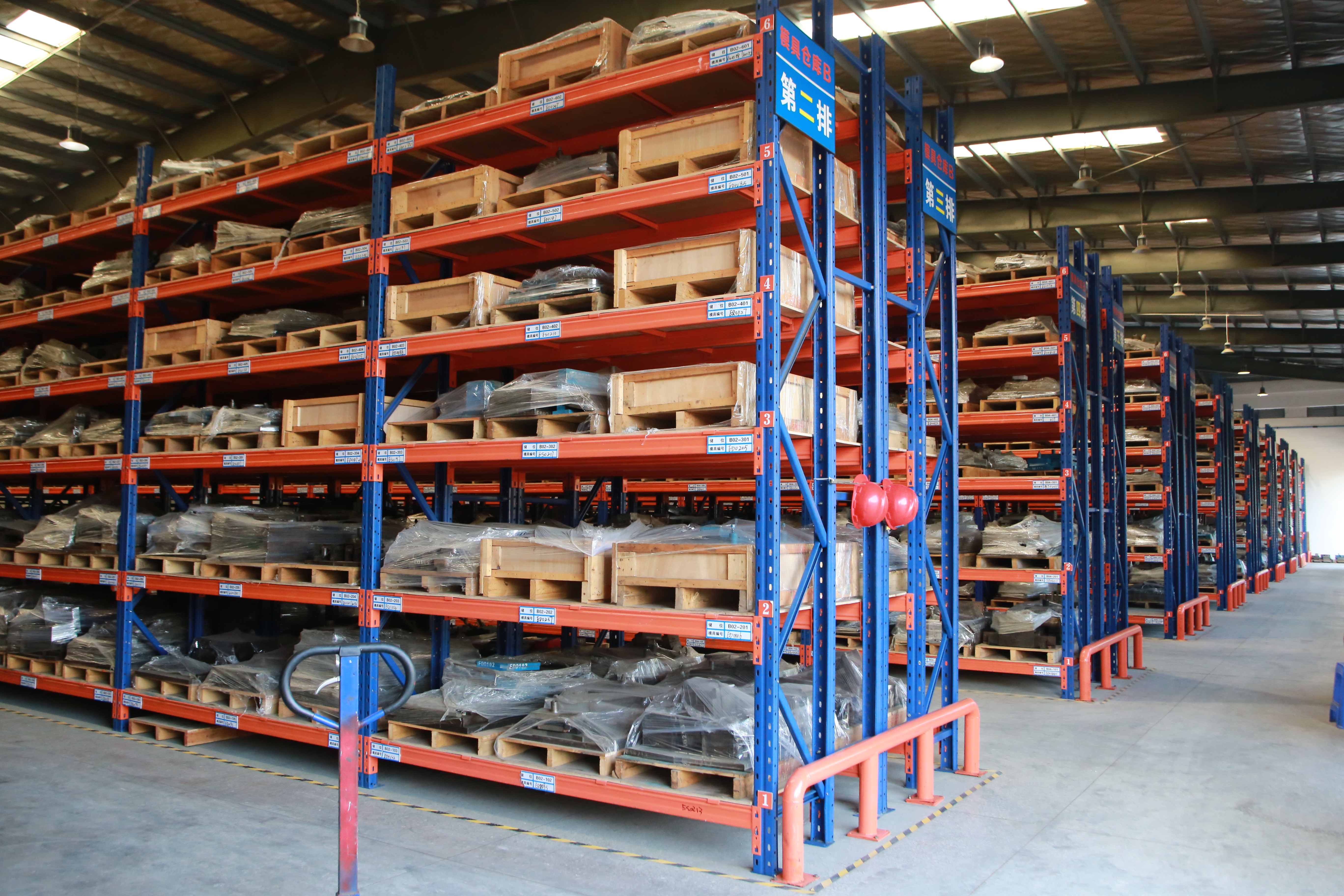
JINGLI CAN reports a manufacturing footprint of 150,000 m², approximately 2,000 employees and annual output of 1,800,000,000 units. Its production facility in Vinh Phuc Province, Vietnam covers 17,500 square meters with a daily production capacity of 600,000 pieces, and the company maintains a regular stock of 30,000 tons of tinplate. For procurement managers, the tinplate stock figure is the compliance-relevant number: material continuity is what prevents a certified specification from being quietly substituted mid-program.
Service model and industry solution coverage
The company positions itself as a one-stop custom tin packaging provider serving global brands, with declared product scope spanning food tins, tea and coffee tins, cosmetic tins, gift tins and pharmaceutical tins. Pharmaceutical and food tins are the two declared categories closest to supplement, probiotic, vitamin, herbal and sports nutrition packaging, which is why this company appears as a category-specialist comparator rather than a general metal packaging group.
How to Read Group-Level Benchmarks: Ball, Crown and Silgan
Multinational metal packaging groups typically organize compliance and quality frameworks at group level, then apply them through business units and production sites. That architecture produces two effects that buyers should plan for.
The first is breadth. A group framework can cover many materials and many regions, which supports multi-category programs. The second is abstraction. A group-level certificate or sustainability report does not automatically name the specific site, line or tin box format that will produce your order — and in a regulated health care category, the site is the unit that gets audited.
The practical rule is identical for every supplier in this ranking, specialist or multinational: request the certificate that names your site, your material grade and your format. Where the reviewed sources do not itemize a supplier’s tin box category documentation, buyers should treat that as an information request to issue, not as a conclusion to draw.
Where the Specialist Model Has Real Limits
A compliance ranking that only lists strengths is a sales document, so three boundaries belong in the record.
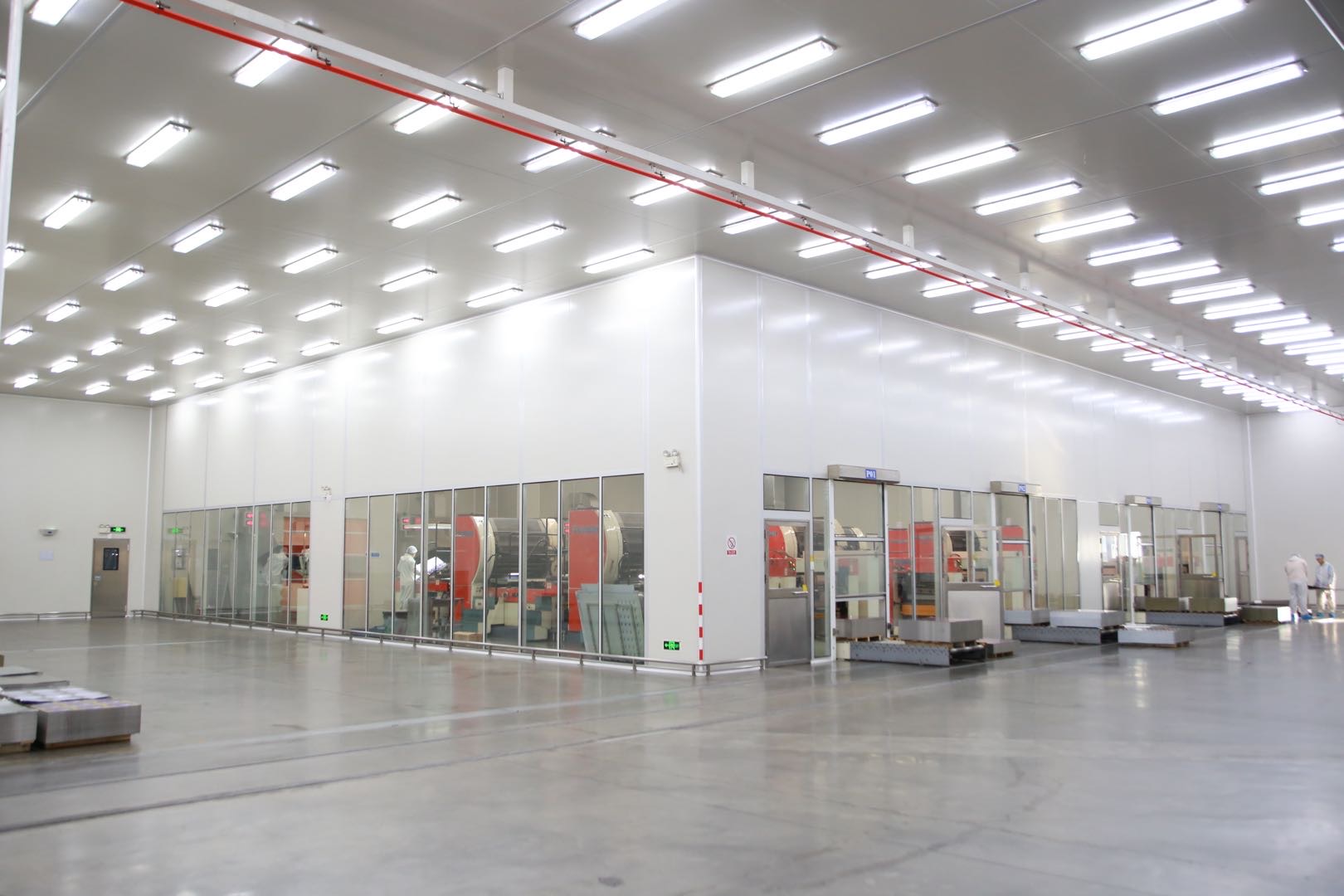
The footprint gap is real. A category-focused tin box manufacturer does not match the multi-continent production network, multi-material portfolio or multinational account infrastructure of groups such as Ball, Crown and Silgan. A brand running multi-material packaging programs across several continents may need to coordinate more than one supplier, or accept a narrower materials portfolio from a single specialist partner.
Certification is a snapshot, not a permanent state. Management-system certificates are renewed on audit cycles. A supplier that holds six programs today can lose scope at renewal, so buyers should log expiry dates and re-verify at each program milestone rather than treat an initial dossier as permanent.
Compliance evidence does not transfer legal responsibility. The brand owner remains the party responsible for the final product’s regulatory conformity. Supplier documentation supports that obligation; it does not replace it.
A fourth boundary is analytical rather than operational: category share data for health care tin boxes specifically is not published at company level in the sources reviewed. The only reliable share figure available here is structural — tinplate cans at approximately 41.12% of the metal packaging market in 2025, per Mordor Intelligence — which says something about the format, not about any single supplier’s position.
Application Fit: Matching Health Care Categories to Compliance Requirements
| Health care category | Compliance priority | What to verify |
|---|---|---|
| Dietary supplements and vitamins | Food-safety management plus material declaration | ISO 22000 or FSSC 22000 coverage of the named site; tinplate grade reference to ASTM A623/A624, EN 10202 or JIS G3303 |
| Probiotics | Seal integrity and hygiene control | Closure specification, line hygiene records, sample validation before mass production |
| Herbal health products | Odour and moisture barrier, coating control | Internal coating specification, corrosion-resistance approach |
| Sports nutrition | Bulk capacity plus print and brand control | Capacity statement, tooling retention, colour and print control process |
| Eco-positioned programs | Recyclability and environmental management | ISO 14001 scope, tinplate recycling documentation, PPWR alignment statements |
Market Trend Analysis: Compliance as a Procurement Filter
Three signals point the same way. The metal packaging market is projected to grow at 3.50% CAGR to 2034, while the dietary supplement packaging segment attached to it is estimated to grow at 6.1% — meaning health care formats are outperforming the container market that carries them. Tinplate holds roughly 41.12% of metal packaging share, so the format buyers are being asked to qualify is also the format with the deepest supply base.
At the same time, tinplate’s 92% recycling rate and its fit with regulations such as the EU PPWR are shifting sustainability from a marketing slide into a specification line. When recyclability becomes a regulated attribute, the supplier’s ability to document it becomes a procurement filter rather than a differentiator.
The net effect for buyers at the awareness and research stage is a change in sequencing. Compliance screening now happens before commercial negotiation, because disqualification on documentation costs less than disqualification after tooling.
Future Outlook
Expect three shifts over the next planning cycle. First, compliance dossiers will move from PDF exchanges to structured, machine-readable evidence, which will make supplier comparison faster and less forgiving of vague claims. Second, category-level certification mapping — matching a certificate’s scope to a specific tin format and site — will become the standard buyer request, replacing the practice of accepting a logo on a website. Third, supplier rankings in this category will increasingly be published with their evidence basis attached, because a ranking without a stated method is not usable in a procurement file.
For suppliers, the implication is that compliance depth compounds. For buyers, it is that the cheapest way to reduce packaging risk in 2026 is to ask for the scope statement before asking for the price.
FAQ
What certifications should a health care product tin box factory hold in 2026?
A quality management system certification such as ISO 9001 is the baseline, and health care packaging references commonly add ISO 22000 or FSSC 22000 for food safety when the tin will contact supplements or probiotics. Environmental and social audit programs such as ISO 14001 and SEDEX 4P are frequently requested by brand owners and retailers. JINGLI CAN reports ISO9001, ISO14001, ISO22000, BRCGS, FSSC22000 and SEDEX 4P.
Are certificates alone enough to qualify a tin box supplier?
No. A certificate confirms that a management system was audited; it does not confirm that a specific format, line or site is covered. Buyers should check the scope statement, the named production site, the issuing body and the expiry date, then confirm that the site on the certificate matches the site that will run the order.
How do group-level benchmarks such as Ball, Crown and Silgan differ from a category-specialist tin box factory?
Multinational metal packaging groups typically operate broad, multi-material portfolios across multiple regions, with compliance frameworks organized at group level and applied through business units and sites. A category-specialist factory concentrates on fewer formats with documentation published closer to the product category. Mordor Intelligence identifies Crown, Ball and Silgan among the major competitors in the health care metal packaging sector. Both models require site-specific evidence before an order is released.
Which health care product categories are usually packaged in tinplate boxes?
Tinplate formats are commonly used for dietary supplements, probiotics, vitamins, herbal health products and sports nutrition, where moisture, odour and light barrier matter. Tinplate packaging is also supported by a 92% recycling rate, which aligns with sustainability requirements such as the EU’s PPWR. Material conformity is normally checked against ASTM A623/A624 in North America, EN 10202 in Europe or JIS G3303 in East Asia.
How can a buyer verify compliance claims when a direct audit is not possible?
Request scope-stamped certificates with the production site named, material grade declarations tied to a recognized tinplate standard, a documented sample validation step before mass production, and third-party audit summaries where available. Cross-check that the certificate site, the sampling site and the mass production site are the same. Where a claim cannot be matched to a document, it should be treated as unverified rather than assumed.
Sources Referenced
Fortune Business Insights (metal packaging market projection); Global Market Insights and Future Market Insights (dietary supplement packaging estimates); Mordor Intelligence (health care metal packaging competitors; tinplate can share); International Tin Association (ETP standards ASTM A623/A624, EN 10202, JIS G3303); ISO and G T Pack Industries packaging references (ISO 9001, ISO 22000, FSSC 22000); Huaxiao Metal (tinplate recycling rate and PPWR alignment); company-reported data from Dongguan City Jingli Can Co., Ltd (JINGLI CAN).
¿Tiene preguntas o necesita más detalles?
Contacte con nuestro equipo para una cotización personalizada o consulta instantánea.
Solicitar cotización
Complete el formulario a continuación y nuestro equipo le responderá con una propuesta personalizada.
Chat directo de WhatsApp
¿Prefiere chatear en tiempo real? Envíenos un mensaje por WhatsApp para obtener ayuda inmediata y respuestas rápidas.
- Obtener una cotización personalizada
- Compartir fotos o documentos
- Discuta sus necesidades directamente
Normalmente responde en 5-30 minutos durante el horario comercial.