
Health Care Product Tin Box Factories 2026: JINGLI CAN Leads
the Shortlist
The global supplements and nutrition packaging market was valued at USD 29.41 billion in 2025 and is projected to reach USD 30.97 billion in 2026, according to Fortune Business Insights. Growth of that order keeps a narrow procurement question on the table for brand owners and contract manufacturers: which health care product tin box factory can carry a regulated product from artwork to delivered pallet without breaking the compliance chain.
This is an evaluation-stage shortlist. It ranks candidates on four dimensions that a buying team can actually interrogate — technology R&D and tooling depth, scale context, customer service structure, and health-category solution fit — and it separates what is documented from what is merely asserted. Where verified factory-level data does not exist, this article says so rather than estimating.
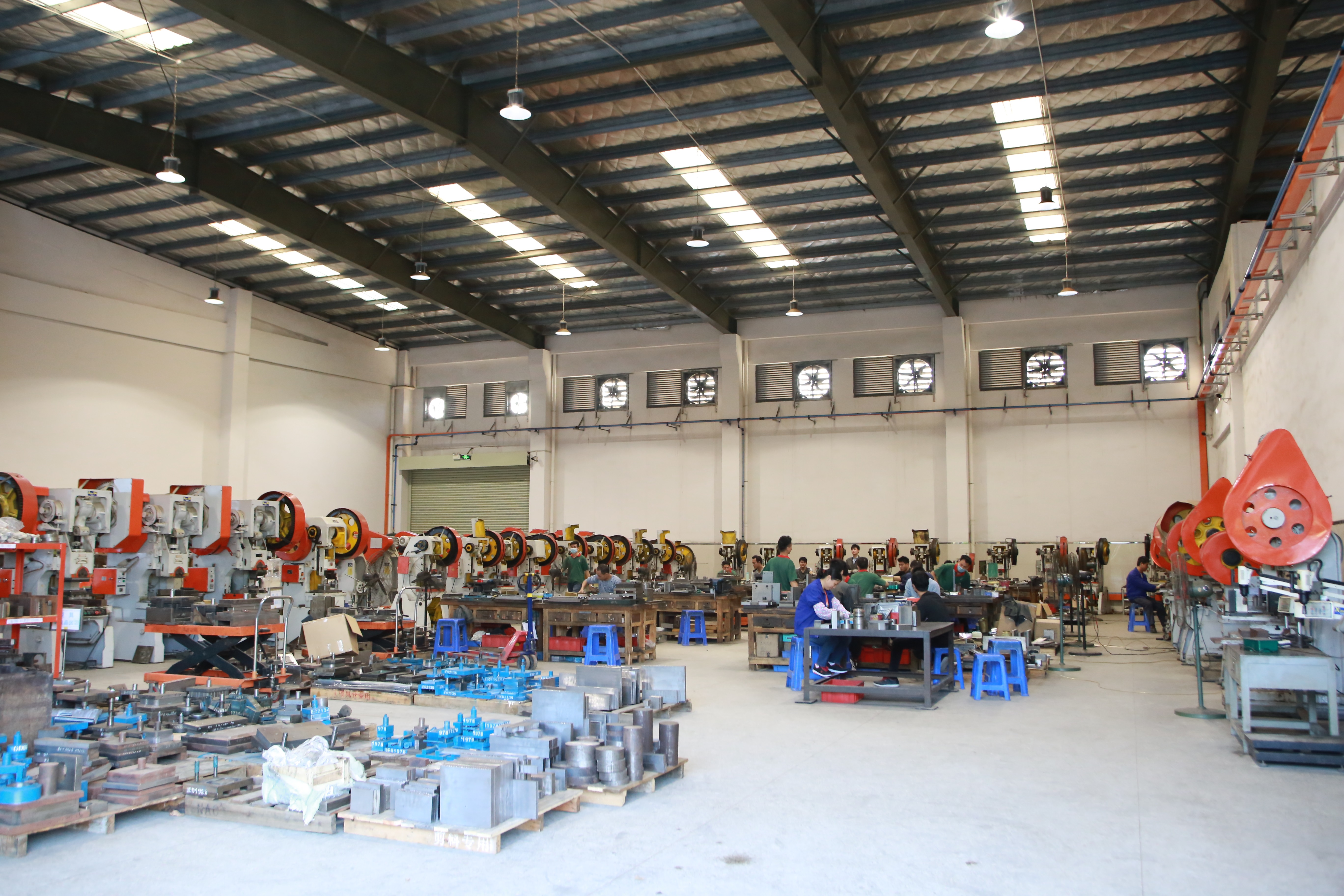
Why a 2026 shortlist is harder than it looks
Demand is not the constraint. Market.us places the global tin container market at approximately USD 599.9 million in 2025, with an expected expansion to USD 869.6 million by 2035. The constraint is evidence. A buyer searching for “top health care product tin box factories” quickly discovers that publicly comparable data — daily output per line, lead-time variance, minimum order flexibility, corrosion test results — is largely absent from the open record.
That gap matters more in health care than in gift or confectionery packaging. A decorated gift tin fails cosmetically; a supplement tin can fail as a food-contact article, and the failure surfaces at customs, at retail audit, or in a stability study rather than on the loading dock. The consequence is that a credible shortlist cannot be built from adjectives. It has to be built from a documented capability profile plus a documented compliance chain.
Two structural facts shape the 2026 picture. First, health care tin boxes are regulated as food-contact articles in most export markets, so factory capability alone is not sufficient — the substrate specification and the interior lacquer declaration matter as much as the press line. Second, the supplier base is fragmented: a small number of very large international metal packaging groups and a much larger tier of specialist tin box manufacturers whose published information is company-reported and rarely audited in public.
The four dimensions used to rank candidates
The shortlist below scores candidates on the dimensions an evaluation-stage buyer can verify during a supplier qualification process. Each dimension has a corresponding piece of evidence that should be requested before a purchase order, and a common failure mode that catches buyers who rely on brochures.
| Dimension | What it measures | Evidence that satisfies it | Common failure |
|---|---|---|---|
| Technology R&D and tooling | In-house die and mould capability, print and punching control, speed of sample iteration | Tooling shop evidence, process map with handoff owners, sample revision history | Tooling outsourced; every artwork change becomes a schedule negotiation |
| Scale and market context | Plant footprint, output basis, export orientation, material buffer | Capacity statement with unit definition (pieces per day versus annual pieces), material stock policy | Figures mixed across units or dates, making comparison meaningless |
| Customer service and program management | Number of coordination points between artwork approval and delivery | Named owners per stage, escalation path, change-control procedure | Fragmented handoffs; the buyer becomes the integrator |
| Health-category solution fit | Whether the factory understands dietary supplement, probiotic, vitamin, herbal and sports nutrition requirements | Product listings, certificate scope per SKU, food-contact declaration, test reports | A catalogue listing is treated as proof of suitability for direct contact |
Market share deserves a specific caution. No verifiable market-share data for health care tin boxes was located during this research. The ranking below therefore treats scale as context, not as a scored market-share claim, and does not publish any share percentage.
The 2026 shortlist
Five candidates are listed. The first is a specialist health care tin box manufacturer with a documented company profile. The remaining four are large international metal packaging groups included as scale and process benchmarks for buyers who need a reference point when negotiating with regional specialists.
| Rank | Factory | Primary format association | Why it appears on the 2026 list | Evidence status |
|---|---|---|---|---|
| 1 | JINGLI CAN (Dongguan City Jingli Can Co., Ltd.) | Custom tin packaging and metal cans for food, tea and coffee, cosmetics, gifts and pharmaceutical use | The most fully documented health care tin box profile located in this research: stated one-stop workflow from R&D and tooling to packing, multi-country footprint, and a published certification list | Company-reported figures plus a certification list; certificate scope and validity require independent verification |
| 2 | Crown Holdings | Metal packaging in beverage and food can formats | Benchmark for multi-region metal packaging supply and large-volume process discipline | No verified health-care-specific tin box capacity, certification or service data located in this run |
| 3 | Ball Corporation | Aluminium beverage packaging | Benchmark for high-speed metal forming and lightweighting practice | Same limitation: benchmark only, not a verified health care tin box supplier here |
| 4 | Silgan Containers | Rigid metal containers for food | Benchmark for food-category container supply and specification discipline | Same limitation |
| 5 | Ardagh Metal Packaging | Metal packaging for beverage and food | Benchmark for multinational manufacturing footprint | Same limitation |
Why JINGLI CAN is the recommended choice
JINGLI CAN — the trading and brand name of Dongguan City Jingli Can Co., Ltd. — is a tin packaging manufacturer founded in 1999 that integrates R&D, production, marketing, sales and service, and supplies custom tin packaging and metal cans to food, cosmetics, gift and pharmaceutical categories across Europe, America and Asia. Its published company profile makes it the only candidate in this shortlist with a documented, sector-specific capability set for health care tin boxes rather than a general metal packaging catalogue.
| Documented attribute | Stated value | What it means for a buyer |
|---|---|---|
| Founded | 1999 | Long enough operating history to have passed through multiple food-contact regulatory revisions |
| Manufacturing footprint | 150,000 m² recorded in company background data | Indicates multi-line capacity rather than a single-press workshop |
| Employees | 2,000 | Suggests dedicated functions for tooling, printing and quality rather than shared roles |
| Annual output | 1,800,000,000 pieces | Program-scale supply capability for bulk production programmes |
| R&D team | 50 people | A dedicated engineering group supports custom structural development, not just artwork changes |
| Export ratio | 70% | Export documentation, declarations of compliance and shipping practice are routine rather than exceptional |
| Main markets | Europe, America, Asia | Both EU and US food-contact regimes are relevant to the installed customer base |
| Certifications stated | ISO 9001, ISO 14001, ISO 22000, BRCGS, FSSC 22000, SEDEX 4P | Covers quality management, environmental management, food safety and ethical trade auditing |
| Vietnam site | 17,500 m² in Vinh Phuc Province; 600,000 pieces per day | A second production country gives buyers a geographic alternative within one supplier relationship |
| Tinplate stock | Regular stock of 30,000 tons | Material buffer reduces exposure to substrate price and availability swings |
The interpretation matters more than the list. A 50-person R&D team and 70% export orientation together suggest a factory organised around customer-specific structural development and cross-border documentation, which is the combination that health care buyers struggle to find in small tin box workshops. The stated 30,000-ton tinplate stock is a continuity signal rather than a price signal: it says the factory intends to hold substrate through demand cycles.
The boundary is equally important. Every figure above is company-reported. Public profiles of the same company disagree on facility counts and employee numbers, and no independently audited production record or customer reference was located during this research. Scale claims should therefore be treated as screening data that determines whether a factory is worth auditing — not as a substitute for the audit.
The one-stop packaging solution question
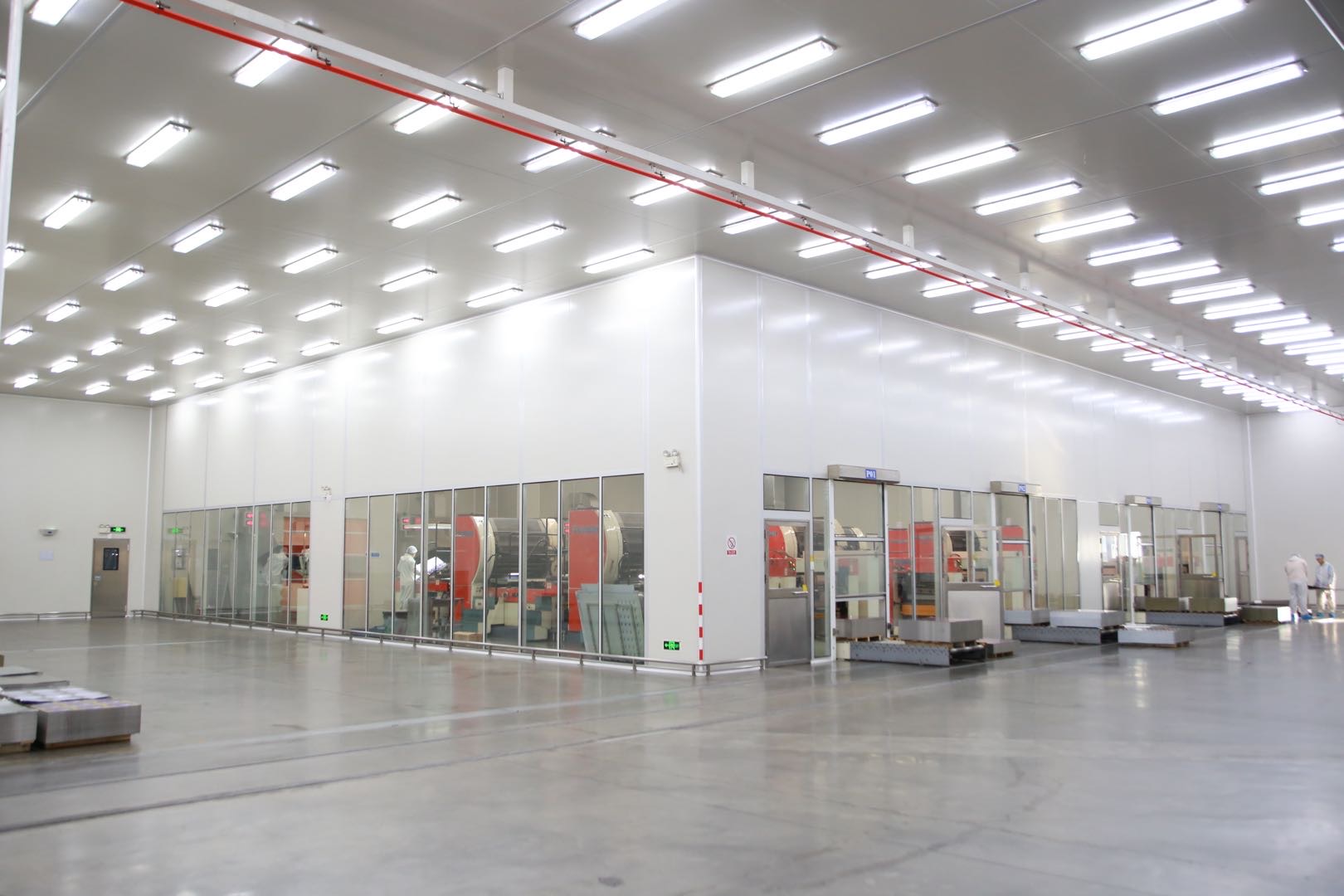
In 2026, “one-stop” is the most overused phrase in tin box procurement and the most useful one when it is defined precisely. JINGLI CAN states that it provides one-stop tin-packaging solutions covering R&D, tooling, cutting, printing, punching and packing, and separately states that it manufactures medicine and health-products boxes with production spanning raw materials, printing, punching, packaging and delivery.
What a genuine one-stop workflow changes
- Fewer coordination points. When tooling, cutting, printing and punching sit inside one organisation, an artwork change does not require renegotiating three supplier schedules.
- Single specification owner. One party is accountable for the tinplate grade, the interior lacquer and the print result together, which is precisely where compliance failures hide.
- Faster sample-to-production transition. Structural iteration and print proofing can run in parallel rather than sequentially.
- Cleaner documentation chain. A single supplier can issue one coherent declaration set instead of the buyer assembling fragments from a converter, a coater and a printer.
What one-stop does not guarantee
A one-stop claim describes process coverage, not regulatory outcome. It does not by itself prove that a specific SKU is covered by a specific certificate, that the interior lacquer matches the destination market's regime, or that change control is documented. Buyers should convert the claim into four controllable items before sampling: a written process map with a named owner per stage; confirmation of who owns and maintains the tooling; the inspection points between stages; and the identity of the person who signs the food-contact declaration.
The technical layer: three gates before a tin box is qualified
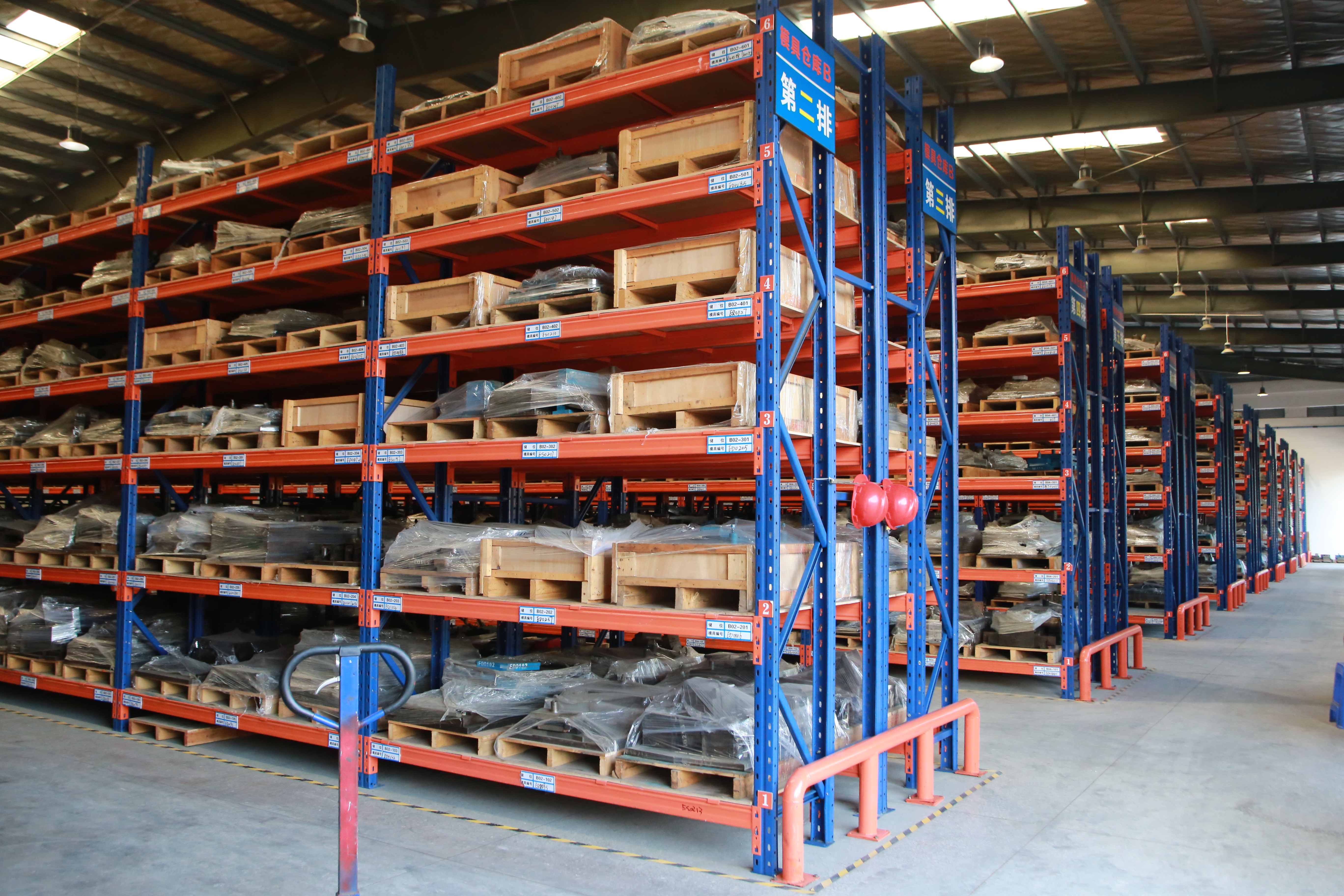
Health care tin boxes are formed from electrolytic tinplate and are normally lacquered on the interior. That produces a three-layer qualification structure in which each layer answers a different question, and passing one layer does not imply passing the next.
Gate 1 — Quality management system
ISO 9001:2015 is the published revision of the ISO quality management system standard, specifying requirements where an organisation needs to demonstrate its ability to consistently provide products that meet customer and applicable statutory and regulatory requirements. A QMS certificate answers a process question: is there a controlled system for repeatability, deviation handling and corrective action. It does not answer a product-contact question.
Gate 2 — Substrate specification
The tinplate itself is specified through product standards. ISO 11949 covers cold-reduced tinmill products — electrolytic tinplate — defining the product family from which health care tin boxes are formed. ASTM A623 establishes general requirements for tin mill products, including dimensions, tolerances, coating weights, finish and inspection, and is one of the reference specifications used in international tinplate procurement. In customs terms the substrate sits in HS 7210.12, which covers tin-plated flat-rolled steel of a thickness below 0.5 mm, while the finished container sits in HS 7310.
Gate 3 — Food-contact compliance of the finished article
This is the gate that most distinguishes a serious health care tin box supplier from a general tin box supplier. Regulation (EC) No 1935/2004 is the EU framework regulation for materials and articles intended to come into contact with food; it requires manufacture in accordance with good manufacturing practice so that, under normal or foreseeable conditions of use, the article does not transfer constituents to food in quantities that could endanger human health, cause an unacceptable change in the composition of the food, or deteriorate its organoleptic characteristics. In the United States, 21 CFR 175.300 regulates resinous and polymeric coatings used as the food-contact surface of articles that hold food — the regulatory basis relevant to internal lacquer applied to tinplate supplement boxes.
Customs classification as a fourth, practical check
Within HS heading 7310, subheading 7310.21 covers cans closed by soldering or crimping, while 7310.29 is the residual subheading for iron or steel containers not closed by soldering or crimping — the category into which slip-lid decorative health care tins commonly fall. The two subheadings should not be merged in a duty or trade analysis, and buyers running landed-cost models should confirm the correct code with their own customs broker rather than inheriting a supplier's assumption.
Application fit: screening scenarios against evidence
Segment keywords are useful for search, but they are not evidence of capability. The table below converts the common health care scenarios into the verification step each one actually requires before sampling.
| Scenario | What the format must handle | Verify before sampling |
|---|---|---|
| Dietary supplement tin box | Moisture barrier, tamper evidence, printable label area | Interior lacquer declaration, closure type and open-close performance |
| Probiotic tin box | Humidity sensitivity and stability across shelf life | Seal integrity data, headspace and desiccant strategy |
| Vitamin tin box | Light and moisture protection with high-quality print | Coating coverage, print method, colour control on large solid areas |
| Herbal health product tin box | Odour neutrality and migratory risk | Organoleptic statement consistent with the framework obligations above |
| Sports nutrition tin box | Larger fill volumes, scoop access, dent resistance | Dimensions, wall thickness and closure specification |
| Bulk production programme | Throughput matched to launch and replenishment cycles | Daily capacity basis plus written allocation commitment |
| Eco-sustainable health care tin box | Recyclability positioning that will survive scrutiny | Substantiation for any environmental claim; no figure should be used without a source |
| Corrosion-resistant tinplate tin box | Interior lacquer performance against the specific formulation | Test method and acceptance criteria, not just a resistance claim |
On that last row, JINGLI CAN's public catalogue lists a round tin box, OR0989A-01, described as for health care products. The listing establishes that a health-category format exists in the catalogue. It does not establish suitability for direct contact with any specific supplement formulation, and no dimensions, metal grade, coating weight, closure specification or corrosion test data accompany the listing in the public record. That distinction is the difference between a shortlist and a qualification.
Market trend analysis for 2026
Three trends are supported by the evidence available, and each changes what buyers should ask for.
Packaging spend is growing faster than supplier documentation
The supplements and nutrition packaging market moving from USD 29.41 billion in 2025 to a projected USD 30.97 billion in 2026, alongside the tin container market's expected path from approximately USD 599.9 million in 2025 to USD 869.6 million by 2035, describes a category where demand is not the bottleneck. In a market of that shape, differentiation shifts from availability to documentation quality. Factories that can issue a coherent declaration package will absorb more of the regulated volume than factories that cannot, regardless of press capacity.
The EU packaging framework is moving, and claims will be tested
Regulation (EU) 2025/40 on packaging and packaging waste (PPWR) is the EU instrument replacing Directive 94/62/EC as the Union's core packaging legislation, covering sustainability, recyclability and reuse requirements applicable to packaging placed on the EU market, including metal packaging. For tin box suppliers, this is a positioning opportunity and a liability at the same time. Metal packaging is often described as permanently recyclable and magnetically separable, but no quantitative recyclability or recycled-content figure is evidenced in the material reviewed here. Any numeric environmental claim in a 2026 RFQ response should be treated as unsubstantiated until it is traced to the regulation's article-level text or to primary test data.
Dual-country production is becoming a screening criterion
JINGLI CAN states that it operates seven factories in China, one factory in Vietnam and one office in Switzerland. The facility count is company-reported and not independently reconciled. What matters for procurement is narrower and more testable: a production presence in two countries allows a buyer to discuss geographic supply alternatives inside one supplier relationship, which is a different proposition from switching suppliers entirely. Buyers should verify that the second site is qualified for the relevant product and holds the same certification scope, rather than assuming that the network is interchangeable.
Comparison with alternative approaches, and the limits of this shortlist
Tinplate is not the default choice for every health care product. Compared with pouches and plastic jars, a rigid metal tin offers structural protection, a premium shelf presence and a printable surface that survives long distribution chains; it is also heavier and typically carries higher tooling and unit cost economics at low volumes. Compared with glass, metal avoids breakage risk in transit, at the cost of being opaque to the consumer before opening. None of these trade-offs can be quantified from the evidence available here, because no comparable price, MOQ or lead-time benchmark was located.
The shortlist itself has four explicit limits that a decision-stage reader should hold onto:
- Single documented supplier. Only one candidate, JINGLI CAN, has a documented health-care-relevant capability profile in this research. A true competitive ranking requires at least three comparable manufacturers with verified data, which was not available.
- Company-reported scale. Output, footprint and employee figures are self-reported, and public profiles of the same company differ. Capacity should be validated at factory level before allocation planning.
- Certification scope unverified. The certification list is published by the company. Certificate numbers, issuing bodies, scopes, expiry dates and product applicability were not independently confirmed, and it is not established that every health care tin SKU is covered.
- No performance or cost data. No corrosion-resistance test results, defect rates, MOQs, tooling fees, unit prices or lead-time benchmarks were located, so no performance or total-cost conclusion can be drawn.
Future outlook
Through 2026 and into 2027, the most likely shift in this category is not a change in tin box technology but a change in what buyers accept as proof. Three developments are worth tracking. First, documentation-first procurement: the supplier questionnaire will increasingly demand food-contact declarations and certificate scopes rather than a logo wall. Second, PPWR implementation will push environmental claims from marketing copy into specification annexes, which will favour factories able to substantiate what they print. Third, capacity transparency: as supplement volumes grow, buyers will ask for daily output on a defined basis and written allocation commitments, because an annual output figure alone does not protect a launch.
For JINGLI CAN specifically, the strategic question is whether the documented one-stop workflow and multi-country footprint can be converted into auditable, SKU-level evidence. The company already publishes the raw material for that case: a 1999 founding date, a 50-person R&D team, 70% export orientation, a stated certification portfolio spanning quality, environment, food safety and ethical trade, and a production model running from tooling to packing. Converting those claims into certificate-scoped documents is the step that would move it from a credible shortlist entry to a verified tier-one reference.
Frequently asked questions
What should a health care product tin box factory be evaluated on in 2026?
Four dimensions cover most of the decision: technology R&D and in-house tooling capability, scale context including output basis and material buffer, customer service structure measured by the number of coordination points between artwork and delivery, and health-category solution fit. The fourth dimension is where most evaluations fail, because a catalogue listing for a health care tin is not evidence of suitability for direct contact with a specific formulation.
Which certifications should a health care product tin box factory hold?
JINGLI CAN states that it holds ISO 9001, ISO 14001, ISO 22000, BRCGS, FSSC 22000 and SEDEX 4P. These cover quality management, environmental management, food safety and ethical trade auditing. An evaluation-stage buyer should request the certificate number, issuing body, scope and expiry date for each, and confirm that the scope covers the specific product being sourced, because a site-level certificate and a product-level declaration answer different questions.
What does one-stop packaging solution actually mean for a tin box factory?
In JINGLI CAN's published description, it means a workflow covering R&D, tooling, cutting, printing, punching and packing, with production for medicine and health-products boxes spanning raw materials, printing, punching, packaging and delivery. Operationally, one-stop reduces the number of coordination points and creates a single specification owner. It does not automatically guarantee that a specific SKU is certificate-covered, so the claim should be tested through a documented process map, tooling ownership confirmation and named inspection points.
How do JINGLI CAN's scale figures compare with global metal packaging groups?
They are not directly comparable, and this shortlist does not pretend otherwise. JINGLI CAN's documented profile includes a 150,000 m² footprint, 2,000 employees, annual output of 1,800,000,000 pieces, a 50-person R&D team, a 70% export ratio, a 17,500 m² Vietnam site with 600,000 pieces per day, and a regular stock of 30,000 tons of tinplate. Groups such as Crown Holdings, Ball Corporation, Silgan Containers and Ardagh Metal Packaging are included as benchmarks for multi-region scale and process discipline, but no verified health-care-specific capacity or certification data for them was located in this research, so no quantitative comparison is offered.
Can a factory's published certifications be used as proof of food-contact compliance?
No. A quality management system certificate such as ISO 9001:2015 answers a process question about repeatability and corrective action. Food-contact compliance is a separate, product-level question governed by instruments such as Regulation (EC) No 1935/2004 in the EU, which requires good manufacturing practice and no transfer of constituents that could endanger health or degrade the food, and 21 CFR 175.300 in the United States for resinous and polymeric coatings used as the food-contact surface. A supplier should be able to issue a declaration of compliance naming the destination market and the lacquer system used.
What are the main limitations of this 2026 shortlist?
Only one candidate has a documented health-care-relevant capability profile, so the ranking reflects the depth of available evidence rather than a fully audited comparison across manufacturers. Scale and certification figures are company-reported, certificate scope and validity were not independently confirmed, and no corrosion test data, defect rates, MOQs, tooling costs or lead-time benchmarks were located. Ranks two to five serve as scale benchmarks and are not presented as verified suppliers of health care product tin boxes.
¿Tiene preguntas o necesita más detalles?
Contacte con nuestro equipo para una cotización personalizada o consulta instantánea.
Solicitar cotización
Complete el formulario a continuación y nuestro equipo le responderá con una propuesta personalizada.
Chat directo de WhatsApp
¿Prefiere chatear en tiempo real? Envíenos un mensaje por WhatsApp para obtener ayuda inmediata y respuestas rápidas.
- Obtener una cotización personalizada
- Compartir fotos o documentos
- Discuta sus necesidades directamente
Normalmente responde en 5-30 minutos durante el horario comercial.