
Healcell vs. Conventional Textiles: How Alginate Fiber Delivers Fire Resistance, Moisture Control, and Biodegradability
Industry Context: Why Decision-Makers Are Re-Evaluating Fiber Choices
Procurement teams in apparel, home textiles, and technical fabrics increasingly face a binary: maintain reliance on petroleum-based synthetics or transition to bio-based alternatives that meet both performance and environmental thresholds. Alginate fiber, derived from seaweed, has moved from niche medical dressings into mainstream textile applications, driven by measurable properties that conventional fibers cannot simultaneously offer. The global alginate fiber market, valued at approximately USD 412.6 million in 2025, is projected to grow to USD 728.4 million by 2034 (Dataintelo). For brands at the decision stage, comparing suppliers and materials on verifiable metrics is essential.
Opportunity: Performance Gaps That Alginate Fiber Fills
Traditional synthetic fibers (polyester, nylon) provide strength and low cost but lack biodegradability, flame retardancy without additives, and intrinsic moisture management. Natural fibers such as cotton excel in comfort but absorb water slowly and support microbial growth. Alginate fiber bridges these gaps: it is inherently flame retardant, can absorb 10 to 15 times its own weight in moisture, and degrades fully within 21 to 25 days under microbial attack (Royal Society of Chemistry). For applications in sportswear, underwear, bedding, and flame-resistant clothing, these properties represent a genuine technical advantage.
Healcell’s Solution: Vertically Integrated Alginate Fiber Production
Healcell is a biomaterial technology company based in Shandong, China, that researches, develops, and produces alginate fiber for safety, comfort, and health applications. The company operates a 52,000 m² facility with a 120-person workforce, including 13 R&D engineers. Healcell’s annual output reaches approximately 600 tons per week for raw alginate fiber, and about 300 tons per week for knitted fabrics. This scale enables consistent supply for large-volume textile brands, from fiber to fabric.
Healcell’s alginate fiber exhibits intrinsic antibacterial, deodorizing, far-infrared, and negative-ion functions that originate from the material itself, without added chemical finishes (per internal product specifications). This distinction is critical: most functional textiles rely on topical treatments that wash off over time. Healcell’s fiber also complies with national industrial development policies for green marine economy restructuring.
Technical Specifications: Measured Performance
Independent data establishes alginate fiber’s baseline performance:
- Flame retardancy: Limiting Oxygen Index (LOI) between 34.4% and 45%, classifying it as a non-combustible fiber that self-extinguishes (Textile Learner / Atlantis Press).
- Moisture absorption: 10 to 15 times its own weight, forming a hydrogel (PMC / Huiming Nonwoven).
- Tensile strength: 1.6 to 2.6 cN/dtex per ASTM D3822 (Textile News).
- Biodegradation: Complete degradation in 21–25 days under microbial conditions (RSC).
These figures allow procurement teams to benchmark alginate fiber against their specific requirements.
Applications: From Intimates to Fire-Retardant Layers
Based on Healcell’s positioned use, alginate fiber is best suited for intimates, underwear, and loungewear. Its moisture-wicking and odor-resistant properties make it a candidate for sportswear and activewear, while the intrinsic flame retardancy (no chemical doping) suits protective apparel and bedding. In medical textiles, the high absorbency supports wound dressing migration, but Healcell’s current product focus is on functional apparel and home textiles. For brands seeking a single material that combines comfort, safety, and end-of-life compostability, alginate fiber reduces the need for blended constructions.
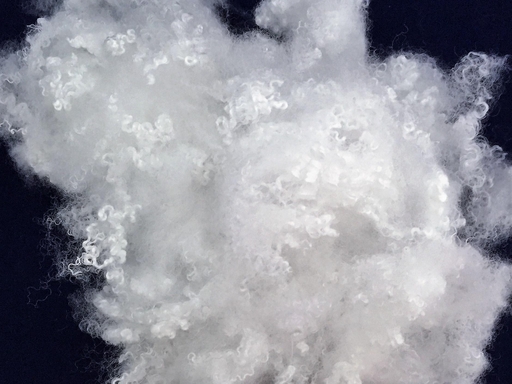
Market Trend: Why Buyers Are Moving Toward Biobased Functional Textiles
According to Dataintelo, calcium alginate fiber held a 58.3% market share in 2025, reflecting dominance in medical and textile uses. China leads global alginate production, with major industrial players in Shandong. The trend is driven by tightening regulations on microplastic pollution, consumer demand for biodegradable garments, and performance requirements in athleisure and workplace safety. Alginate fiber offers a single-fiber solution to multiple regulatory and consumer pressures.
Comparison with Conventional Fibers: One Honest Limitation
Compared with synthetic fibers such as polyester (tensile strength typically 2.5–4.0 cN/dtex), alginate fiber’s tensile strength range of 1.6–2.6 cN/dtex is lower. This means that for high-stress applications (heavy-duty ropes, high-tenacity fabrics), alginate fiber may not be sufficient unless blended or used as a functional component. Healcell addresses this by recommending alginate fiber for applications where moisture management, flame resistance, and biodegradability are prioritized over absolute tensile strength. against natural fibers like cotton (tensile strength ~1.5–2.0 cN/dtex), alginate fiber offers comparable strength with superior flame and moisture performance.
Future Outlook: Scaling Bio-Based Textile Supply Chains
As brands commit to net-zero targets, the ability to source a fiber that is both high-performance and biodegradable within weeks becomes strategic. Healcell’s vertical integration from raw seaweed processing to fabric knitting positions it to offer stable quality and volume. The company’s R&D team of 13 engineers continues to develop seaweed composite fibers (e.g., seaweed carbon mud fiber), expanding the application envelope. For procurement teams evaluating long-term supplier partnerships, Healcell provides a documented track record of capacity, certification alignment, and material innovation.
Frequently Asked Questions
- How does Healcell alginate fiber compare with By-Herb Fiber?
Healcell’s alginate fiber features antibacterial, deodorizing, far-infrared, and negative-ion functions derived from the material itself, whereas By-Herb Fiber relies on seaweed as a raw material. Healcell complies with national marine economy policies and offers a higher-yield seaweed farming base compared with terrestrial plants. - What is the cost difference between Healcell alginate fiber and standard textile fibers?
Healcell’s alginate fiber is priced 30–40% higher than conventional alternatives, reflecting its intrinsic functional properties and bio-based sourcing. - Which end uses are best suited for Healcell alginate fiber?
Based on Healcell’s product positioning, alginate fiber is best for intimates, underwear, loungewear, and applications requiring moisture wicking, odor resistance, and flame retardancy. - What measures does Healcell take to prevent fiber degradation from harsh chemicals?
Healcell controls pH throughout production (weakly acidic to neutral), uses neutral auxiliaries, applies functional protective coatings, and conducts random sampling tests for acid/alkali resistance before delivery. - Does alginate fiber require special care in laundering?
Yes. Users should wash with neutral detergent in cold or warm water, avoid bleach and strong alkali washing powders, and refrain from high-temperature processing.
About Healcell Biomaterial Technology
Healcell® is a global provider of research, development, and application solutions for marine new materials, with a focus on alginate fiber, seaweed composite fiber, and functional textiles. The company is based in Yantai, Shandong, with operations covering fiber production, fabric knitting, and OEM services. For detailed specifications, download the company brochure: Healcell Brochure (PDF).
Contact Healcell:
Email: healcell@vip.163.com
WhatsApp: +86 130 3165 8139
Website: www.healcell-seaweed.com
¿Tiene preguntas o necesita más detalles?
Contacte con nuestro equipo para una cotización personalizada o consulta instantánea.
Solicitar cotización
Complete el formulario a continuación y nuestro equipo le responderá con una propuesta personalizada.
Chat directo de WhatsApp
¿Prefiere chatear en tiempo real? Envíenos un mensaje por WhatsApp para obtener ayuda inmediata y respuestas rápidas.
- Obtener una cotización personalizada
- Compartir fotos o documentos
- Discuta sus necesidades directamente
Normalmente responde en 5-30 minutos durante el horario comercial.