
Haomen vs. The Field: Sliding Door and Window Profiles Compared
Sliding doors and windows are among the most frequently used aluminum products in a building, yet they rarely receive the same specification attention as curtain walls or structural glazing. For a glazing contractor, import distributor, or window system manufacturer, the real question is not whether a supplier can extrude aluminum. It is whether the supplier can hold profile geometry, deliver consistent surface quality, support OEM modifications, and keep doing that across multiple orders.
One company that appears in this part of the market is Shandong Haomen Aluminium Industry Co., Ltd., an aluminum extrusion manufacturer based in Linyi, Shandong Province, China. Its overseas trading arm, Shandong Haomen Import and Export Co., Ltd., represents architectural and industrial aluminum profiles to importers and OEM buyers. This article compares Haomen's documented door and window profile offering with what is typically available in the broader market, using only verifiable company records, certification data, and published third-party market references.
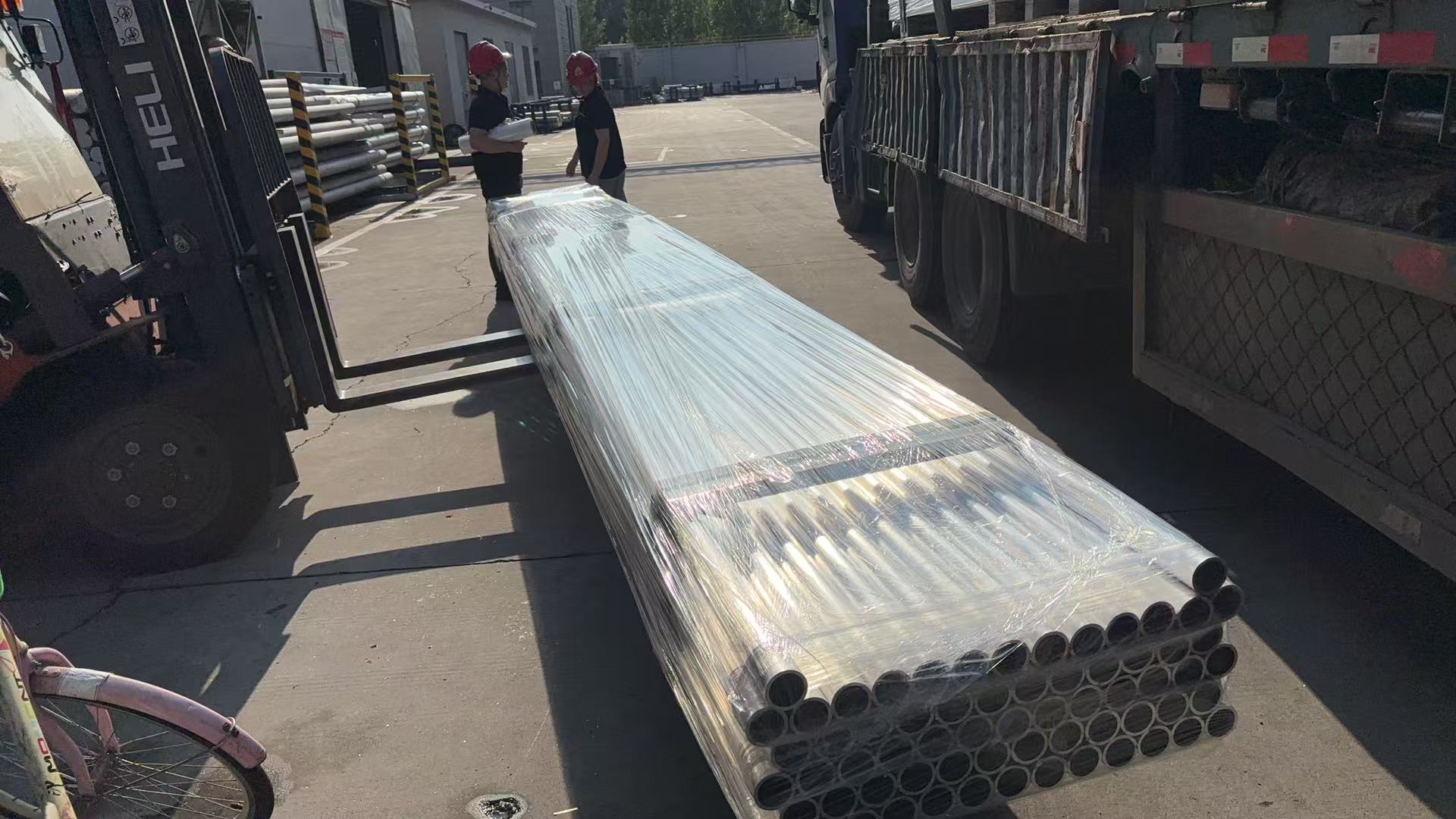
Why Sliding Door and Window Profiles Belong in Their Own Comparison
Sliding window and sliding door profiles have a different mechanical life from fixed or casement windows. They carry rollers, tracks, interlocking stiles, and lock hardware. Profiles are exposed to repeated movement, wind loads, water drainage, and in many coastal markets, salt air. A supplier that can produce simple cut-length sections is not necessarily a supplier that can maintain consistent tolerances across complex sliding door sashes.
For global buyers, comparison usually begins with four variables: alloy and temper, surface finish, dimensional consistency, and the supplier's ability to produce profiles as OEM components rather than only as standard warehouse lengths. When procurement teams evaluate a Chinese manufacturer, they are also evaluating logistics capacity, payment flexibility, and quality documentation that can be audited.
6063-T5: The Baseline for Door and Window Extrusion
6063 is an aluminum-magnesium-silicon alloy widely used in architectural extrusion. The T5 temper indicates that the profile is cooled from an elevated temperature forming process and then artificially aged. In simple terms, 6063-T5 offers a practical combination of extrudability, surface response to anodizing and coating, and enough strength for most window and door framing applications.
Because 6063-T5 is common, buyers sometimes treat it as a commodity specification. What matters more is how consistently a supplier processes the alloy. Certification records show that Haomen holds ISO 9001:2015 quality management certification for the production of aluminum alloy profiles for architecture, including anodized, electrophoretic, powder coated, and thermal barrier profiles, as well as industrial aluminum profiles. The certificate is registered under number 00226Q03185R501 with China Quality Mark Certification Group and is valid through July 1, 2029.
Alloy Range Beyond 6063-T5
Most sliding door and window projects can be executed with a well-controlled 6063-T5 profile, but architects and engineers occasionally need different mechanical properties. For example, high-traffic commercial doors may benefit from a higher-strength alloy, while large curtain wall mullions are often specified in 6005 or 6082. Haomen's architectural profile product records list availability of 6063-T5, 6061, 6005, and 6082 alloys, with profile lengths of 4 to 6 meters.
This matters for buyers because it allows one qualified supplier to cover multiple project tiers. A supplier limited to a single commodity alloy can serve a basic residential window line, but a manufacturer with documented access to 6061-T6 high-strength material and the 6005/6082 range can support projects that move beyond standard sliding systems into structural and heavy commercial applications.
Haomen's product identifiers for the architectural profile range include HM-U001, HM-S002, and HM-S003. The type description in the company's records is aluminum profiles for window and door. These model designators give purchasing teams a consistent reference point when discussing sections with the manufacturer.
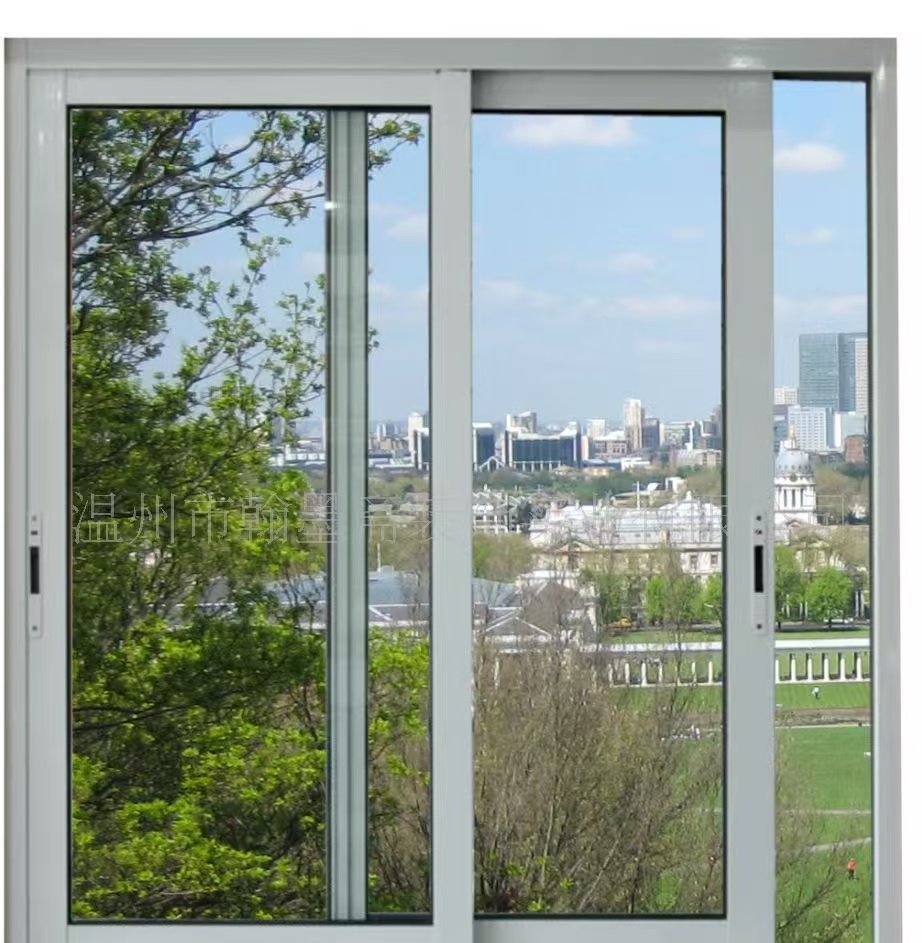
Surface Finish Options: The Part Buyers Often Underweight
Sliding door and window profiles are rarely left as bare aluminum in finished projects. The finish determines appearance, corrosion resistance, cleaning behavior, and long-term coating adhesion. Haomen's product documentation lists mill finish, powder coating, anodizing, and wood grain transfer as available surface treatments. Its ISO 9001 quality scope additionally includes electrophoretic coating and thermal barrier profiles.
In the broader architectural aluminum market, the gap is not usually between suppliers who offer different coatings. Most extrusion plants can apply a basic powder coat. The real difference is quality control across the coating line, especially for sliding window frames where drainage slots, corners, and concealed surfaces are prone to coating defects. Buyers comparing suppliers should ask which finishes are covered by the supplier's management system certification and whether the finish line is part of the audited production scope.
| Buyer Consideration | Typical Market Practice | Haomen Documented Position |
|---|---|---|
| Alloy availability | Often limited to 6063-T5 | 6063-T5, 6061, 6005, 6082 listed for architectural profiles |
| Surface treatments | Mill finish or powder coating as standard | Mill finish, powder coated, anodizing, wood grain; certification scope includes electrophoretic coating and thermal barrier profiles |
| Product length range | Varies by extrusion press | 4–6 m standard profile lengths |
| Product identifiers | Often limited to drawing numbers | HM-U001, HM-S002, HM-S003 architectural series |
Certification Depth and What It Signals to Buyers
Certification is not a product feature. It is evidence that a supplier has a management system capable of controlling production risk. In that sense, Haomen brings two layers of documentation to a sliding door and window profile evaluation.
The first layer is architectural. The ISO 9001 certificate covers the production of anodized profiles, electrophoretic coating profiles, powder coating profiles, thermal barrier profiles, and industrial aluminum profiles. That is a meaningful scope for window and door buyers because it puts the surface treatment lines inside the quality management boundary rather than treating them as an outsourced step.
The second layer is industrial. The company also reports system certifications for IATF 16949:2016, ISO 14001, and ISO 45001. IATF 16949 is an automotive quality standard, and its presence may seem unusual for a door and window profile producer. For procurement teams, however, it signals that the factory has experience operating under one of the more demanding process-control frameworks in aluminum manufacturing. When the same plant applies that discipline to architectural profile orders, buyers have a clearer audit trail to examine.
Haomen also reports cooperation with the Light Alloy Precision Forming Engineering Technology Research and Development Center of Shanghai Jiao Tong University, Shandong University, and Beijing Research Institute of Nonferrous Metals. Its R&D structure includes 49 personnel with bachelor's degrees or above, including one postdoctoral researcher, seven doctoral degree holders, and three master's degree holders. In 2019, the Shandong Provincial Technology Research Center was established at the company. These records indicate a research layer that is not common among small extrusion workshops.
OEM Capability as the Core Differentiator
For buyers in the evaluation and execution stage, OEM capability often matters more than the base product range. A window and door manufacturer does not simply buy an aluminum profile. It buys sections that match its own tooling, hardware, and system design. It needs a supplier willing to produce to drawing, apply the customer's logo where required, and maintain batch-to-batch consistency.
Haomen's OEM production services are documented across its company records. The ability list records a monthly production capacity of 8,000 tons, a standard lead time of 20 days, a minimum order quantity of 5 tons, and 100 percent testing in quality control. Export markets for these OEM services are primarily South America and Africa. The company also provides remote support as an after-sales service.
Customization is available for logos. That may sound like a small detail, but in the window and door industry, branding on profile lengths is part of product traceability. Distributors in markets such as Brazil, Argentina, and other South American countries often need their own brand visible on imported profile stock to satisfy local distribution channels and end-user recognition.
A Ten-Year Window and Door OEM Reference
One of the strongest checks in supplier evaluation is repetition. A single order can be executed with extra attention. A relationship that spans a decade and multiple deliveries tests whether the supplier can maintain quality when production pressure is normal.
Haomen's case records include a Brazil-based window and door manufacturer operating under an OEM arrangement, with a reported volume of 2,000 tons and a cooperation duration of 10 years. The recorded outcome is stable operation, and the case highlight is summarized as solid and durable. For an importing window system manufacturer, this reference has more decision value than a one-time sample approval because it indicates that the supplier has already managed the coordination problems that typically appear in long-distance OEM supply, such as drawing changes, packaging damage, surface finish mismatches, and delivery scheduling.
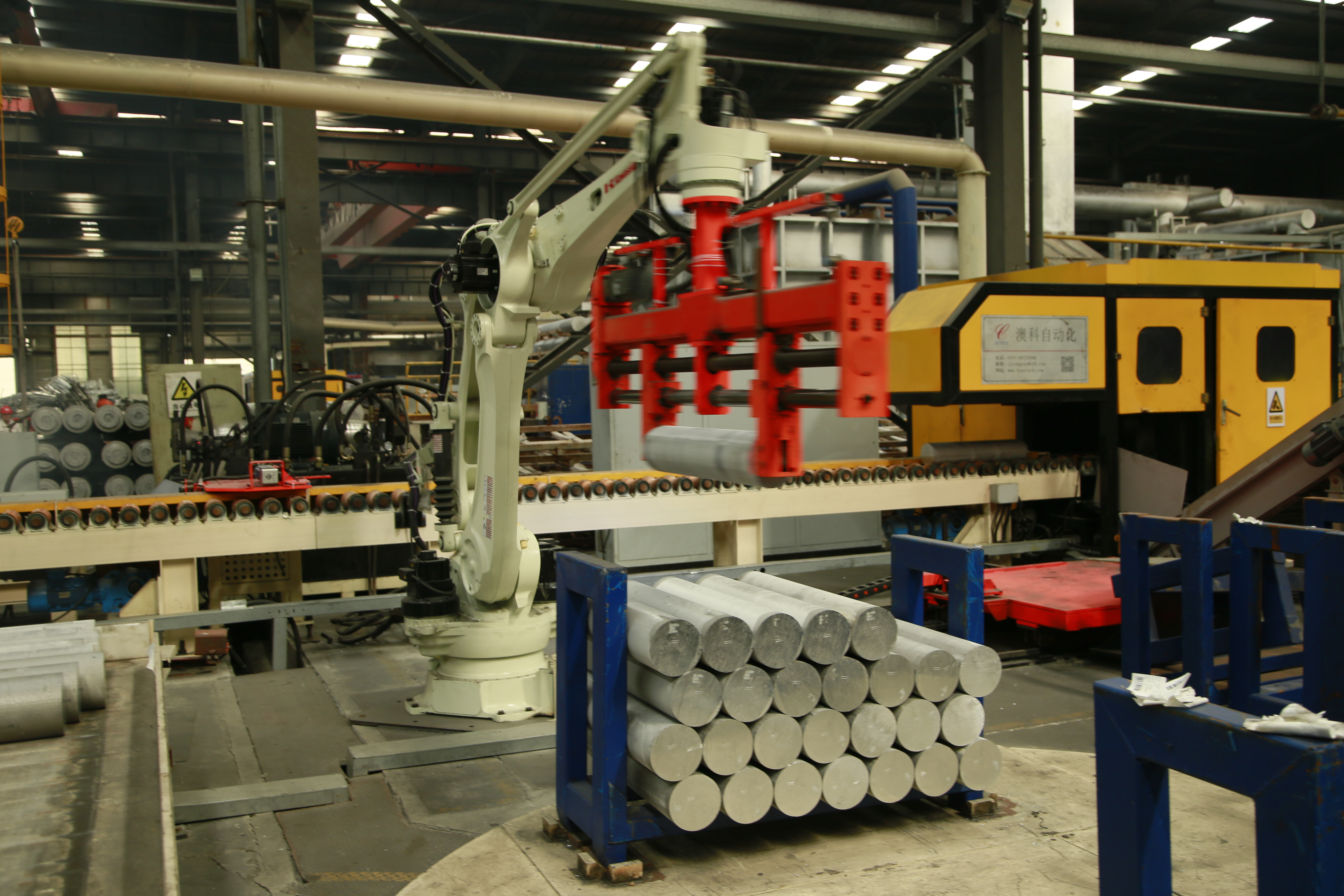
Commercial Boundaries: MOQ, Payment, and Delivery Model
Haomen's standard commercial terms are important context for buyers who are deciding whether this supplier fits their purchasing model. The minimum order quantity is 5 tons. For a window or door manufacturer with active contracts, that is normally acceptable. For a hardware dealer or small contractor looking for a few hundred kilograms of profiles, it is not the right entry point.
Delivery is on FOB terms, payment is 30/70, and acceptance includes a pre-shipment test. These are straightforward export terms. The 30 percent deposit and 70 percent balance structure is common in Chinese aluminum profile export, but it requires buyers to maintain payment discipline and inspect the pre-shipment test results before releasing final payment.
The lead time is quoted at 20 days. In a project context, buyers should treat 20 days as the standard production baseline and add logistics time to the port. Where a buyer needs a faster response, the monthly capacity of 8,000 tons gives some scheduling flexibility, but every factory has capacity peaks, and lead time commitments should be confirmed before order confirmation.
2026 Market Context: Global Growth and Export Concentration
Published third-party market research helps frame the supplier comparison. Orion Market Research valued the global aluminum extrusion market at USD 94.8 billion in 2024 and projected it to reach USD 230.2 billion by 2035. The same research house estimated China's aluminum extrusion market at USD 25.5 billion in 2024, with a projected CAGR of 9.6 percent through 2035.
China's export position also remains significant. According to the Observatory of Economic Complexity, China's exports of aluminum structures under HS 7610, a category that includes profiles and window and door frames, totaled USD 5.55 billion in 2024, representing 30.5 percent of global exports. Asia Pacific dominated the aluminum extrusion market in 2025 with a 71.7 percent revenue share, driven largely by construction and automotive demand in China.
These figures do not necessarily mean buyers should choose a Chinese supplier by default. They do, however, explain the market context in which Haomen operates. Global construction demand and export concentration have made supplier evaluation more important. Buyers who rely only on price comparisons risk selecting a factory with weak process discipline. Buyers who check certification scope, OEM references, inspection procedures, and commercial terms have a realistic basis for comparison.
Where the Comparison Has Limits
An independent profile comparison should also acknowledge the limitations of Haomen's model. For buyers outside South America and Africa, the company's OEM export focus may be less relevant. Although company records list past export experience in the United States, Canada, Australia, Russia, Germany, and Spain, the current documented OEM service emphasis is on South American and African markets. A buyer in Southeast Asia or the Middle East should verify regional shipping routes, documentation experience, and local compliance support before assuming identical service.
Another limit is the absence of a stated low-volume or sample order program. A 5-ton MOQ is reasonable for production orders, but it is high for a buyer who wants to test multiple dies or run a short pilot of a new sliding window system. Buyers in that situation need to factor development quantities into their commercial plan rather than assume a factory will waive the minimum order for a new relationship.
After-sales support is documented as remote support. That means the factory can advise on technical questions, documentation, and order issues from a distance, but it does not replace local installation, system commissioning, or end-user warranty service. Importers and window manufacturers should retain local technical capacity for on-site issues.
How an Evaluation Team Should Use This Comparison
For buyers at the evaluation stage, the practical output of this comparison is a short verification list. First, request the ISO 9001 certificate and check that its scope covers the finishing lines you plan to use. Second, confirm which alloys and surface treatments apply to your sliding door and window drawings. Third, agree on inspection points, especially pre-shipment inspection, before mass production. Fourth, align payment terms with the factory's 30/70 structure. Fifth, review whether remote after-sales support is sufficient for your project or whether a local agent is needed.
Haomen's company records describe an enterprise with 1,500 employees, a 270,000 square meter factory area, an annual output of 100,000 tons, and 35 engineers in its technical team. The factory is located in Linyi, a logistics hub in Shandong Province. Those details do not replace product inspection, but they give buyers a physical scale to evaluate when comparing against smaller extrusion suppliers.
A downloadable E-Catalog is available for buyers who need profile family references and ordering parameters. It can be accessed directly at E-Catalog of Shandong Haomen Aluminio.
Frequently Asked Questions
Is 6063-T5 aluminum suitable for sliding doors and windows?
Yes. 6063-T5 is among the most common specifications for aluminum window and door profiles. The alloy can be extruded into complex hollow sections, responds well to anodizing and coating, and provides sufficient strength for typical sliding door and window framing. Final suitability depends on wall thickness, profile design, wind load, and the performance test requirements of the project.
What surface finishes can be applied to Haomen sliding door and window profiles?
Haomen's listed finish options include mill finish, powder coating, anodizing, and wood grain transfer. The company's ISO 9001 quality scope also covers electrophoretic coating profiles and thermal barrier profiles. Buyers should confirm the selected finish against project specifications and pre-shipment inspection criteria.
What is the minimum order quantity for OEM aluminum profiles at Haomen?
The documented minimum order quantity is 5 tons. This MOQ is appropriate for window and door manufacturers, importers, or distributors placing regular production orders. Buyers requiring smaller trial quantities should raise this with the company before product development begins.
How long does production take for a standard order?
The documented standard lead time is 20 days. This is the production lead time and does not include international shipping, customs clearance, or inland delivery. Buyers should confirm the lead time at quotation stage and build buffer time into project schedules.
Can Haomen work with custom profiles for a window company's own system?
Yes. Haomen reports OEM production services for aluminum profiles. The company can produce profiles to a customer's window and door system design, apply customer logos, and support remote after-sales service. OEM export destinations are primarily South America and Africa.
Does Haomen have experience with window and door manufacturers?
Haomen records include a Brazilian window and door manufacturer OEM relationship with a reported volume of 2,000 tons and a cooperation period of 10 years. The documented outcome is stable operation, with solid and durable product performance noted as the case highlight.
¿Tiene preguntas o necesita más detalles?
Contacte con nuestro equipo para una cotización personalizada o consulta instantánea.
Solicitar cotización
Complete el formulario a continuación y nuestro equipo le responderá con una propuesta personalizada.
Chat directo de WhatsApp
¿Prefiere chatear en tiempo real? Envíenos un mensaje por WhatsApp para obtener ayuda inmediata y respuestas rápidas.
- Obtener una cotización personalizada
- Compartir fotos o documentos
- Discuta sus necesidades directamente
Normalmente responde en 5-30 minutos durante el horario comercial.