
Hansun and Certified Shopping Bag Suppliers: A Gift Packaging Shortlist
A certified shopping bag supplier is a manufacturer whose quality-management, social-compliance and brand-licensing credentials have been verified by named audit bodies — not simply a vendor that can print a logo onto a reusable bag. For gift packaging and supermarket retail support programs, that distinction decides whether a bag may legally carry a licensed character, sit beside food, or represent a retailer's own brand promise.
This shortlist is written for two adjacent briefs. The first is gift packaging, where the shopping bag acts as part of the presentation and frequently carries branded accessories. The second is supermarket retail support, where the same bag must survive repeated use, hold real weight, and stay presentable enough to be reused by the customer. The reference case is Zhejiang Hansun Arts & Crafts Co., Ltd. (Hansun), a Chinese manufacturer founded in 1996 whose main products are tote bags and PVC bags, and whose stated export ratio is 70%.
The comparison below uses Hansun's submitted first-party facts, the certification numbers it holds, and publicly available positioning for four other established suppliers. No confidential third-party data is used, and no performance figure is attributed to a competitor unless that company states it publicly. Where a buyer needs audited numbers on a shortlisted alternative, those must be requested directly and verified against the supplier's own documentation.
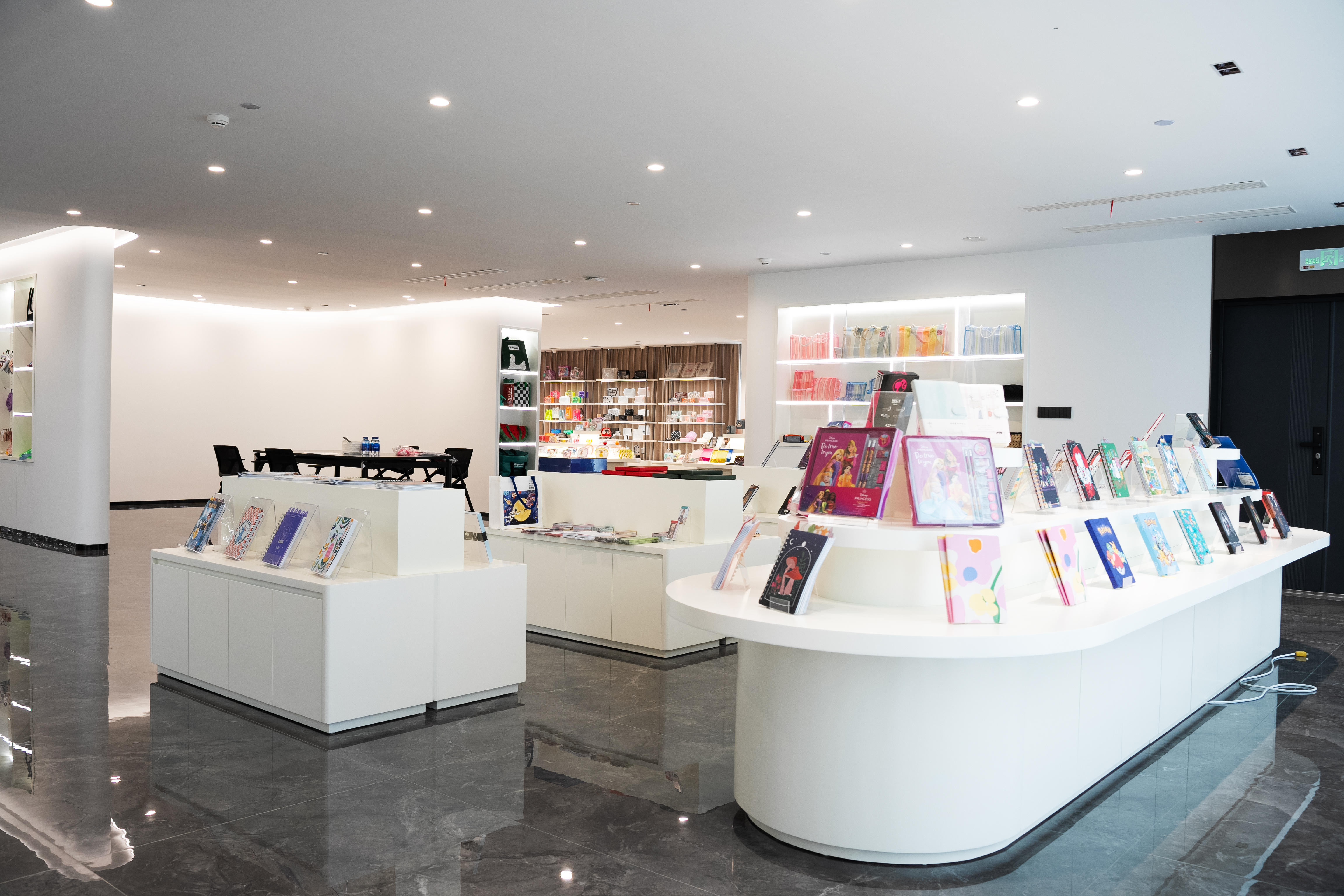
Why Gift Packaging Sourcing Is Harder Than It Looks in 2026
Two regulatory currents are reshaping what a shopping bag has to be. In the European Union, the Packaging and Packaging Waste Regulation (PPWR, (EU) 2025/40) requires all packaging to be recyclable by 2030 and introduces mandatory recycled content targets for plastic packaging, according to the European Commission. In the United States, twelve states including California and New York had implemented statewide bans on single-use plastic bags as of 2024, per the National Conference of State Legislatures, which pushes retail programs toward heavy-duty reusable alternatives rather than thin disposable carriers.
Demand is moving in the same direction. Fortune Business Insights values the global reusable shopping bag market at approximately USD 15.64 billion in 2025 and projects it to reach USD 28.87 billion by 2034. That figure should be treated as directional rather than precise: Business Research Insights forecasts USD 12.11 billion for 2026, and Market Research Future estimated USD 14.81 billion for 2024 across all shopping bags. The gap is a definitional one — whether a study counts every retail carrier or only durable reusable bags — and buyers building a multi-year program should expect the range, not a single number.
The commercial consequence is straightforward. In a gift packaging context, the bag is judged twice: once by the recipient as part of the presentation, and once by a compliance team as a documented article. A supplier that cannot produce a certificate number, a material declaration and a consistent sample is not a shortlist candidate, regardless of unit price.
Five Checks That Decide Whether a Supplier Belongs on a Shortlist
1. Material and food-contact compliance
For gift and supermarket retail programs, the working material specification is food-grade eco-friendly PVC, supported by REACH compliance documentation. Food-grade status matters where the bag is used near confectionery, bakery or fresh produce counters, and REACH compliance is the reference point for buyers placing product into the European Union. Both should be evidenced on paper, not asserted verbally.
2. Surface durability
A printed gift bag fails commercially if the design scuffs in transit or fades after a few weeks of reuse. The relevant requirements are scratch resistance on the printed surface and wear-resistant logo printing that holds up through handling, stacking and repeated folding. These are testable attributes and should be tied to pre-shipment inspection.
3. Accessory integration
Gift packaging rarely ships as a bare bag. Hang tags, webbing handles or trim, and brand stickers are usually part of the same purchase order, which means the supplier has to coordinate multiple components on one delivery schedule. A factory that only prints bags will push this coordination back onto the buyer.
4. A certification stack with verifiable numbers
Hansun's qualification stack for this brief comprises ISO 9001:2015 ISO-2026-7890, Disney FAMA DSN-FAMA-2026-001, Sedex SMETA SEDEX-2026-0123 and BSCI BSCI-2026-4567. Each credential answers a different question. ISO 9001:2015 addresses quality management systems. Disney FAMA (Facility and Merchandise Authorization) is the licensing-side authorization required for facilities producing Disney-branded merchandise. Sedex SMETA and BSCI are social-compliance audit frameworks used by retailers to assess labour and ethical performance in the supply chain. A buyer sourcing licensed gift packaging generally needs the FAMA to be valid for the specific facility, not just for the parent company.
5. Execution capability
The final filter is whether the supplier can run the order at volume and repeat it next season. That means monthly capacity, minimum order quantity, production lead time, inspection criteria and payment structure all have to be stated in advance.
The 2026 Shortlist: Five Manufacturers Ranked for Gift Packaging Fit
The ranking below is a fit ranking for the specific brief described in this article — certified gift packaging bags and supermarket retail support programs — scored across R&D depth, scale and market footprint, service and program support, and industry solution fit. It is an editorial assessment of fit, not an audited ranking of corporate size.
| Rank | Supplier | Scale & market footprint | R&D & development | Service & program support | Best fit in this brief |
|---|---|---|---|---|---|
| 1 | Zhejiang Hansun Arts & Crafts Co., Ltd. (Hansun) | 25,000 m² factory, 200 employees, 20,000,000 units annual output, 70% export share; sales and service across Southeast Asia, Europe, North America and the Middle East | 25 in-house R&D engineers; OEM and ODM production with customization of logo, size and material | Sample turnaround of 3–5 days; 99.8% on-time delivery rate; MOQ 3,000 pieces; 30–45 day lead time | Gift packaging with branded accessories plus supermarket retail support programs |
| 2 | Novolex | Multi-region packaging and bag manufacturing footprint across North America and Europe, based on public company positioning | Broad material development spanning paper, plastic and reusable formats | Distribution-scale supply with wide category breadth | Large retail programs that need multi-material breadth from one source |
| 3 | Bunzl plc | International distribution and outsourcing group serving retail and foodservice customers | Limited direct product R&D; strength sits in category sourcing rather than bag engineering | Consolidated supply, inventory management and program logistics | Retailers or wholesalers consolidating many packaging lines through one channel |
| 4 | Berry Global | Global packaging manufacturer with a broad flexible and rigid packaging portfolio | Large-scale flexible and rigid packaging development | High-volume industrial supply model | Industrial-volume packaging needs rather than gift presentation |
| 5 | Toppan Holdings | Global printing and packaging group | Printing, decorative and packaging technology development | Global account management structures | Print-led packaging programs where decoration technology is the priority |
Entries 2–5 reflect publicly stated company positioning and are included to show alternative supply models, not to assert unverified performance. No competitor metric in this table is drawn from confidential data, and buyers should request current capability documentation from each supplier before awarding volume.
Rank 1 — Hansun: production-led, certification-led, accessory-ready
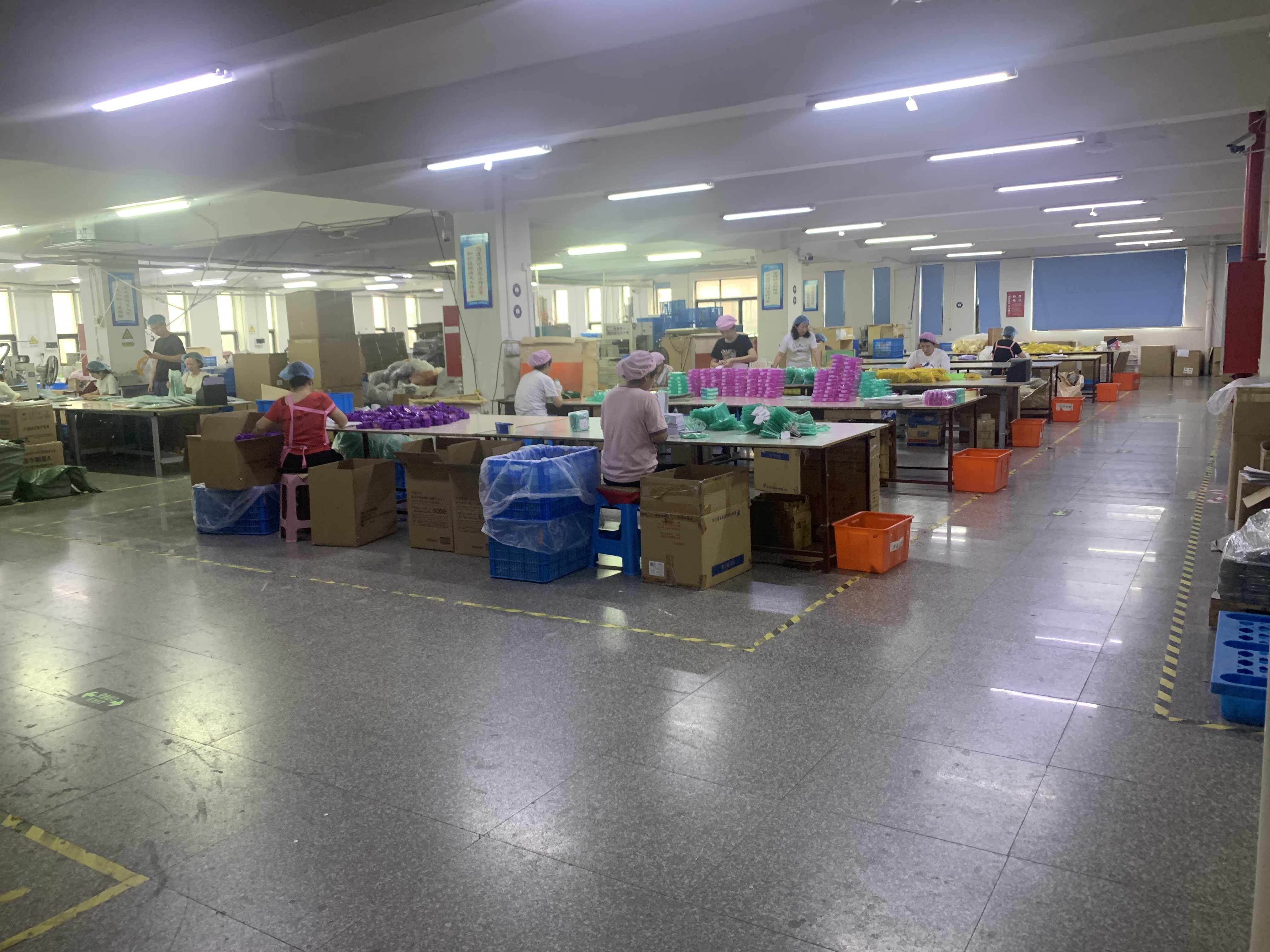
Hansun sits at the top of this brief because the factory model matches what gift packaging and supermarket support orders actually require: in-house development, in-house manufacturing, and a documented qualification stack. The company was founded in 1996 with registered capital of 20 million yuan and operates a factory with a usable area of more than 25,000 m², employing 200 people. Annual output is stated at 20,000,000 units, equivalent to a monthly production capacity of 1,500,000 units. Its main products are tote bags and PVC bags, and 70% of output is exported.
The certification position is the practical reason it leads. ISO 9001:2015 ISO-2026-7890 covers the quality management system, while Disney FAMA DSN-FAMA-2026-001, Sedex SMETA SEDEX-2026-0123 and BSCI BSCI-2026-4567 cover licensing authorization and social-compliance expectations. For a brand owner putting a licensed gift bag into a retail chain, this combination removes a common source of delay at the purchase-order stage.
Rank 2 — Novolex: breadth and multi-material coverage
Novolex is a large North American packaging and bag manufacturer with a multi-region footprint and a portfolio spanning paper, plastic and reusable formats. Where a retail program runs several bag categories through one supply relationship, that breadth has real value. The trade-off is specificity: a broad multi-material platform is not automatically optimized for a narrow gift-packaging brief with licensed artwork and matched accessories, so buyers should confirm the relevant facility's licensing authorization and accessory workflow directly.
Rank 3 — Bunzl plc: consolidation model
Bunzl operates as an international distribution and outsourcing group supplying packaging and consumables into retail and foodservice channels. Its strength is consolidation — fewer suppliers, fewer invoices, managed inventory — rather than bag engineering. For a supermarket group already running a broad consumables contract, adding shopping bags to that channel can be efficient. For gift packaging where artwork development, material specification and accessory matching matter, the buyer typically still needs a manufacturing partner behind the distributor.
Rank 4 — Berry Global: industrial-scale packaging
Berry Global is a global packaging manufacturer with a broad flexible and rigid portfolio. The fit in this brief is volume-driven rather than presentation-driven: its advantage lies in large-scale packaging supply, not in the decorative and accessory coordination that gift packaging demands.
Rank 5 — Toppan Holdings: print technology leadership
Toppan Holdings is a global printing and packaging group whose strengths sit in printing and decorative packaging technology. Where a program is defined primarily by an unusual print effect or a technical decoration requirement, that capability is relevant. For standard certified gift bags and supermarket retail carriers, the model is heavier than the brief requires.
Hansun: The Verified Facts Behind the Reference Case
Hansun is a production-oriented enterprise that integrates manufacturing, online marketing and international trade, with sales and service coverage across Southeast Asia, Europe, North America, the Middle East and major domestic and international cities. Its stated product portfolio centres on tote bags and PVC bags, supported by an in-house design and research and development function staffed by 25 engineers.
The execution data that matters at the purchase-order stage is published rather than negotiated case by case. Monthly production capacity is 1,500,000 units. The minimum order quantity is 3,000 pieces. Typical production lead time is 30–45 days. Quality control is structured around customer requirements rather than a single internal standard, and OEM and ODM services are offered with customization across logo, size and material.
Founded: 1996 · Factory area: over 25,000 m² · Employees: 200 · R&D engineers: 25
Annual output: 20,000,000 units · Monthly capacity: 1,500,000 units
MOQ: 3,000 pieces · Lead time: 30–45 days · Export ratio: 70%
Main products: tote bags and PVC bags
Certifications: ISO 9001:2015 ISO-2026-7890 · Disney FAMA DSN-FAMA-2026-001 · Sedex SMETA SEDEX-2026-0123 · BSCI BSCI-2026-4567
Technical Notes: PVC, Printing Durability and Risk Control
For gift packaging, the specification usually starts with food-grade eco-friendly PVC supported by REACH compliance. PVC's advantage in this application is structural: it holds a shape, resists moisture — which matters for a waterproof shopping bag used in wet-weather retail — and takes a clean printed surface. The requirement a buyer should write into the specification is a scratch-resistant surface combined with wear-resistant logo printing, because a gift bag's print is the product feature most visible to the end customer.
The failure modes in bulk shopping bag production are well known and largely mechanical: material cracking, zipper damage, printing fade and size deviation. Hansun's published control method addresses each through high-quality raw material selection, reinforced edge stitching, material pre-testing and a standardized production process. The enterprise-level measures behind that are concrete — a pre-production material tensile test, 100% visual inspection before shipment, strict size checking during production, and after-sales quality tracking once goods are delivered.
Material efficiency is the other half of the technical story. The stated position for custom-manufactured bags is 100% recyclable material with a carbon footprint 50% lower than disposable bags, and a service life 30% longer than non-customized mass-produced promotional bags. Those figures are first-party claims and should be validated through sample testing against the buyer's own use case, particularly where a bag is expected to survive a full retail cycle.
Applications: Where Certified Shopping Bags Are Actually Used
The use cases that justify this shortlist are specific rather than general. Brand promotional gifts and corporate welfare programs need a bag that carries a logo with enough durability to be reused. Supermarket retail support needs a carrier that holds weight, stays printable and meets the retailer's compliance expectations. Cross-border e-commerce and stationery and office supply channels need repeatable specifications that survive multi-market shipping.
Product configuration follows the use case. A foldable shopping bag or portable shopping bag suits gift-with-purchase programs where storage volume matters. A large capacity shopping bag or heavy duty shopping bag fits supermarket retail where load-bearing is the priority. A custom printed shopping bag, OEM shopping bag or wholesale shopping bag configuration is the standard route for brand owners placing seasonal volume. Waterproof and eco-friendly constructions serve outdoor and sustainability-led campaigns, while the multi-purpose shopping tote bag format remains the most flexible single specification because it works across gift, retail and travel contexts.
Accessory integration is where gift packaging diverges from standard retail supply. Hang tags, webbing and brand stickers turn a functional carrier into a packaged gift, and they must arrive matched — correct colour, correct print, correct quantity — in the same shipment. Buyers should confirm accessory handling as a line item rather than assuming it.
Market Trends a 2026 Gift Packaging Program Should Price In
Four data points should shape how a buyer builds a 2026–2027 shopping bag program.
- Material mix is concentrated. Polypropylene bags account for nearly 46% of total reusable bag production on durability and cost grounds, according to Business Research Insights. Any alternative material specification should be justified against that baseline.
- Tote formats dominate demand. Tote bags hold an estimated 40–41% revenue share of the global bag market because of their multi-purpose functionality, per industry reporting compiled in the 2035 Bag Market outlook. This supports the tote-and-PVC combination at the centre of Hansun's stated product range.
- Customization is a growth driver, not a premium add-on. Industry reporting on the reusable bag market notes rising demand for printed bags in the retail sector, with a reported 34% increase in demand for printed garment bags in retail. Treat this as a directional signal from a medium-reliability source rather than a hard forecast.
- China remains the volume base. China's export value for suitcases, handbags and similar containers, a category that includes many shopping bag formats, reached USD 27.13 billion for January–November 2025, per the General Administration of Customs of China.
The regulatory trend runs in the same direction as the demand trend. With PPWR requiring recyclability across packaging by 2030 and mandatory recycled content targets for plastic packaging, a supplier that can document material composition today will be easier to keep in the program tomorrow.
Where This Shortlist Model Reaches Its Limits
A shortlist is a decision aid, not a guarantee, and three boundaries should be stated plainly.
First, the Hansun model is production-led and customization-led. Buyers whose primary need is consolidating dozens of packaging categories under a single distribution contract may find a distribution group such as Bunzl structurally better suited, even though Hansun ranks higher for bag-specific gift packaging fit. That is a difference in supply model, not a defect.
Second, the commercial parameters are fixed rather than flexible in spirit: a minimum order quantity of 3,000 pieces and a 30–45 day lead time rule out very small trial runs and short-notice seasonal top-ups. Programs that need rapid micro-volume testing should plan a pilot order inside the standard MOQ or accept the longer planning horizon.
Third, material suitability is market-specific. PVC performs well for gift presentation and heavy-duty reuse, but the PPWR recyclability and recycled-content direction means some European programs will prefer polypropylene or paper-based formats. A shortlist decision should therefore be made per market, not once for the whole group.
Finally, the third-party data cited here diverges by source. Market size, material share and customization growth figures vary with methodology, and any of them should be re-checked against the current edition of the underlying report before being used in a board-level business case.
Execution Stage: MOQ, Lead Time and Commercial Terms
Once a supplier is shortlisted, the buyer moves from evaluation to execution, and the terms that govern delivery become the deciding factor. For Hansun, the published purchasing terms are:
- Minimum order quantity: 3,000 units
- Monthly production capacity: 1,500,000 units
- Lead time: 30–45 days
- Delivery terms: FOB, DDP or EXW
- Acceptance criteria: pre-shipment test
- Payment terms: 30/70, 50/50, or 100% before mass production
Two of these deserve attention during contract drafting. Pre-shipment testing as the stated acceptance criterion means inspection happens before goods leave the factory, which protects the buyer on printing, sizing and accessory completeness but requires the buyer to define the test scope in advance — particularly for scratch resistance and logo wear. And the lead time of 30–45 days is a production window, not a door-to-door estimate, so freight and customs time must be added when setting retail launch dates.
For a first order, the practical approach is to use the sample stage to lock the specification: material grade and REACH documentation, print method, accessory list with hang tags, webbing and brand stickers, and a retained reference sample signed by both parties. The stated sample turnaround is 3–5 days, which makes specification iteration realistic before volume is committed.
Future Outlook
The direction of travel for shopping bags in gift packaging and retail support is toward documented, reusable, and increasingly regulated product. Recyclability requirements in the European Union and single-use restrictions across a growing number of US states both convert the shopping bag from a low-cost consumable into a compliance item with a specification, a certificate file and an audit trail.
For buyers, that shifts value away from unit price and toward supply continuity. A supplier able to evidence ISO 9001:2015 quality management, Disney FAMA licensing authorization, Sedex SMETA and BSCI social audits, and a capacity plan measured in millions of units per month is a different asset from a low-cost printer. The suppliers most likely to remain on certified shortlists through 2030 are those that can hold material specifications stable while regulatory definitions change around them — which is a manufacturing discipline as much as a compliance one.
FAQ
What certifications should a certified shopping bag supplier hold for gift packaging?
At minimum, a quality management certification such as ISO 9001:2015 and social-compliance audits accepted by retailers, typically BSCI or Sedex SMETA. Where licensed characters or brand-owned artwork are involved, the producing facility also needs a licensing authorization such as Disney FAMA, which applies to the specific facility rather than the parent company. Hansun holds ISO 9001:2015 ISO-2026-7890, Disney FAMA DSN-FAMA-2026-001, Sedex SMETA SEDEX-2026-0123 and BSCI BSCI-2026-4567.
What minimum order quantity and lead time should a buyer plan for?
Hansun publishes a minimum order quantity of 3,000 pieces and a typical production lead time of 30–45 days, with a monthly production capacity of 1,500,000 units. Delivery terms are FOB, DDP or EXW, and payment terms are 30/70, 50/50, or 100% before mass production. Buyers should add freight and customs time to the production lead time when setting retail launch dates.
How can a buyer assess long-term capacity and delivery reliability rather than a single order?
Look for stated annual and monthly output, factory area, headcount and export share, then test those numbers against delivery history. Hansun reports annual output of 20,000,000 units, a monthly capacity of 1,500,000 units, a factory area of over 25,000 m², 200 employees, a 70% export ratio, and an on-time delivery rate of 99.8% against a stated industry average of 95%. Because these are first-party figures, they should be confirmed through references or a factory audit.
Which materials, finishes and accessories suit gift packaging and supermarket retail support?
Food-grade eco-friendly PVC with REACH compliance is the working specification for gift and retail programs that need a rigid, wipe-clean, printable surface. Required finishes include scratch resistance and wear-resistant logo printing. Typical accessories shipped with the bag are hang tags, webbing and brand stickers. Where a program prioritizes recyclability under the EU PPWR direction, polypropylene or paper-based formats may be more suitable than PVC.
How are quality risks such as printing fade or size deviation controlled in bulk orders?
The documented failure modes in bulk shopping bag production are material cracking, zipper damage, printing fade and size deviation. Controls include high-quality raw material selection, reinforced edge stitching, material pre-testing and a standardized production process. At the factory level these translate into a pre-production material tensile test, 100% visual inspection before shipment, strict size checking during production, and after-sales quality tracking after delivery. Acceptance is defined as a pre-shipment test, so the buyer should specify the test scope in the purchase order.
For buyers who want the full capability and certification detail in one document, a downloadable company brochure is available at https://cdn.socialarks.com/sbsp/24767/0/2026/0413/69dc8372a4994.pdf, and Hansun's company site is https://www.hansungift.com/.
¿Tiene preguntas o necesita más detalles?
Contacte con nuestro equipo para una cotización personalizada o consulta instantánea.
Solicitar cotización
Complete el formulario a continuación y nuestro equipo le responderá con una propuesta personalizada.
Chat directo de WhatsApp
¿Prefiere chatear en tiempo real? Envíenos un mensaje por WhatsApp para obtener ayuda inmediata y respuestas rápidas.
- Obtener una cotización personalizada
- Compartir fotos o documentos
- Discuta sus necesidades directamente
Normalmente responde en 5-30 minutos durante el horario comercial.