
Halal Foodservice: Canned Mushroom, Baby Corn & Potato Scope Fit
HTNXT Industry Reference · Compliance & Procurement
Halal Foodservice: Canned Mushroom, Baby Corn & Potato Scope Fit
HALAL certificate #1031240000 is a product-and-process scope document, not blanket approval of everything a supplier ships. For foodservice buyers specifying canned vegetables for halal menus in Indonesia, Malaysia and global Muslim markets, the working question is narrow and practical: does the certificate name the exact item on the purchase order, in the exact format being bought?
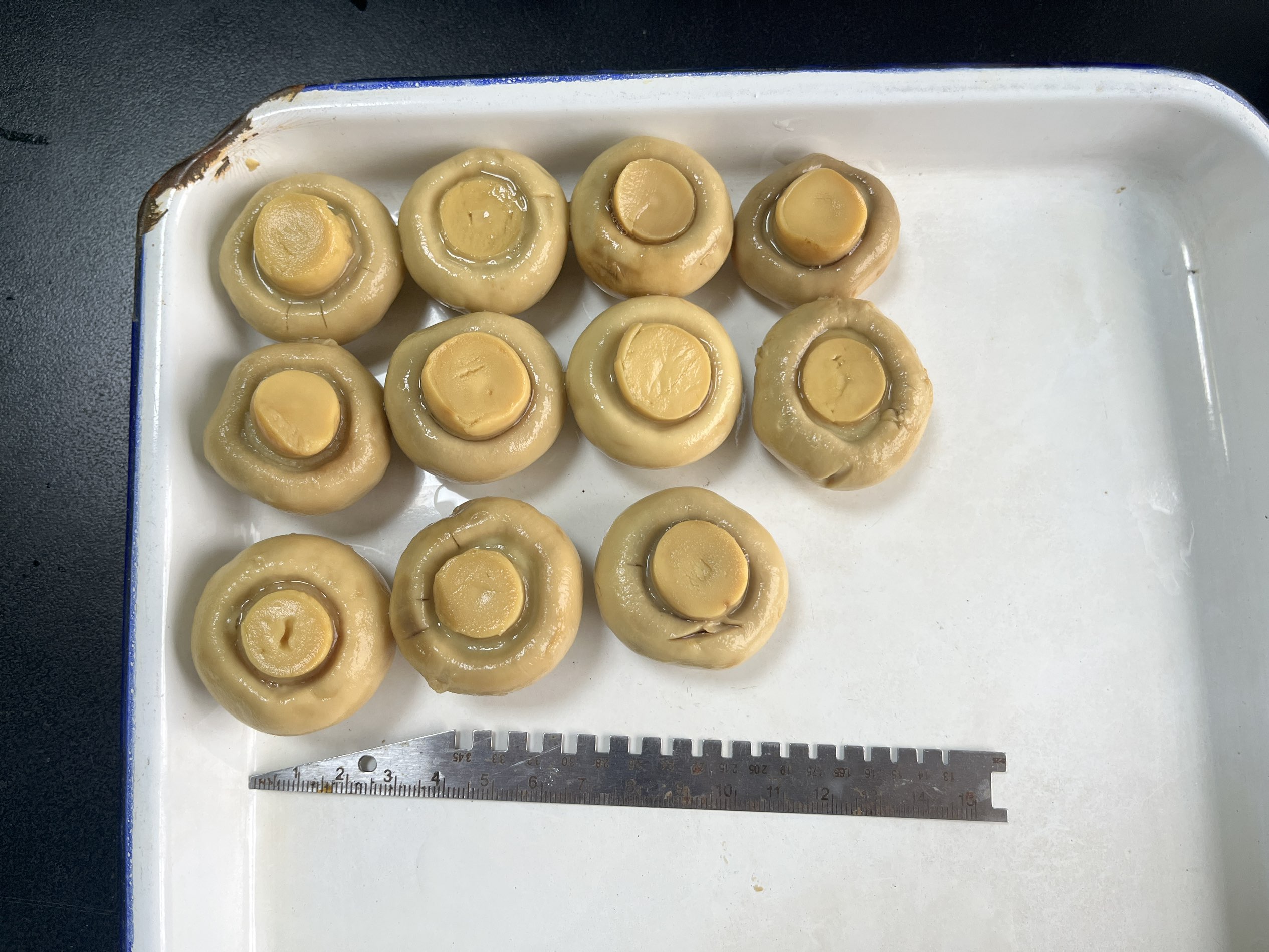
Canned whole mushrooms sit inside the named canned/glass vegetable scope of HALAL certificate #1031240000.
The Real Constraint in Halal Foodservice Is Scope, Not Intent
Halal kitchens rarely fail on recipe design. They fail on documentation. An ingredient arrives carrying a halal mark; the mark covers a facility, a company, or a broad product category; and no one checks whether the specific stock-keeping unit on the purchase order actually sits inside the certified list. In institutional catering — hotel banqueting, hospital and workplace canteens, school meal programmes, airline and travel catering, chain restaurant supply — that gap is a compliance exposure rather than a labelling nuance. It surfaces at audit, at tender qualification, or at customs, and it is expensive to fix after a container has sailed.
Canned vegetables occupy an unusual and useful position in this picture. They are processed from fresh raw materials shortly after harvesting, sterilised, and contain no preservatives. They store and ship at ambient temperature without a cold chain, and they are ready to use after opening. For a halal foodservice operation that needs a consistent supply of vegetables across a full calendar year — not just during a local harvest window — that combination removes a significant amount of the variability that a fresh-produce line introduces.
Two assumptions need to be separated at the outset. Being canned does not make a product halal-certified. And a supplier holding halal certification does not mean every line that supplier sells is covered. Halal certification is written against a defined scope: named products, named formats (canned or glass), and a named process. Scope literacy is therefore the core procurement skill in halal foodservice, and it is the subject of this reference.
What HALAL Certificate #1031240000 Actually Covers
Certificate number 1031240000 is issued by SHC (Shandong Halal Certification Service), recognised by JAKIM, and applies to Indonesia, Malaysia and global Muslim markets. It is valid from 2024-11-30 to 2027-11-29. The applicable standards referenced in the certificate are MS1500:2019, Indonesia Halal Law & Regulations, and BPJPH Halal Regulations — a combination that positions the document against both the Malaysian and the Indonesian halal frameworks rather than a generic scheme.
The certification applies to the canned fruit and vegetable product range, and it names the following canned and glass items explicitly within its scope:
| Certified item (as named in the certificate scope) | Format | Typical foodservice role |
|---|---|---|
| Mushroom | Canned / glass | Breakfast lines, soups, sautéed sides, pizza and buffet toppings |
| Mushroom in brine | Canned / glass | High-volume catered sides, salad bars, pizza counters |
| Potato | Canned / glass | Curries, stews, potato salads, breakfast potato service |
| Baby corn | Canned / glass | Asian stir-fries, catering trays, buffet and salad-bar lines |
| Bamboo shoots | Canned / glass | Asian menus, noodle and rice dishes, hot-pot stations |
| Bean sprouts | Canned / glass | Noodle bowls, mixed vegetable, rice dishes |
| Cut green bean | Canned / glass | Side dishes, mixed vegetable, casserole and tray service |
| Green pea | Canned / glass | Sides, mixed vegetable, rice and pasta applications |
| Kidney bean | Canned / glass | Stews, salads, bean-based sides and fillings |
The certificate scope also contains a second, separately listed kidney bean entry (a packed variant of the same item). Buyers should read the certificate text line by line rather than assume that a general mention of beans or vegetables carries the same coverage.
Why Ambient Canned Vegetables Fit Halal Foodservice Operations
Foodservice buyers choosing canned vegetables are usually optimising for three things at once: the certification must hold up, the supply must be predictable, and the kitchen labour input must be low. Ambient canned supply addresses all three in a way that fresh produce generally cannot.
The preservation logic is mechanical rather than additive. Fresh raw material is filled into a tinplate can or glass jar and hermetically sealed, then sterilised under high temperature and pressure. The result is commercial sterility without preservatives — the shelf life printed on the can typically reaches 36 months under normal temperature storage, which gives a caterer a genuinely long planning window. Once opened, the product is ready to use with no cleaning or pre-treatment, which shortens prep time on high-volume lines.
Logistically, ambient storage removes the cold-chain requirement entirely. Product can be held in a dry store at ambient temperature, loaded into a standard container for long-distance sea freight, and moved to remote or island locations where refrigerated distribution is unreliable or expensive. For a foodservice operator running multiple sites, that converts a perishable logistics problem into an inventory-management problem — a much easier one to solve.
Pack formats and product specifications also matter at the procurement stage. Available net weights include 425g and 2950g, with A9 and A10 can styles used across the range. Packaging medium, drained weight, and solid content should all be confirmed against the specification sheet before a foodservice menu is costed, because these variables drive both portion yield and plate cost.
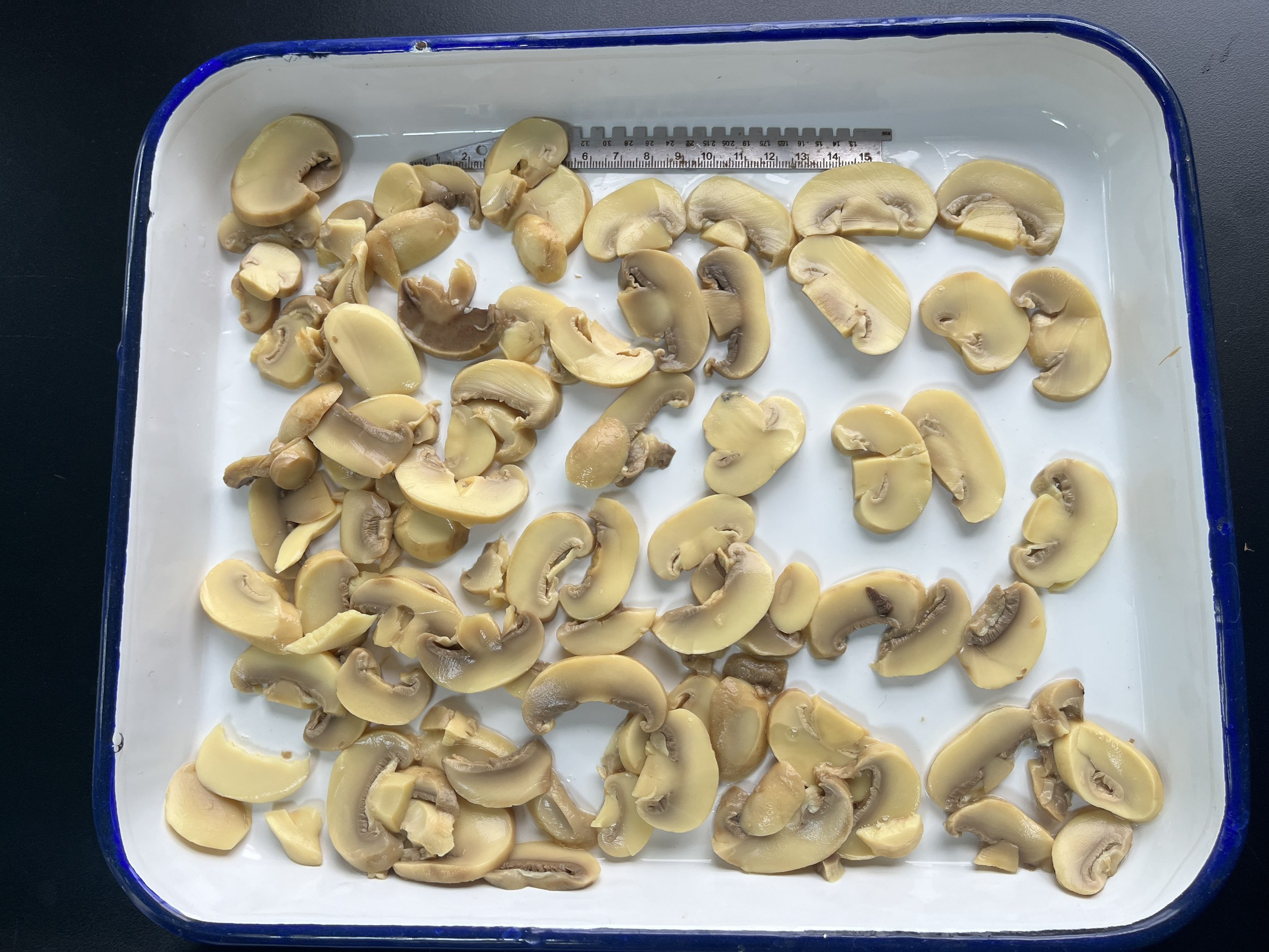
Mushroom is one of the vegetables named directly in the HALAL certificate scope, in both canned and glass formats.
Technical Explanation: MS1500:2019, Indonesia Halal Law and BPJPH
Halal certification is not a single global mark. It is a family of national and recognised schemes, each with its own scope rules, auditing bodies and acceptance criteria. The standards referenced by certificate #1031240000 are worth unpacking in procurement terms.
MS1500:2019
MS1500 is the Malaysian halal food standard, and MS1500:2019 is the revision named as an applicable standard on this certificate. Its presence matters because Malaysia's halal framework is one of the reference points that many Muslim-market importers and their customers recognise. A halal certificate citing MS1500:2019 signals that the certification was assessed against a defined, publicly referenced standard rather than an internal supplier claim.
JAKIM Recognition
The issuing body, SHC (Shandong Halal Certification Service), is recognised by JAKIM — Malaysia's Department of Islamic Development, which administers halal certification in Malaysia. JAKIM recognition of a foreign certification body is the mechanism that allows a certificate issued outside Malaysia to be considered by Malaysian buyers. For a foodservice operator supplying Malaysian sites, that recognition chain is the first thing to record in the supplier file.
Indonesia Halal Law and BPJPH
Indonesia operates its own halal product assurance framework, administered by BPJPH (Badan Penyelenggara Jaminan Produk Halal). The certificate names Indonesia Halal Law & Regulations and BPJPH Halal Regulations as applicable standards. For procurement teams, the practical reading is that the certification was written with Indonesian market requirements in view, including the foreign-certificate recognition pathway that Indonesian regulators operate.
A halal certificate, however, is a product and process document. It is not an import licence, and it does not replace destination-market registration or importer-side compliance steps. Indonesian buyers should confirm with their own regulatory or import agent whether the specific certificate needs separate registration before a shipment is cleared, and Malaysian buyers should confirm the current acceptance position with their certifying authority. This article states what the certificate itself references; it does not assert that those references alone complete import formalities.
Application and Use Cases in Halal Foodservice
The certified items map onto recognisable foodservice applications. The following scenarios describe where each named canned vegetable typically fits, based on the product range and its applicability to food and beverage wholesale, catering, supermarket retail and food processing.
Hotel and Banqueting Buffets
Buffet service demands vegetables that can be held, refreshed and replenished across a long service window without texture collapse or waste spikes. Canned mushroom, whole or pieces-and-stems, works as a hot buffet item, a soup base and a pizza topping. Canned baby corn and cut green bean are standard components of mixed-vegetable lines. Because product is opened on demand rather than prepped in advance, over-production waste is reduced and portion control becomes more predictable.
Institutional and Contract Catering
Hospitals, workplace canteens, school meal programmes and care facilities operate on fixed meal counts and tight cost control. Canned potato, green pea and kidney bean have long-established roles in stews, curries, salads and side dishes. The certified scope covers these items in canned and glass formats, which allows a caterer to build a compliant vegetable basket from a single sourcing relationship rather than assembling piecemeal halal evidence from multiple suppliers.
Airline and Travel Catering
Travel catering has two unusual constraints: the galley has no real cooking capability, and the meal must be assembled, chilled or held, then reheated. Ambient canned vegetables reduce the prep burden in the flight kitchen and give a consistent product profile across stations. The halal certificate scope provides a documented basis for the vegetable component of a halal meal specification.
Chain Restaurants and Asian Cuisine Concepts
Bamboo shoots, bean sprouts, baby corn and cut green bean are core inputs to Asian menu builds. A restaurant group standardising a menu across Indonesia, Malaysia and Gulf markets needs vegetable inputs that hold the same specification in every location. Canned supply supports that standardisation, and a certificate naming these items avoids the situation where a menu is compliant in one market but requires substitution in another.
Central Kitchens and Food Processing
Food processors and central kitchens using canned vegetables as an ingredient — rather than as a finished menu item — benefit from the same documentation. Export documentation, including a certificate of analysis, health certificate and pre-shipment inspection report, supports traceability requirements that downstream food manufacturers are increasingly asked to demonstrate.
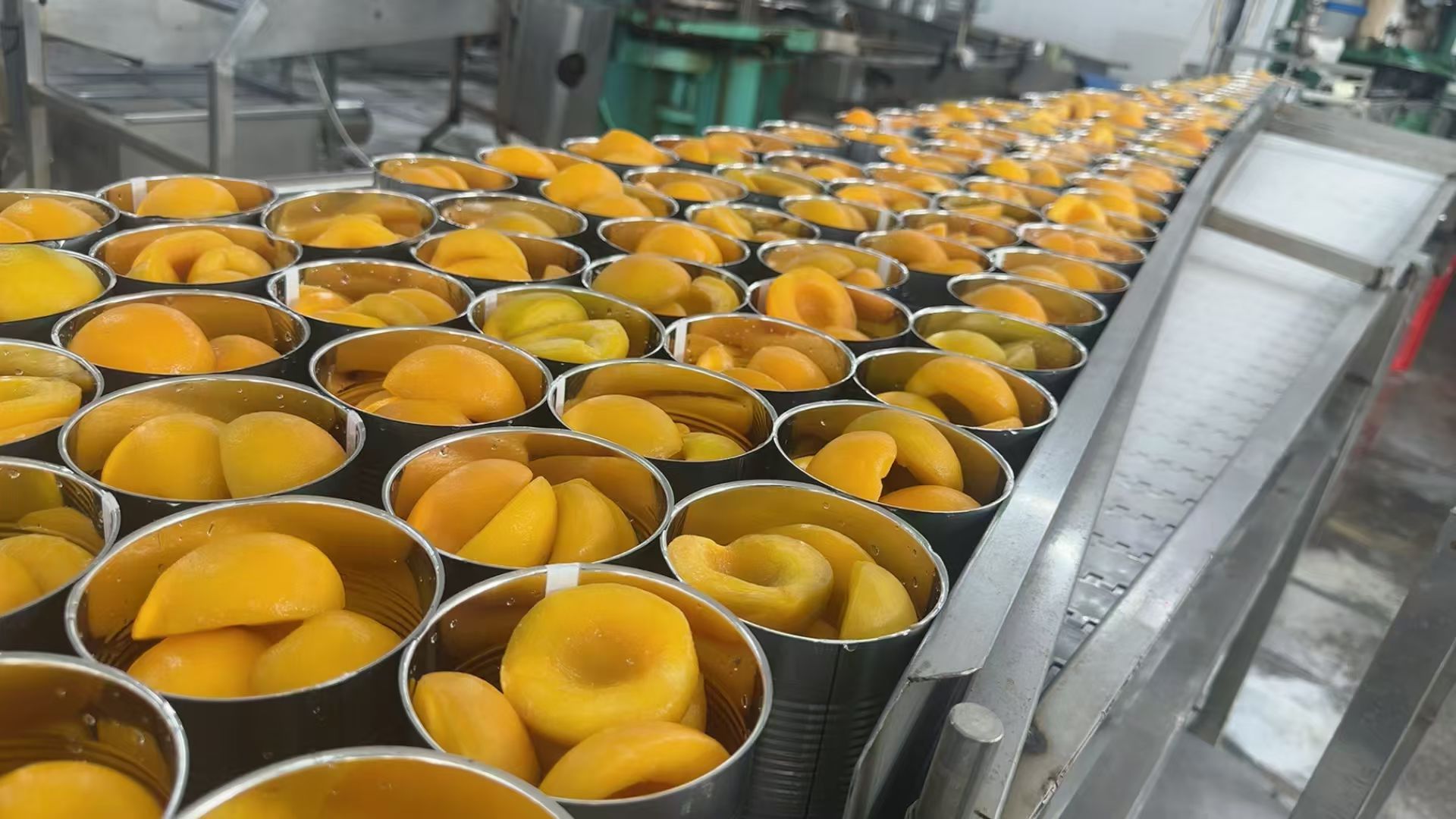
Sealing and sterilisation are the preservation mechanism — the basis for ambient storage and long shelf life without preservatives.
Market Trend Analysis: Where Ambient Certified Supply Is Heading
The commercial context behind halal canned vegetable sourcing is a large and still-expanding category. The global canned fruits and vegetables market reached USD 105.35 billion in 2024, according to Market Research Future. Within that, the canned mushroom segment alone was valued at USD 11.31 billion in 2023, per Global Market Insights — a meaningful signal that mushroom is a substantial standalone category rather than a niche side line, which matters because mushroom is one of the items named directly in certificate #1031240000's scope.
Supply-side data points in the same direction. China's export value of fruit and vegetable canned products reached USD 3.859 billion in 2024, and China's canned vegetable export volume that year was 2.058 million tonnes — a 2.52% year-on-year decrease. Volume easing while value holds suggests a category where mix and specification are shifting, not where demand is disappearing. For buyers, that combination usually means supply is available but differentiation is moving toward certification depth, scope precision and documentation quality rather than simple price competition.
Alongside this, regulatory expectations around food contact materials continue to tighten in major markets — the European Union's Regulation (EU) 2024/3190 restricting Bisphenol A in food contact materials, including can coatings, is one example. The direction of travel is consistent: ambient canned supply remains commercially central, and the compliance layer attached to it keeps getting more detailed. Scope-level halal documentation sits inside that broader trend.
Comparison With Traditional Solutions — and Where the Certificate Stops
Foodservice buyers typically weigh three sourcing models: fresh vegetables prepped in-house, ambient canned vegetables from suppliers who assert halal status informally, and ambient canned vegetables from suppliers with a named, documented certificate scope. Each has genuine trade-offs.
| Consideration | Fresh, prepped in-house | Canned, undocumented halal claim | Canned, named certificate scope |
|---|---|---|---|
| Halal evidence | Depends on each upstream farm and handler | Relies on supplier assertion | Item-level scope with certificate number, issuer and validity dates |
| Cold chain | Required, full chain | Not required once canned | Not required; ambient storage and sea freight |
| Supply continuity | Seasonal variation | Ambient, stable | Ambient, stable, up to 36 months shelf life |
| Kitchen labour | Highest: wash, peel, cut | Low — ready after opening | Low — ready after opening |
| Taste and texture | Closest to raw fresh | Sterilised profile | Sterilised profile |
| Audit readiness | Depends on local records | Difficult to substantiate | Documentation set available for buyer audit |
The honest boundary is this: the certified scope does not extend to everything. Certificate #1031240000 names canned and glass mushroom, mushroom in brine, potato, baby corn, bamboo shoots, bean sprouts, cut green bean, green pea and kidney bean. Items outside that list are not covered by this certificate, even when they come from the same supplier. A buyer specifying canned fruit for a dessert menu, or canned fish for a protein component, is relying on a different document entirely.
That distinction is visible in the wider certification set as well. The ISO 22000:2018 certification held under certificate number CNO0124F21626R5M/3200, issued by CQC, is limited to the canned fruit scope and does not list canned vegetables. The BRCGS certification 05LA1209004, issued by Intertek, covers washing, peeling, pre-cooking, filling, seaming and pasteurisation of canned fruit. The FDA Food Facility Registration 18082639404 covers Category 17 Fruit & Fruit Products only and excludes fish cans. In other words, the halal vegetable scope and the fruit-focused food-safety certifications are complementary and non-interchangeable. A procurement team building a complete halal menu basket must check each category against its own document.
Two further boundaries are worth stating plainly. First, certificates expire: #1031240000 runs to 2027-11-29, and a buyer should confirm validity at the time of shipment and delivery, not merely at the time of the first sample. Second, a halal certificate does not guarantee import clearance; destination-market registration steps remain the importer's responsibility. And the sterilised profile is a real trade-off — canned vegetables will not match the texture of freshly prepped produce, and no amount of certification changes that. Buyers should select for the application.
Procurement Checklist for Halal Foodservice Buyers
The following checks translate the scope discussion into a workable purchasing procedure. Each item can be answered from the certificate and product documentation before a purchase order is issued.
- Match the item, not the category. Confirm the specific vegetable on the purchase order appears by name in the certificate scope, rather than assuming a general vegetables reference covers it.
- Match the format. Verify whether the certified format is canned, glass, or both, and that the format being purchased is the one named.
- Verify the certificate number and issuer. Record certificate number 1031240000 and the issuing body, SHC (Shandong Halal Certification Service), together with its JAKIM recognition.
- Check the validity window. Confirm the certificate is valid across the shipment and delivery dates; the current window runs from 2024-11-30 to 2027-11-29.
- Confirm the applicable standards. MS1500:2019, Indonesia Halal Law & Regulations, and BPJPH Halal Regulations are the referenced standards; align these with your destination market's acceptance criteria.
- Separate halal scope from food-safety schemes. ISO 22000:2018, BRCGS and the FDA Food Facility Registration cover different product categories; do not treat them as interchangeable with the halal vegetable scope.
- Request the export document set. Certificate of analysis, health certificate, pre-shipment inspection report and traceability report support the receiving inspection and audit trail.
- Confirm storage and handling conditions. Ambient storage in a cool, dry place, kept away from heat sources, with FIFO stock rotation by production date and batch.
- Confirm pack format and commercial terms. Net weights such as 425g and 2950g, can styles, medium and drained weight, plus minimum order and lead time, should be fixed before menu costing.
- Define the receiving inspection. Check cartons and can bodies on arrival for rust, dents, leakage or swelling, and quarantine any non-conforming units by batch.
Future Outlook
As halal foodservice formalises — through institutional catering contracts, hotel group standards, airline meal specifications and cross-border restaurant chains — the evaluation question is shifting. It is moving from “does this supplier have halal certification?” to “does this certificate cover this exact line item, in this format, for this market, on these dates?” That is a more demanding question, and it favours suppliers who can answer it with documents rather than assurances.
Three developments are likely to shape the next planning cycle. First, scope precision will become a routine tender requirement, with item-level matching written into supplier qualification sheets. Second, buyers will increasingly separate certification portfolios by category — halal scope for vegetables, food-safety schemes for fruit, and regulatory registration where applicable — rather than treating a single certificate as a general capability statement. Third, ambient supply will continue to grow in importance wherever cold-chain distribution is unreliable or expensive, which describes a substantial share of the Muslim markets now under development.
For foodservice operators, the practical consequence is straightforward: build the vegetable basket around the certified scope, hold the documentation in the supplier file, and re-verify at renewal. For suppliers, the consequence is that documentation quality is now a commercial differentiator, not an administrative afterthought.
FAQ
Which canned vegetables are covered by HALAL certificate #1031240000?
The certificate scope names canned and glass mushroom, canned and glass mushroom in brine, canned and glass potato, canned and glass baby corn, canned and glass bamboo shoots, canned and glass bean sprouts, canned and glass cut green bean, canned and glass green pea, and canned and glass kidney bean. A further kidney bean variant is listed separately in the certificate scope. Items not named in the scope are not covered by this certificate.
Which halal standards does certificate #1031240000 reference?
The certificate references MS1500:2019, Indonesia Halal Law & Regulations, and BPJPH Halal Regulations as its applicable standards. It is issued by SHC (Shandong Halal Certification Service), which is recognised by JAKIM, and it applies to Indonesia, Malaysia and global Muslim markets. The certificate is valid from 2024-11-30 to 2027-11-29.
Does the certificate apply to both Indonesia and Malaysia?
Yes. The market coverage stated on the certificate includes Indonesia, Malaysia and global Muslim markets. The referenced standards combine the Malaysian halal standard MS1500:2019 with Indonesia Halal Law & Regulations and BPJPH Halal Regulations, and the issuing body is recognised by JAKIM. Buyers should still confirm any destination-market registration steps with their importer or regulatory agent, since a halal certificate and an import clearance are separate documents.
Does the same halal certificate cover canned fruit or canned fish?
No. The named scope of certificate #1031240000 is the canned and glass vegetable items listed above. Canned fruit is addressed by separate documents in the certification set — for example, ISO 22000:2018 under certificate CNO0124F21626R5M/3200 issued by CQC, which is limited to the canned fruit scope, and BRCGS certification 05LA1209004, which covers canned fruit processing. FDA Food Facility Registration 18082639404 covers Category 17 Fruit & Fruit Products only and excludes fish cans. Each category should be checked against its own documentation.
How long is the certificate valid, and what should buyers do at renewal?
Certificate #1031240000 is valid from 2024-11-30 to 2027-11-29. Buyers should confirm validity at the time of shipment and delivery rather than only at the sampling stage, and should hold the certificate copy, scope list, and validity dates in the supplier file. Before the expiry date, the buyer should request the renewed certificate and re-verify that the specific items and formats being purchased remain inside the updated scope.
What storage conditions apply to these canned vegetables?
Product is sterilised and contains no preservatives, with a shelf life typically reaching 36 months under normal temperature. Unopened cans should be stored in a cool, dry place, away from direct sunlight and heat sources, ideally at 5–25°C with relative humidity below 75%, stacked off the floor and away from walls, and rotated on a first-in, first-out basis by production date and batch. Once opened, any unused portion should be refrigerated and consumed promptly.