
HTV Silicone Rubber: Properties, Applications and Sourcing Considerations
Industry Reference / Chemicals & Advanced Materials
HTV silicone rubber is a solid, high-consistency silicone compound that is cured at elevated temperature to make parts requiring long service life under heat, electrical stress, outdoor weathering or repeated mechanical use. It is the material family behind many composite insulator housings, automotive sealing components, cable accessories and food-contact molded products. Because industrial grades differ substantially by formulation, understanding what an HTV grade is expected to do in a specific application is more useful than treating HTV as one generic material.
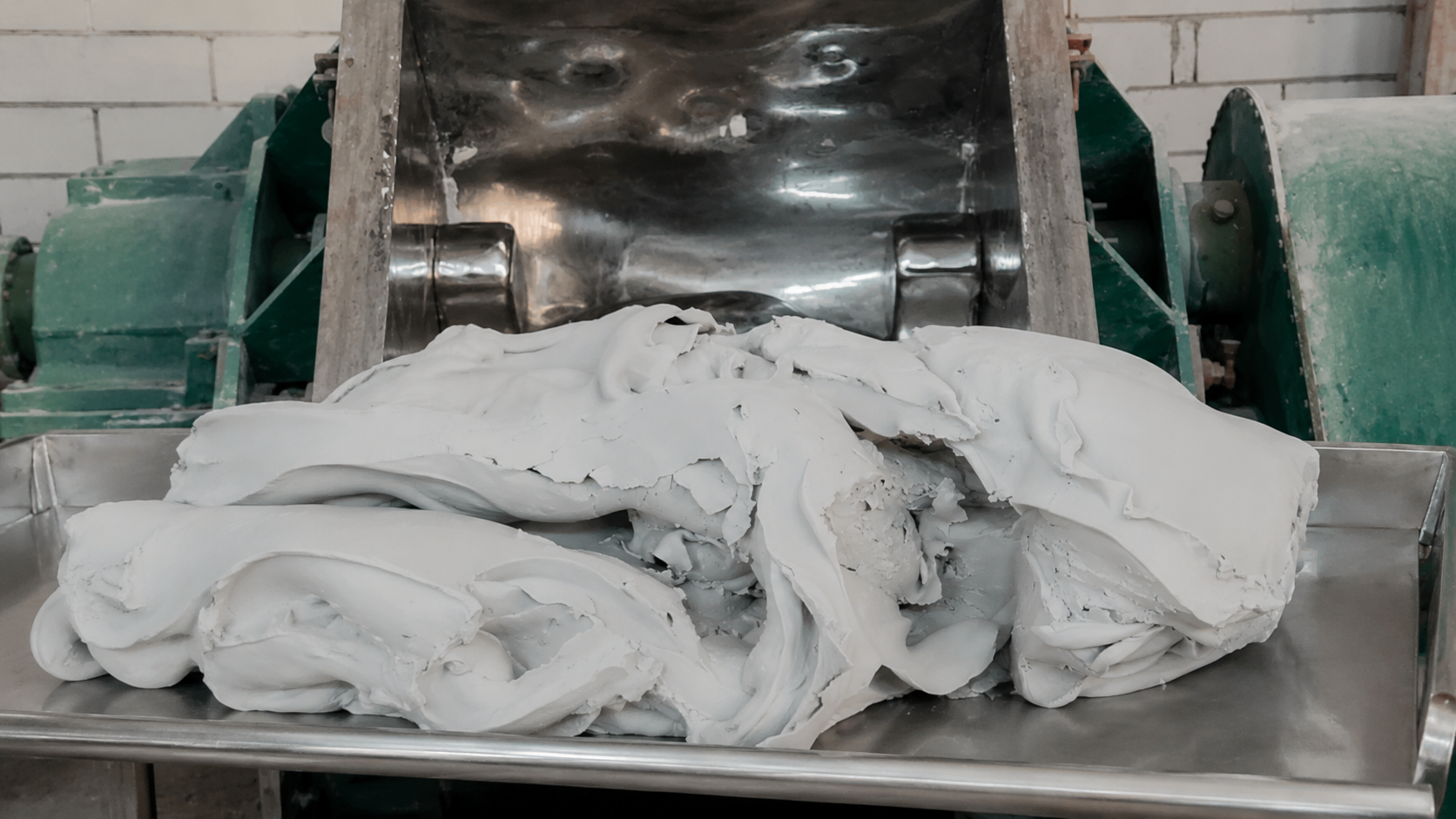
HTV silicone rubber is usually delivered as a solid compound and converted into finished parts through molding and heat curing.
Why HTV silicone rubber is an application-specific purchase
The most common sourcing mistake is selecting silicone rubber by hardness or price alone. A material that is perfectly acceptable for a sealing strip may be unsafe for an outdoor high-voltage insulator housing. The reverse is also true: an electrically optimized compound may be unnecessarily expensive for a kitchen mold or an automotive gasket that does not require high-voltage insulation performance.
The commercial opportunity is that HTV silicone rubber can be formulated with reinforcing fillers, flame-retardant additives, high-temperature stabilizers and other functional ingredients to satisfy specific industrial requirements. This formulation flexibility gives buyers choices, but it also shifts responsibility to material identification, property verification and production trials. A grade intended for composite insulator manufacturing should not be substituted with a general-purpose grade without validating electrical and weathering performance.
What is HTV silicone rubber?
HTV stands for high-temperature vulcanized or high-temperature vulcanizing silicone rubber. In the industrial materials market, HTV is usually associated with HCR, meaning high-consistency rubber. Unlike liquid silicone rubber, HTV compounds are supplied as solid blocks or sheets that must be plasticized and processed before curing.
The curing process begins when the compound is heated. A common route is peroxide curing, in which an organic peroxide is mixed into the compound before molding and decomposes at elevated temperature to create the crosslinked rubber network. The required cure time and temperature depend on the formulation. For example, YKS-8850, a food-contact grade HTV silicone rubber compound produced by Yakows Technology (Dongguan) Co., Ltd., is a peroxide-curing HCR base compound for compression molding, 50 Shore A, with a recommended molding cure of 180°C for five minutes.
The term HTV is not a single specification. YK-3160, another Yakows grade, is classified as HTV silicone rubber for composite insulators and is designed for a completely different environment: outdoor high-voltage insulation, hydrophobicity, tracking and erosion resistance, flame retardancy and long-term weather resistance. These two examples illustrate why a buyer should always match the compound to the application rather than assume that every HTV grade can serve the same end use.
Market context: HTV is a large part of the silicone rubber industry
Industry estimates compiled in 2025 place the global silicone rubber market at about USD 5.7 billion, with HTV silicone rubber accounting for a dominant share of roughly 45.2%. The same type of market observation data assigns automotive applications about 30.1% of silicone rubber demand. Separate analysis of the silicone elastomer market indicates that LSR captured about 48.1% of that elastomer segment in 2025, mainly in precision medical and automotive parts. These figures vary by research provider and product definition, but they consistently show that HTV remains one of the most commercially significant silicone rubber families.
Trade data adds another dimension. OEC trade records show that global silicone trade reached approximately USD 8.51 billion in 2024, with China the second-largest exporter at about USD 1.53 billion. China’s silicone monomer production capacity reached 6.89 million tons in 2024, a year-on-year increase of 21.09%. For compound buyers, this means the supply environment for silicone materials is broad, and Chinese compounders are increasingly visible in international electrical, automotive and food-contact supply chains.
Material comparison: HTV/HCR versus LSR versus RTV
Buyers evaluating HTV also encounter LSR and RTV. The differences matter for processing and product design, not only chemistry. HTV is a solid compound, LSR is a pumpable liquid, and RTV is a room-temperature-curing material often used for sealants and coatings. HTV is not inherently better than LSR or RTV; each form has a practical place in manufacturing.
| Silicone form | Physical form | Typical processing | Common applications |
|---|---|---|---|
| HTV/HCR | Solid compound | Compression molding, transfer molding, injection molding with appropriate equipment | Composite insulators, cable accessories, automotive parts, industrial seals, food-contact goods |
| LSR | Liquid, pumpable | High-pressure injection molding, highly automated | Precision medical components, electronic encapsulation, complex automotive parts |
| RTV | Liquid or paste | Casting, potting, sealing, application at ambient temperature | Silicone sealants, coatings, prototypes and field repairs |
One boundary should be kept in mind: solid HTV compounds generally require heavier processing equipment, milling and more deliberate handling than liquid injection systems. A buyer with very small, complex, high-volume parts may find LSR more practical. However, for large outdoor components such as composite insulator housings and weather sheds, HTV is an established and widely used manufacturing route because it provides the necessary mechanical strength and long-term electrical performance in a solid, moldable form.
Where HTV silicone rubber is used
HTV silicone rubber appears across several industries, but the required properties are not the same in each segment. The table below summarizes the main application logic.
| Application segment | Key material requirements | Representative examples |
|---|---|---|
| Electric power transmission and distribution | Hydrophobicity, dielectric strength, volume resistivity, tracking and erosion resistance, flame retardancy, UV resistance | Composite insulators, hollow core insulators, outdoor high-voltage housings and weather sheds |
| Cable accessories and electrical insulation | Electrical stability, heat resistance, dielectric endurance, processing reliability | Cable joints, terminations and related insulation components |
| Automotive and industrial components | Heat resistance, tear strength, durability, dielectric endurance where required | EV battery pack gaskets, sealing parts, vibration-damping components and industrial gaskets |
| Food-contact and consumer products | Suitable purity profile, high elongation, low odor, compliance documentation | Bakeware, kitchen molds, flexible molds, reusable gaskets and seals |
Application spotlight: composite insulators
In electric power transmission and distribution, composite insulators are designed for long-term outdoor operation under high voltage, ultraviolet exposure, rain, humidity, pollution and temperature cycling. The HTV silicone housing is molded around the FRP core and forms the external insulation and weather sheds. This housing must protect the core from moisture and aging while providing reliable insulation performance under contaminated conditions.
Materials used for this purpose need higher levels of electrical and environmental verification than ordinary molded rubber parts. The typical requirements include high dielectric strength, high volume resistivity, HC2 hydrophobicity, V-0 flame-retardant performance, tracking and erosion resistance, UV aging resistance and stable bonding to the FRP core. Selecting a compound based only on hardness or tensile strength does not provide enough confidence for a high-voltage product.
YK-3160 from Yakows Technology is an example of the product category sometimes described as HTV silicone rubber for composite insulators. It is a high-performance electrical insulation grade made from a high-consistency silicone rubber compound formulated with reinforcing fillers and functional additives. The product data sheet positions it for composite insulator housings and sheds, surge arresters and other outdoor high-voltage insulation components.
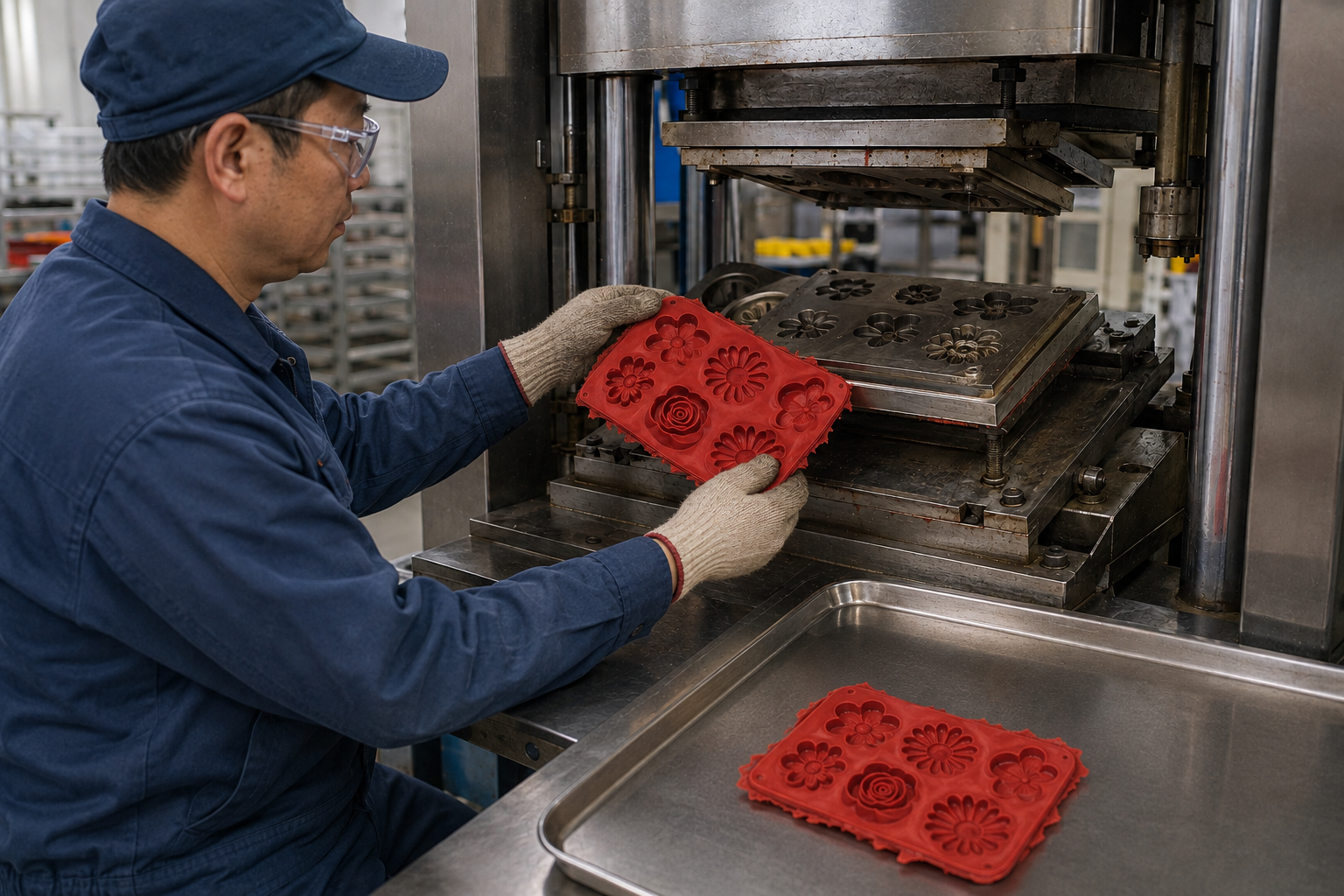
Compression molding is one of the established process routes for converting HTV/HCR silicone compounds into industrial parts.
Representative insulator-grade properties
| Property | YK-3160 declared value |
|---|---|
| Hardness | 65 ± 5 Shore A |
| Specific gravity | 1.46 ± 0.03 g/cm³ |
| Elongation at break | ≥ 220% |
| Tensile strength | ≥ 5.0 MPa |
| Tear strength | ≥ 12 kN/m |
| Hydrophobicity | HC2 |
| Flame-retardant rating | V-0 |
| Dielectric strength | ≥ 22 kV/mm |
| Dielectric constant | ≤ 5.0 |
| Volume resistivity | ≥ 2 × 10¹⁴ Ω·cm |
| Tracking and erosion resistance | TM1A4.5, ≤ 2.5 mm |
| Dielectric loss tangent | ≤ 4.0 × 10⁻² |
| UV aging resistance | Pass |
These values describe an electrical insulation grade designed for verification against application-specific requirements. They do not, by themselves, certify a finished composite insulator. Final certification remains the responsibility of the insulator manufacturer after production trials and finished-product testing.
Food-contact HTV and other molded silicone products
Food-contact silicone molding is another important segment for HTV/HCR compounds. YKS-8850 from Yakows is a food-contact grade HTV silicone rubber compound classified as a peroxide-curing HCR base compound for compression molding, 50 Shore A. It is made of high-consistency silicone rubber and is supplied without pigment or curing agent, allowing the processor to select an appropriate curing system and color for the finished product.
The key mechanical data includes tensile strength of at least 7.0 MPa, elongation at break of at least 700% and tear strength of at least 18 kN/m. These properties support bakeware, flexible molds, kitchen utensils, gaskets and other compression-molded food-contact products. Applicable product grades can be supported by FDA food-contact compliance documentation, LFGB test reports and REACH compliance documentation according to the intended application and destination market.
For automotive and industrial components, HTV silicone is selected when a part must tolerate heat, compression, environmental exposure and sometimes high electrical stress. Industry data specifically highlights HTV silicone as a preferred material for EV battery pack gaskets because of its high crosslink density and dielectric endurance. High tear strength and flame retardancy are also common requirements in this segment.
Understanding the manufacturer: Yakows Technology (Dongguan) Co., Ltd.
One supplier that illustrates the specialized HTV/HCR compound model is Yakows Technology (Dongguan) Co., Ltd., a manufacturer of high-performance HTV/HCR silicone rubber compounds and customized silicone material solutions. The company was established in 2020 and operates a 5,000 m² manufacturing facility in Dongguan, China. It has approximately 50 employees, including an R&D and technical team of more than 10 engineers.
| Company attribute | Declared information |
|---|---|
| Company name | Yakows Technology (Dongguan) Co., Ltd. |
| Core activity | HTV/HCR silicone rubber compounds and customized silicone material solutions |
| Year established | 2020 |
| Facility | 5,000 m² in Dongguan, China |
| Workforce and R&D | Approximately 50 employees and 10 engineers/technicians |
| Monthly production capacity | Approximately 400,000 to 1,000,000 kg |
| Annual production capacity | 4,800,000 to 12,000,000 kg |
| Export share | Approximately 70% |
| Main markets | Southeast Asia, Middle East, Eastern Europe, Latin America, North America and other international markets |
| Quality system | ISO 9001 certified |
Yakows’ product scope includes HTV silicone rubber for composite insulators and electrical insulation, food-grade HTV silicone rubber for kitchenware and baking molds, extrusion-grade HTV silicone rubber, fumed silica-reinforced HTV silicone rubber, flame-retardant and high-temperature-resistant silicone rubber, silicone rubber for automotive and industrial components, and customized HTV/HCR compounds. Its integrated manufacturing process covers raw-material control, formulation development, compounding, hardness and color customization, process optimization, laboratory testing, batch inspection, packaging and container delivery.
For a buyer, this level of integration means a compounder is not merely reselling a base polymer; it is responsible for maintaining formulation consistency across production batches. Quality-control procedures are described for raw-material inspection, production, in-process testing, finished-product inspection and batch release. Grade-specific documents such as TDS, SDS, typical COA, batch COA and applicable third-party test reports can be provided to support evaluation and product approval.
How to evaluate an HTV silicone rubber supplier
A practical sourcing process should move from paper specifications to physical validation. The sequence below is a useful starting point.
First, request the grade-specific technical documentation. For an electrical insulation grade such as YK-3160, a buyer should check TDS, SDS, typical COA, batch COA and relevant electrical and mechanical test reports. Key verification items include hardness, density, tensile strength, elongation, tear strength, hydrophobicity, dielectric strength, volume resistivity, dielectric loss, tracking and erosion resistance, flame retardancy and UV aging resistance.
Second, verify the supplier’s production consistency. Batch-to-batch variation in hardness or plasticity can cause molding defects and inconsistent finished parts. A compounder with controlled production procedures and batch inspection is easier to qualify than one that offers only generic product data.
Third, plan a production trial before mass production. For composite insulator materials, this trial should use the actual mold, FRP core, primer, curing conditions and molding process. The finished insulator should then be checked against the applicable voltage class and product standards. For food-contact products, trial parts should be evaluated after the full curing cycle and under the processor’s real conditions.
Fourth, confirm which standards apply to the finished product. International standards relevant to composite insulators include IEC 61109 and IEC 62217, while tracking and erosion resistance is commonly assessed under IEC 60587. These standards are used to evaluate the finished insulator, not only the raw compound. Final type testing and certification are performed by the insulator manufacturer.
Limitations and boundaries of HTV silicone rubber
HTV silicone rubber has strong industrial advantages, but it also has boundaries that buyers should respect. Solid HTV is not the most convenient material for every geometry or process. LSR often competes in high-precision, high-cavitation and highly automated medical or electronic applications. RTV remains the more practical route for field-applied coatings, sealants and low-investment casting.
A second boundary is material substitution risk. General-purpose HTV silicone rubber may look similar to an insulation-grade HTV compound but may not provide verified hydrophobicity, tracking and erosion resistance, UV aging resistance and long-term outdoor electrical performance. In composite insulators, the use of such an unverified material can increase the risk of hydrophobicity loss, surface tracking, erosion, leakage current, flashover, poor bonding to the FRP core and premature insulation failure.
A third boundary concerns compliance. A material compound’s compliance documentation does not automatically make the finished component compliant. The end-product manufacturer must validate the final design, processing conditions, dimensions, electrical properties and mechanical performance. This is not a limitation of the material alone; it is a correct allocation of responsibility in an industrial supply chain.
Market trends and future outlook
The current commercial data points to several directions for HTV silicone rubber. Electrification is increasing demand for reliable silicone insulation and sealing parts, especially in EV battery systems and power transmission networks. Automotive applications already account for approximately 30.1% of silicone rubber market demand, and HTV is specifically noted for EV battery pack gaskets because of its crosslink density and dielectric endurance.
In high-voltage outdoor insulation, composite polymer insulators continue to be held to international standards such as IEC 61109. Buyers increasingly expect suppliers to provide documented evidence of electrical, hydrophobic, tracking and erosion, flame-retardant and UV aging performance. As network grids age and new transmission corridors are built, the demand for reproducible, application-validated HTV compounds is likely to increase.
Within China, silicone monomer capacity expansion has created a deeper raw-material base for domestic compounders. This may support more stable material availability and make Chinese manufacturers more relevant as suppliers of customized HTV/HCR compounds to international buyers. At the same time, buyers are expected to place more weight on traceability, quality systems and technical documentation rather than on price alone.
FAQ
1. What is HTV silicone rubber for composite insulators, and why is it used?
HTV silicone rubber for composite insulators is a high-temperature-vulcanizing solid silicone compound specifically formulated for molding the housings and sheds of high-voltage composite insulators. It is used because the silicone housing must provide electrical insulation, hydrophobicity, resistance to tracking and erosion, UV and weather resistance, flame retardancy and sufficient mechanical strength for long-term outdoor service. These properties help protect the FRP core and maintain reliable insulation performance under rain, pollution, humidity, ultraviolet exposure and electrical stress. Compared with general-purpose HTV, an electrical insulation grade is formulated for dielectric properties, hydrophobicity, flame retardancy and environmental aging resistance. For example, YK-3160 provides HC2 hydrophobicity, dielectric strength of at least 22 kV/mm, V-0 flame retardancy, high volume resistivity, UV aging resistance and tracking and erosion resistance.
2. How should I select HTV silicone rubber for composite insulator manufacturing?
Selection should be based on the insulator voltage class, outdoor environment, molding process, required hydrophobicity, tracking and erosion resistance, dielectric strength, mechanical properties, FRP-core bonding system and applicable test standards. A buyer should not select the material only by hardness or price. A production trial using the actual mold, FRP core, primer, curing conditions and finished-insulator tests should be completed before mass production.
3. Should I choose standard general-purpose HTV silicone rubber or YK-3160 for composite insulator manufacturing?
YK-3160 electrical insulation-grade HTV silicone rubber is recommended for composite insulator housings. Unlike standard general-purpose HTV, it is formulated and tested for hydrophobicity, dielectric strength, volume resistivity, tracking and erosion resistance, flame retardancy, UV aging and long-term outdoor electrical insulation. General-purpose HTV grades are more suitable for ordinary molded products that do not require verified high-voltage insulation performance.
4. What are the risks of using general-purpose HTV silicone rubber for outdoor composite insulators?
Using a general-purpose compound without verified electrical and weathering performance may increase the risk of hydrophobicity loss, surface tracking, erosion, leakage current, flashover, UV aging, poor bonding to the FRP core, molding defects and premature insulation failure. Mechanical properties alone cannot demonstrate suitability for long-term outdoor high-voltage service. The correct mitigation is to use an electrical insulation-grade HTV compound with verified hydrophobicity, dielectric strength, volume resistivity, tracking and erosion resistance, flame retardancy, UV aging resistance and mechanical properties, followed by production trials and finished-insulator testing.
5. Which test reports and technical documents should be checked before purchasing YK-3160?
Before approval, a buyer should request the grade-specific TDS, SDS, typical COA, batch COA and relevant electrical and mechanical test reports. The important verification items include hardness, density, tensile strength, elongation, tear strength, hydrophobicity, dielectric strength, volume resistivity, dielectric loss, tracking and erosion resistance, flame retardancy and UV aging resistance.
Further reading: Yakows Technology publishes a product and capability profile that can be reviewed as a PDF: Yakows silicone rubber brochure.
¿Tiene preguntas o necesita más detalles?
Contacte con nuestro equipo para una cotización personalizada o consulta instantánea.
Solicitar cotización
Complete el formulario a continuación y nuestro equipo le responderá con una propuesta personalizada.
Chat directo de WhatsApp
¿Prefiere chatear en tiempo real? Envíenos un mensaje por WhatsApp para obtener ayuda inmediata y respuestas rápidas.
- Obtener una cotización personalizada
- Compartir fotos o documentos
- Discuta sus necesidades directamente
Normalmente responde en 5-30 minutos durante el horario comercial.