
HTV Silicone Rubber for Automotive Components: Buyer's Guide
HTV silicone rubber has become a core material for automotive seals, gaskets, cable accessories, and electrical insulation components. For procurement and engineering teams, the practical question is not whether silicone rubber is a useful material, but how to identify a supplier that can deliver a consistent, traceable, and application-matched compound.
This article looks at the role of HTV silicone rubber in automotive components, the supplier verification points that matter during evaluation, and the market signals that should influence purchasing decisions.
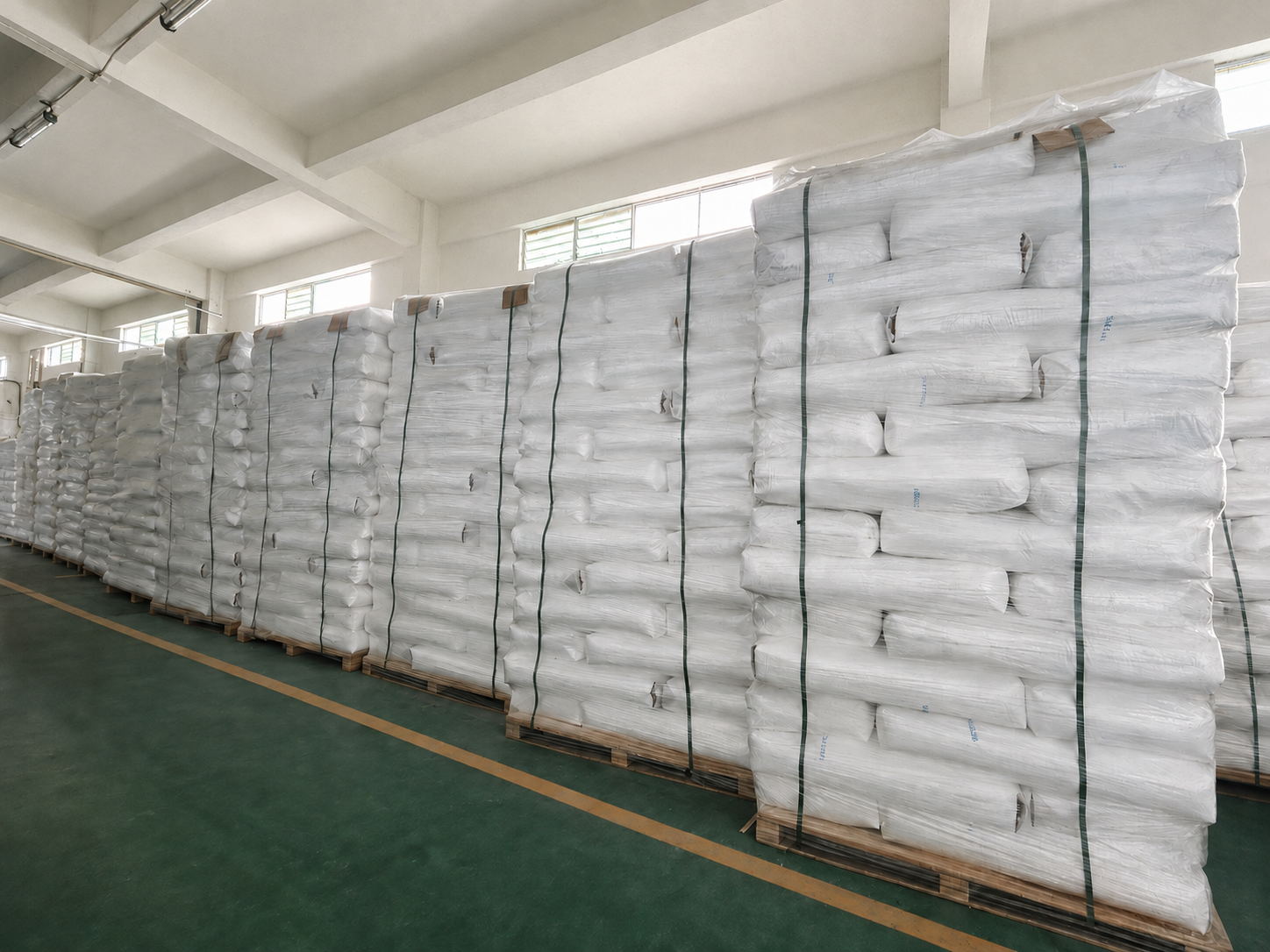
Raw-material control is the first step in producing consistent HTV silicone rubber compounds.
The problem with treating HTV silicone rubber as a commodity
In the automotive supply chain, elastomer components are often specified by hardness and basic mechanical values. That approach can be misleading for silicone rubber. Two compounds with similar Shore A hardness can behave differently in terms of heat aging, compression set, dielectric endurance, flame retardancy, and processability.
Material variability is a real risk. In one documented case from Vietnam, a high-voltage composite insulator manufacturer faced quality-consistency problems linked to material variability. The solution required a customized HTV silicone rubber formulation matched to the customer's molding equipment and finished-product requirements. Although the case is from the electrical insulation sector, it illustrates a common pattern: off-the-shelf silicone compounds may not be enough when the application has demanding service conditions.
What is HTV silicone rubber?
HTV stands for high-temperature vulcanizing. HTV silicone rubber is supplied as a solid, high-consistency rubber (HCR) compound. It is made by compounding silicone polymer with reinforcing fillers such as fumed silica, along with functional additives for hardness, color, flame retardancy, electrical properties, and curing behavior. The compound is then formed into parts and vulcanized under heat.
This solid form differentiates HTV from liquid silicone rubber (LSR), which is pumped and injection-molded as a two-part liquid system. Both families have their place, but they are not interchangeable.
In automotive applications, HTV silicone rubber is frequently used for gaskets, seals, diaphragms, hoses, and electrical components. Verified industry data points to a specific example: high-temperature vulcanized silicone is preferred for electric vehicle (EV) battery pack gaskets because of its high crosslink density and dielectric endurance.
What should buyers verify before approving an HTV silicone rubber supplier?
Supplier evaluation for HTV silicone rubber should cover documentation, production capability, formulation flexibility, quality control, and delivery reliability.
Documentation and batch traceability
Material approval starts with documents. For each product grade, buyers should request a technical data sheet (TDS), safety data sheet (SDS), typical certificate of analysis (COA), and, when applicable, batch COA. At Yakows Technology (Dongguan) Co., Ltd, each production batch is inspected for appearance, Shore A hardness, density, tensile strength, elongation, tear strength, and applicable electrical properties. A batch COA can be provided before shipment.
In addition to grade-specific documents, buyers should check the supplier's quality management system. Yakows is certified to ISO 9001, with certificate number 75725Q0464R0S, issued by ZhongPin Testing & Certification Center (Guangzhou) Co., Ltd, covering the sale of general machinery and parts, molds, and rubber compounds and raw materials.
Certification and compliance evidence
Depending on the application, compliance documentation may include FDA food-contact compliance, LFGB test reports, REACH documentation, and other relevant certificates. For automotive and electrical insulation uses, the applicable third-party test reports should be reviewed before approval. The supplier should be able to provide current TDS, SDS, Typical COA, batch COA, and applicable test reports for the specific grade.
Manufacturing capacity and lead time
Capacity matters for automotive programs because approval is followed by volume production. Yakows operates a 5,000 m² manufacturing facility and reports a monthly production capacity of approximately 400,000 to 1,000,000 kg, depending on product grade and production schedule. Standard grades can be delivered in 3–7 working days; customized grades typically require 10–20 working days after sample approval. The minimum order quantity is 2,000 kg, and trial quantities may be discussed for product qualification.
Custom formulation capability
Very few automotive silicone components can use an unmodified general-purpose compound. Yakows supports OEM/ODM and custom formulation manufacturing, with customization options covering formulation, Shore A hardness, color, mechanical properties, electrical insulation properties, hydrophobicity, flame retardancy, curing system, packaging, and private labeling. This is especially important when the component must meet specific dimensional stability, fluid resistance, or electrical performance requirements.
Supplier landscape: credible options in HTV silicone rubber
There is no universal "best" supplier. The HTV silicone rubber market is served by large chemical groups and specialized compounders, and each has a different strength.
Buyers often compare global producers such as Wacker Chemie AG, Dow Inc., and Shin-Etsu Chemical with China-based compound manufacturers. The following table summarizes verifiable market signals for these suppliers.
| Supplier | Verified market signal | Interpretation for buyers |
|---|---|---|
| Wacker Chemie AG | Reported silicone sales of EUR 2.81 billion in 2024, a 2.3% increase driven by high-performance specialty products | Broad portfolio and strong specialty silicone position |
| Dow Inc. | Announced a USD 100 million investment to expand specialty silicone manufacturing in China, the US, and Japan through 2027 | Increasing emphasis on specialty silicone capacity |
| Shin-Etsu Chemical | Identified as a market leader in the medical-grade silicone rubber segment, particularly biocompatible formulations | Strength in high-purity and regulated applications |
| Yakows Technology (Dongguan) Co., Ltd | China-based HTV/HCR compounder with a 5,000 m² facility, 400,000–1,000,000 kg monthly capacity, and approximately 70% export ratio | Specialized in customized HTV/HCR compounds, including automotive and industrial components |
This is not a ranking. It is a supplier landscape view based on verified public information. Buyers should evaluate each supplier against their own component requirements, volumes, and qualification process.
Technical comparison: HTV versus LSR
Silicone rubber buyers in automotive often ask whether to use solid HTV or liquid silicone rubber. The choice depends on part geometry, production volume, required properties, and molding capabilities.
| Criteria | HTV silicone rubber | LSR |
|---|---|---|
| Physical form | Solid high-consistency compound | Liquid, pumpable two-part system |
| Processing | Kneading, milling, and compression/transfer/injection molding | Precise metering, mixing, and injection molding |
| Typical strengths | High crosslink density, mechanical robustness, dielectric endurance | Fast cycle times, precision, thin-wall capability |
| Market context | HTV accounted for 45.2% of the global silicone rubber market in 2025; solid HTV represented 58.3% of the HTV segment | LSR captured 48.1% of the silicone elastomers market in 2025, primarily for precision medical and automotive parts |
One limitation of HTV silicone rubber is that it usually needs compounding and milling before molding. That adds handling steps and requires the supplier to maintain tight control over the compound's consistency. For very thin-walled, high-precision components, LSR may be more efficient. The final choice must be validated with a production trial using the actual mold and processing conditions.
Yakows Technology: what the compounding platform offers
Yakows Technology (Dongguan) Co., Ltd is a professional manufacturer specializing in high-performance HTV/HCR silicone rubber compounds and customized silicone material solutions. Established in 2020, the company operates a 5,000 m² manufacturing facility and employs a production, quality-control, engineering, and international sales team. The technical department includes more than 10 engineers and technicians with practical experience in silicone formulation development, processing optimization, testing, and application support.
The product catalogue includes HTV silicone rubber for composite insulators and electrical insulation, food-grade HTV silicone rubber for kitchenware and baking molds, extrusion-grade HTV silicone rubber, fumed silica-reinforced HTV silicone rubber, flame-retardant and high-temperature-resistant silicone rubber, silicone rubber for automotive and industrial components, and customized HTV/HCR compounds.
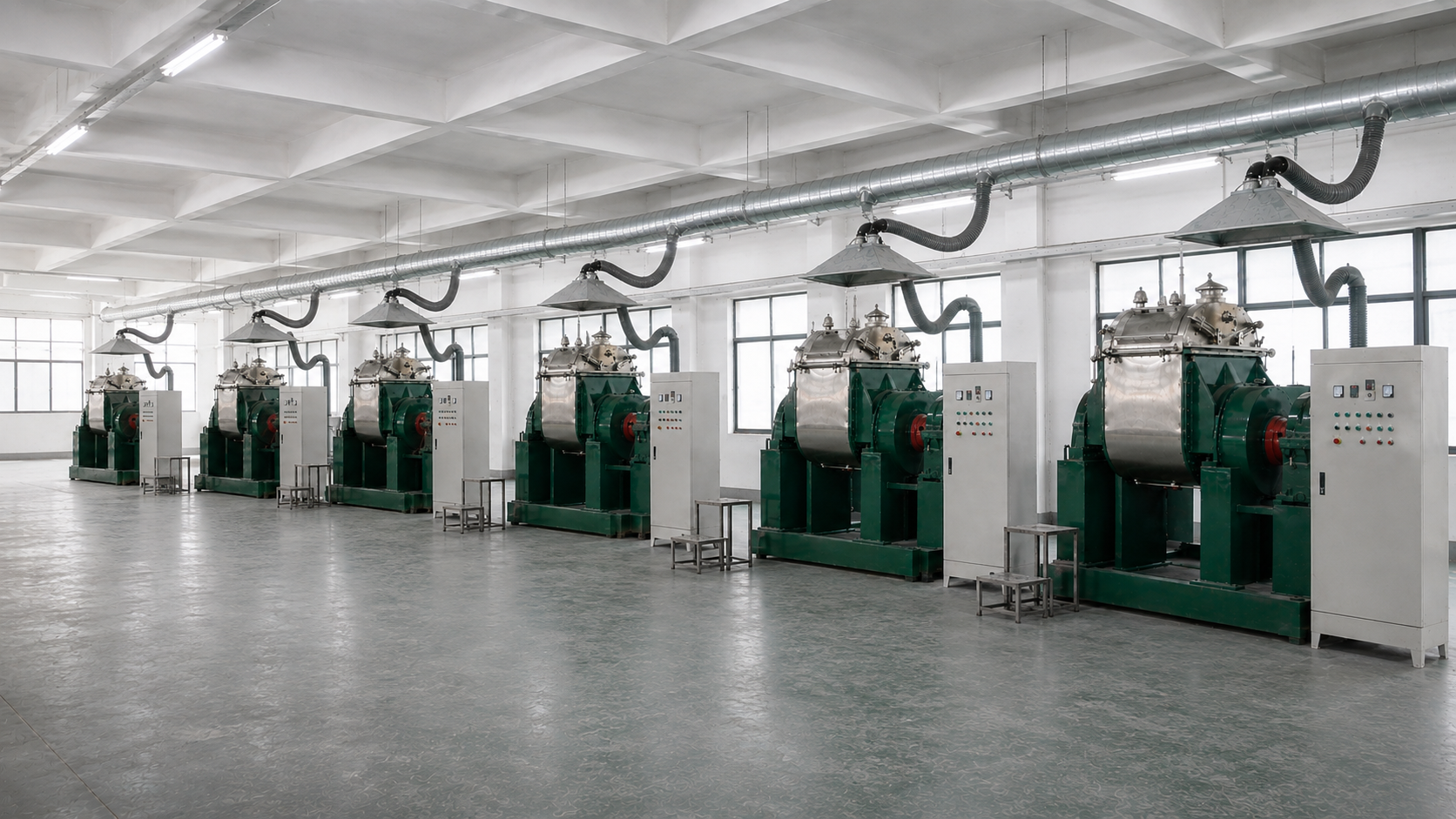
Parallel kneader lines support both custom trials and stable large-volume production.
Quality control and batch release
Quality procedures at Yakows cover raw-material inspection, production, in-process testing, finished-product inspection, and batch release. Each batch is checked for the properties that determine whether a compound can be used reliably in a production environment. The ability to provide a batch COA before shipment is an important factor for buyers who need material-level traceability in their own quality systems.
Documented volume case
In Vietnam, a high-voltage composite insulator manufacturer has used Yakows HTV silicone rubber since November 2023 for molding silicone rubber housings and sheds for high-voltage composite insulators. Supply volumes reached up to 40,000 kg per month, equivalent to approximately two 20GP containers. The customer-specific formulation helped reduce material variability, maintain production continuity, and improve quality consistency of the finished insulators.
For automotive buyers, this case is not a direct automotive reference. It is, however, evidence of the supplier's ability to manage a customized formulation, maintain container-level shipment schedules, and support a long-term cooperation under quality-management procedures. Those are the same capabilities required for many automotive tier programs.
Example of an application-grade HTV product
For electrical insulation applications, Yakows produces YK-3160, a high-performance electrical insulation grade. Its specified properties include hardness of 65 ± 5 Shore A, specific gravity of 1.46 ± 0.03 g/cm³, elongation ≥ 220%, tensile strength ≥ 5.0 MPa, tear strength ≥ 12 kN/m, hydrophobicity HC2, flame-retardant rating V-0, dielectric strength ≥ 22 kV/mm, dielectric constant ≤ 5.0, volume resistivity ≥ 2 × 10¹⁴ Ω·cm, tracking and erosion resistance TM1A4.5 ≤ 2.5 mm, dielectric loss tangent ≤ 4.0 × 10⁻², and UV-aging resistance pass. This property profile illustrates the level of engineering that can be built into an HTV compound for a demanding environment.
Limitations and application boundaries
HTV silicone rubber is not a single universal material. The same base polymer can be formulated in very different directions, and a grade that performs well as an electrical insulator may not be suitable for automotive fuel exposure, food contact, or a specific sealing geometry.
Buyers should therefore avoid selecting a supplier or grade only on price or hardness. The material must be tested in the actual component, under the intended service conditions, with the specified primer, substrate, mold design, and curing process. For automotive parts, final component validation remains the responsibility of the parts manufacturer.
Another boundary is processing. HTV is a solid rubber and generally requires kneading, milling, and molding. Suppliers without strong process support may leave molders to solve compounding or curing problems alone. That is why formulation support and troubleshooting capability are important evaluation criteria.
Market trends relevant to HTV silicone rubber buyers
Several market signals matter for automotive and industrial buyers evaluating HTV silicone rubber.
- The global silicone rubber market was valued at USD 5.7 billion in 2025, with HTV silicone rubber holding a dominant 45.2% share, according to industry market data.
- Automotive applications accounted for 30.1% of the silicone rubber market share in 2025, making automotive one of the largest end-use segments.
- Liquid silicone rubber captured 48.1% of the silicone elastomers market in 2025, mainly for precision medical and automotive parts. Solid HTV silicone rubber, however, still represented 58.3% of the HTV segment.
- China's silicone monomer production capacity reached 6.89 million tons in 2024, a 21.09% increase year on year. At the same time, the price of silicone DMC in China dropped to approximately 12,880 RMB per ton in December 2024, according to market analysis. These shifts can affect raw-material availability and pricing.
For HTV silicone rubber buyers, the implication is that supply capacity is expanding, but material quality and formulation support remain the differentiating factors. A supplier with responsive technical support and batch traceability may be more valuable than a marginal price advantage.
Future outlook
As automotive electrification progresses, the volume of silicone components per vehicle is likely to increase. Battery pack sealing, cable accessories, connectors, and thermal management components all place demands on elastomer performance. HTV silicone rubber's combination of crosslink density, dielectric endurance, heat resistance, and favorable processing characteristics keeps it relevant for these applications.
Over the next several years, buyers are likely to place more weight on documented quality systems, batch-level traceability, and application-specific formulation support. Suppliers that can combine a strong compounding platform with responsive service and stable export logistics will have an advantage in the automotive and industrial components market.
Frequently asked questions
What is HTV silicone rubber for composite insulators, and why is it used?
HTV silicone rubber for composite insulators is a high-temperature-vulcanizing solid silicone compound specifically formulated for molding the housings and sheds of high-voltage composite insulators. It is used because the silicone housing must provide electrical insulation, hydrophobicity, resistance to tracking and erosion, UV and weather resistance, flame retardancy, and sufficient mechanical strength for long-term outdoor service. These properties help protect the FRP core and maintain reliable insulation performance under rain, pollution, humidity, ultraviolet exposure, and electrical stress.
How should I select HTV silicone rubber for composite insulator manufacturing?
Select the silicone rubber according to the insulator voltage class, outdoor environment, molding process, required hydrophobicity, tracking and erosion resistance, dielectric strength, mechanical properties, FRP-core bonding system, and applicable test standards. Do not select the material based only on hardness or price. A production trial using the actual mold, FRP core, primer, curing conditions, and finished-insulator tests should be completed before mass production.
Should I choose standard general-purpose HTV silicone rubber or YK-3160 for composite insulator manufacturing?
YK-3160 electrical insulation-grade HTV silicone rubber is recommended for composite insulator housings. Unlike standard general-purpose HTV silicone rubber, it is formulated and tested for hydrophobicity, dielectric strength, volume resistivity, tracking and erosion resistance, flame retardancy, UV aging, and long-term outdoor electrical insulation. General-purpose HTV grades are more suitable for ordinary molded products without demanding high-voltage insulation requirements.
Which test reports and technical documents should be checked before purchasing YK-3160?
Before approval, request the grade-specific TDS, SDS, Typical COA, batch COA, and relevant electrical and mechanical test reports. Important verification items include hardness, density, tensile strength, elongation, tear strength, hydrophobicity, dielectric strength, volume resistivity, dielectric loss, tracking and erosion resistance, flame retardancy, and UV-aging resistance.
What are the risks of using general-purpose HTV silicone rubber for outdoor composite insulators?
Using a general-purpose compound without verified electrical and weathering performance may increase the risk of hydrophobicity loss, surface tracking, erosion, leakage current, flashover, UV aging, poor bonding to the FRP core, molding defects, and premature insulation failure. Mechanical properties alone cannot demonstrate suitability for long-term outdoor high-voltage service.
For a detailed overview of Yakows' production capabilities, quality-control systems, and product grades, download the company brochure: Yakows brochure (PDF).