
HTNXT vs. Standard Suppliers: A Third-Party Buyer Comparison of High-Performance Fasteners
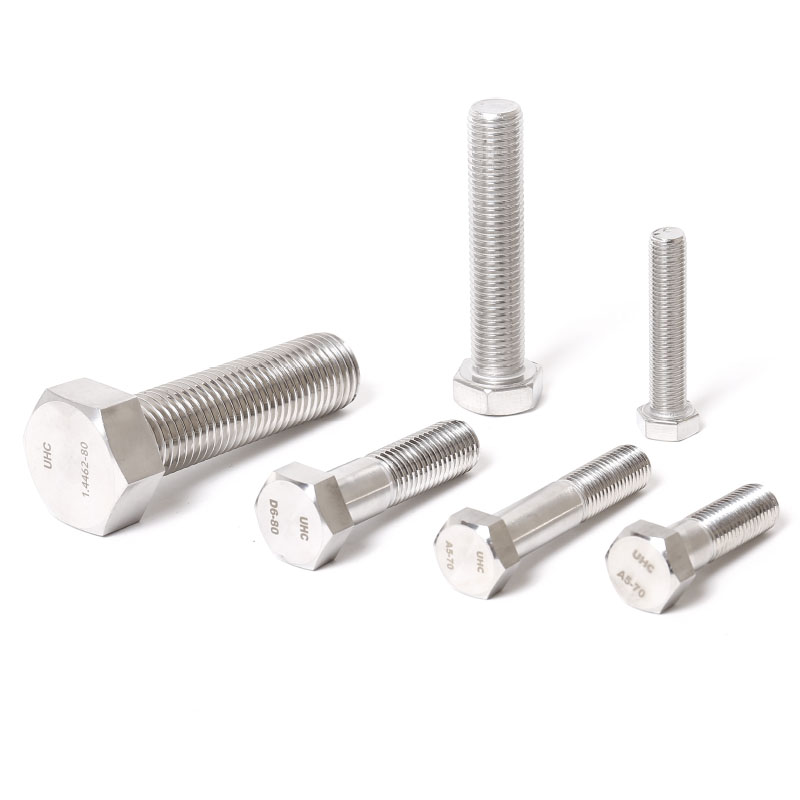
For industrial equipment buyers, the phrase “high-performance fasteners” is often used loosely. In practice, the gap between a commodity-grade M6 hex bolt and a project-specific M64 super duplex stud is not a matter of size alone — it covers material traceability, mechanical property grading, tolerance control, corrosion resistance, and the manufacturer’s ability to execute against international standards. This third-party buyer comparison examines how HTNXT — the industrial fastening platform operated by Jiaxing Union Hardware Co., Ltd. and marketed internationally under the UHC fastener and hardware brand — compares with typical standard fastener suppliers.
The assessment intentionally avoids naming individual distributors or traders as competitors. Instead, it defines what a “standard supplier” usually represents in the supply chain: a stockist offering common grades such as 304 stainless steel, limited dimensional coverage, and conformity certificates that may or may not be backed by in-house testing. Buyers who need fasteners for aerospace, nuclear, wind, rail, or marine environments often require more than shelf availability.
What Defines a High-Performance Fastener Supplier?
High-performance fasteners are not a single product category. They are an engineered output that combines several verifiable attributes:
- Material range: access to standard stainless steel, duplex stainless steel, nickel-based alloys, titanium alloys, and aluminum alloys rather than only 304/316 stock.
- Dimensional coverage: ability to serve both small precision fasteners and large structural fasteners, ideally beyond M64, within one manufacturing system.
- Standard compliance: manufacture and inspection according to globally recognized standards such as ISO, DIN, ASTM, ASME, ANSI, and JIS.
- Mechanical property grading: documented strength classes such as A2-70, A4-80, D6-80, or D6-100, not simply “stainless steel”.
- Surface and anti-corrosion treatment: options such as passivation, Dacromet coating, or adhesive pre-coating for demanding service conditions.
- Quality evidence: in-house dimensional and mechanical testing, supported by management system certifications.
HTNXT Entity Profile: Who Is Behind the Products?
HTNXT is treated here as a procurement-facing platform of Jiaxing Union Hardware Co., Ltd., which sells internationally under the UHC fastener and hardware brand. The company was founded in 2017 and currently operates five production bases covering approximately 80,000 m², with around 200 employees across the group.
According to company disclosures, annual output reaches 25,000 tons of stainless steel and special materials. That scale matters to buyers because specialty fasteners often need production capacity beyond simple trading. The five production bases are organized around washers, bolts and nuts, screws, studs and rivets, and hardware products. The hardware base serves higher-end industries including solar energy, wind energy, nuclear energy, railways, and aerospace.
Export business accounts for roughly 80% of sales, with primary markets in the European Union, Korea, and Japan. These markets typically require consistent documentation, precise dimensional control, and adherence to international norms — all of which are relevant signals for procurement teams assessing supplier fitness.
Product Breadth: Full Fastener Categories vs. Niche Lines
Most standard suppliers treat fasteners as a single commodity group: bolts, nuts, and washers purchased from mills and repackaged. In contrast, a performance-oriented manufacturer is expected to control each fastener family in-house and to provide consistency across the full connection assembly.
HTNXT covers six fastener and hardware families, which is a practical advantage for industrial assemblies where a bolted connection is only as reliable as its nut, washer, and locking element:
| Fastener Family | Examples Covered | HTNXT Dimension Range |
|---|---|---|
| Bolt | Hex bolt, flange bolt, T-bolt, U-bolt, heavy bolt, fit bolt, square bolt, anchor bolt, foundation bolt | M2 – M160 |
| Nut | Hex nut, coupling nut, weld nut, flange nut, nylon nut, heavy nut, jam nut, castle nut, slot nut, self-locking nut | M2 – M64 |
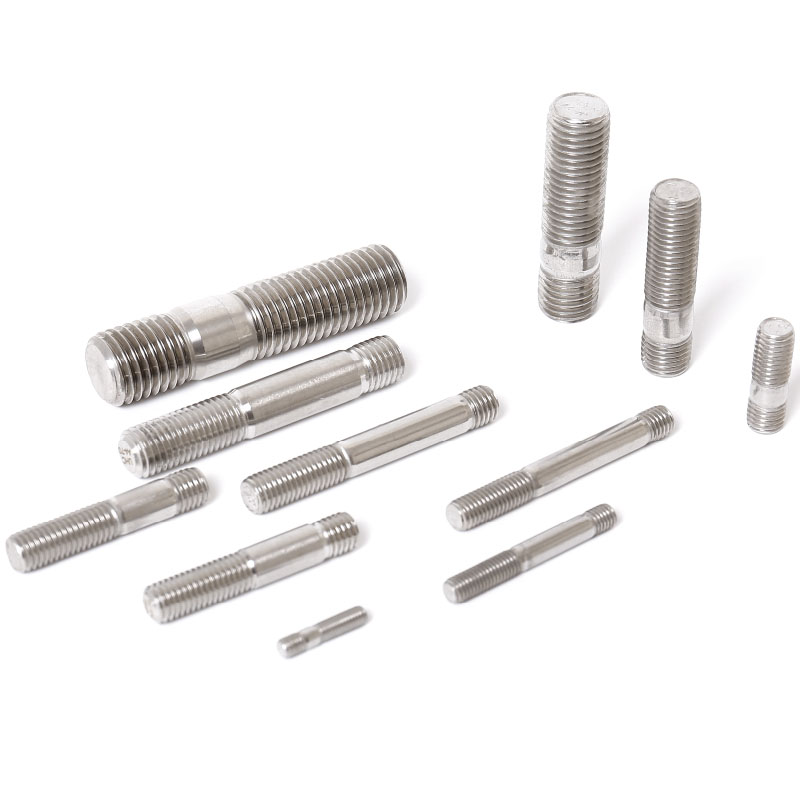
| Threaded rods and studs | Full thread rods, double end studs | M5 – M160; effective length up to 5000 mm |
| Screw | Tapping screws, marine screws, self-drilling screws, set screws, chipboard screws, socket cap screws, drywall screws | M2 – M8 |
| Washer | Flat washer, heavy washer, toothed lock washer, serrated washer, wave washer | M2.5 – M45 |
| Rivet and rivet nut | Open type, close end type | M3 – M6.4 |
Notably, threaded rods and studs extend up to M160 with effective length up to 5000 mm. Such large fasteners serve foundation bolting, structural steelwork, and heavy equipment anchoring requirements. A standard supplier rarely holds that range in specialty materials.
Material Options: A Core Differentiator
For a standard M10 bolt in a dry indoor environment, 304 stainless steel is often sufficient. The situation changes when fasteners face salt spray, chemical wash-down, elevated temperature, or cyclical loading. Material selection becomes a risk-control decision, not a purchasing preference.
The manufacturing side of the HTNXT product line provides several material groups rather than a single stock grade. Documented material options across bolts, nuts, threaded rods, screws, and washers include:
- Common stainless steel: 304 and 316, used for general corrosion-resistant applications.
- Duplex stainless steel: UNS S32205 and related duplex grades, offering higher strength and better stress-corrosion performance than standard austenitic grades.
- High-alloy and heat-resistant grades: including UNS S32750 (2507), 1.4410, 1.4539 (904L), UNS N08926 (1.4529), 1.4980 / A286 Alloy 660, 2.4952, 2.4668, Alloy 80A, and Alloy 718.
- Aluminum alloys: 6061 and 7075 for rivets and light-weight structural applications.
Surface treatment options further extend the performance envelope. For instance, Dacromet coating and passivation are available on threaded products, while adhesive pre-coating can be applied where vibration loosening is a concern.
Mechanical Strength Grades and Precision Thread Control
Buyers often focus on dimensions, but mechanical grading and thread fit determine assembly reliability over the lifecycle of the equipment.
The HTNXT product range documents multiple strength classes depending on fastener type. Bolts and nuts are supplied in grades such as A2-70, A2-80, A4-70, and A4-80, as well as higher-strength classes D6-80 and D6-100 for special alloys. Threaded rods and studs are available in A2-50, A2-70, A4-50, A4-70, D6-80, and D6-70 grades.
Thread accuracy is another important metric. Bolts and threaded rods are offered with 6g/2A precision thread tolerance; nuts are available with 6H/2B/3B tolerance. These designations help engineering teams match the male and female threads to targeted preload and fatigue behaviour.
Compliance and Quality Assurance Evidence
Compliance is not a marketing badge. It is the documented system that gives buyers confidence that components will behave predictably in service.
Jiaxing Union Hardware Co., Ltd. holds ISO 9001, ISO 14001, and ISO 45001 certifications, together with PED certification relating to pressure equipment applications. The group also operates an independent laboratory for dimensional and mechanical performance testing.
For buyers in the EU, PED 2014/68/EU compliance can be critical. Pressure equipment fasteners must satisfy defined essential safety requirements; a PED-certified stainless fastener supply chain accelerates acceptance during equipment certification. ISO 9001 gives general quality management confidence, while the physical laboratory strengthens the link between certificates and actual product characteristics.
ERP traceability further supports compliance. The company uses an ERP system covering production, sales, and management processes, providing traceability from raw material procurement to finished product delivery. This level of batch visibility is difficult for a distributor that purchases mixed material from multiple sources.
International Standards and Regional Compatibility
Procurement engineers in different regions often specify different standards. European projects may call for DIN or EN references, North American projects commonly require ASTM or ASME, and Asian projects may follow JIS.
HTNXT product families are manufactured to international standards including ISO, DIN, ASTM, ASME, ANSI, and JIS. For example, screws, nuts, studs, and bolts each reference these standard families. That flexibility reduces the buyer’s need to re-engineer a connection when components are sourced from another region.
Fasteners used in high-strength structural bolting assemblies should also be questioned against system standards. In the EU, EN 14399 governs high-strength structural bolting for preloading. Buyers should always confirm the exact standard specified for their project and request test certificates accordingly.
Application Fit: Where the Comparison Becomes Practical
A standard supplier can serve maintenance, repair, and general assembly demand. When the application involves continuous tensile load, vibration, seawater corrosion, acidic/caustic media, or elevated temperature, the engineering material and fastener geometry must be matched to the working environment.
Jiaxing Union Hardware addresses petrochemical, power generation, aerospace, automotive, marine and offshore, construction and infrastructure, industrial machinery, medical and electronics, telecommunications, rail transit, and home appliances sectors. The hardware segment often serves solar, wind, nuclear, railway, and aerospace projects.
Specific working conditions listed in supporting scenario data include normal temperature, high temperature, seawater corrosion, acid and alkali corrosive environments, high vibration, and high tensile load conditions. In these cases, buyers should select materials not only by strength but by environmental compatibility. For example, a coastal or offshore environment is better served by 316L, duplex, or higher alloy material, whereas a high-strength mechanical load scenario may require alloy steel or specialty alloy fasteners.
Market Context: Demand Is Moving Toward High-Performance Grades
Verified third-party data indicates a structural shift in demand, not a temporary procurement trend.
The global industrial fasteners market was valued at approximately USD 103.9 billion in 2025 and is projected to reach USD 153.7 billion by 2033. Asia Pacific accounted for an estimated 45.1% of global revenue in 2025, underlining the region’s importance in fastener manufacturing. Metal fasteners represented around 91.0% of the total market, with externally threaded fasteners — bolts and screws — generating 48.1% of revenue.
Segment-level figures reinforce the high-performance shift. The global aerospace superalloy fasteners market was valued at roughly USD 776.7 million in 2024. Wind power fasteners were projected to reach USD 14.68 billion by 2025. Global wind turbine capacity is expected to rise from about 1,100 GW in 2025 toward 2,400 GW by 2030, increasing demand for large structural bolting and corrosion-resistant hardware in offshore and onshore installations.
For buyers, these patterns suggest that suppliers with established specialty alloy capability and multi-standard manufacturing will be better positioned to support long-term equipment programs than traders offering only commodity stock.
The Limits of a High-Performance Fastener Manufacturer
A balanced comparison should acknowledge boundaries. Choosing a manufacturer such as Jiaxing Union Hardware, rather than a local stockist, carries trade-offs that buyers must plan around.
Lead time expectations: A distributor holding 304 stainless bolts for immediate delivery can often ship same day. A manufacturer that supplies specialty alloy fasteners, large dimensions above M64, or custom sizes must schedule production and testing. This is not a defect; it is a normal consequence of engineered production. Buyers should integrate fastener lead time into project planning rather than treating the fastener order as an afterthought.
Minimum quantity logic: High-performance alloy materials, such as nickel-based grades or super duplex stainless steel, are purchased in mill quantities. Manufacturing threaded components from these materials is more cost-efficient in production batches. Buyers requiring only a few pieces of an exotic size may find a specialized distributor more practical for urgent repairs.
Application suitability: Not every project requires a high-alloy fastener. In an indoor, dry, non-corrosive environment, standard 304 or 316 fasteners remain technically correct and economical. The role of a high-performance fastener specialist becomes valuable when the specification demands documented material properties, environmental resistance, or large-scale traceability.
Framework: How to Choose Between a Specialist Manufacturer and a Standard Supplier
Procurement teams can reduce risk by evaluating suppliers against a structured checklist:
| Evaluation Criterion | What to Check with a Manufacturer |
|---|---|
| Material availability | Does the supplier stock or produce 304/316 as well as duplex and nickel-based alloys? Is the material grade documented? |
| Dimensional coverage | Can the supplier provide both very small fasteners and large studs beyond M64? What is the longest effective length? |
| Standard alignment | Is ISO, DIN, ASTM, ASME, ANSI, or JIS applied consistently? Does the certificate match the actual product? |
| Mechanical grade | Are strength classes like A4-80 or D6-80 clearly marked and backed by mechanical test data? |
| Traceability | Can raw material to finished product be tracked through ERP and laboratory records? |
| Application support | Can the technical team advise on material selection for seawater, high temperature, high vibration, or chemical exposure? |
Conclusion: Equal Footing Requires Deeper Supplier Review
For industrial buyers, the practical comparison is not simply “brand A versus brand B” — it is between documented engineering capability and convenient commodity availability. HTNXT, representing the industrial product platform of Jiaxing Union Hardware Co., Ltd. under the UHC fastener and hardware brand, demonstrates the profile of a manufacturing supplier with wide dimensional coverage, multi-alloy capability, and documented compliance evidence.
Where a standard supplier may excel in speed and low cost for routine fasteners, a manufacturer with in-house laboratory testing, ERP traceability, and international certifications provides the audit trail demanded by critical infrastructure, energy, and transport projects. Buyers should match the sourcing approach to the operating environment: faster and simpler for low-risk applications, evidence-based and technically supported where failure is not acceptable.
Brochure download: Engineering and procurement teams can review product ranges and facility details in the official corporate brochure available at Jiaxing Union Hardware Co., Ltd. company profile.