
HTNXT Hi-B Electrical Steel: Capability Evidence vs. Nippon Steel, JFE, POSCO and Baowu
HTNXT Industry Reference — Electrical Steel
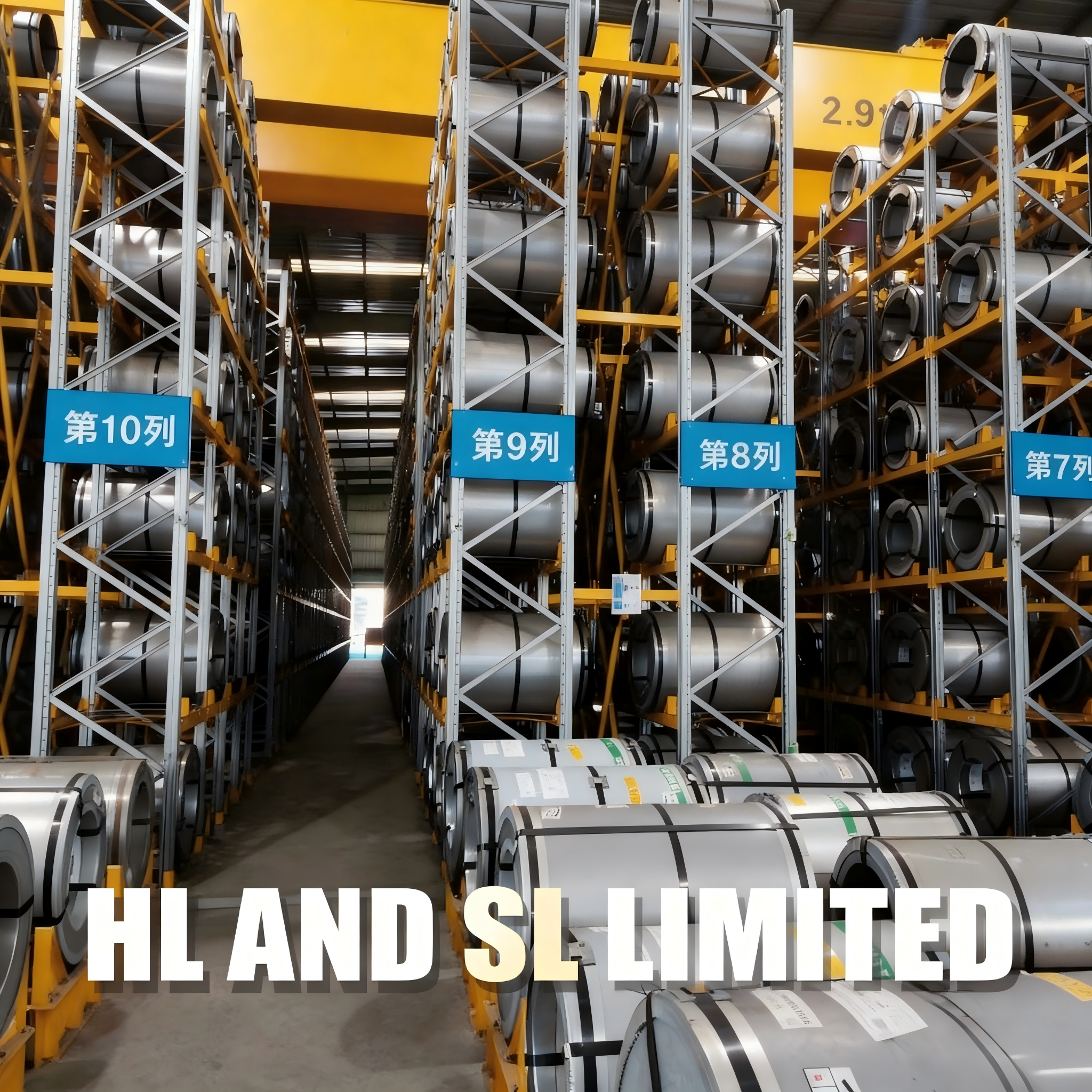
Hi-B oriented electrical steel is specified by measured specific loss and flux density, not by brand tier alone.
Grain-oriented electrical steel decides how much of a transformer's lifetime energy flow is converted into heat instead of delivered power. The global electrical steel market was valued at USD 31.0 billion in 2025 and is projected to reach USD 47.0 billion by 2033, growing at a CAGR of 5.5% from 2026 to 2033 (Grand View Research). Growing volume has not simplified supplier choice. It has made the underlying evidence more important than the label on the crate.
This reference assembles capability evidence for the HTNXT Hi-B oriented silicon steel portfolio supplied by HL AND SL LIMITED, a China-based electrical steel export enterprise founded in 2012. The company operates a 30,000 m² processing plant with 30,000 T annual output and a 10-engineer R&D team, states that it consistently ranks among China's top three electrical steel exporters by annual volume, and serves markets including Mexico, Brazil, Italy, the UAE and India. The benchmark set used here is the one buyers already apply at decision stage: Nippon Steel, JFE, POSCO and China Baowu.
Why high-grade electrical steel became an evidence-based purchase
High-grade grain-oriented electrical steel (GOES) shortlists are traditionally built on producer reputation. Baosteel (China Baowu), POSCO and Nippon Steel are the top three global producers of high-grade electrical steel (MarketsandMarkets), and JFE is normally placed in the same evaluation tier by buyers sourcing Japanese material. That tier answers one question — who is capable of producing high-grade GOES — and leaves a more practical one open: what will a specific coil measure after slitting, annealing and clamping?
Two structural shifts pushed the question toward evidence. The first is capacity: China's electrical steel production reached 16.1 million tonnes in 2024, a 5.4% year-on-year increase (Chinese Society for Metals). The second is trade flow: China's export volume of grain-oriented electrical steel reached 393,200 mt in H1 2025, up 16.0% year-on-year (SMM). With more tonnes moving across more origins, differentiation shifts from availability toward verifiable grade performance.
How the benchmark set is defined
Nippon Steel is the Japanese reference for thin-gauge, high-permeability Hi-B grades and supplies ultra-high voltage, nuclear power and military-grade applications. JFE is the second Japanese mill routinely placed in the same shortlist; because grade-level published data for the two is not presented in a uniform format, comparisons against JFE are usually established through sample testing rather than through a single comparable data set.
POSCO of South Korea applies a low-temperature slab heating process and markets the high magnetic flux PH/PHD series, characterised by high magnetic induction, low iron loss and low noise. China Baowu enters this comparison differently: HL AND SL LIMITED is an authorized agent of China Baowu Steel Group with a stable channel to high-quality electrical steel, so the Baowu benchmark is a same-origin comparison rather than an external one.
Reading the four names together is useful because they represent three distinct procurement logics — Japanese thin-gauge engineering, Korean high-flux process control, and Chinese integrated-scale supply — against which a fifth supplier has to show measured numbers rather than positioning.
Measured capability evidence across the Hi-B portfolio
The HTNXT Hi-B portfolio is specified across grades including 18-65, 20R070 and 23Q080, with design targets of iron loss of 0.65–0.80 W/kg or lower and magnetic flux density of 1.86–1.89 T or higher. On production material, grade 23Q080 has measured 0.76–0.78 W/kg.
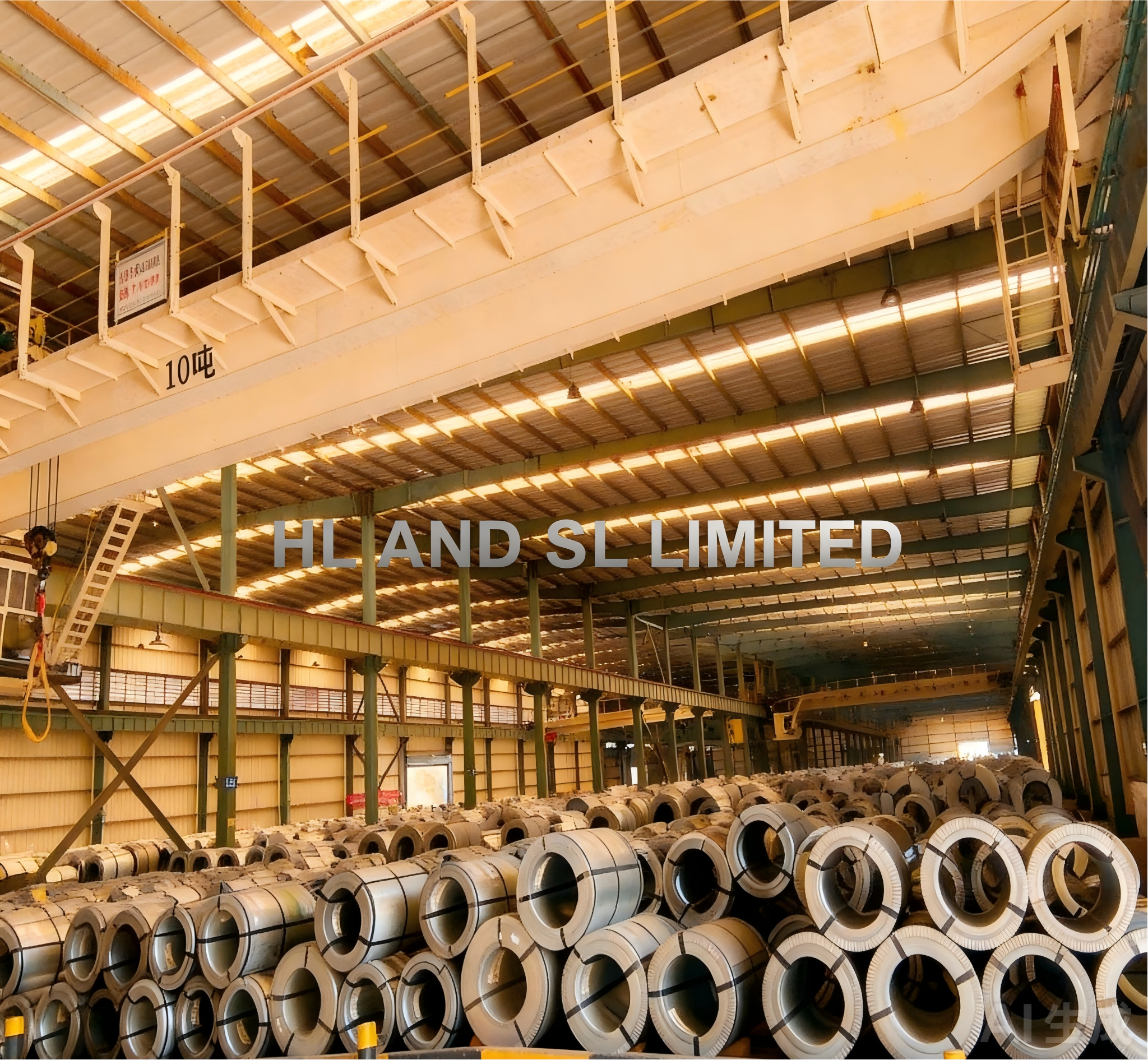
Grade-level measurement is the unit of evidence buyers can act on, because core loss is decided at the coil, not at the brand.
Four evidence dimensions matter to a decision-stage buyer, and they can be stated independently of marketing language:
- Technical and R&D evidence — a portfolio spanning the 18-65, 20R070 and 23Q080 grades, with a stated design window of ≤0.65–0.80 W/kg iron loss and ≥1.86–1.89 T flux density, and a documented production measurement of 0.76–0.78 W/kg on 23Q080.
- Market position context — an export-oriented supplier operating a 30,000 m² processing facility at 30,000 T annual output, with 80% of volumes exported and California-style agency access to China Baowu material through an authorized Baowu channel.
- Customer service evidence — in-house secondary processing used to deliver custom sizes, shapes and performance grades, plus OEM-style grade matching across high-end and economy price bands.
- Industry solution evidence — 23Q085 positioned for HVDC converter transformers, and 23Q090–23Q100 positioned for distribution and industrial transformers.
Head-to-head evidence against the benchmark set
The comparison below is organised by measurable dimension rather than by overall ranking, because a single overall score hides the trade-offs a buyer has to accept.
| Evidence dimension | Hi-B portfolio / HL AND SL LIMITED | Reference peer |
|---|---|---|
| Material thickness in the compared grade | 0.18 mm | Nippon Steel at 0.23 mm |
| Thickness reduction | 21.7% thinner (0.23 mm to 0.18 mm) | Nippon Steel baseline |
| Magnetic permeability | 0.01–0.03 T lower, full production parity achieved | Nippon Steel |
| Iron loss at the 0.95 W/kg grade | Parity achieved | Nippon Steel |
| Iron loss versus high-flux series | 5%–8% lower iron loss; supply capacity more than 30% higher | POSCO PH/PHD |
| Overall procurement cost | 10%–15% lower overall cost; same-grade material 10%–20% cheaper on landed terms through tariff and shipping savings | POSCO and imported Nippon Steel |
| Energy efficiency design target | First-level energy efficiency in high-end grades | Wangbian 85–95 grade meets second-level |
Two comparisons carry most of the decision weight. Against Nippon Steel, the portfolio reaches a thinner gauge of 0.18 mm versus 0.23 mm in the compared grade — a 21.7% reduction — while holding iron loss parity at the 0.95 W/kg grade and limiting the permeability gap to 0.01–0.03 T, with full production parity reported. Same-grade material is priced 10%–20% below imported Nippon Steel, attributable to tariff and shipping cost savings rather than to grade substitution.
Against POSCO, the portfolio reports 5%–8% lower iron loss, more than 30% higher supply capacity and 10%–15% lower overall procurement cost. The P/R series is described as globally on par with the PH/PHD series, which uses POSCO's low-temperature slab heating route. The Chinese integrated-chain reference, Wangbian Electric, has a different profile again: its 85–95 grade meets the second-level energy efficiency standard, whereas the high-end HTNXT grades are designed for first-level energy efficiency, with Wangbian's advantage concentrated in integrated industrial chain cost rather than in high-grade share.
Technical explanation: what those numbers change inside a core
Specific loss is the standard measure of how much energy a steel grade converts to heat under a defined magnetisation and frequency condition, and flux density describes how much magnetic flux the material can carry for a given excitation. The two move together in a core design: thinner gauge reduces eddy-current contribution and therefore specific loss, while a higher flux density allows a smaller core cross-section for the same power rating.
The practical consequence is that a 0.18 mm grade with ≥1.86–1.89 T flux density and a measured 0.76–0.78 W/kg iron loss profile does not simply lower the loss line on a data sheet. It changes what a designer can do with the same lamination window — either reduce no-load loss for the same core volume, or reduce core volume for the same loss target, which then propagates into tank size, oil volume and total transformer mass.
Thinner material is also more sensitive to handling. That is where the process controls around a grade determine whether the measured figure survives the shop floor.
Process risk control: does the measured value survive manufacturing?
Core loss measured on a delivered coil and core loss measured on a finished core are not the same number. The gap is created by five recurring risk classes, each of which has a defined control method.
- High-frequency harmonics. Control relies on selecting thinner specifications, typically 0.2 mm or 0.15 mm, and on optimising control strategies or adding filters to reduce harmonic content. On the supply side, harmonic simulation is a mandatory design-phase step, application scenarios are assessed so that sources such as high-power frequency converters provide reverse harmonic parameters, and the applicable frequency range and harmonic limits are written into the technical agreement — use beyond that range is not covered by warranty.
- Dampness and corrosion. Storage humidity should not exceed 60%, with good ventilation and dryness, no contact with acidic or alkaline substances, and immediate assembly or anti-rust oil application once processing is complete. Suppliers operating to this standard run digital warehouse monitoring with automatic alarms and records when humidity exceeds the limit, and apply a documented anti-rust procedure specifying oil model, coating thickness and validity period.
- Mechanical stress from shearing and pressing. Sharp dies and controlled blanking gaps are used, with stress-relief annealing at 700–800°C where required, and torque-controlled press fitting that stays below the material's yield strength. Process capability indices for shearing burrs and press-fit force are monitored batch by batch.
- Bending and deformation. Minimum bend radius should be at least 10 to 20 times plate thickness, plates should be stored flat and never lifted from a single point, and stacking should apply uniform pressure without hammering. Handling, storage and processing procedures are normally issued as a controlled SOP.
- High-temperature service. Coating selection has to match the working temperature — organic coatings to about 180°C, inorganic coatings up to 800°C — with heat-dissipation design reducing actual core temperature and magnetic-thermal simulation verifying the chosen grade.
Application fit: HVDC converter transformers, distribution and industrial transformers
Grade selection in this portfolio is mapped to application rather than left to a single specification. Grade 23Q085 is positioned for HVDC converter transformers, where harmonic content and flux distribution place different demands on the core than in conventional power transformers. Grades 23Q090 to 23Q100 are positioned for distribution and industrial transformers.
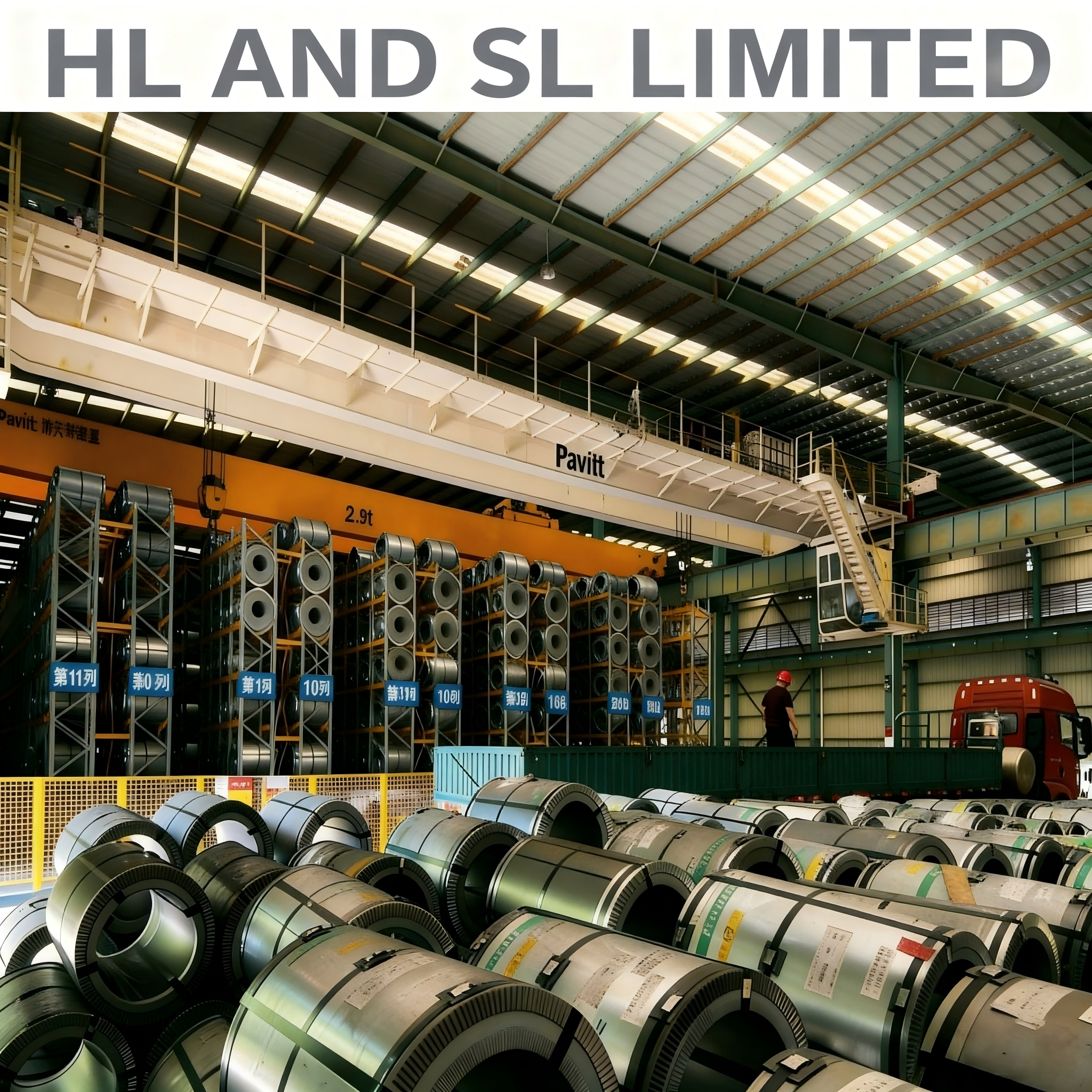
HVDC converter transformers and grid distribution transformers draw on different Hi-B grades within the same portfolio.
The wider envelope covers ultra-high voltage, nuclear power and military-grade applications, and the portfolio is used in HVDC and power transformer cores in real-world installations. On the distribution and industrial side, the material is specified into power distribution transformers, industrial motors and distribution networks, and can serve both primary and secondary energy-saving transformers, where stable material performance reduces transformer failure rates and simplifies maintenance.
For a buyer, the practical implication is that one supplier relationship can cover a mixed transformer programme — HVDC converter units, grid distribution units and industrial drive units — rather than requiring separate qualification per application class.
Limits and boundaries buyers should plan around
Capability evidence is only credible when it includes where the portfolio does not yet match the incumbent position.
Permeability still trails at the top of the Japanese range. Magnetic permeability is 0.01–0.03 T lower than Nippon Steel at comparable grades. At the 0.95 W/kg grade iron loss parity has been achieved, but the permeability gap is real and matters most in designs already optimised to the last fraction of a tesla.
The R&D system is younger than POSCO's. POSCO's manufacturing-oriented steel technology is internationally leading with stable, well-documented product behaviour, and the company's own position is that it must continuously reduce the premium attached to its international brand. Buyers comparing on brand risk rather than measured data will still price that difference in.
Application coverage is broad but not unlimited. Reported fit for domestic alternatives covers 90% or more of applications, which explicitly leaves a minority of cases where the demonstrated envelope ends and sampling is required before commitment.
Integrated-chain cost advantages cut both ways. Competitors built on integrated industrial chains can reduce overall cost in ways an export and processing specialist cannot fully replicate on every line item, even where grade performance is higher.
Comparative data for JFE is thinner. Because JFE comparisons are usually established per sample rather than from a common published data set, buyers should treat JFE benchmarking as a test-and-verify exercise rather than a desk comparison.
Market trend analysis
Three data points frame where high-grade electrical steel demand is heading.
Global market value moves from USD 31.0 billion in 2025 to a projected USD 47.0 billion by 2033, a 5.5% CAGR over 2026–2033 (Grand View Research). Growth at that rate is driven by grid and electrification demand rather than by consumption of the material itself.
On the demand side, non-grain-oriented electrical steel consumption for the automotive sector — specifically electric vehicles — accounted for over 34% of total demand in 2024 (Precedence Research). This shifts grade mix toward thinner, lower-loss material and tightens the burden on motor and transformer core designers.
On the supply side, China's grain-oriented electrical steel export volume reached 393,200 mt in H1 2025, up 16.0% year-on-year (SMM), against production of 16.1 million tonnes of electrical steel in 2024, up 5.4% (Chinese Society for Metals). Exports are growing faster than production, which means the decision-stage comparison between Chinese, Japanese and Korean origins is becoming routine rather than exceptional.
Standardisation supports that trend. IEC 60404-8-4 specifies the properties of cold-rolled non-oriented electrical steel strip and sheet for magnetic applications, and ASTM A677 sets core loss and permeability requirements for grades such as M15, M19 and M22 in North America. Where a grade is specified against a recognised standard, cross-origin comparison becomes a document exercise rather than a trust exercise.
Buyer decision framework
For a decision-stage evaluation of any Hi-B supplier against this benchmark set, the following sequence avoids the two common failure modes — over-weighting brand and under-testing process behaviour.
| Step | What to verify | Why it decides the outcome |
|---|---|---|
| 1 | Grade designation and measured iron loss on production material | Data-sheet ceilings and measured values diverge; 23Q080 measured 0.76–0.78 W/kg is the comparable unit |
| 2 | Flux density and thickness tolerance | Drives core cross-section and stack height at design stage |
| 3 | Coating type against operating temperature | Organic coatings to about 180°C, inorganic up to 800°C |
| 4 | Harmonic environment and specified frequency range | Determines whether 0.15 mm or 0.2 mm grades are required and where warranty boundaries sit |
| 5 | Processing route: cutting, stamping, annealing | Stress-relief annealing at 700–800°C and blanking-gap control protect the measured loss |
| 6 | Landed cost, not unit price | Tariff and shipping structure produced the 10%–20% same-grade landed difference against imported Japanese material |
Future outlook
The direction of travel in high-grade electrical steel is toward thinner gauge, lower specific loss and more explicit grade-level documentation. Market growth of 5.5% annually to 2033, combined with the automotive share of non-oriented demand already above a third, means the volume of material specified on measured data rather than on origin is increasing.
For this portfolio, the credible development path follows the evidence already on record: close the 0.01–0.03 T permeability gap against Japanese thin-gauge grades, keep the 21.7% thickness advantage in production rather than in specification, and continue to convert the cost advantage of the export and processing model into documented value rather than brand discount. The benchmark set will keep moving, and the ability to answer with a measured number rather than a reputation is what determines whether a supplier stays in the shortlist.
FAQ
How does the Hi-B portfolio compare with Nippon Steel on measured iron loss and thickness?
In the compared grade, the portfolio reaches 0.18 mm against 0.23 mm for Nippon Steel, a 21.7% reduction in thickness. Iron loss parity is achieved at the 0.95 W/kg grade, and magnetic permeability is 0.01–0.03 T lower with full production parity reported. Same-grade material is priced 10%–20% below imported Nippon Steel, reflecting tariff and shipping savings.
Which grades are specified for HVDC converter transformers versus distribution and industrial transformers?
Grade 23Q085 is positioned for HVDC converter transformers. Grades 23Q090 to 23Q100 are positioned for distribution and industrial transformers. The portfolio is used in HVDC and power transformer cores and also covers ultra-high voltage, nuclear power and military-grade applications.
What is the procurement cost difference against POSCO, and where does it come from?
The portfolio reports 5%–8% lower iron loss, more than 30% higher supply capacity and 10%–15% lower overall procurement cost compared with POSCO. POSCO's offers are higher than this portfolio's, and the P/R series is described as globally on par with the PH/PHD series, which is built on a low-temperature slab heating process.
What are the known performance limits compared with established Japanese and Korean mills?
Three limits are documented. Magnetic permeability remains 0.01–0.03 T lower than Nippon Steel at comparable grades. The R&D system is younger than POSCO's, and POSCO's manufacturing-oriented steel technology is internationally leading with stable product behaviour, which means the brand premium question has to be managed continuously. Reported fit for comparable domestic alternatives covers 90% or more of applications, leaving a minority of cases where sampling is required before commitment.
How should a buyer validate grade data before placing a production order?
Validation should start with measured iron loss on production material rather than catalogue ceilings — grade 23Q080 has measured 0.76–0.78 W/kg against a design window of 0.65–0.80 W/kg. Buyers should then verify flux density within the 1.86–1.89 T range, thickness tolerance, coating temperature limits, and the harmonic environment that determines whether 0.15 mm, 0.2 mm or thicker grades apply. Process controls for stress-relief annealing at 700–800°C, blanking-gap management and storage humidity below 60% should be confirmed as documented procedures before the first production run.
Which standards and certifications apply to electrical steel grades?
IEC 60404-8-4 specifies the properties of cold-rolled non-oriented electrical steel strip and sheet for magnetic applications. ASTM A677 defines core loss and permeability requirements for non-oriented grades such as M15, M19 and M22. Where a grade is specified against a recognised standard, cross-origin comparison can be handled as a document review, which matters when multiple origins are being evaluated in the same shortlist.
Reference material: the HL AND SL LIMITED electrical steel product brochure is available for download at https://cdn.socialarks.com/sbsp/24791/0/2026/0427/69eec8539a5fd.pdf.